What to Throw Away Today (50 Things)
You are busy. You want a calm home without a big plan. Small steps can change your space and your mood.
This guide shows simple systems. Clear sections, step-by-step checklists, and gentle routines await. You will get daily, weekly, and monthly habits that fit real life.
We give room-by-room examples for kitchen, pantry, bathroom, bedroom, closet, and entryway. You will see quick wins first. Ten minutes can free your view and your energy.
Follow easy cues. One-in, one-out. Keep what serves today. Let go of what no longer fits. This list helps you decide what to throw away without stress.
Key Takeaways
- Start with ten-minute actions to build momentum.
- Use simple checklists for each room.
- Sort items to keep, donate, recycle, or safely dispose.
- Daily resets prevent clutter from returning.
- One-in, one-out keeps systems sustainable.
- Small routines save you time and stress.
Start Here: A Calm Plan to Let Go
Begin with a gentle plan that fits your day and your energy. Small, clear steps help you move. You do not need a full day. A little progress is enough.

Simple steps before you begin
Clear one small surface first. One counter. One chair. One drawer. These tiny wins protect your energy and build confidence.
Set three containers: Donate, Recycle, Trash. Add a fourth for Returns/Repairs if helpful. Each item gets a home as part of your flow.
Use a 10–15 minute timer. Stop when it rings. Short work beats long dread. This saves your time and keeps tasks kind.
Gentle rules: one-in, one-out
Start with no-brainers. Duplicates. Broken things. Expired goods. Easy choices build trust.
Apply one-in, one-out for seasonal clothing and basics. Donate decor not in use so others enjoy it now. Food banks often accept new or gently used tote bags.
“Small routines add up. A little daily care keeps things calm.”
Create a holding box for “Unsure.” Revisit in 30 days. If you did not reach for an item, it likely no longer serves you.
- Daily: five-minute reset. Associate a habit with a cue like coffee.
- Weekly: donation drop or recycle run.
- Monthly: deeper shelf or drawer sweep; reuse candle jars by melting wax in very hot water and repurposing the jar.
Room-by-Room Declutter: Kitchen, Pantry, and Food Zones
Start small in food areas to build quick wins you can keep. Focus on visible spots first. One counter. One shelf. Ten minutes makes a noticeable difference.
Kitchen quick wins
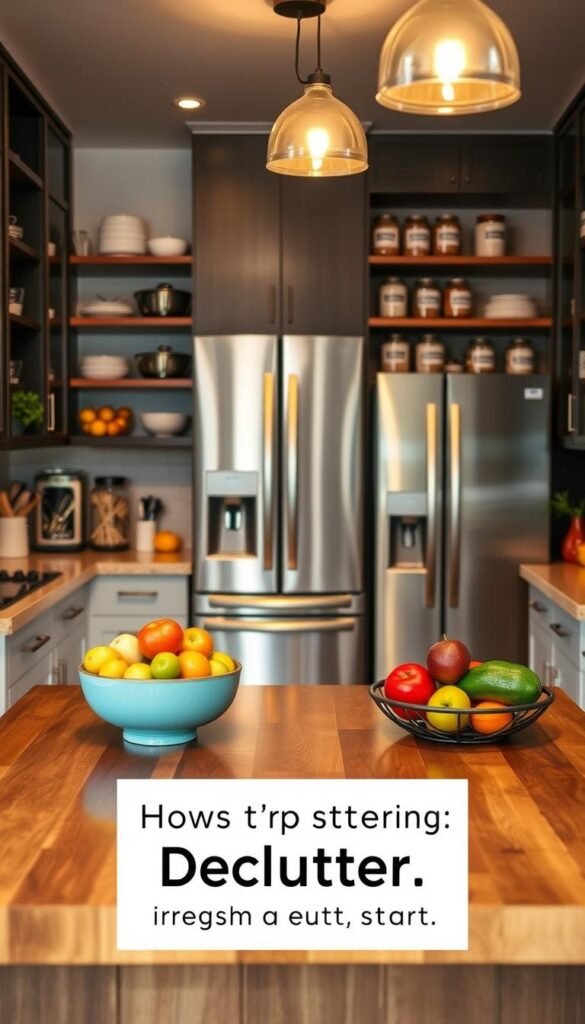
Clear the sink and surrounding counters. Toss cracked takeout containers and mystery lids. Replace stained sponges and recycle worn dish brushes.
Rotate mugs, bottles, and duplicate tools. Keep your top three. Label shelves so things return to the same spot.
Pantry purge list
Remove stale chips, opened grains without dates, expired spices, and duplicate oils you never reach for. Date what you keep. Practice first-in, first-out.
Group by use: breakfast shelf, baking bin, snack zone. Clear containers with simple labels reduce visual noise and speed decisions.
Fridge and freezer toss guide
Discard dressings past their date. Toss leftovers older than three to four days. Remove slimy greens and unknown sauces. Wipe shelves with warm water as you go.
In the freezer, let go of ice-crusted meats, unlabeled tubs, and freezer-burned produce. Keep a simple list on the door to help you use what you have.
Cookware safety: when it’s time to replace
If nonstick pans show scratches, throw away and replace. Scratches can flake into food and trap bacteria, says Tracey Brigman, associate director at the National Center for Home Food Preservation. Jason Reese, co-founder at Wagner Reese, notes scratched coatings may harbor particles.
Warped pans can wobble and cause burns or uneven cooking. Skip older unknown nonstick or ceramic pieces. They may contain lead. Choose even-heating, non-reactive pans that clean easily. Keep only what you use weekly.
- Weekly: quick fridge check and label new items.
- Monthly: deeper pantry sweep and cookware review.
“Ease of cleaning helps prevent bacteria buildup.”
Bedroom and Closet: Clothes, Linens, and Little Things
Pull out coats, boots, and blankets so you can see what truly fits your life. Start gentle. Work in 10–15 minute bursts. Keep choices fast and kind.

Closet edit: winter clothing and basics
Bring winter pieces forward. Try on anything that looks uncertain. Keep what fits and feels good now.
One-in, one-out helps maintain space. Alyssa Gautieri, Good Housekeeping senior gifts editor, uses this rule for winter clothing and boots.
Dresser top and nightstand reset
Clear surfaces. Keep a tray for keys, lip balm, and a book. One candle is enough.
Nightstand: remove receipts and dead pens. Add a small box for chargers and a single notebook. A five-minute evening reset makes mornings calmer.
- Boots and shoes: release pairs that hurt or are badly scuffed. Wipe and donate good pairs.
- Coats and accessories: keep one favorite per type. Use hooks and baskets for easy grabs.
- Linens and blankets: keep two sheet sets per bed and two throws you love. Donate extra to a charity or animal shelter.
- Robes and rags: keep one robe. Cut towel-like robes into rags and store in a labeled bin.
- Bags and totes: limit to those you use weekly. Donate extras to a thrift or pantry that accepts totes.
“Small, regular checks keep clutter from building back up.”
| Task | Quick action | Follow-up habit |
|---|---|---|
| Closet edit | Try on 10 items. Keep 3. | Weekly 10-minute review |
| Dresser top | Clear and keep one tray | Daily five-minute tidy |
| Linens & throws | Sort to two sets per bed | Monthly donation run |
| Robes & rags | Keep one robe; cut extras into rags | Label rag bin for cleaning use |
Bathroom Basics: Simple Toss List
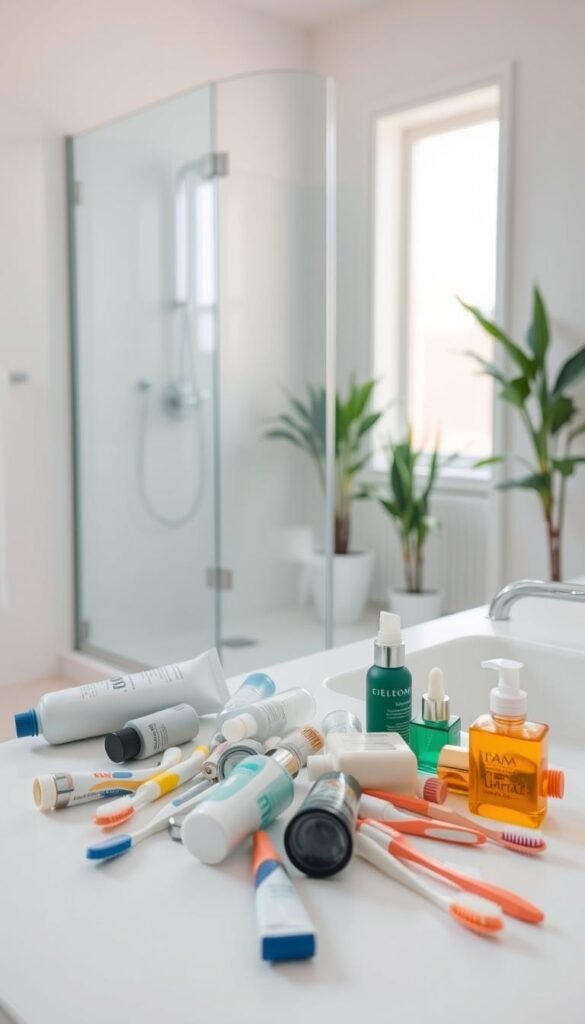
Start small in the bathroom so you gain visible calm fast. A short sweep clears a lot. Use a box for donate, one for recycle, and one for trash. Move with kindness. Keep what you touch daily.
Expired and empty items
Check dates on sunscreen, acne treatments, and prescriptions. If something is past its label date, follow safe disposal and throw away expired meds per instructions.
- Discard dried-up mascara and old lip balm.
- Toss leaky shampoo and bottles that irritate your skin.
- Combine duplicates. Keep one open body wash and label the newest.
- Cut frayed towels into rags. Recycle cardboard packaging.
- Clear hair ties that snap, broken clips, dull razors, and dead trimmer batteries.
Countertop calm: one soap, one lotion, one daily product bin. Everything else goes in a labeled basket under the sink.
“Short, steady care saves your space and your nerves.”
Quick routine: two-minute wipe each day. Weekly ten-minute drawer sweep. Monthly medicine check. These small steps free up your time and keep the bathroom usable.
Entryway and Living Areas: Daily Flow Reset
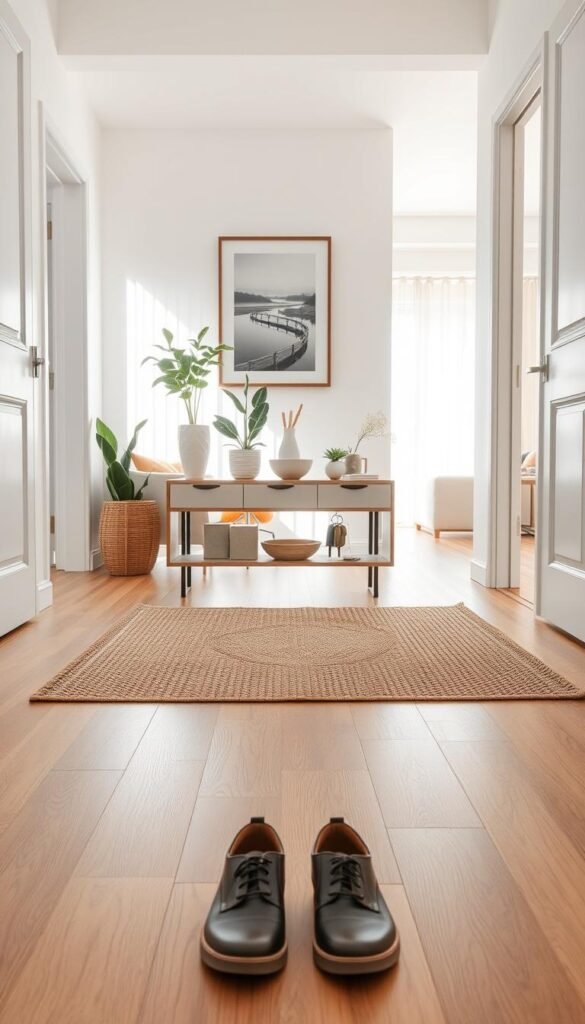
A few gentle stations near the door make daily comings and goings smoother. Small systems cut morning friction. They also make evenings calm.
Entryway catchalls
Create one tray for keys and sunglasses. Add a hook per person for coats. Use a small bin for mail.
Label each spot. Clear labels keep the whole household on the same page.
Living room soft goods
Limit throws to two favorites. Keep pillows you actually fluff and use.
Donate extra blankets in good condition to a charity or animal shelter. Fewer items mean easier weekly cleaning.
Cables, chargers, and random wires
Test cords quickly. If a charger is frayed or no longer matches your devices, throw away or take it to e-waste recycling.
Label the cords you keep. Use Velcro ties and a small box for spares. One spare per device is usually enough.
- Bag station: Fold usable totes into a narrow bin. Donate extras to a thrift store or pantry.
- Remote zone: One caddy for remotes. One basket for controllers. Everything has a home.
- Evening two-minute tidy: Fold throws. Clear cups. Return remotes. A short ritual resets the room.
- Weekly door sweep: Recycle flyers. File important mail. Return stray shoes to closets.
“Little stations take minutes to maintain and save you time every day.”
| Station | Quick setup | Weekly habit |
|---|---|---|
| Entry tray | Tray + hook + small mail bin | Five-minute door sweep |
| Bag bin | Fold totes into a narrow bin | Donate extras to thrift or pantry |
| Tech box | Labelled cords + Velcro ties | Monthly tech check and tidy |
Throw Away Today: The 50-Item Checklist
Start with a short checklist that splits quick wins from deeper cuts so you can make steady progress.
Work in small sets. Pick five items. Set a 10–15 minute timer. Stop when it rings. This keeps decluttering gentle and doable.
Ten-minute items
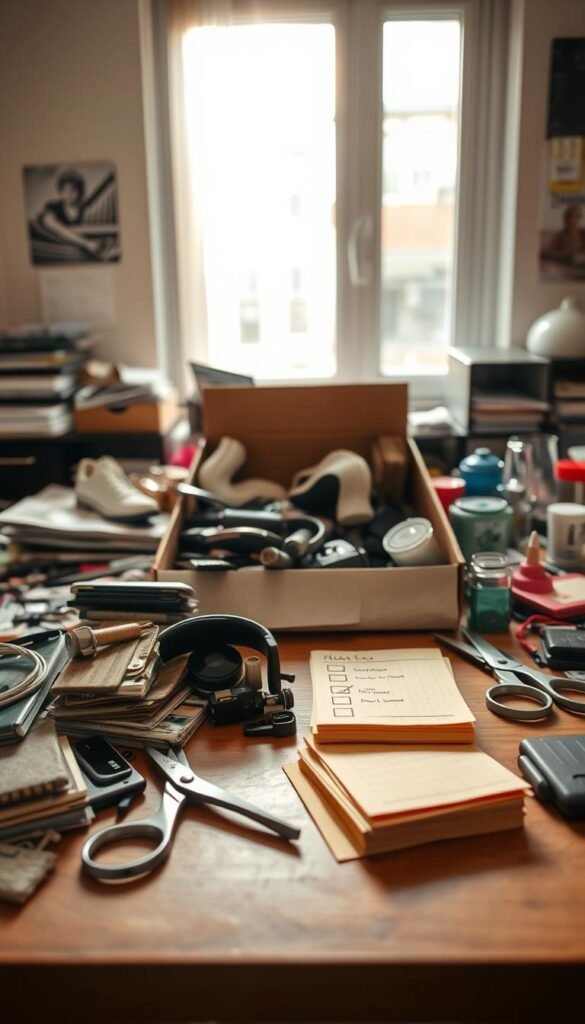
These are fast wins you can clear in a single burst. Do five per space: kitchen, pantry, fridge/freezer, bathroom, bedroom/entry.
- Expired condiments, slimy greens, mystery leftovers older than four days.
- Freezer-burned veggies, cracked takeout containers, orphaned lids.
- Worn sponges, dried-up pens, junk mail piles.
- Incompatible phone chargers, frayed cables, dead batteries.
- Leaky bottles, expired sunscreen, old prescriptions per label guidance.
Deeper cuts when you have more time
Save these for a longer session. They make a big difference but need more attention.
- Scratched nonstick skillets and older unknown nonstick or ceramic pans. Experts warn scratches can flake and harbor particles. Replace damaged cookware for safety and cleanliness.
- Warped pans, bent baking sheets, extra mixing bowls, duplicate tools you never use.
- Spices older than two years, rancid nuts, stale snacks, duplicate oils.
- Holiday decor not used this season, extra reusable bags, throw blankets you do not use (donate clean ones).
- Old chargers for devices you no longer own, instruction manuals available online, unused makeup over a year old.
“Small, steady steps free space and save you time.”
| Category | Quick wins (5) | Deeper cuts (5) | Exit plan |
|---|---|---|---|
| Kitchen | Cracked containers; orphan lids; worn sponges; dried towels; mystery jars | Scratched nonstick pan; warped fry pan; extra bowls; duplicate utensils; bent baking sheet | Donate usable items; recycle plastic; replace unsafe pans |
| Pantry | Stale chips; old spices; duplicate oils; torn snack bags; unlabeled jars | Spices >2 yrs; extra baking mixes; duplicate appliances; unopened bulk you won’t use; expired seeds | Donate unopened nonperishables; compost stale food where possible |
| Fridge/Freezer | Expired condiments; slimy greens; 4+ day leftovers; freezer-burned packs; wobbly containers | Unlabeled tubs; old frozen meats; duplicate sauces; defrost & clean drawers; clean seals | Plan a meal for soon-to-expire items; toss safely per guidelines |
| Bathroom & Bedroom | Empty candles; leaky bottles; old makeup; broken clips; stretched socks | Robes never worn; extra throws; duplicate sheet sets; travel-sized clutter; unused toiletries | Donate clean textiles; dispose of meds per pharmacy rules |
Make this a weekly ritual. Put one donation bag in the car. Keep a recycling bin by the door. Look up local e-waste options for cords and batteries.
Small rhythm: five items now. One focused room per week. In a month, every part of your home feels lighter.
Conclusion
, A small step today can change how your home feels tomorrow. You do not need a perfect plan. Ten minutes is enough. Pick five items. Set a timer. Start now.
Keep systems simple. One-in, one-out. First-in, first-out. Place three exit bins by the door. Use clear labels that anyone can follow. These small habits make upkeep easy.
Use steady rhythms. Two-minute daily resets. A weekly donation drop. A monthly shelf sweep. Simple consistency brings calm and saves you time.
Let your home support you. Keep what you use and love. Release the rest with care and purpose. If you need an editor’s nudge, choose five and go. Lightness grows with each small choice.
FAQ
What is the purpose of the "What to Throw Away Today (50 Things)" list?
The list gives clear, gentle targets to help you clear space fast. It focuses on common clutter items across home zones. You can use it on a ten-minute sprint or a longer declutter session. It’s practical and designed to reduce decision fatigue.
How do I start if I feel overwhelmed?
Begin with the “Start Here: A Calm Plan to Let Go.” Follow a few simple steps. Set a timer for 10 minutes. Pick one surface. Sort into keep, donate, recycle, and trash. Move slowly. Give yourself permission to stop when you need to. This keeps progress soft and steady.
What are the simple steps before I begin?
Clear a small zone first. Gather boxes or bags. Label them. Turn off distractions. Breathe. Work in short bursts. Celebrate small wins. Repeat daily or weekly. This creates a calm routine rather than a big, stressful event.
What does the "one-in, one-out" rule mean?
When you bring a new item into your home, let one similar item go. It helps maintain balance. It’s gentle and realistic. Use it for clothes, cookware, and soft goods. This rule prevents slow re-cluttering and supports sustainable habits.
What are quick wins in the kitchen?
Start with expired food, duplicate gadgets, single-use items, and old takeout containers. Clean one drawer or cabinet. Remove mismatched lids. These actions free counter and shelf space fast. They also make meal prep calmer.
What should I include in a pantry purge?
Check expiry dates first. Toss stale snacks, open bulk items past freshness, and products you no longer use. Group like items. Label shelves. Move older items to the front so they get used. This reduces food waste and saves time when cooking.
How do I decide what to toss from the fridge and freezer?
Use a simple rule: if it’s past its safe date or has off smells or freezer burn, let it go. Keep a running list of meal plans to use remaining items. Defrost and organize by type. This makes it easier to see what you have and what to plan for.
When should I replace cookware for safety?
Replace nonstick pans when the coating flakes. Swap out warped pots or cracked handles. Discard seriously scratched plastic bowls that leach when heated. For knives, hone or replace if damaged. Safe cookware makes cooking easier and keeps you protected.
How do I edit my closet without overwhelm?
Start with a seasonal edit. Pull winter or summer pieces and sort into keep, mend, donate, and recycle. Focus on basics you wear often. Try items on if budget allows. Keep only what fits your life now. Small, regular edits beat big overhauls.
How do I reset a dresser top and nightstand?
Remove everything. Keep only essentials like a lamp, a book, and a glass of water. Return items mindfully. Use a small tray for daily items. Clear surfaces each evening to maintain calm mornings. This creates restful bedrooms.
What bathroom items should I toss first?
Expired skincare, old makeup, and empty bottles are top priorities. Check sunscreen and medication dates. Recycle plastic where possible. Keep a small bin in the bathroom for quick checks. This reduces clutter and health risks.
How do I handle entryway catchalls?
Create zones for keys, mail, and bags. Use hooks, trays, and a small basket for quick deposits. Empty the basket daily. Make decisions about incoming items at the door to prevent buildup. This keeps daily flow smooth.
What should I do about living room soft goods?
Fold blankets and stash extras. Donate worn pillows. Keep only throws you use. Store seldom-used items elsewhere. A few cozy pieces create warmth without clutter. This keeps your main living space calm and welcoming.
How do I manage cables, chargers, and random wires?
Collect and label every cord. Test and keep only what works and you use. Recycle broken or obsolete chargers. Use small organizers to tidy the rest. This reduces frustration and tech clutter.
What are ten-minute items from the 50-item checklist?
Quick items include single socks, expired snacks, old receipts, duplicate utensils, and dried-out markers. These take moments and boost momentum. They are perfect for short, daily wins.
What deeper cuts can I make when I have more time?
Tackle sentimental boxes, full wardrobes, and long-neglected storage. Sort thoroughly. Photograph keepsakes you can’t keep. Plan donation drop-offs. These efforts free significant space and lighten mental load.
Can I donate usable items rather than trash them?
Yes. Donate gently used clothing, cookware, and home goods to local thrift stores like Goodwill or The Salvation Army. Many shelters accept household items. This extends an item’s life and supports community needs.
How do I know when to recycle vs. trash vs. donate?
Recycle clean materials like paper, cardboard, glass, and some plastics. Trash damaged, unsanitary, or non-recyclable items. Donate items in good condition with usable life. Local municipal guidelines help. When unsure, check your city’s recycling rules.
How do I keep clutter from returning?
Build soft systems. One-in, one-out helps. Weekly five- or ten-minute checks work wonders. Create dedicated spots for daily items. Share responsibilities with household members. Small habits maintain calm over time.
Where can I get more help if I’m still stuck?
Reach out to a professional organizer or search local community groups for decluttering workshops. Look for bloggers and platforms focused on simple, sustainable home systems. You don’t have to do it alone. Support makes the process kinder and easier.