
Weekly Cleaning Schedule You Can Actually Stick To
You have a lot on your plate. You want a calm home without the pressure. Small systems can change your life. Gentle habits make caring for your house feel light and steady.
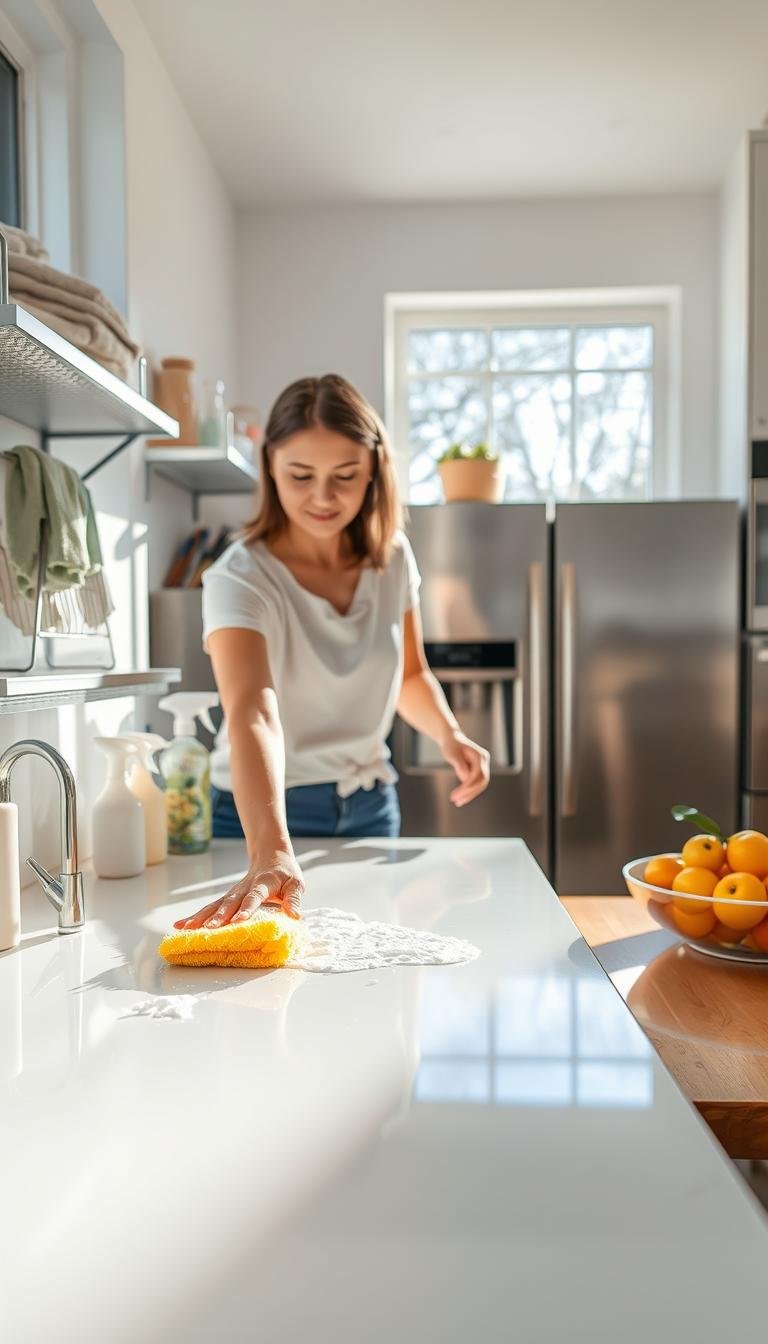
Keep it simple. Do a little each day. Pick one focus area per day. Tie the task to something you already do. For example. Make coffee. Then spend ten minutes on the kitchen counters.
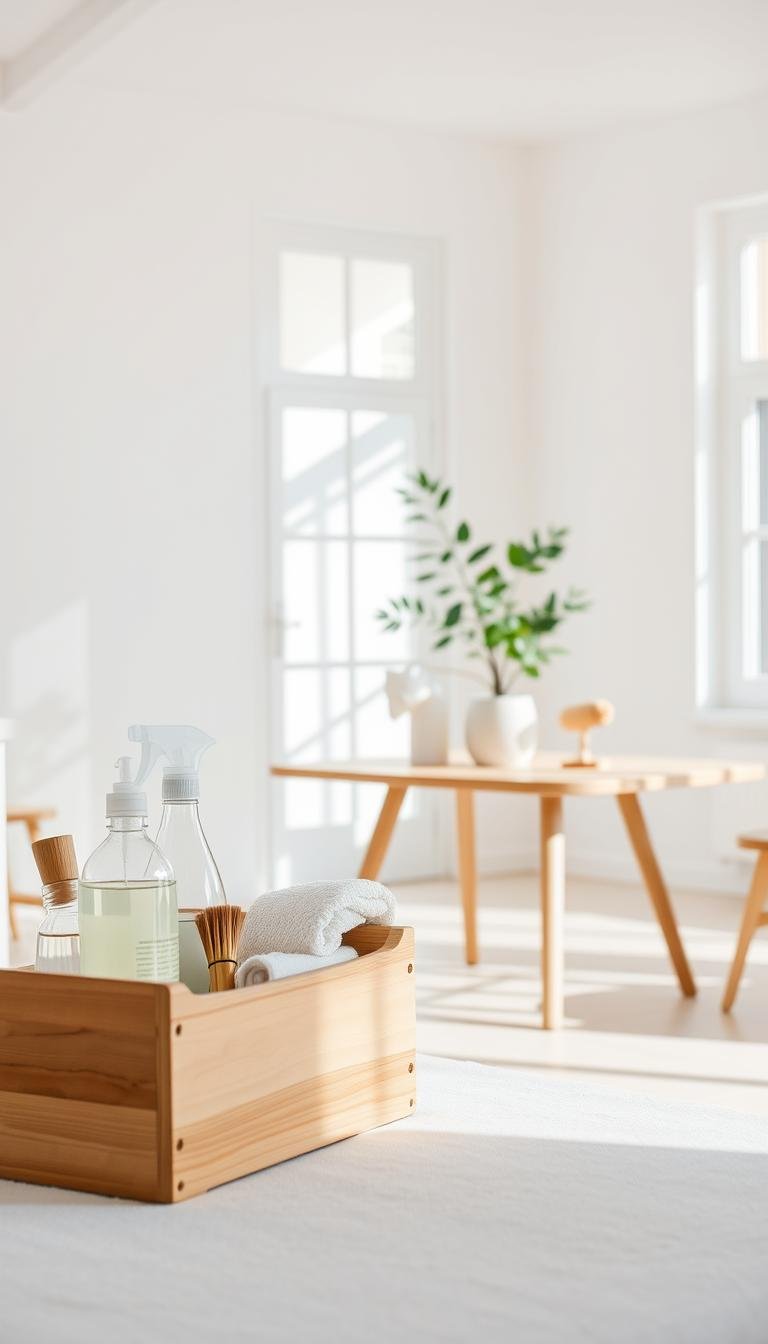
Try a 10–15 minute nightly tidy. It stops clutter from piling up. Use a small caddy with safe basics. Skip harsh chemicals. Choose habits that fit your real week.
We’ll give short checklists and room-by-room examples. You’ll get quick resets for kitchen, bathroom, bedroom, entryway, and closet. Start small. Celebrate tiny wins. This post will help you build a calm routine that lasts.
Key Takeaways
- Short daily habits plus one focus day keep work small.
- Ten minutes at night prevents morning mess.
- Tie tasks to existing routines like coffee or wind-down time.
- Use a simple caddy and gentle supplies.
- Room-by-room quick resets make progress visible and kind.
A calm start: set your intention and keep it simple
Start with one clear intention. Choose a small aim for your home this week. Calm surfaces. Clear floors. Soft routines.
Pick a promise you can keep most days. Five minutes in the morning. Ten minutes at night. That is enough. Name the time. Morning person? Do a quick reset after breakfast. Night owl? Do it before bed.
Tie the task to a habit you already have. Make coffee. Then tidy one counter. This removes decision fatigue. Keep supplies together in a small caddy. Grab and go saves time and reduces friction.
- Protect a tiny block of time on your calendar. Treat it like any other part of your day.
- Write one short list. Three things max. Do them. Then stop.
- Start where you stand. Clear one counter. Wipe one sink. Small things shift the feel of the room.
| Intention | Time to Spend | Link to Habit |
|---|---|---|
| Calm surfaces | 5 minutes | After morning coffee |
| Clear floors | 10 minutes | Before bedtime |
| Soft routines | 5–10 minutes | After lunch or winding down |
Your quick-start system for a realistic weekly routine
Choose a short block of time that feels doable most days. Pick 10, 20, or 30 minutes. Consistency beats intensity. Protect that slot like any important appointment.
Pick your “just-right” time block
Choose one block. Try 10 minutes if mornings are tight. Try 20 or 30 if you prefer a deeper reset. Put it on your phone. Let it anchor the week.
Batch by zone or task to reduce effort
- Zone day: handle all bedrooms in one go.
- Task day: dust every room at once.
- Fewer setups. Fewer supplies. Less friction.
Gather a small cleaning caddy you can carry
Keep microfiber cloths, an all-purpose spray, a glass cloth, and a scrub brush. A toilet brush stays in the bathroom. A portable caddy saves steps.
Create room task lists you’ll actually do
- Keep each list to five items or fewer.
- Kitchen: clear counters, load dishes, wipe appliances.
- Bedroom: make bed, dust nightstand, quick floor pass.
Add a 10-minute nightly tidy to anchor the habit
A short nightly tidy helps you get home to calm mornings. Put things away. Reset the sink. Load the dishwasher. Small wins build a steady routine every day.
| Block | Minutes | Best for |
|---|---|---|
| Quick | 10 | Daily touch-ups |
| Moderate | 20 | Room resets |
| Deep | 30 | Batch tasks |
Daily gentle habits that make cleaning lighter
A few gentle rituals each day make upkeep feel light and doable. These small acts save you time and lower stress. They are quick. They are kind. They help you keep momentum without a lot of effort.

The five-minute morning: bed, sink, counters
Five minutes sets the tone. Make the bed. Wipe the bathroom sink. Clear and wipe one kitchen counter. Do these steps right after your morning routine. They create calm surfaces you can enjoy all day.
The two-minute rule for quick wins
If a task takes under two minutes, do it now. Toss junk mail. Empty a small trash bin. Return a misplaced item. These tiny wins stop clutter from growing.
Laundry rhythm: prep in the morning, finish at night
Sort or load in the morning. Press start when you get home. Fold or swap loads at night while you relax. Use small hampers for lights, darks, and towels. This keeps laundry steady without big time blocks.
Entryway reset: shoes, bags, mail, keys
Set simple homes for things. Hooks for bags and keys. A tray for mail. A basket for shoes. Wear house shoes inside to reduce dirt. A clear entryway keeps floors cleaner and prevents lost items.
End each day with a short tidy. Ten minutes. Surfaces clear. Things in their place. These small habits add up and make your routine gentle and reliable every day.
Weekly Cleaning Schedule by simple days
Map your week with one gentle focus each day to keep tasks small and steady.
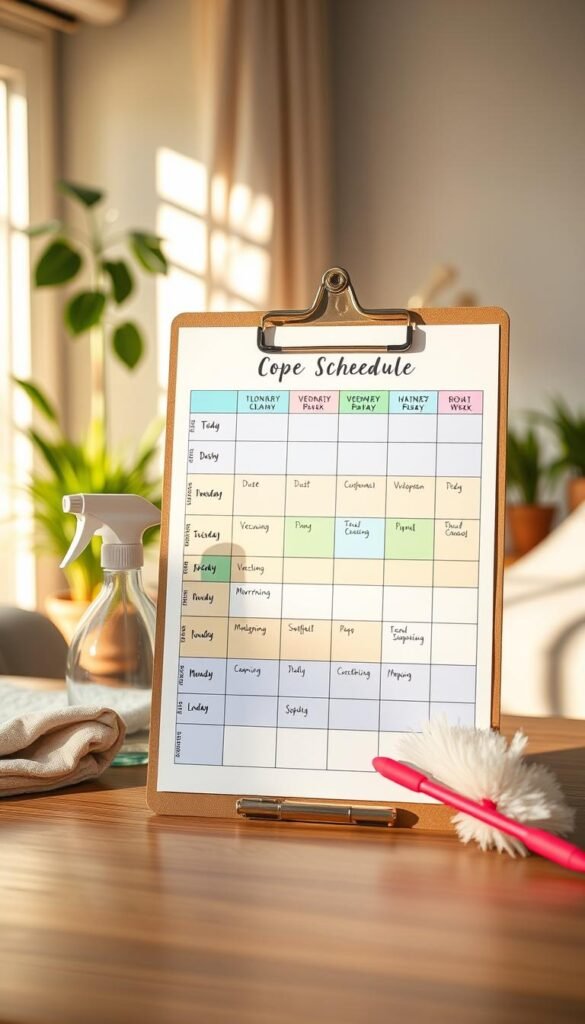
Keep each day short. Aim for 20–40 minutes. If life is full, do half and stop. You still make progress.
Monday
Dust all rooms. Start with tops. Then surfaces and touch points. Quick microfiber pass in the living room and bedrooms.
Tuesday
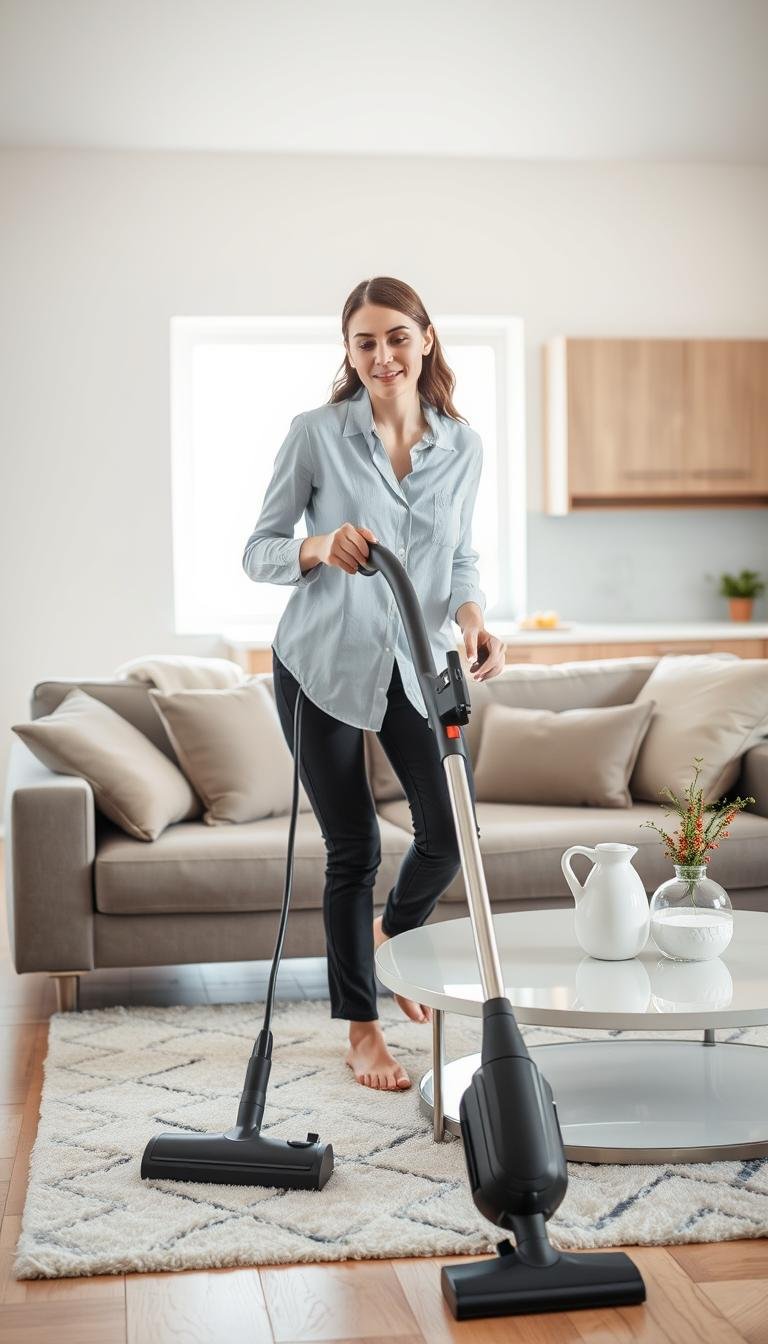
Vacuum rugs and high-traffic floors. Do halls, stairs, and the entry. Take one slow pass for better pickup.
Wednesday
Kitchen reset. Wipe appliances. Scrub the sink. Do a quick fridge check and toss anything off. Run the dishwasher if it’s full.
Thursday
Bathrooms day. Wipe mirrors and counters. Clean shower walls and tub. Scrub the toilet inside and out. Small steps. Big freshness.
Friday
Sweep and mop hard floors. Start in kitchen and bath. Use light, even passes. Your floors will feel cleaner going into the weekend.
Saturday
Laundry focus. Sheets, towels, and pet bedding. Fold and put away. A calm bedroom helps your whole week feel easier.
Sunday
Meal prep and a short calendar review. Do a light reset of hotspots. Look at the coming week and place your time blocks.
- Keep the plan flexible. Swap days when needed.
- Shift a task earlier for guests. Small moves keep stress low.
- Tie each day to a habit you already do. It removes decision fatigue.
Room-by-room examples for quick resets
A quick loop through rooms clears clutter and soothes the mind. Small steps work best. Do one room at a time. Use a timer. Stop when it dings.
Kitchen quick reset
- Clear counters. Put away extras.
- Load dishes and run or queue the dishwasher.
- Wipe appliances and the sink.

- Pick one shelf. Toss expired items.
- Face labels forward.
- Group snacks or baking items into one bin.
Bathroom refresh
- Wipe sink and faucet.
- Spot clean toilet seat and handle.
- Shake or wash mats. Quick mirror wipe if needed.
Bedroom reset
- Change sheets and fluff pillows.
- Dust nightstands and lamps.
- Quick floor pass with a vacuum or dry mop.
Closet calm
- Donate one item today.
- Rehang by type and color.
- Keep everyday pieces at eye level.
Entryway order & living room touch
- Shoes in a basket. Mail out. Keys on a hook.
- Fold throws. Straighten pillows. Wipe the coffee table.
- Use a small return bin for items that belong elsewhere.
| Room | Main task | Time | Quick tip |
|---|---|---|---|
| Kitchen | Clear counters, dishes, wipe | 10 min | Start by loading the dishwasher |
| Pantry | Sort one shelf | 5 min | Group like items in a bin |
| Bathroom | Sink, toilet spot clean, mats | 8 min | Keep wipes handy for quick touch-ups |
| Bedroom / Living room | Change bed linens, fold throws | 10 min | Do floors last: declutter, wipe, floors |
Use the same sequence every time: declutter, wipe, floors. Your brain relaxes when steps repeat. Progress over perfection. One small task each day keeps your home calmer.
Simple decluttering steps that support every clean
Start small: clear one tiny spot and feel the difference. Five minutes is enough. A short win reduces stress and saves you time later.
One small space per day: pick a drawer, a shelf, or a single surface. Set a timer for five to ten minutes. Touch things once. Sort into three piles: keep, donate, trash.
Keep-a-bag method works quietly. Keep a donation bag in a closet. When you decide an item is ready, drop it in. When the bag is full, take it to the car and let it go.

- Make a short list for the week of five tiny spots you can finish.
- Set a simple rule: broken, expired, or unused for a year—let it go.
- Use clear bins and easy labels so you see what you have at a glance.
Micro-decluttering during calls or short breaks builds steady progress. Less clutter means fewer cleaning tasks and a calmer home. Keep this routine soft and gentle. Celebrate the space you create.
Weekly, monthly, and seasonal cadence without overwhelm
Think in beats: a short weekly pulse, a monthly focus, and a seasonal sweep. This keeps chores small and steady. It helps you protect time and feel calm at home.
Weekly anchors
Keep a few steady anchors each week. Dust one day. Vacuum another. Tackle the bathroom on its day. Do floors on a set day. These small repeats form a simple weekly cleaning routine you can trust.

Monthly focus
Pick one focused task each month. Windows one month. Baseboards the next. Wipe down appliances another time. Time-box these efforts to 20–30 minutes. If more is needed, split the work across a day week.
Seasonal sweep
Plan a gentle deep clean each season. Spring and fall for closets and bedding. Summer for outdoor areas. Winter for storage checks. Rotate the list so nothing grows heavy.
- Cap sessions at 30 minutes. Hard stop.
- Pair tasks with life rhythms. Open windows on a sunny Saturday.
- Monthly laundry extras: wash comforters and clean the washer gasket.
| Cadence | Main focus | Time |
|---|---|---|
| Weekly anchor | Dust / Vacuum / Bathroom / Floors | 20–40 minutes |
| Monthly focus | Windows or baseboards or appliances | 20–30 minutes |
| Seasonal sweep | Closets, bedding, outdoor areas | Hours or split days |
Keep it flexible. Use your calendar to repeat reminders. Small, steady work keeps your house calm. A simple cleaning schedule like this makes upkeep feel light and doable.
Conclusion
Finish each day with one small task so the next morning feels lighter. A few minutes nightly and one focused day keep your home calm. Tiny acts add up every day.
Keep it gentle. Make the bed. Clear the sink. Run the dishwasher. Set a timer and stop when it dings. Protect your time for work and life.
Follow the simple weekly map: dust, vacuum, kitchen care, bathroom reset, a quick mop for floors, and a laundry load. Let Sunday help you place tasks around real life.
When days are full, do one thing only. A fast vacuum. Fresh towels. A short shower wipe. Progress matters more than hours. Your house will reflect the care you give, one day and one small task at a time.
FAQ
How long should each cleaning session take?
Aim for a time block that fits your life. Start with 10 to 30 minutes for most tasks. Short blocks reduce resistance. You’ll build momentum and feel calmer. Adjust as you learn what’s realistic for you.
When is the best time to do tasks like vacuuming or laundry?
Pick a consistent slot that won’t clash with family routines. Mornings work if you want a fresh start. Evenings suit those who prefer to reset before bed. For laundry, start a load in the morning and fold at night to spread the work gently.
What should go in a small cleaning caddy?
Keep a spray cleaner, microfiber cloths, a scrub brush, disposable wipes, and a lightweight duster. Add a pair of gloves and a small trash bag. A compact caddy keeps things simple and saves time.
How do I stop clutter from piling up in the entryway?
Create a simple entry routine. Designate hooks or a basket for shoes and bags. Sort mail once a day. Put keys in the same bowl every time. Small, repeatable moves prevent big messes.
What is the two-minute rule and how does it help?
If a task takes two minutes or less, do it immediately. Put dishes away. Wipe a spill. Toss junk mail. These tiny wins cut clutter quickly and keep your space calm.
How do I make a room task list that I’ll actually follow?
Keep lists short. Use three to five simple actions per room. Write them where you’ll see them. Use plain language and focus on what matters most. Small steps feel achievable and build confidence.
Can I fit this into a busy week with kids or full-time work?
Yes. Batch tasks by zone and use short time blocks. Involve family with clear, small jobs. Trade a 15-minute reset for 15 minutes of quiet later. The goal is steady progress, not perfection.
How often should I do deeper tasks like baseboards or windows?
Tackle those monthly or seasonally. Pick one focus per month. Spread chores across the year. This keeps big jobs manageable and prevents burnout.
What are gentle daily habits that actually make a difference?
Make your bed each morning. Wipe counters after meals. Sort laundry into baskets. Do a quick five-minute tidy before bed. These small routines ease the load for bigger clean sessions.
How do I keep momentum without feeling pressured?
Be kind to yourself. Celebrate small wins. Reduce task lists to what truly matters. Use gentle time blocks. When life gets busy, scale back rather than stop. Consistency, not perfection, creates a peaceful home.