Under-the-Sink Bathroom Organization
You’re busy. You want a calm, simple home that supports your day. Small routines can bring that calm back. Start with a five-minute reset and feel the difference.
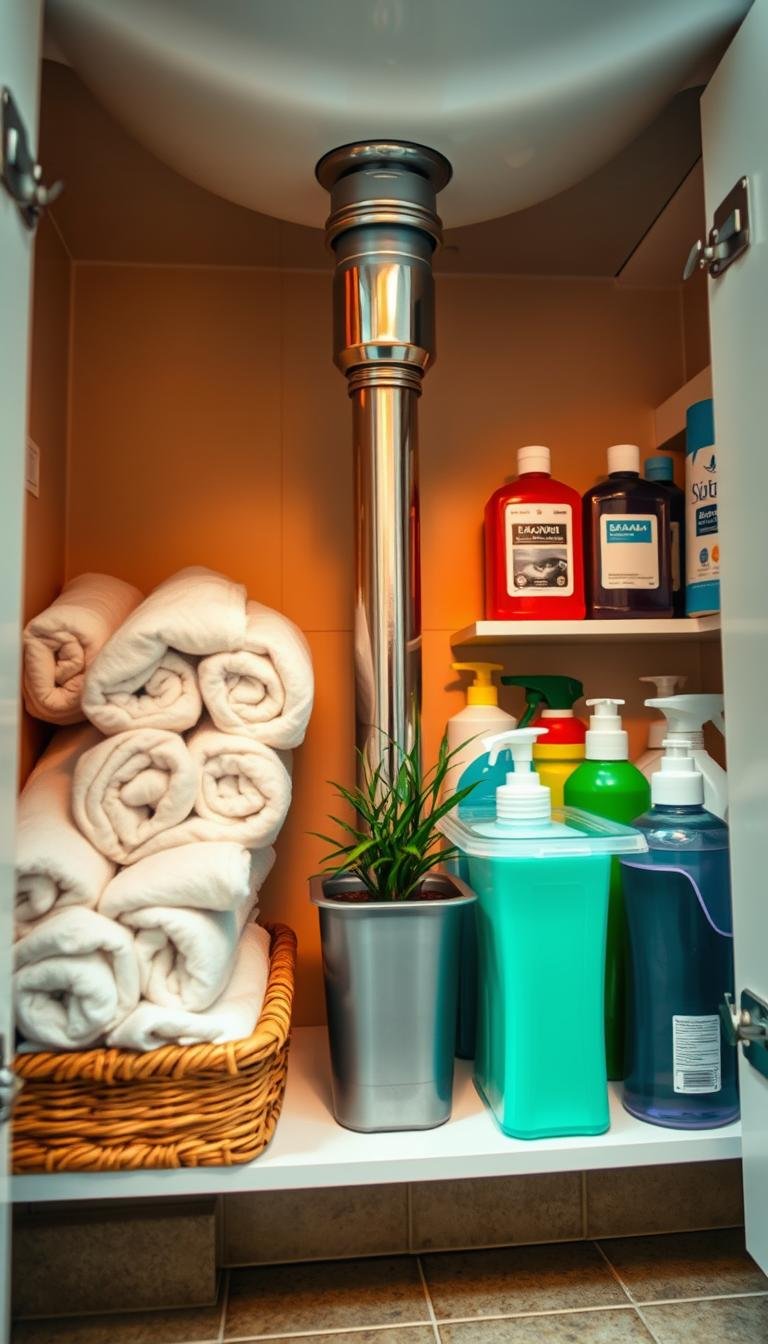
Work with the pipe, not against it. Use pull-out drawers, turntables, and door baskets to use every inch of space. Choose wipeable, water-safe bins so spills stay easy.
Set zones that match your routine. Keep only the items you use now. Label lightly and make returns quick.
Key Takeaways
- Start with a quick five-minute reset to clear obvious clutter.
- Use pull-out drawers and turntables to maximize tight spaces.
- Pick water-safe, wipeable storage to handle leaks and messes.
- Make simple zones that match your daily routine.
- Short habits—daily, weekly, monthly—keep things calm.
Start here: calm goals and a quick reset for your bathroom sink
Begin with a soft goal: a clear surface and easy reach. This small aim helps mornings flow. It keeps decisions gentle. It stops clutter from piling up.
Five-minute tidy:
Quick steps to feel better fast
- Toss trash and empties. Little work. Big lift.
- Wipe the base and doors. A clean surface resets the mind.
- Group like items together. Daily face and body care in front. Hair tools in one spot. Cleaning sprays in another.
- Keep only what serves your routine this week. Move extras to a linen closet or nearby shelving.
- Use a small box or tray to corral loose things so nothing drifts.
Simple placement tips
Place daily items up front. Backups live behind or in a separate cabinet or drawer. If space is very tight, pick three tiny categories: daily skin, daily hair, one cleaning product.
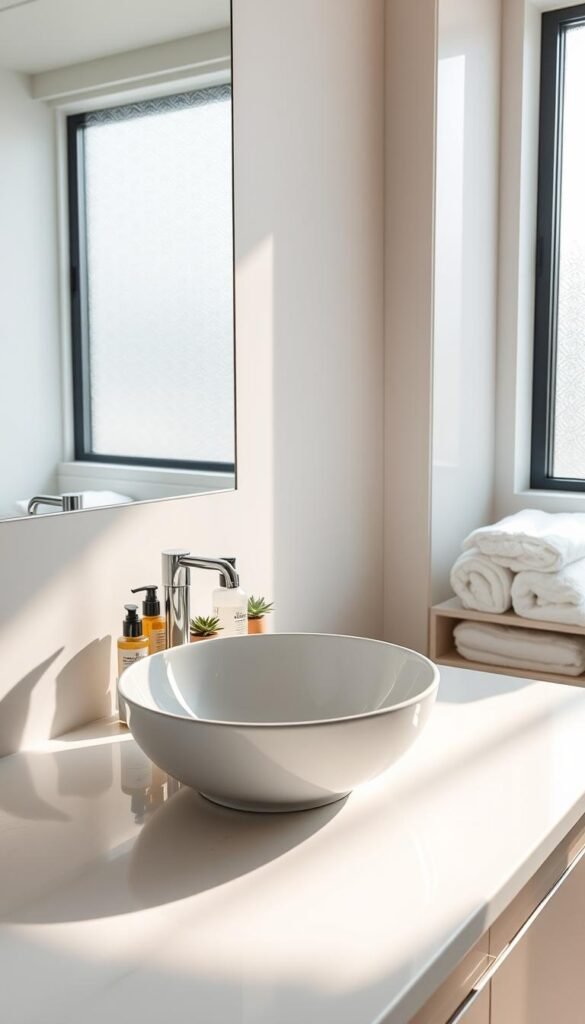
Pause. Breathe. This five-minute reset is real progress. You can build from here, one calm step at a time.
Under-the-Sink Bathroom Organization: a simple step-by-step setup
Begin by emptying the cabinet and making simple choices. Work in short bursts. You’ll feel progress fast.
Step-by-step system
- Empty the cabinet onto a towel. Wipe the base and sides.
- Sort into four piles: daily essentials, weekly use, cleaning supplies, backstock.
- Edit kindly. Toss expired products and duplicates you never reach for.
- Measure width, depth, and height. Note if the pipe is centered or offset.
- Choose fit: open-front bins and tiered drawers make the most of shelving and height.
Create simple zones. Daily items go in front. Hair tools and a heat-safe holder sit to one side. Cleaning products live at the back. Backups stack in clear containers or bins.
Label lightly with one or two words. “Daily,” “Hair,” “Cleaning,” “Backups.” Load by frequency. Leave a little space so you can slide your hand in without toppling things.
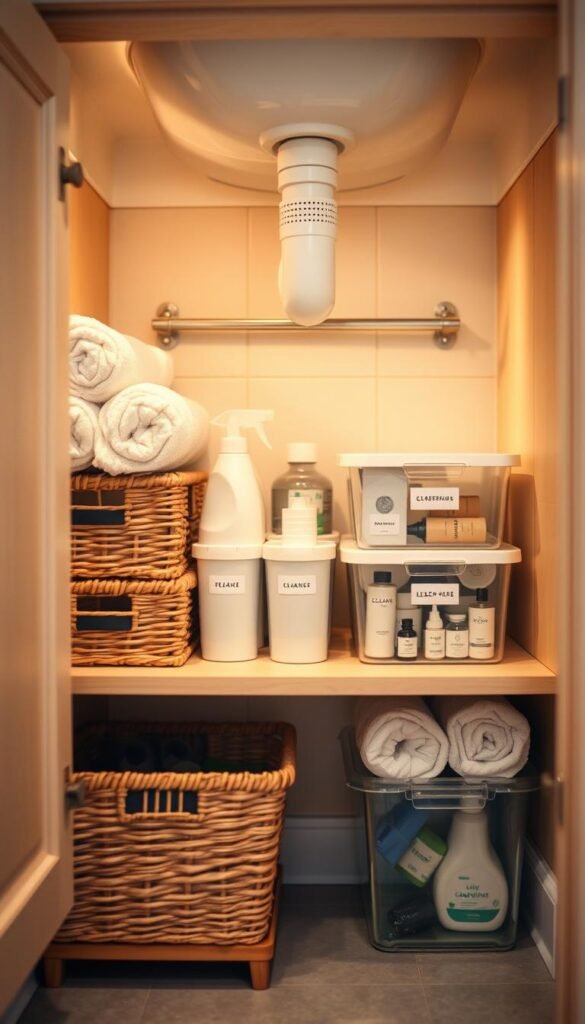
Pause and test. Open the door. Pull the drawer. Make sure nothing rubs the pipe. Small checks keep this system calm and useful.
Work with the pipe, not against it: smart cabinet layouts
Begin with a simple map of the pipe and the empty spaces around it. This small step makes planning calm and clear. It shows where storage fits and where it won’t.
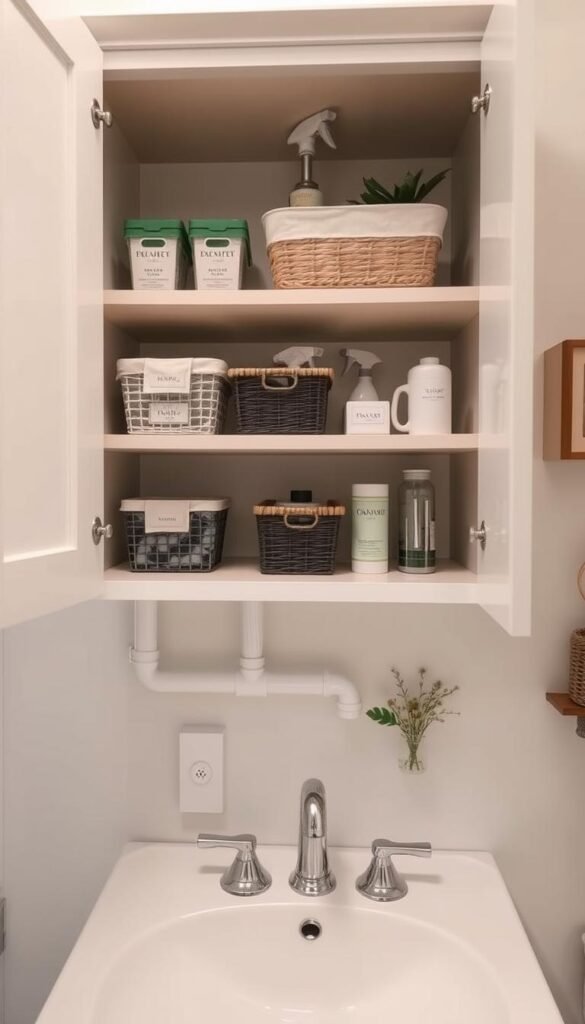
Modular drawers can be arranged around a centered or offset pipe. Pick different widths and heights so pieces “puzzle” together. Deep drawers that reach the back use the full cabinet depth and stop small items from getting lost in the shadow zone.
Expandable shelving and practical fits
Use expandable shelving over short gaps. Build only where it clears the plumbing. A Container Store expandable under-sink organizer is one example of adjustable shelves and drawers that work around plumbing voids.
- Map the pipe first. Sketch the cabinet and mark valves.
- Choose drawers that slide beside or under the pipe.
- Keep a finger gap around valves for quick access.
- Stack extra drawers on the wide side if the pipe is offset.
- Label fronts with one word. It helps fast returns.
“Make the cabinet serve you. Let the pipe be part of the plan.”
This simple way turns a plumbing challenge into a calm storage solution. You get a usable cabinet and easy daily reach to the items you use most at the sink.
Storage solutions that actually fit: drawers, baskets, and door space
Small, smart pieces can turn awkward cabinet gaps into calm, usable space. Choose items that match the shape and height of your cabinet. This makes daily routines quieter and faster.
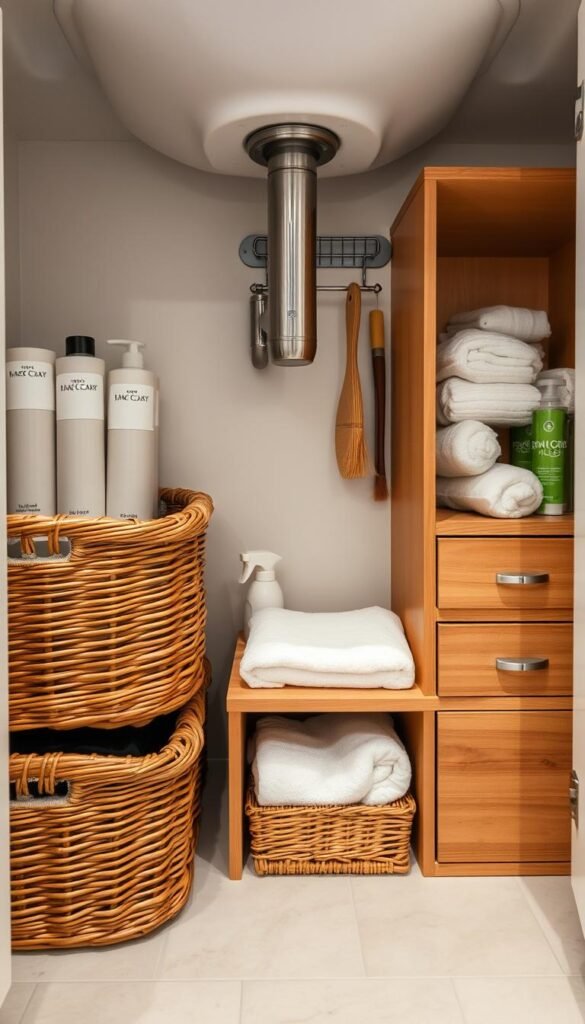
Tiered pull-out drawers to use full height and depth
Tiered pull-out drawers use the full cabinet height. They keep tall products upright and make the back reachable. A compact 2-tier unit fits beside pipes and holds pods, sponges, or spray bottles.
Over-the-door baskets and adhesive hooks
Use the door for extra space. Over-the-door baskets corral a hair dryer and brushes. Or add adhesive hooks inside the door for tools if you want a cleaner look.
Turntables and open-front bins
Add a turntable for fast grabs. OXO’s 16-inch turntable fits many bottles and wipes clean in seconds. Open-front stacking bins keep categories visible and stack to the top of shelves.
- Keep a small basket for extra toilet paper or rolled towels.
- Stop sliding with a dab of putty on corners.
- Label lightly: “Face,” “Hair,” “Cleaning.”
“Choose pieces that are easy to wipe. Quick care keeps the setup fresh.”
| Solution | Best for | Key benefit |
|---|---|---|
| Tiered drawers | Tall bottles, deep cabinet | Full height use; easy reach |
| Over-door baskets | Hair tools, cloths | Frees shelf space; keeps items visible |
| Turntable & bins | Daily products | Fast access; cleanable surface |
Materials that handle moisture and spills
Pick materials that shrug off spills and make quick cleaning easy. Choose pieces that resist water and wipe clean in seconds. This keeps daily care calm and simple.
Plastic and acrylic for easy cleaning
Plastic and acrylic
Plastic and acrylic bins resist moisture. They wipe clean when a bottle leaks. Clear containers also let you see when products run low.
Plastic drawers glide smoothly. A plastic turntable rinses quickly after soap or pod spills. These options help you maintain a tidy cabinet with little fuss.
When to avoid wood and woven bins
Wood and woven materials
Wood and woven baskets look warm. But moisture can warp or stain them. Keep these farther from valves and pipes or use them only in dry spots.
Metal pull-out frames and hair tool holders work well if they have a water-resistant finish. If a product tends to leak, set it in a small tray to catch drips.
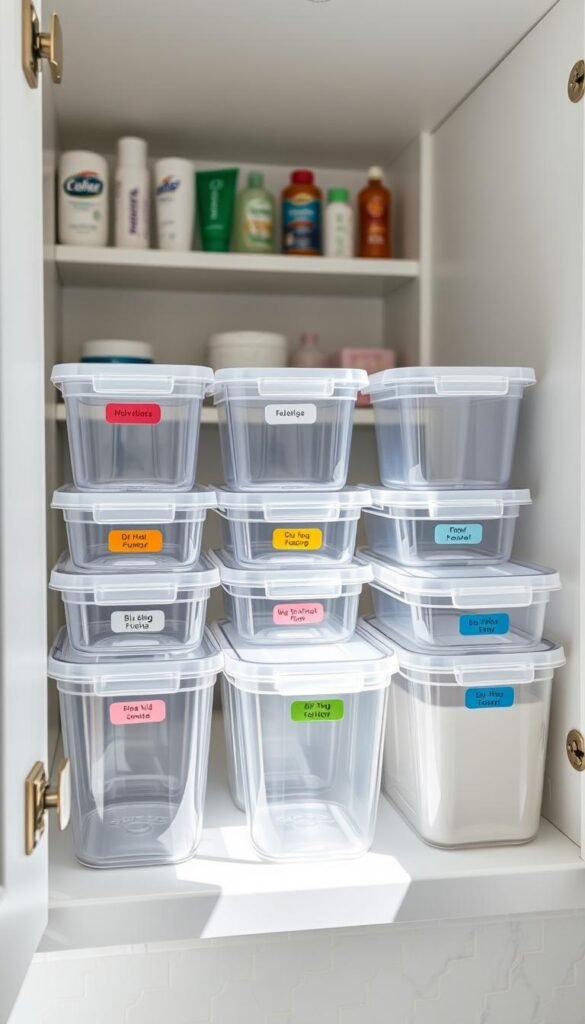
- Choose plastic or acrylic for quick wipe-downs.
- Avoid wood and woven near plumbing to prevent damage.
- Use metal frames with water-resistant finishes to avoid rust.
- Keep a spare cloth in a small bin for fast cleanups.
“Calm materials. Calm care. Less worry about messes.”
Routines that keep it tidy: daily, weekly, monthly
Gentle, repeatable steps make daily care feel simple. These short routines protect your calm. They take little time. They keep your cabinet working for you.
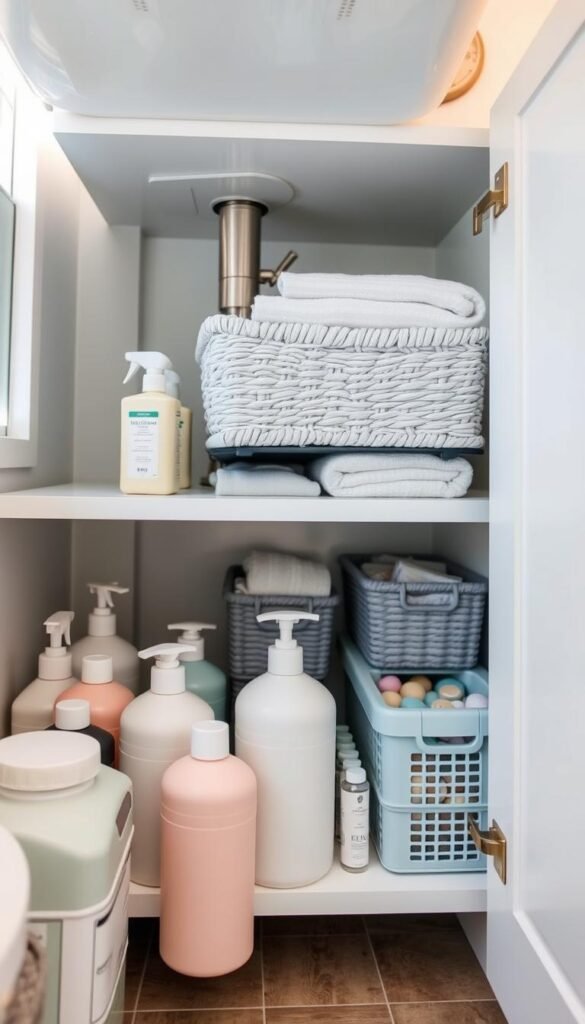
Daily: 60-second sink storage reset
After you brush, return two or three items to their zones. Close a drawer. Wipe a small splash. Touch the drawer front to anchor the habit. This 60-second reset keeps the space tidy with almost no effort.
Weekly: quick inventory and surface wipe
Spend two minutes once a week. Scan for empties and toss them. Pull a drawer out. Reset anything out of place. Wipe the front edge and door pulls. Note one or two refills to add to your shopping list to avoid overbuying.
Monthly: declutter backups and relabel zones
Take five minutes each month. Edit backups and combine partial products when it makes sense. Recycle excess packaging. Refresh simple labels if a zone shifted. If space feels tight, remove one category for a week and see if you miss it.
- Keep a tiny caddy: one spray, one cloth, one scrub pad for grab-and-go care.
- Aim for “good enough.” Small, steady care beats a perfect overhaul you never start.
- Trust the system. Short routines keep your bathroom calm and usable.
Room-by-room examples to copy
Small swaps in each room make daily care faster and calmer. Try one idea and see how it feels. These setups are simple and copy-ready.
Bathroom vanity cabinet
Drawer inserts for small items
Add drawer organizers with squared corners and grippy feet so inserts do not slide. Group floss, razors, and small tubes. Label the front lip for quick returns.
Pedestal sink
Slim shelf, tray, and a jar
Skip a skirt. Add a slim side shelf and a small tray for daily items. Fold a few towels and tuck a clear jar for cotton balls. Clean and calm.
Linen closet overflow
Labeled bins and a lazy Susan
Store backstock in stackable lidded bins with clear labels. Put a lazy Susan on a high shelf for refill bottles you use less often.
Entryway guest bath
Visible towels and simple baskets
Keep hand towels visible. Add one small basket for extra toilet paper. Make it friendly for guests.
Bedroom en suite and pantry crossover
Hair tools and bulk backstock
Use an over-the-door hair tool holder inside the cabinet to keep cords tidy and tools safe. Move bulk packs to the pantry so the bathroom space holds only daily essentials.
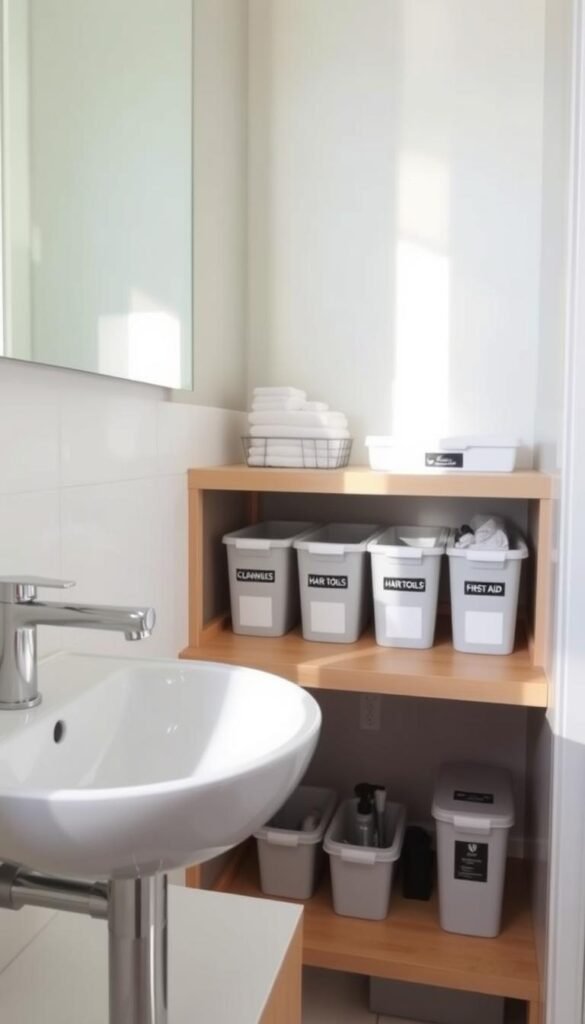
- Kitchen under-sink: roll-out drawers for pods and a small caddy for sprays.
- Closet vanity nook: one narrow bin for makeup backups and a small turntable for bottles.
- Small apartments: stack two narrow bins under the sink and use the door for a shallow basket.
- Family bath: color-dot labels for each person so shared drawers stay calm.
Your minimalist toolkit: organizers that make home care easy
A tiny, trusted toolkit makes daily care feel effortless. Start with a few reliable pieces that are easy to clean and built to last. Keep the set small. Repeat what works across rooms.
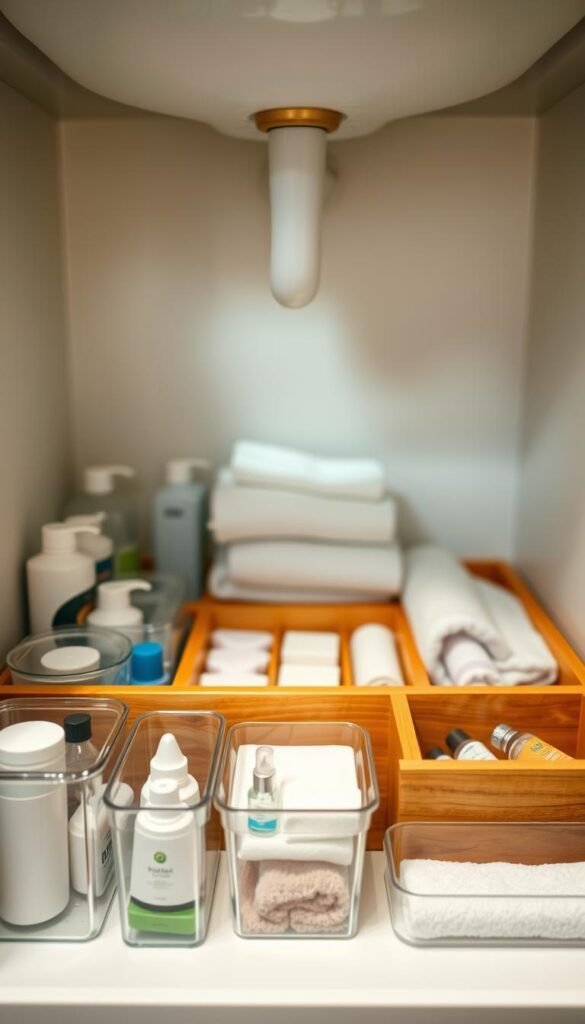
Sink storage basics: stackable bins, drawer organizers, labels
Choose two stackable plastic bins and one set of drawer organizers. Add a small label pack. Clear bins let you see bottles and pads at a glance. This prevents duplicates and saves money.
Sliding units and roll-out shelves for deep cabinets
Add one sliding drawer or roll-out shelf for deep reach. Pick a sturdy frame that glides and wipes clean. Consider an expandable shelf kit to build around pipes and reclaim unused space.
Caddies for grab-and-go cleaning supplies
Keep a compact caddy with a handle. One spray. One scrub. One cloth. Grab it and go for quick touch-ups.
Hair tool holders for dryers, irons, and brushes
Mount a hair tool holder on the door or use an over-the-door model. It keeps cords neat and tools safe. Simple Houseware and Polder offer good tested picks.
- Favorites: The Container Store starter kit, Madesmart 2-Tier, Rebrilliant pull-out, OXO turntable, YouCopia roll-out.
- Keep the toolkit minimal. Repeat what works. Storage stays calm and life gets easier.
“Small, sturdy pieces are the best way to keep daily life calm.”
Conclusion
Start with one drawer and let the rest follow. Pick a single spot. Clear it. Put back only the things you use each day. This small step builds calm fast.
Keep it soft. Use water-safe storage and a couple of clear shelves so items stay visible. Touch a few things daily. Close a drawer. Wipe once. That simple care keeps chaos away.
Label lightly. Teach each person their zone. Move a bin or swap a shelf if life changes. You measured, you zoned, and you chose pieces that fit. Now enjoy a calmer bathroom and gentler mornings. Start today. One drawer. One small win.
FAQ
How do I start a quick reset for my bathroom sink area?
Start small. Remove trash and expired products. Wipe surfaces with a gentle cleaner. Group items by type—daily, backstock, cleaning, and hair tools—so you can see what you actually use. This takes five minutes and calms the space.
What should I keep and what should I toss when decluttering?
Keep what you use in your current routine. Toss expired toiletries and empty bottles. Move bulk backups to a different spot, like a pantry or linen closet. If something hasn’t been used in six months, consider donating or recycling it.
How do I measure my cabinet to choose the right storage?
Measure width, depth, and height. Note the pipe location and any obstructions. Measure inside the cabinet at several points in case it’s not perfectly square. Use those numbers to pick drawers or bins that fit around plumbing.
How can I work around a centered or offset pipe?
Choose modular drawers or pull-outs that leave a gap for the pipe. Slim side shelves fit beside pipes. Expandable shelving can bridge uneven spaces. The goal is to use dead space without blocking access to plumbing.
What storage types work best for deep cabinets?
Tiered pull-out drawers and sliding units make deep cabinets usable. Stackable bins and open-front containers keep items visible. Turntables help with bottles. Over-the-door baskets use unseen space on cabinet doors.
Which materials hold up best under a sink?
Plastic and acrylic resist moisture and wipe clean easily. Look for water-resistant finishes. Avoid untreated wood or woven bins near pipes; they swell and grow mold when damp.
How often should I tidy the sink storage?
Do a 60-second reset daily—return items to their zones. Weekly, wipe surfaces and check inventory. Monthly, declutter backups and relabel if things shift. Short, regular routines keep the space calm.
How can I store hair tools safely under a cabinet?
Use heat-safe holders or a door-mounted organizer. Keep cords neatly coiled with clips or Velcro. Store tools in a ventilated caddy to avoid moisture buildup. Never place hot tools directly in enclosed plastic.
Can I store backups like shampoo and toilet paper in this cabinet?
Yes, but keep bulk backups in a nearby linen closet or pantry if space allows. Reserve the cabinet for daily items and a small supply of backups. Label bins so you know what’s inside without digging.
What small organizers help with tiny items like cotton swabs and bobby pins?
Drawer organizers with small compartments, clear jars, and divided trays work well. Open-front containers help you see contents. Label lightly to make returns simple for everyone in the home.
Any tips for keeping everything tidy without making it perfect?
Aim for functional calm, not perfection. Use simple zones and clear containers. Make daily tidy a short habit. Celebrate small wins. Systems should support your life, not add pressure.