Towel & Linen Storage Ideas
Your days are full. Your home deserves calm. Small systems bring big relief. Gentle routines fit busy lives and ease the daily rush.
This short guide offers simple wins. You’ll get room-by-room tips for bathroom, bedroom, kitchen, and more. We focus on small spaces and practical moves like back-of-door racks, clear bins, labeled baskets, and shelf spacing that works.
Start with one shelf. One basket. One label. Easy folds and pull-out drawers keep linens neat. Adjustable shelving and slim baskets add capacity without stress.
We keep steps gentle. No perfection required. Just soft habits you can repeat in minutes. Your home can feel calmer today.
Key Takeaways
- Begin small. One shelf or basket makes a difference.
- Use vertical space and back-of-door solutions for compact areas.
- Label and separate sheet sizes to reduce morning stress.
- Adopt two-minute resets and simple weekly refreshes.
- Choose adjustable shelves or pull-out drawers for flexible use.
- Keep what you use; donate or recycle the rest.
Calm start: simple goals for linen organization
Choose one tiny task to win the day. Keep it short. Ten to fifteen minutes is enough. A small win builds momentum.
Pick one room or one shelf. The bathroom or a hallway linen closet works well. Clear one basket or fold one pile. No perfection. Just progress.
- Set one calm goal: clear a single area in ten minutes.
- Sort simply: Keep. Donate. Recycle.
- List essentials: sheets, guest items, and towels you use most.
- Choose a way to group: by room or by category.
- Protect the time: put a short block on your calendar.
Stop when the time is up. Celebrate the tiny win. Repeat the same steps in the next closet tomorrow.
| Goal | Time | First Room |
|---|---|---|
| Clear one shelf | 10–15 minutes | Bathroom |
| Sort into three piles | 10 minutes | Hallway closet |
| Label a bin | 5 minutes | Bedroom closet |
Towel & Linen Storage Ideas for small spaces
A ten-minute sweep can free up surprising vertical space. Do a quick pass. Remove trash. Group like items. You just made visual room without heavy decisions.
Quick wins that take under 15 minutes
Set a 10-minute timer. Tackle one shelf or the top of a closet shelf. Fold towels in thirds to make narrow stacks. Keep a small guest bin for quick hosting.
Use vertical solutions: shelves, hooks, and door racks
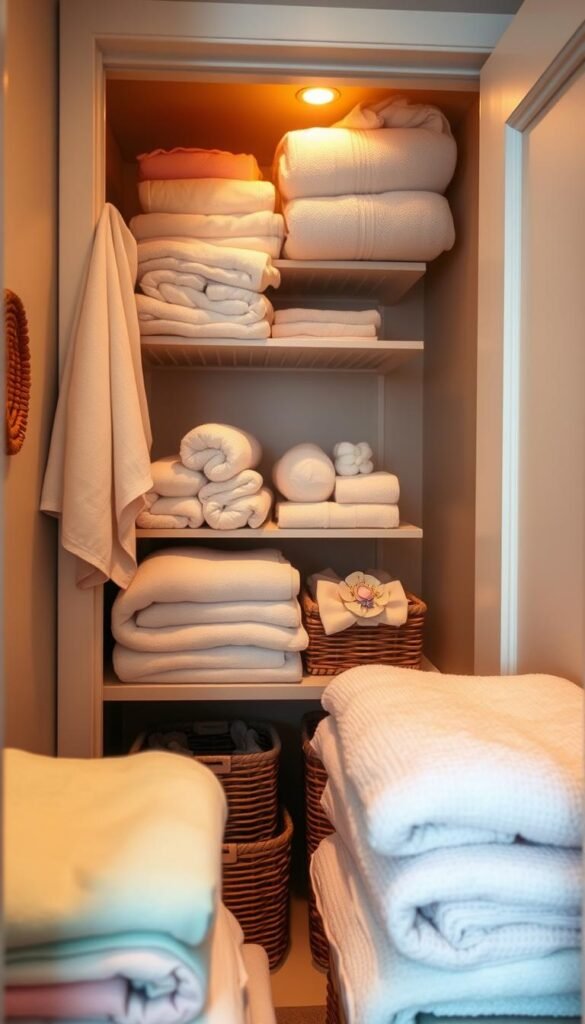
Mount two or three hooks for robes and hair tools. Add an over-the-door rack if you lack a dedicated linen closet. Clear, stackable bins and wire baskets lift items off the floor and use height well.
- Slide a slim rolling cart beside the washer for toiletries and cleaning cloths.
- Label clear bins on the top shelf so you see low stock at a glance.
- Use soft dividers in bins to keep washcloths tidy.
| Action | Time | Best tool |
|---|---|---|
| Quick sweep and sort | 10 minutes | Basket or bag |
| Add over-the-door rack | 15 minutes | Door-mounted shelf |
| Install hooks | 5–10 minutes | Wall hooks or adhesive hooks |
Declutter first: a gentle, step-by-step reset
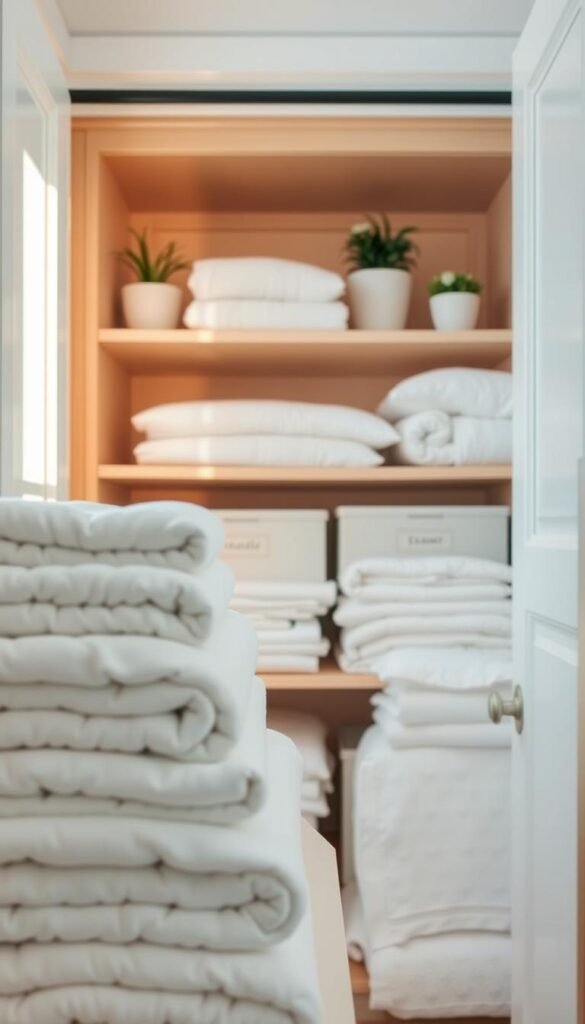
This is a calm reset you can finish in short bursts. Begin by emptying the closet so you can see every item at once. Seeing things helps your first choice. Move at a steady, kind pace.
Keep, donate, recycle: a simple sorting flow
Pull everything out. Place it on a bed or table. Group by type: bedding, bath pieces, cleaning cloths, and guest sets.
- Sort fast into three piles: keep, donate, recycle.
- Trust your first thought. No guilt. Just clear choices.
- Keep only what you use and can store neatly.
Wipe shelves quickly. Line them if you like. Then decide homes for each group. Backups go high. Daily items sit at eye level. Heavy baskets live low.
| Step | Time | Result |
|---|---|---|
| Empty the closet | 10–15 min | See all items |
| Sort into three piles | 10 min | Quick decisions |
| Bag donations | 5 min | Schedule drop-off |
Place a donation bag by the door. Schedule a drop-off this week. Recycle worn textiles through local programs. A small rhythm keeps the space calm and useful.
Make a home for every set: grouping and labeling
Give every sheet set a clear home so morning swaps are fast. A simple system keeps things calm. You and your family will know where to look.
Label shelves and bins so everyone can help
Use clear words. Put a visible label on each shelf and bin. Try tags like “Queen Sheets,” “Kids’ Towels,” or “Guest Linens.”
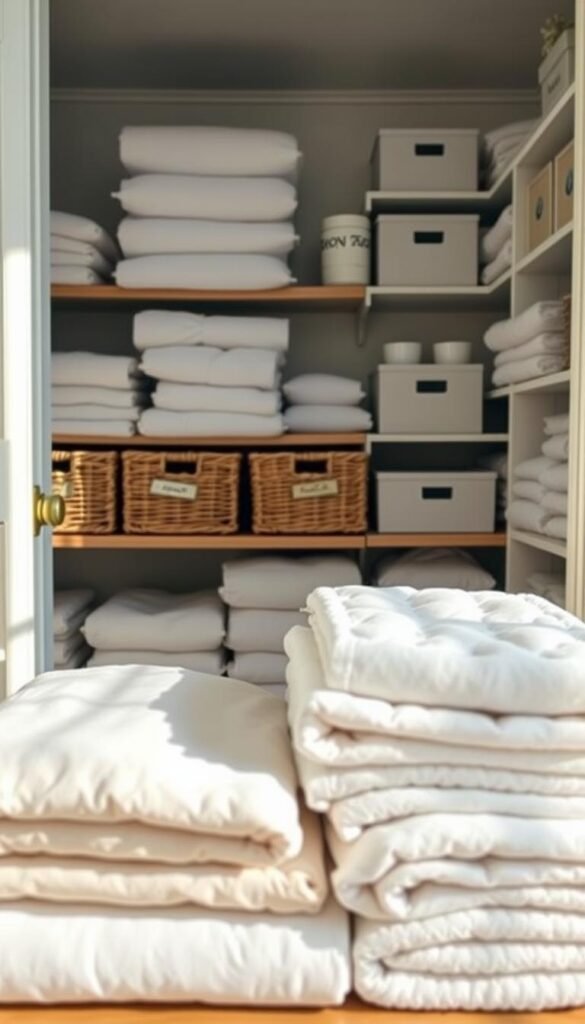
Keep daily items at eye level. Store backup sets higher. Lidded baskets work well to separate bed sizes.
Store sheets inside pillowcases to keep sets together
Fold flat sheets and extra pillowcases. Nest them inside the fitted sheet. Tuck the bundle into one neat package.
This keeps each set ready. No digging through mixed piles.
- Group by set so laundry day is faster.
- Use one bin per category: washcloths, hand towels, bath sheets.
- Add a small repair bin for loose buttons or hems.
- Keep one empty bin for rotation when laundry runs.
- Review labels monthly and update as needed.
Linen closet organization that actually fits your space
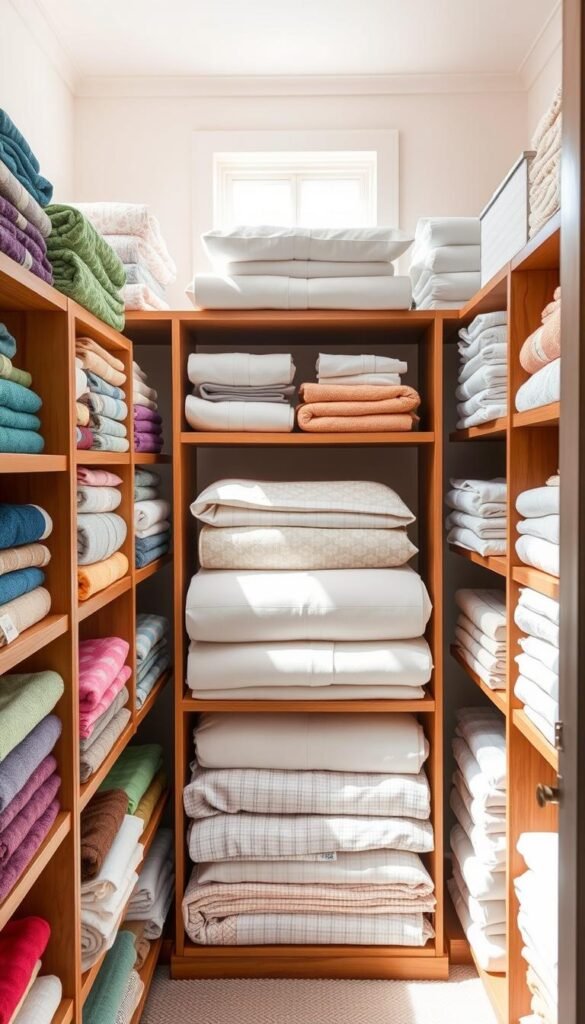
Measure your shelves first so every inch works for what you keep. A quick tape measure and a small plan prevent wasted space.
Adjustable shelves and pull-out drawers
Set shelf spacing between 10 and 18 inches. Aim for 10–12 inches for folded towels and 14–18 inches for pillows or bulky quilts. Leave one or two lower shelves clear for a rolling hamper or a large basket for laundry.
Recommended shelf spacing: 10–18 inches
Use shelf clips so you can tweak heights as needs change. Span wider for stacked sheets and narrower for hand towels. This simple sizing keeps items visible and reachable.
Clear, stackable bins for toiletries and small items
Choose bins that match the full shelf depth. Keep clear, stackable bins at eye level for toiletries and small items. Label the front so everyone knows what goes where.
- Add one or two pull-out drawers for hair tools, first aid, and small supplies.
- Use dividers on wide shelves to stop stacks from slumping.
- Store sheet sets in lidded baskets and label by bed size.
- Keep a labeled cleaning bin for easy trips between bathroom and bedroom.
| Feature | Recommended height | Best use |
|---|---|---|
| Lower shelf | 16–18 in | Rolling hamper or large basket for laundry |
| Middle shelves | 10–14 in | Clear bins for toiletries and small items |
| Upper shelf | 14–18 in | Bulky pillows, extra blankets, seasonal bed items |
| Pull-out drawers | Varies by depth | Hair tools, first aid, chargers, small items |
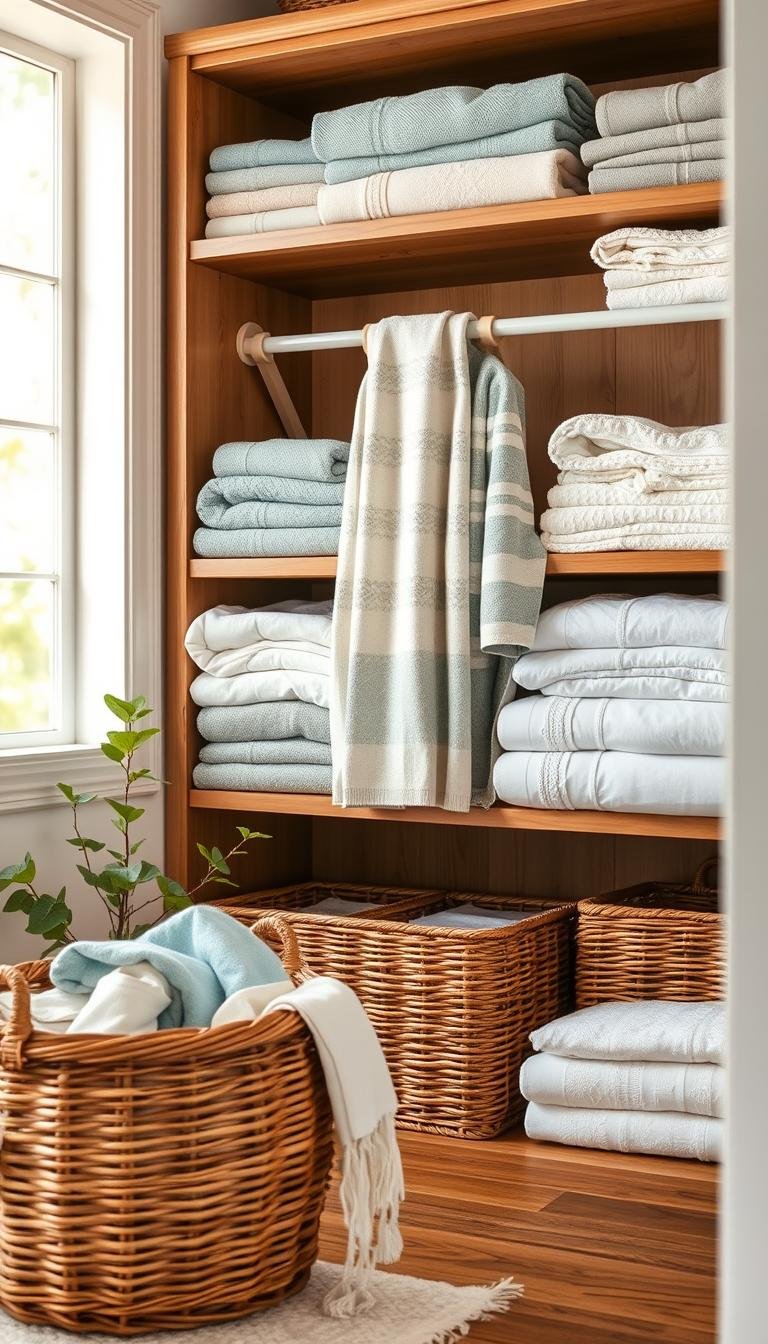
Bathroom towels: neat stacks, soft habits
A simple fold and a divider will save you time each morning. Keep a short routine. Small moves make the shelf calm and clear.
Fold in thirds; use dividers for tidy piles
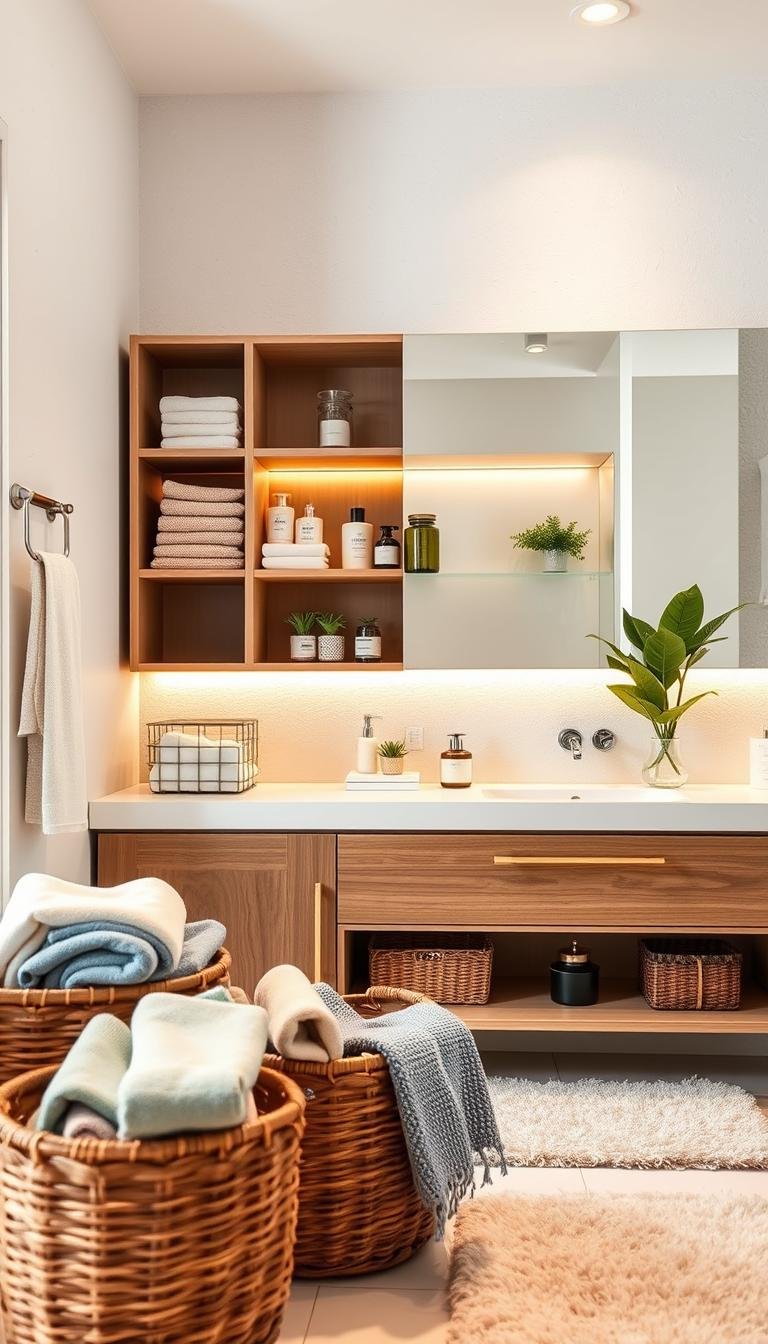
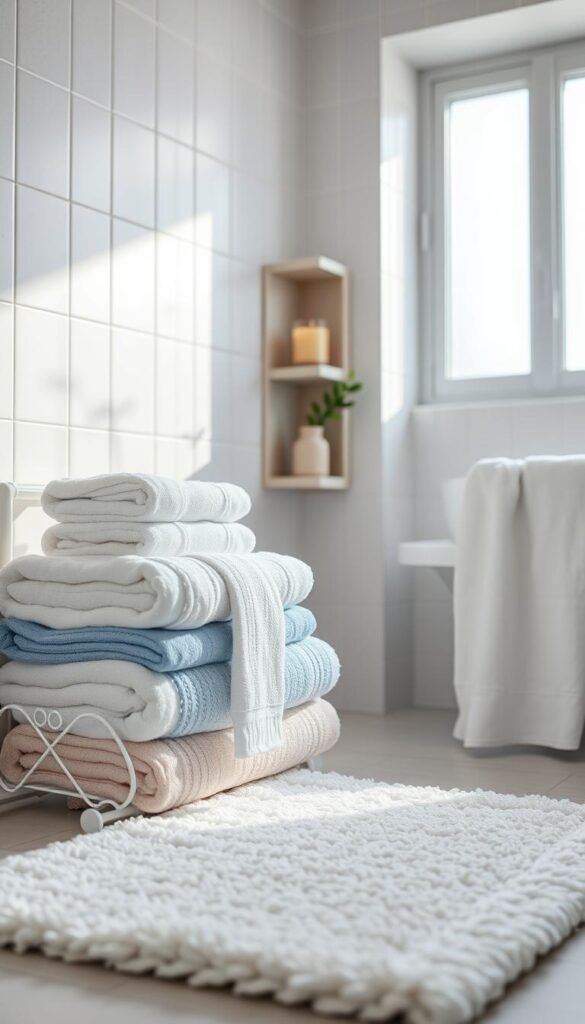
Fold bath towels in thirds, then in half. Stacks stay tight. They look neat and are easier to grab.
Slide simple dividers between stacks. The lanes stop tipping. You get steady piles even when you pull from the middle.
Hand towels and washcloths in easy-reach bins
Place shallow bins at arm height. Put hand towels and washcloths there for quick use. Label each bin. Labels help everyone return items correctly.
Keep a small clear bin of backup toiletries nearby. Add toothpaste, soap, and extra toothbrushes so restocking is fast.
- Two sets per person. One in use. One clean.
- Plush or guest towels go on a separate shelf in the linen closet or closet top shelf.
- Do a two-minute reset each night. Straighten stacks. Refill the small bin.
Bedroom and closet storage for sheets, blankets, and pillows
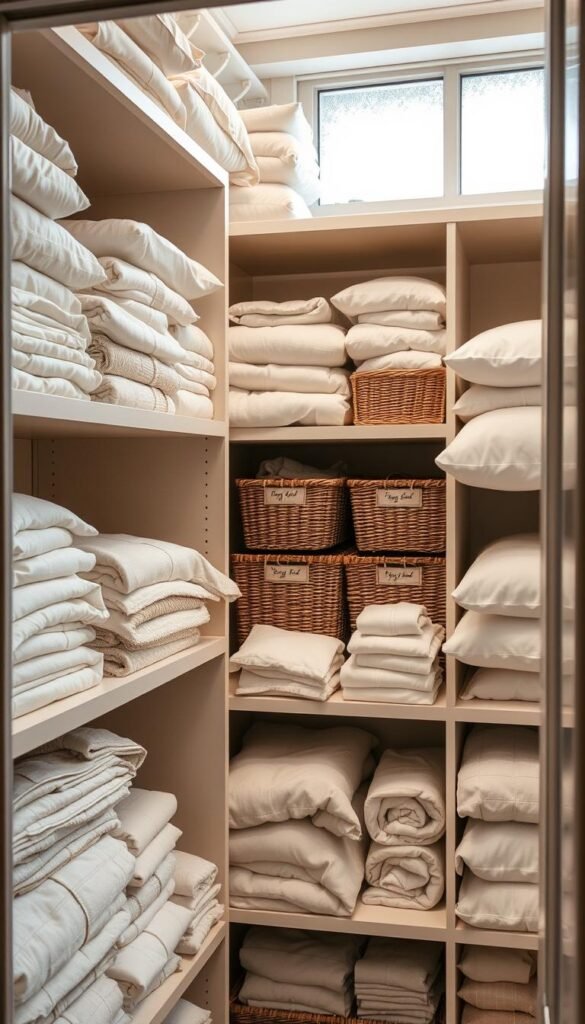
Give each bed its own labeled shelf so mornings stay calm. A clear spot makes finding the right set fast. Small labels remove guessing.
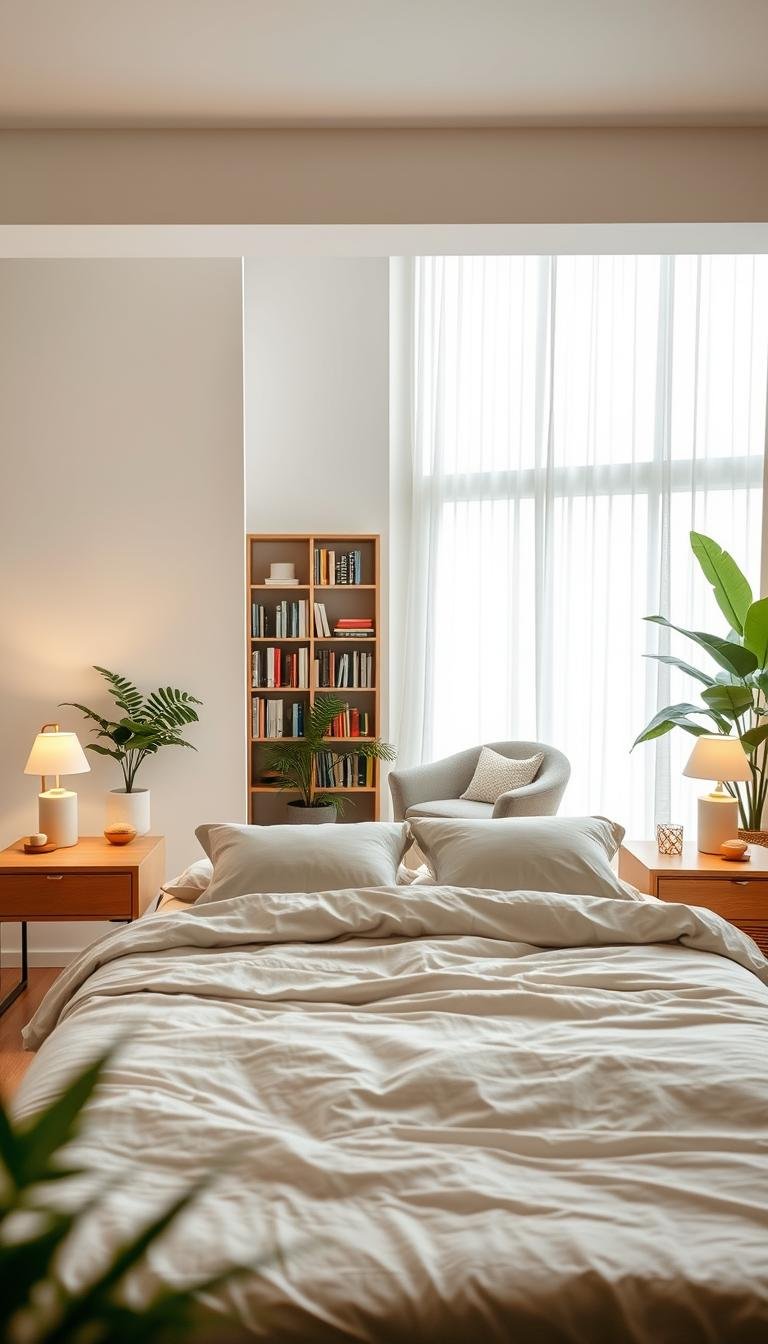
Keep sheet sets together. Fold a fitted, flat, and pillowcases into one neat bundle. Tuck bundles into a lidded basket by size or room. This prevents mixed piles and saves time.
Store bulky quilts and extra blankets on top shelves. They are light and best kept high. Use large handled baskets for duvets and guest swaps.
Add a breathable bin for delicate pillow covers. Zippers and trims stay safe. Slide a narrow basket on the closet floor for throws. It is easy to grab for movie nights.
- Assign one shelf per bed size and label it by room or size.
- Keep everyday sheets at eye level. Seasonal sets go higher.
- Place two sets per bed. Donate extras to free space and mind.
- Drop a small lavender or charcoal sachet in each basket to keep scents fresh.
| Home spot | Best items | Why it works |
|---|---|---|
| Eye-level shelf | Everyday sheets and set | Fast access for daily changes |
| Top shelf | Blankets, quilts, spare pillows | Light but bulky. Out of the way. |
| Floor basket | Throws and guest extras | Easy grab for guests and living room use |
| Lidded baskets | Separated sheet sizes | Prevents digging and keeps sets neat |
Entryway and guest-ready sets
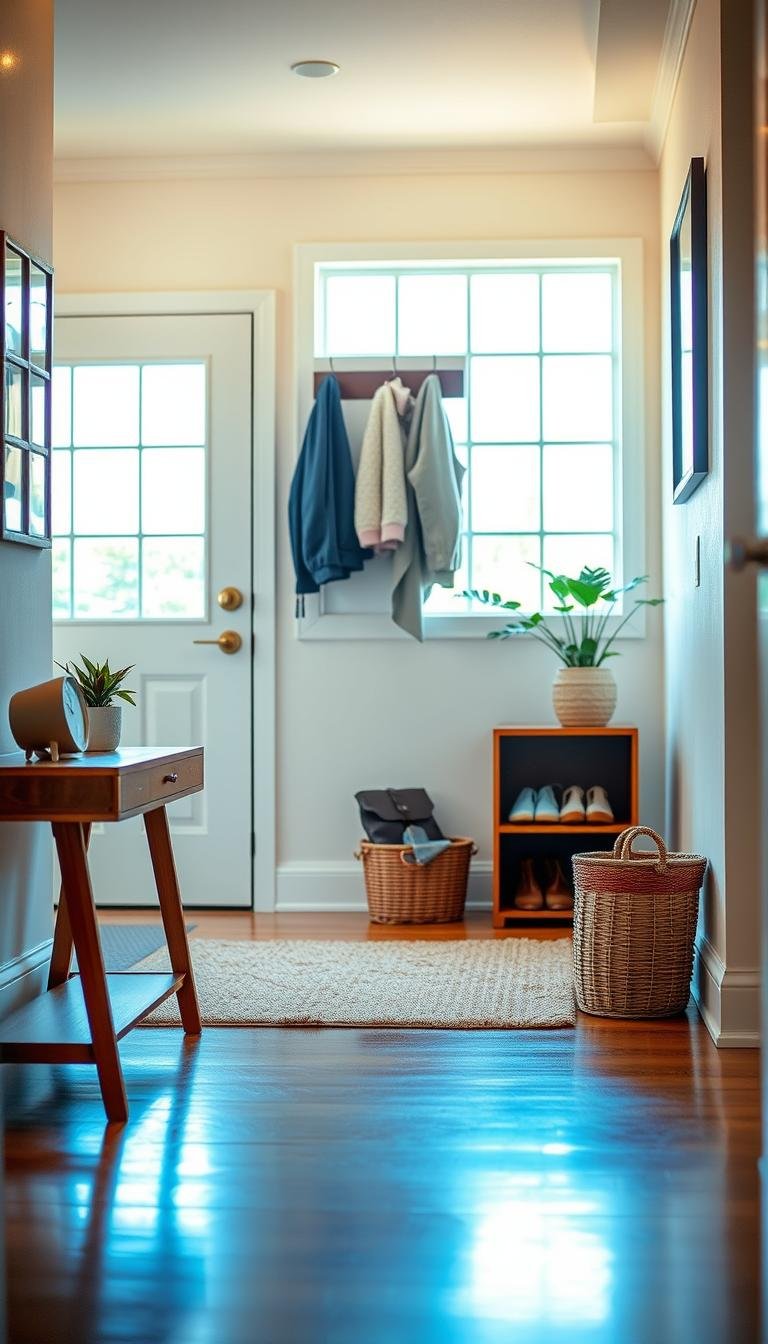
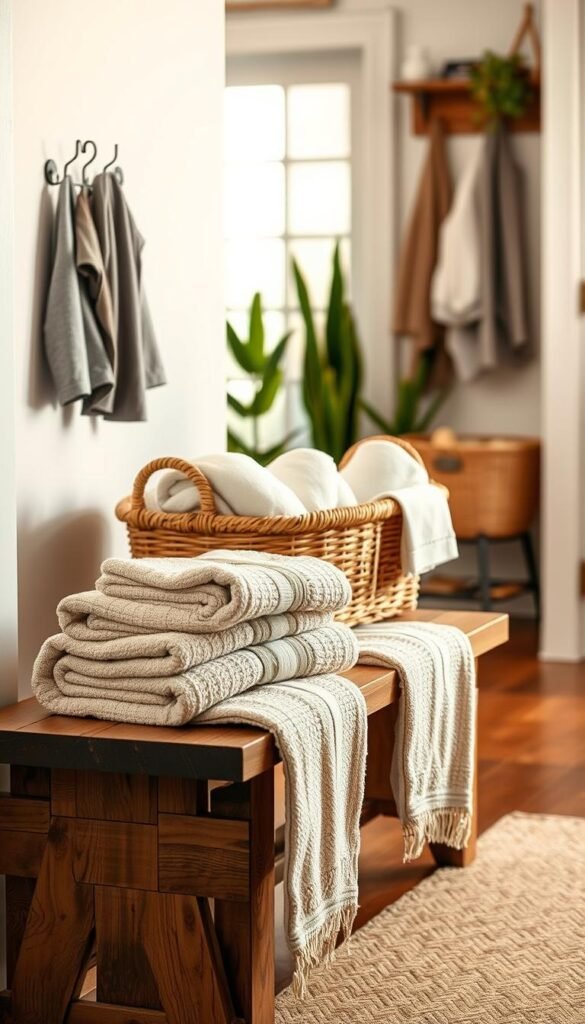
Make a small guest kit you can grab in a minute. A single, portable basket keeps hosting calm. It lets you welcome people without a last-minute scramble.
Create one grab-and-go basket with hand towels, a small bar of soap, toothbrushes, and travel-size shampoo and conditioner. Add a lightweight throw or small quilt for quick overnight comfort.
Place the basket in an entry closet or a hall shelf near the bathroom door. Keep a labeled bin of toiletries and a spare set of sheets in the linen closet so refills are fast.
- Keep a tin of travel items in the linen closet to refill quickly.
- Label guest shelves and bins so everyone can find things.
- Store an extra set for the guest bed in a marked bundle.
- Use an over-the-door rack for overflow when the closet is tight.
Tip: Tuck a small card with Wi‑Fi and a gentle care note into the basket. Guests feel welcome. You feel ready.
Kitchen and pantry linens: wipes, rags, and napkins
A tiny system in a cabinet can stop frantic searches during dinner prep. Keep textiles simple. Separate everyday cloths from guest napkins so you always grab the right item.
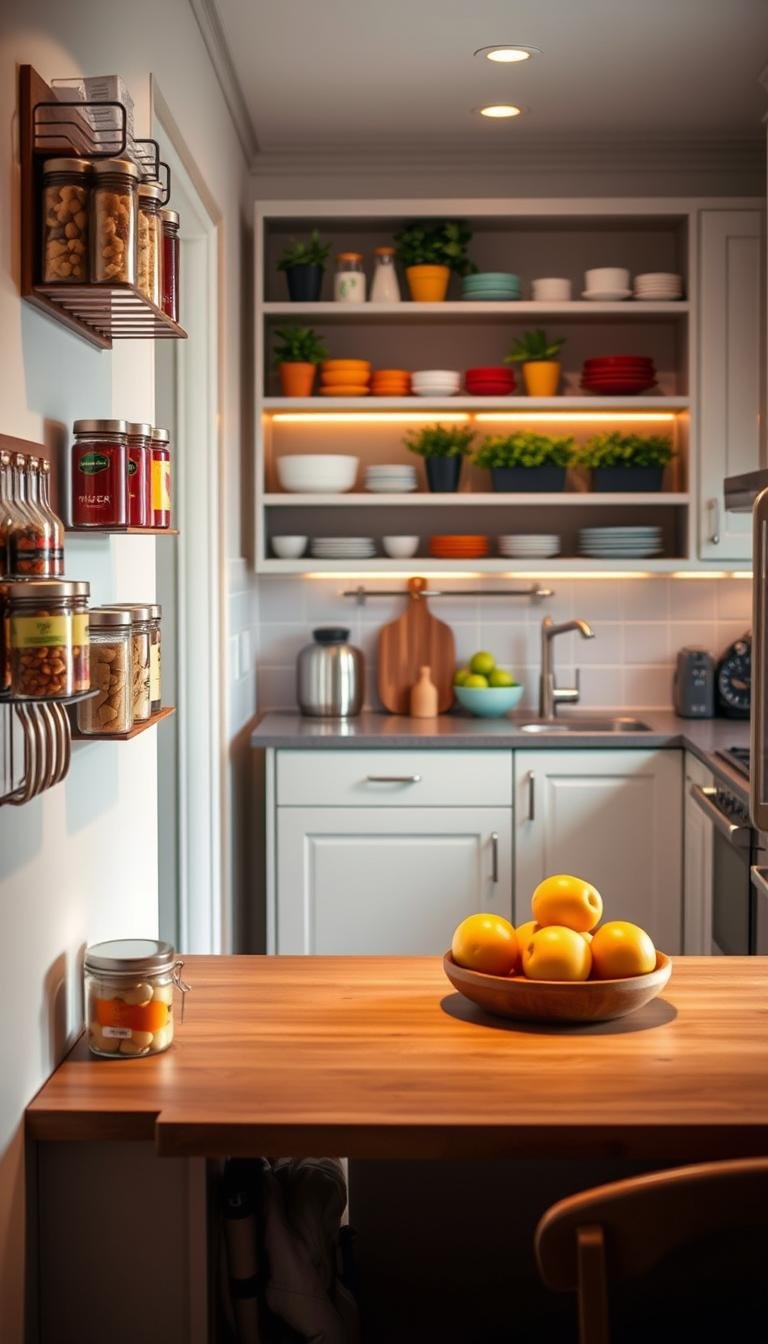
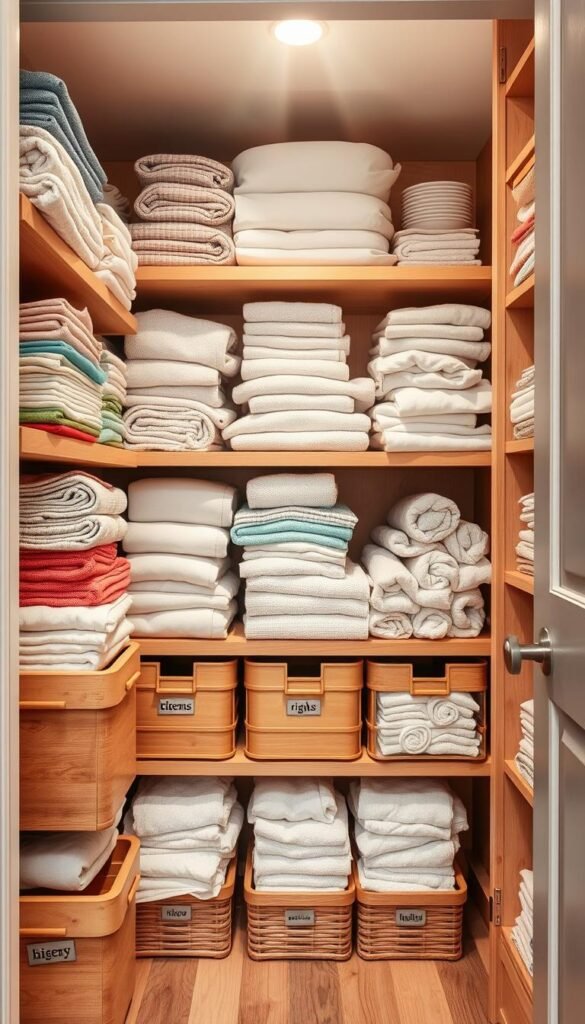
Group by type: dish towels, napkins, and cleaning rags. Use small boxes or bins on a pantry shelf or inside a cabinet. Label each front so you see what to pull.
Roll dish towels to fit narrow drawers. Fold napkins in thirds for shallow boxes. This saves space and keeps stacks calm.
“A short five-minute reset each week keeps the kitchen tidy and stress low.”
- Keep a clear “stains” bag on a hook for pre-treated items.
- Place a small basket under the sink for rags. Wash and rotate weekly.
- Store extras in the linen closet if they don’t fit the pantry.
| Item | Best container | Why it helps |
|---|---|---|
| Everyday wipes | Small bin under sink | Fast reach and weekly rotation |
| Guest napkins | Labeled box on pantry shelf | Easy grab for company |
| Dish towels | Narrow drawer or rolled in box | Maximizes tight space |
| Stained items | Hooked “stains” bag | Clear pre-treating path |
Use baskets, bins, and boxes to reduce visual clutter
Choose one uniform container style to calm the look of your closet. Matching baskets and bins make the space feel gentle and intentional. Your eye rests. Putting things away becomes faster.
Use boxes with lids for seasonal linen. Label the top and side so you find quilts and extra sets quickly. Clear stacking bins work well for toiletries and first aid. You can see levels and restock before you run out.
Add simple dividers on wide shelves and inside drawers. They stop stacks from sliding and keep neat rows. A shallow drawer unit on a low shelf holds small items: hair ties, cotton rounds, spare razors.
Keep heavier baskets low for safety. Lighter bins go up high. Use one bin as a “returns” spot for stray items. Empty it during your weekly reset.
- Pick one container style for most items.
- Label plainly: “Queen Sheets,” “Guest Towels,” “Cleaning Cloths.”
- Review sizes after a month and tweak only what feels off.
Maximize deep shelves and hard-to-reach corners
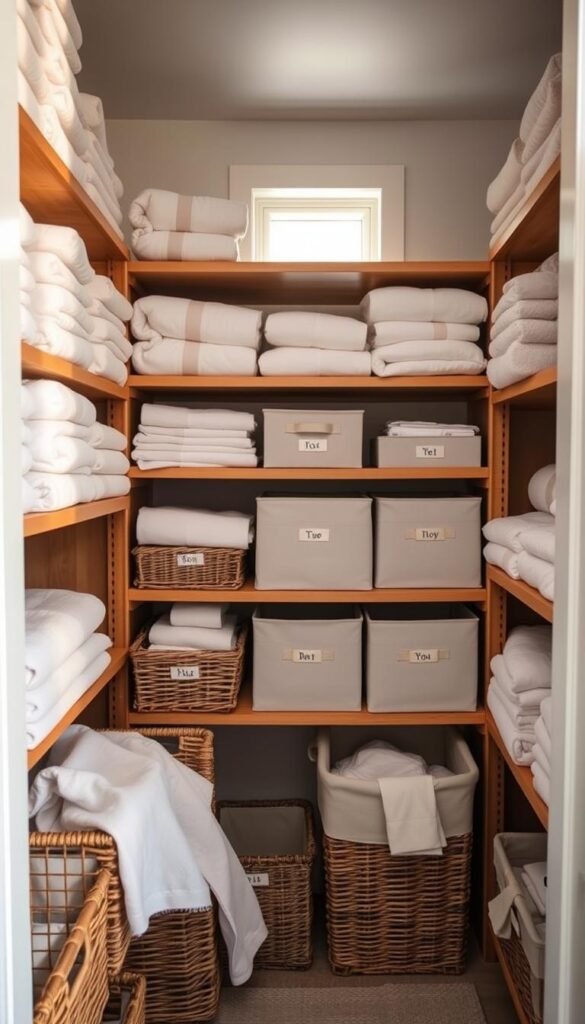
Hard-to-reach corners can become the most useful spots with a few small changes. Deep shelves hide a lot. You only need a clear plan to use that depth safely.
Measure first. Check shelf depth. Pick bins and baskets that reach toward the back so no space is wasted. A well-fit bin keeps things visible and easy to pull forward.
Large lidded baskets for duvets and quilts
Use large handled baskets for bulky blankets, quilts, and duvets. Label each basket by bed size so you grab the right set fast.
Store rarely used pillows on the top shelf. Light but bulky items belong up high.
Back-of-door racks for overflow
Mount a slim rack on the back of the door for overflow towels or paper goods. It frees core shelf space for daily sets.
Keep a clear bin on a lower shelf for odd pieces. Label it “Extras.” It keeps stray sheets and protectors from clogging stacks.
- Install pull-out drawers or slide-out bins on lower levels. They stop reaching into dark corners.
- Add tiered risers to create more vertical space for small stacks.
- Rotate a seasonal basket by month. Swap bulky bedding with the weather.
| Action | Best place | Why it helps |
|---|---|---|
| Measure shelf depth | All shelves | Choose bins that use full depth |
| Large lidded baskets | Middle or top shelf | Contain quilts and duvets by bed size |
| Pull-out drawers | Lower shelf | Easy access to bins and avoid lost items |
Laundry support that keeps systems easy
Make laundry flow feel effortless with a few simple tools placed where you live. Small gear and clear spots cut decisions. You move faster. You feel calmer.
Color-coded rolling hampers make sorting automatic. Use two wheeled hampers. One for lights. One for darks. Choose a clear color cue. A drawstring, collapsible hamper is easy to carry to the washer in one trip.
Leave the floor under a low shelf free so hampers slide in and out. This small gap saves time on busy days. It also keeps your closet organization tidy and accessible.
Simple caddy for cleaning supplies
Keep a single cleaning caddy in the linen closet. One handle. All basics together. Use a lazy Susan for sprays and small bottles so you can spin and grab.
- Label caddy sections: glass, bath, and surfaces for quick grabs.
- Add a small bin for laundry extras like mesh bags and stain sticks. Label it and return items after use.
- Post a tiny guide on the inside closet door with quick wash-day steps.
| Item | Where | Why |
|---|---|---|
| Rolling hampers (2) | Under low shelf | Auto-sorts lights and darks; easy to roll to washer |
| Collapsible drawstring bin | Closet floor or laundry room | Compact and easy to carry full loads |
| Cleaning caddy / lazy Susan | linen closet shelf | Portable, keeps cleaning supplies together |
| Small extras bin | Near caddy | Holds mesh bags, stain sticks, and small items |
Finish with a five-minute weekly reset. Empty the lint bin. Refill supplies. Roll hampers back in place. A short check keeps laundry moving and your closet organized.
Daily, weekly, and monthly routines that keep order
A tiny daily habit keeps the closet calm and the morning simple. These short routines take little time. They protect your calm and help the whole home feel cared for.
Daily: two-minute reset
Two minutes. Straighten stacks and return hand items to their bin. Check the toiletries bin. Add one low item to your shopping list. Small wins add up.
Weekly: shelf straighten and label check
Spend five to ten minutes each week. Slide stacks forward. Wipe a shelf edge if needed. Do a quick label check. Fix any loose or missing tags.
- Empty the “returns” basket and put items back in their homes.
- Slide clear bins so you can see supply levels at a glance.
Monthly: light declutter and restock
Set aside fifteen minutes once a month. Remove worn or unused sets. Restock guest bundles and refill your cleaning caddy. Rotate seasonal blankets and sheets higher or lower as needed.
Simple way to stay consistent: Post this short guide on the inside of the closet door. A tiny checklist helps everyone follow the plan without fuss.
“A little time each day keeps chaos from growing.”
| Routine | Time | What to do |
|---|---|---|
| Daily | 2 minutes | Straighten stacks; check toiletries |
| Weekly | 5–10 minutes | Tidy shelves; empty returns; check labels |
| Monthly | 15 minutes | Declutter; restock guest sets; rotate seasonals |
Gentle tips: white linens, fresh scents, and easy care
A mostly-white palette makes laundering easier and the linen closet feel spa‑like. Whites wash together. They resist fading. That keeps each load simple and calm.
Keep scents light. Try a DIY linen spray with water, a little alcohol, and a few drops of lavender or citrus. A soft spritz refreshes sheets and bath items without heavy perfume.
Air out pillows and bulky blankets on a sunny day. Fresh air brightens them. It also helps reduce musty smells.
Store guest toiletries in a clear bin on a visible shelf. Guests should never have to ask where things are. Place toilet paper and extras nearby for easy reach.
Separate sheet sizes in lidded baskets. This prevents jumbling and saves time when you change beds. Tuck a small sachet or a piece of charcoal in each basket to keep odors away.
- Choose mostly white sheets and towels for easy laundry days.
- Wash towels on a steady rhythm that fits your life.
- Rotate pillow protectors and mattress pads monthly to protect pillows and mattresses.
- Keep short care notes on the inside closet door so everyone can help.
“Soft, small habits keep your place calm and ready.”
Conclusion
Pick a tiny habit that makes daily life easier. One small step builds calm. It could be a single shelf, one basket, or one clear label.
You have a clear way forward. A hallway closet often works best. A bathroom or laundry nook can be the right place for your calm zone.
Set shelf spacing between 10 and 18 inches when you can. Add pull-out drawers or deep bins so deep space stays useful. These simple moves make closet organization feel doable.
Keep routines light. Two-minute resets daily. A five-minute weekly tidy. A short monthly refresh. Group, label, and limit. Small, steady steps beat perfection every time.
Start today. One tiny action. Peace over perfection. Your home will thank you.
FAQ
How do I start organizing my linen closet without feeling overwhelmed?
Begin with small goals. Set a timer for 15 minutes. Remove items and sort into keep, donate, and recycle. Focus on one shelf at a time. Gentle progress builds lasting calm.
What are quick wins I can do in under 15 minutes?
Fold a few bath sets and place them in a basket. Add labels to one shelf. Hang a door rack for extra towels. These small actions make the space feel organized fast.
How can I use vertical space effectively?
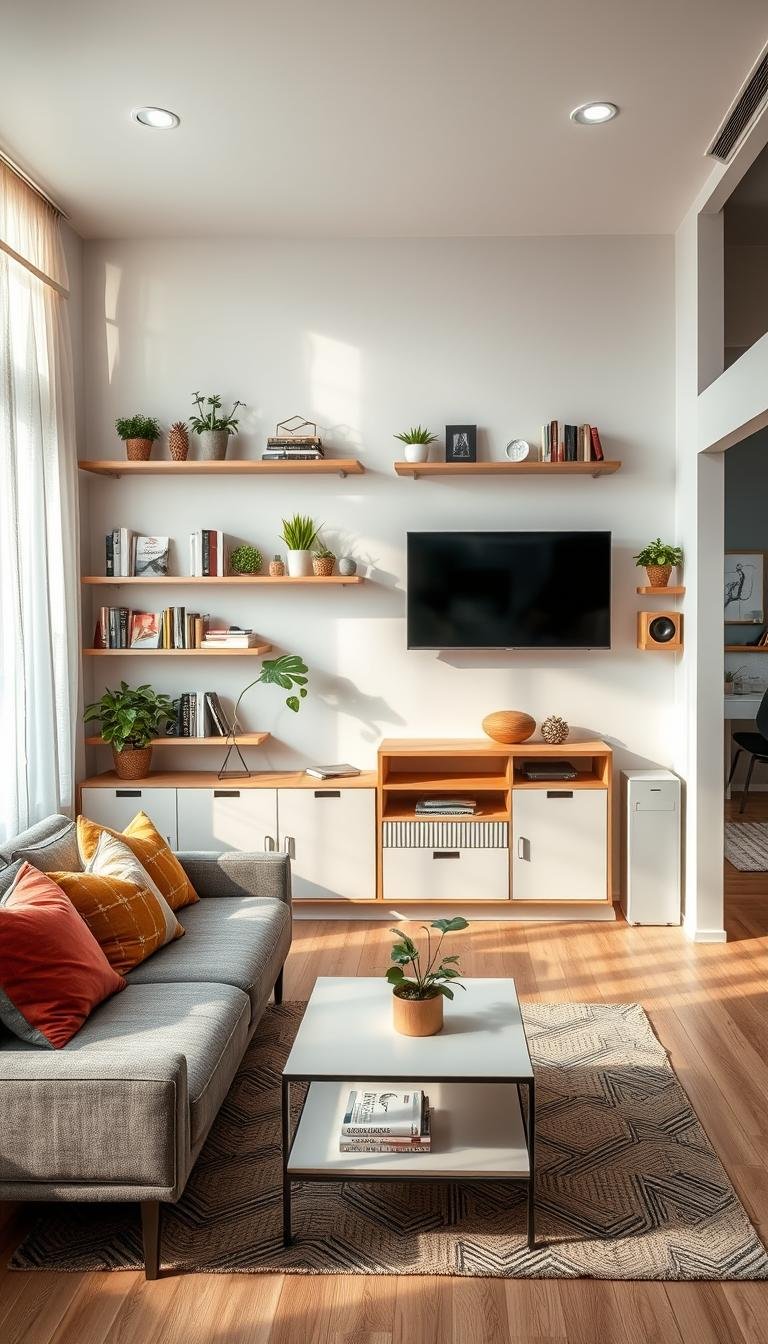
Add floating shelves, hooks, or an over-the-door rack. Stackable clear bins help use height without losing visibility. Vertical solutions free floor area and keep items easy to reach.
What’s the best way to sort before reorganizing?
Use the simple keep, donate, recycle flow. Test items for wear. Keep what you use and what fits your home. Donate extras and recycle worn pieces. This clears room for what matters.
How should I group and label sets so family members can help?
Group by set type: sheets, bath sets, hand cloths. Place sets in labeled bins or on dedicated shelves. Use short, clear labels and a calm color code so everyone knows where things belong.
Is storing sheets inside pillowcases a good idea?
Yes. It keeps each set together. Fold sheets neatly, tuck them inside a matching pillowcase, and stack. It saves time when you change the bed and looks tidy on shelves.
What shelving options work best for different closet sizes?
Adjustable shelves and pull-out drawers fit changing needs. For narrow closets, use shallow shelves or vertical dividers. Deeper shelves benefit from clear, stackable bins to avoid lost items.
What shelf spacing should I use for optimal fit?
Aim for 10 to 18 inches between shelves. Lower shelves can be taller for bulky blankets. Shorter spacing works well for folded sets and small bins.
How can I store toiletries and small items neatly?
Use clear stackable bins or small boxes. Group like items together. Label each container. This keeps counters clear and supplies easy to find when you’re in a hurry.
How do I keep bathroom stacks soft and tidy?
Fold in thirds for neat, stable stacks. Use shelf dividers to prevent slumping. Rotate older sets forward to use them first. Soft habits make upkeep simple and calm.
Where should hand towels and washcloths live?
Keep them in easy-reach bins or on a low shelf near the sink. Bins make quick grabbing simple for busy mornings. Reserve one shelf for guest-ready hand cloths.
How can I store blankets, pillows, and extra bedding in a bedroom closet?
Use large lidded baskets or vacuum bags for bulky items. Keep seasonal bedding on higher or deeper shelves. Label baskets so you don’t have to dig when guests arrive.
What’s a good setup for entryway or guest-ready sets?
Create a grab-and-go basket with hand cloths, extra pillowcases, and a small toiletries kit. Keep it near the door or in a visible shelf so last-minute prep is calm and quick.
How should kitchen and pantry cloths be organized?
Separate everyday rags from guest napkins. Fold and stack kitchen cloths in a shallow bin. Label zones so everyone knows where to find clean cloths for dishes or guests.
Do baskets and bins really reduce visual clutter?
Yes. They hide mixed items and create clean lines. Choose neutral baskets and matching bins for a calm look. Clear bins help with visibility while keeping things tidy.
How do I use deep shelves and awkward corners well?
Store bulky quilts and duvets in large lidded baskets. Use the back of the door for overflow racks. Pull-out bins or rolling baskets can make deep space accessible.
What laundry tools make systems easier to keep?
Color-coded rolling hampers simplify sorting. A small cleaning caddy keeps detergents and stain removers together. These tools cut steps and save time each week.
What simple routines keep order without pressure?
Try a daily two-minute tidy of folded stacks. Weekly straighten shelves and check labels. Monthly do a quick declutter and restock essentials. Small habits keep the space calm.
Any gentle care tips for white linens and fresh scents?
Wash whites on a gentle cycle with a mild detergent. Add a soft scent with a linen spray or a sachet in a basket. Avoid overloading machines to keep fabrics soft and long-lasting.