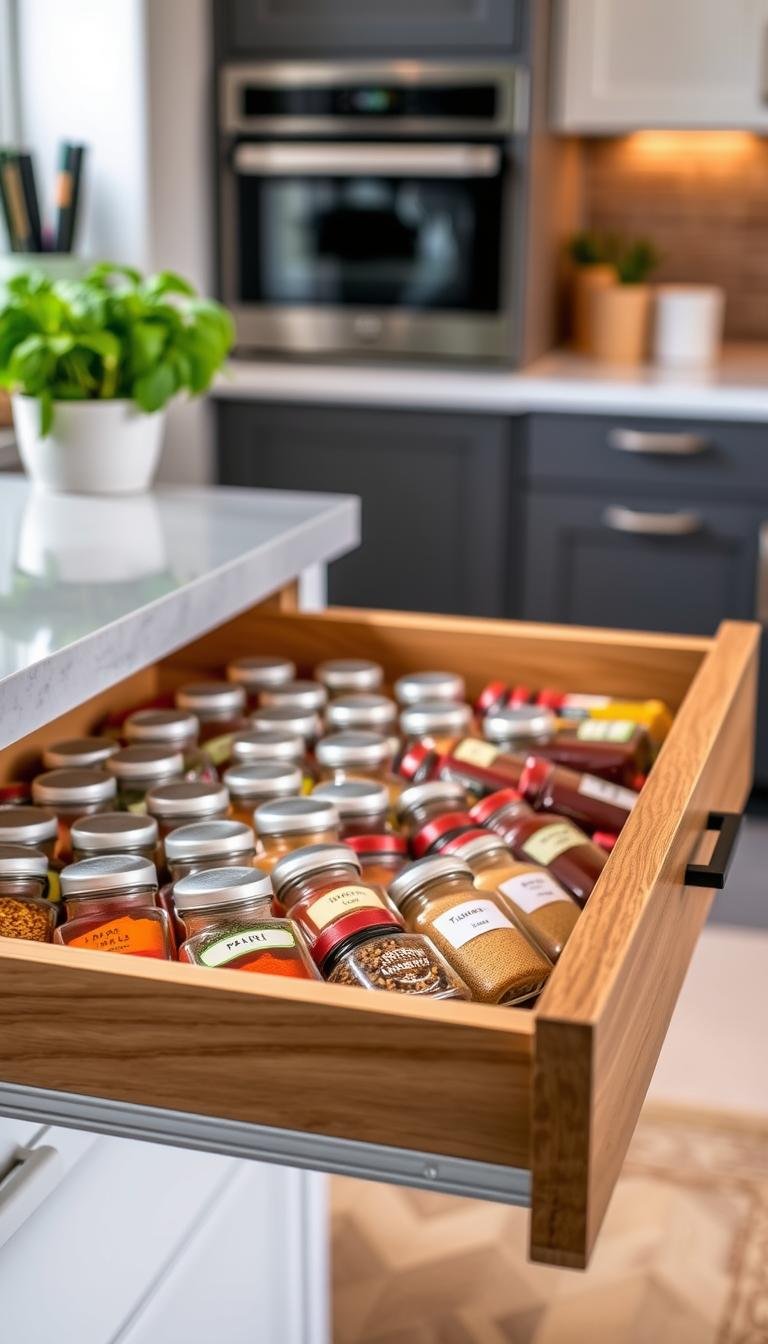
Spice Drawer Systems You’ll Love
You are busy. You want a calm, tidy kitchen that fits your life. Small routines can make a big difference. This guide offers soft habits and easy steps you can keep.
Start small. Start gentle. A single drawer or shelf gives fast wins. Solid shelves and tiered racks help you read labels and keep bottles steady.
Quick choices matter. The Lynk Professional expandable organizer fits many drawers and holds lots of bottles. The Container Store Acrylic 20-Bottle rack comes with bottles and labels for counter or wall use. The mDesign tiered rack is stable and makes labels easy to read.
Try a tiny system now:
- Pick one drawer or shelf to tame.
- Choose a stable rack or organizer with solid shelves.
- Label and place bottles so labels face up or forward.
Key Takeaways
- Start with one small spot to get quick calm in your kitchen.
- Choose solid shelves and tiered racks for label visibility and stability.
- Expandable organizers and acrylic racks suit drawers, counters, or walls.
- Simple routines and labeling keep spices easy to find.
- Gentle, repeatable steps reduce stress and save space at home.
Spice Drawer Systems: simple picks that work
A few reliable picks can cut clutter and save time. This short guide helps you pick one lasting solution. Each choice is quick to set up and gentle on your schedule.
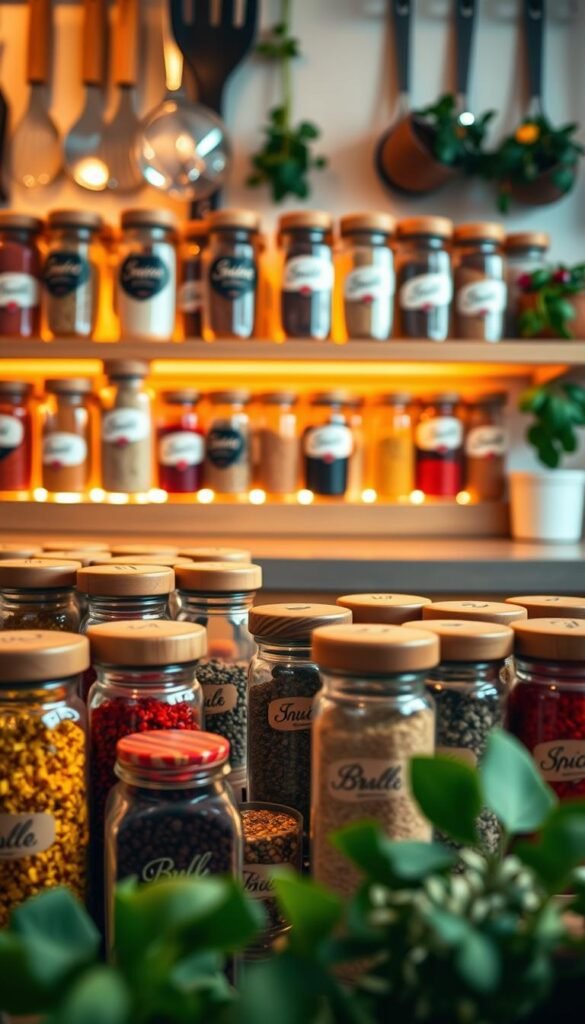
Top drawer pick: Lynk Professional Expandable Organizer
Pros: Alloy steel. Expands to fit 13.25–26.5 inches. Holds up to 64 bottles laid sideways for easy reading.
Cons: May not suit shallow drawers or larger tins. Measure depth first.
Best cabinet pick: mDesign tiered rack with solid shelves
Pros: Stadium-style tiers. Stable solid shelf design. Fits 30+ jars and keeps labels visible.
Cons: Clear plastic shows smudges. Wipe weekly for a fresh look.
Counter or wall option: The Container Store Acrylic 20-bottle rack
Pros: Includes 20 labeled bottles. Works on counter or wall. Uniform jars make pantry visuals calm.
Cons: You’ll need to decant. Sprinkle caps can be tight for large flakes.
Premium modular set with spices included: Evermill in-drawer system
Pros: Amber glass jars, magnetic modules, 12 or 18 jar sets. Jars hold about half a cup and fit measuring spoons.
Cons: Higher cost but gives a polished, flexible solution.
“Simple, sturdy builds beat complex assemblies.”
| Product | Fit | Capacity | Best for |
|---|---|---|---|
| Lynk Expandable Organizer | 13.25–26.5 in drawer | Up to 64 bottles | High-capacity drawer use |
| mDesign Tiered Shelf | Cabinet shelf or counter | 30+ jars | Cabinet visibility |
| Container Store Acrylic Rack | Counter or wall | 20 included bottles | Uniform counter display |
| Evermill Modular Set | In-drawer or wall mount | 12 or 18 jars | Premium, flexible storage |
Easy wins: measure your space, pick one product, and transfer your most-used jars first. Small steps build calm.
Set up your drawer the easy way
One gentle session clears clutter and brings order. You can do this in 20 minutes. The goal is calm, not perfection.
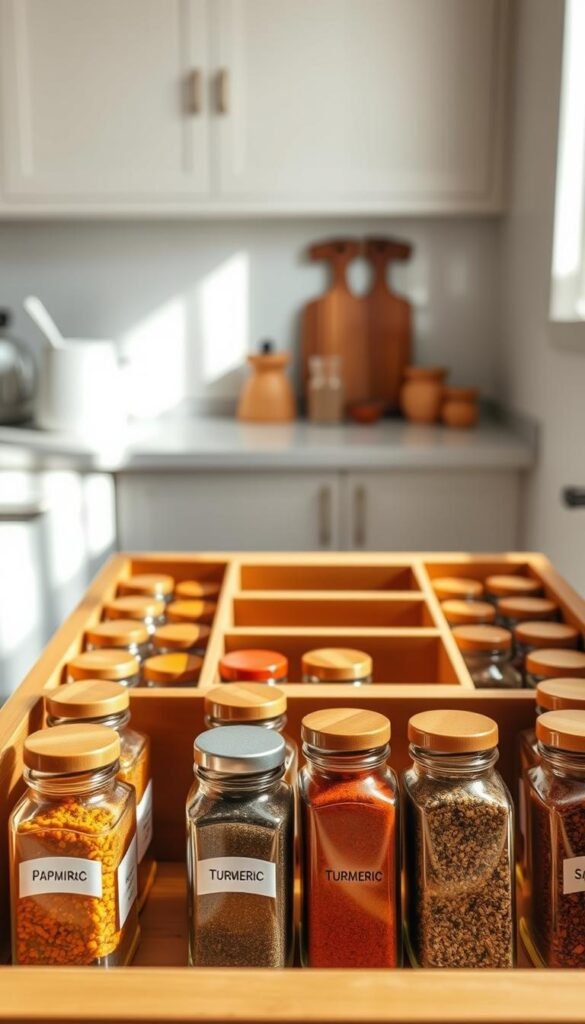
Quick declutter: keep, refill, retire
Work through jars and bottles one at a time. Keep what you reach for weekly.
- Refill: mark near-empty favorites to top up.
- Retire: set aside duplicates or flat spices for recycling.
- Freshness check: sniff and taste. If flavor feels weak, retire it.
Step-by-step install and fit check
Measure width and height first. This keeps surprises away.
- Measure drawer width. For the Lynk, confirm 13.25–26.5 inches fit.
- Check height. Evermill modules need at least 3.5 inches tall.
- Test with two jars in the tightest spot. Move the organizer until it sits level.
- Place labels facing up for side-lying bottles. Use top labels for flat jars.
Room-by-room quick start: kitchen and pantry examples
In the kitchen, keep daily items in the front third. Weekly items go in the middle.
In the pantry, store backups and the extra collection together. That keeps the main drawer simple.
60-second reset: face labels, nest bottles in rows, remove empties. This little habit keeps storage calm.
Labels, jars, and visibility that reduce fuss
Clear labels save you time and calm the routine. Small changes to how you label and choose jars make daily cooking easier. You get quick reads. You make fewer stops mid-recipe.
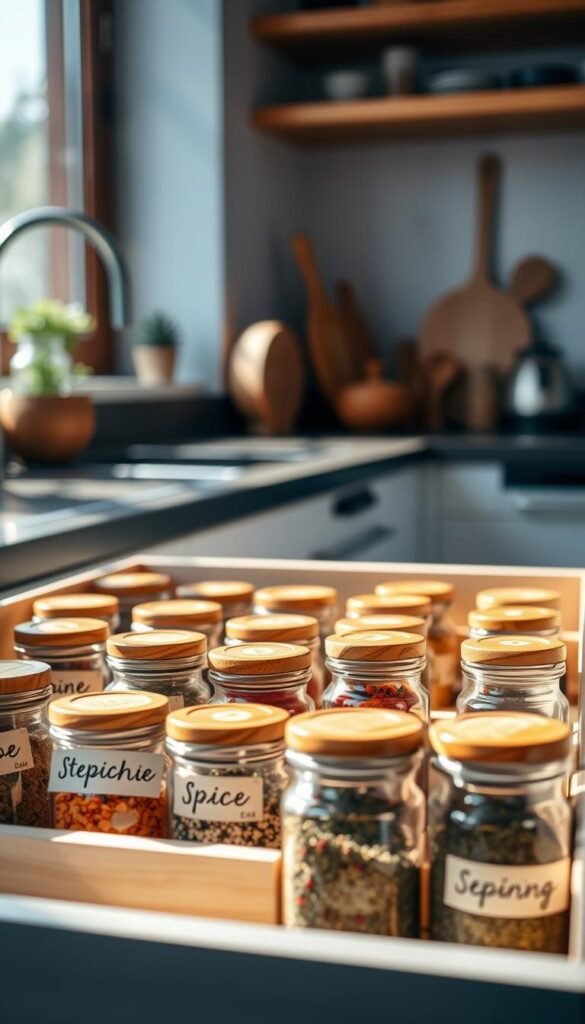
Clear labels on tops and sides for fast reads
Use plain, large text on both the top and the side. That way you can scan from above or at a glance in a drawer or on a shelf.
Place every label in the same spot. Consistency helps your eyes find things faster. Keep a tiny label kit nearby for quick swaps during your weekly wipe.
Jar choices: standard, included bottles, or amber glass
Standard jar sets are fine. The Container Store acrylic rack comes with 20 labeled bottles for a neat uniform line.
Premium amber glass jars, like Evermill, protect flavor and hold about half a cup. They have wide brims and come with shaker lids. That makes measuring easier.
- Choose wide-brim jar openings so spoons fit without spills.
- Decant only what you use often. No need to redo everything at once.
- Store jars in single rows when possible for clear visibility.
- Put daily-use spice in front and specialty blends in back or on a tier.
Aim for “clear enough” visibility, not perfection.
Daily, weekly, and monthly spice routines
Tiny resets add up fast and keep your pantry calm. Build quick habits that fit real life. These steps are gentle. They save time. They protect flavor.
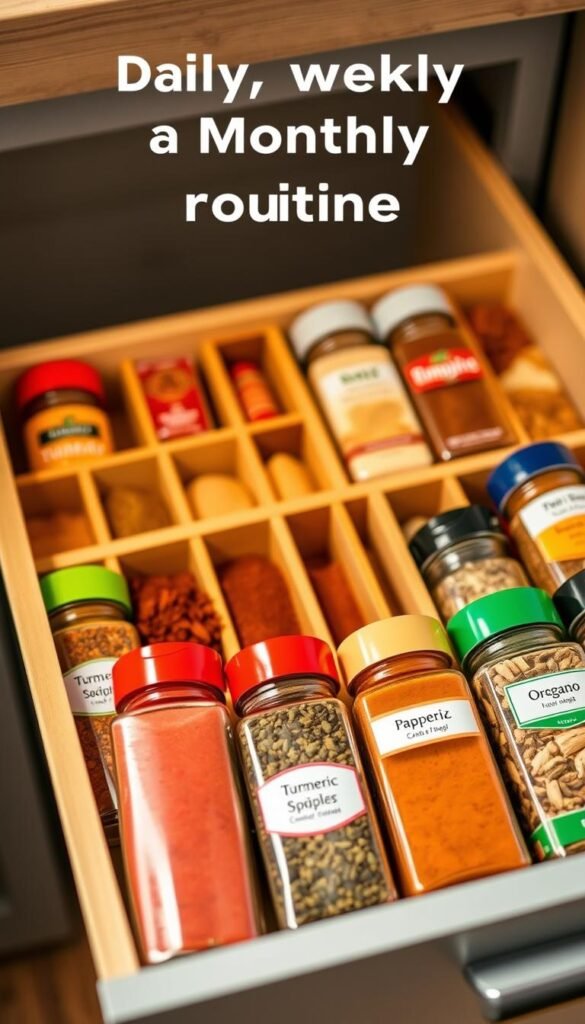
Daily: 60-second reset after cooking
Return each spice to its spot. Face labels forward. Toss empties into a refill bin.
Weekly: wipe, face labels, restock staples
Spend five minutes. Lightly wipe your organizer or shelf. Align single rows. Top up your three most-used jars.
Monthly: freshness check and gentle edit
Take ten minutes once a month. Smell and taste ground items. Remember: ground spices stay fresh about 6–10 months. Whole spices can last up to two years.
Retire any dull jars. Note replacements on a short list. Move little-used items to the back or the pantry.
Soft habits that stick
- Keep a small caddy with a cloth, label tape, and a pen near the kitchen.
- If your main spices live in a cabinet, add a tray so bottles slide without bumps.
- Reset while the pan cools or the kettle boils. Small pauses make care easy.
Celebrate steady progress, not perfect rows—function first, then looks.
Choose the right rack for your space and style
Find a rack that earns its place by making daily cooking easier. Think about how you cook and where you reach most. A calm choice beats a fancy one. Measure first. A small test keeps you from a wasted purchase.
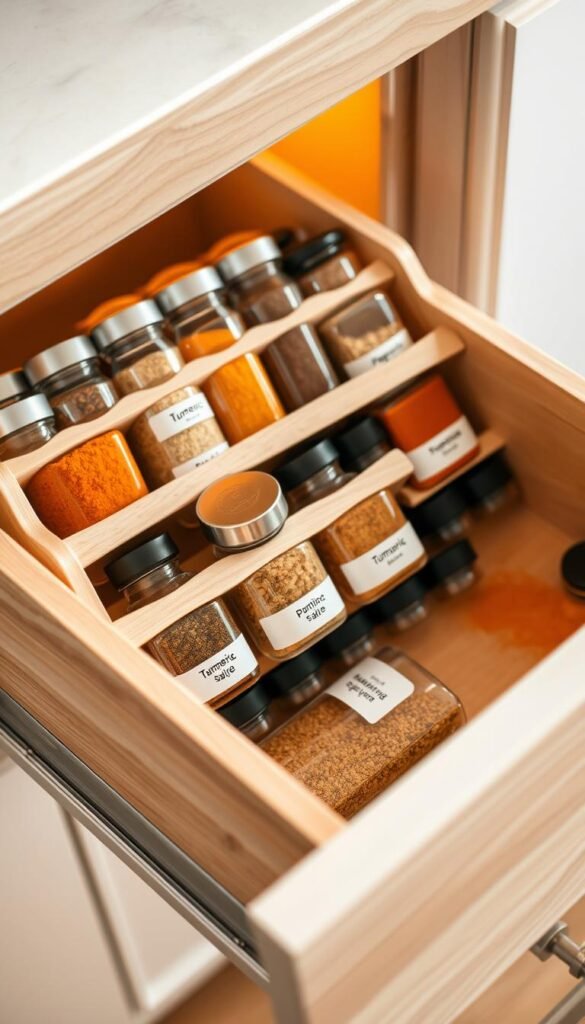
Small kitchens: drawer vs. cabinet vs. wall
Drawer inserts give the best label visibility. They make jars easy to read and grab. If you have one free, start there.
Cabinet shelves work well with tiered shelf steps. They lift back rows so every label shows. Choose solid bases. They beat slatted door racks that wobble.
Wall racks free counter space. Mount near the stove at eye level for calm access. The Container Store acrylic rack and Evermill both offer wall-mount options with included hardware.
Quick decision checklist
- Measure width, depth, and height before you purchase.
- Match rack type to daily cooking needs.
- Pick solid shelves. Avoid brittle plastic frames.
- Prefer simple instructions and sturdy builds over complex assemblies.
- If space is tight, an in-drawer or compact shelf wins for visibility.
Choose one rack organizer that fits your real kitchen flow, install it once, and let it do the work.
Conclusion
, A small change today can make cooking feel calmer.
Pick one spice rack or rack organizer that fits your flow. The Lynk in-drawer pick, the mDesign tiered cabinet shelf, The Container Store acrylic 20-bottle set, and the Evermill modular collection are all reviews-backed choices you can trust.
Keep jars and bottles in single rows on a solid shelf or in clear drawers. That simple habit improves visibility and stops tipping. Use plain labels and match jars only if you enjoy the look.
Try a five-minute reset now. Face labels, group daily spices in front, and move extras to the pantry. Small steps protect flavor and save time.
Gentle reminder: your organizer should feel helpful, not rigid. Adjust the type and layout as your cooking changes. One neat spot is enough to begin.
FAQ
What size organizer fits a standard kitchen drawer?
Measure the inside width, depth, and height of your drawer. Choose an expandable organizer that adjusts within that width. For depth, allow 1–2 inches of clearance at the back so jars don’t press against the drawer. Height should clear the lid of your tallest jar. If you use tiered inserts, check total stack height before buying.
How do I decide between in-drawer, cabinet, or wall storage?
Think about reach and workflow. In-drawer keeps bottles flat and out of sight. Cabinet racks give upright visibility and save drawer space. Wall or counter racks make frequently used items easy to grab. Pick the option that matches how you cook. Small kitchens often benefit from in-drawer or slim wall racks.
Can I convert existing jars to work with a rack organizer?
Yes. Standard spice jars fit most organizers. Swap mismatched bottles for uniform ones for a neater look. You can also use refillable amber glass or the included bottles some kits provide. The goal is a consistent size for secure placement and clear labeling.
What’s the easiest way to set up my spice area without a big time investment?
Start with a quick declutter. Keep what you use, refill favorites, retire expired items. Group like items together. Place frequently used bottles front and center. Install inserts and do a simple fit check. This takes 20–30 minutes and creates calm that lasts.
How often should I check spice freshness?
Do a monthly freshness check for ground powders. Smell and taste a small pinch. Whole spices last longer but still benefit from a quarterly look. Replace anything flat or off. A gentle monthly edit keeps flavors bright without fuss.
Are labels better on tops or sides?
Use both if you can. Top labels speed grabbing in a drawer. Side labels help on shelves and cabinets. Clear, simple labels reduce search time. Choose a soft, readable font. Keep wording short to stay calm and organized.
Will a tiered rack fit in my cabinet with lazy susan hardware?
Measure the clear height from shelf to door and the usable depth of the lazy susan. Many low-profile tiered racks work with lazy susans, but tall shelves may need single-level inserts instead. When in doubt, pick an adjustable or low-profile option.
Can I mix plastic and glass jars in the same system?
Yes. Mixes are fine as long as sizes are consistent. Glass looks premium and preserves aroma. BPA-free plastic is lighter and less likely to break. Keep heavier glass lower in cabinets and lighter bottles in drawers for smooth use.
How do I secure jars so they don’t slide when opening a drawer?
Use organizers with non-slip bases or soft dividers. Foam-lined slots or silicone mats reduce movement. Keep heavier bottles toward the back. A gentle recheck after installation fixes most wobble quickly.
Are there reliable brands to consider for different needs?
Yes. For expandables, Lynk Professional makes sturdy organizers. mDesign offers tiered cabinet racks with solid shelves. The Container Store has clear acrylic wall and counter racks. For premium modular in-drawer kits with spices included, Evermill is worth considering. These options cover most kitchens and styles.
How do I maintain a calm routine for spice restocking?
Add simple habits. Daily: a 60-second tidy after cooking. Weekly: wipe jars, face labels forward, top up staples. Monthly: freshness check and a small edit. Short, gentle steps build a lasting system without pressure.
What should I look for if I want a kid-safe setup?
Keep strong aromatics and hot spices out of reach. Choose cabinets with childproof latches or place racks higher. Use clear labeling so family members can return items correctly. A simple habit of closing drawers and doors helps safety and order.
Can pantry racks be used for bulk spice storage?
Yes. Tiered pantry racks and larger jars work well for bulk. Use airtight amber containers for long-term freshness. Label with purchase or refill dates. Keep bulk items on lower shelves for easy access during cooking.