Shoe Organization Systems
You are busy. Mornings feel rushed and clutter steals calm. This short guide offers gentle, simple fixes you can start today. Small routines. Easy resets. Quick wins.
We walk you through smart racks, clear storage choices, and matching organizers that fit your entryway, closet, or bedroom. Expect real picks that work. Think Seville Classics 3-Tier, Oceanstar bamboo, Yamazaki Tower, IKEA Bissa, and Whitmor over-the-door styles.
There is no need for perfect systems. Just practical steps. Simple checklists and room-by-room ideas will help you keep shoes tidy with minutes a day. We stay supportive and pressure-free. You get options for every family and every space.
Key Takeaways
- Simple routines bring calm fast.
- Choose the right rack or storage for your space.
- Options include open racks, enclosed cabinets, and hanging solutions.
- Short daily resets keep clutter away.
- We share step-by-step checklists and room ideas.
A calm start: what this product roundup covers
We tested common racks and clever bins so you can pick calm, useful choices fast.
This roundup focuses on practical storage for everyday life. We tried freestanding racks, over-the-door hangers, and under-bed drawers. We looked at fit, stability, and ease of use.
What you’ll find: clear options for daily access, hidden storage, and door-mounted picks. Brands we tested include Seville Classics, Yamazaki, Whitmor, IRIS, and Clearline.
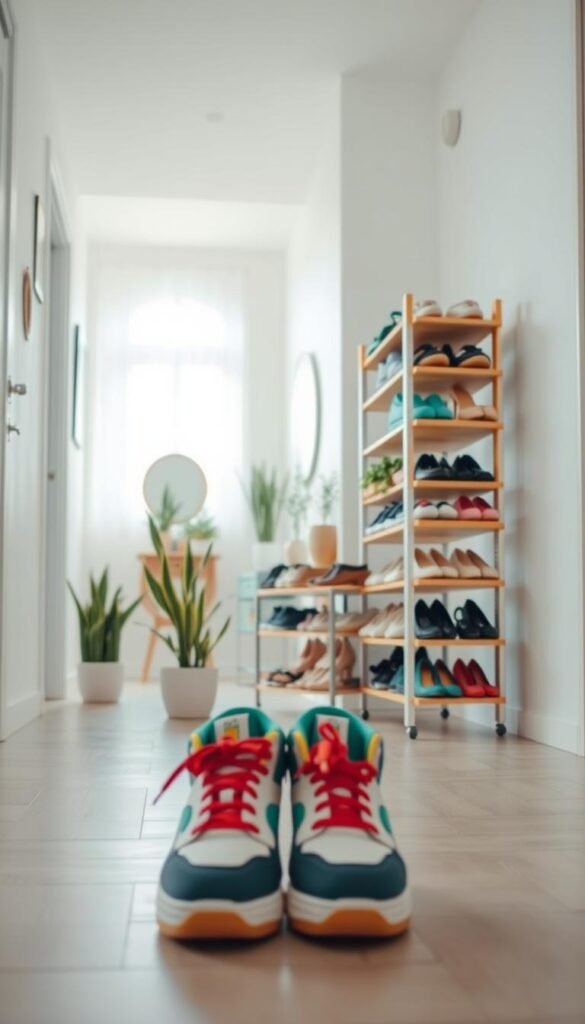
This guide gives step-by-step choices. You get simple checklists and room-by-room ideas. No pressure. Just small moves that bring calm.
- How we chose: stability, visibility, and real-world fit.
- What you’ll get: tested picks at varied price points.
- Who it helps: busy homes and small spaces seeking visual calm.
- How to start: pick one rack or drawer. Layer more options later.
| Type | Best for | Capacity | Price range | Key benefit |
|---|---|---|---|---|
| Freestanding rack | Entryway, closet | 8–24 pairs | $30–$150 | Quick access and flexibility |
| Over-the-door | Door, small spaces | 10–36 pairs | $15–$60 | Maximizes vertical space |
| Under-bed drawer | Bedroom, seasonal | 6–12 pairs | $20–$80 | Dust-free, out-of-sight storage |
How to choose Shoe Organization Systems for your space
Take a gentle inventory before you shop. A calm count and a few simple measures make the rest easy. This saves time and reduces returns.
Take stock. List every pair. Mark favorites. Group by season. Note which pairs you use each week. That weekly number sets your capacity target.
Measure the spot. Check floor depth and shelf width. Test door swing and closet clearance. Note ceiling height if you want a tall tower. Measure under-bed height for drawers.
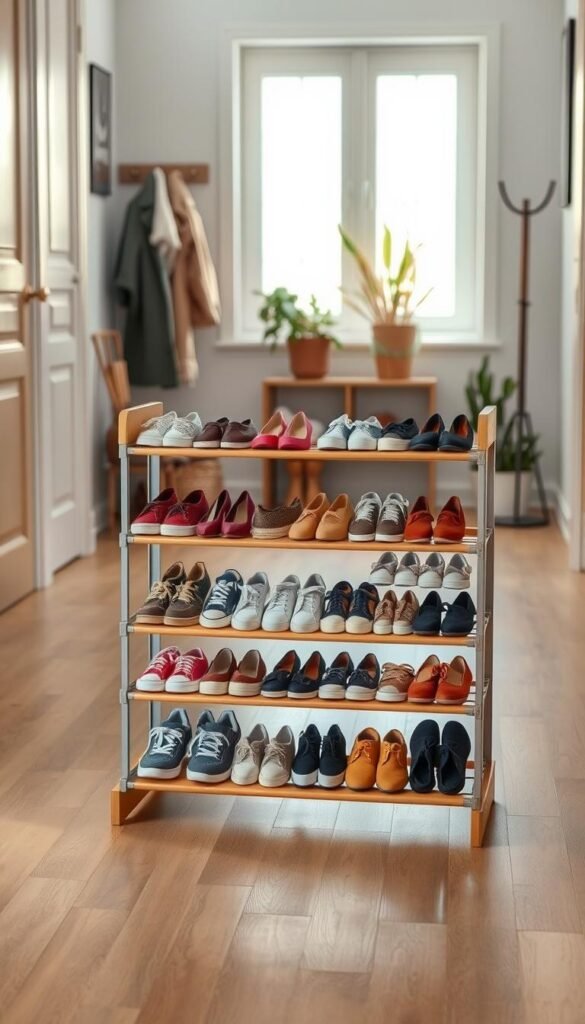
Open vs enclosed—simple choices
Open racks give airflow and quick grab-and-go access. They help shoes dry and keep routines fast.
Enclosed cabinets cut dust and create calm visuals. They hide pairs and make a minimal look.
Hybrid builds using engineered wood and powder-coated steel add strength and a clean finish. Sealed surfaces resist indoor wear.
A short checklist to guide you
- List pairs. Note favorites and seasons.
- Count weekly use to set capacity.
- Measure floor depth, shelves, door swing, and under-bed height.
- Pick open for airflow or enclosed for dust control.
- Choose a hybrid if you want style and strength.
- Start with one zone. Expand as your routine settles.
You don’t need a perfect solution. Pick what fits your habits today. Small steps bring calm.
Freestanding shoe racks for everyday access
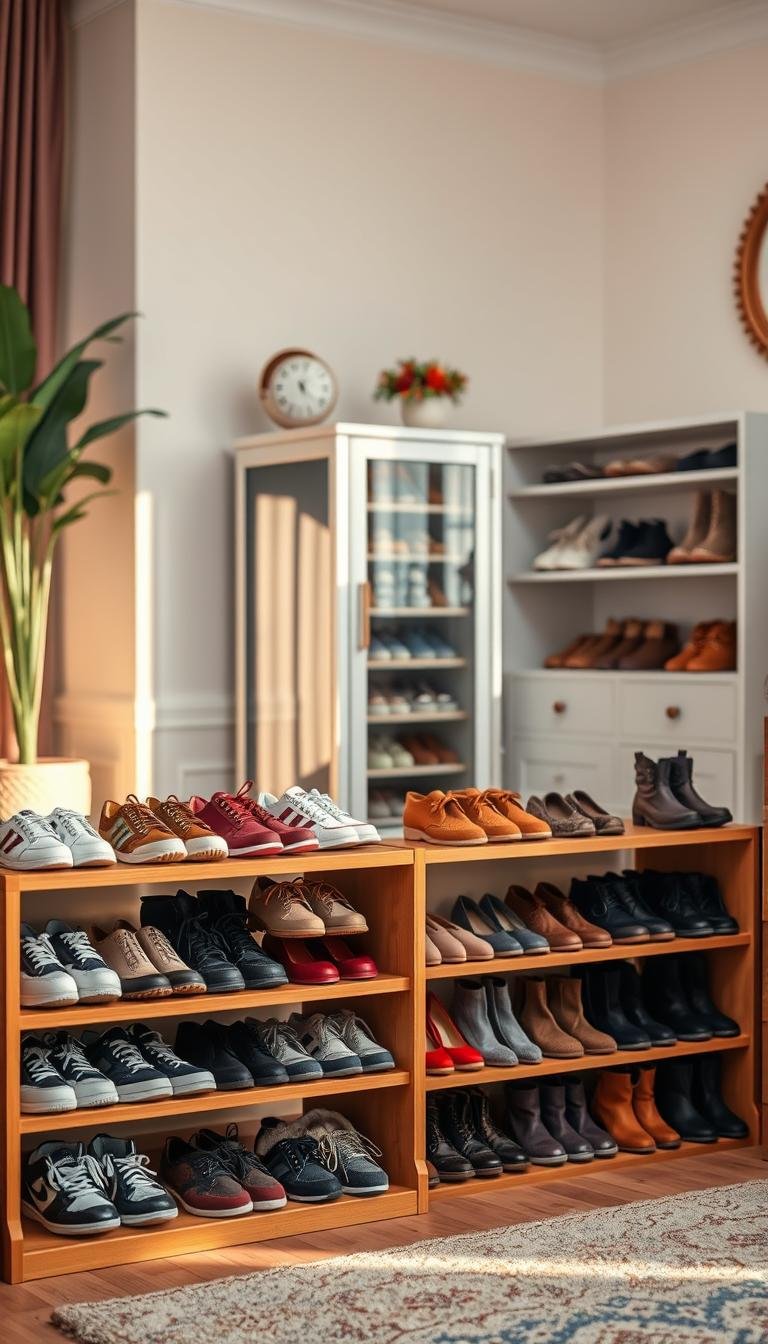
A good freestanding rack makes daily shoe swaps fast and calm. These pieces work well where you need quick reach and a tidy floor. They suit entryway nooks, closets, or a bedroom corner.
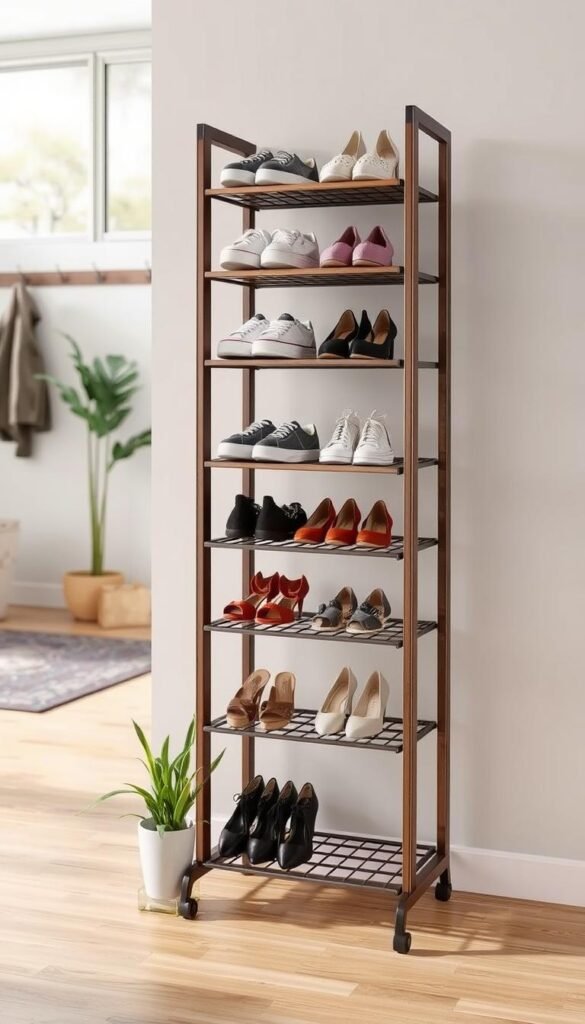
Yamazaki steel-and-wood towers
Minimal footprint. The metal frame keeps lines simple. The five-rack model plus floor space holds about 20 pairs and can reach 24 pairs if you stack carefully.
The wood top gives a small drop spot for keys or mail. Choose this when space is tight and you want calm style.
Seville Classics 3-Tier
Adjustable and stackable. Shelves shift to fit toddler sneakers through men’s size-12. You can stack vertically or connect horizontally to change size and reach.
This rack is stable. It handles mixed heights and even tall boots when shelves are moved.
Rebrilliant 4-Tier with wood top
Shared entryway pick. Each tier creates a personal level for family members. The wood top doubles as a console for mail or baskets.
Note: open mesh shelves can let debris fall. Wipe below weekly and place a washable mat under the rack to catch grit.
“Keep everyday pairs on the middle shelf for the easiest reach.”
- Choose Yamazaki for a small footprint and calm lines.
- Pick Seville for adjustable shelves and mixed-size needs.
- Try Rebrilliant when shared zones need clear levels.
- Label a low shelf for kids. It helps them reset shoes on their own.
| Model | Capacity (pairs) | Key benefit | Estimated price |
|---|---|---|---|
| Yamazaki tower | 20–24 pairs | Minimal footprint; wood top | $120–$200 |
| Seville Classics 3-Tier | 8–18 pairs | Adjustable shelves; stackable | $30–$80 |
| Rebrilliant 4-Tier | 16–20 pairs | Shared levels; console top | $50–$120 |
Bamboo shoe rack options for natural warmth
Natural bamboo brings warmth and calm to a busy entry or closet. It is light. It feels soft in a room. And it pairs well with neutral decor.
Oceanstar 2-Tier Bamboo
Light, stackable vertical design
The Oceanstar stacks vertically so you can add tiers as your collection grows. It is easy to move during a quick reset. Shelves are fixed. So plan taller pairs on the floor next to the unit.
Smiry Bamboo
Grooved legs for sturdy, low-profile stacks
Smiry uses embedded grooves at the legs to lock tiers together. It stays low profile. That makes it fit under hanging clothes and in shallow closets. Assembly is required, but the result is steady and neat.
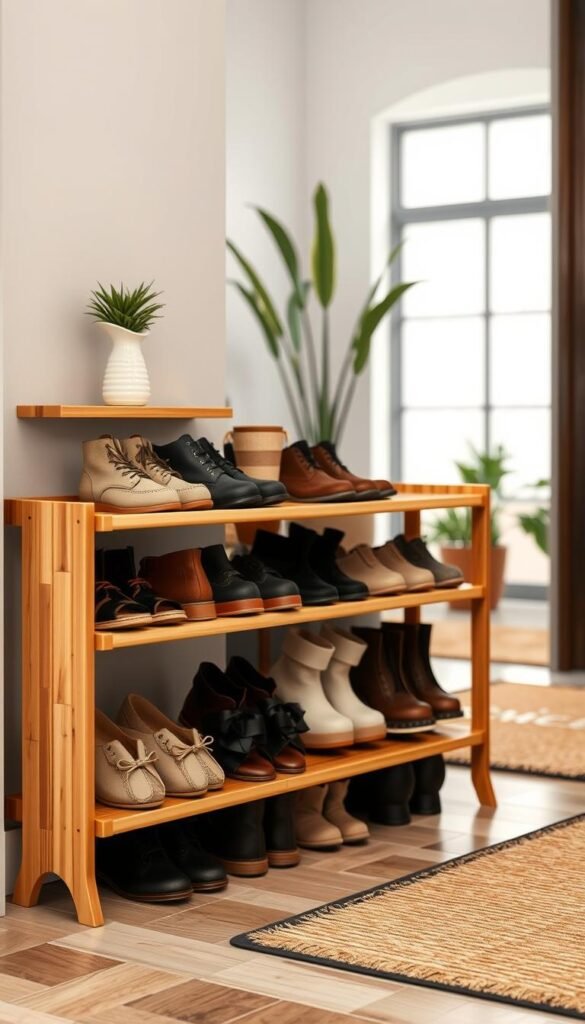
“Keep three favorite pairs on the top tier and rotate weekly for easy mornings.”
- Choose bamboo when you want warmth and a softer look.
- Light weight makes rearranging simple during a quick reset.
- Place felt pads under the rack to protect floors.
- Use a small tray for a gentle brush and care items.
- Wipe with a barely damp cloth and dry fully to extend life.
Hanging and over-the-door organizers for small spaces
Over-the-door solutions turn a swinging door into an everyday storage spot. They fit renters and apartments well. You get vertical space without drilling or bulky furniture.
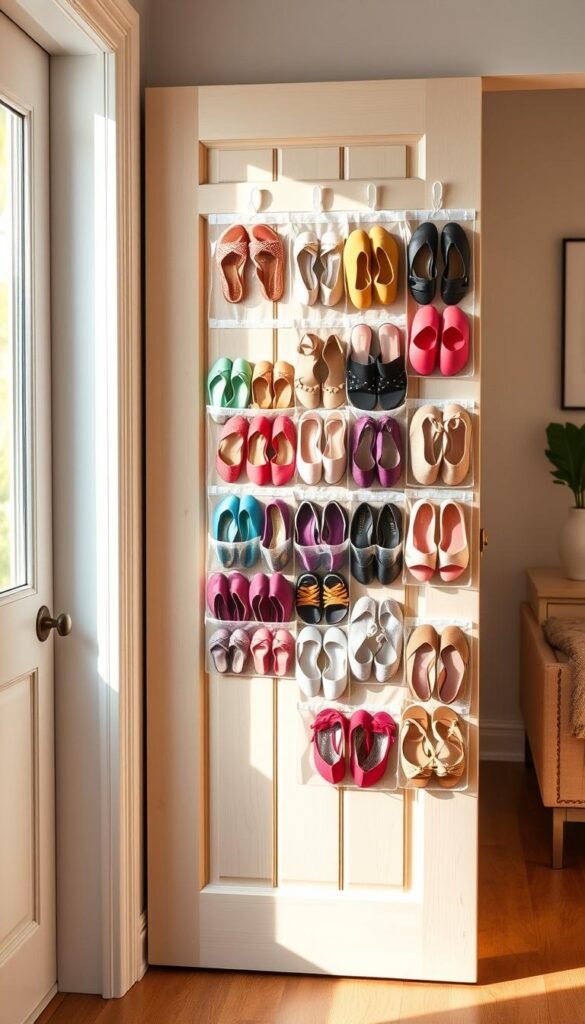
Whitmor 36-Pair Over-the-Door offers configurable shelves that fit heels, sneakers, or kids’ pairs. The rubber-lined hooks protect the door and cut wobble. It holds many pairs while staying stable.
Misslo Hanging Shoe Organizer uses clear PVC pockets. The pockets wipe clean and protect clothes from tread dirt. It fits about six pairs, more if shoes are small.
Quick, calm steps before you buy
- Measure door thickness and clearance. Check swing and trim.
- Choose rubber-lined hooks to protect paint.
- Reserve lower pockets for kids. Keep daily pairs at eye level.
- Wipe PVC with a damp cloth during your weekly reset.
- Add felt bumpers where the rack meets the door.
“For apartments, choose a hanger that secures to the top and rests low to reduce sway.”
| Model | Capacity | Key feature | Best for |
|---|---|---|---|
| Whitmor 36-Pair | Up to 36 pairs | Configurable shelves; rubber-lined hooks | High-capacity door storage |
| Misslo Hanging | About 6 pairs (compact) | Clear PVC pockets; easy wipe-down | Small spaces; visibility |
| Basic Over-the-Door Rack | 10–20 pairs | Lightweight hooks; slim profile | Renters; quick install |
Hidden shoe storage: cabinets that tidy visual clutter
Closed cabinets calm a busy entry and give you a clean surface to land on. They hide daily clutter so mornings feel easier. A blank top lets you add a small bowl for keys. It stops piles from forming.
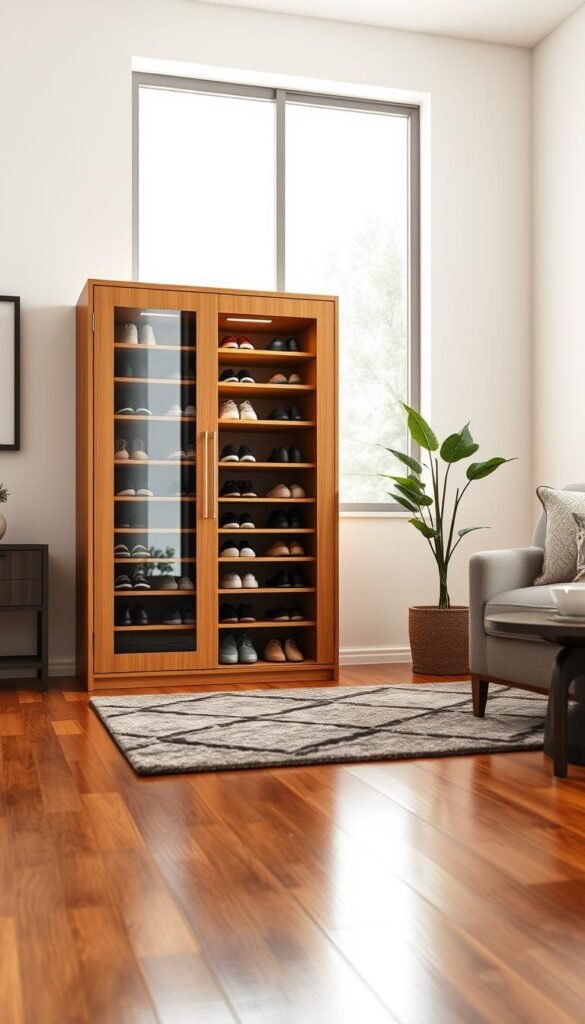
IKEA Bissa: slim, budget-friendly, anchor it
Bissa is slim and easy to assemble. It gives hidden shoe cabinet storage at a low price. It fits narrow walls and small entryway nooks.
Important: anchor the cabinet to the wall for safety. That keeps little hands and pets safe. It also steadies the piece during daily use.
IKEA STÄLL: tilt-out, narrow footprint, customizable
STÄLL works where depth is tight. The tilt-out compartments save space and hold about 12 pairs. Assembly takes a bit longer, but the result is tidy and functional.
You can swap pulls or add a top tray to match your room. Personal touches make it feel like home.
Rattan-front consoles: airflow and a useful top
Rattan-front cabinets let air circulate. That helps sneakers breathe and reduces odor. Many include an open lower shelf. Keep daily pairs there for quick grabs.
“Choose closed storage when you want a calm surface and fewer visual distractions.”
- Choose a cabinet for a blank, calm top.
- Anchor Bissa for safety and stability.
- Use STÄLL when hallways are narrow; customize the look.
- Try rattan fronts for airflow and a cozy top surface.
- Place a slim mat under the cabinet to catch grit.
Clear and stackable shoe boxes to see everything at a glance
Seeing what you own makes mornings softer. Clear boxes keep pairs easy to find. They cut decision time and lower stress.
Drop-front boxes offer dust protection and quick reach. Hinged doors open so you do not pull the whole stack. Small ventilation holes reduce odor without sprays. These boxes stack safely. Place heavy stacks lower on shelves or a low rack for stability.
Clearline bins are fully transparent and stackable shoe-friendly bins with open tops. They hold tall boots and chunky heels upright. Add lids if you want full dust control and a uniform look.
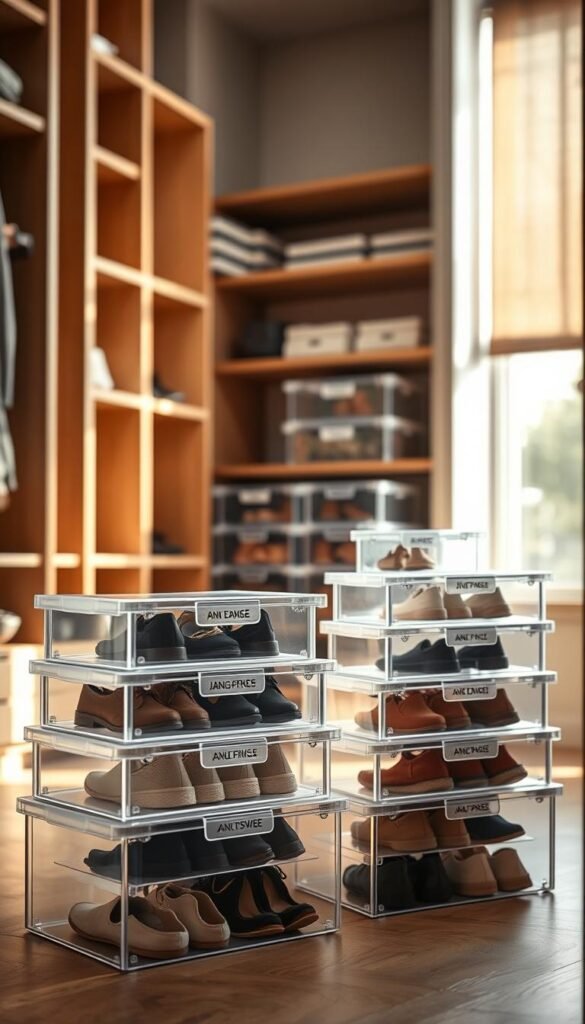
- Use a drop-front box to protect while still seeing every pair.
- Label fronts with simple tags: work, workout, special.
- Keep one outgoing box for donate or repair.
- Wipe plastic fronts monthly for a crystal view.
- Leave one empty box for new arrivals to avoid overflow.
“Stack to the ceiling to use vertical space. Anchor tall stacks and keep a light touch for ease.”
Under-bed shoe drawers to rotate by season
Slide-out drawers under your bed are a gentle way to store off-season pairs. They keep extras dust-free and out of sight. They free closet and floor space. And they make swaps simple when weather changes.
IRIS Under Bed Drawer pulls out without lifting the unit. The clear plastic offers quick visibility. Drawers stack in multipacks when you need more capacity. Note: they may slide on wood floors and are not ideal for tall heels.
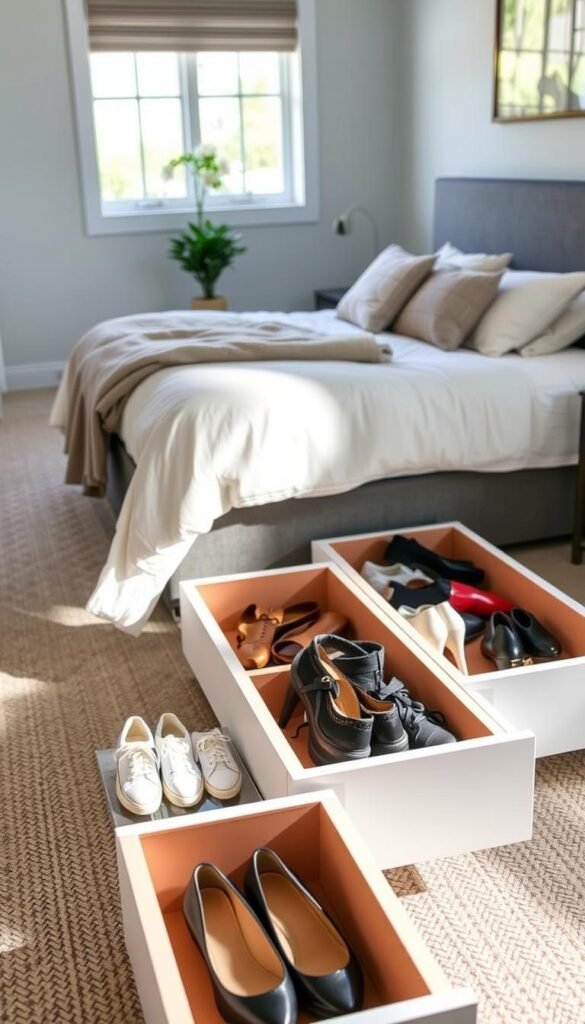
- Measure under-bed height before ordering drawers.
- Group by season and label the front edge for quick swaps.
- Place a non-slip mat under drawers to reduce sliding on the floor.
- Keep flats and sneakers here; store tall heels in a taller rack or cabinet.
- Add a light sachet for freshness and one front drawer for guest slippers.
“Slide out, grab, and go—no heavy lifting needed.”
Benches, lockers, and credenzas that do double duty
Choose furniture that works harder so you don’t have to. A small bench or a low credenza can store pairs, host a tray, and give you a gentle place to sit before you head out.
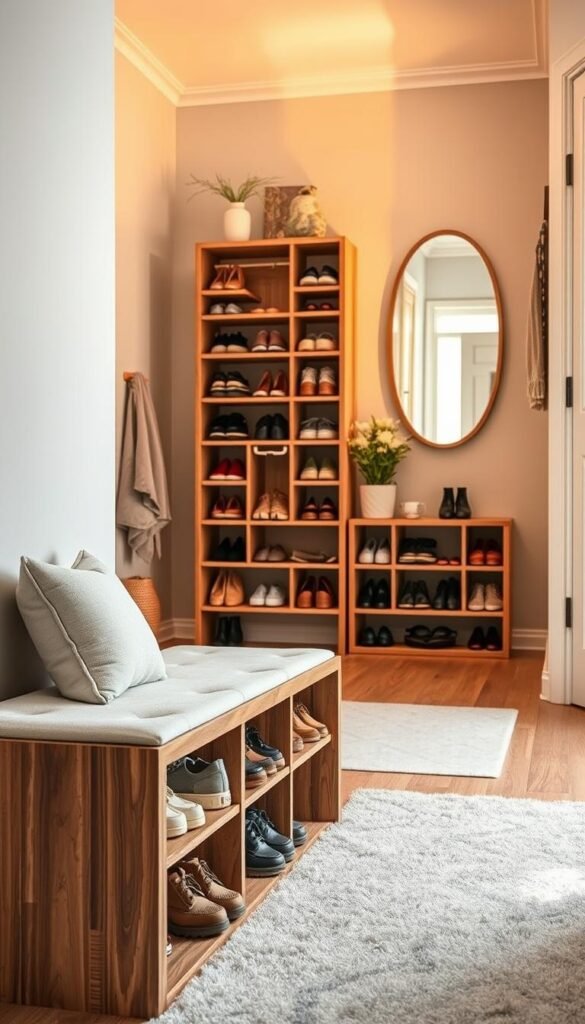
Upholstered storage bench: hidden pairs and a seat for the entryway
A storage bench hides footwear and offers a soft spot to sit. Velvet and bouclé add comfort and a tidy look. Place it in the entryway for quick on-and-off moments.
Quick tips: Set a washable mat under the bench for wet days. Tuck a slim rack beside it for guests on busy mornings. Keep a tiny basket on top for a brush and lint roller.
Colorful lockers and credenzas: adjustable shelves and bold style
Lockers like Mustard Made bring color and adjustable shelves. They lock if you need secure storage. A modular credenza such as the USM Haller is costly but very durable.
A credenza can hold mid-calf boots on an open bottom shelf. Measure depth so doors open freely and walkways stay clear. Consider price versus longevity when you decide.
“Pick multiuse pieces. They free floor space and make routines easier.”
- Choose a storage bench to blend seating with hidden pairs.
- Label shelves by person or type: work, gym, weekend.
- Use lockers for color and adjustable interiors.
- Measure depth and door swing before you buy.
Boot trays and tall-boot solutions
A dedicated landing spot for boots makes arrivals and exits gentler and quicker. It protects your floor and keeps wet days from spreading. This is a small change with a big calm payoff.
Metal trays with a raised lip
Choose a metal tray with a raised edge to hold water, mud, and slush. The Tangier boot tray in galvanized iron is a solid pick. It cleans easily. It fits about three pairs and comes in multiple colors.
Place the tray at the entryway or in your mudroom. That way wet pairs rest on the tray not your floor. Keep tall boots upright with shapers or a rolled towel so they dry faster.
- Use a metal tray with a raised lip to contain water and mud.
- Wipe the tray during your weekly reset to prevent build-up.
- Rotate a second tray for guests in wet seasons.
- Choose a size that fits your space and daily traffic.
- Add pebbles to elevate soles for faster drying.
- Pair with a small towel on the side for quick wipe-downs.
“Containment and a quick wipe make messy weather feel manageable.”
Keep one tray near a small rack or shoe rack for quick swaps. Simple storage like this saves time and keeps the entry calm.
Vertical towers and wall grids for narrow nooks
Tall, slim solutions let you claim vertical real estate in the tightest corners. They make narrow gaps useful. They keep the floor calm. You get more access with less clutter.
Slim towers with hooks: maximize height, tiny footprint
Pick a slim tower that fits an 11-inch-deep space. Many models include side hooks. Use those hooks for umbrellas, totes, and keys. That keeps things ready by the door.
Quick tips: keep heavier pairs low for safety. Measure ceiling height before adding extra tiers. Place a small catch mat under the base to collect grit.
Wire grid panel for heels: display and save shelf space
A wire grid panel holds about 20 heels by slipping each heel into the mesh. It creates a clean, minimalist look. No assembly is often needed. Lean it against the wall or mount it for a neater finish.
Reserve upper levels for flats and sandals. Keep one hook free for a daily bag to speed exits.
- Use slim towers to claim height in tiny corners.
- Hooks on the side hold umbrellas, totes, and keys.
- Try a wire grid to display heels and free shelf space.
- Measure ceiling height before stacking more tiers.
| Solution | Best spot | Depth fit | Extras |
|---|---|---|---|
| Slim vertical tower | Hallway nook, closet side | Fits 11″ deep spaces | Side hooks; small top shelf |
| Wire grid panel | Bedroom wall or leaning by mirror | Thin profile; any wall | Holds ~20 heels; no assembly |
| Mounted narrow rack | Inside closet door or mudroom wall | Varied sizes; choose slim models | Good for flats; saves shelf space |
Materials that last: steel frames, engineered wood, and bamboo
A smart mix of metal and wood gives you strength without the heavy look.
Start with a strong frame. Choose powder-coated metal for steady support and low rust risk. Pair it with engineered wood or E1 MDF shelves for a warm, minimal finish.
Hybrids balance durability and budget. They often cost less than full metal units and resist daily wear better than plastic. Sealed wood surfaces handle indoor humidity. That keeps finishes calm and neat.
Moisture and rust notes
Metal parts resist rust under normal home humidity. Still, avoid damp spots. Keep racks a few inches from splash zones. Wipe dry if spills happen.
- Choose powder-coated metal for strong frames.
- Pair with engineered wood shelves for a softer look.
- Pick sizes to match your capacity goal without crowding.
- Use shelves with slight lips to reduce slipping.
- Dust weekly; deeper wipe monthly for easy care.
“Hybrids give you style, strength, and low maintenance for everyday life.”
| Material | Best use | Durability |
|---|---|---|
| Powder-coated metal frame | Frame for tall racks and heavy pairs | High; resists rust indoors |
| Engineered wood / E1 MDF shelves | Visible cabinet fronts and warm tops | Medium-high; sealed finishes resist humidity |
| Bamboo | Light racks and natural look | Good; keep away from damp areas |
Color and finish: keep it neutral for a calm look
Neutral finishes help rooms feel calm and cohesive without extra effort.
Black, white, and wood tones that blend with any room
Choose a simple palette. It makes decision fatigue smaller. Neutrals adapt as your style changes.
Practical picks: a white cabinet with clean lines; a black rack for contrast; a wood top to add warmth.
- Choose black, white, or wood to keep your room calm and cohesive.
- Neutrals let your shoe pairs stand out without visual noise.
- A neutral cabinet with a wood top warms an entryway instantly.
- Mix finishes only when it helps zones feel defined.
- Consider price last. Pick the finish you’ll enjoy daily.
- Keep sizes consistent when stacking for a cleaner line.
- Add soft baskets to match the finish for hats and gloves.
- Use small felt pads to protect light floors from dark racks.
| Finish | Best for | Price sense | Visual effect |
|---|---|---|---|
| White | Small rooms, bright entryway | Budget to mid | Clean and airy |
| Black | High-traffic zones, contrast | Mid to high | Sophisticated, hides scuffs |
| Natural wood | Warm entries, benches with a top | Mid to high | Cozy and timeless |
“Pick a neutral finish you like. You’ll use it every day, so make it feel gentle and true.”
Keep choices simple. Start with one finish. Add small accents later. Your entryway will feel calmer fast.
Small-space playbook: closets, doors, and corners
Turn closet corners and a back-of-door into helpful, no-fuss storage zones.
Use the back of the door for high-volume, quick-grab storage. Over-the-door racks like Whitmor make use of wasted space. They hold many pairs without blocking traffic.
Hang a slim organizer such as Misslo for flats and light sneakers. It keeps dust off clothes and wipes clean easily. Place daily pairs at chest height so reaching is simple.
Slide IRIS under-bed drawers in to reclaim floor space fast. Slim towers fit an 11-inch-wide nook and lift footwear off the floor. Add a small wall hook by the closet entrance for slippers.
- Limit each person to one shelf or row to prevent overflow.
- Store occasional pairs higher. Donate if you skip them for months.
- Reset nightly: five minutes to return pairs to their spots.
“Small moves. Low effort. Big calm.”
| Solution | Best spot | What it holds | Quick win |
|---|---|---|---|
| Over-the-door rack (Whitmor) | Back of door | High-capacity pairs | Uses unused vertical space |
| Hanging organizer (Misslo) | Closet rod or door | Flats & light sneakers | Easy wipe-clean |
| Under-bed drawer (IRIS) | Under bed | Off-season pairs | Frees floor space |
Simple routines that keep shoes under control
Small daily habits keep your entryway calm without extra time or stress.
Gentle, short rituals make tidy feel doable. Do them without guilt. The goal is steady progress. Not perfection.
Daily
Take 60 seconds to return pairs to the rack by the door. Air damp shoes on a mat or boot tray before storing. Keep a tiny caddy with a brush, cloth, and gentle cleaner nearby.
Weekly
Wipe boot trays and clear box fronts with a damp cloth. Scan for duplicates and place one pair in a donate bag. Rotate a new favorite to the front so mornings feel fresh.
Monthly
Do a seasonal swap using under-bed drawers. Check soles and laces. Set one repair on your calendar. Donate what you no longer use.
“A few minutes each day keeps the clutter away.”
- Celebrate small wins. A tiny reset keeps the system steady.
- Use drop-front boxes or Clearline bins for easy wipe-downs.
- Boot trays with raised lips contain messes on wet days.
| Frequency | Action | Handy tools |
|---|---|---|
| Daily | Return pairs to the rack; air damp items | Mat or boot tray; small caddy |
| Weekly | Wipe trays and box fronts; remove duplicates | Damp cloth; donate bag |
| Monthly | Seasonal swap; inspect and repair | IRIS drawers; repair calendar |
Room-by-room systems that make sense
Assign a calm landing spot in each room to speed your daily routine. Small, clear choices help you move faster. They keep surfaces tidy and mornings gentle.
Entryway
Place a boot tray and a storage bench by the door. Add three hooks above the bench for bags and quick-grab items.
Quick tip: keep daily pairs at eye level on a low rack. Tuck a slim trash can nearby for tags and worn laces.
Kitchen or mudroom
Choose a sturdy metal rack over a washable mat. Metal holds weight and wipes clean fast.
Use open shelves for everyday pairs. Wipe and go. A weekly sweep keeps grit away.
Pantry or utility zone
Stack clear bins for sports and overflow pairs. Clearline-style boxes make finding things simple.
Label fronts. Keep a donate box on the top shelf so clutter moves out quickly.
Bathroom
Add wall hooks for slippers and a small basket for guests. This keeps damp pairs off the floor.
Bedroom
Use IRIS under-bed drawers for off-season items. They free closet space and protect pairs from dust.
Closet
Combine a slim cabinet like Bissa or STÄLL with a hanging organizer for full visibility. Wire grids work well for heels.
Keep shelves at eye level for daily use. Store specialty pairs higher to reduce reach and clutter.
- Entryway: boot tray + bench by the door.
- Kitchen/mudroom: metal rack + washable mat.
- Pantry: stack clear bins for overflow.
- Bathroom: hooks for slippers; guest basket.
- Bedroom: under-bed drawers for seasonal work.
- Closet: cabinet + hanging organizer for full view.
“Small blueprints in each room make daily life calmer and faster.”
Conclusion
Start small. Let one clear spot transform how your space works.
Begin with the entryway or a closet floor. Pick one simple organizer that fits your rhythm. Make it a habit to do a quick daily reset. Little actions add up. They keep shoes from piling and mornings calm.
Choose a single rack or box that feels right. Use neutral colors and hybrid materials for durability. Add a second option only after the first is steady.
Tested picks like Yamazaki, Seville Classics, Oceanstar, Whitmor, IRIS, and IKEA cover most needs and budgets. Trust gentle routines. Your home will feel lighter with each small step.
FAQ
What types of shoe storage work best for small spaces?
For tight spots, choose vertical and over-the-door options. Slim towers and wall grids use height not floor. Hanging organizers and clear stackable boxes fit closets and under-bed drawers. Benches with built-in storage give a seat and hide pairs. Pick one small change at a time. It keeps the room calm.
How do I decide between open racks and enclosed cabinets?
Think about airflow and visual calm. Open racks let shoes breathe and dry. Cabinets reduce dust and create a neater look. If you have pets or live in a dusty area, choose an enclosed cabinet or boxes. If you need quick access and visual ease, an open shelf or rack may feel gentler.
How many pairs should I plan storage for?
Count what you own. Note daily favorites and seasonal items. Keep a clear aim. Store daily pairs near the entryway. Off-season shoes go under the bed or in clear boxes. This simple inventory helps you choose the right capacity without excess.
What measurements matter before buying a rack or organizer?
Measure door clearance, shelf width, ceiling height, and the space under the bed if you plan drawers. Also note how high shoes sit on shelves. A quick sketch and a tape measure prevent returns and awkward fits.
Are bamboo racks durable for everyday use?
Yes. Good-quality bamboo is sturdy and moisture resistant. It feels warm and natural. For wet climates, look for sealed finishes. Bamboo racks pair well with steel frames for added strength.
Can clear stackable boxes hold boots and tall footwear?
Some do. Look for clearline bins or drop-front boxes with taller dimensions. Open-top bins also work for very tall boots. Ventilation matters. Choose boxes with vents or occasional airing to prevent odor.
How do I keep shoes from getting musty in closed storage?
Air them before storing. Use silica packs or a small baking soda sachet to absorb moisture. Leave a small gap in stacked boxes for airflow. Rotate seasonally and let closed pairs breathe once a month.
Are hanging organizers safe for heavy boots?
Most fabric hanging organizers are better for flats and light shoes. For heavy boots, use sturdy over-the-door racks with reinforced hooks or a dedicated boot tray and tall storage cabinet. Metal boot trays with raised lips protect floors from water and mud.
How do I store high heels to save space and prevent damage?
Use wall grids with small shelves or individual cubbies. Drop-front boxes protect heels and stack neatly. Keep heels upright and use heel caps for delicate tips. A wire grid panel displays them and frees shelf space.
What should I look for in assembly and durability?
Check materials and fastenings. Powder-coated steel and engineered wood are strong. Look for clear assembly instructions and included hardware. Anchoring options are important for tall units. A simple, solid build lasts longer and feels less stressful.
Which entryway setup is best for families with busy schedules?
Choose a low-effort combo. A bench with storage, a boot tray, and hooks for quick drops work well. Add a metal or wood rack for everyday pairs. Keep a wipe-and-go habit. Small routines make mornings calmer.
Can I mix storage types in one closet?
Absolutely. Combine a cabinet for formal pairs, hanging organizers for flats, and clear boxes for seasonal shoes. Use wall hooks for slippers. Mixing keeps things visible and functional without extra clutter.
How often should I declutter shoes?
Quick weekly resets and a monthly check are helpful. Each season, do a fuller sort and donate what you no longer wear. Small, regular steps keep your system gentle and realistic.
What budget-friendly brands offer reliable racks and organizers?
Look to IKEA for slim cabinets like Bissa and STÄLL. Whitmor and IRIS offer practical hanging and under-bed solutions. Seville Classics has adjustable metal racks. These brands balance price and durability for calm, usable systems.