
Seasonal Cleaning Guide: Winter Edition
You likely juggle work, family, and small daily fires. You want a calm home. You want systems that fit a busy life.
This simple Winter Cleaning Guide offers gentle routines. It focuses on indoor air, fresh light, and easy room-by-room resets. Small habits beat rare marathons. A short timer. A clear checklist.
Start with air quality. Change filters and tend vents. Vacuum and dust to remove trapped dust and allergens. Move appliances to clean behind them. Deep clean rugs and bedding on a calm schedule. Shake small rugs outside. Machine-wash what tags allow.
Care for safety too. Clean dryer vents and clear the outdoor outlet. Service chimneys and gas units when needed. Clean windows and tracks for more light and to spot drafts. Use mild cleaners, microfiber, and vinegar. No harsh chemicals. No guilt.
Key Takeaways
- Follow short daily, weekly, and monthly routines for steady progress.
- Prioritize indoor air quality: filters, vents, and vacuuming.
- Deep clean rugs, bedding, and high-dust spots on a calm schedule.
- Maintain appliances and dryer vents to boost efficiency and safety.
- Clean windows for more light and check for drafts.
- Use simple tools and gentle cleaners for safe, sustainable upkeep.
Why Winter Cleaning Matters for Indoor Air and Calm Routines
A sealed home holds more than warmth—air can get stale and dusty fast.
You spend more time inside now. Air moves less. Dust and germs linger for months.
Small, steady steps help. Swap HVAC filters on schedule. Dust vents and return grates. These quick tasks lift indoor air quality and help your system run better.

“A bit of routine makes home feel calmer. Little wins add up.”
- You spend more time indoors. Dust and germs linger. Short cleanups help breathing and mood.
- Add two mats at each entry. One outside. One inside. This traps salt and mud.
- Wipe high-touch spots often. Knobs, switches, remotes. Gentle products reduce germs.
- Declutter a little at a time. Less clutter means less dust and easier mornings.
- Consider duct cleaning only if dust blows from vents or new allergy symptoms appear.
Keep routines light. A five-minute daily reset. One room focus each week. One monthly deep target. Your aim is comfort and health—not perfection.
| Task | Time | Benefit |
|---|---|---|
| Change HVAC filter | Monthly | Better air quality and system efficiency |
| High-touch wipe | Daily | Lower germ spread |
| Declutter session | Weekly (10–20 min) | Less dust. Easier tasks |
| Window and sill wipe | Monthly | More daylight. Better focus |
Quick-Start System: A Gentle Plan for the Colder Months
A simple cadence—daily, weekly, monthly—turns chores into easy rhythms.
Five-minute daily reset. Set a timer. Clear counters. Toss trash. Start or fold one laundry load. Return stray items to their homes. Run a quick vacuum on crumbs. Stop when the timer rings.
Weekly focus room. Pick one room each week. Do a deeper tidy. Dust surfaces. Vacuum edges and baseboards. Wipe switches and handles. Spend just 10–20 minutes. Small time blocks add up.
Monthly deep-clean target. Choose one task each month. Clean fridge coils. Wash the shower liner. Shampoo a high-traffic rug. Clean the dryer vent. One focused task keeps your home in gentle maintenance mode.
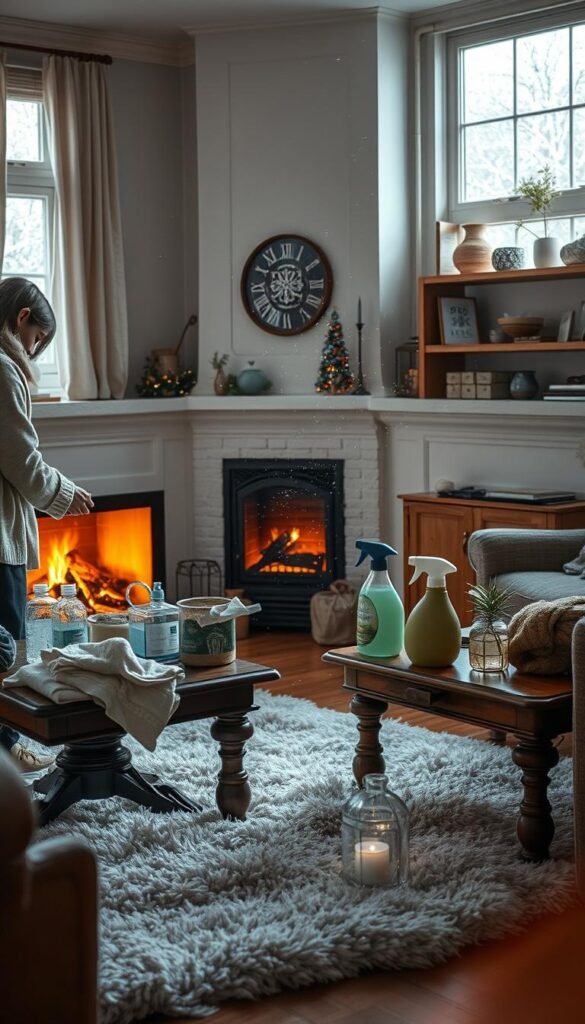
- Stack habits with routines you already do. Wipe counters after dinner. Restore the living room before bed.
- Keep a small caddy: microfiber cloths, a gentle multipurpose spray, gloves, a brush, and trash bags.
- Work top to bottom. Shelves first. Floors last. This saves time and effort.
- Share the load. Give each person a tiny task. Hooks and labeled bins speed resets.
“A few minutes every day keeps the season’s mess from piling up.”
Tools and Materials Checklist for a Simple, Safer Clean
Gather a small set of reliable supplies that make upkeep simple and safe.
Core supplies
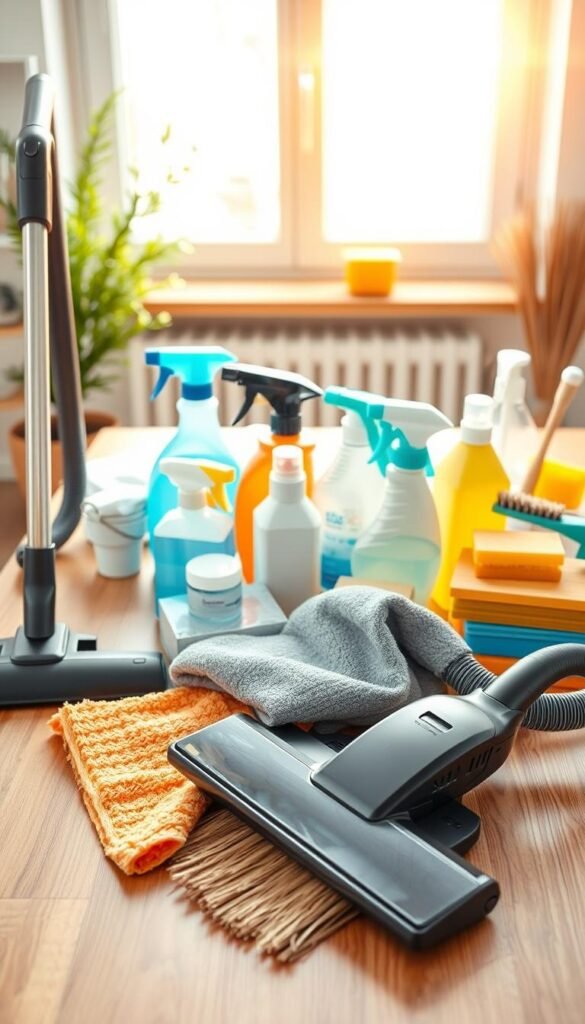
Keep it minimal. Microfiber cloths grab dust and leave glass streak-free. A vacuum with crevice, brush, and upholstery attachments reaches vents and mattresses.
Mop or spray mop handles hard floors. A gentle multipurpose cleaner and plain vinegar for windows cut down on chemicals.
Air and safety add-ons
Fresh HVAC filters and a dryer vent brush protect air and reduce lint fires. A sturdy step stool and gloves keep you safe. Protective eyewear helps for maintenance tasks.
Storage helpers
Clear bins, simple labels, and vacuum-sealed bags save space and make seasonal swaps easy. A small toolkit nearby speeds quick fixes.
“A few good tools remove the friction from routine upkeep.”
| Item | Use | Why it helps |
|---|---|---|
| Microfiber cloths | Dusting, glass | Traps particles. No lint. |
| Vacuum + attachments | Floors, vents, upholstery | Reaches tight spots. Reduces dirt build-up. |
| HVAC filters | Air system | Improves air quality. Aids maintenance. |
| Clear bins & labels | Storage | See contents. Quick access. |
Improve Indoor Air Quality: Filters, Vents, Humidifiers, and Easy Wins
Clear airflow is the low-effort way to help breathing and calm. Small steps make a big difference. You will notice fresher air and fewer particles in living areas.
Replace HVAC filters and dust vents
Turn off your system first. Remove return grates. Vacuum dust with a soft brush attachment. Replace filters with the correct size and rating.
Set a monthly reminder. New filters keep steady airflow and improve indoor air quality. Wipe dust from room vents and registers to cut allergens and dust.
Clean dryer vent and lint trap for safety
Unplug the dryer. Clean the lint trap every load. Use a vent brush to clear the duct to the wall.
Check the outside cap for blockages. If drying takes longer, the vent may be clogged. Clearing it boosts efficiency and reduces fire risk.
Tend humidifiers and air purifiers
Rinse humidifier tanks often. Descale per the manual. Replace wicks and filters on schedule.
If you use an air purifier, clean pre-filters monthly in winter. Replace HEPA filters per the brand’s guidance.

“Small air care tasks bring big daily relief.”
- Keep furniture away from vents to help heating in the colder months.
- Use a doormat system to trap grit at the door. Less grit means cleaner air indoors.
- Notice your breathing and comfort. Quick maintenance boosts calm.
| Task | Frequency | Benefit |
|---|---|---|
| Change HVAC filter | Monthly | Improves air quality and efficiency |
| Vacuum returns & vents | Monthly | Reduces dust and allergens |
| Clean dryer vent | Every 6–12 months or if drying slows | Prevents fires and saves energy |
| Maintain humidifier / purifier | Weekly tank rinse; monthly filter checks | Prevents mold; supports indoor air |
Decluttering Without Overwhelm: Keep, Donate, Discard
Choose one tiny zone and make fast, kind choices about what stays. This gentle approach keeps tasks small and steady. It helps your home feel calmer without pressure.
Room-at-a-time method
Work one room at a time. Pick a drawer, a shelf, or a corner. Small wins matter.
Short timer sessions
Set a 10–15 minute timer. Move quickly. Sort into three piles: keep, donate, discard.

- Start with one tiny zone. Keep it kind and light.
- Use three bins for quick choices. Avoid overthinking used items.
- Remove donation bags the same day. Fast exits prevent backsliding.
- Label homes for daily items. Bins, baskets, and hooks speed resets.
- Declutter before organizing. Fewer items means less dust and easier cleaning.
- Revisit hotspots weekly for five minutes. Small upkeep prevents big clutter.
“Aim for function, not perfect aesthetics. Your peace matters most.”
Room-by-Room Systems: Kitchen and Pantry Calm
Tackle the kitchen in short, calm bursts so it feels manageable each day.
Quick kitchen reset. Clear counters. Wipe the sink and stovetop. Run or unload the dishwasher. Sweep crumbs. These small tasks cut dirt and make the room ready for the next meal.
Monthly appliance care
Empty the fridge. Check dates and toss expired items. Wipe shelves with warm water and mild soap. Pull the fridge forward carefully. Vacuum and wipe the coils to boost efficiency and reduce dust.
Run an empty dishwasher with a cup of white vinegar on the top rack. This melts mineral film and freshens seals. Clean the filter and door gasket. For ovens, use the self-clean cycle or follow your model’s cleaner instructions. Soak stovetop grates in hot, soapy water and degrease the range hood.
Pantry edit and storage
Group items by category. Use clear containers and simple labels. Keep daily staples at eye level. Store rice, pasta, and baking soda in airtight jars to reduce pests and spills.

Keep a small “use-first” basket for items nearing expiry. End each night with a five-minute sweep. Little time spent now saves you larger tasks later.
“Short resets and clear labels make the kitchen feel calm all week.”
| Task | Frequency | Benefit |
|---|---|---|
| Daily reset (counters, sink, stovetop) | Daily | Reduces crumbs, dust, and surface dirt |
| Wipe appliance fronts & handles | Weekly | Lower allergens and germ spread |
| Fridge shelves & coils | Monthly | Fresh food, better efficiency |
| Dishwasher vinegar cycle | Monthly | Removes odors and mineral film |
| Pantry edit & labels | Monthly | Less waste. Faster meal prep |
Bathroom Routine: Steam, Surfaces, and Soothing Order
Tending small wet spots right after a shower prevents long-term buildup. Short, calm steps protect your fixtures and keep the room inviting. This routine saves you time and worry.
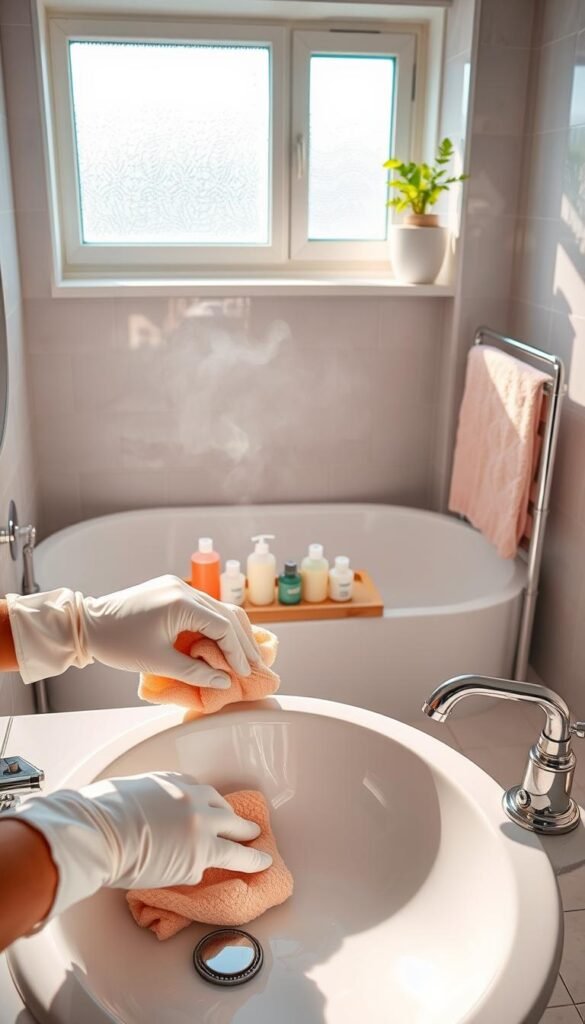
Daily wipe-down and squeegee
After each shower, squeegee glass and tile. Wipe faucets and handles. This cuts water spots and soap film right away.
Do a quick sink wipe with a gentle cleaner. Swap hand towels often. These tiny acts keep surfaces ready for the day.
Weekly scrub: tub, toilet, sink, grout refresh
Once a week, scrub the tub, toilet, sink, and grout lines. Ventilate while you clean so the air clears quickly.
Wash bath mats. Restock soap and toilet paper. Small resets stop clutter and reduce grime buildup.
Monthly wash: liners, curtains, descale showerheads
Every few months, machine-wash fabric curtains with detergent and a cup of vinegar. Gently wash plastic liners with a towel for scrubbing action.
Descale showerheads with a vinegar soak to keep spray strong. Use a baking soda paste on soap scum for effective removal. Rinse well and squeegee after use.
“A tiny caddy with a microfiber cloth, a brush, and a gentle cleaner makes upkeep simple.”
- Run the exhaust fan during and 20 minutes after showers to clear moisture and protect against mold.
- Check under the sink for leaks or moisture to prevent damage.
- Keep a tidy ledge and a closed hamper. Calm spaces help you relax.
Bedroom and Bedding: Dust Removal and Cozy Wash Cycles
Create a calm sleep zone by tackling bedding and dust in short, regular steps.
Your bed sets the mood for the whole room. Fresh sheets and a tidy surface help sleep. These small habits also cut allergens and lift air quality.

Weekly: sheets, pillowcases, throws
Wash sheets and pillowcases every seven days. Add throws if you use them nightly. Keep extras folded for quick swaps.
Monthly: comforters, duvet covers, bed skirts
Wash duvet covers, comforters, shams, and bed skirts per care tags. Follow manufacturer instructions to keep fabric quality.
Mattress care: HEPA vacuum and rotate
HEPA vacuum the mattress top and sides. Rotate it seasonally if the maker recommends it. This reduces trapped dust and helps the mattress wear evenly.
- Vacuum under the bed and along baseboards to cut dust and allergens.
- Dust headboards and frames. Wipe wood with a gentle cleaner.
- Wash or vacuum curtains and shades to support better air.
- Keep nightstands clear. A small tray reduces visual clutter.
- Place a laundry basket near the closet to limit floor piles.
- Consider allergen-friendly pillow and mattress covers for extra protection.
“A calm bedroom supports deeper rest, especially winter nights.”
| Task | Frequency | Benefit |
|---|---|---|
| Sheets & pillowcases wash | Weekly | Fresh feel. Fewer allergens |
| Duvet, comforter, bed skirt | Monthly | Removes buildup. Preserves fabric quality |
| Mattress HEPA vacuum & rotate | Every 1–3 months (vacuum); rotate seasonally | Reduces dust mites. Even wear |
| Vacuum under bed & window treatments | Monthly | Less dust. Better room air |
Closets and Seasonal Switch: Make Space for Winter Gear
Clear a single shelf and you instantly gain room for coats and boots.
Work one shelf at a time. Pull summer pieces into vacuum-sealed bags. Compress bulky items to free space.
Label bags and bins. Mark type and size. This helps quick finds on busy mornings.
Bring out coats and boots. Check for repairs. Note stains and missing buttons. Plan quick fixes before cold months arrive.
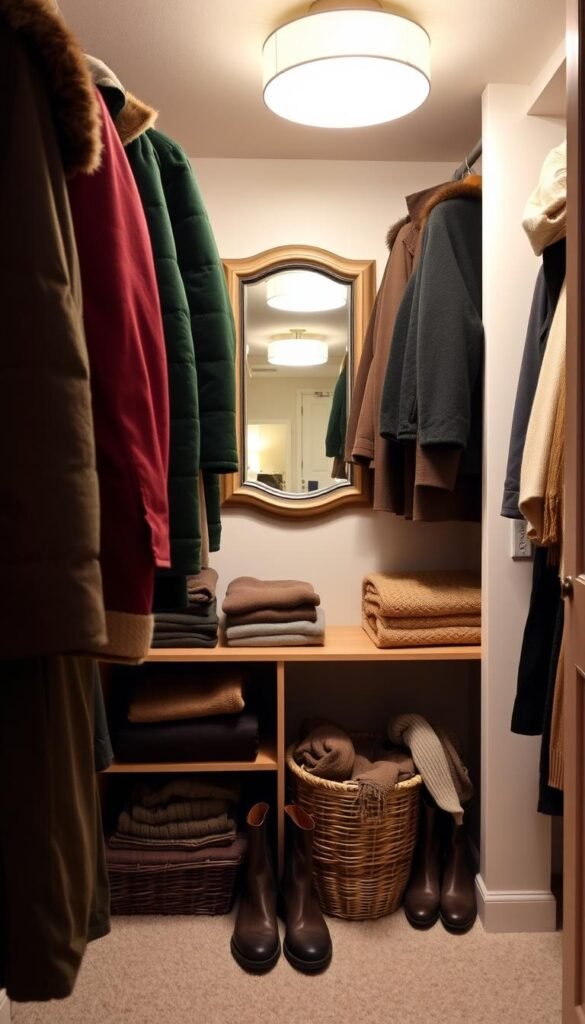
Simple, gentle steps
- Wipe shelves and rods before restocking to keep everything fresh.
- Use slim hangers and face clothes the same way for a tidy look.
- Place a boot tray near the door to catch grit and melt.
- Install lower hooks for kids to hang coats easily.
- Keep a small bin for donations. Add used items you no longer wear as you find them.
“A small rotation makes mornings calmer and keeps your home feeling orderly.”
| Task | How | Benefit |
|---|---|---|
| Store summer items | Vacuum-sealed bags labeled by type | More closet space. Easier access to current items |
| Check outerwear | Inspect coats, boots, and covers for repairs or cleaning | Ready-to-wear gear. Fewer last-minute fixes |
| Donate unused pieces | Keep a donation bin. Add items immediately | Less clutter. Good for others |
| Seasonal reminder | Phone alert for spring rotation in months ahead | Smooth switch-back. Fewer forgotten pieces |
Entryway and Mudroom: Contain Salt, Snow, and Clutter
A tidy threshold keeps wet shoes and clutter from spreading through your home.
Keep the entry simple. Focus on containment and a short evening reset. This saves you time and protects floors from water and salt damage.
Double mat system
Use two mats. One outside catches grit and snow. One inside absorbs melt and protects surfaces.
Shake and wash mats often. That prevents debris and keeps floors drier.
Hooks, trays, and a five-minute reset
Install sturdy hooks and a small bench. Add boot trays to hold water and salt. Empty and wipe trays daily.
Try a five-minute evening routine. Line up shoes. Hang coats. Clear mail. Wipe the doorknob.
High-touch wipe-down
Wipe knobs, railings, and switches a few times a week. This simple habit reduces dust and limits germ spread.
Keep a labeled basket for hats and gloves. Use a closed bin for deliveries and returns. Bright light and clean glass make quick resets easier.
“Small containment choices keep your entry calm and your floors safe.”
| Task | Frequency | Why | Quick tip |
|---|---|---|---|
| Shake and wash mats | Weekly or as needed | Removes salt and debris | Rotate two sets for drying |
| Empty boot trays | Daily | Prevents water damage | Line trays with a towel for easy drying |
| Five-minute reset | Every evening | Keeps areas clutter-free | Set a timer to build habit |
| Wipe high-touch surfaces | 2–3 times weekly | Limits dust and germs | Use a gentle disinfectant on handles |
Floors, Carpets, and Rugs: Vacuum, Spot, and Deep Clean
High-traffic zones collect the most dirt — treat them with a steady, small routine.
Keep a short plan. Focus on entry, hall, and living room first. These spots trap grit and allergens.
High-traffic vacuum plan
Vacuum these areas 2–3 times a week in winter. Use slow passes and the correct height setting.
Work edges and baseboards where extra dirt builds. A steady pace lifts more debris than quick vacuuming.
Spot removal and rug care
Blot spills with plain water first. Then dab a gentle cleaner if needed.
Take area rugs outside and shake them to remove dust and debris. Check care tags; many small rugs are machine-washable. Air dry flat to protect the backing.
When to shampoo or steam
Vacuum well before any wet work. Deep clean carpets seasonally or when they look dull.
Rent a machine or hire pros for large areas. Allow full dry time before moving furniture. Open interior doors to improve airflow for faster drying.
“A small caddy with stain remover and a cloth makes quick spot work calm and doable.”
| Task | Frequency | Why |
|---|---|---|
| Vacuum high-traffic areas | 2–3× weekly (winter) | Removes dirt and reduces allergens |
| Shake or machine-wash small rugs | Monthly or as needed | Clears dust and debris; protects fibers |
| Spot treat spills | Immediately | Prevents stains; uses minimal water |
| Carpet shampoo/steam | Seasonal or when dull | Deep clean for heavy use; professional option |
Rotate rugs each season. Add doormats and encourage a shoe-off habit. Small habits keep your home calmer and floors easier to maintain.
Windows, Light, and Dust Removal in Low-Light Months
A clean view helps a small space feel wider and calmer.
Start at the sills and tracks. Dry dust or vacuum loose grit first. This prevents grit from turning into mud when you add water for wet work.
Sills, tracks, and streak-free glass
Wash glass with warm water and mild soap or a window cleaner. Use a squeegee top to bottom for a streak-free finish. Wipe edges and frames with a microfiber cloth.
When possible, clean both sides. More light enters. The whole room feels brighter.
Ceiling fans, trim, and baseboards
Use an old pillowcase over fan blades and pull it back to trap dust. Microfiber cloths work well on trim and baseboards.
Wipe damp, then dry surfaces to avoid paint or wood damage. This simple step helps prevent buildup and keeps air moving cleaner.
- Dust blinds with a brush attachment. Use a mild cleaner for sticky spots.
- Clean lampshades and light bulbs. Brighter bulbs plus clean shades boost light instantly.
- Finish with a quick sweep under windows to catch any loose dust.
“Small, steady work at windows and trim gives a big lift to light and air.”
Fireplace, Appliances, and Home Maintenance for Winter
A little upkeep today keeps your home safer and more efficient this season.
Safety first. Schedule a chimney inspection before heavy use. A pro removes creosote and checks flues. That reduces fire risk and helps ventilation.
Remove only cooled ashes. Scoop into a metal container. Wipe the firebox and check the damper for smooth movement.
Behind major appliances
Unplug the fridge and slide it out carefully. Put cardboard under the wheels to protect floors. Vacuum coils and wipe them down. Cleaner coils improve airflow and lower energy use.
Move the stove the same way. Clean grease and crumbs underneath. Empty and wash drip pans. Replace or wash range hood filters per the manual.
Gutters and outdoor care
Clear gutters of leaves and debris. Ensure downspouts direct water away from the foundation to prevent damage.
Consider gutter guards if buildup is frequent. Clean and cover outdoor furniture. Store cushions inside for the season to avoid mold and dirt.
“Small checks now prevent bigger repairs later.”
- Schedule a chimney sweep and check the damper.
- Store ashes safely. Wipe the firebox.
- Unplug and protect floors before moving appliances.
- Vacuum coils. Remove dust to boost efficiency.
- Clear gutters and confirm proper drainage.
- Clean, cover, or store outdoor furniture and cushions.
- Note small repairs now to avoid bigger problems in deep cold.
| Task | When | Benefit |
|---|---|---|
| Chimney inspection | Annually before heavy use | Reduces fire risk and improves ventilation |
| Vacuum appliance coils | Every 3–6 months | Better airflow and lower energy use |
| Gutter clearing | Seasonal or after storms | Prevents water damage and buildup |
| Outdoor furniture care | At season start | Extends life and prevents mold |
Winter Cleaning Guide: Post-Holiday Reset and Gentle Habits
After guests leave, a small, steady plan restores order without stress. You can clear festive debris and tuck things away in gentle steps. The goal is calm. Not perfection. This short plan helps you finish a busy season and return your home to a peaceful rhythm.
Glitter, pine needles, and decor storage
Start with a slow vacuum. Use the crevice tool along baseboards to lift needles and sparkles.
Sort decor by room and type. Pack items in clear, labeled bins. Wrap fragile pieces gently. Coil lights loosely and secure ends. Label by length or location so next setup is easy.
Trash can refresh with baking soda and vinegar
Refresh cans outdoors. Wash with hot, soapy water. Rinse well.
Sprinkle baking soda for odor control. Add a vinegar rinse to cut lingering smells. Let cans dry fully in sunlight when weather allows. Replace liners only when dry.
- Keep a returns tote by the door for quick errands.
- Review new gifts and duplicates. Donate extras while packaging is fresh.
- Store gift wrap in a tall bin with dividers and a tape pouch.
“Small nightly tidies for a week make the whole house feel settled again.”
| Task | How | Benefit | Timing |
|---|---|---|---|
| Vacuum needles & glitter | Slow passes; crevice tool | Removes debris without scattering | After gatherings (winter season) |
| Pack decor | Clear bins; label by room | Easy access next year | Same day or within days |
| Refresh trash cans | Hot wash, baking soda, vinegar rinse | Removes odors and residue | Monthly or after events |
| Wrap up gifts & returns | Sort duplicates; use returns tote | Less clutter. Quick errands | Within 7 days |
When to Call Pros for Safe, Thorough Help
Some tasks are best left to trained hands for safety and speed. You can still choose what you do and what you outsource. That keeps your schedule gentle and your home safer.
Call a pro when safety or scale is involved. Chimney inspection and cleaning. Deep carpet or upholstery shampooing. Gutter clearing on multi-story roofs. HVAC performance checks and filter swaps. Tall or exterior windows that are hard to reach.
- Pros bring tools and know-how. They save time and reduce risk.
- Ask for fragrance-free products if you prefer gentler cleaning.
- Get quotes and timelines. Fit work to your budget and calendar.
- Keep a simple seasonal list of areas you outsource each winter.
“Hiring help is not a failure. It’s a smart, calm choice when life is full.”
| Service | When to Call | Benefit |
|---|---|---|
| Chimney sweep | Annually before heavy use | Fire safety and better ventilation |
| Carpet & upholstery | Stains, odors, or annual deep clean | Restores fibers; removes trapped allergens |
| Gutter cleaning | Multi-story or after heavy leaf fall | Prevents water damage and ice build-up |
| HVAC maintenance | Seasonal check; filter guidance | Improves efficiency and air quality |
| High windows | Exterior or hard-to-reach panes | Clear light; safer access |
Conclusion
Finish strong with small steps that keep your home calm and healthy.
Keep it simple. Do a short daily reset. Pick one room each week. Choose one monthly deep task. These small acts add up over the season.
Care for air and light. Change filters. Wipe vents and windows. You will feel the difference in comfort and quality.
Contain mess at the door. Use double mats, hooks, and trays. Spend five minutes each evening to tidy. Progress matters more than perfection.
Use the tools you have. Add only what helps momentum. Call pros for big, high, or risky jobs. You do not have to do it all.
Pick one system and start today. Set a timer. Stop on time. Let your home support you while you spend time indoors this winter. Small, steady steps keep things calm, cozy, and clear.
FAQ
How often should I replace HVAC filters to improve indoor air?
Replace standard filters every 90 days. If you have pets or allergies, swap them every 30 to 60 days. Use a higher MERV rating or a HEPA-compatible filter for better capture of dust and allergens. A fresh filter keeps air moving and reduces buildup on vents.
What are quick daily tasks to keep a calmer home during colder months?
Do a five-minute reset each evening. Clear counters. Wipe high-use surfaces. Shake out rugs at the entry. Put items back in their spots. These small steps prevent clutter from growing and make weekly cleaning easier.
Which supplies are essential for a safe, gentle clean?
Keep microfiber cloths, a vacuum with attachments, a mop, gentle cleaners, and white vinegar on hand. Add gloves, a step stool, and a dryer vent brush for safety. Simple tools reduce time and stress.
How can I improve moisture and air quality with humidifiers and purifiers?
Clean humidifiers weekly and change their water daily. Replace humidifier filters per manufacturer instructions. Run an air purifier with a HEPA filter in bedrooms. Together they balance humidity and cut airborne particles.
What’s the easiest way to declutter without feeling overwhelmed?
Use a room-at-a-time method. Set a 15- or 20-minute timer. Sort into keep, donate, and discard piles. Small sessions build momentum and prevent burnout.
How often should bedding be washed to reduce dust and allergens?
Wash sheets and pillowcases weekly. Wash throws and frequently used pillow covers every two weeks. Clean comforters and duvet covers monthly or as needed. Regular washing reduces dust mite buildup and keeps sleep spaces fresh.
When is it time to call a professional for things like chimneys or deep carpet cleaning?
Call a chimney sweep before heavy use or if you notice smoke smells. Hire carpet or upholstery pros if stains or odors persist after spot cleaning. Also call pros for mold, pest signs, or HVAC repairs beyond basic filter changes.
How do I protect floors from salt and snow without constant mopping?
Use a double-mat system at the entry. Keep a tray with a towel for wet boots. Wipe shoes at the door and have a short daily sweep for grit. Treat high-traffic areas with quick vacuuming to prevent long-term wear.
Can vinegar be used safely for most household tasks?
Yes. White vinegar is great for descaling showerheads, running dishwasher vinegar cycles, and refreshing trash cans. Avoid using vinegar on natural stone, waxed surfaces, or certain sealed finishes. Test a small area first.
What’s the simple routine for maintaining a clean dryer vent and lint trap?
Clean the lint trap after every load. Check and vacuum the dryer vent every few months. Remove lint from the external vent flap and consider a professional duct cleaning yearly if you notice reduced drying efficiency.
How should I store seasonal items to save space and prevent damage?
Use clear bins and labels. Vacuum-seal bulky textiles to save room and block moisture. Store shoes in breathable boxes. Keep delicate items in acid-free tissue and off damp basements.
What are gentle ways to freshen a mattress without heavy treatments?
Vacuum the surface with a HEPA-equipped attachment. Spot-treat stains promptly. Air out the mattress on a sunny day when possible. Rotate or flip per manufacturer guidance to maintain even wear.
How often should I deep clean the kitchen appliances like fridge and oven?
Wipe spills weekly. Do a monthly fridge edit and wipe shelves. Run an oven or use a vinegar steam method monthly for light buildup. Give the dishwasher a vinegar cycle monthly to remove residue.