Room-by-Room Decluttering Checklist
Life is busy. You want a calm home. You also want realistic steps that fit your day.
This gentle guide helps you move through your house one room at a time. It offers a simple plan and clear process. Small wins build steady momentum.
Prepare a few basics. Grab trash bags, a donation box, a recycle bin, labels, and a timer. Work short blocks. Finish each small section before you stop.
You will find clear methods for sorting items. Decide once. Keep, relocate, donate, sell, or discard. These simple steps reduce clutter and free up spaces.

Key Takeaways
- Move through the home one room at a time for less stress.
- Use a short plan and basic supplies before you begin.
- Work in timed blocks to keep energy and focus.
- Sort with a clear method and decide once per item.
- Build simple daily and weekly habits to prevent future clutter.
Start Here: A Calm Plan to Declutter Home Without Overwhelm
Begin with a tiny, reassuring step you can finish in minutes. This simple plan helps you move gently. It keeps choices small. It protects your energy.

Simple goals and gentle pace
Set one small goal for the day. One shelf. One drawer. One tiny area. Fifteen minutes or a single focused hour. Use a timer. Stop when you need to.
“Small wins build steady momentum.”
What you’ll need: bags, bins, and basic tools
Gather supplies before you start. Large trash bags. Labeled bins for keep, relocate, donate, sell, trash. A soft cloth for quick wipe-downs.
- Create five sorting spots so items are easy to move.
- Work one room zone at a time. Do not empty everything at once.
- Use a “decide later” bin for tricky items and move on.
- Put away the relocate pile before you stop. A three-minute reset helps.
This way is practical and kind. Little steps each day change your homes and the process becomes natural.
The Core System: Sort, Decide, and Move with Ease
Start with a simple system you can repeat again and again. It keeps choices small. It saves energy. Use this calm method each time you decluttering a spot.

The 5-category method
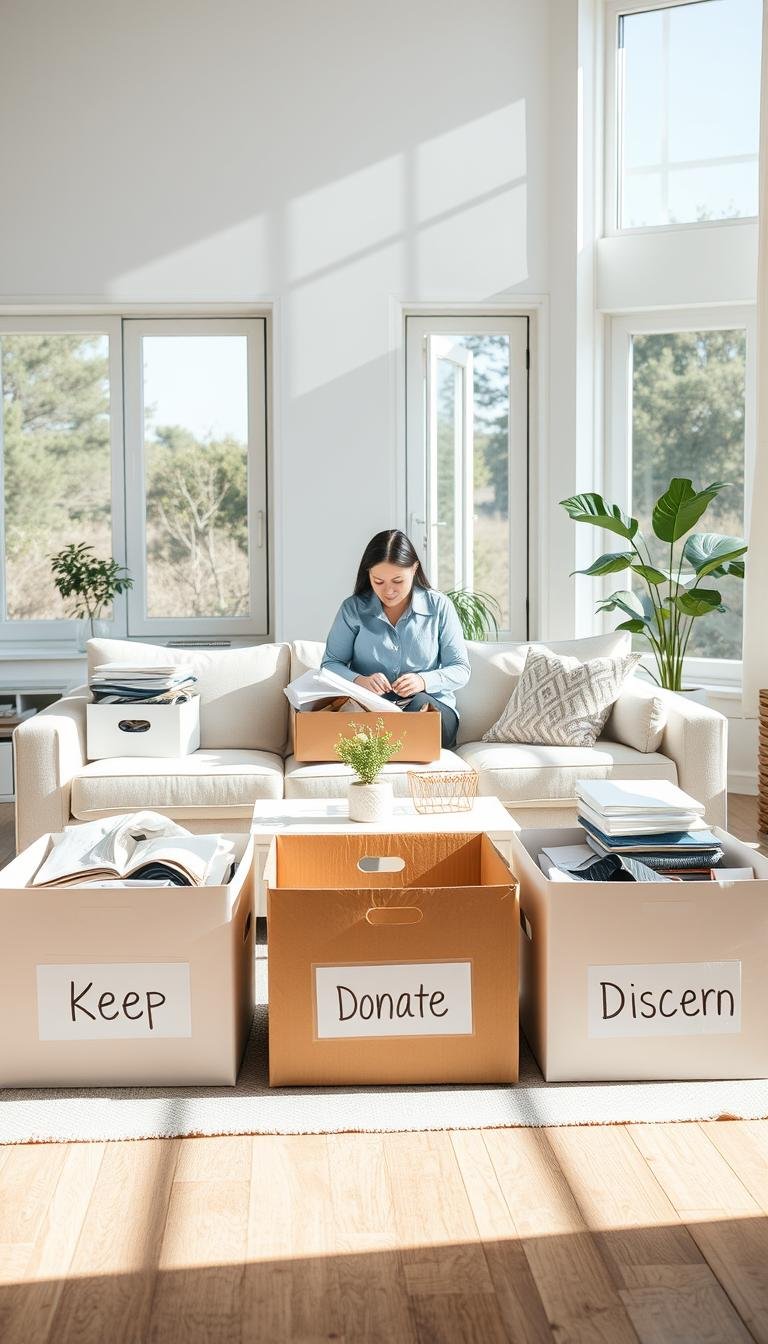
Create five clear piles: Keep (here), Relocate (elsewhere), Donate, Sell, Trash (broken or expired).
This reduces back-and-forth. It speeds the process. It makes decisions easy.
Quick rules to help you let go
- 12-12-12: find 12 to throw away, 12 to donate, 12 to put away.
- 20/20: if it costs under $20 and takes 20 minutes to replace, consider letting it go.
- 80/20: you use 20% of items most. Edit the rest gently.
- Five-Second check: if you cannot recall last use in five seconds, it may be time to release.
- Five-year rule: not used in five years? Move it out kindly.
Light boundaries that last
Set simple space limits. One shelf for backups. One-in/one-out for similar items.
Move fast with small decisions. If a choice is tricky, set the item aside and keep going. These steps protect your momentum and your calm.
Entryway Reset: Create a Clear Path In and Out
Start with a clear path so coming home is easy and soft. Clear the entry space first. A free walkway calms the entire house.
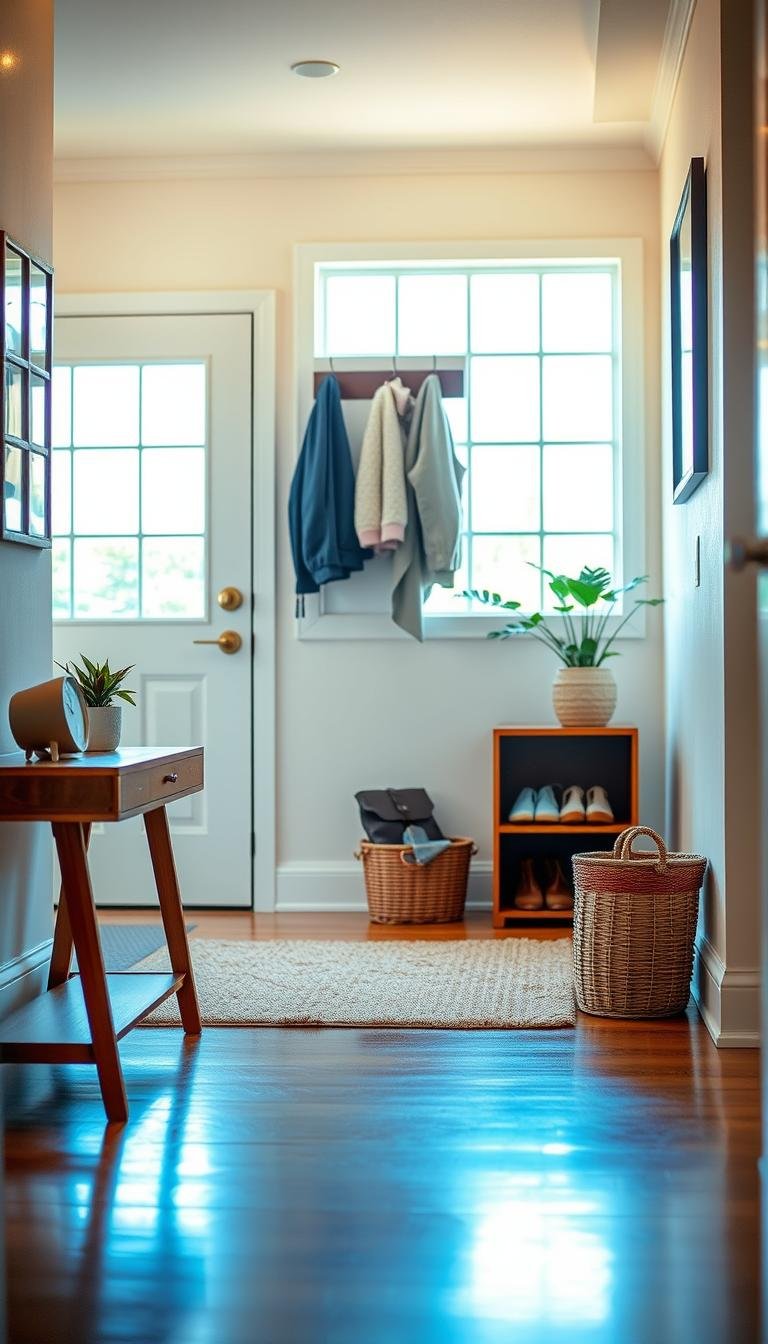
Give each family member one small basket or hook. Limit these to in-season items. Rotate with weather. This keeps daily things visible and ready.

Hooks, trays, and one small basket per person
Make a home for keys, mail, and your daily carry items. Add a small tray for wallets and a slim shoe rack or shared bin.
- Start with floors and surfaces. Clear shoes, bags, and paper piles so the path feels open.
- Sort mail as you enter. Recycle junk and place urgent paper in a vertical sorter.
- Keep a lidded bin for umbrellas and pet leashes. Label it lightly.
- Do a two-minute reset each evening. Line up shoes and hang coats.
| Need | Quick Fix | Storage Solution |
|---|---|---|
| Keys & Wallets | Single tray by door | Small dish or tray |
| Shoes | Limit to in-season pairs | Slim rack or shared bin |
| Sort at entry | Vertical sorter |
Return out-of-place items to their rooms before bed. One small motion keeps this way calm and simple.
Kitchen Decluttering: Zones, Containers, and Daily Flow
A tidy kitchen makes daily meals feel easier and calmer. Work in short bursts. Focus on one zone. Small wins build momentum.

Pantry and food: dates, duplicates, and simple categories
Start with easy wins. Toss expired food and stale spices. Pull duplicate items and plan to use near-term items this week.
Group by category—baking, snacks, cans, grains. Light labeling helps everyone return things to the right spot.
Tools, gadgets, and counters: keep what serves your cooking
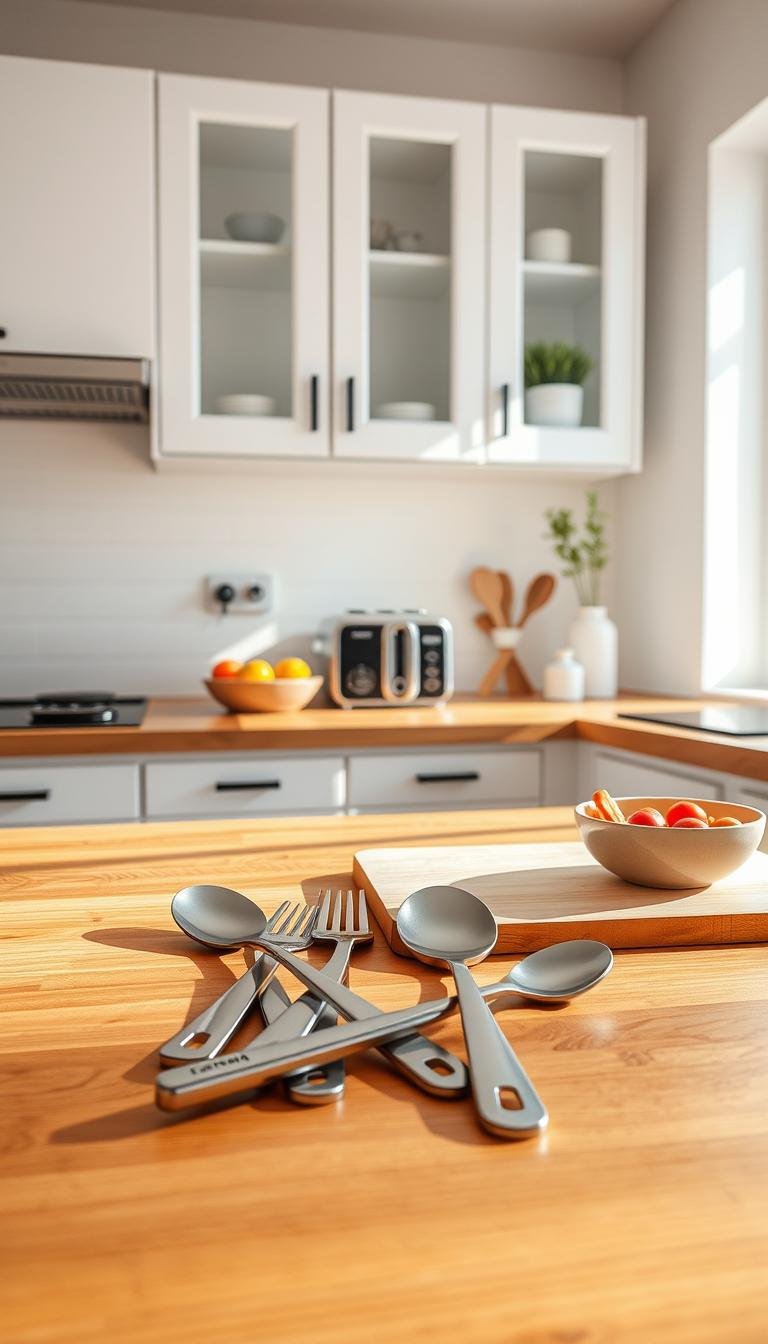
Keep one of each tool you reach for. Let single-use gadgets go if they slow you down. Clear counters of non-daily items.
Only daily appliances stay out. Everything else belongs in a cabinet or drawer for smoother meal flow.
Under-sink and drawers: dividers and labeled bins
Use simple dividers and a few labeled bins for storage. Match containers and lids. Recycle mismatches and stained pieces.
Under the sink keep kitchen cleaning supplies you use now. Move extras to a different storage spot.
Quick nightly reset: five-minute surfaces and sinks
Finish the day with a five-minute reset. Load the dishwasher. Wipe counters. Clear the sink. Mornings will feel easier.
| Zone | Quick Action | Suggested Container |
|---|---|---|
| Pantry | Check dates. Consolidate duplicates. | Clear bins or turntables |
| Counters | Remove non-daily items. Store appliances. | Small appliance cabinet |
| Drawers | Use dividers. Keep daily tools. | Drawer trays |
| Under-sink | Limit to current cleaning supplies. | Stackable bins |
Pantry: Simple Categories That Save Time
A tidy pantry speeds cooking and cuts last-minute stress. Keep the plan small. Work one shelf at a time. Wipe, sort, and restock with calm intention.

Core groups and gentle order
Group staples by function: baking, snacks, canned goods, grains, and oils. Keep it obvious. This helps you find items fast and reduces wasted food.
Practical habits that last
- Check dates as you go. Make a small use-first spot for near-expiry products.
- Consolidate duplicates. One open bag of rice. One spare can stack.
- Decant only when it truly helps. Use clear containers with tight lids for things you reach for daily.
- Choose shallow bins so small items don’t get lost. Front-row placement saves time.
- Label lightly. Small tags or shelf labels are enough. Avoid perfection. Aim for clarity.
- Keep heavy items low and everyday items at eye level. If space allows, keep a tiny backstock zone with a set limit.
Quick care: do a five-minute tidy weekly. Return stray items to their category. Let your pantry serve cooking, not the other way around.
Bathroom: Small Wins with Big Calm
Focus on one category at a time to make real progress in the bathroom. Work in five- to fifteen-minute bursts. Small edits add up quickly. You will feel calmer and more ready each morning.
Edit by category:
Makeup, skincare, hair, first aid
Sort each group separately. Review makeup dates. Mascara usually lasts about three months. Foundation and lip products can last about a year. Toss what is past its safe use.
Clear skincare and hair products next. Keep what you use today. Let duplicates go. Use drawer dividers to keep daily items easy to reach.

Safe disposal and a single backstock
Dispose of expired medications at a pharmacy drop-off. Keep only current first-aid basics. Create one small backstock space. When it’s full, pause buying until you use what you have.
Quick habits:
- Work by category, not by cabinet. Small blocks of time win.
- Keep counters clear and do a 30-second nightly reset.
- Store travel sizes together for a simple go kit.
| Category | Quick Action | Storage Tip |
|---|---|---|
| Makeup | Check dates; toss old tubes | Small tray for daily pieces |
| Skincare | Keep current products only | Drawer divider near sink |
| First aid | Remove expired meds safely | One small kit in cabinet |
Choose calm over excess. Fewer products. Easier cleaning. A softer start to your day. This gentle edit helps you keep the space useful and kind.
Bedroom & Closet: Clothing, Surfaces, and Gentle Decisions
A small, visible change sets a calm tone for the whole bedroom. Start simple. One steady action helps your mind relax.
Make the bed first. It gives you a clear surface to fold and sort. It also creates instant order and a softer wake-up each morning.

Sort by type to speed choices
Group jeans, tees, dresses, and shoes together. Comparing clothes side by side makes decisions faster. You waste less time and doubt.
The four-pile method
Create four piles: organize, launder, repair, donate. Put items back, wash what needs it, mend what matters, and gently get rid of the rest.
Clear surfaces and small signals
Keep nightstands and dressers calm. One small tray for glasses and lip balm. One book. Limit dresser-top items to daily essentials.
- Use slim hangers to save space.
- Keep a tiny mending bag and a hamper nearby.
- Do a five-minute sweep weekly and pick one piece to donate.
| Task | Quick Action | Benefit |
|---|---|---|
| Make bed | Daily; 2 minutes | Instant order |
| Closet sort | Type-by-type | Easier choices |
| Surface care | Tray + one photo | Calm space |
Living Room: Clear Surfaces, Calm Storage
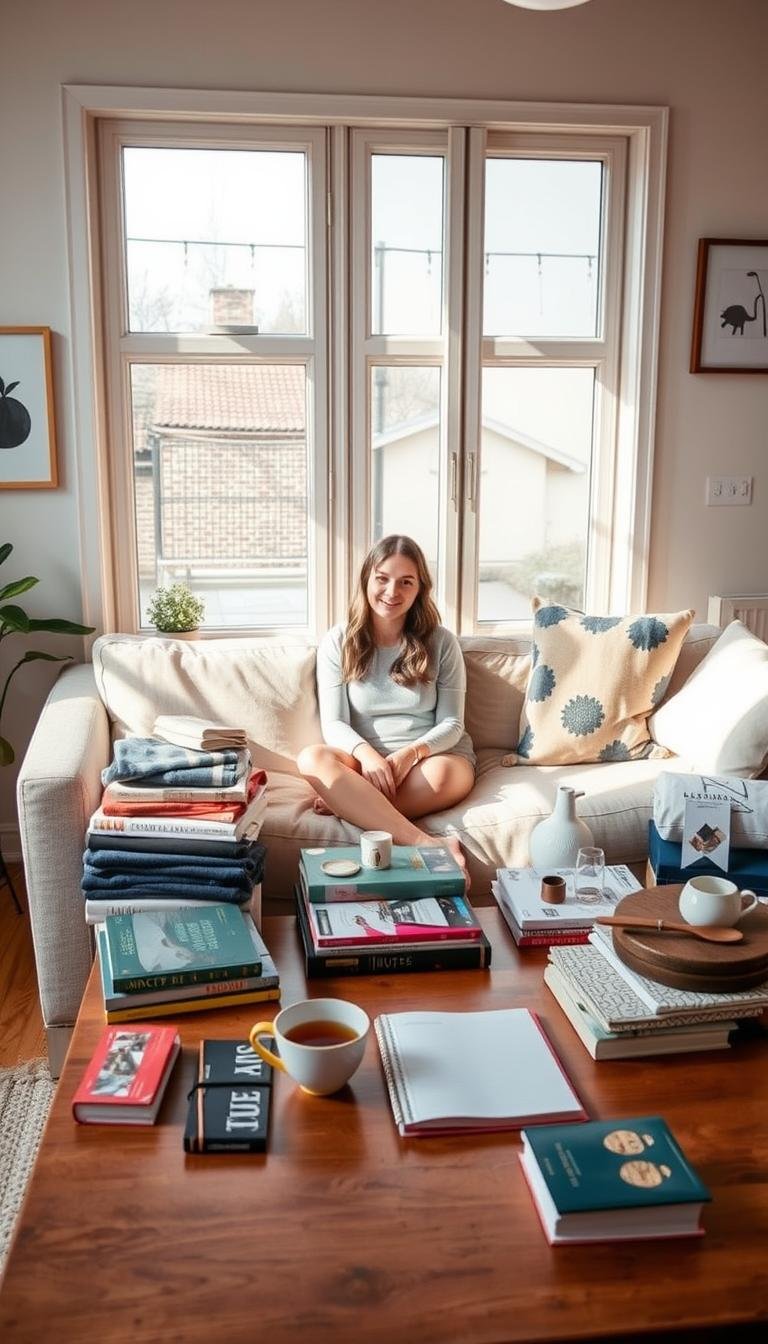
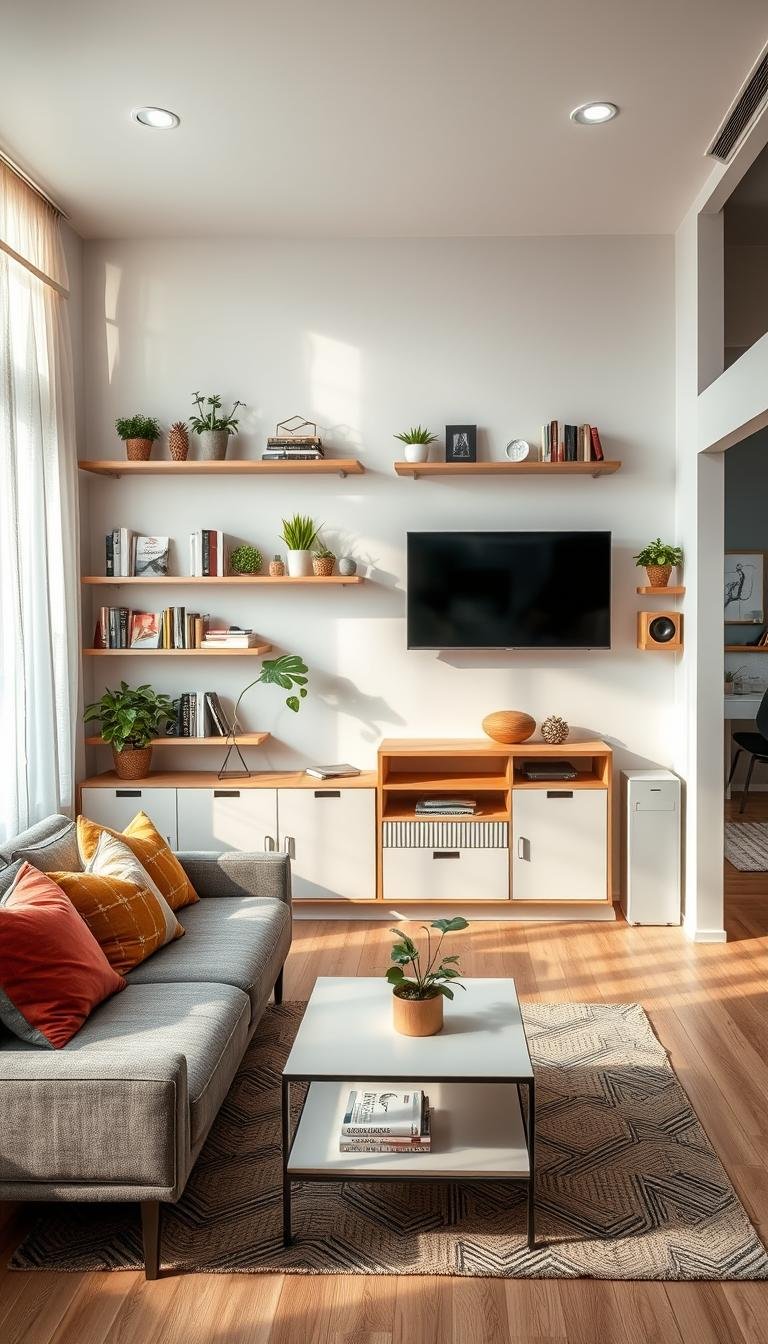
Start where your eyes land: a tidy surface invites rest and ease. Begin with the coffee table and side tables. Clear everything. Keep only daily-use favorites and a small decorative piece.

Media, cords, and remotes: contain and reduce
Contain remotes and cords. Use a small lidded box or basket on the console. Label chargers by device. Tuck cables into a slim cord organizer behind the TV.
Empty a bookcase or console one shelf at a time. Assess items. Remove electronics you no longer use. Store gaming gear where it is played.
“A few purposeful storage choices make the living space feel restful.”
- Edit décor with a light hand. Keep what adds warmth and meaning.
- Donate DVDs, games, and books you won’t use again.
- Choose furniture with hidden storage. An ottoman with space. A lidded basket for throws.
- Create one small drop zone. A tray or basket catches stray items.
- Do a quick end-of-day tidy. Return things to their homes before you relax.
| Task | Quick Action | Why it helps |
|---|---|---|
| Surfaces | Clear coffee & side tables | Instant calm and visual breathing room |
| Cords & remotes | Use lidded box & label chargers | Less visible tangle. Faster find. |
| Media | Donate unused DVDs/games/books | Frees shelves and reduces clutter |
| Consoles & drawers | Sort one compartment at a time | Avoids overwhelm. Keeps momentum. |
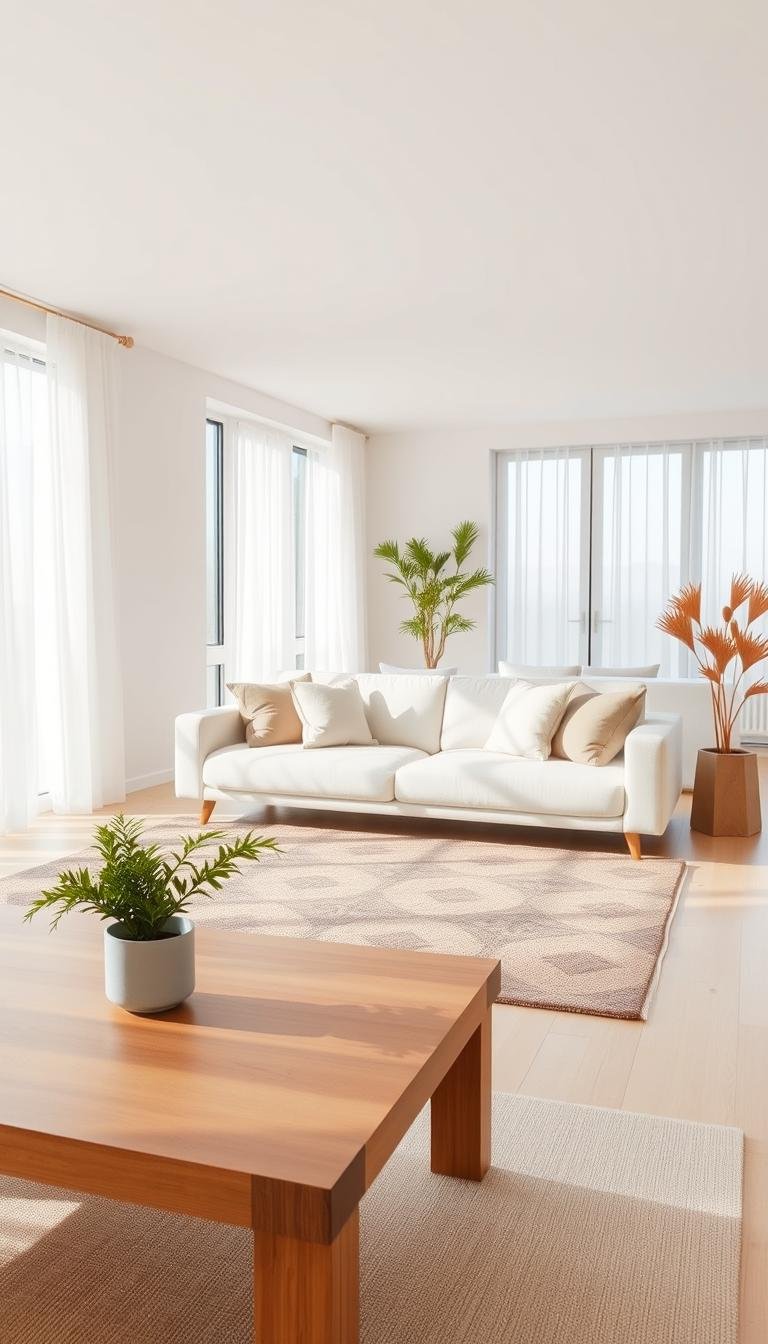
Revisit this space seasonally. Edit blankets and décor as needs change. Aim for breathing room. A few loved pieces. Clear lines. A living space made for rest.
Kids’ Spaces: Toys, Clothes, and Easy Cleanup
Small systems make toys easier to manage every day. Keep the plan light. Do one category at a time. Short habits beat big overhauls.

Sort by play type for faster choices
Start with clear groups: building, pretend play, games and puzzles, art supplies. Work on one pile. Quick wins build momentum.
Remove broken pieces and incomplete sets first. That single step clears visual clutter and keeps play safe.
Rotate, donate, and retire with kindness
Ask your child to choose favorites to keep out. Put extras in a box to rotate every few weeks. Donate outgrown items together. It teaches sharing and choice.
Retire duplicates. Keep the version they love. Fewer items make play deeper and easier to tidy.
Simple storage and tiny tidy times
Use clear bins with picture or word labels so kids can help. Create small play zones near family spaces. Keep only a few favorites out.
- Sort toys by category so retrieval and clean-up are fast.
- Replace dried markers and toss unusable art items.
- Use a small basket for the week’s outfits to speed mornings.
- Try two five-minute tidy times. One midday. One evening.
| Task | Quick Action | Why it helps |
|---|---|---|
| Broken toys | Remove immediately | Safer play. Clearer shelves. |
| Rotate sets | Swap every few weeks | Fresh interest. No extra buying. |
| Labels | Words or pictures | Kids tidy more easily. |
Celebrate effort, not perfection. Small, regular steps help your family learn a calm rhythm. Play stays fun. Cleanup stays doable.
Home Office & Paper: Focused Systems for Work and Family
A calm desk starts with a clear paper habit and a short timer. Keep things simple. Small steps each week prevent long piles.
Set a paper flow: In. Action. File. Recycle. Use two small trays. One for mail in. One for items that need action. Limit each tray so buildup stops.
Paper flow: file, scan, shred, recycle
Scan documents you rarely need. File the rest. Shred sensitive papers right away.
Keep tax records and key receipts for about seven years. Remove outdated warranties and manuals. Most are online. Recycle what you can.
Supplies and tech: test, group, and let extras go
Test pens and markers. Toss dried ones. Group chargers and cables by use. Label lightly so they live where you use them.
Remove broken equipment you will not repair. Use drawer dividers for small items. A tidy drawer keeps your desk calm and your focus steady.
- Use one labeled file box for active family documents. When full, review and edit.
- Shred sensitive papers. Store tax files safely for years.
- Time-box sessions to 15–20 minutes. Clear decisions feel easier.
- End with a reset. Clear the surface. Put tools away. Leave the desk ready for tomorrow.
| Task | Quick Action | Why it helps | Suggested Tool |
|---|---|---|---|
| Sort into In/Action/File | Limits piles | Two small trays | |
| Sensitive documents | Shred or secure | Protects privacy | Cross-cut shredder |
| Supplies | Test and purge | Less clutter, more function | Drawer dividers |
| Tech | Group by use | Faster access | Labelled pouches |
Garage & Storage: Seasonal Items, Tools, and Clear Zones
A clear garage gives you straightforward access to the things you actually use. Start by imagining a single open aisle. That small change helps everything feel reachable.
Keep only what serves you now. Group sports, holidays, garden, tools, and car-care into small zones. If you no longer use a piece of gear, donate or sell it. If seasonal décor has sat unused for two years, let it go kindly.
Check tools for safe function. Toss broken ones and keep the best version of each tool. Sort car-care products. Remove expired fluids and follow local rules for disposal. Do not place old automotive liquids in regular trash.
Use sturdy shelving and clear bins with labels. Store heavy bins low. Keep an aisle you can walk. If you cannot access something, you will not use it.
- Divide the garage into clear zones: sports, holidays, garden, tools, car care.
- Set one small limit for “someday” items. When the bin is full, choose what goes.
- Schedule donation and recycling drops the same week so clutter actually leaves.
- End with a quick broom sweep. A clean floor signals a fresh start.
| Task | Quick Action | Benefit |
|---|---|---|
| Seasonal decor | Review; donate if unused 2+ years | Frees space and reduces repeat sorting |
| Tools | Test; discard broken; keep one of each | Safer work and clearer storage |
| Car care | Remove expired fluids safely | Protects your car and the environment |
Room-by-Room Decluttering Routines: Daily, Weekly, Monthly
Little, consistent actions protect your calm and cut future time spent tidying. Keep routines short. Choose one small habit each day. These tiny moves keep your checklist practical and kind.
Daily
One-touch mail. Recycle junk at the door. File or act on important paper the same day.
Do a ten-minute evening tidy. Clear kitchen hotspots and living areas. Reset surfaces for morning.
Return items to their homes after use. These small motions save you time later.
Weekly
Do quick sweeps in high-use spaces. Five minutes per space keeps ahead of buildup.
Drop donations weekly or biweekly. Empty bags make decisions final. Review kids’ toys. Rotate a few. Remove broken pieces.
Check the kitchen before grocery day. Toss expired items and write a short restock list.
Monthly
Review systems. If a bin overflows, set a limit or adjust categories.
Schedule a donation run and a light pantry reset. Mark these on your checklist. Celebrate small wins each month.
“Small, steady habits keep your home calm and your time free.”
| Routine | Action | Benefit |
|---|---|---|
| Daily | One-touch mail; 10-minute tidy | Less daily buildup; smoother mornings |
| Weekly | 5-minute sweeps; donation drop | Keeps high-use areas tidy |
| Monthly | System review; pantry reset | Adjusts storage to life changes |
Momentum and Timeline: One Room at a Time, Steady and Kind
Choose a timeline that fits your life and let small wins build your confidence. A clear plan helps you move without pressure. Pick a pace and protect your energy. Progress matters more than perfection.
Choose a pace: one-month sprint to one-year plan
For apartments or small homes try a one-month sprint. Do 20 minutes each day. Add a longer weekend block for deeper spots.
Or stretch this into two to three months, tackling one room per week. For larger family homes consider a one-year plan — one room per month. A six-month plan means two rooms per month. A three-month pass is one room per week.
Start with easy spaces to build confidence
Begin with quick wins. Entryway and bathrooms usually tidy fast. That momentum helps you handle the kitchen and living areas next.
If you have kids, edit toys before living spaces. Save paper and storage areas for later. Your systems will feel stronger by then.
- Choose a timeline that fits your season. A one-month sprint. A three-month pass. Or a gentle year-long plan.
- Focus on one room at a time. Finish fully. Then move on. This protects energy and clarity.
- Schedule short, defined time blocks. Consistency beats marathon sessions.
- Track your process in a simple list. Check off one room at a time. Celebrate each finish.
- Adjust the way as needed. Life changes. Your plan can flex with it.
“Progress over perfection. Kind choices, steady steps, and restful spaces.”
Conclusion
Gentle routines turn short minutes into lasting order. Keep a simple checklist nearby. Use it for quick sessions when time is tight. Small efforts each day protect the calm you made in your home.
Use the five-category rule and quick decisions. Sort by category and keep items that serve daily life. Focus on key areas like the kitchen, pantry, bedroom, and living room. Use clear containers so things are easy to find and put away. When an item no longer fits, get rid of it kindly.
Keep paper flowing. Do evening five-minute resets. Rotate clothing each season. Move donations out weekly. Celebrate each finished space. Little steady steps keep clutter down and make your house feel softer and more useful for your family.
FAQ
What is the simplest way to start decluttering my home without feeling overwhelmed?
Start small. Pick one area you use every day. Set a 15- or 30-minute timer. Sort into five simple categories: keep, relocate, donate, sell, trash. Use a bag or box for each. Celebrate the small win and stop when the timer rings. Repeat a little each day. This gentle pace builds momentum without pressure.
How do I choose which room to tackle first?
Choose a room that gives quick payoff. The kitchen or entryway often creates the biggest calm fast. Pick a space that will make daily life easier. If you have kids, a common family area is helpful. The aim is confidence, not perfection.
What supplies should I have on hand before I begin?
Keep it simple. Grab trash bags, boxes, clear bins, sticky labels, a marker, and cleaning wipes. A laundry basket helps move items that belong elsewhere. If you plan to sell things, have a box for photos. These basics keep the process smooth and calm.
How do I decide what to keep and what to let go of?
Use a few quick rules. Try the 12-12-12 or the five-year test. Ask: Have I used this in a year? Does it spark calm or serve a role? If not, let it go. Limit duplicates. Keep items that support daily life and your values.
What are gentle limits I can set so clutter doesn’t come back?
Create light boundaries. Use space limits like one bin per person. Try one-in/one-out for clothing. Set a home for frequently used items. Simple routines—five-minute nightly tidy or one-touch mail—prevent clutter from returning.
How do I handle paper, mail, and kids’ schoolwork without drowning in it?
Make a paper flow. Sort into file, scan, shred, recycle. Keep a small active file for current papers. For kids, use a display and a memory box. Rotate artwork. Keep only what matters and photograph the rest to save space.
What is a realistic schedule for decluttering the whole house?
Be kind to your time. Choose a pace that fits your life. You can do a one-month sprint by focusing daily. Or spread work across weeks and months. Aim for steady progress. One room at a time. Small, regular actions win.
How should I organize a kitchen pantry so it stays useful?
Group like with like: baking, snacks, canned goods, grains, oils. Consolidate duplicates and decant only when helpful. Use clear containers and light labels. Keep frequently used items at eye level. Date anything opened and rotate older items forward.
What about bathroom products and medications—how do I safely edit them?
Sort by category: makeup, skincare, hair, first aid. Check expiration dates. Dispose of medications at a pharmacy take-back or approved local program. Recycle or trash expired cosmetics. Keep a small backstock zone for essentials only.
How can I declutter kids’ toys without upsetting them?
Involve your child. Sort by category: building, pretend, games, art. Offer choices. Use a toy rotation to keep favorites fresh. Let them donate outgrown or duplicates. Keep labeled bins and a short tidy routine they can follow.
What are quick nightly and weekly routines that keep things tidy?
Nightly: five- to ten-minute surface reset. Put dishes away. Clear counters. Quick sweep of high-traffic spots. Weekly: a short sweep of each main room. Drop donations weekly. These small habits prevent big messes.
How do I deal with sentimental items without feeling guilty?
Be gentle. Keep a small memory box for true keepsakes. Photograph larger or bulkier items you can’t store. Set a limit on how many pieces you keep. Ask if the item connects you to a memory or to a person. Keep what truly matters.
What should I do with items I want to sell or donate?
Sort items into clear piles. Photograph and list sellable items quickly while interest is high. Schedule donation drop-offs or pickups within a few days. If an item sits more than a month, consider donating instead of selling.
How can I make closet editing simple and lasting?
Start by type: jeans, tees, dresses, shoes. Make four piles: organize, launder, repair, donate. Try on questionable pieces. Use consistent hangers. Keep daily items at eye level. Use seasonal rotation to limit what’s in your closet at once.
How do I maintain a clear entryway and avoid the pile-up of bags and shoes?
Create zones. Install hooks and a tray for keys. One small basket per person for daily items. Limit shoes to a manageable number. Do a quick evening reset so the entry stays a calm transition space.