Paper Clutter System (Easy Method)
You are busy. You want a calm, tidy home without more work.
Start with one gentle flow. Make one decision per item. No perfection needed.
This method gives small wins fast. Set a tiny station where mail lands. Use broad buckets. Move on.
You will keep vital documents safe in a fireproof box. Scan what you don’t need. Your digital cabinet holds information and frees space. Switch to e-billing when you can.
Daily five minutes. A weekly reset. Monthly tidy. These short routines save time and ease family stress.
Key Takeaways
- Set one simple inbox near where mail arrives.
- Sort into a few broad buckets. Avoid micro-sorting.
- Scan and store digital copies to reduce physical volume.
- Protect important records in a fireproof lock box.
- Build short daily and weekly habits for lasting order.
Why paper piles happen and how this guide keeps it simple
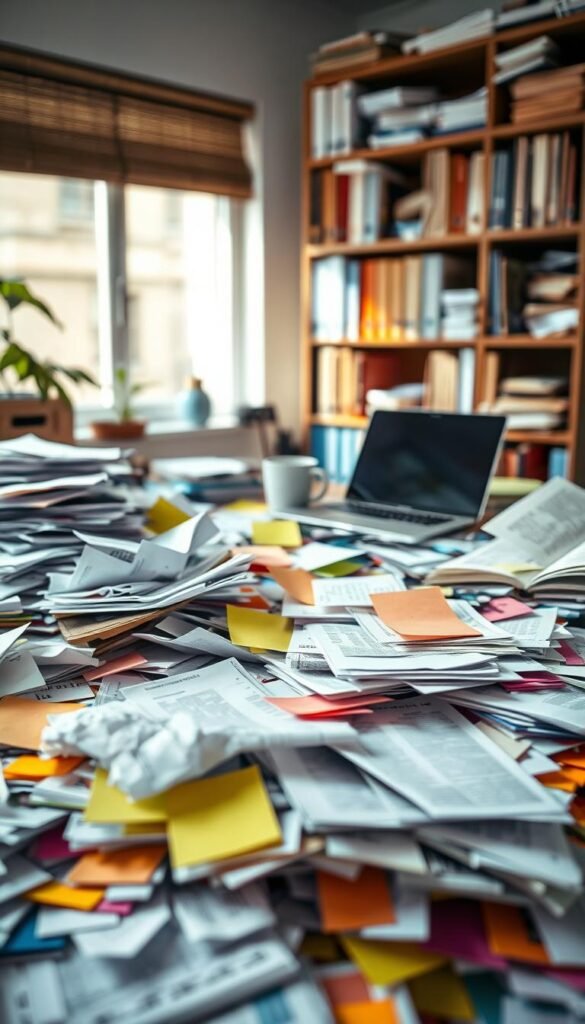
A steady incoming stream makes piles almost inevitable. You did not fail. The mail and notes keep coming. Life is busy. You set a sheet down for later. A pile grows. That is normal.
Too many choices slow you down. When you face dozens of tiny categories you pause. Decision fatigue wins. The pile waits. Stress rises.
Keep categories broad. Use To Do, Wait and See, and This Year. These three buckets cut choices. They make action clear. They let you sort fast.
Go vertical. A wall file gives a clear, finite container. It shows when to review. Place a recycle bin nearby. Most mail and junk will go straight in. That saves time.
- Decide once per item. Keep. Act. Or toss.
- Daily triage at the door stops new stacks.
- Fewer categories mean less friction and better follow-through.
Small daily moves build confidence. Over time new piles stop forming. You gain calm and more time to enjoy things that matter.
Paper Clutter System: set up your easy, low-stress flow
Claim one spot at the door to catch incoming envelopes and notes. This small move stops loose mail from drifting into every room. It makes decisions faster. You can do this in under an hour with low-cost tools.
Create an entryway mail station
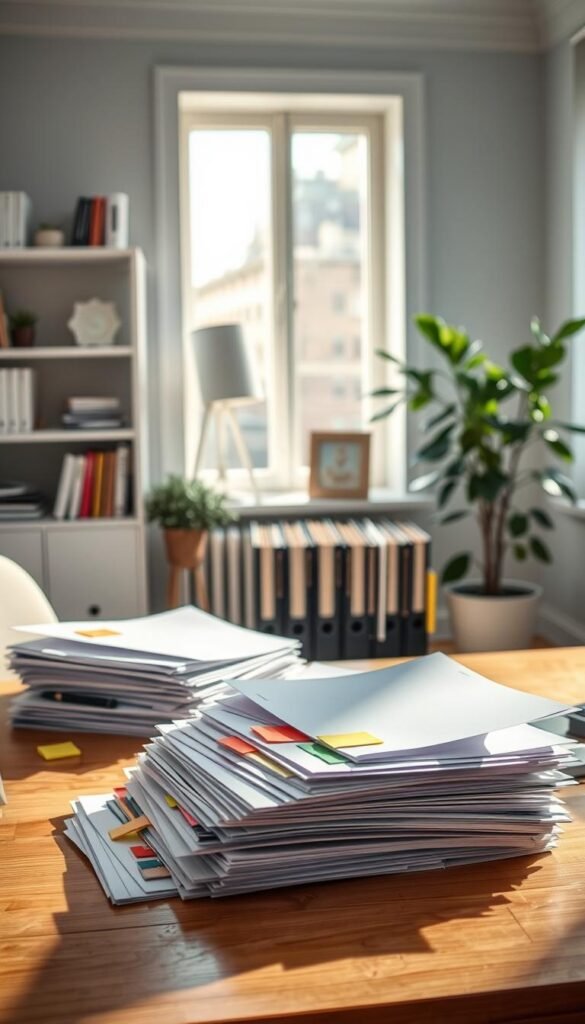
Place a small tray or a vertical wall file where mail arrives. Keep a pen and a letter opener nearby. A visible inbox helps you decide at the moment.
Use three broad categories
Label three categories: To Do, Wait and See, This Year. These cover most items. Avoid tiny folders and endless rules.
Quick setup checklist
- Mount a vertical file as your action-focused inbox.
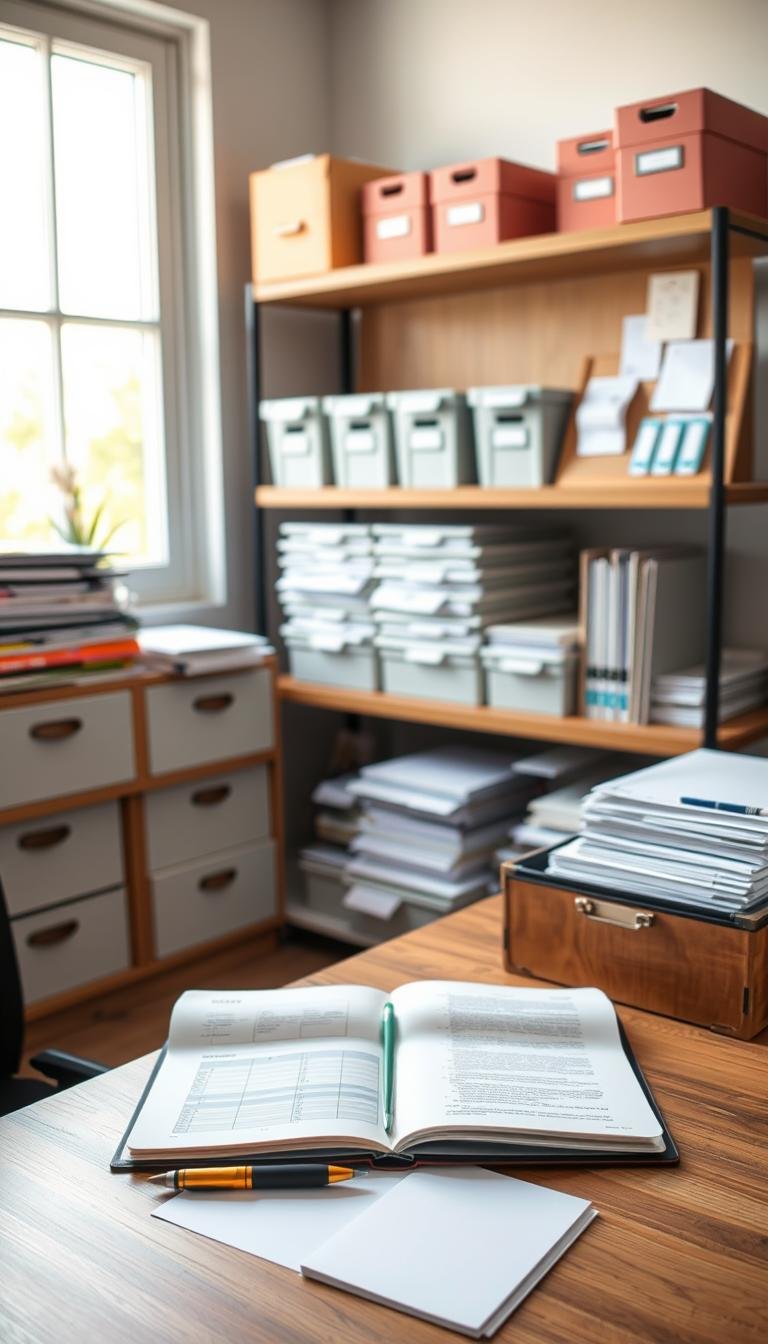
- Put a recycle bin and a shredder beneath the sorter.
- Switch to e-billing and unsubscribe from junk mail (DMAchoice.org).
- Scan important documents to a digital filing cabinet like Evernote.
- Keep vital documents in a fireproof lock box.
Small rules. One place. That is enough to calm the flow. Start simple and adjust as you go.
Daily, weekly, and monthly routines that keep papers light
Small, steady habits keep your counters clear and your mind calm. These short routines fit into real life. They take little time and give big wins.
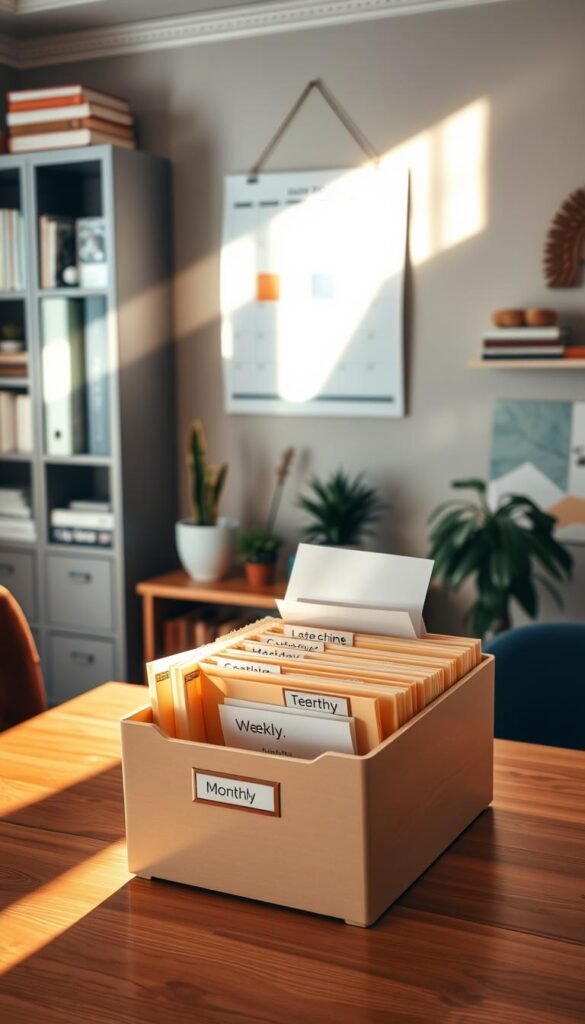
Daily quick sort: shred, file, or recycle in five minutes
Spend five minutes each day. Open today’s mail. Recycle most pieces.
- File one document you will keep.
- Shred anything with personal information.
- Drop action items into your inbox and add a sticky with a due date.
Weekly review: empty the inbox and clear action items
Set aside 20–30 minutes once a week. Empty the inbox. Pay bills and sign forms.
- Do a small filing session. Use broad categories and stop when it looks clear.
- Batch similar tasks to save time.
Monthly tidy: purge, archive, and name scanned files
Spend about 30 minutes each month. Review the “Wait and See” pile. Keep only what matters.
- Move “This Year” items into one tax-ready folder or file folders for easy access.
- Rename scanned documents with YYYY-MM-DD + keyword + vendor. Example: 2025-01-31 HVAC service invoice.
Batching and safety
Scan first. Then shred in one go. Less switching. More calm.
Shred statements, offers, IDs, and anything that reveals sensitive information.
| Routine | Duration | Key tasks |
|---|---|---|
| Daily | 5 minutes | Open mail, recycle, file one, shred sensitive items |
| Weekly | 20–30 minutes | Empty inbox, pay bills, small filing, clear action items |
| Monthly | 30 minutes | Purge wait items, archive for tax, rename scanned files |
Room-by-room examples: calm paper habits in every space
Give each room one tiny habit that keeps papers from piling up. Small limits win. Gentle routines stick.
Entryway
Open mail at the sorter. Decide once per piece. Most items go straight to recycle. Keep two clear categories in your sorter. This little rule cuts time and stress.
Kitchen
Use one magazine holder for menus and school calendars. When it fills, clear it. Counters stay for prep, not paper. This keeps the kitchen neat and usable.
Pantry
Tape a small shopping pad to a shelf. Snap photos of recipes instead of keeping clippings. Toss what you don’t use. Simple habits reduce excess.
Bathroom
Avoid stacks of leaflets. Store warranties and manuals digitally. Search online when you need a document. It saves shelf space and worry.
Bedroom
Keep a small tray by the bed. One book. One notepad. Recycle catalogs as they arrive. This limit helps you rest and wake to a calm surface.
Closet
Keep a slim file for receipts and returns. Shred expired tags and old forms monthly. One small folder controls the overflow.
Kids’ zone
Pick a few favorites to keep. Photograph the rest. Make a slim album each school year. This honors kids while cutting bulk.
Home office
Use broad folders and simple files. Avoid micro-categories. Add a filing cabinet only if the volume truly needs it. Keep the things you actually need where you will look first.
“One small container in every room beats a mountain of loose papers.” — A calm-home rule
Choose limits. Use tiny containers. Repeat daily. These small moves make your home gentler and more livable.
Decluttering backlog without overwhelm
Handle what arrives today before diving into old stacks. That small step stops new piles from forming. It gives quick wins and lowers stress.
Start with incoming paper first to stop the flow today
Process today’s mail before touching older piles. Open each envelope. Recycle or shred junk right away.
Do the easy pass: obvious recycle, then quick shred
Do one fast sweep. Toss clear trash. Shred anything with personal data.
- Set aside 10–15 minutes. Use a timer.
- Celebrate finishing that window.
Batch scanning, then batch shredding for smooth progress
Scan documents you want to keep digitally. Then shred duplicates in one go. Batching saves time and mental energy.
Use container limits: when a file is full, review and reduce
Give each folder a size limit. When a file is full, decide what truly stays. Use your three categories: To Do, Wait and See, This Year.
“One tub or one inch at a time makes a big difference.”
| Step | Action | Why it helps |
|---|---|---|
| Incoming first | Process today’s mail | Prevents new piles and keeps momentum |
| Easy pass | Recycle obvious trash; shred sensitive items | Quick volume reduction and safety |
| Batch | Scan then shred | Efficient and less switching |
| Container limits | Review when folder fills | Forces decisions; keeps files manageable |
Keep only what you need keep for legal, tax, or personal reasons. Label files by years for easy access. If you have a lot, repeat short sessions. Small, steady work beats a marathon.
Conclusion
Take one small action now to ease the stack at your door.
Decide once per piece. Recycle, file, or act. Use a tall inbox, a recycle bin, and a shredder nearby. This short setup cuts volume fast.
Do five minutes each day. Do a weekly clear and a monthly review. Scan what you don’t need in paper form and archive tax items by year. Keep vital documents in a fireproof box.
Choose three broad categories you will actually use. Simple organization beats perfect organizing. Right-size folders and add a filing cabinet only if you truly need more space.
You are not behind. One piece at a time makes steady change. Start now. Your home and family will feel the difference.
FAQ
What is the easiest way to stop paper piles from growing?
Start with a simple entry point. Create a small mail station by the door. Open new items once. Decide immediately: shred, file, or act. Set a short daily habit. Five minutes a day keeps stacks away.
How do I sort what to keep without overthinking?
Use three broad categories. To Do. Wait and See. This Year. They keep choices clear. Limit folders. If you can’t decide, place it in Wait and See for a month. If it still feels important, move it. If not, recycle.
Can I go digital without losing important records?
Yes. Scan vital documents into a simple folder structure and name files with dates. Use cloud backup and e-billing. Keep originals like birth certificates in a small fireproof box. Digitize everything else and shred paper copies you no longer need.
How do I handle junk mail and subscriptions?
Unsubscribe online and use opt-out services for marketing mail. Recycle catalogs and flyers immediately. Keep a small bin by the sorter so unwanted items leave your home fast.
What tools do I need to keep papers under control?
A vertical sorter or wall file, a shredder, a recycle bin, and a scanner or scanning app. Add a slim, labeled folder for receipts and a fireproof box for essentials. That’s all you need to get started.
How often should I review and file documents?
Quick daily sorts for incoming items. Weekly empty the inbox and handle bills and action items. Monthly tidy the Wait and See pile and archive This Year files for taxes or records. Regular rhythm prevents backlogs.
What if I have a big backlog of papers?
Begin with incoming mail to stop the flood. Do an easy pass through the backlog: obvious recycling first, then shredding. Batch-scan what you want to keep and batch-shred the rest. Use container limits so full boxes force review.
How can I manage kids’ artwork and school papers?
Capture artwork by photographing or scanning it. Keep a slim album for favorites. Set a quota—one archive box per school year. Recycle the rest kindly and quickly to avoid overflow.
Should I have a filing cabinet at home?
Not always. Try broad folders first. Only use a filing cabinet if you have many legal or business documents. Keep home files tidy and minimal. Most families do fine with a small, well-organized system.
How do I name scanned documents so I can find them later?
Use short, consistent names. Start with date (YYYY-MM-DD), then a keyword and family name if needed. Example: 2025-04-15_Warranty_Microwave. Keep folder names broad like Finance, Home, Kids, Medical.
Is shredding necessary for everything I discard?
Shred sensitive items—bank statements, tax records with personal data, medical forms. Junk mail and obvious trash can go straight to recycling. When in doubt, shred.
How do I keep counters clear in active rooms like the kitchen?
Use a magazine holder for menus and school calendars. Open mail at the sorter. Decide once. Keep only current, actionable items on counters. Everything else goes to its place or gets recycled.
What if I don’t have time for daily sorting?
Do five-minute quick sorts. Even small, consistent steps add up. Set a timer. Focus on stopping new piles. Use weekly sessions to catch up. Small habits beat perfect systems every time.