
Nightly Reset: 7 Simple Tasks for a Tidy Home
You’re busy. Even so, you want a calm end to the day and a head start in the morning. A short, simple nightly reset can give you both. It is a soft way to care for your house without pressure.
Think of it as putting your home to bed. A few small tasks now help you feel like the next day will flow. These steps take five to fifteen minutes for most spaces. They use timers, tiny checklists, and clear spots for things.
This introduction shows a gentle routine you can keep home steady with. You’ll get room-by-room examples and a simple floor for low-energy nights. Start small. Add one thing at a time. The goal is peace, not perfection.
Key Takeaways
- Short, gentle tasks give you calm at night and an easier morning.
- Seven simple steps create a clear, repeatable routine.
- Timers and tiny checklists reduce decisions and save time.
- Room-by-room examples make the reset realistic for families.
- A minimal floor helps on a day without much energy.
What a Nightly Reset Is and Why It Helps
Wrap the day with simple habits that make home feel peaceful and ready.
A nightly reset is a short routine that returns your house to a calm baseline at the end of day. It focuses on the spots you use most. The kitchen and living room usually set the tone for the next day.
Why it matters: A few small tasks reduce visual mess. They cut the decisions you face in the morning. You wake to clear counters, a clean sink, and a tidy main room. That order lowers stress and makes life feel easier.
Start small. Choose one or two tasks that help you most. Many families report ten to fifteen minutes is enough. Typical steps include loading the dishwasher, wiping counters, rinsing the sink, and a five-minute tidy in the family room.
- Short. Gentle. Achievable.
- Gives your home a place for things.
- Builds over time as kids and schedules change.

| Focus Area | Quick Task | Time |
|---|---|---|
| Kitchen | Load dishwasher, wipe counters | 5–7 minutes |
| Living room | Fold blankets, put toys away | 3–5 minutes |
| Entry | Hang bags, line up shoes | 1–2 minutes |
Nightly Reset
Finish the day with a short, clear list you can truly finish. Use a timer. Move with purpose. These steps fit after dinner and before bed.
The seven core tasks in under 25 minutes
- Dishes in the dishwasher (5 minutes). Gather plates. Quick scrape. One pass only.
- Start the dishwasher (1 minute). Add detergent. Press start. You’ll get the flow for morning.
- Wipe counters (3–5 minutes). Clear crumbs. Wipe the spots you touched.
- Rinse and swish the sink (1 minute). Hot water and a drop of soap. Fresh sink for coffee.
- Living room reset (5 minutes). Fold blankets. Put remotes back. Return toys to a bin.
- Entryway reset (3 minutes). Line up shoes. Hang bags. Contain mail.
- Set out tomorrow’s things (5 minutes). Clothes for you and kids. Pack lunch bits. Fill bottles.

Do these seven tasks in about 25 minutes. Use a simple timer to stay focused. Stop when the timer dings. Done is kind.
Set a simple floor for low-energy nights
Floor: load and start the dishwasher only. That one step keeps habit alive. Go to bed knowing you did enough.
Room-by-Room Quick Wins
A few gentle steps in each room clear the day and make mornings simpler.

Kitchen
- Load the dishwasher. One pass. Plates and cups now.
- Wipe counters from back to front. A quick swipe removes crumbs.
- Rinse the sink. A fresh sink feels like a fresh start.
- Clear the table in one minute.
Living room
- Fold blankets. Neat throws make the room calm.
- Put toys and remotes away. One sweep. One bin.
- If you run a vacuum, use it as your cue for a fast pickup.
Entryway, Bedroom, Bathroom, Pantry
- Entryway: shoes to their place. Hang bags. Mail in one container.
- Bedroom: set out clothes for bed. Clear nightstands for a calmer head.
- Bathroom: clear surfaces, quick wipe, hang a fresh towel.
- Pantry: put back five items. Check staples for tomorrow.
“Small, consistent moves beat big bursts of cleaning.”
Focus on easy wins. Spend a few minutes per room. Stop when your timer dings. This small reset protects your peace, not perfection.
Simple Systems, Checklists, and Timers
Small systems make evenings feel lighter and more steady. Use tiny, repeatable steps. Timers and clear roles turn chores into calm habits. These micro-systems fit busy families and low-energy nights.
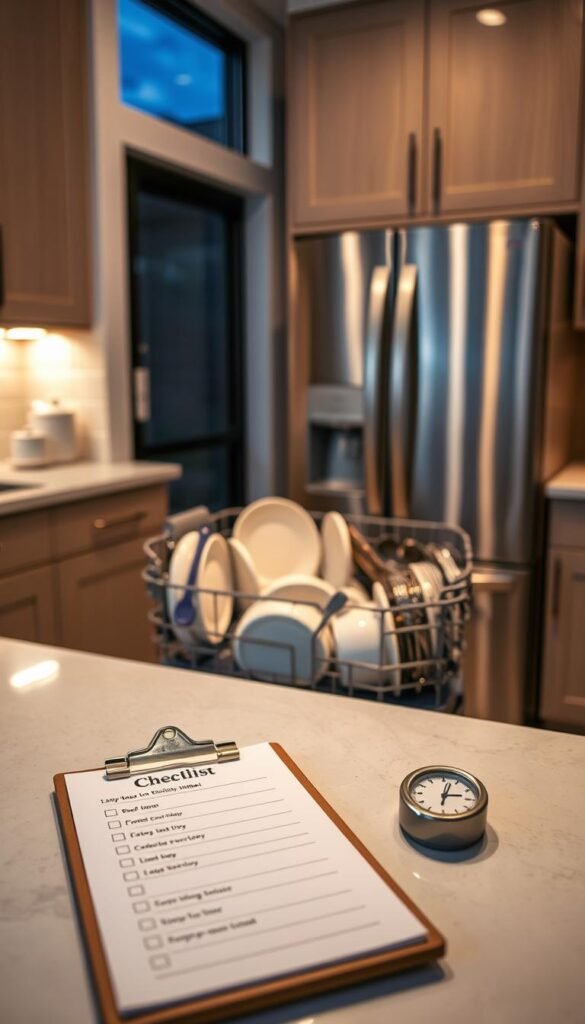
Two-minute counter wipe and sink rinse. Set a two-minute timer. Wipe counters. Rinse the sink. One quick pass keeps the kitchen ready for morning coffee.
Toy tidy game: assign small, specific jobs
Give each child a clear job. “Pick up ten cars.” “Return five books to the table shelf.” Set music. Make it a friendly race. Keep tasks short and age-appropriate. Kids win. You win a tidy space.
Dishwasher rhythm: run at night, unload in the morning
Create a simple flow. Load dishes after dinner. Start the dishwasher before bed. Unload in the morning. If possible, split the work. One person starts the dishwasher. Another unloads at breakfast. This keeps dishes moving with little fuss.
- Micro-checklist on a sticky: dishes, wipe counters, sink, toys.
- One catch-all basket for stray things. Walk main rooms once.
- Use 1–5 minute timers. Small time boxes build momentum.
| System | Action | Time |
|---|---|---|
| Surface reset | Wipe counters and rinse sink | 2 minutes |
| Toy tidy game | Assign jobs, play music, set timer | 3–5 minutes |
| Dishwasher rhythm | Load/run at night, unload in morning | Start: 1 minute. Unload: 5 minutes |
Routines by Cadence: Daily, Weekly, Monthly
Short loops of care help your home feel steady from day to day. A simple routine by cadence prevents pileups. It gives you clear, doable tasks for each part of the week.
Daily
- Run the dishwasher at night. Unload in the morning. This keeps the kitchen ready for coffee and breakfast.
- Wipe key surfaces and the sink after dinner. A quick pass clears crumbs and spills.
- Five-minute room reset. Fold a blanket. Put toys in one bin. Prep floors for a vacuum pass.
Weekly
- Rotate toys and blankets. Fresh items reduce clutter and renew interest.
- Clear hot spots like the entry table and that kitchen corner. Ten minutes per spot is enough.
- Use short minutes blocks. Give each task a small time box to avoid overwhelm.
Monthly
- Pantry edit. Toss expired items and group staples for easier shopping.
- Linen reset. Wash sheets and refresh bed linens for a calmer morning.
- Closet mini-purge. Pick one shelf or drawer. Remove things you no longer wear.

Keep home steady with small, regular things. Involve your kids in tiny tasks. Use a short visible list for daily, weekly, and monthly checks. One new habit each month is a gentle way to make a reset routine stick.
| Cadence | Example Task | Time |
|---|---|---|
| Daily | Dishwasher, wipe counters, quick room tidy | 5–15 minutes |
| Weekly | Rotate toys/blankets, clear hot spots | 10 minutes each |
| Monthly | Pantry edit, linen reset, closet purge | 15–30 minutes |
Make It a Family Routine
Turn the few minutes after dinner into a gentle family habit.
Share small parts so no one carries it all. After dinner, divide roles. One person runs the dishwasher. Another wipes the sink and counters.

Age-appropriate tasks kids can own
Give kids short, clear jobs. Ask them to return shoes to their place. Put away ten toys. Fold a small blanket.
Divide and conquer: calm roles after dinner
Keep roles steady. One loads the dishwasher. One makes lunches or packs snacks. Use a calm timer. Make it a shared rhythm, not a taskmaster.
Five-minute check-in for tomorrow
Before bed, do a five-minute check-in. Ask: “What’s on for the next day?” Confirm rides and lunches. Share any early needs.
- Make it a family thing each night.
- Use the vacuum as a cue to clear the floor and put away loose things.
- End with thanks. A quick “thank you” makes this routine feel like care.
| Role | Example Task | Time |
|---|---|---|
| Adult | Run dishwasher / wipe counters | 5–7 min |
| Kids | Put away toys / bring bottles | 2–5 min |
| Family | Five-minute check-in / pack lunches | 5 min |
Conclusion
Do one tiny task tonight and you’ll wake to less mess and more ease. Start small. Load and start the dishwasher. Wipe counters. Rinse the sink. These quick moves take just a few minutes and change your morning.
A nightly reset routine is simple care for your home and life. A five-minute tidy in the main room clears visual noise. Pack lunches during dinner prep. Do a brief check-in before bed. You’ll feel steadier the next day.
Choose one anchor. Let the dishwasher at night hold the rest. Add a floor for hard nights. One tiny task and then to bed. No guilt. Just calm order that fits your day.
FAQ
What is a nightly reset and how long does it take?
A nightly reset is a short routine that brings order to key areas of your home before bed. It focuses on a few simple tasks like loading the dishwasher, wiping counters, and tidying common rooms. Aim for seven core tasks and keep it under 25 minutes. This small practice makes mornings calmer and gives you an easier start to the day.
What seven tasks should I include for a quick reset?
Start small. Load the dishwasher or rinse dishes. Wipe kitchen counters and rinse the sink. Put away dinner items and clear the table. Fold one or two blankets in the living room and put away toys. Line up shoes and hang bags in the entryway. Set out clothes for the next day. Do a quick surface wipe in the bathroom and hang a fresh towel if needed.
What if I’m too tired some nights?
Set a low-effort floor. Pick two to three nonnegotiables: load the dishwasher, clear the sink, and tidy the main clutter zone. Use a two-minute wipe for counters and a one-minute toy sweep. Even tiny wins keep the house livable and reduce morning stress. Gentle consistency beats perfection.
How can I make the routine feel manageable for the whole family?
Give simple, age-appropriate tasks. Young children can put toys in bins. Older kids can set out lunches or clear plates. Assign calm roles after dinner and make it a five-minute team check-in. Short timers or a tidy game help make the work feel light and cooperative.
When should I run the dishwasher — night or morning?
Run it at night to save morning time and keep the sink clear. Unload in the morning while the kettle boils. That spreads the work and lets you start the day with empty counters and a ready sink.
How often should I tackle deeper tasks like pantry edits and linen changes?
Follow a simple cadence. Daily: dishes, clear surfaces, spot-floor tidies. Weekly: rotate toys and blankets, vacuum high-traffic areas, clear hot spots. Monthly: edit the pantry, reset linens, and do a mini-closet purge. These rhythms keep small tasks from growing into big chores.
What quick wins work for the kitchen each night?
Load the dishwasher, rinse the sink, and wipe counters. Put food away and check tomorrow’s staples. Use a two-minute counter wipe to remove crumbs and spills. Small steps keep the kitchen feeling calm and ready for the next meal.
How do I keep kids engaged without nagging?
Make tasks clear and short. Turn tidy time into a game. Offer choices like “put away books” or “fold one blanket.” Praise effort. Keep routines predictable. When children know their small jobs matter, they’re more likely to help without reminders.
How can I maintain the habit without feeling pressured?
Be gentle with yourself. Aim for progress not perfection. Start with a few minutes and build gradually. Use checklists and timers to remove decision fatigue. Celebrate small wins. Over time the routine becomes second nature and your home feels calmer with less effort.