Minimalist Kitchen Setup (Step-by-Step)
You are busy. You want a calm home that fits real life. Small routines can change how the space feels.
This guide gives one clear path. It uses a short list of essentials so you waste no time. You will learn what to keep and what to let go.
Quality over quantity saves effort. A sharp 8-inch chef’s knife, a medium pot, a reliable pan, and a few tools cover most meals. Skip novelty items. Borrow bulky tools when you need them.
We share small systems. Easy wins come first. Quick resets and gentle habits help you keep the space calm and useful.
Key Takeaways
- Focus on a short list of durable essentials to save time.
- Choose quality tools that handle most tasks.
- Set simple stations to make cooking smoother.
- Use quick daily resets to keep the room calm.
- Let go of extras that add clutter, not value.
Start Here: Your Calm, Minimalist Kitchen
A calm kitchen begins with small choices you can keep up every day. This is about ease, not perfection. Take tiny steps that fit your schedule. The goal is a room that helps you cook, relax, and leave quickly when needed.
What a minimalist kitchen feels like
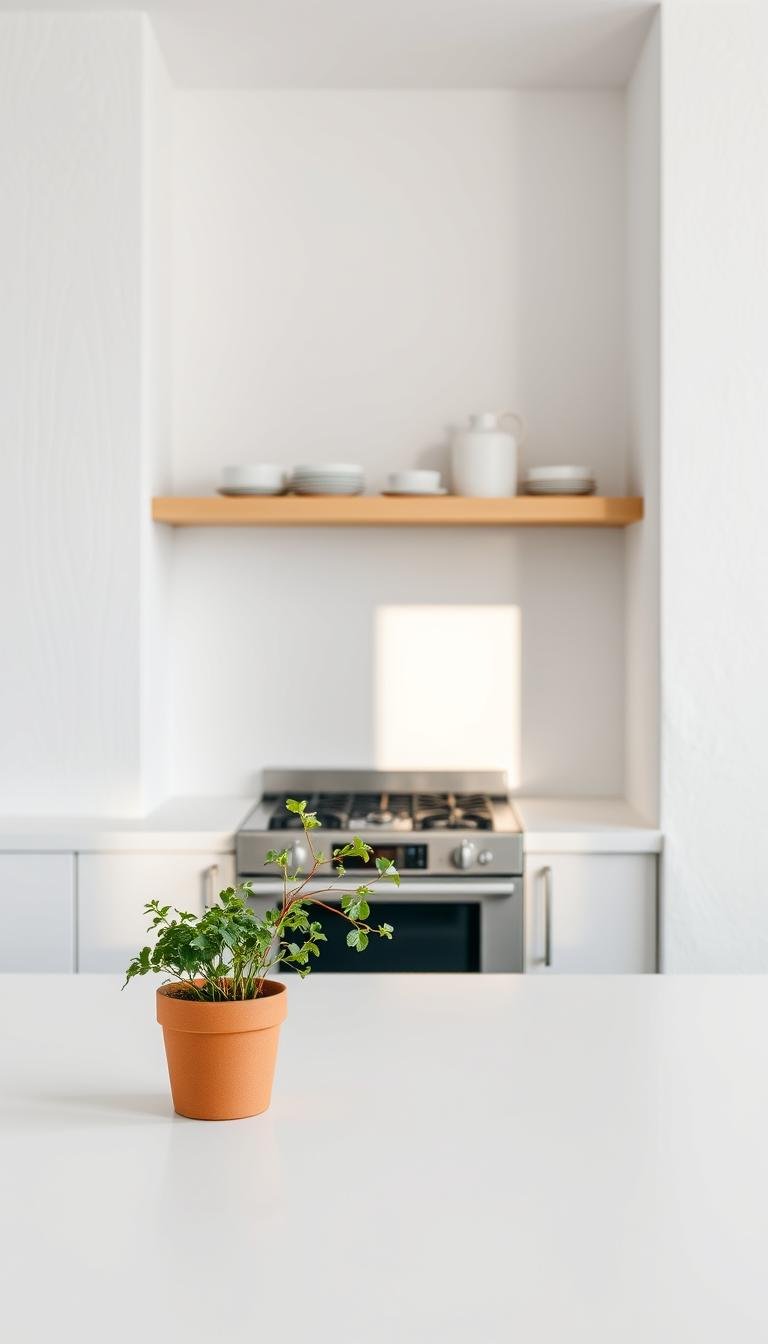
You will feel open space. Counters stay clear. Cabinets hold only the tools you use. Clutter has no place to pile up.
User intent: simple steps, fewer items, more ease
Focus on multitaskers. Keep bowls, a chef’s knife, and a reliable pan. Skip single-use gadgets. Assign a nightly five-minute tidy so the whole family helps.
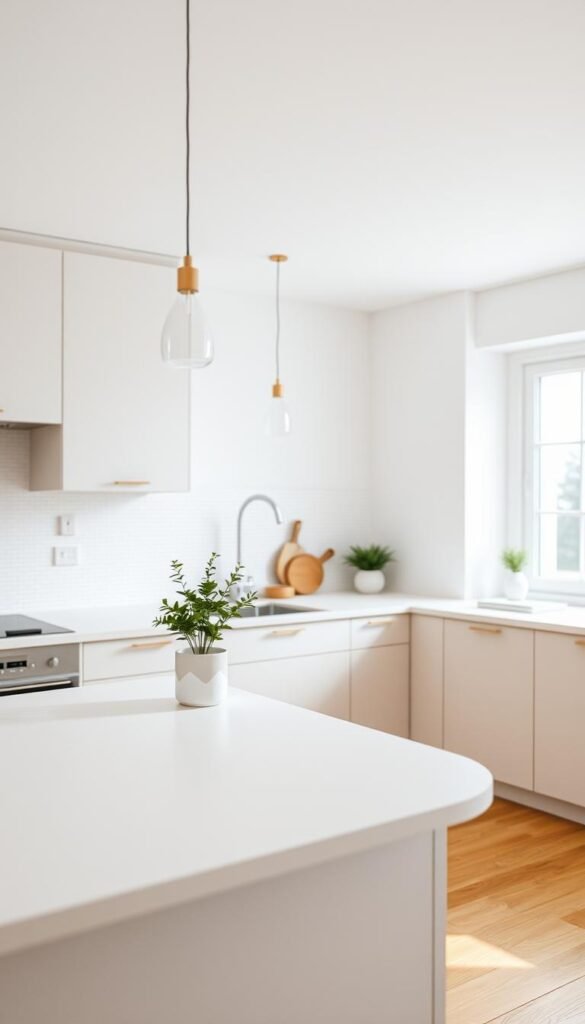
- Move with ease: zones and simple storage keep what you need within reach.
- Small steps: one sweep, then define cabinet and counter roles.
- Less visual noise: choose fewer, better items that do more than one job.
- Daily reset: quick cleanup keeps the room ready for coffee and the day.
| Zone | Primary Purpose | Daily Task | Key Item |
|---|---|---|---|
| Prep | Chop and assemble | Clear counters, wipe | Chef’s knife |
| Cook | Stove and pan work | Return lids and pans | Multi-use pan |
| Landing | Drop bags, coffee, keys | Put items in assigned spot | Small tray |
| Storage | Plates, glasses, pots | Check cabinets, tidy | Simple shelf labels |
Minimalist Kitchen Setup
Begin with tiny wins that make cooking feel easier right away. Start with a clear, calm plan. You do not need perfection. You need a repeatable way that saves time and eases daily tasks.
Step-by-step declutter path
Five-minute sweep. Clear counters into one bin. Wipe surfaces. Put back only daily items to open space fast.
Make a short list by category: cookware, utensils, prep tools, and small appliances. Keep what you use weekly. Let the rest go kindly.
Keep, donate, or sell: gentle decisions
Decide by use, not guilt. Ask: does this help my cooking three times a week? If no, mark it donate or sell.
Group like items so duplicates stand out. Keep the best one and release extras to lighten the load.
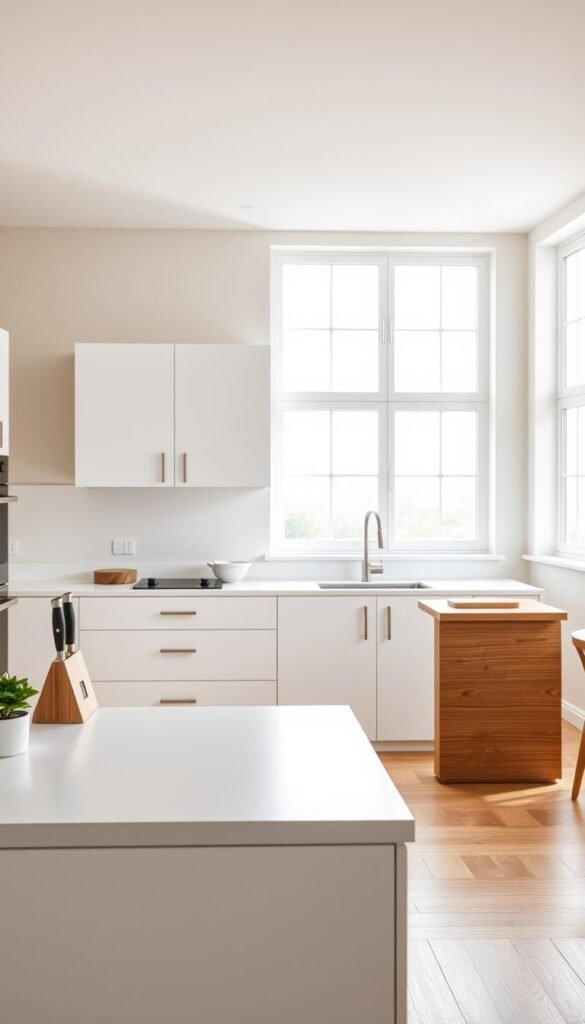
The “multi-tasker first” rule
Choose tools that do many jobs. A chef’s knife, a medium pot, a 10-inch pan, and basic measures cover most meals.
A small blender or a compact 3-cup food processor can replace several single-use items. Skip uni-taskers like odd pasta gadgets unless you use them often.
Quick win sweep: five-minute surface clear
- Clear counters into one bin.
- Wipe down surfaces.
- Return true essentials. Enjoy the open space.
Essentials Only: Tools that Do the Most
Choose few high‑function pieces that make daily cooking easier. Start with items that cover prep, mixing, and baking. Aim for quality where it matters. Fewer well-chosen tools save time and stress.
Knives and care. One sharp 8‑inch chef’s knife handles most work. Add a paring and a serrated knife for small produce and bread. Use a honing steel weekly. Sharpen with a whetstone a few times a year.
Everyday utensils. Keep wooden spoons, a sturdy spatula, a silicone scraper, tongs, and a can opener. These utensils cover most tasks without crowding drawers.
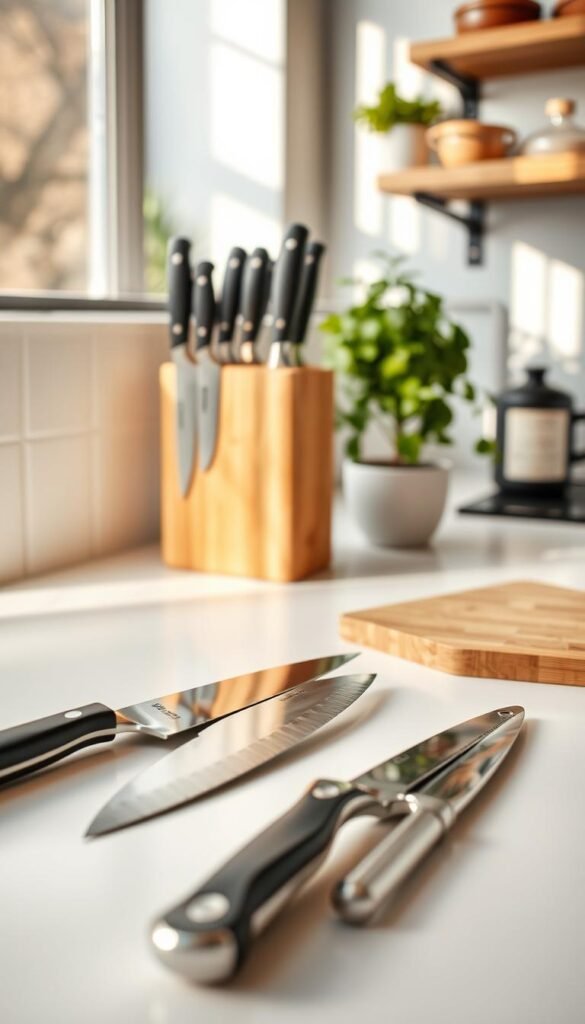
Mixing and prep basics. Nest two to three stainless steel mixing bowls for batter, salads, and prep. Keep measuring cups and spoons nearby. Add a mesh strainer and a box grater for versatile use.
Baking and oven items. Store oven mitts, one or two rimmed baking sheets, and a 9×13 baking dish with lid. Pick quality so each piece lasts and fits the size needs of your household.
- Place items close to their work zones to keep flow calm.
- Pick quality over quantity so tools feel reliable.
Core Cookware and Appliances that Earn Their Place
Favor a few reliable pots and pans that cover most meals. Choose pieces that do real work. This keeps your counters clear and your evenings simpler.
Pots and pans: sizes that cover daily cooking
Pick one small pot (about 3-quart) and one larger pot (6–8 quarts). They handle oatmeal, sauces, grains, soups, and pasta with ease.
Pair a 10-inch nonstick skillet for eggs and delicate food. Add a 5.5-quart stainless skillet for searing and sautéing. This combo limits clutter and boosts usefulness.
Nonstick for eggs; stainless steel for longevity
Nonstick is best for fragile foods. Use it for eggs and quick sautés.
Stainless steel gives even heat and long life. It earns its place when you want steady quality and durability.
Blender vs. food processor: choose your one
Pick a blender that vents steam if you make smoothies and hot soup. Or choose a small food processor for pesto and chopping. One trusted tool is usually enough.
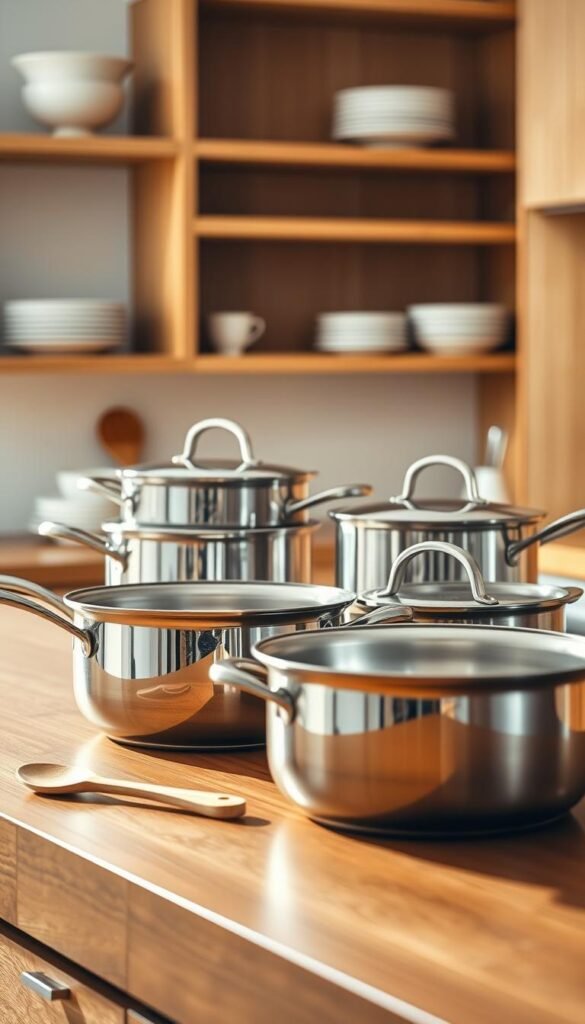
Appliances to skip or borrow
Skip novelty appliances that take space. Borrow a bread maker, dehydrator, spiralizer, or ice cream maker for special projects.
Consider an Instant Pot only if you will use pressure and slow functions weekly. A toaster or toaster oven is optional if you already reheat in the oven or skillet.
- Choose one small and one large pot plus two skillets to keep daily cooking easy.
- Buy a simple set only if every piece earns its use.
- Mind weight and cleaning so gear does not become visual noise.
“Choose pieces that do more than one job and bring calm to your space.”
Smart Kitchen Storage: Cabinets, Drawers, and Counter Space
A few simple zones make your daily flow easier and calmer. Start small. Group by function so things live where you use them.
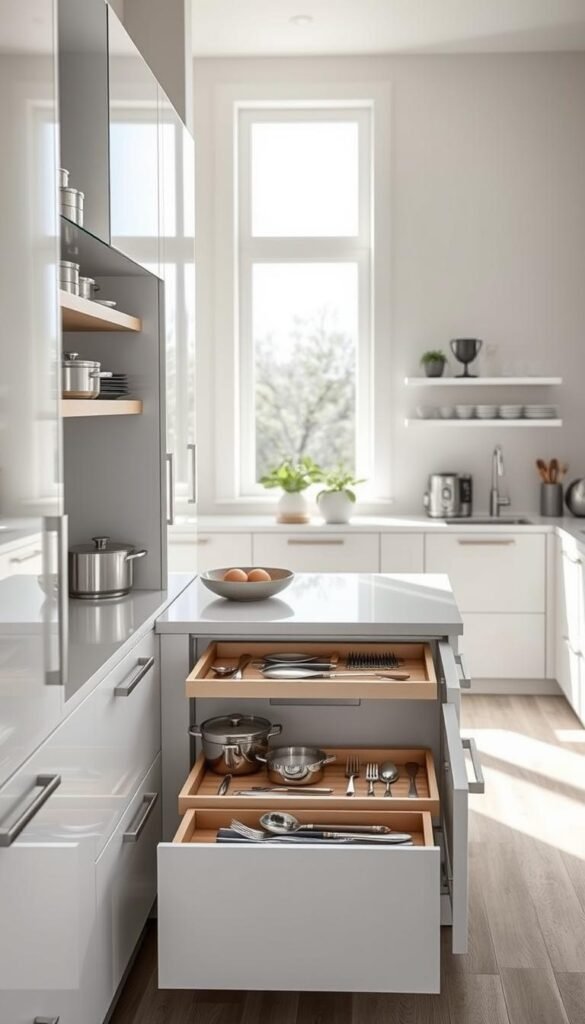
Cabinets: set zones for dishes, glassware, and serving
Assign one cabinet for dishes and glasses. Keep serving pieces near the table. Put daily pans and spices in a cabinet close to the stove.
Drawers: utensil dividers and a single tools set
Use a simple divider so cutlery stays in one place. Keep a single tools set for daily cooking. This stops digging and saves time.
Counters: clear, with one or two daily-use items
Keep counters mostly empty. Let only one or two items stay out. A coffee maker or a fruit bowl is enough to keep the space calm and easy to wipe.
Containers: glass storage, jars, and silicone bags
Choose quality glass containers and a few silicone bags for leftovers. Nest lids and stack jars by size. Slide baking sheets upright. Nest stainless steel mixing bowls in the prep zone so mixing and cleanup flow.
- Label jars for pasta, grains, and snacks.
- Match storage size to your meals.
- Limit appliances on counters; store extras on one shelf.
Room-by-Room Minimal Systems
Room-focused rules help you move through the home without stress. Start with one clear habit per room. Tiny changes add up quickly.
Kitchen flow and landing
Define a cooking triangle between stove, sink, and fridge. Add a small landing zone for mail and keys so counters stay clear.
Set a simple dish flow: scrape, rinse, rack. Teach the family the same way so chores finish faster.
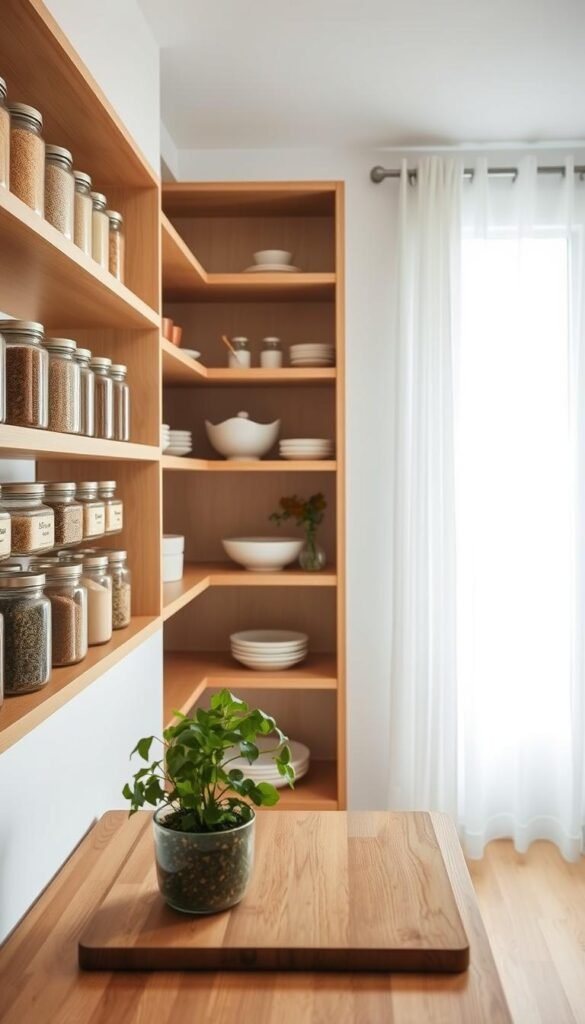
Pantry order
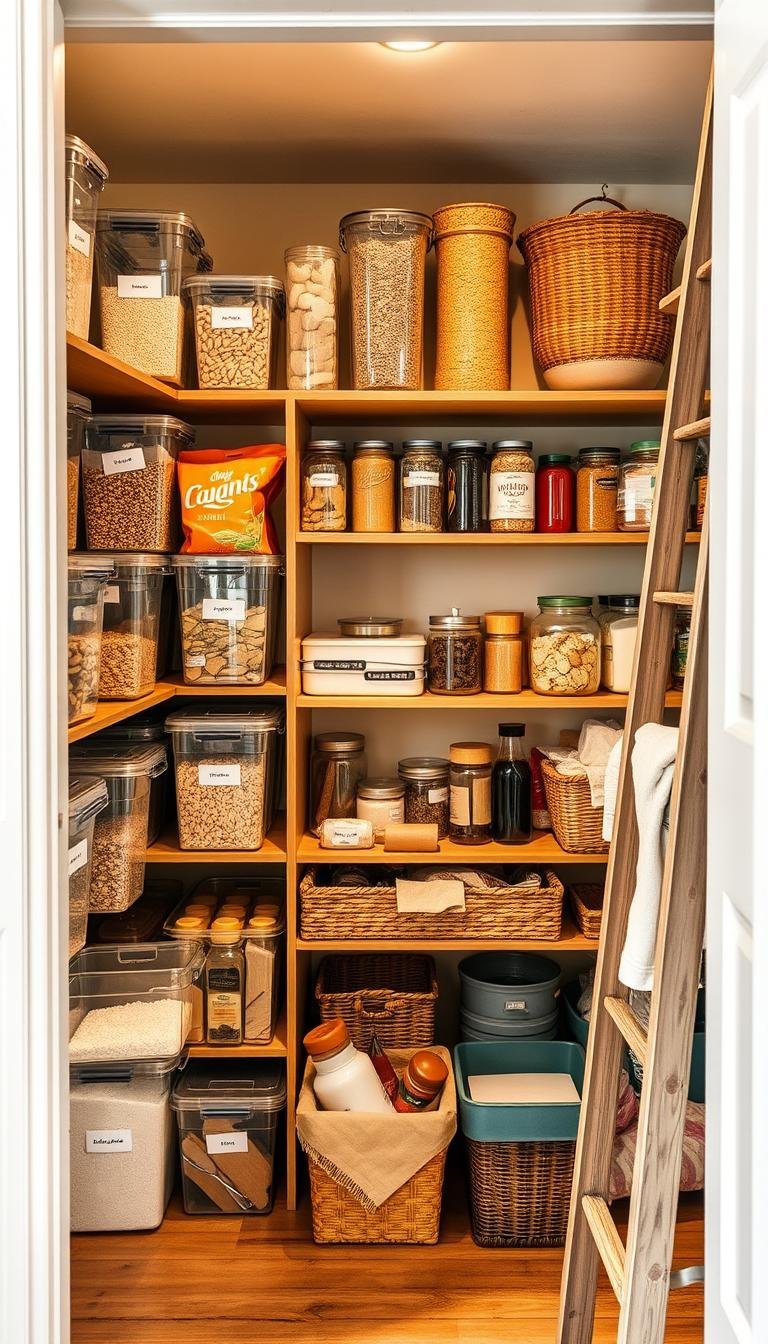
Label sections: grains, snacks, canned, baking. Rotate bread and vegetables first using first-in-first-out. Group by size and keep eye-level categories for quick finds.
Other rooms
Bathroom: one caddy, a daily wipe, and low backups of basics. Bedroom: a single laundry bin and a tidy-surface rule. Closet: a capsule wardrobe with seasonal edits to match size and needs.
Entryway: a small drop spot for keys, mail, and bags. For gatherings, borrow extra appliances and place settings. Review each room monthly and remove one or two items to keep space calm.
Daily, Weekly, Monthly Routines
A short routine can protect your calm and save you time each day. These gentle steps keep your kitchen ready without stress.
Daily
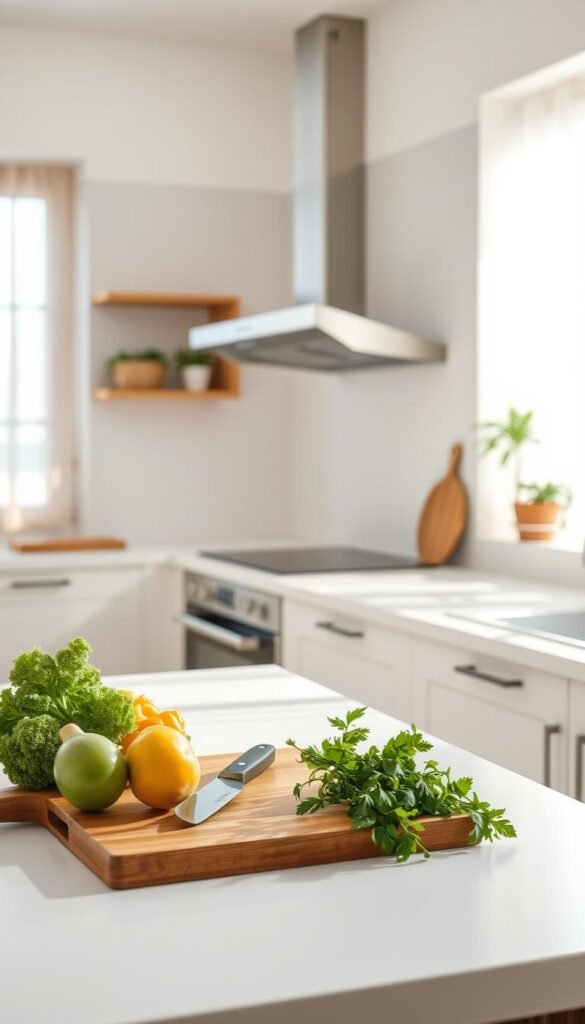
Do a five-minute reset after dinner. Wash or load the dishes. Wipe counters and clear the landing strip.
Unload the dishwasher or put clean items away. Return tools to their set zones. This stops clutter from growing.
Weekly
Quickly check the fridge and the pantry. Toss old food. Sweep and wipe floors and surfaces.
Plan one simple baking or batch session. It saves you time later. Hone knives and spot-check appliances. Wash the dish mat.
Monthly
Do a gentle declutter. Sharpen blades if needed. Donate extras so drawers close with ease.
Update labels and tweak zones when family habits shift. Small changes keep the system working for your home.
Family task map
Create tiny roles. One person loads dishes. One wipes counters. One empties the landing strip.
Short, shared chores make upkeep light. Everyone helps a little and the kitchen stays calm.
Quick Resets and Gentle Habits
A few gentle habits keep your counters clear and your mind quieter. These are small steps you can do daily. They protect your calm without adding pressure.
One-touch rule: rinse and place dishes straight into the washer or drying rack. Handle things once when you can. This keeps the sink free and saves time.
- Prep tray: use a rimmed baking sheet as a mobile zone. It catches crumbs and splatter. Move it when you need counter space.
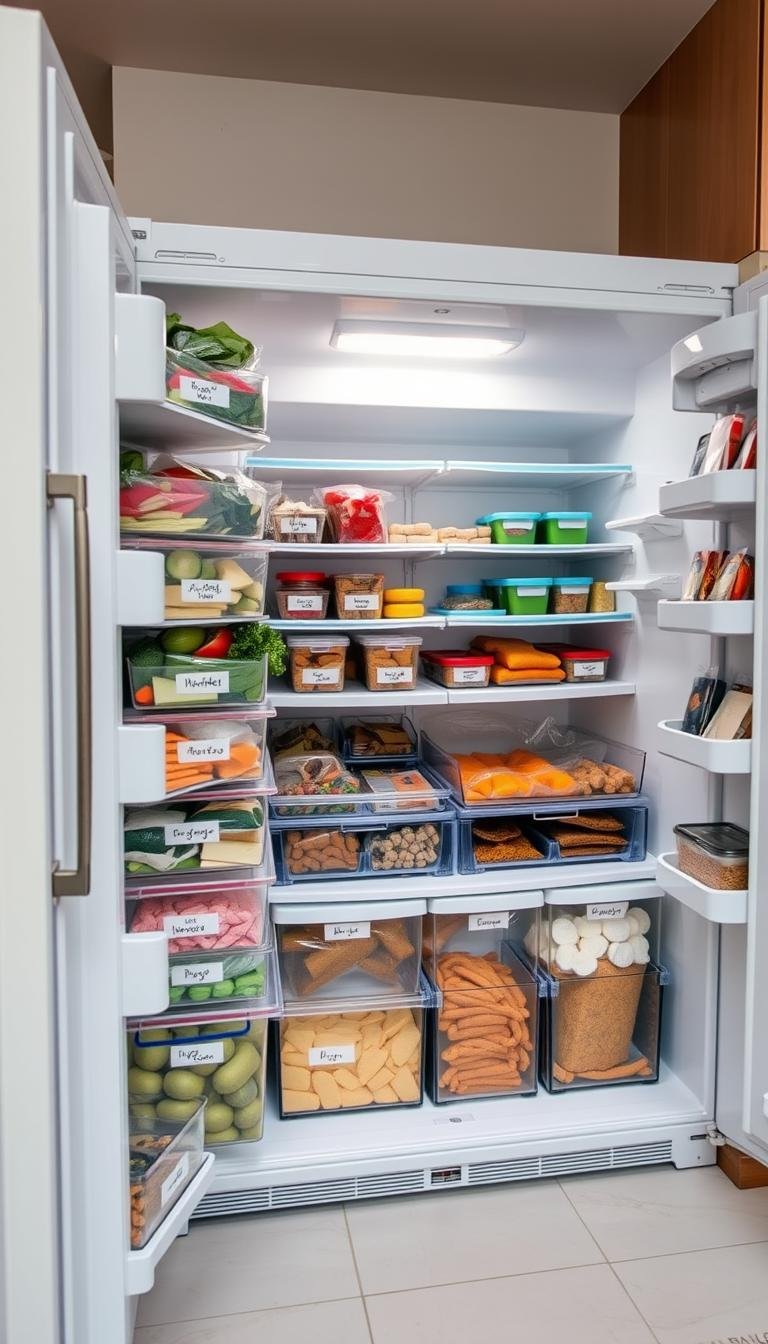
- Batch and label: cook once and portion food into glass containers or silicone bags. Date them and place older items up front to rotate use.
- Mix and stash: keep a couple of mixing bowls with lids for chopped veggies and grains. They speed assembly and save storage space.
- Small tools: keep one small blender or chopper on a single shelf for quick sauces and dressings.
- Finish fast: cool pasta and grains before sealing to avoid sogginess. Empty scraps into a tiny compost bowl while you prep. Do a two-minute reset after cooking to start the next meal fresh.
These habits are gentle. Aim for progress, not perfection. Use this way to make the kitchen kinder to your day.
Conclusion
Simple choices let you keep what truly helps your daily life.
You now have a clear minimalist kitchen plan and a short list of essentials that cuts decision fatigue. Choose quality over quantity. A few stainless steel pieces, sharp knives, a trusted chef knife, a good blender, and sturdy bowls cover most prep.
Keep only the appliances you use. A small toaster or a simple coffee maker is enough if it fits your routine. Let extras go so clutter and stress fade.
Move gently. Short resets and shared chores keep the space calm. Return to this plan when life changes. Cook with joy. Enjoy your home and your kitchen, day by day.
FAQ
How do I start a calm, minimalist kitchen without feeling overwhelmed?
Begin with one small zone. Clear a counter or a single cabinet. Remove everything. Put back only what you use every week. Box the rest and live without it for a month. If you don’t miss an item, donate or sell it. Keep your pace gentle. Short, regular steps win.
What are the most useful tools to keep first?
Choose multi-taskers. A quality chef’s knife. A paring knife. A serrated knife. One sturdy cutting board. A set of stainless steel mixing bowls. A reliable spatula, wooden spoon, and tongs. A simple set of measuring cups and spoons. These cover most meals and reduce clutter.
How many pots and pans do I really need?
Aim for a small set that covers daily cooking. One 8–10″ skillet for eggs and sautés. A larger 10–12″ skillet. A medium saucepan and a 3–4 quart pot with lid. Choose nonstick for delicate foods and stainless steel for stews and browning. Quality over quantity keeps counters clear.
Which appliances should I keep or skip?
Keep appliances you use several times a week. A coffee maker, a blender or food processor (pick the one you use most), and a toaster or toaster oven if you rely on toast. Skip single-use gadgets like bread machines or dehydrators unless you use them regularly. Borrow or rent for special projects.
How do I set up cabinets and drawers to stay organized?
Create zones. Dishes and glassware near the dishwasher. Prep tools by the main work surface. Baking supplies in one spot. Use drawer dividers for utensils. Store rarely used items on high shelves. Clear zones make cooking calm and fast.
What’s the best way to manage pantry items?
Group like with like. Keep staples front and center. Use clear glass containers or labeled jars for dry goods. Practice first-in-first-out so older items get used first. A simple shelf plan prevents impulse buys and reduces food waste.
How can I keep counters clear without losing convenience?
Limit daily-use items to one or two. A coffee maker and a fruit bowl. Store everything else behind doors. Use a small landing tray for mail and keys. Having a dedicated spot for daily tools keeps surfaces calm and functional.
What quick habits help maintain a tidy space each day?
Do a five-minute reset every evening. Wash or load dishes. Wipe counters. Put tools back where they belong. Small daily habits prevent big clutter. They feel doable and build steady calm.
How do I decide between keeping, donating, or selling items?
Ask three questions. Do I use it at least once a month? Does it make cooking easier or safer? Would I buy it again today? If the answer is no, box it. Donate or sell after 30 days. Gentle rules remove decision fatigue.
Can a small household still have a functional cooking space?
Yes. Choose versatile tools and multi-purpose cookware. A single high-quality pan can do many jobs. Keep a modest set of utensils and a few baking sheets. Thoughtful choices let a small space work hard without chaos.
How do I maintain knives and keep them sharp?
Hone them often with a steel. Sharpen every few months or as needed. Store knives in a block, magnetic strip, or blade guards to protect edges. A sharp knife is safer and makes cooking easier.
What storage solutions work best for leftovers and bulk food?
Use glass containers with lids. Pick a few sizes that nest. Silicone bags are good for smaller portions. Label with dates and rotate oldest items forward. Clear containers show what you have and reduce waste.
How do I involve family in simple kitchen routines?
Create a small task map. Give each person one quick job. Kids can clear plates or wipe a table. Partners can handle trash or sweep. Short, consistent chores keep the space livable and teach shared responsibility.
What are gentle rules for baking and sheet pans?
Keep a couple of sheet pans and a 9×13 baking dish. Use them for roasting, baking, and prep. Store them vertically to save space. One set of mixing bowls and a few measuring tools cover most baking projects.
How often should I do a deeper declutter and maintenance?
Monthly is a good rhythm. Check pantry dates. Sharpen or oil tools. Donate items you didn’t use. A monthly reset keeps systems working and prevents slow clutter buildup.