Minimalist Kitchen Essentials List
You are busy. Your days are full. You want a calm home that fits real life. Small routines can bring big relief.
This short guide gives you a clear list and gentle systems. A few durable tools cover most meals. One chef’s knife, a paring knife, and a serrated knife. A 4–6 quart pot and a 10-inch pan. A stainless pan that lasts with care.
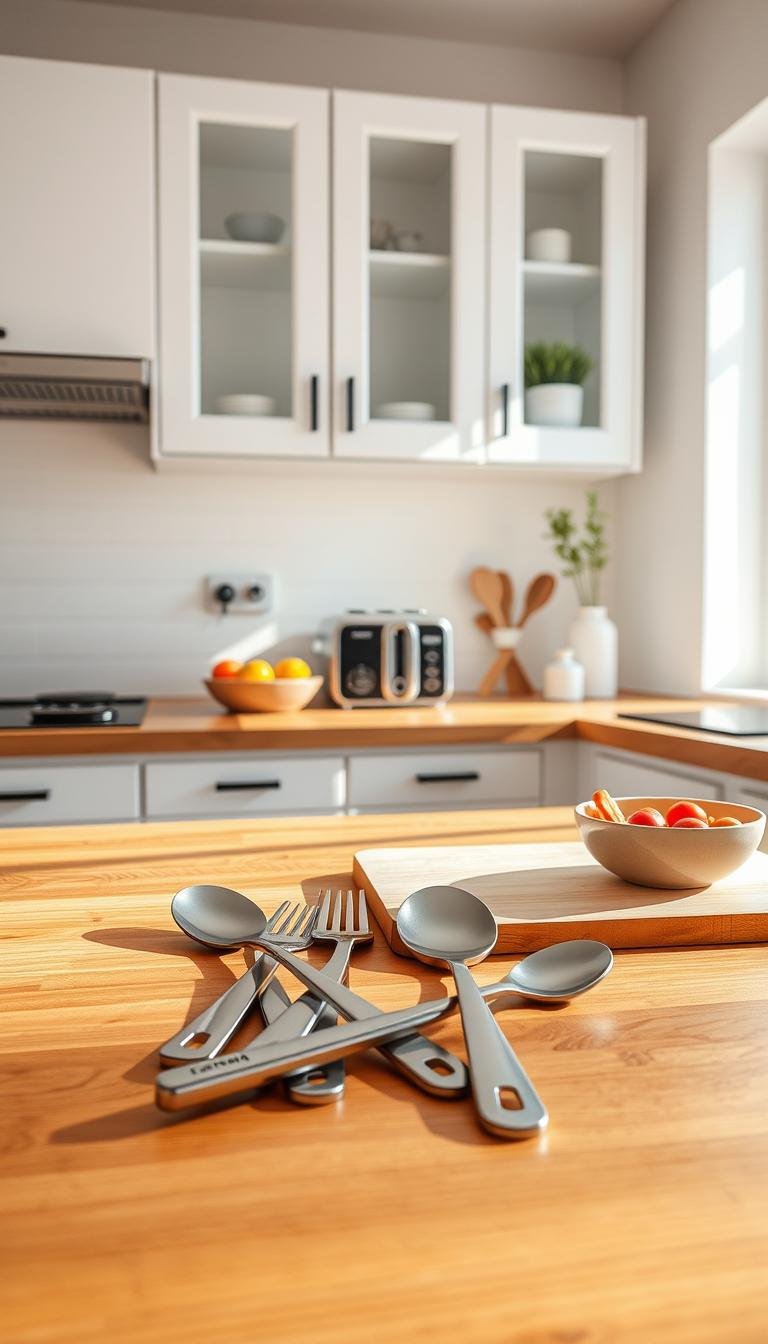
Keep simple tools close. A spatula, wooden spoon, tongs, can opener, box grater, measuring cups, a rimmed sheet pan, a 9×13 glass dish, colander, and oven mitts handle most tasks. Borrow big or rare items. Skip single-use gadgets.
Small habits protect your quality cookware and save space. Gentle routines free time and reduce stress. Start small. Build calm.
Key Takeaways
- Start with few, durable pieces that cover daily tasks.
- Choose one good knife set and a reliable pan and pot.
- Keep simple utensils within reach for quick meals.
- Borrow bulky tools you rarely use.
- Use short daily and weekly routines to keep your space calm.
- Care for knives and pans to extend their life.
Start here: a calm path to fewer, better kitchen tools
Pick one clear goal today: less clutter, more calm in your home. Choose one intention. Fewer, better tools make cooking easier and kinder to your time.
Set a simple rule. Keep what you use weekly. Let the rest go when you are ready. No rush. Pick one drawer. Ten minutes. Remove extras. Keep what serves you.
Create a tiny landing spot for daily coffee and tea. One kettle. One mug per person. A small tray keeps cups corralled and counters clear.
Share the load at home. Give each person one small job after dinner. Dishes. Unload the dishwasher. Take out trash. Sweep. A short shared routine keeps the kitchen steady.
Choose one good knife you like to hold. It will do most work and save you time. Work in short sessions. Set a timer. Stop before you feel tired. Small steps add up in life.
- Store like with like. Tools together. Lids with pots.
- Clear counters nightly with a two-minute reset. Wipe. Breathe.
- Celebrate the space you recover. Empty corners feel like relief.
| Small Action | Time | Benefit |
|---|---|---|
| Pick one drawer | 10 minutes | Less clutter. Quick win. |
| Create coffee landing | 5 minutes | Faster mornings. Clear counters. |
| Shared nightly task | 5–10 minutes per person | Less overwhelm. Steady upkeep. |
| Choose one knife | 5 minutes | Streamlines prep. Saves time. |
Minimalist Kitchen Essentials
Start with a tiny set of tools that do almost everything. Keep choices calm and useful. Aim for pieces that cook, prep, and store without fuss.
Core knives
Chef’s knife: an 8-inch blade covers slicing, chopping, and most vegetables.
Paring and serrated: use the paring for small produce and the serrated for bread and tomatoes.
Everyday cookware
One 3–6 quart pot handles oats, rice, and soup. A 10-inch nonstick skillet does eggs. Add a stainless or cast-iron pan for searing.
Kitchen tools that multitask
- Spatula, wooden spoon, and tongs for most stirring and turning.
- Can opener and box grater for quick prep.
Measuring and prep
Measuring cups and spoons. Two to three cutting boards. Mixing bowls and a sturdy colander keep prep tidy.
Bakeware, dinnerware, and storage
A rimmed sheet pan, a 9×13 glass baking dish, and a cooling rack cover baking and roasting.
Plates, bowls, mugs, and cups sized to your household. A few glass containers, jars, and silicone bags make storage simple.
“Choose tools you enjoy using. Fewer pieces. Better results.”
Nice-to-have: a blender or immersion blender and a small food processor for sauces and pesto. Keep oven mitts and a trivet near the oven for safe, calm cooking.
Declutter your kitchen the gentle way
Begin with a tiny sweep that takes five minutes and feels doable. This small step begins calm change. No guilt. No big decisions. Just a steady start.
Edit by use:
Edit by use: keep what you reach for weekly
Open a drawer. Pull out what you use each week. Keep those pieces. Place unused things in a donate box.
Make a short list of keepers. Seeing your essentials helps you say no to extras.
Decide on duplicates: choose one best set
Pick your favorite measuring cup, pan, and cutting board. Keep one set that works well. Let the rest go. This frees storage and makes cooking easier.
Release unitaskers: let space breathe
Many single-use gadgets sit unused. A good knife or a pan often replaces them. Borrow large pans or extra place settings for holidays. Keep counters clear. Let the space breathe.
- Start with a five-minute sweep and donate broken or unused items.
- Create an outbox for unsure pieces. Revisit in 30 days.
- Celebrate small wins. One drawer at a time keeps the process light.
| Action | Time | Why it helps |
|---|---|---|
| Five-minute sweep | 5 minutes | Quick clarity. Removes broken items. |
| Edit by use | 10–20 minutes | Retains only things you reach for weekly. |
| Choose one set | 5 minutes | Reduces duplicates. Frees storage space. |
| Outbox check | 30 days | Easy decision. Low pressure donation. |
When you finish, write a short list of keepers. Use it when shopping. Small steps protect calm and make the kitchen feel kinder.
Simple organizing systems that stick
Design a few clear spots so everything has a steady place. A calm layout makes daily tasks easier. You move less. You find more.
Set visible zones
Make four zones: prep, cook, serve, and clean. Place cutting boards and mixing bowls near prep. Put pans and spices by the stove. Store plates and flatware near the serving area. Keep towels and trash near the sink for cleaning.
Right-size bins and containers
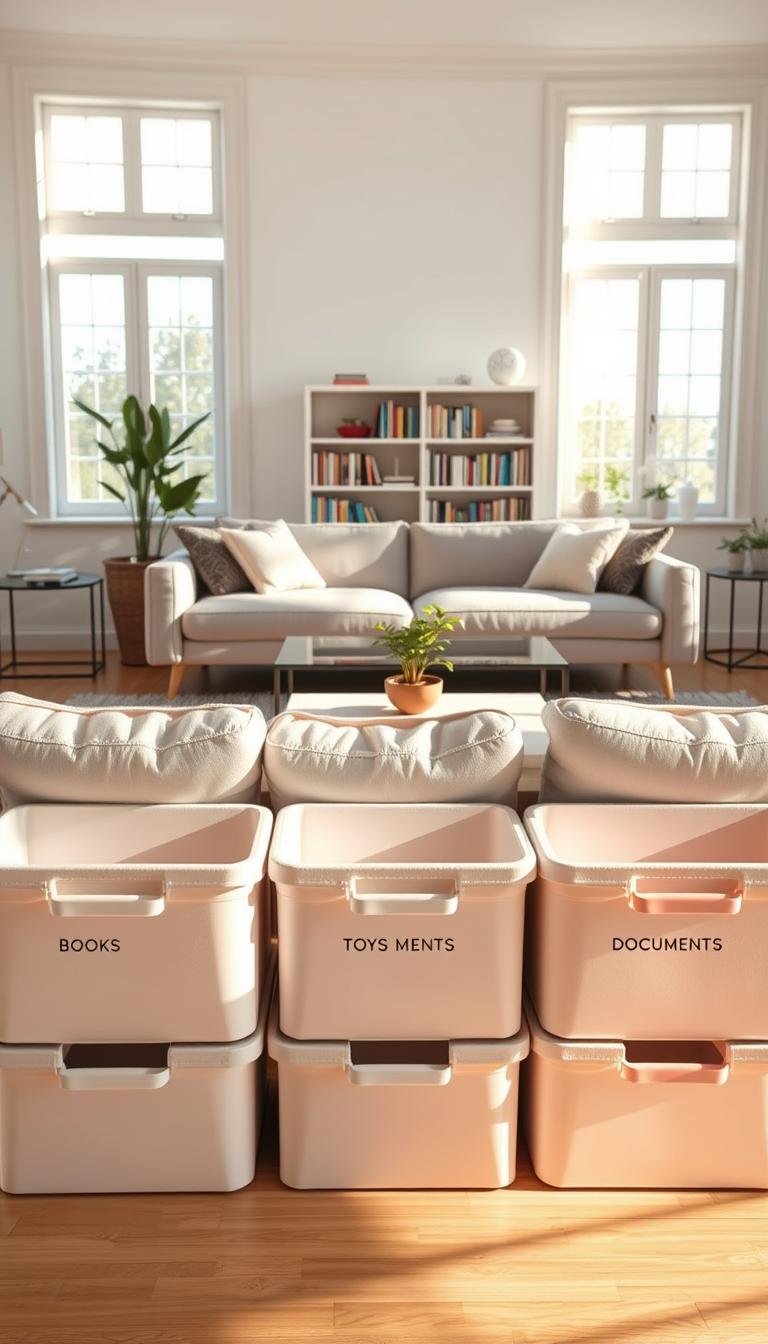
Use small containers in drawers for utensils and tools. Use larger bins on shelves for lids and baking pieces. Store like with like. Lids with lids. Bowls with bowls. This reduces searching and extra steps.
Go vertical and label lightly
Add shelf risers, hooks for mugs, and a pan rack to free counter space. Store baking sheets standing on a rack. Label bins with one or two words. Clear labels help everyone return items to the right place.
| Zone | Keep Nearby | Quick tip |
|---|---|---|
| Prep | Cutting boards, mixing bowls, knives | Drawer organizer for utensils |
| Cook | Pans, spatula, spices | Pan rack and shelf riser |
| Serve | Plates, flatware, trays | Corral small items on a tray |
| Clean | Sink tools, towels, trash | Return bin for misplaced items |
Review monthly. Move what you use closer to its zone. Small tweaks keep the system kind and lasting.
Daily, weekly, and monthly routines for a peaceful kitchen
Small, steady steps make the daily rhythm feel easy. Gentle routines keep your counters clear and your mind calmer. Build habits that fit the day you already have.
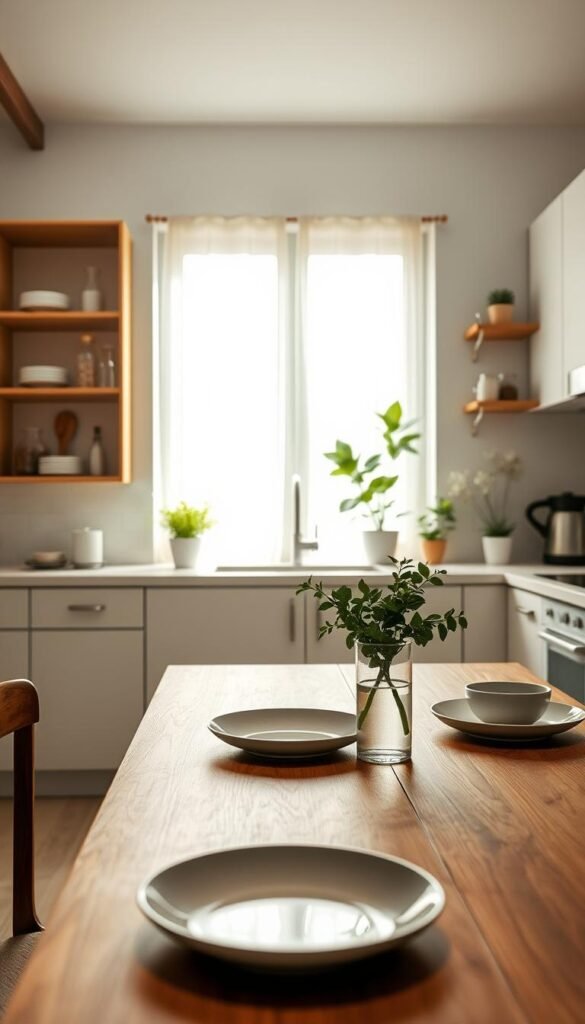
Daily reset checklist
Five to ten minutes each night makes mornings softer.
- Clear dishes and load the dishwasher or stack to wash.
- Wipe counters. Quick sweep if needed.
- Reset the sink and put away lunch boxes.
- Set out what you need for tomorrow’s first meal.
Weekly tidy and restock
One short session weekly keeps things steady.
- Empty old leftovers and wipe fridge shelves.
- Return stray tools to their zones. Match lids to containers.
- Restock a small set of staples for easy meal planning.
- Note items you ran out of on a fridge list for quick shopping.
Monthly deep-light reset
Do one focused task each month.
- Declutter a drawer or shelf.
- Wipe cabinet fronts and check pantry dates.
- Rehome one item you never use.
Shared tasks for the household
Share small jobs so no one carries it alone.
- After-dinner rhythm: one loads, one dries, one puts away, one takes out trash.
- Post the routine on a family board. Rotate jobs weekly.
- Set a timer. Stop when it rings. Short and steady wins over years.
Room-by-room examples: quick wins and tiny systems
Small, steady setups make each room easier to manage. These are quick places to start. Use tiny systems that stick.
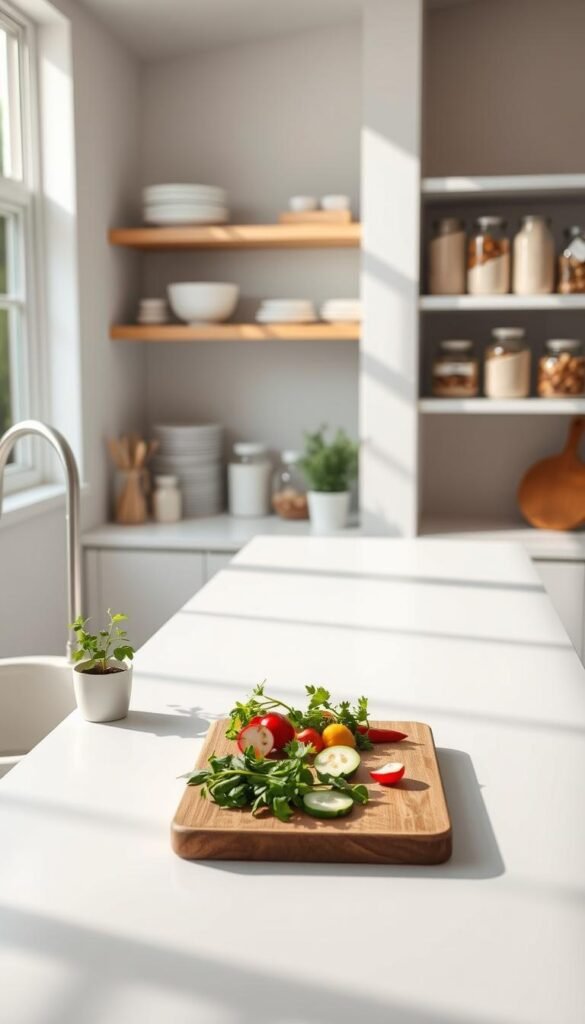
Kitchen: one-pot zone and knife station
One-pot zone: keep a large pot, ladle, and wooden spoon together. Store salt and oil nearby. Dinner starts fast.
Knife station: place knives, cutting boards, and a towel in one prep spot. Safe and quick. Reach for what you need.
Pantry: decant staples and first-in-first-out
Decant flour, rice, and beans into clear glass containers. Label lightly. Use first-in-first-out so older items move forward.
Keep a small produce bin for vegetables that need quick use. See it. Use it. Waste falls.
Bathroom, bedroom, and closet
Bathroom caddy: one small caddy with basics clears under-sink clutter. Grab and go for cleaning.
Bedroom nightstand: a lamp, a book, and water. Add a small dish for rings. Quiet before sleep.
Closet capsule: group hangers by category. Keep a donation bag on the floor. Add one item weekly.
Entryway and daily reset
Entryway drop zone: a tray for mail, hooks for keys, and a basket for small items. One place for things arriving home.
End the day with a five-minute reset. Return one item to its place in each room. Small moves keep your family calm and your space steady.
Cook more with less: minimalist kitchen tools in action
A few smart pieces can turn weeknight work into calm cooking. This section shows simple ways to use one pot, a rimmed baking sheet, and a blender to make real meals with little cleanup.
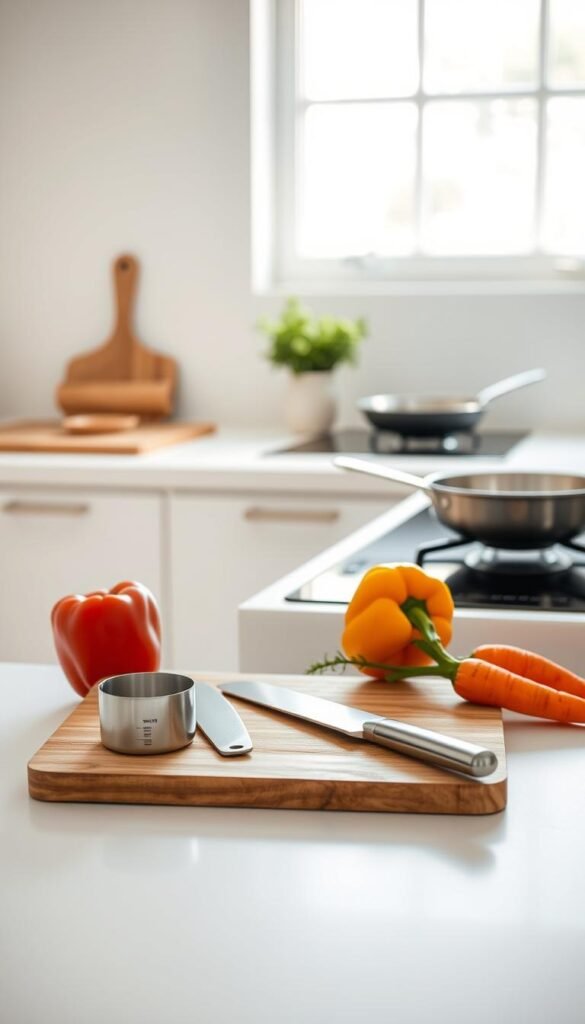
One-pot dinners with a large pot or Dutch oven
One-pot dinners keep things tidy. Follow these steps.
- Sauté aromatics in the pot.
- Add vegetables and protein.
- Pour in broth. Simmer until done.
- Finish with herbs or a squeeze of lemon.
If you have a Dutch oven, use it. It bakes and braises with even heat. It works in the oven for long cooks. Choose a pot size that leaves room to stir.
Sheet-pan meals on a rimmed baking sheet
Toss vegetables and protein with oil and spices. Spread them so they have space. Roast in a hot oven until edges brown. A rimmed pan keeps juices contained. Less fuss. Crisp results.
Blender basics: soups, sauces, smoothies
A blender makes smooth soup and quick sauces. Use frozen fruit plus cups of liquid for smoothies. For sauces, pulse until you reach the texture you want.
Use nonstick for eggs and delicate fish. Use a stainless pan to sear. Heat the pan, add oil, then protein. Let it release before flipping for a golden crust.
| Method | Key tool | Quick tip | Cleanup |
|---|---|---|---|
| One-pot dinner | Large pot / Dutch oven | Start with aromatics. Finish with herbs. | One pot to wash |
| Sheet-pan roast | Rimmed baking sheet | Give ingredients room to brown | Line or wipe clean |
| Smooth soups & sauces | Blender (appliance) | Blend hot soups carefully | Rinse and quick wash |
| Quick sear or eggs | Stainless pan / nonstick skillet | Use medium heat for eggs; high for sear | Wipe and wash |
Portion help: use small bowls to sort prepped ingredients. This keeps the cooktop clear. While the meal rests, rinse the pan, wipe counters, and load dishes. Ten minutes. Done.
What to skip, borrow, or replace
Not every gadget earns a permanent shelf in your home. A kind question helps. Do you reach for it weekly? If not, it may be taking space you need for calm.
Skip uni-taskers that do one thing. Spiralizers. Juicers. Popcorn machines. Many cooks regret a bread maker or dehydrator after a few uses. A good knife and a sturdy pan often do more than several single-use tools.
Think twice about bulky appliances. If an appliance sits unused most months, consider borrowing or selling it. Try borrowing a friend’s coffee maker or air fryer first. Test before you buy.
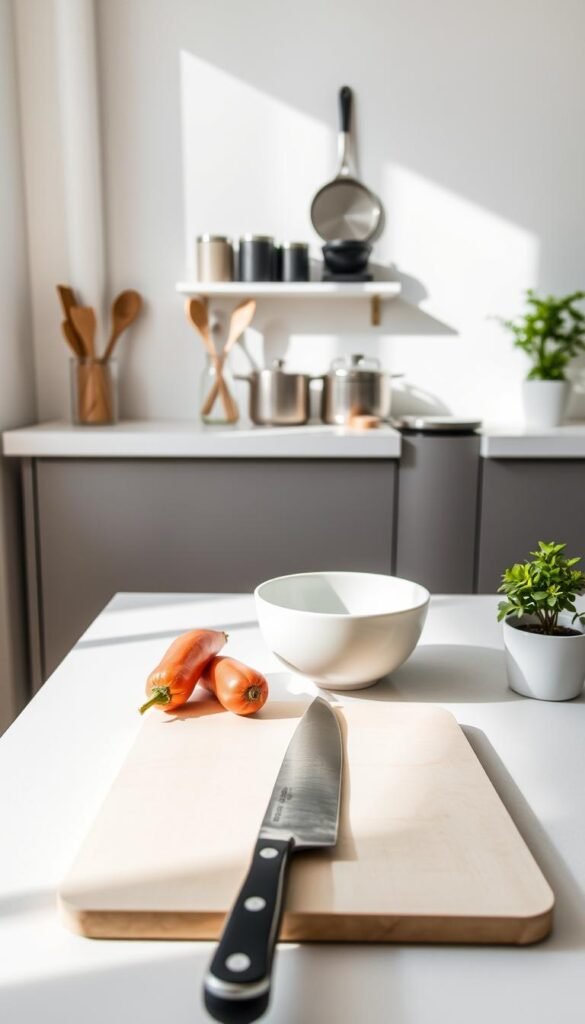
Borrow for holidays and big batches
Borrow a turkey roaster, extra place settings, or a stand mixer for holiday baking. It frees storage and saves money. One quality piece you own will often outlast many cheap items over years.
“Replace with better, not more.”
- Keep a wish waitlist. Wait 30 days before you buy.
- Trade up slowly. Replace only when something breaks.
- Keep receipts. Return or resell clutter and reclaim space.
| Choice | Example | Quick action |
|---|---|---|
| Skip | Spiralizer, popcorn machine | Donate or sell |
| Borrow | Roaster, mixer | Ask a friend or rent |
| Replace | One quality pan | Buy better; keep longer |
Care and longevity: make essentials last
A few gentle steps after each meal adds up to long-lasting gear. Small habits protect your tools. They keep your kitchen calm. They save money over the years.
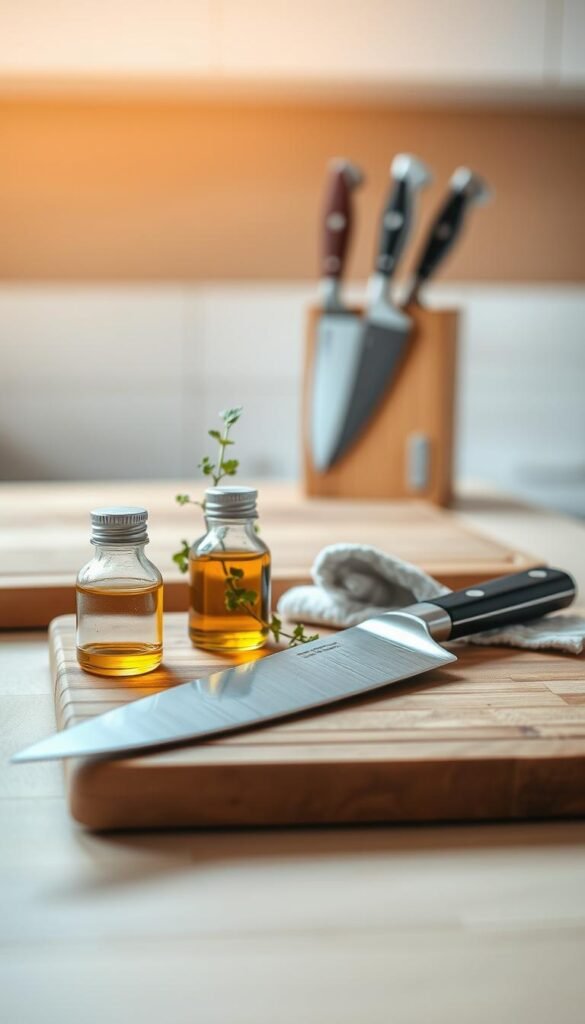
Knife care: hone weekly, sharpen as needed
Hone weekly with a honing steel to realign the edge. Sharpen on a whetstone a few times per year or when the blade drags.
Hand wash and dry right away. Store knives safely. Use a stable cutting board. Keep one board for strong aromatics to avoid flavor transfer.
Pan care: nonstick for eggs, stainless for sear
Use nonstick pans at medium heat. Use silicone or wooden utensils. Hand wash to protect the coating. Expect wear over time.
Preheat stainless pans, add oil, then food. Let protein release before flipping. Deglaze with water or sauces to lift fond and clean the pan easily. Cast-iron needs drying and a light oil after use to protect the surface.
Storage rotation: match lids, retire stained pieces
Once a month match lids to storage containers. Recycle cracked or stained glass and plastic. Let hot glass cool before washing to avoid thermal shock. Pick the pot and pan size you use most. One great piece you reach for daily beats three you ignore.
- Gentle cleaning: use non-abrasive tools or a baking soda paste for stuck bits.
- Record care: note when you last sharpened a knife or re-seasoned a pan. Small logs help over years.
| Item | Key habit | Frequency | Benefit |
|---|---|---|---|
| Knives | Hone weekly; sharpen yearly as needed | Weekly / Few times a year | Consistent edge; safer prep |
| Nonstick pan | Medium heat; hand wash; soft utensils | After each use | Longer coating life; better eggs |
| Stainless pan | Preheat; deglaze with sauces or water | Each cook | Decades of use; great sear |
| Storage | Match lids monthly; retire damaged pieces | Monthly | Clear drawers; safe storage |
“Care is simple. Small acts keep good tools serving you well.”
Conclusion
You can cook more with less, one calm step at a time.
Keep a short list of true essentials. One good knife, a trusted pot, and a couple of pans cover most meals. Match your bowls, cups, and spoons to your household size.
If you love baking bread or big projects, borrow a mixer or an appliance for the day. Save space and time the rest of the year.
Choose sturdy containers that stack. Keep measuring cups and mixing bowls ready. Build tiny routines. Five quiet minutes at night and one shelf each month protect your time and energy.
Serve a simple salad, a warm loaf, and coffee. Connection matters more than perfect kitchen tools. Pause before new things. If they have no place or purpose, let them pass.
You are doing this well. Small habits add up. One calm step at a time, your home and life will feel lighter and kinder.
FAQ
What is the first step to simplify your kitchen tools?
Start small. Choose a drawer or a cabinet. Remove anything broken or rarely used. Keep what you reach for weekly. Let the rest go. This creates calm without pressure.
Which knives should I keep for everyday cooking?
Keep three reliable knives: a chef’s knife, a paring knife, and a serrated bread knife. They cover most tasks. Buy one good brand you can maintain. Hone weekly. Sharpen as needed.
What cookware truly covers family meals?
Aim for a saucepan, a large pot or Dutch oven, and a versatile skillet—nonstick for eggs and stainless or cast iron for searing. These handle soups, pasta, sautés, and one-pot dinners.
Which small tools are worth keeping?
Choose multitaskers: a sturdy spatula, a wooden spoon, tongs, a box grater, and a good can opener. They save space and cover many tasks. Avoid single-use gadgets.
What bakeware should stay in a pared-down kitchen?
Keep a rimmed sheet pan, a 9×13 glass baking dish, and a cooling rack. They work for roasting, baking, and reheating. One versatile set is better than many specialty pieces.
How do I handle storage and leftovers simply?
Use glass containers with matching lids, a few jars, and silicone bags. Choose sizes that match your meals. Stackable, clear pieces make restocking easy and reduce food waste.
Are there small appliances worth the counter space?
Keep one or two that you use most. A blender or immersion blender and a small food processor are often enough. A kettle is helpful for tea and quick meals. Borrow or store bulky items you use rarely.
How do I let go of duplicates without regret?
Decide by use. Keep the single best version of an item. If you worry, box extras for 30 days. If you don’t miss them, donate. This gentle test removes doubt and keeps peace.
What organizing systems actually stick?
Set functional zones: prep, cook, serve, clean. Right-size containers for drawers. Use vertical space with racks and hooks. Label lightly. Simple rules reduce decision fatigue and help everyone follow them.
How often should I tidy and deep-clean?
Do a daily reset each evening. Tidy and restock once a week. Do a light deep reset monthly. Short, consistent habits keep the kitchen calm and prevent overwhelm.
What should I skip or borrow for occasional needs?
Skip single-use gadgets and bulky appliances you rarely use. Borrow specialty tools for holidays or big batches. This saves space and keeps the everyday easier to manage.
How do I make cookware and knives last longer?
Care regularly. Hone knives weekly and sharpen when needed. Follow pan care: nonstick for delicate foods, stainless or cast iron for high heat. Match lids, retire stained containers, and rotate storage to avoid clutter.
How can I apply these ideas in other rooms?
Use the same gentle edits. Create small zones in the pantry, bathroom, and entryway. Decant staples, keep a small cleaning caddy, and set a drop zone for keys and mail. Tiny systems add calm across the home.