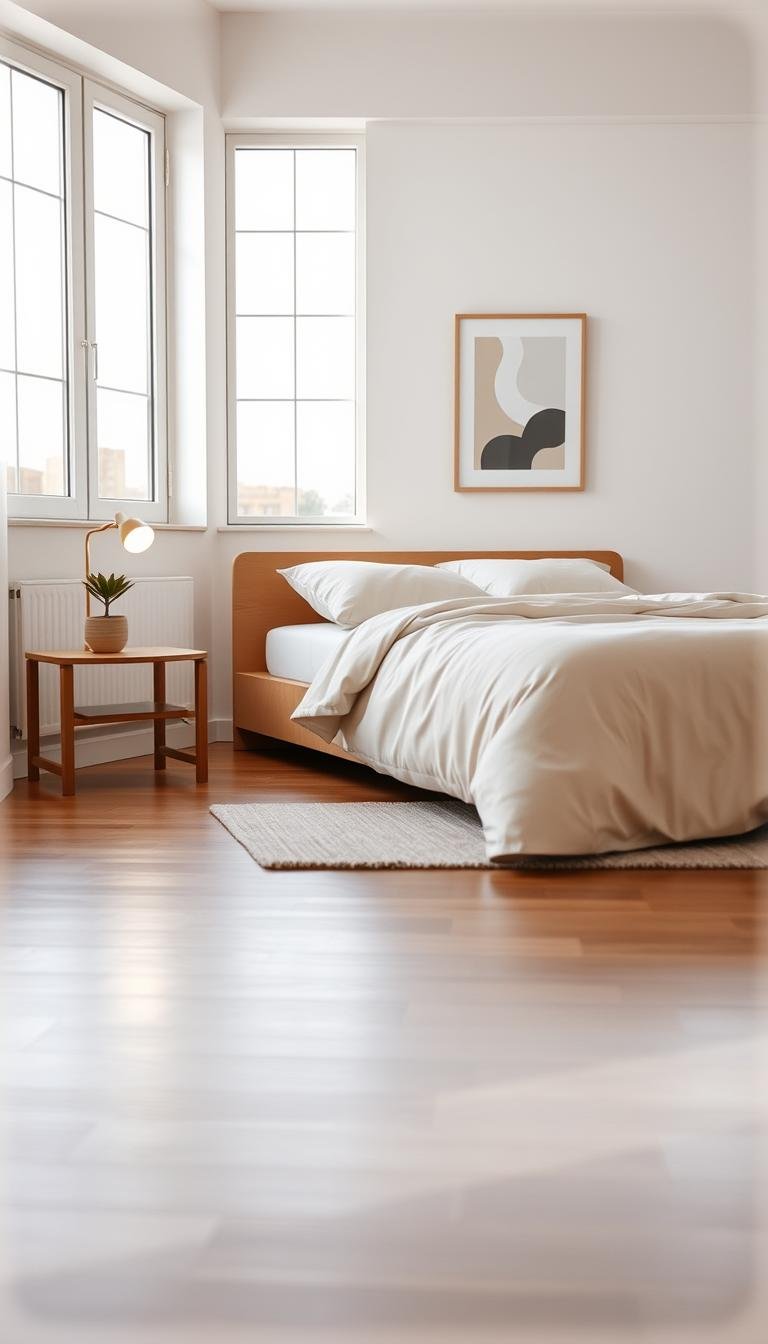
Minimalist Bedroom Setup
You are busy. You want a calm home that helps you breathe and sleep better.
This short guide shows simple, kind steps to reset a room and keep it peaceful.
Start small. Clear surfaces. Put back only the essentials. Use closets, drawers, or under-bed storage to hide extras.
A platform bed with storage can save space and make the room feel tidy. Choose a soft palette and textured accents for warmth. Frosted glass lighting and a full-length mirror add depth without clutter.
You will learn gentle routines. Try a two-minute nightly reset. Do a weekly sweep and a monthly drawer edit. These small systems reduce stress and protect rest.
No perfection needed. You decide what calm living means. We offer friendly steps that fit real life and real schedules.
Key Takeaways
- Begin with a clear reset and keep only essentials.
- Use hidden storage and clean-lined furniture to save space.
- Soft palette and textures soothe the mind.
- Simple lighting and one focal piece reduce visual noise.
- Easy routines—two minutes nightly, weekly sweep—keep the room calm.
Why a Minimalist Bedroom Helps You Rest Better
A tidy space sends a quiet signal to your nervous system. Fewer objects mean less for your brain to follow. That quiet lets your mind slow down.
Designers link calm rooms to better sleep. Limit visual noise. Keep the bed wall balanced. Hide small items behind drawers. Use warm, natural materials so the room does not feel cold.
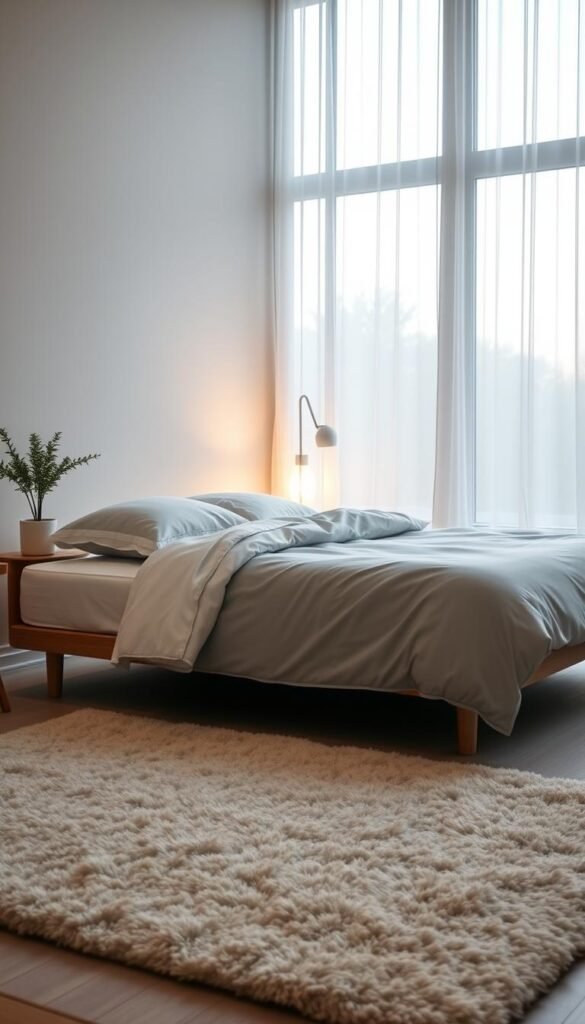
Choose a soft palette. Neutral tones like warm whites and soft beiges ease your feelings. Layer lighting with dimmers and frosted glass. Lower light to about 30% an hour before bed.
| Benefit | Simple Action | Result |
|---|---|---|
| Lower visual noise | Clear surfaces nightly | Faster calm |
| Balanced interior | Match nightstands or lamps | Sense of steadiness |
| Warm materials | Use wood and cotton | Cozy, not stark |
Small habits help. Two minutes to clear the bedside. One deep breath at the doorway. These tiny steps protect rest and make living easier.
Defining Minimalism: From Austere to Casual
Decide how spare or lived-in you want your sleeping space to feel. Each choice is valid. You can aim for extreme calm or a softer, lived-in warmth. The point is to pick what helps you rest.
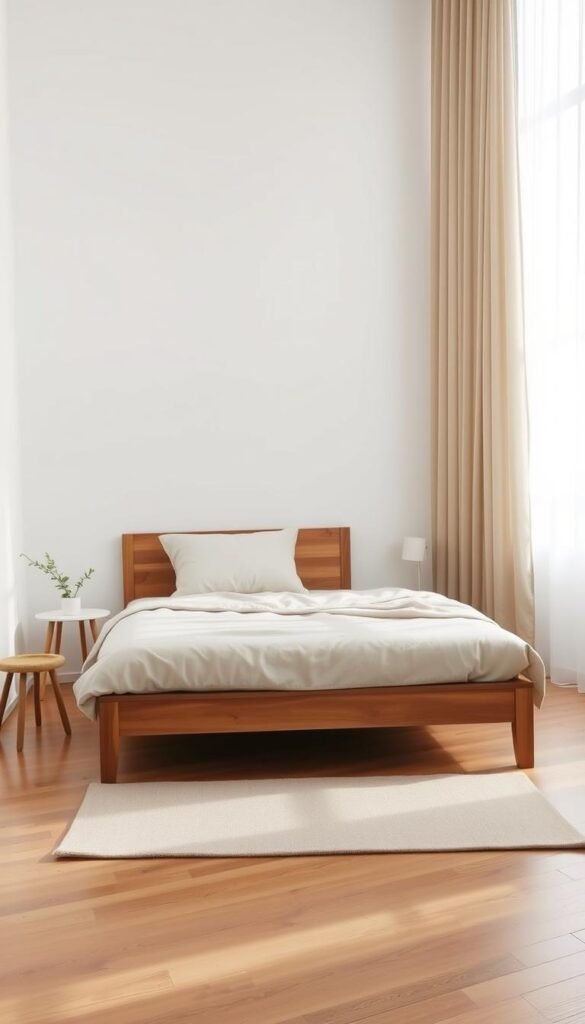
Austere
What it looks like: A mattress and bedding only. Clear floors. Bare walls.
Why people choose it: Maximum calm and minimal visual clutter.
Moderate
What it looks like: A simple bed frame, one nightstand, and a lamp. Windows are bare or lightly treated.
Why people choose it: Easy function with an open feeling. You keep only the furniture and items you use nightly.
Casual
What it looks like: A limited palette with a rug, drapery, and a small dresser. A few accents and soft textiles are allowed.
Why people choose it: Comfort plus calm. You add warmth without adding clutter.
- A dresser fits any level if it has clean lines and a clear top. One bowl or tray is enough.
- Pick your level by asking: What helps me sleep? What do I touch daily? What adds visual noise?
- Choose one focal element—bed, art, or a soft accent wall—and let the rest step back.
- Your level can shift with life seasons. Adjust without guilt. Keep the core simple.
| Level | Key pieces | Clutter control cue |
|---|---|---|
| Austere | Mattress, bedding | Keep floors and walls clear |
| Moderate | Bed frame, nightstand, lamp | One surface free each evening |
| Casual | Rug, dresser, soft textiles | Limit decor to a single focal piece |
Minimalist Bedroom Setup: A Simple Step-by-Step
Use a calm, short plan to clear the room and keep it that way. Work in 15-minute bursts. Small choices add up. You do not need a full day or perfect decisions.

Clear the room completely
Step 1. Move out extra decor, clothes, and small things. Leave the bed and basic bedding if that feels easiest.
Put back only essentials
Step 2. Put the bed, two pillows, one light blanket, one nightstand, and one lamp back first. Pause. Breathe. The room already feels calmer.
Store, donate, or rehome the rest
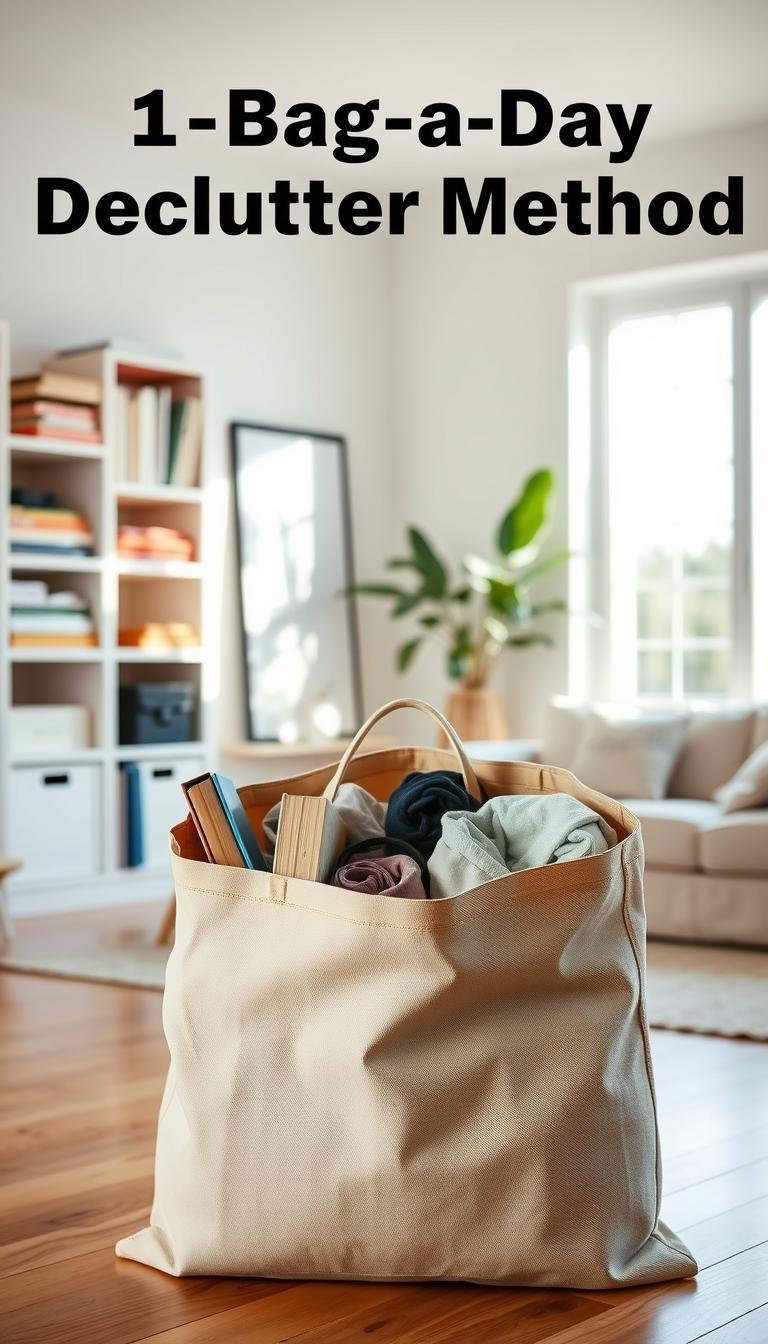
Step 3. Sort into four bags: Keep, Donate, Rehome, Trash. Work in short bursts. Be kind to yourself when you donate. Someone else may use what you no longer need.
Create homes in drawers, closets, or under-bed storage
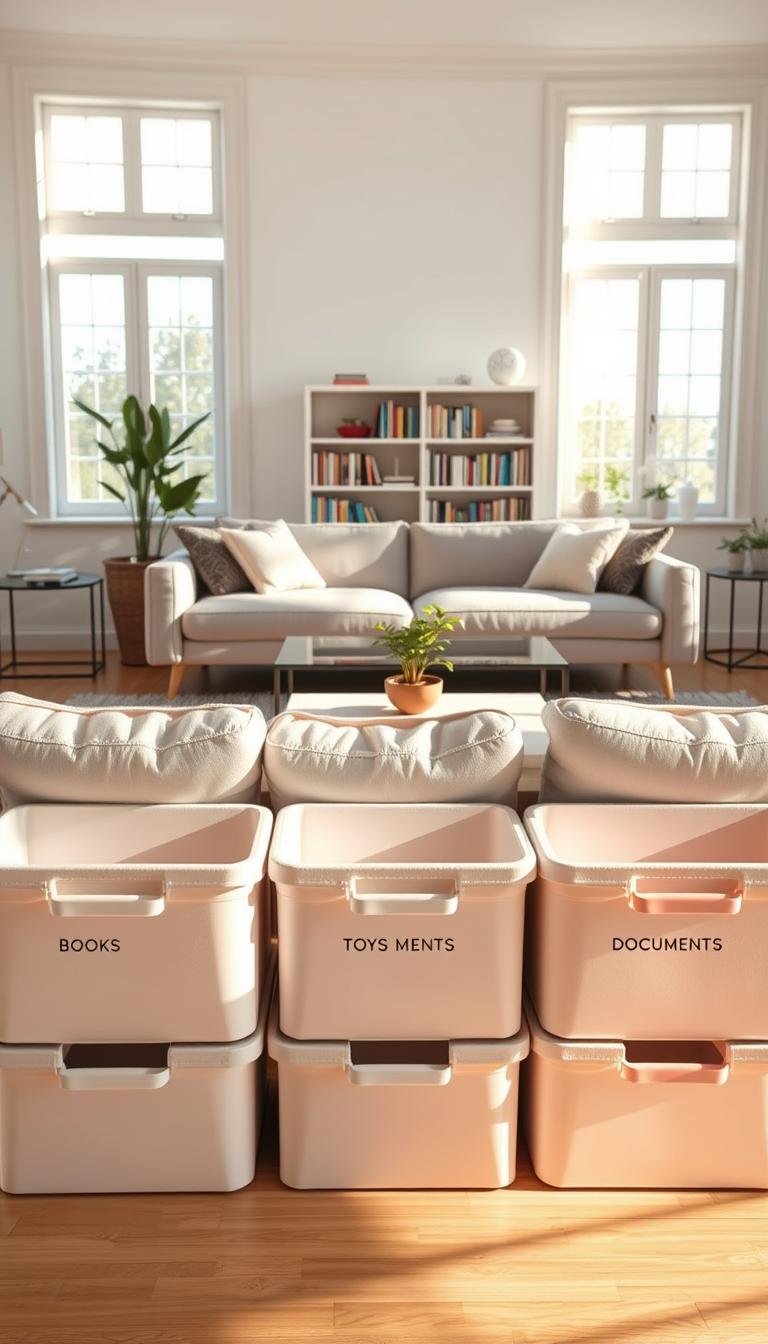
Step 4. Use drawers for daily items. Use under-bed storage for off-season bedding. Label bins. Platform beds with built-in storage hide clutter and keep clean lines.
- Quick clean: Dust, sweep, open a window.
- Surface rule: One tray on the nightstand. One book out.
- Finish: Two-minute reset each night. Fluff pillows. Dim lights.
| Action | What to keep | Where to put it |
|---|---|---|
| Daily essentials | Bed, two pillows, one lamp | Nightstand and tidy drawers |
| Seasonal items | Extra bedding, off-season clothing | Under-bed storage labeled bins |
| Extras to remove | Unused decor, duplicate things | Donate or rehome |
Color Palette and Neutral Tones That Calm
Let color soothe the space rather than shout. A calm palette helps you relax the moment you walk in. Keep choices small. Choose warmth over stark contrast.
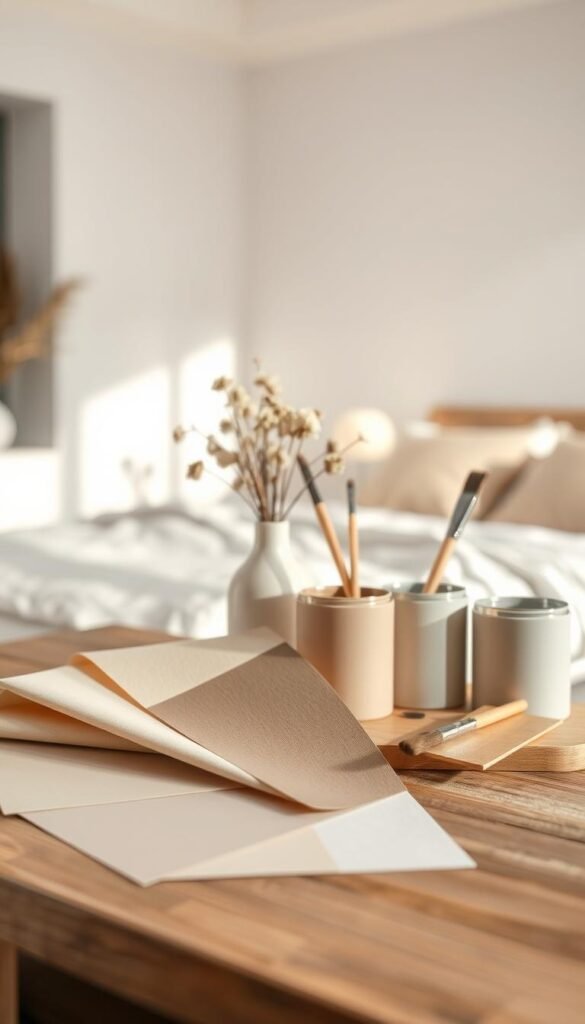
Designers warn that pure white can feel cold. Try a warm white or soft beige instead. These neutral tones feel gentle and steady. They help the bedroom feel lived-in, not clinical.
One accent color used sparingly
Pick a single accent color you love. Use it in a throw, a pillow, or a small art print. That restrained use adds interest without clutter. Let most surfaces stay quiet.
Match tones across bedding, rug, and drapery
Match hues so the eye can move without stopping. Keep bedding, rug, and drapery in the same family of tones. This creates a soft flow and a calm room.
“Pull your palette from a favorite piece of art. It makes choices easy and true to you.”
- Rule: Start with warm whites or soft beige as your base.
- Rule: Use one accent to add small pops of color or art.
- Rule: Add depth with textures—linen, wool, cotton—rather than more hues.
- Tip: Test paint on the wall. Watch it from morning to night.
Textures and Materials: Clean Lines, Real Warmth
The right materials can make a simple space feel warm and finished. Use tactile choices to invite calm. Let surfaces and finishes carry the mood so you need fewer objects.

Natural fibers and wood finishes
Choose fabrics that breathe and feel gentle on skin. Cotton sheets, a linen duvet, and a wool or jute rug add warmth and comfort. These materials age well and stay soft.
Keep wood finishes consistent. Match nightstands to the floor or the bed frame. Consistent wood ties the room together and reduces visual noise.
Limewash or textured wallpaper for quiet depth
Limewash paint gives a soft, aged texture that can replace extra wall art. It adds subtle movement when light changes. Textured wallpaper—silk, grasscloth, or soft vinyl—wraps a room in warmth and helps dampen sound.
“Let materials do the talking. Fewer pieces. Better feel.”
- Layer two to three textures only. Example: linen bedding, wool rug, smooth wood.
- Keep lines clean. Simple edges and minimal seams let your eye glide across the space.
- Add tiny natural accents. One branch or a small vase of pampas grass brings life without clutter.
| Material | Why it helps | Easy swap |
|---|---|---|
| Linen or cotton | Breathable. Soft to touch. Invites rest. | Replace synthetic sheets with a linen or cotton set. |
| Wool or jute rug | Adds warmth and texture. Softens sound. | Choose a neutral woven rug under the bed. |
| Limewash or grasscloth | Quiet depth. Acts as art and finish. | Paint one wall with limewash or apply grasscloth wallpaper. |
Bed First: Platform Bed, Frame, and Placement
Let the bed anchor your plan for flow and ease. Start by choosing the bed as the visual and practical focal point. A low-profile platform bed sets a clear silhouette and keeps clean lines in the room.
Placement rules: Center the bed on the main wall. Leave at least 24–30 inches of clear walkway on both sides. If possible, face the bed toward the door but avoid direct alignment for a grounded feel.
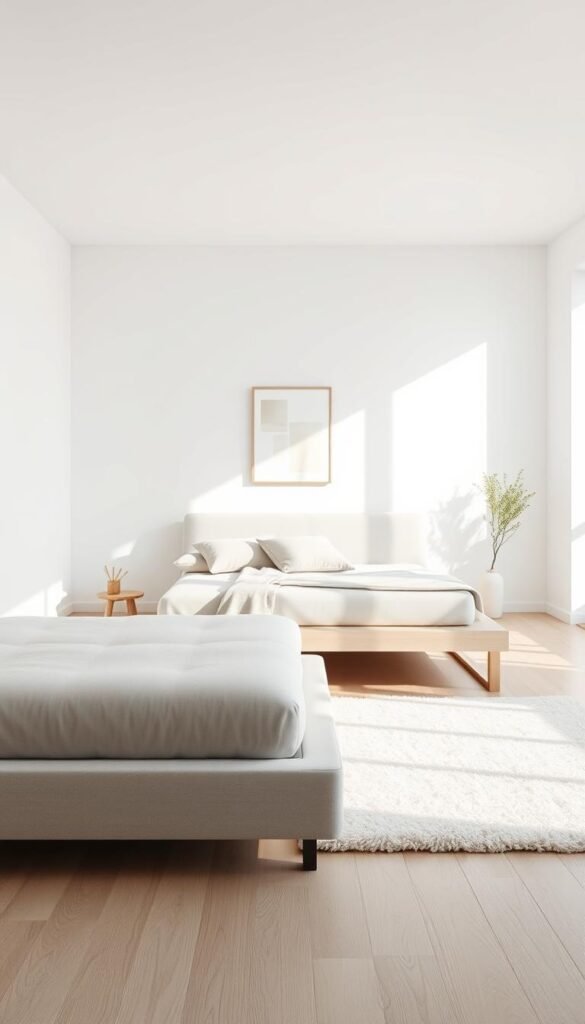
Low profile platform bed
Pick a platform frame with a simple edge. A low profile reduces visual clutter. Built-in drawers or slatted bases give extra storage for off-season bedding.
Clear walkways and balance
Measure the floor before you move heavy pieces. Mark 24–30 inches on each side with tape. That space keeps traffic smooth and calm.
Hidden storage and cohesion
Use labeled soft bins under the bed. Store spare blankets, not daily items. Match the bed frame wood to the floor or nightstands for a quiet, cohesive look.
| Need | Rule | Quick tip |
|---|---|---|
| Walkways | 24–30 inches each side | Use painter’s tape to test clearance |
| Rug placement | Extend 18–24 inches beyond sides and foot | Rug frames the bed and softens the floor |
| Nightstands | At mattress height; keep narrow | One small tray and lamp only |
| Lighting | Soft, dimmable bedside lights | Switches within reach from pillow |
Nightstands and Bedside Lamps That Work Hard
A calm nightstand makes evenings smoother and mornings kinder. Keep this area simple. Use furniture that hides the little things so the room feels restful.
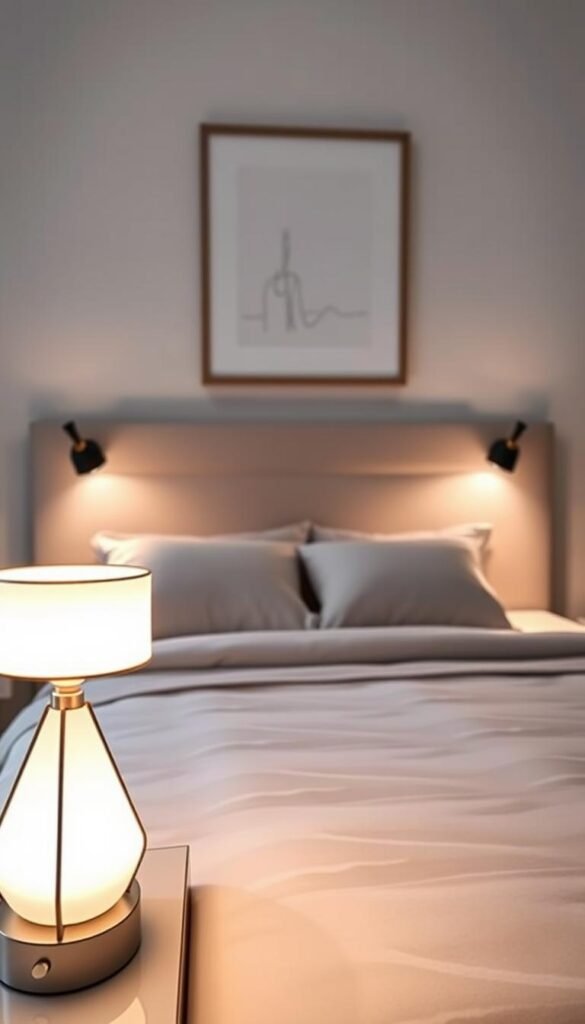
Drawers to hide small items
Pick nightstands with at least one drawer. Stash chargers, hand cream, and glasses out of sight. Drawer dividers help. One section for tech. One for sleep aids. One for small care items.
Keep tabletops nearly clear
Use one tray on top. Limit items to three. A lamp, a current book, and a water glass are enough. Run a cable clip at the back so cords vanish. A two-minute bedside reset each night keeps this tiny space peaceful.
Match finishes to the floor for cohesion
Match the nightstand finish to the floor for a quieter feel. Clean lines and consistent finishes make the room read as one calm surface. Felt pads make it easy to move furniture for cleaning.
- Choose lamps with frosted shades or fabric diffusers.
- Add dimmers for soft evening light.
- Keep decor minimal. One small tray is the anchor.
| Need | Simple rule | Quick benefit |
|---|---|---|
| Storage | Nightstand with 1+ drawers | Hide daily clutter |
| Surface | One tray. Three items max | Clear visual field |
| Lighting | Frosted shade + dimmer | Soft, sleep-friendly glow |
| Finish | Match nightstand to floor | Cohesive, calm room |
Dresser, Closet, and Hidden Storage Systems
A tidy storage plan makes daily life simpler and calmer. You want easy access and quiet surfaces. These choices keep the room feeling uncluttered and friendly.
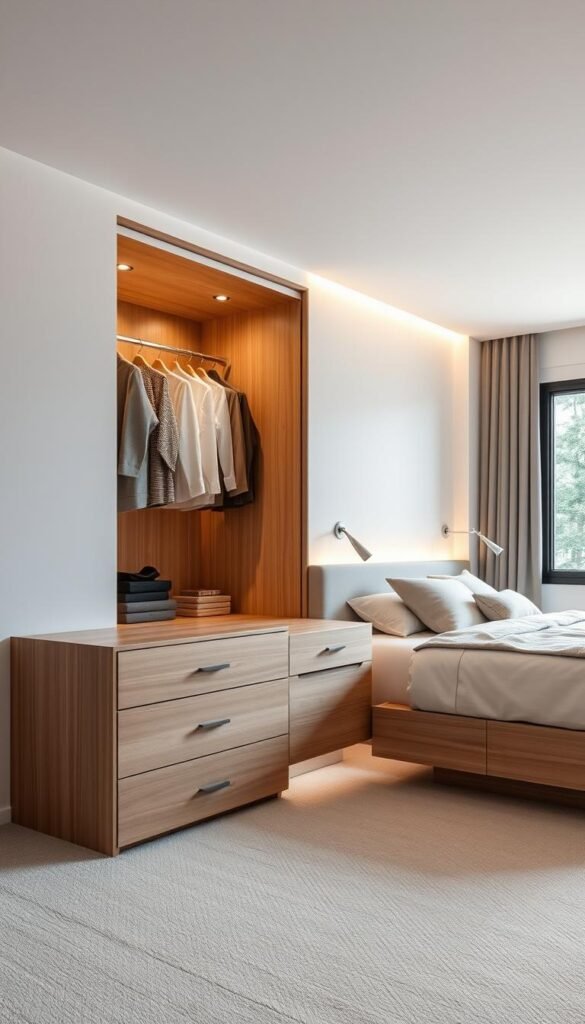
Pick the right furniture
Choose a clean-lined dresser with simple hardware. Straight edges collect less dust. A well-made piece holds a lot without adding visual weight.
Keep tops nearly empty
Limit items to one tray or a small bowl. Let the rest live in drawers. Clear tops reduce visual clutter and help the interior feel calm.
Make drawers and closets work
File-fold clothing so you see everything at once. Use dividers and labeled soft bins. Label bins: Sleepwear, Tees, Workout, Off-season. A shallow box in a drawer keeps jewelry easy to find.
- Place a lidded hamper inside the closet or behind the door.
- Store spare bedding in labeled under-bed bins for quick swaps.
- Schedule a 10-minute monthly edit. Open each drawer. Remove what you did not wear.
These small systems guard your calm. They make daily routines easier and free up mental space.
Rug, Layout, and Symmetry for a Calm Look
A calm look begins where floor, bed, and textiles meet. A rug frames the main area and gives the room a finished feel.
Size the rug to frame the bed. For queen and king sizes, choose a rug that extends 18–24 inches beyond the sides and foot. Slide the rug under the front two-thirds of the bed. Keep nightstands off the rug for clean lines.
Balance with pairs
Use matching nightstands and two lamps. Pairs calm the eye. Symmetry on the bed wall creates a steady, peaceful look.
- Leave at least 24 inches of pathway at the sides and end of the bed.
- Echo rug tones with bedding and drapery for a cohesive color story.
- For wood floors, pick a rug with a warm undertone to complement the grain.
- In small rooms, choose a lighter rug to keep the space feeling open.
| Rule | Practical tip | Quick result |
|---|---|---|
| Rug size | Extend 18–24″ beyond sides and foot | Frames the bed and anchors the room |
| Placement | Under front two-thirds of bed; nightstands off rug | Clean lines and balance |
| Symmetry | Two lamps, two nightstands, centered bed | Calm, steady look from the door |
| Pathways | 24″ clearance each side and end | Easy flow and less visual clutter |
Lighting Plan: Layered, Soft, and Dimmable
Good lighting quietly guides your day and night. It helps the bedroom move from bright morning to a calm evening. Use a simple plan so the room feels steady and kind.
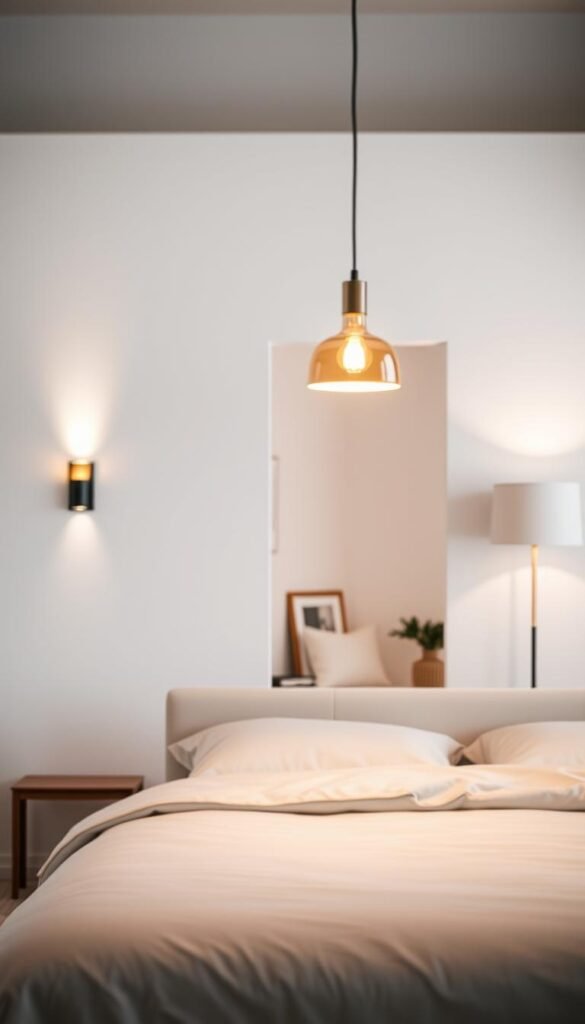
Start with three layers of light. Ambient overhead light. Task light at the bedside. A soft accent near art or the closet. Each layer should have a dimmer or smart control.
Statement fixture with frosted glass
Pick a ceiling fixture that glows, not glares. Frosted globes or fabric shades spread even light. Designers favor something special that is quiet by day and soft at night.
Bedside sconces or lamps with dimmers
Use bedside lamps or wall sconces you can lower. A dimmer helps you slow down before sleep. Keep one small tray and a lamp on the nightstand to keep lines clean.
Keep finishes consistent
Match finishes across fixtures. Choose blackened brass, matte white, or soft nickel. One finish ties the room together and makes the interior design feel calm.
“Frosted globes make a soft day statement and a calm glow at night.”
- Choose bulbs at about 2700K. Warm tones help you wind down.
- Hide cords along furniture lines. Cable channels keep the room neat.
- Add a smart plug or wall dimmer for one‑tap evening mode.
- Simple rule: bright in morning, medium by afternoon, low and warm at night.
| Layer | Example | Quick action |
|---|---|---|
| Ambient | Frosted ceiling fixture | Install dimmer |
| Task | Bedside lamps or sconces | Use adjustable dimmers |
| Accent | Small wall light or picture lamp | Set low level for evenings |
Action steps: Fit a frosted overhead light. Add dimmable bedside lamps. Match finishes and set warm bulbs. These small moves change how the room feels each hour.
Windows and Wall Accents: Drapery, Art, and Accent Walls
Window treatments set the mood before you touch a single pillow. They add height, softness, and a sense of white space. This is an easy way to lift the whole room.
Hang drapery from ceiling to floor. This makes the ceiling feel taller and the space calmer. Choose a warm neutral that ties to your palette. Use a simple rod. Add blackout lining if you need darker nights.
Consider a subtle accent wall behind the bed. Limewash adds texture and can act as art. Gentle wood paneling gives warmth and a cozy alcove. Keep lines clean. Avoid heavy patterns so texture does the work.
One focal piece is enough. A single large artwork or a sculptural headboard anchors the wall. Echo one color from that piece in a small textile. Keep every other surface quiet.
- Repeat the same finish on rods and lamp hardware for cohesion.
- Keep window treatments functional. No extra layers.
- Edit visual noise monthly. Store, donate, or rehome what you no longer love.
| Element | Why it helps | Quick tip |
|---|---|---|
| Drapery | Adds height and softness | Hang from ceiling; choose warm neutral |
| Accent wall | Defines a cozy bed alcove | Use limewash or subtle wood paneling |
| Focal piece | Reduces visual clutter | One large art or sculptural headboard |
Bedding, Pillows, and Layers for a Restful Feel
A quiet bedding scheme makes the room feel settled from the moment you enter. Keep choices small. Fewer items mean less visual noise and easier care.
Monochrome sets as a base
Begin with one monochrome set. One fitted sheet. One flat sheet. Two pillows. One duvet. This keeps laundry simple and the bed calm.
One throw or two pillows for interest
Add one throw or two extra pillows for a gentle pop. Keep patterns subtle. Stay inside your palette so the bed reads as one calm surface.
Warm tones for a cozy look
Choose warm neutrals. Cream, oatmeal, taupe, or clay make the space feel inviting, not sterile.
- Keep a spare sheet set in a labeled bin under the bed for quick changes.
- Use breathable fibers like cotton or linen for easy washing and temperature control.
- Limit bedside linens. A water carafe coaster and a tissue packet are enough.
- Rotate pillow covers by season and store off-season covers in one zip pouch.
Simple habit: Smooth the bed each morning in one minute. A tidy bed sets the tone for your day and helps the bedroom feel steadier.
Statement Pieces That Still Feel Minimal
Pick one striking object and let the rest of the room breathe around it. One clear choice adds personality without creating clutter. Keep the rest quiet. Let a single item set the mood.
Full-length floor mirror to open the room
A slim mirror with a simple frame can double visual space. Place it opposite a window or near a light source. It adds depth and soft light. Choose a thin metal or warm wood frame for a gentle edge.
Four-poster or canopy frame for tall ceilings
If your ceilings are high, a four-poster bed in warm wood adds vertical presence without bulk. Keep fabric simple. Skip heavy drapery. The frame creates a calm architectural moment.
One accent chair for a small reading nook
Add a single chair and a tiny side table. Anchor the nook with a small rug. Drape one soft throw on the chair. Keep a low basket nearby for a book and blanket. This fills a corner and invites rest.
- Rule: One statement piece only. Let it shine.
- Keep surrounding tones quiet to avoid visual noise.
- Check walkways after placing the piece. Comfort first.
| Piece | Placement | Quick tip |
|---|---|---|
| Full-length mirror | Opposite window or light | Thin frame, adds depth |
| Four-poster frame | Centered on main wall | Warm wood, simple textile |
| Accent chair + rug | Empty corner, near light | Small rug to define nook |
Budget-Friendly Path: Create Minimalist Style Under $1,000
A peaceful room need not cost a fortune; focus on a few key investments. Choose comfort first. Then add items that pull the look together.
Prioritize bed, bedding, rug, and lighting. These four pieces do the most work. A simple plan can outfit a calm bedroom for under $1,000.
Spend where it counts
Buy a platform bed or frame that offers hidden storage. Comfort and storage are the biggest wins. Look for a sturdy slatted base or built-in drawers.
Keep linens and textiles simple
Choose a monochrome bedding set now. One good set keeps laundry easy and the bed calm. Add a second set later if the budget allows.
Rug, lighting, and a single statement piece
A rug that frames the bed pulls the room together. Pick warm tones that match your palette.
Pick simple lighting with dimmers. One ceiling fixture and two bedside lamps are enough.
Make one affordable statement: a thin-frame full-length mirror. It opens the space and costs less than large art.
- Spend first on the platform bed and mattress support.
- Buy a rug sized to frame the bed.
- Choose lighting that can dim for evening.
- Use slim frames and low-cost prints for extra decor.
- Shop your home first. Move an existing dresser or chair to save money and waste.
“Start with comfort, then refine with a few high-impact pieces.”
| Item | Why | Quick cost idea |
|---|---|---|
| Platform bed / frame | Storage + support | Largest single investment |
| Rug | Anchors the bed | Mid-range cost, high impact |
| Lighting | Sets mood | Ceiling + two lamps with dimmers |
Final tip: Use what you already own. Small moves add up. With care, you can make a calm, functional home space well within budget.
Daily, Weekly, and Monthly Routines to Stay Clutter-Free
A few steady rituals protect the room’s calm without adding stress. Keep steps short. Be kind to yourself when you miss one. Gentle repetition is the way to lasting peace in your home.
Daily: Two-minute bedside reset
Quick checklist:
- Clear the nightstand. Return two things to their homes.
- Smooth bedding. Dim lights to a warm glow.
- Drop small items in a closet return bin for later.
Weekly: Laundry, dust, and floor sweep
Set aside 20 minutes once a week.
- Gather laundry and start a load.
- Dust flat surfaces and wipe quick spots.
- Sweep or vacuum, including under the bed. Use bins for extra storage.
Weekly add-on (10 minutes): empty trash, wipe mirrors, and do a quick closet reset—rehang or refold items.
Monthly: Edit drawers, rotate seasonal bedding
Spend about 20 minutes each month. Open two drawers. Remove items you did not use.
- Donate or rehome with care.
- Rotate seasonal bedding. Wash and label before storing.
- Follow the simple rule: one in, one out for new things.
“If you miss a day, it’s okay. Pick up where you are. Gentle progress keeps the bedroom calm.”
Room-by-Room Minimalist Habits You Can Borrow
A few gentle routines in the kitchen, bath, and entry add up to real calm in your home. Small systems keep things usable. They do not ask for perfection. Just tiny, steady choices.
Kitchen and pantry
Keep counters clear. Leave one work area free for prep. Store appliances you use weekly, not daily.
Pantry tip: Use labeled zones. One bin per category. Decant staples you actually buy. Put bulk items low and near the door for easy access.
Bathroom
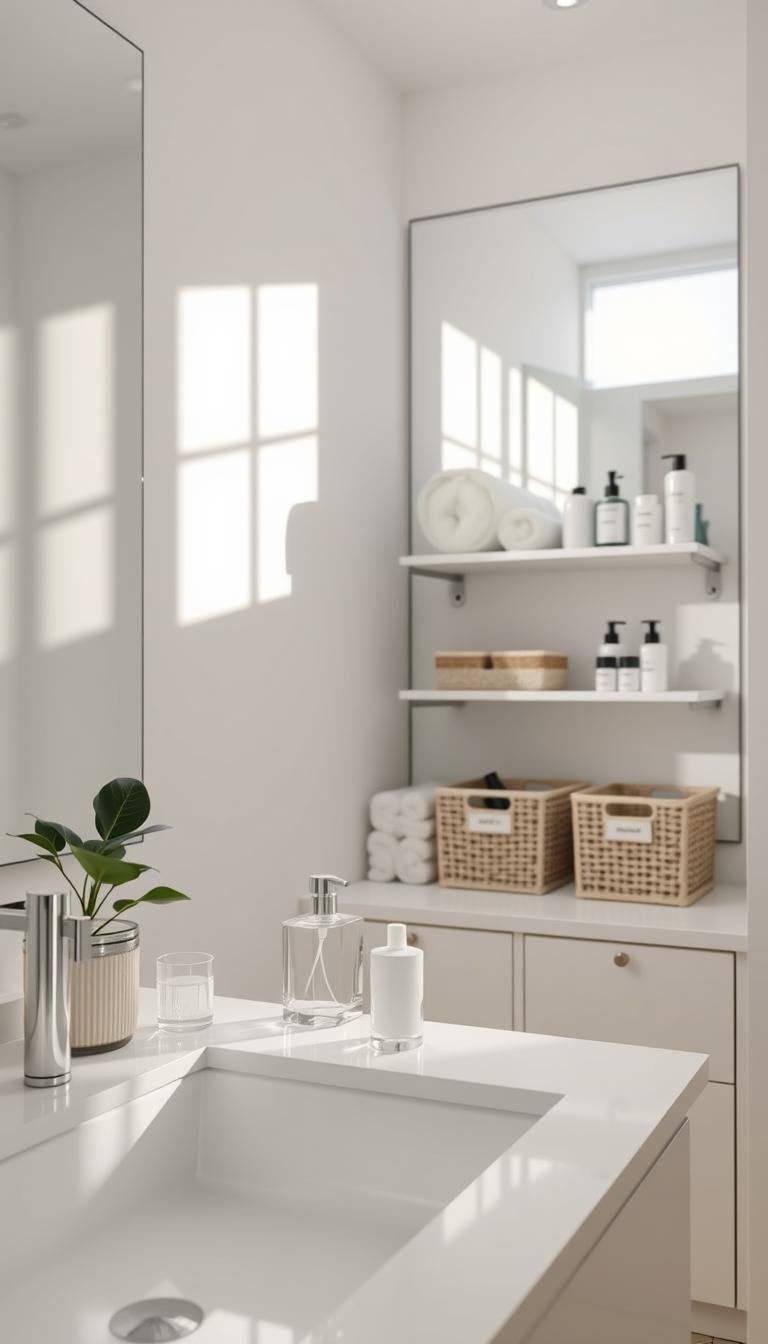
Limit products to a small tray by the sink. Choose three daily items and keep extras stored away.
Practice one-in-one-out for skincare and hair. When you bring new pieces in, remove one. This keeps surfaces calm and routines simple.
Closet and entryway
Use matching hangers and group clothes by type and color. Keep a donation bag on the floor for quick edits.
At the entry, add two wood hooks per person. One tray for keys and wallets. One small catch-all for mail. These tiny systems save time and cut visual noise.
Living tips: In shared spaces choose fewer decor accents. One plant, one book stack, one candle per surface at most. Favor furniture with clean lines and light legs so sightlines stay open.
| Room | Small system | Quick result |
|---|---|---|
| Kitchen | Labeled zones, clear counters | Easier cooking |
| Bathroom | Tray + one-in-one-out | Fewer surface items |
| Entry | Hooks + tray | Faster comings and goings |
Repeat your palette and match finishes across rooms. Consistent color and wood tones tie the whole interior design together. That way your living spaces feel calm and cohesive.
Conclusion
A few small actions today will change how the room feels tomorrow.
Your minimalist bedroom is a gentle journey, not a test. Edit belongings. Clear surfaces. Favor a warm palette and simple textures that invite calm.
Anchor the space with the bed. Center it. Use hidden storage and keep walkways open. Floor-to-ceiling drapery and subtle wall texture create depth without clutter.
Light softly. Choose frosted shades and dimmers. Pick one focal piece—art, a mirror, or a textured wall—and let the rest step back. This style and small systems shape how you live and how you rest.
Take one next step: smooth the bed. Clear the nightstand. One two-minute habit protects clear surfaces and leads the way to a calmer look and kinder interior design for daily living.
FAQ
What is a peaceful, pared-back bedroom and how will it help me sleep?
A peaceful, pared-back room focuses on calm colors, few items, and clear surfaces. It reduces visual noise and decision fatigue. You rest better. Your mind settles faster. Small routines feel easier. The space supports slow evenings and better sleep habits.
How do I begin clearing my room without getting overwhelmed?
Start with one surface. A bedside table or a single drawer. Remove everything. Keep only what you use nightly. Box the rest for storage. Donate or rehome items you haven’t used in six months. Small steps build momentum. Work in 20-minute bursts if time is tight.
What essential furniture do I really need?
Focus on a bed, one nightstand, and one storage piece like a low dresser. A low-profile platform frame helps keep lines clean. Choose pieces that do double duty. Beds with under-bed drawers or dressers with deep drawers reduce visible clutter.
Which colors calm the room without feeling cold?
Warm whites, soft beige, and muted greige create a soft base. Add one gentle accent color in small doses. Match tones across bedding, rugs, and drapery for a cohesive feel. Avoid high-contrast palettes that raise visual tension.
How many pillows and layers should I use on the bed?
Keep it simple. One base duvet and one light layer. Two sleeping pillows and one decorative throw or pillow are enough. Use texture for interest. Choose natural fibers like linen or cotton for softness and breathability.
How can I add warmth without adding clutter?
Use natural materials. A wooden nightstand. A wool rug. Linen bedding. A single framed print. Textured paint or a subtle limewash wall adds depth without objects. These choices keep the room warm and quiet.
What lighting plan works best for a calm atmosphere?
Layer light. A dimmable overhead fixture for general glow. Bedside lamps or sconces for reading. Warm bulbs and frosted shades soften the light. Keep finishes consistent for a unified look.
Where should I place the bed for the best flow?
Center the bed on the longest wall when possible. Leave clear walkways on both sides. A centered layout feels balanced and makes the room easier to use. Position windows and light sources to avoid glare while you rest.
How do I handle small items like chargers and jewelry?
Create small homes. Use a drawer with dividers or a shallow tray in a nightstand. Label bins for spare cords. Keep tabletop surfaces nearly clear. When everything has a spot, daily resets take two minutes.
Can I have a statement piece without ruining the calm?
Yes. Choose one focal item. A full-length mirror or a simple four-poster bed works well. Keep the rest minimal. One carefully chosen piece adds personality while preserving quiet.
How do I keep the room tidy with a busy schedule?
Build tiny routines. Two-minute bedside tidy each night. A weekly sweep for laundry and dust. A monthly edit of drawers. Small consistent actions prevent clutter from growing and fit into real life.
What budget tips help create a serene look under
FAQ
What is a peaceful, pared-back bedroom and how will it help me sleep?
A peaceful, pared-back room focuses on calm colors, few items, and clear surfaces. It reduces visual noise and decision fatigue. You rest better. Your mind settles faster. Small routines feel easier. The space supports slow evenings and better sleep habits.
How do I begin clearing my room without getting overwhelmed?
Start with one surface. A bedside table or a single drawer. Remove everything. Keep only what you use nightly. Box the rest for storage. Donate or rehome items you haven’t used in six months. Small steps build momentum. Work in 20-minute bursts if time is tight.
What essential furniture do I really need?
Focus on a bed, one nightstand, and one storage piece like a low dresser. A low-profile platform frame helps keep lines clean. Choose pieces that do double duty. Beds with under-bed drawers or dressers with deep drawers reduce visible clutter.
Which colors calm the room without feeling cold?
Warm whites, soft beige, and muted greige create a soft base. Add one gentle accent color in small doses. Match tones across bedding, rugs, and drapery for a cohesive feel. Avoid high-contrast palettes that raise visual tension.
How many pillows and layers should I use on the bed?
Keep it simple. One base duvet and one light layer. Two sleeping pillows and one decorative throw or pillow are enough. Use texture for interest. Choose natural fibers like linen or cotton for softness and breathability.
How can I add warmth without adding clutter?
Use natural materials. A wooden nightstand. A wool rug. Linen bedding. A single framed print. Textured paint or a subtle limewash wall adds depth without objects. These choices keep the room warm and quiet.
What lighting plan works best for a calm atmosphere?
Layer light. A dimmable overhead fixture for general glow. Bedside lamps or sconces for reading. Warm bulbs and frosted shades soften the light. Keep finishes consistent for a unified look.
Where should I place the bed for the best flow?
Center the bed on the longest wall when possible. Leave clear walkways on both sides. A centered layout feels balanced and makes the room easier to use. Position windows and light sources to avoid glare while you rest.
How do I handle small items like chargers and jewelry?
Create small homes. Use a drawer with dividers or a shallow tray in a nightstand. Label bins for spare cords. Keep tabletop surfaces nearly clear. When everything has a spot, daily resets take two minutes.
Can I have a statement piece without ruining the calm?
Yes. Choose one focal item. A full-length mirror or a simple four-poster bed works well. Keep the rest minimal. One carefully chosen piece adds personality while preserving quiet.
How do I keep the room tidy with a busy schedule?
Build tiny routines. Two-minute bedside tidy each night. A weekly sweep for laundry and dust. A monthly edit of drawers. Small consistent actions prevent clutter from growing and fit into real life.
What budget tips help create a serene look under $1,000?
Prioritize bed, bedding, a rug, and lighting. Mix one higher-quality item with budget-friendly accents like framed prints from independent artists. Shop secondhand for frames and dressers. Small swaps create big impact.
How do I choose window treatments that add softness?
Floor-to-ceiling drapery adds height and softness. Choose light-filtering fabrics for daylight and blackout options for sleep. Keep hardware simple. Neutral tones blend with the palette and reduce visual clutter.
What textures should I avoid to maintain a calm feel?
Avoid overly busy patterns and high-gloss finishes. Skip too many small decorative items. Loud textures compete with relaxation. Stick to a few natural fibers and matte wood or plaster finishes for quiet depth.
What is a peaceful, pared-back bedroom and how will it help me sleep?
A peaceful, pared-back room focuses on calm colors, few items, and clear surfaces. It reduces visual noise and decision fatigue. You rest better. Your mind settles faster. Small routines feel easier. The space supports slow evenings and better sleep habits.
How do I begin clearing my room without getting overwhelmed?
Start with one surface. A bedside table or a single drawer. Remove everything. Keep only what you use nightly. Box the rest for storage. Donate or rehome items you haven’t used in six months. Small steps build momentum. Work in 20-minute bursts if time is tight.
What essential furniture do I really need?
Focus on a bed, one nightstand, and one storage piece like a low dresser. A low-profile platform frame helps keep lines clean. Choose pieces that do double duty. Beds with under-bed drawers or dressers with deep drawers reduce visible clutter.
Which colors calm the room without feeling cold?
Warm whites, soft beige, and muted greige create a soft base. Add one gentle accent color in small doses. Match tones across bedding, rugs, and drapery for a cohesive feel. Avoid high-contrast palettes that raise visual tension.
How many pillows and layers should I use on the bed?
Keep it simple. One base duvet and one light layer. Two sleeping pillows and one decorative throw or pillow are enough. Use texture for interest. Choose natural fibers like linen or cotton for softness and breathability.
How can I add warmth without adding clutter?
Use natural materials. A wooden nightstand. A wool rug. Linen bedding. A single framed print. Textured paint or a subtle limewash wall adds depth without objects. These choices keep the room warm and quiet.
What lighting plan works best for a calm atmosphere?
Layer light. A dimmable overhead fixture for general glow. Bedside lamps or sconces for reading. Warm bulbs and frosted shades soften the light. Keep finishes consistent for a unified look.
Where should I place the bed for the best flow?
Center the bed on the longest wall when possible. Leave clear walkways on both sides. A centered layout feels balanced and makes the room easier to use. Position windows and light sources to avoid glare while you rest.
How do I handle small items like chargers and jewelry?
Create small homes. Use a drawer with dividers or a shallow tray in a nightstand. Label bins for spare cords. Keep tabletop surfaces nearly clear. When everything has a spot, daily resets take two minutes.
Can I have a statement piece without ruining the calm?
Yes. Choose one focal item. A full-length mirror or a simple four-poster bed works well. Keep the rest minimal. One carefully chosen piece adds personality while preserving quiet.
How do I keep the room tidy with a busy schedule?
Build tiny routines. Two-minute bedside tidy each night. A weekly sweep for laundry and dust. A monthly edit of drawers. Small consistent actions prevent clutter from growing and fit into real life.
What budget tips help create a serene look under $1,000?
Prioritize bed, bedding, a rug, and lighting. Mix one higher-quality item with budget-friendly accents like framed prints from independent artists. Shop secondhand for frames and dressers. Small swaps create big impact.
How do I choose window treatments that add softness?
Floor-to-ceiling drapery adds height and softness. Choose light-filtering fabrics for daylight and blackout options for sleep. Keep hardware simple. Neutral tones blend with the palette and reduce visual clutter.
What textures should I avoid to maintain a calm feel?
Avoid overly busy patterns and high-gloss finishes. Skip too many small decorative items. Loud textures compete with relaxation. Stick to a few natural fibers and matte wood or plaster finishes for quiet depth.
,000?
Prioritize bed, bedding, a rug, and lighting. Mix one higher-quality item with budget-friendly accents like framed prints from independent artists. Shop secondhand for frames and dressers. Small swaps create big impact.
How do I choose window treatments that add softness?
Floor-to-ceiling drapery adds height and softness. Choose light-filtering fabrics for daylight and blackout options for sleep. Keep hardware simple. Neutral tones blend with the palette and reduce visual clutter.
What textures should I avoid to maintain a calm feel?
Avoid overly busy patterns and high-gloss finishes. Skip too many small decorative items. Loud textures compete with relaxation. Stick to a few natural fibers and matte wood or plaster finishes for quiet depth.