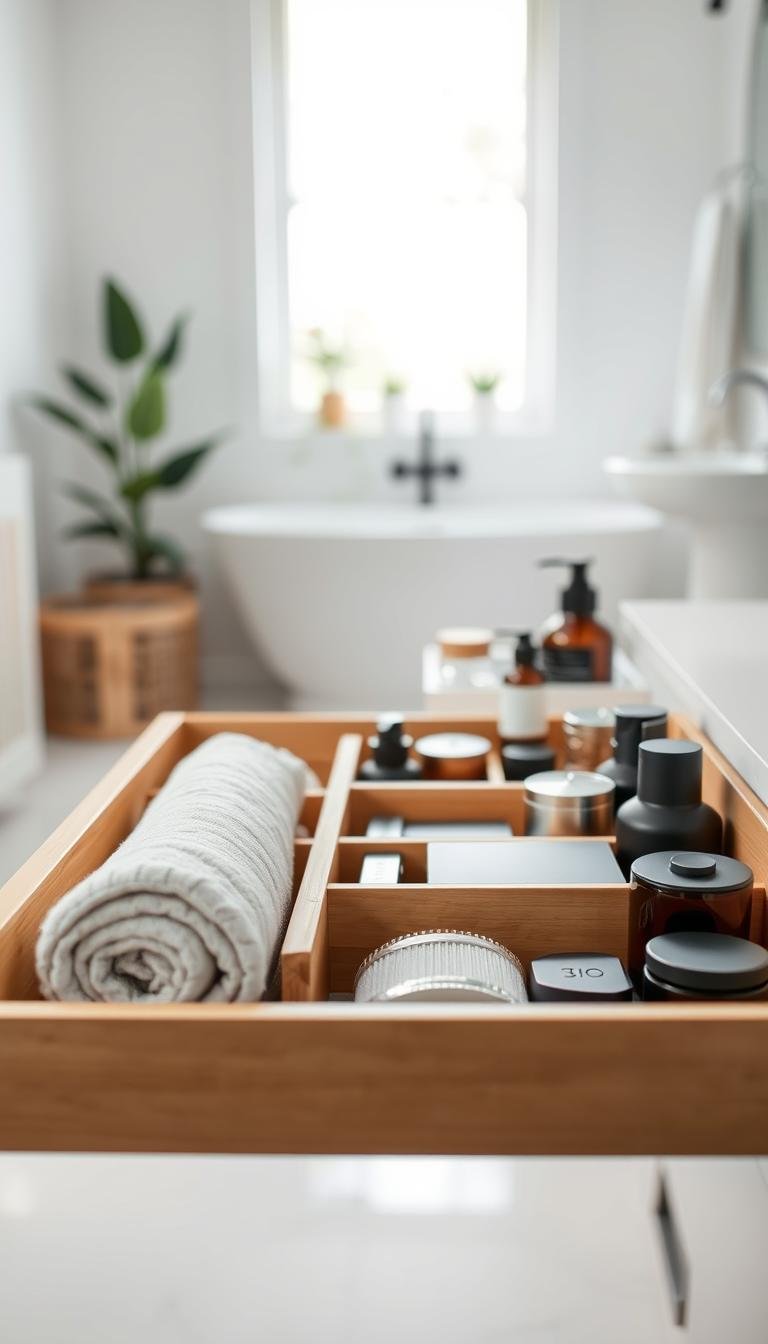
How to Organize Bathroom Drawers (Minimalist Style)
You are busy. You want calm when you open a drawer. This short guide offers a gentle, realistic way to bring peace to your home. Simple routines and clear steps make care feel light and doable.
Start by emptying one drawer. Vacuum crumbs and wipe surfaces. Toss expired products and items you no longer use. Group like things together: teeth, hair care, skincare, makeup, medicines, and travel items.
Keep daily essentials in the front for fast access. Store extras lower or in a separate set. Use clear acrylic bins, expandable dividers, and stackable organizers like OXO, Vtopmart, Sorbus, or Linfidite. Repurpose small boxes or trays to save space. This is a simple solution that saves time and reduces decisions.
No guilt. Just steady habits. We will add short checklists and tiny routines so you spend less time sorting and more time living in a calm, usable space.
Key Takeaways
- Empty, clean, and sort one drawer at a time.
- Group essentials for quick access and keep backups below.
- Use clear bins and dividers to see and secure items.
- Repurpose what you have before buying new organizers.
- Short routines save time and keep the system gentle and lasting.
Why Organized Bathroom Drawers Feel Calming
Knowing where each item lives eases your day in a simple way. You spend less time searching. You lower small, tiring choices. That gentle freedom matters.
Group similar things together. Teeth with dental care. Hair with styling tools. Skincare and makeup in one visible zone. This gives quick access and fewer interruptions to your routine.
Minimalist here means you keep only what you use. Daily items sit up front. Rarely used things go to the back or a lower shelf. Labels help everyone return things to the right place.
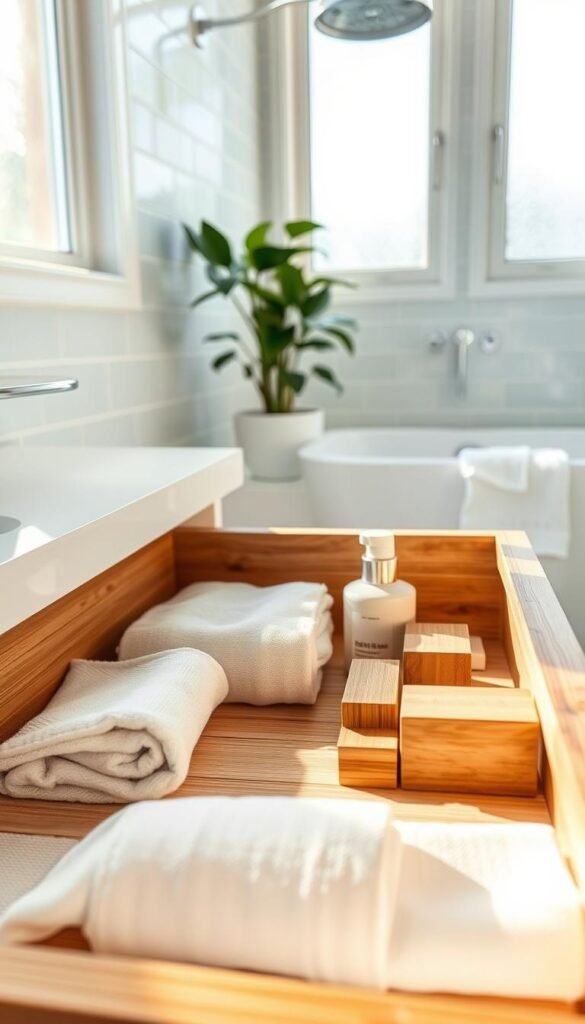
Benefits at a glance
- Less searching. Faster mornings.
- Simple upkeep with wipeable, moisture-resistant bins.
- Clear zones cut decision fatigue and save time.
| Benefit | Why it helps | Quick tip |
|---|---|---|
| Less searching | Daily items up front shorten reach | Keep one everyday kit |
| Faster routine | Groups reduce mental steps | Use clear trays for visibility |
| Low upkeep | Moisture-proof materials wipe clean | Choose simple, durable bins |
| Shared clarity | Labels guide everyone to the same place | Label fronts for easy access |
Organize Bathroom Drawers: A Simple Step-by-Step
Clear every drawer so you can see what you truly use. This short path keeps pressure low. Follow the steps slowly. Make small changes that last.
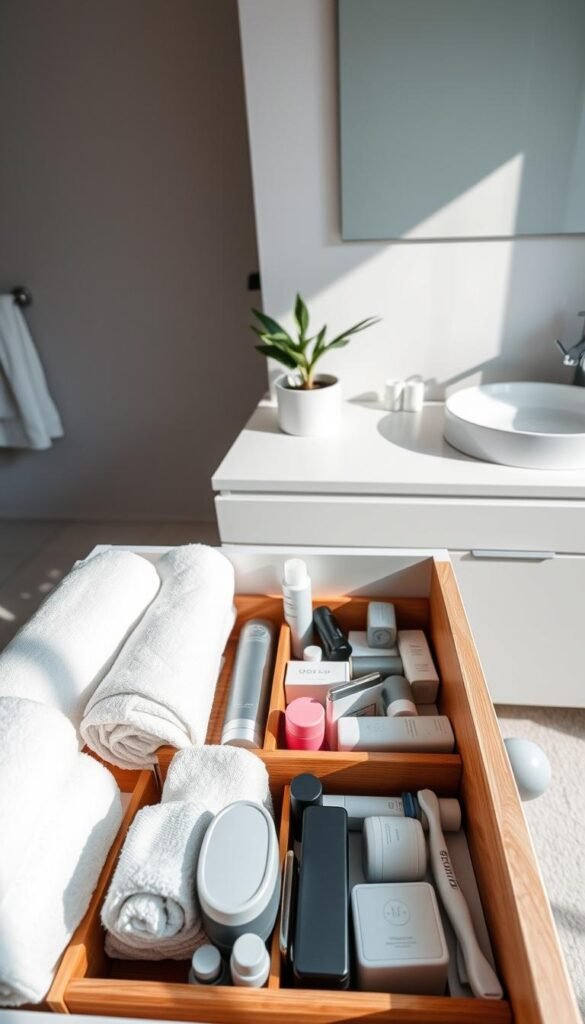
- Step 1. Empty each drawer. Vacuum crumbs. Wipe dry. A clean base makes the plan work.
- Step 2. Declutter gently. Toss expired products and medicines. Donate sealed extras. No shame. Just gentle edits.
- Step 3. Group by routine. Teeth. Hair care. Skincare. Makeup. First aid. Travel. Keep similar items together for easy reach.
- Step 4. Right-size the drawer. Put heavy or bulk items in the sturdiest spot. Match the group to the space.
- Step 5. Place by frequency. Daily essentials go up front. Back and lower drawers hold backups and travel kits.
- Step 6. Contain to keep order. Use small bins or trays. Tight edges stop drifting.
- Step 7. Label lightly if shared. A small tag helps everyone store things the same way.
- Step 8. Do a one-minute check daily. Return stray items. Toss empties.
- Step 9. Adjust after a week. Watch what you reach for. Swap positions to save time.
- Step 10. Celebrate ease. Your drawer now works for you.
| Step type | Action | Estimated time saved per routine |
|---|---|---|
| Clean & reset | Empty, wipe, sort | 1–2 minutes |
| Declutter | Remove expired and duplicates | 3–5 minutes |
| Group & place | Match items to drawer and front/back | 2–4 minutes |
| Maintain | One-minute daily check; weekly adjust | 60 seconds daily |
Measure First, Then Choose the Right Drawer Organizers
Know the exact interior size so new pieces fit with ease. A quick measure protects your budget. It also keeps daily life simple.
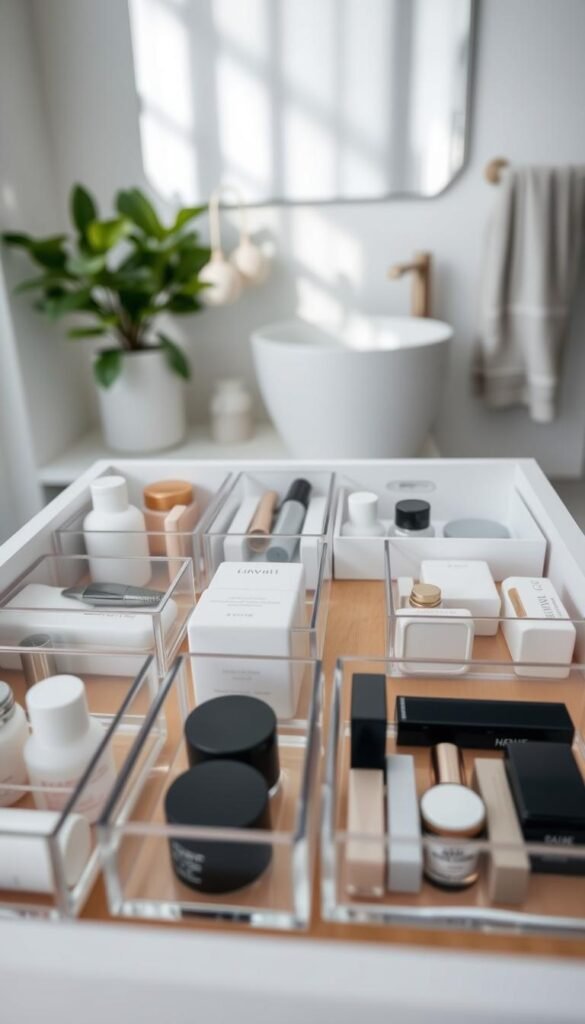
How to measure. Use a tape. Note interior width, depth, and height. Record each number for every drawer you plan to outfit.
- Width first. Measure side to side.
- Depth next. Front to back.
- Height last. Include clearance for lids or stacked items.
Pick the right fits. Match the size to the job. Shallow trays suit small tools. Taller containers hold bottles. Leave a little room so the drawer glides smoothly.
- Choose clear acrylic bins for easy visibility and quick grabs.
- Use expandable dividers like OXO Good Grips to create custom lanes.
- Stackable bins save vertical space when height allows.
- Select wipeable, non-slip materials for humid bathroom conditions.
Repurpose small boxes, mugs, or vintage trays if you prefer not to buy new containers. Buy slowly. Test one organizer at a time. Keep a bit of open space so the drawer stays calm and usable.
| Need | Best pick | Why |
|---|---|---|
| Small tools | Shallow trays | Easy reach and visibility |
| Bottles | Taller bins | Stable upright storage |
| Mixed items | Expandable dividers | Custom lanes, no shifting |
Smart Categories That Make Sense Every Day
Make simple zones for what you use most so routines flow faster. This keeps mornings calm. It lets you find things without thinking hard. Use a single dedicated space for daily needs when you can.
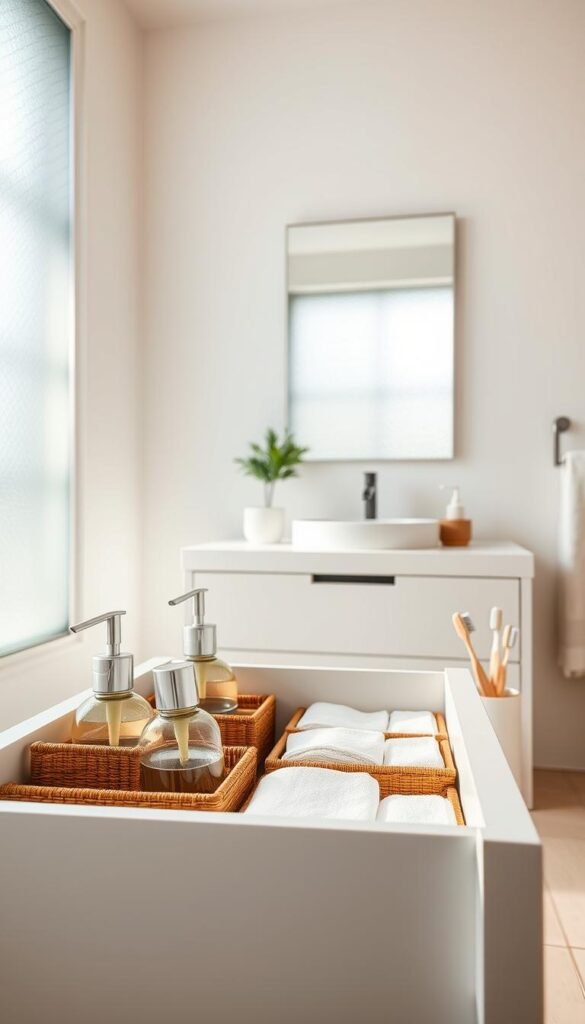
Daily essentials
Keep toothbrush, toothpaste, deodorant, and basic skincare up front. These essentials are your first reach. One open product at a time reduces clutter and waste.
Hair zone
Create a clear hair area for washing, styling, and small accessories. Put heat tools in a safe, ventilated spot. Add hair ties next to brushes so you spend less time hunting.
Makeup station
Store your everyday makeup in the first reach. Place occasional items in a secondary spot. This keeps the main place tidy and fast to use.
Health and first aid
Keep medicines and first aid together in a labeled container. Store instructions where they are easy to see. Use child-safe closures if needed.
- Group related items for faster routines. Put supporting tools with each category.
- Assign a lane for each person when sharing. Labels help everyone return things correctly.
- Keep backups lower. Store extras out of the front row so counts stay clear.
Keep categories flexible. If an item becomes daily, move it forward. Do a quick monthly review. Remove what you no longer reach for. Add only what you use.
Small Space Wins: Vertical, Deep, and Narrow Drawer Strategies
Think up, not out—vertical storage multiplies what a shallow area can hold. Use simple layers so each small space feels calm and useful. Small changes make routine moments easier.
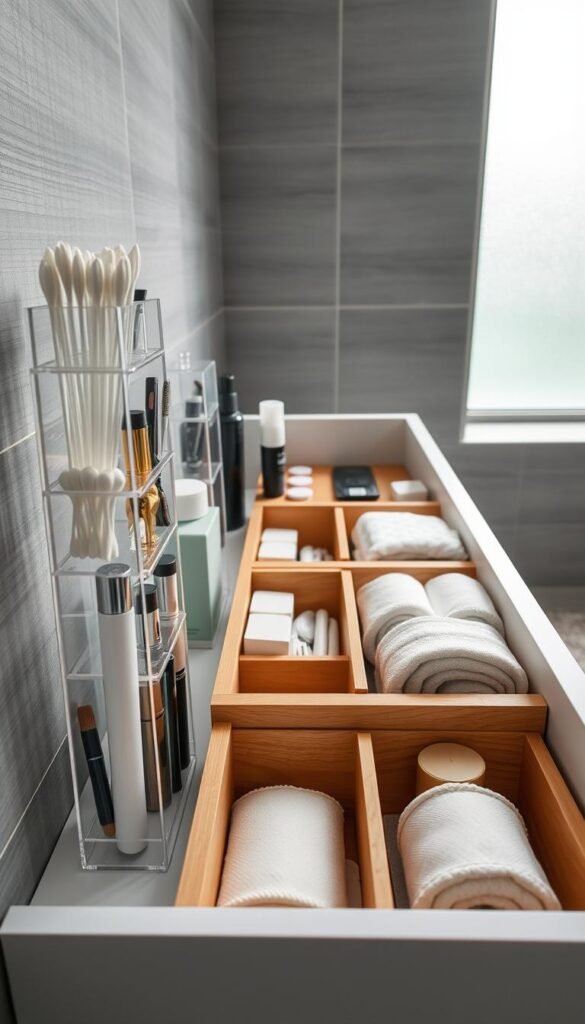
Stackable bins for deep drawers
Stackable bins turn deep drawers into tiers. Keep daily items on the top level. Store backstock below. You gain clear layers without clutter.
Rotating organizers for taller bottles
A rotating organizer keeps serums and sprays upright and visible. Tall bottles stay steady. You can spin to find what you need in one motion.
Slim trays, dividers, and front row access
Slim trays make narrow drawers usable. Add expandable dividers to create lanes. Reserve the front row for daily picks so access is instant.
- Stand bottles by height: tallest at the back.
- Leave finger space. Don’t cram every inch.
- Use non-slip liners for a wipeable, moisture-resistant base.
- Label edges for shared use. Revisit after a week to fine-tune.
| Problem | Best fix | Why it helps |
|---|---|---|
| Too deep | Stackable bins | Create visible layers; keep daily items reachable |
| Tall bottles tip | Rotating organizer | Upright storage; quick visual access |
| Narrow space | Slim trays & dividers | Defined lanes; prevents items from shifting |
| Slip and slide | Non-slip liners | Stable surface; easy to wipe clean |
Labeling and Gentle Habits That Keep Order
Small words on bins make shared spaces calmer and easier to use. Labels cut moments of doubt. They guide hands. They reduce questions when people rush.
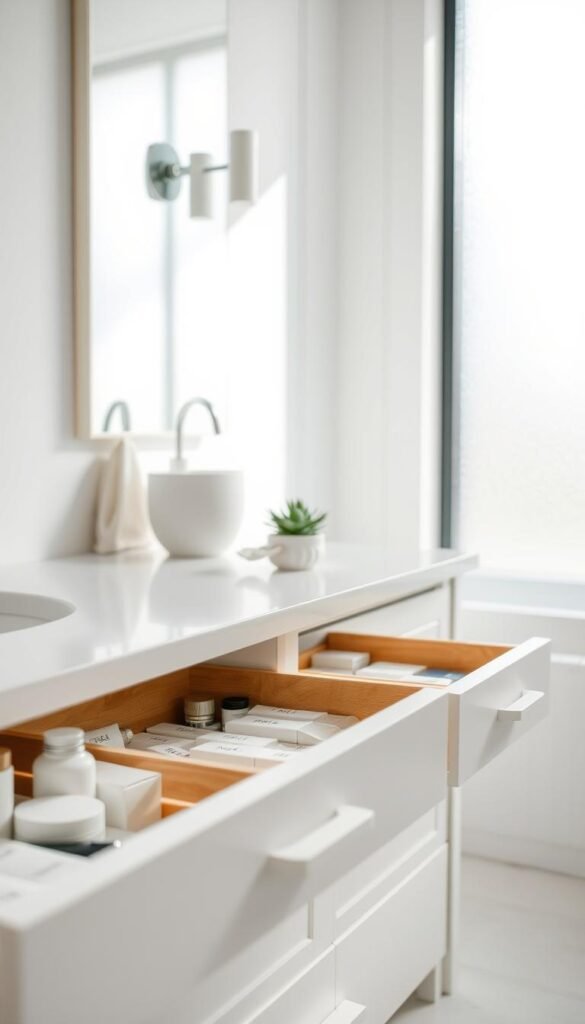
Simple labels for shared spaces
Keep labels short and visible. Use single words like Teeth, Hair, or Makeup. Edge tags work for tight pulls. Wipeable labels stand up to steam. Label holders make swaps easy when categories change.
One-touch rule: use it, return it
Practice the one-touch rule. Take an item. Use it. Put it back in the same place. Build a 60-second reset every evening. Return stray items. Toss empties. Wipe small spills.
Monthly, rotate products and check expirations. Keep a small declutter bin nearby for things you rarely use. Add a simple shared map inside a cabinet if needed. Refresh tags when categories shift. Celebrate steady habits over perfect systems. A few kind actions save a lot of time and keep the system gentle and lasting.
Daily, Weekly, and Monthly Routines
Spend a minute each day to keep your system gentle and useful. Small habits save you time and stress. These short routines make upkeep feel light and steady.
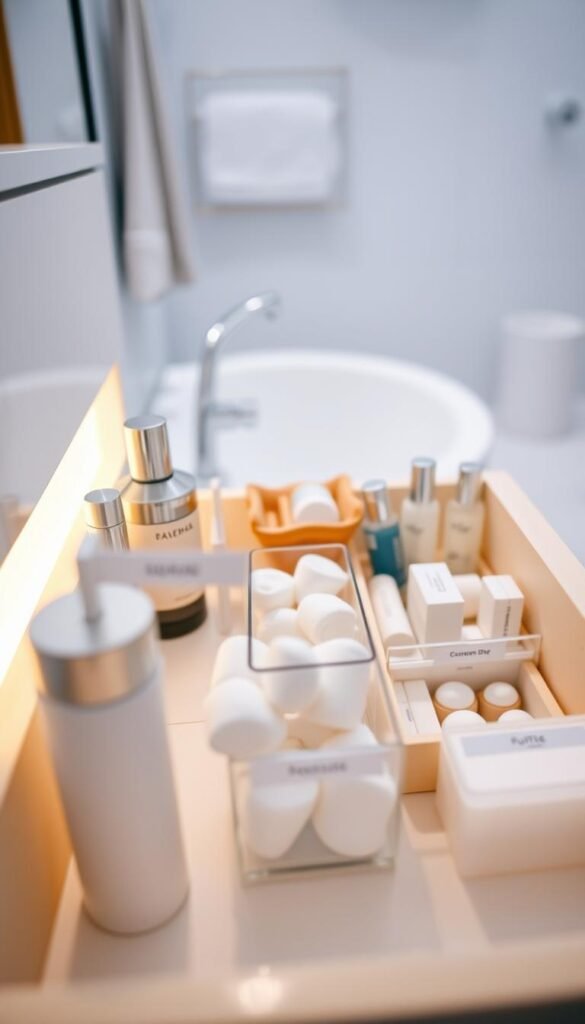
Daily: 60-second drawer reset
Return stray items to their labeled spots. Toss empties. Close the front with a deep breath.
Weekly: quick wipe and reorder high-use items
Take five minutes once a week. Wipe liners and corners. Move high-use items to the front row.
Check backups. Note low items on a small list so you buy only what you need.
Monthly: rotate products, check expirations, re-home extras
Spend about ten minutes monthly. Review products kindly. Discard what is expired.
Move open bottles to the front. Reset categories if one group grows or shrinks.
- Keep a travel caddy and rotate sizes so they stay ready.
- Choose acrylic bins, non-slip liners, and moisture-wise dividers for easy cleaning.
- Post a tiny checklist inside a cabinet so the routine is visible.
This simple solution is flexible. Skip perfection. Small, steady care keeps your drawers calm and your daily routines smoother.
Room-by-Room Examples to Copy the System
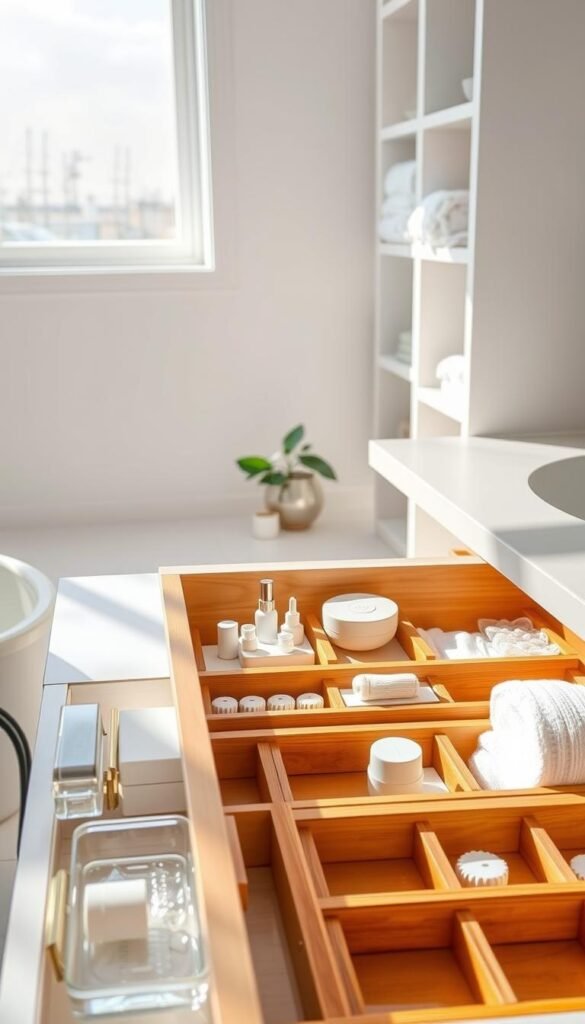
Copy one small setup across rooms and you get calm in minutes. The same rule works everywhere. Daily up front. Backups behind. Clear labels help hands move faster.
Kitchen
Keep everyday utensils at the front. Backups live in the back with labeled dividers. Add a small bin for food wraps near the sink for quick reach.
Pantry
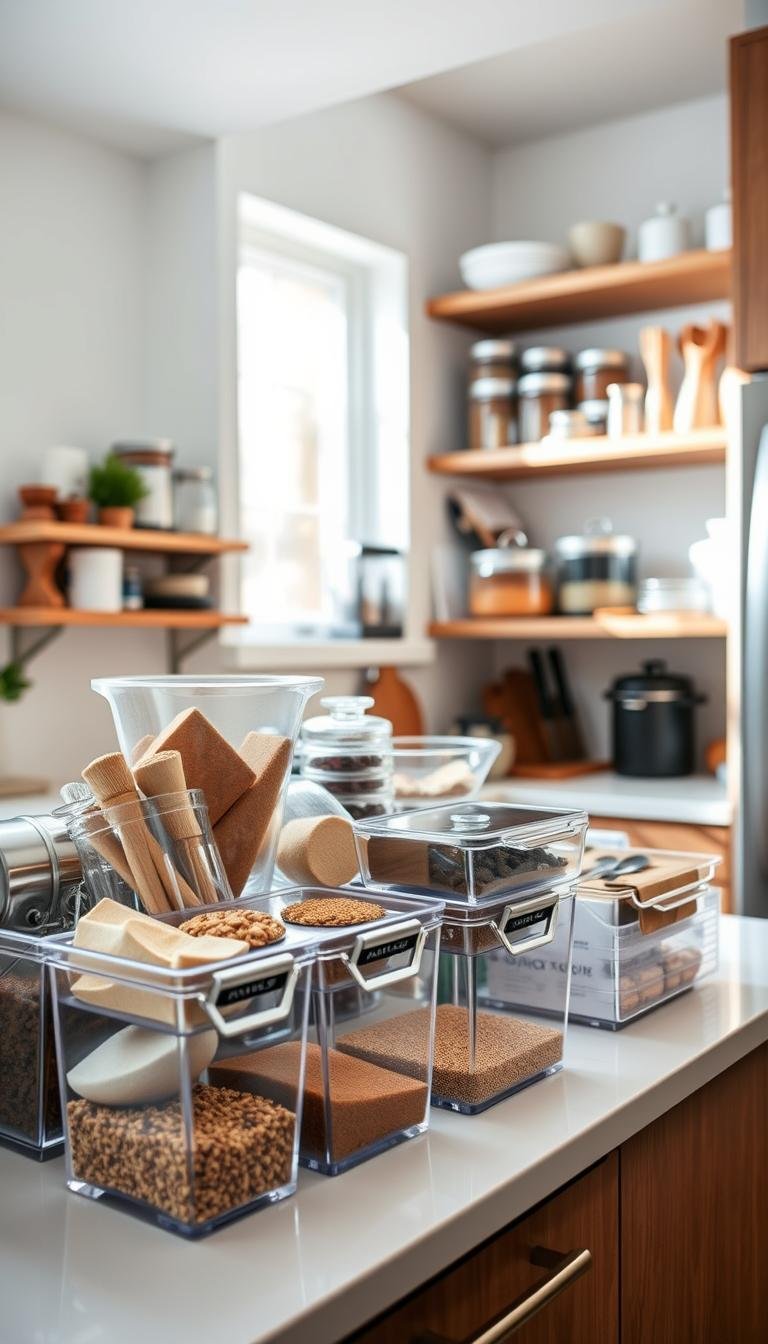
Group snacks in clear bins. Keep baking items together in see-through containers so you spot low levels and avoid overbuying.
Bathroom
Top drawer holds your daily set. Bottom drawer stores backstock. Add a labeled section for first aid so it is easy to find.
Bedroom
Use a nightstand tray for essentials. One small zone for meds, lip balm, and a notepad keeps surfaces calm.
Closet
Use jewelry trays for earrings and rings. Shallow bins hold belts and scarves so nothing tangles.
Entryway and Under-sink
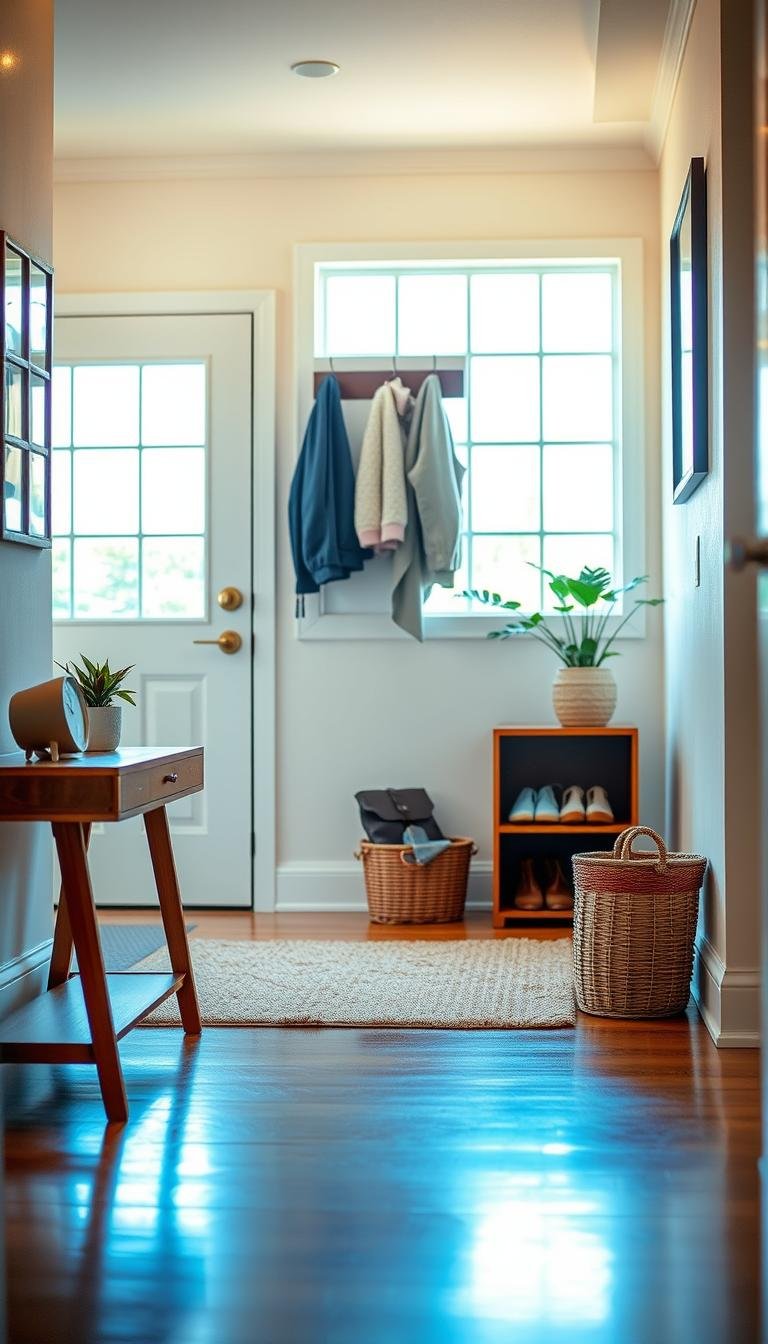
Set a divided catch-all for keys and mail. Inside the cabinet door, add a stick-on bin for cloths. A magnetic strip keeps tweezers and clippers visible.
| Room | Quick setup | Why it helps |
|---|---|---|
| Kitchen | Front utensils, back backups | Saves time at the sink |
| Pantry | Snack bins, clear containers | See levels; reduce waste |
| Bathroom | Top daily set, bottom stock | Fast morning routine |
| Closet | Jewelry trays, shallow bins | Protect small items; no tangles |
Products and Containers That Simplify Drawer Organization
Choose a few simple pieces that match your daily rhythm and you will use them. These products should be easy to clean and built for moist spaces near the sink.
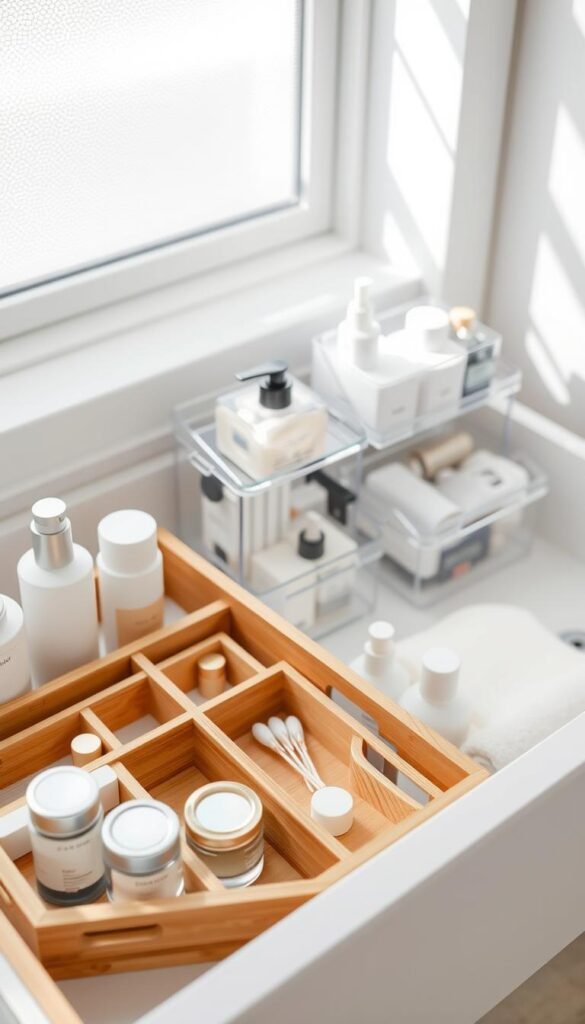
Expandable dividers create flexible lanes. Try OXO Good Grips dividers. They adjust gently and hold firm. Use them to separate makeup, hair tools, and daily kits.
Clear acrylic bins and trays keep contents visible. Sorbus cosmetic trays come in several sizes. You see levels and avoid overbuying. That saves storage space and time.
- Stackable bins: Vtopmart sets hide backstock. Use them for cotton pads, extra razors, and lotion refills.
- Rotating organizer: Linfidite keeps tall serums and sprays upright and easy to scan.
- Hooks and magnetic strips: Command Hooks or a magnetic strip inside a cabinet keep tweezers and clippers ready and safe.
- Drawer liners: Non-slip liners protect surfaces and stop sliding near the sink. They wipe clean in seconds.
Choose materials that are wipeable and moisture-wise. Pick a small set you will actually use. Label lightly. Keep categories together inside each drawer organizer so everyone can return items without fuss.
| Need | Best pick | Why it helps |
|---|---|---|
| Flexible lanes | Expandable dividers | Custom zones for seasonal products |
| Visibility | Clear acrylic bins | See levels; reduce waste |
| Backstock | Stackable bins | Neat layers; quick access |
Conclusion
Let a single simple routine protect the calm you just made. A quick, kind reset keeps the system working. Take sixty seconds each evening to return items and wipe liners.
Keep daily essentials up front and backups lower. Use a clear organizer, acrylic bins, expandable dividers, or stackable bins. Repurpose small boxes or mugs when you prefer not to buy more.
Rotate open products monthly. Toss expired skincare, makeup, or meds. Label softly if you share the space. This gentle approach supports lasting drawer organization across your closet and other storage.
You chose peace over perfection. Small steps. One calm step at a time. That is a simple solution for your home and your routines.
FAQ
How do I start when my bathroom drawers are a mess?
Start simple. Empty one drawer at a time. Wipe surfaces. Sort items into keep, toss, and donate piles. Work gently. Small progress keeps stress low and makes the next step easier.
What is “minimalist” in this routine?
Minimalist means keeping only what you use regularly. Choose easy-access items for daily routines. Store extras elsewhere. The goal is less clutter and lighter upkeep, not perfection.
How should I group items for easy mornings?
Group by use. Keep oral care together. Put daily skincare in one tray. Hair tools and accessories in another. Medicine and first aid in a labeled spot. This saves time and reduces decision fatigue.
How do I measure drawers before buying organizers?
Measure interior width, depth, and height. Note any obstructions like drawer slides. Bring measurements when shopping. That ensures dividers, acrylic bins, or stackable inserts truly fit.
Which organizer materials hold up best to moisture?
Pick wipeable, non-porous options. Clear acrylic bins and silicone dividers clean easily. Non-slip liners help items stay put. Avoid cardboard or fabric that traps dampness.
What’s a simple rule to keep order each day?
Try the one-touch rule. Use an item. Put it back immediately. Add a 60-second reset each evening. Small habits prevent big messes.
How do I store tall bottles in deep drawers?
Use stackable bins or rotating organizers. Tall items can stand in a dedicated bin so they don’t tip. Alternatively, keep tall bottles upright in a shallow tray near the drawer’s front for quick reach.
How often should I check expirations and restock?
Do a quick check monthly. Toss expired products. Re-home extras so the front holds only current use items. This keeps space tidy and safe.
Any tips for shared bathroom drawers?
Label zones gently. Use small trays for each person. Agree on a front-row for daily items and a back row for backups. Clear labels keep confusion low and routines calm.
What kind of dividers work best for flexible needs?
Expandable dividers are versatile. They adjust to fit different drawer widths. Pair them with small bins for makeup or jewelry. This combo adapts as your needs change.
Can I use these ideas in other rooms?
Yes. The same steps apply in kitchens, closets, entryways, and nightstands. Group by function. Measure first. Use clear bins and labels. It creates calm everywhere.
How do I keep items from sliding when opening drawers?
Add non-slip drawer liners or silicone mats under trays. Choose bins with a snug fit. This reduces sliding and keeps things in place during daily use.