How to Declutter Your Kitchen (Step-by-Step)
Life feels full. You want a calm home but have little time. This gentle guide offers simple steps you can fit into busy days.
We promise small wins. Follow a light plan. Gather a few supplies. Work in short sessions of 15–30 minutes.
Start by assessing the space. Note problem spots like paper piles or crowded counters. Then use clear checklists and mini rules. Keep, donate, or toss. Decide once and move on.
You will work zone by zone. Counters. Cabinets. Pantry. Fridge. One area at a time. Involve the family with tiny roles. This keeps results steady.
Expect real benefits. Faster meal prep. Easier cleaning. Less waste. More calm while you cook. Small routines will keep the order with little effort.
Key Takeaways
- Use short, timed sessions to make progress without stress.
- Set a simple plan and gather boxes and bags first.
- Work one zone at a time for steady wins.
- Use checklists and quick rules: keep, donate, toss.
- Include the family with clear, small roles.
- Expect faster prep, easier cleaning, and more peaceful space.
Why a Lighter Kitchen Works for Real Life
A lighter space makes daily tasks feel easier and calmer. It helps you move faster. It cuts small stresses that add up each day.
Simple benefits: time, space, and calmer meals.
Simple benefits: time, space, and calmer meals
Less to manage saves time every morning and evening. You find what you need fast. Meal prep moves along with fewer stops and searches.
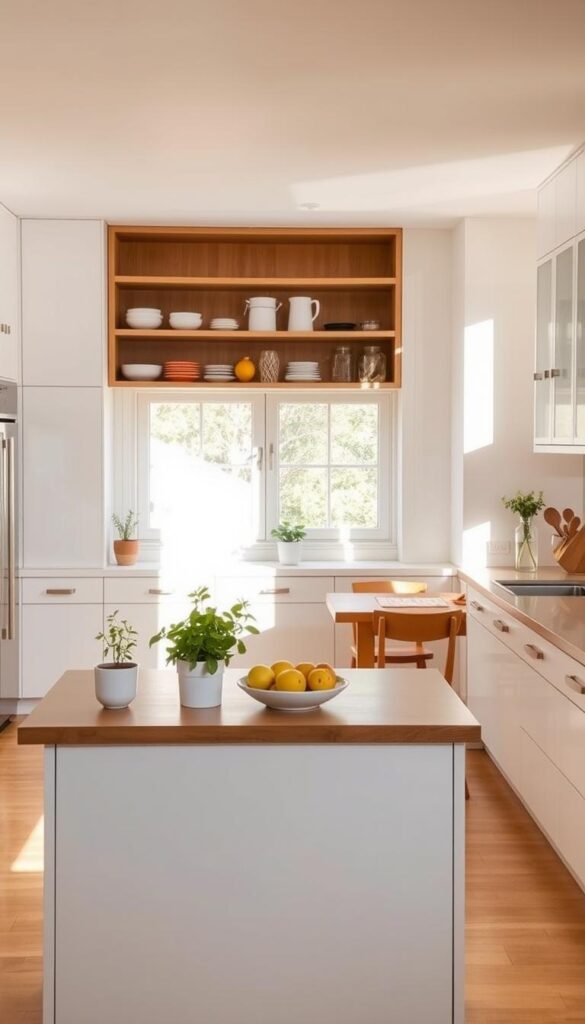
Open counters and clear shelves give you physical room to work. That open space also lowers mental noise for you and the kids. Meals feel calmer.
Easy wins that build momentum
Start small. Clear one shelf. Tidy one drawer. A tiny win boosts confidence.
- You see pantry goods at a glance. That cuts duplicate food buys.
- Clear zones help you move from fridge to stove to sink with ease.
- A tidy spot becomes a steady anchor for the whole home and family.
“Small edits, steady results.”
This way needs no marathon. It favors short, kind sessions that fit real life. Use these ideas as gentle steps. Keep going one small win at a time.
Set Your Plan: Gentle Prep, Simple Supplies
Gather a few simple supplies so each short session flows well. Start light. Keep choices small. This helps you finish tasks without pressure.
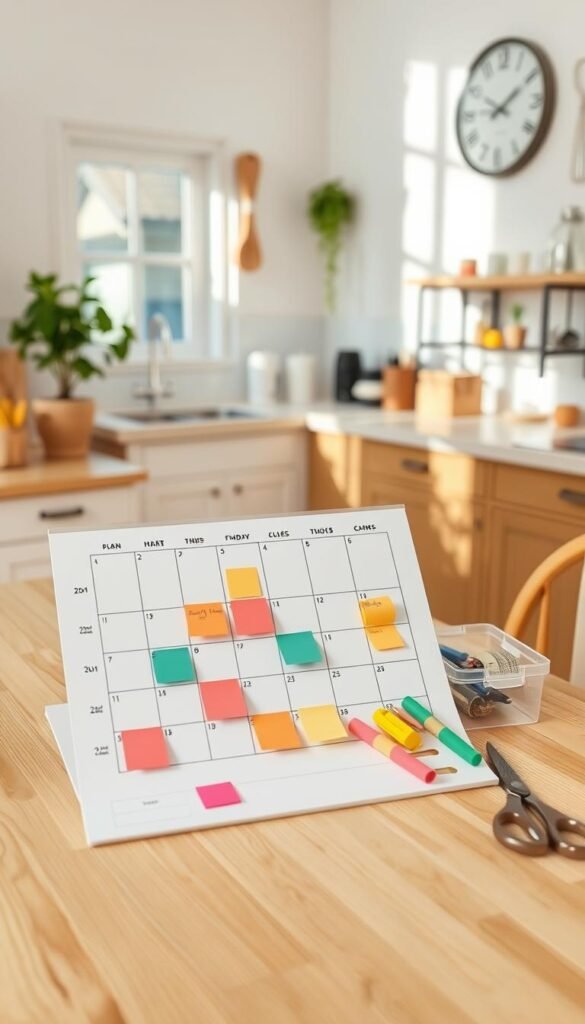
Set a plan you can trust. Pick a two-week or one-month calendar. Block short sessions of 15–30 minutes. Treat these blocks as kind appointments with yourself.
Mini checklist
- Donation box and trash bags
- Recycling bin and simple labels
- Empty sink for quick rinses
- Rags and mild soap
- Hand vacuum and measuring tape
Prepare the sink. Rinse lids and trays as you go. Clean surfaces keep momentum. Measure shelves before you buy an organizer. The right fit saves time later.
Questions to guide decisions
- When was the last time I used this?
- Do I have something else that does the same job?
- How many of these items do I need at once?
- Would I buy this again today?
- If broken, when will I fix it?
Create a gentle calendar
Choose two weeks for quick wins or a full month for a relaxed pace. Mark small sessions on the calendar. Keep a donation box open all week. Schedule one drop-off day.
| Plan length | Session length | Focus |
|---|---|---|
| Two-week | 15–20 minutes | Counters, easy drawers |
| One-month | 20–30 minutes | Cabinets, pantry, cold storage |
| Ongoing | 5 minutes daily | Quick resets and notes |
“Decide keep, donate, or toss in one pass.”
End each session with a quick wipe and a short note of what’s next. These small steps make long-term order possible. Use these tips to create calm, steady progress in the kitchen while keeping decisions kind and simple.
Declutter Your Kitchen: A Clear Path Through Each Zone
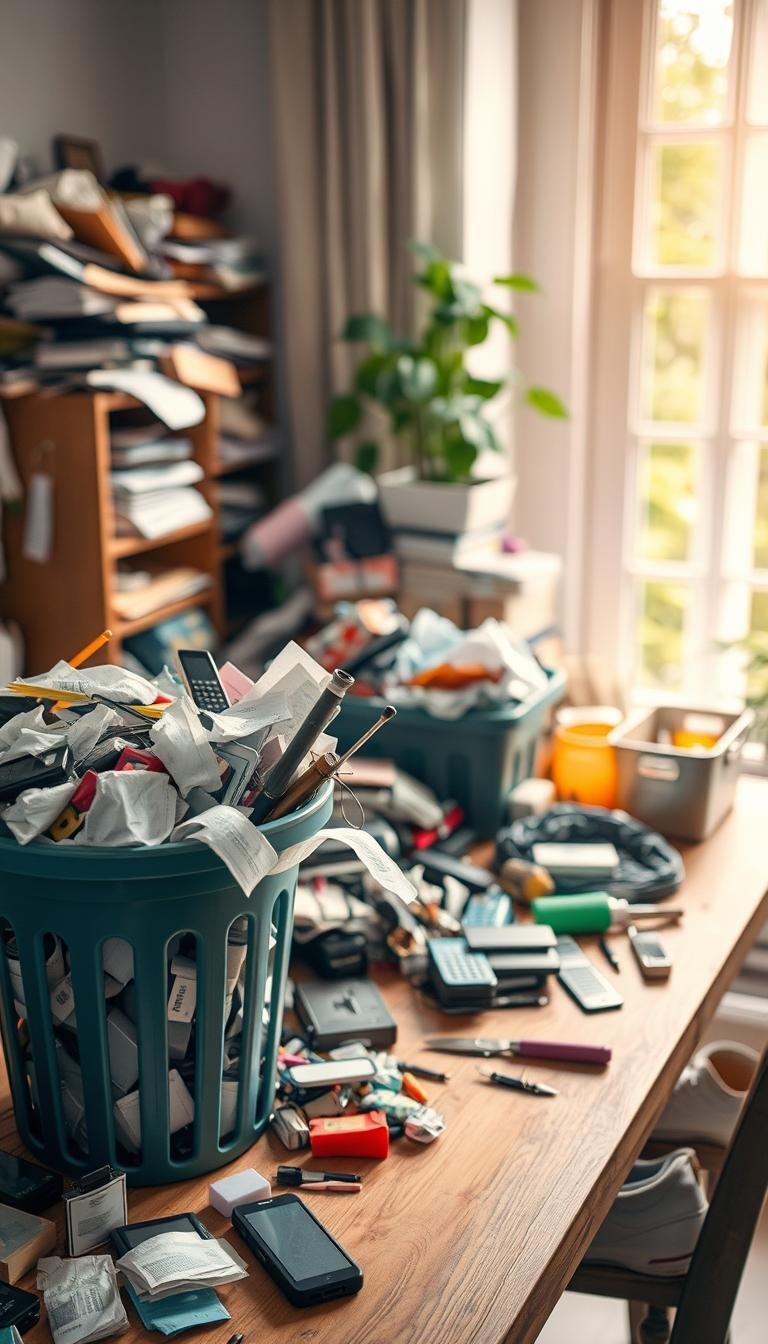
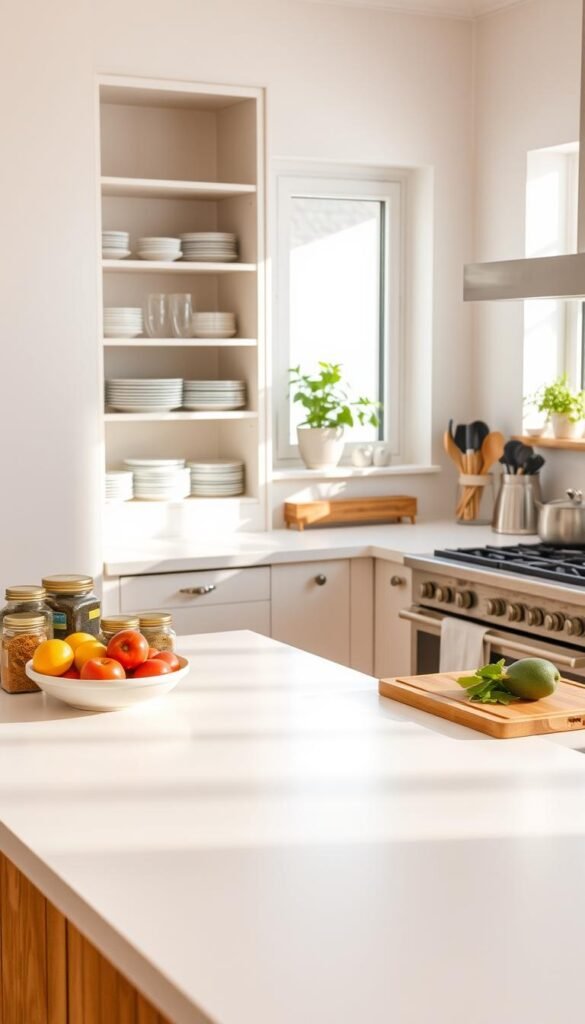
Begin with the busiest surfaces to see quick progress. Start at the counter. Remove things that do not belong. Sort paper into keep, shred, or recycle. Make a small paper flow with an action folder on a shelf.
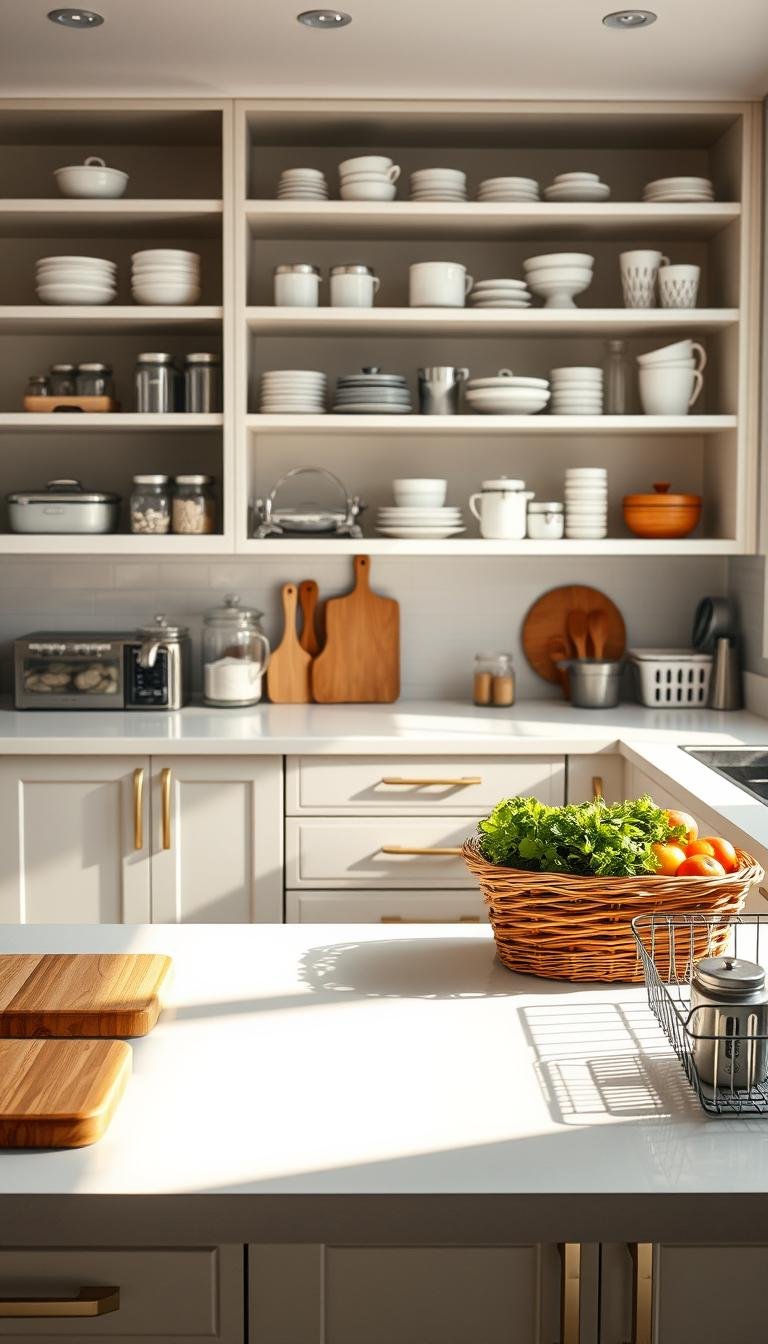
Keep only daily-use small appliances. Put extras away in cabinets. This frees surface space and makes cooking calmer.
Next, open a cabinet or drawer. Work one category at a time. Clean the shelf. Sort items. Spot duplicates and get rid of extras. Add simple dividers, turntables, or pull-out shelves. Use labels so everyone can return things with ease.
For the pantry, take everything out. Group baking, grains, snacks, cans, and sauces. Check dates and consolidate duplicates into basic bins. Put frequently used goods at eye level.
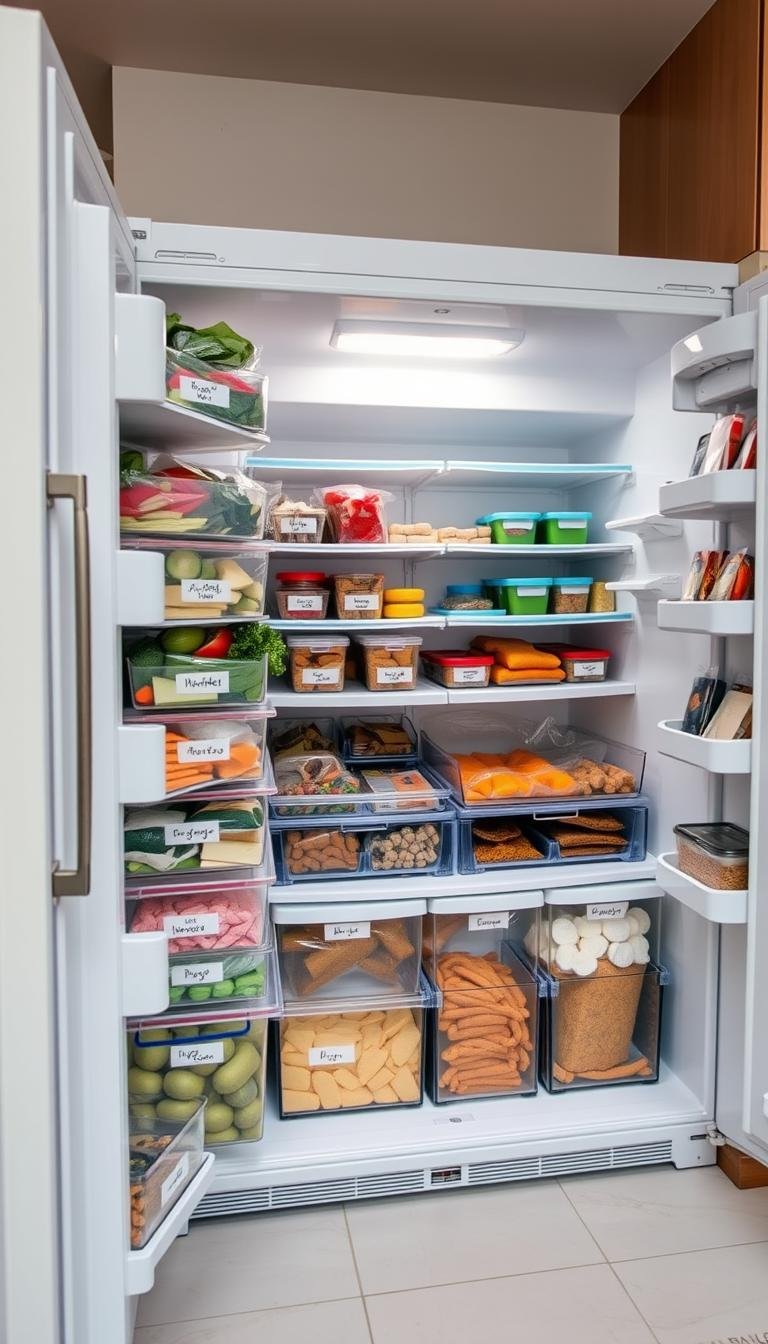
Finally, set zones in the fridge and freezer: dairy, produce, meats, and leftovers. Label dates on containers to track freshness. End each zone session with a two-minute reset. Wipe surfaces. Return only what earns its place.
“Small steps. Clear zones. Calm meals.”
Countertop Solutions That Stick
Treat the counter as a short-term landing spot, not permanent storage. A calm surface makes morning routines easier. Small habits keep mess at bay.
Catch-all baskets by person help. Give each family member a small basket. Add clear labels. Each basket holds mail, keys, school notes, and daily items. Hold one short family meeting to explain the flow.
Set a simple paper routine. Recycle what you can. Shred sensitive sheets. Move action papers to a slim folder. Put a mini calendar note for a weekly review.
Decide what can stay on the counter. Pick one or two daily appliances. Move decor and seldom-used tools off the surface. Use wall files, hooks, or a magnetic strip to free space.
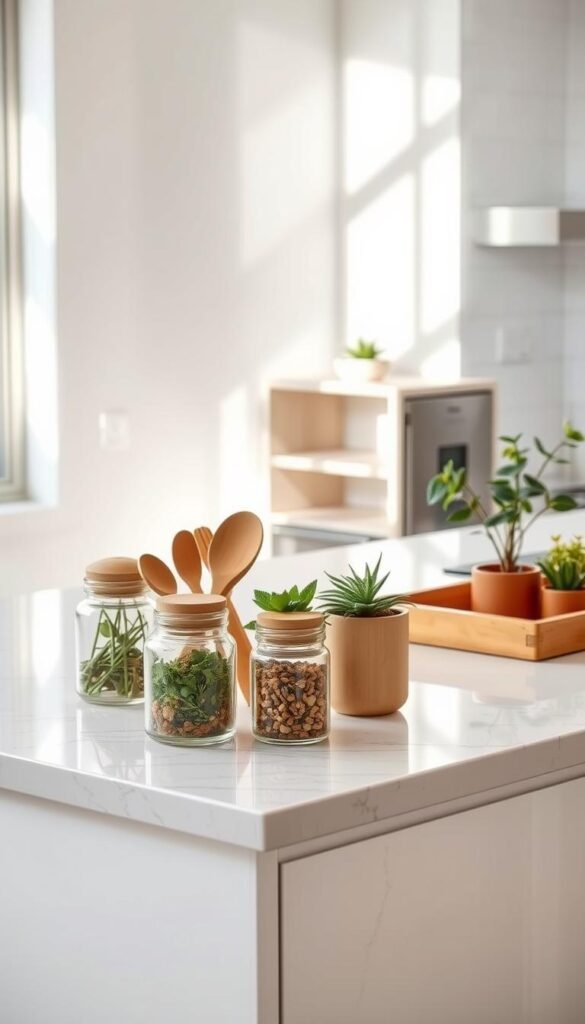
- Keep a tiny caddy by the sink for soap and brush.
- Use an in-drawer organizer or magnetic strip for knives.
- End each day with a brief reset to prevent clutter.
| Solution | Where | Benefit |
|---|---|---|
| Catch-all baskets | Counter landing spot | Quick corral of papers and items |
| Wall file + hooks | Near entry or counter | Clears surface and holds mail |
| Magnetic strip / in-drawer organizer | Side wall or drawer | Frees counter for cooking |
Storage That Saves Time: Cabinets, Drawers, and Small Appliances
Place things where you use them most to save steps and time. Keep systems small. Tackle one category at a time. Clean and measure before adding organizers.
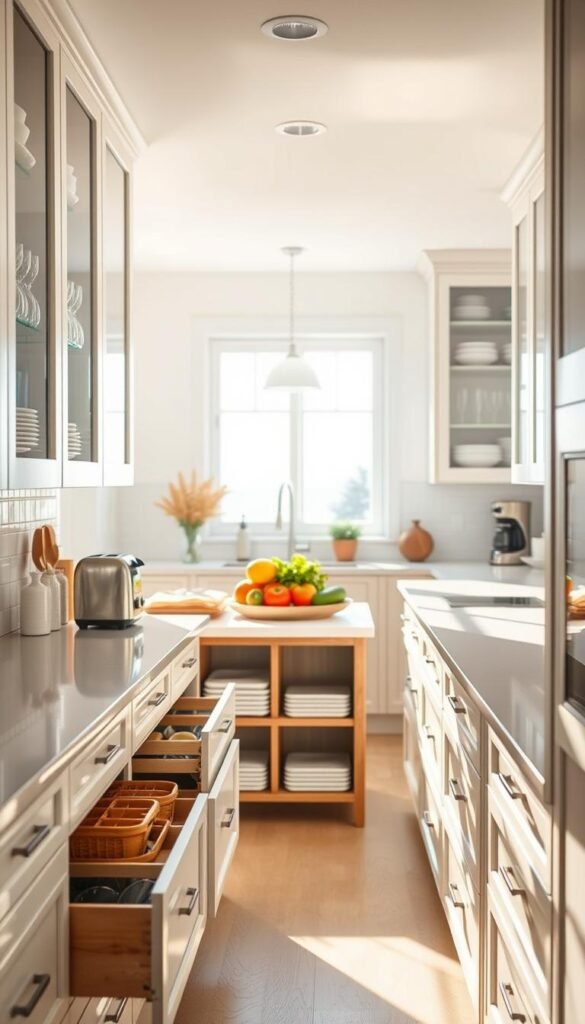
Keep like with like. Group lids with containers. Put mugs by the coffee station. Store dishes near the dishwasher. Keep bakeware together for quick pulls.
Smart organizers to try
Use drawer dividers for utensils. Add bins for lids. Place turntables for oils and spices. Fit pull-out shelves in deep cabinets. Measure shelves first. Good fit saves time and space.
Place items near where you use them
Put heavy appliances low and close to prep areas. Keep small appliances that you use daily within easy reach. Store backup or rarely used things on higher shelves or in a cabinet.
- Set clear labels so everyone can maintain order.
- Give each drawer a job: prep, cooking, baking.
- Use a slim vertical bin for cutting boards and baking sheets.
- Edit as you go. If a shelf feels tight, release a few things.
End each session with a 60-second tidy.
Room-by-Room Examples Inside the Kitchen
Tackle one small zone at a time so the process feels simple and steady.
Under the sink. Use one bin for safe cleaners. Use a second for towels. Keep a third for extras. Lay a spare roll-up mat in front for quick spills.
Pantry shelves. Group snacks, grains, cans, and baking in clear bins. Add one bin for cuisine-specific items. Label each shelf so everyone finds things fast.
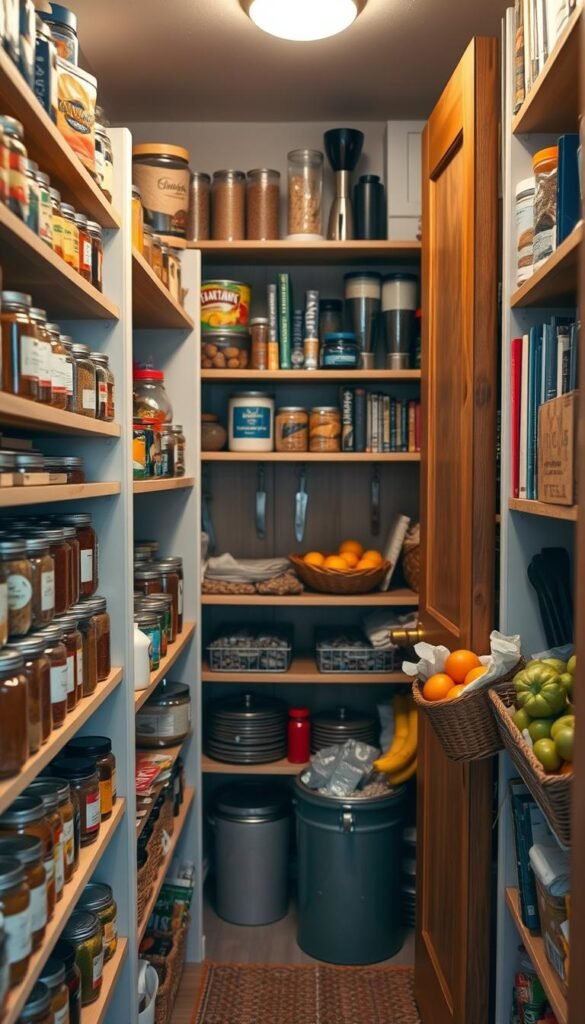
Fridge zones. Put condiments on the door. Use drawers for produce and meats. Keep a marked spot for labeled leftovers. Add a small “use first” bin for quick meal starters to cut food waste.
Drawers and drawer roles. Make a prep drawer for cutlery and daily tools. Reserve a lower drawer for kids’ dishes and easy access plates. Keep organizers so things stay tidy.
Cabinets, mugs, and dishes. Store pots and pans near the stove. Keep plates and bowls within arm’s reach. Place mugs above the coffee maker with filters and spoons in a small caddy beside them.
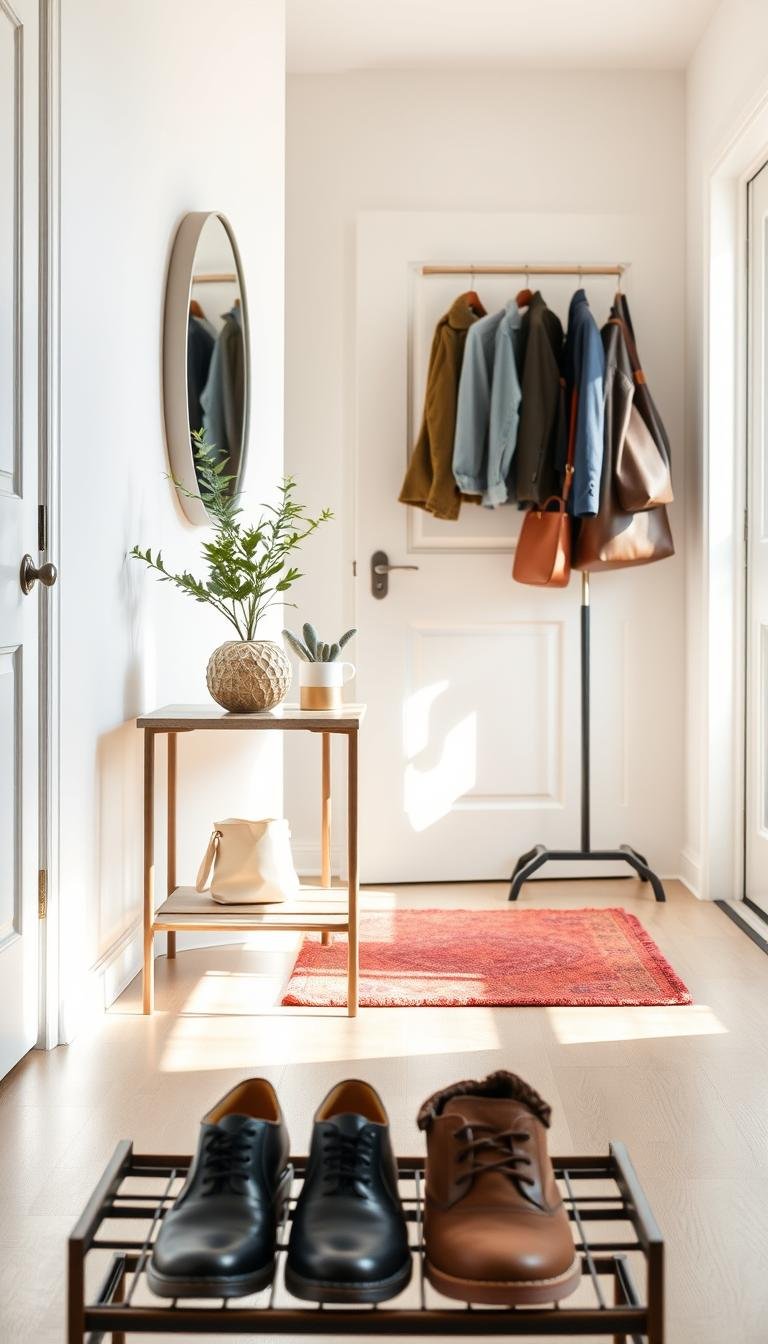
Small touchpoint. Set a tray by the entry for keys and a mail basket for papers. This keeps the counter clear and makes habits stick.
Routines That Keep Clutter Away
A few short rituals will keep surfaces calm day after day. Make habits tiny. Make them kind. A steady routine beats bursts of work.
Daily
Five-minute counter reset. Set a timer for 5–10 minutes. Put things back. Leave the sink clear. Toss junk mail. File action papers. End with a quick wipe.
Weekly
Mini session once a week. Tidy one drawer. Check pantry and fridge dates. Ask the family for one small assist. One item to put away. One shelf to tidy. This keeps flow steady.
Monthly
Light maintenance each month. Schedule a donation drop-off. Refresh an organizer. Review the calendar and pick two focus spots for the next month. A short plan saves time and energy.
- Keep routines short by design. Protect your time and rest.
- Use a simple timer. When it ends, you’re done.
- Post a small note on the fridge with three current habits.
- Celebrate tiny wins. A clear corner counts.
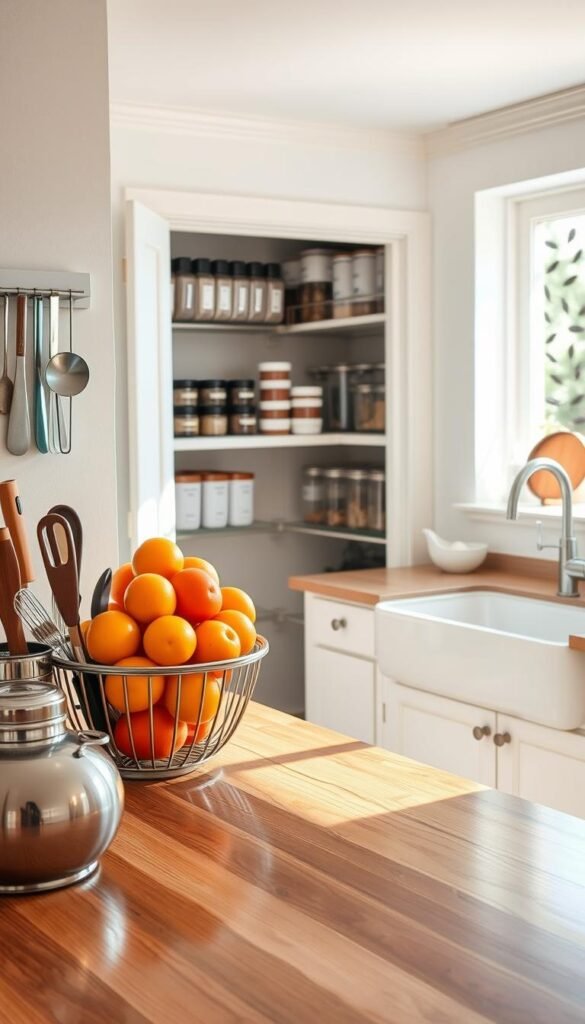
Small Kitchen, Big Results
Trim the tools down to the few that truly make meals easier. Keep choices simple. Favor items that do more than one job. This makes the room work harder with less clutter.

Edit gadgets: one tool, many jobs
Pick multi-use pieces first. A good blender, a cast-iron pan, or one compact food processor can replace several single-purpose items.
Let go of extras you never reach for. If an item serves one rare task, consider where it will live. Put a labeled backup tub in the garage for seasonal tools and get rid of what you don’t need in daily life.
Use vertical and nearby space: above-fridge, cart, closet pantry
Use the top of the fridge for occasional dishes or small appliances. Add a slim rolling cart for pantry overflow. Convert a nearby closet into a small pantry when possible.
Place the coffee set near water and mugs to save steps. Use wall rails for hooks. This protects the counter and makes the way you move feel easier.
| Solution | Where | Benefit | Best for |
|---|---|---|---|
| Multi-use tools | Cabinet or drawer | Saves shelf and counter space | Small appliances & dishes |
| Above-fridge bins | Top of fridge | Holds rarely used items | Occasional dishes, extra pans |
| Slim rolling cart | Nearby counter or pantry | Adds mobile storage | Pantry overflow, snacks |
| Labeled backup tub | Garage or closet | Frees cabinet room for daily use | Seasonal bakeware, party gear |
Conclusion
Wrap up by turning short sessions into lasting routines.
Small, steady steps, set a gentle rhythm. Spend five minutes each day. Use a calendar for every-other-day or weekly blocks. This saves time and keeps clutter from returning.
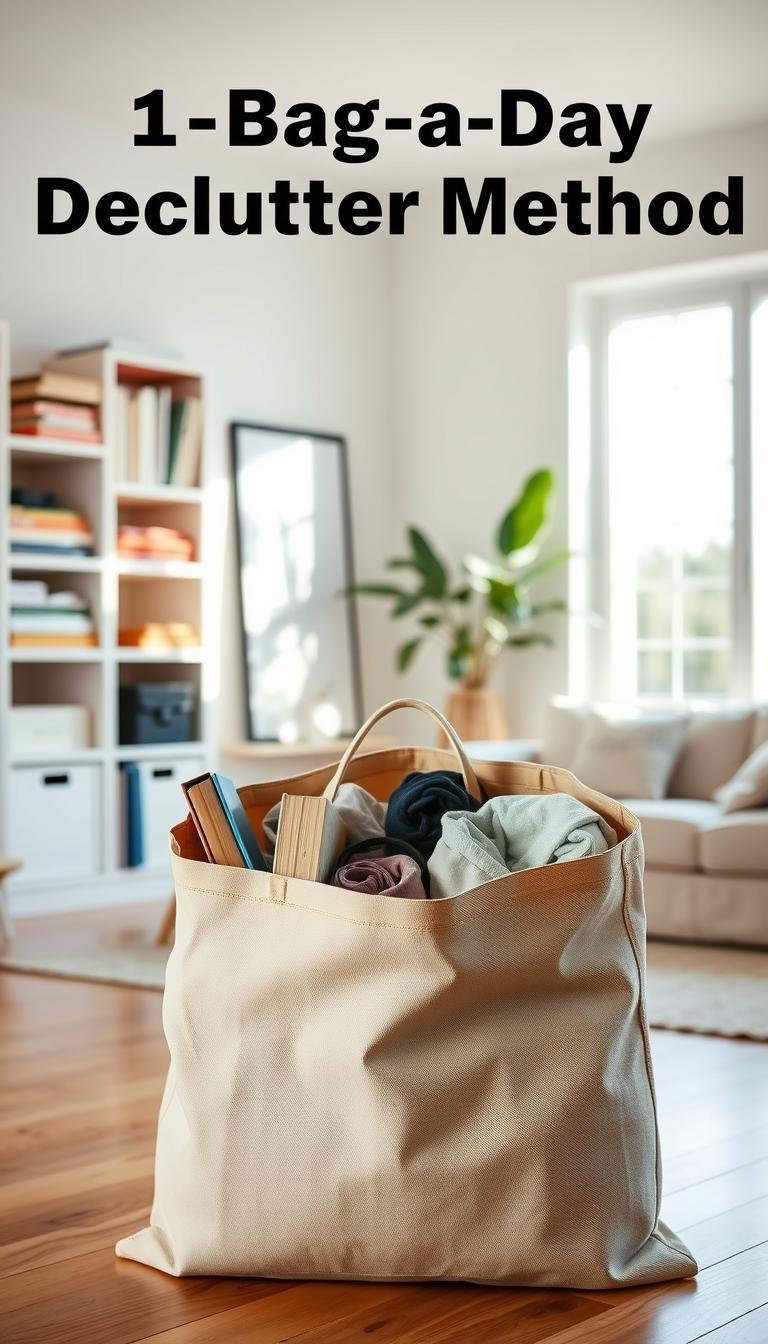
Pack one donation box. Consider Goodwill, Salvation Army, Habitat for Humanity ReStore, or local thrift shops. Unopened food can go to a pantry or shelter. Call first to confirm rules.
Keep focus on counters, cabinets, pantry, fridge, and a single drawer at a time. Return items to their place as you go. Try the same way in a bathroom, bedroom, closet, or entryway for more wins.
One final tip: note one small task on the fridge. A daily reset, a weekly drawer refresh, and a monthly organizer check will protect the calm in your home.
FAQ
How do I begin if I feel overwhelmed by the mess?
Start small. Pick one surface or one drawer. Clear it completely. Keep what you use. Box items to donate or toss. A five- or fifteen-minute tidy builds confidence. Repeat daily until the whole space feels lighter.
What basic supplies do I need to get started?
Gather boxes, trash bags, cleaning rags, a mild dish soap, and a timer. Have an empty sink ready for quick wash-ups. Labels and a simple marker help sort things for keep, donate, or recycle.
How do I decide what to keep, donate, or throw away?
Ask three gentle questions: Have I used this in the last year? Does it fit my routine and space? Would someone else benefit from it more? If the answer is no, let it go. Keep duplicates only when truly needed.
How can I manage countertop clutter without losing convenience?
Choose a few daily-use items to stay out, like a coffee maker and a salt jar. Add a catch-all basket for keys, papers, and masks. Everything else goes back to cabinets. Clear counters every evening for calm mornings.
What’s the best way to organize pantry shelves?
Pull everything out. Group similar foods together. Use clear bins for snacks and baking items. Check dates and discard expired food. Put frequently used items at eye level. Label bins for easy refills.
How do I keep the fridge and freezer tidy?
Create zones: produce, dairy, proteins, and leftovers. Date-label containers. Do a quick scan weekly to toss old items. Use clear bins for small things. A five-minute reset after grocery day prevents buildup.
What storage solutions help small spaces the most?
Use vertical space. Add pull-out shelves, turntables, and drawer dividers. Store lids together. Keep like with like — mugs with mugs, baking with baking. Place items near where you use them to save time.
How often should I do deeper maintenance tasks?
Do small daily resets. Weekly checks for one drawer, fridge dates, or a pantry shelf. Monthly refreshes for donation items and organizer tweaks. A simple calendar reminder keeps it doable.
How can I involve my family without nagging?
Give clear, small tasks. A child can put away their mugs. Use a family drop zone for papers. Praise effort. Make it a shared five-minute routine after dinner. Little habits add up to steady calm.
What if I don’t have time for long projects?
Break work into bite-sized sessions. Set a 15-minute timer. Focus on one zone. Repeat often. Small wins replace stress. Over a few weeks you’ll notice real change.
Which small appliances should stay out and which should be stored?
Keep out what you use daily — coffee maker or toaster. Store single-use gadgets you rarely reach for. Consider multi-task tools that replace several appliances to save space.
How do I stop paper from piling up on the counter?
Create a simple paper flow: recycle, shred, or place urgent items in an action folder. Use a wall-mounted inbox or a basket in the drop zone. Deal with papers once a day to prevent stacks.
Any tips for organizing drawers effectively?
Empty the drawer. Sort by function. Use dividers for cutlery and tools. Keep frequently used items front and kids’ dishes lower down. Remove duplicates and donate extras.
How do I make systems that last without perfectionism?
Aim for good enough. Build small, repeatable routines. Set realistic reminders. Let systems evolve. Celebrate small wins. The goal is peace, not perfection.
Can I apply these ideas in a small apartment kitchen?
Yes. Edit gadgets to multi-use tools. Use above-fridge shelves and slim carts. Store seasonal items elsewhere. Focus on vertical storage and keeping counters clear for cooking flow.