How to Create a “Drop Zone” That Stays Tidy
You are busy. You want calm at the door. Small routines can bring that peace. Gentle systems save time and lower stress.
Think small. Think useful. A hook for keys, a basket for shoes, or an ottoman with storage can mark the space near your entry.
Set one clear purpose. One place to catch daily items. One quick routine to reset. Use slim shelves or command hooks when floor room is tight.
Keep tools basic. A tray for mail, clear jars for keys, and a small table for bags work well. These choices protect your organization and cut clutter for the whole family.
Key Takeaways
- Design one simple zone to hold everyday items.
- Use basic storage: hooks, baskets, trays, and an ottoman.
- Adopt a short daily reset and a light weekly tidy.
- Choose calm over perfection. Small wins add up.
- Save time by giving everything a clear home.
- Support family flow with labels and easy reach.
What a drop zone is and why your home needs one
Give your essentials one small, steady home by the entry.
A drop zone is a tiny set of hooks, trays, or a small table near your door. It keeps daily items from spreading through the house. The purpose is simple. Stop piles. Save time. Reduce noise in your space.
Think of it like a traffic light for things. Red means stop at the zone. Yellow asks you to place the item with care. Green means go once the item lives where it belongs.
Quick checklist
- Keys, wallet, and phone
- Mail and small papers
- Coats, backpacks, and shoes
- One tray or one basket and one table
Pick a spot you already pass each day. Near the door or in a tiny room works best. Make it easy for people to succeed. Small steps bring calmer house and more free space. Start with one surface and one container. Gentle wins last.
Choose the right spot for your drop zone
Pick a spot you already use each day and make it work for you.
Find a high-traffic place near your front door or main entryway. This gives quick wins. A small table and a tray for keys help right away.
Entryway or front door: high-traffic, quick wins
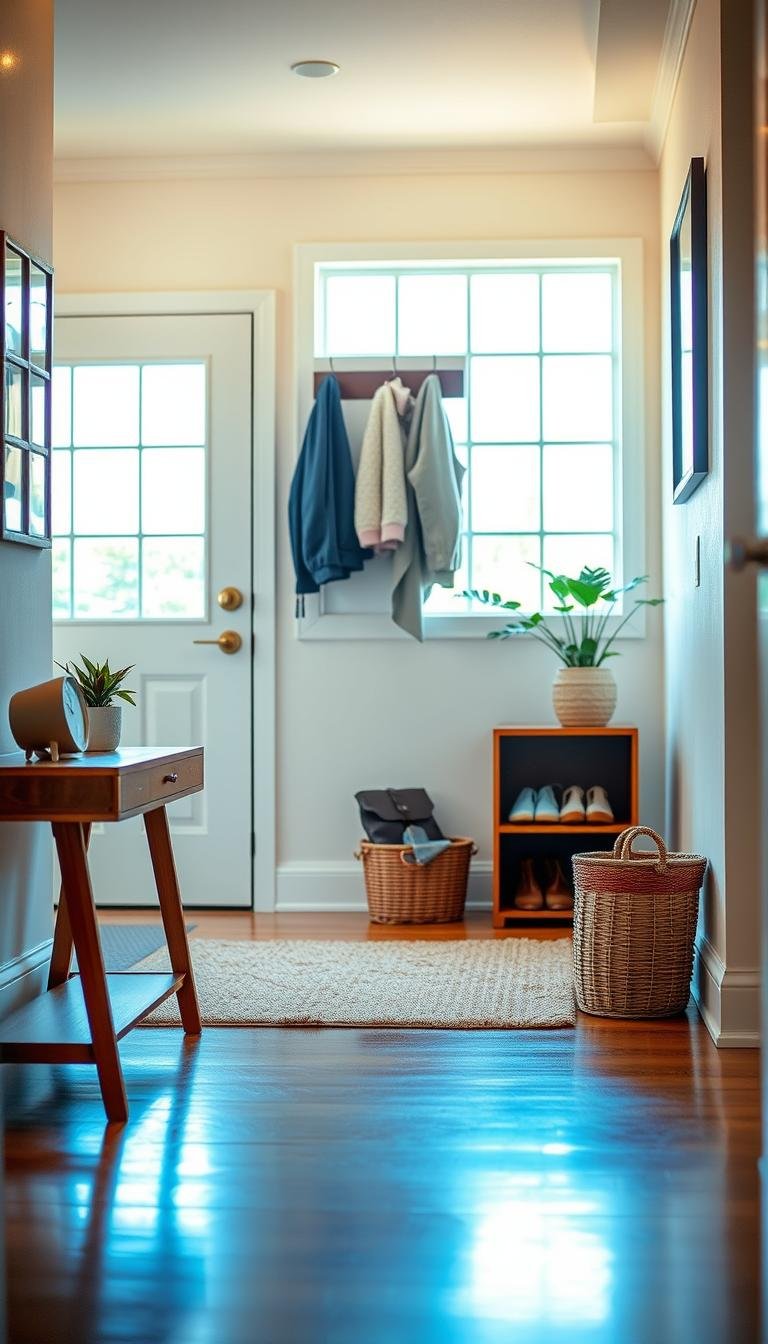
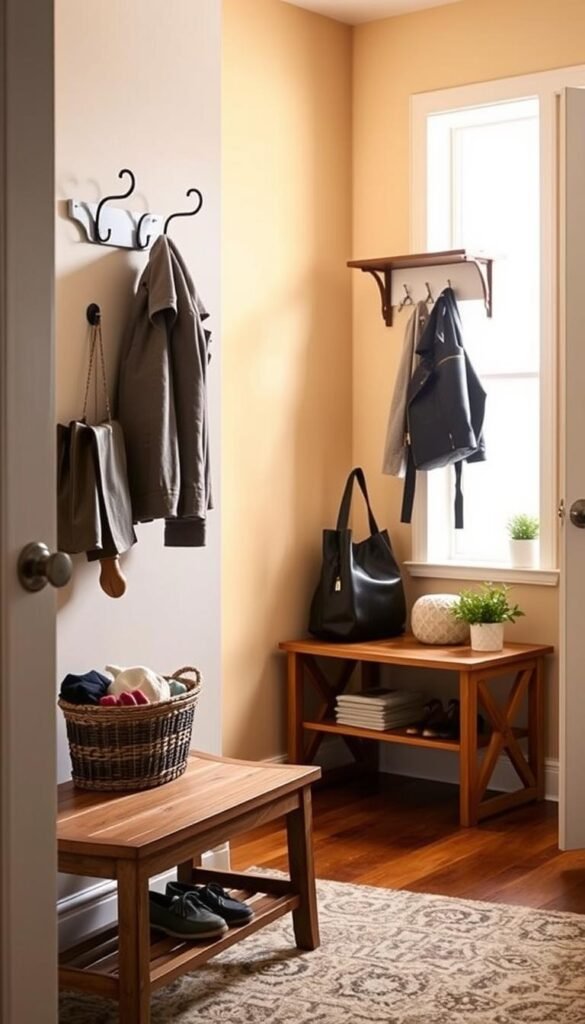
Near the front door add a slim table, a tray for mail, and a basket for shoes. This keeps items from spreading through the house.
Mudroom or mud room: coats, shoes, and a bench
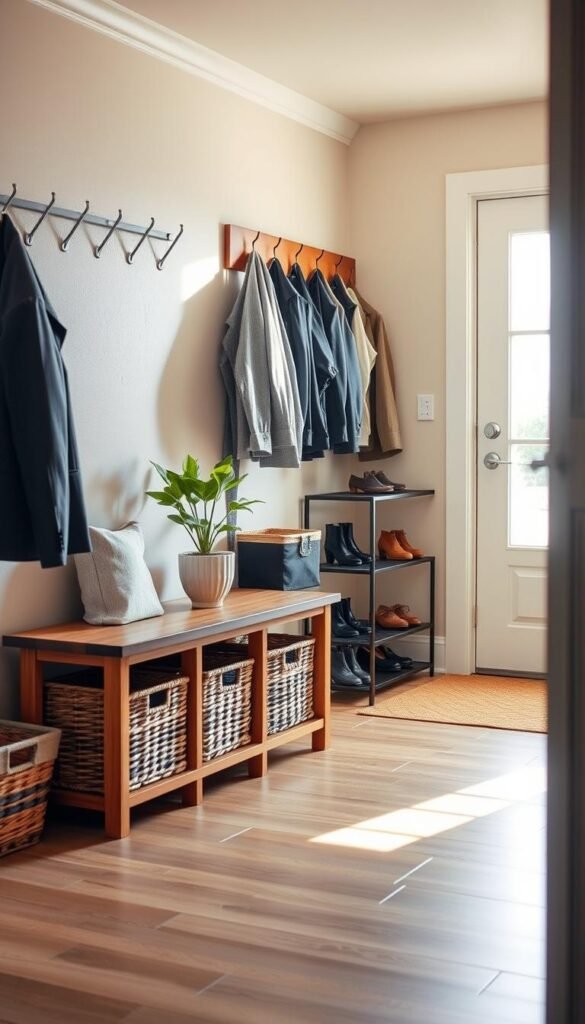
In the mudroom use a washable rug and sturdy hooks for coats. A bench and labeled shelves help each person find their shoes and bags.
Garage door area: wipe paws, store boots, hang bags
Use shelves and baskets in the garage to catch mud and winter gear. Back-of-door storage saves space. Add a hook for dog leashes.
Kitchen corner or wall: keys, mail, everyday items
Mount command hooks on the kitchen wall. Add a mail tray and keep a pen nearby. Keys by the stove save a frantic search later.
Closet conversion or small nook: maximize hidden space
Remove a closet door for an open feel. Add slim shelves or a small bench. Use the wall to keep floor space clear.
- Pick the spot you pass first. Make it simple.
- Use one basket per person when possible. Gentle labels help.
- Save vertical space with slim shelves and hooks on the wall.
| Spot | Best use | Must-have |
|---|---|---|
| Entryway | Keys, mail, shoes | Tray, small table, basket |
| Mudroom | Coats, shoes, wet boots | Rug, bench, sturdy hooks |
| Garage | Boots, pet gear, bags | Shelves, baskets, door hooks |
| Kitchen wall | Keys, mail, quick items | Command hooks, mail tray, pen |
Create a “Drop Zone” with simple tools and clear purpose
Give each daily item a simple, steady place to land.
Set the goal. Name the items that need homes right now: keys, coats, bags, and shoes. Keep the list short. That focus guides every choice.
Starter kit
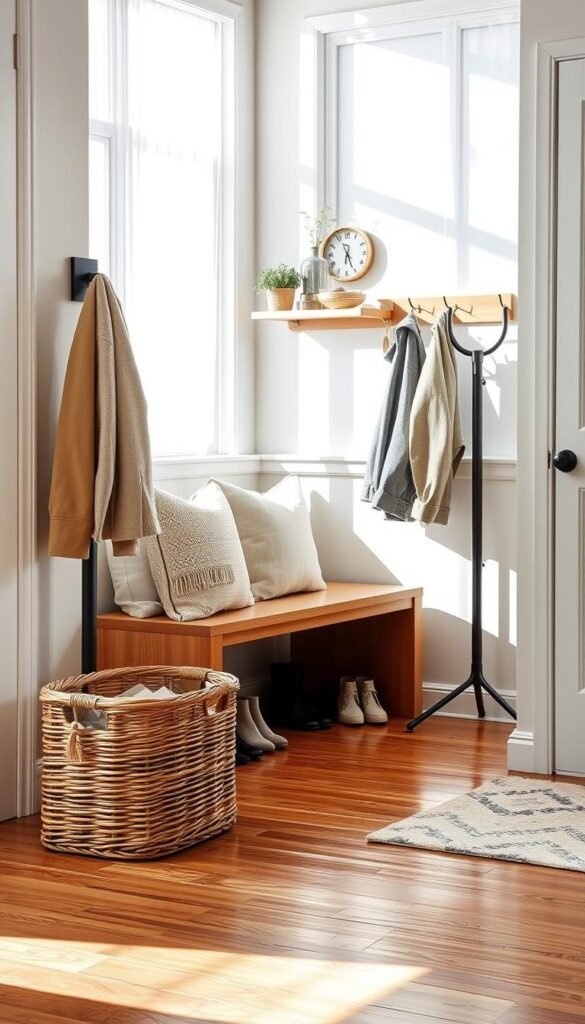
One hook. One basket. One tray. One small table. One mirror. These five pieces cover most needs. Use them in neutral tones to keep the space calm.
Use vertical wall space
Mount command hooks or slim shelves on the wall. Hooks hold coats and backpacks. Shelves free the floor and add gentle storage without bulk.
Small-space ideas
Try an ottoman with hidden storage for shoes or slippers. A single hook plus one basket can hold daily items in tiny entries.
Mail and keys station
Set a tray for mail. Use a napkin holder as a quick sorter. Keep keys in a clear jar so you see them fast. Reuse shoe boxes and mason jars when you can.
- Checklist: set one purpose, one hook, one basket, one tray, one table, one mirror.
- Review after one week and tweak gently.
Set up your space step by step
Point to one clear spot by the door and make it your daily stop.
Define the zone
Pick the exact wall, corner, or bench area that you pass each day. Mark it in your mind. Make this the single place for incoming items.
Place containers
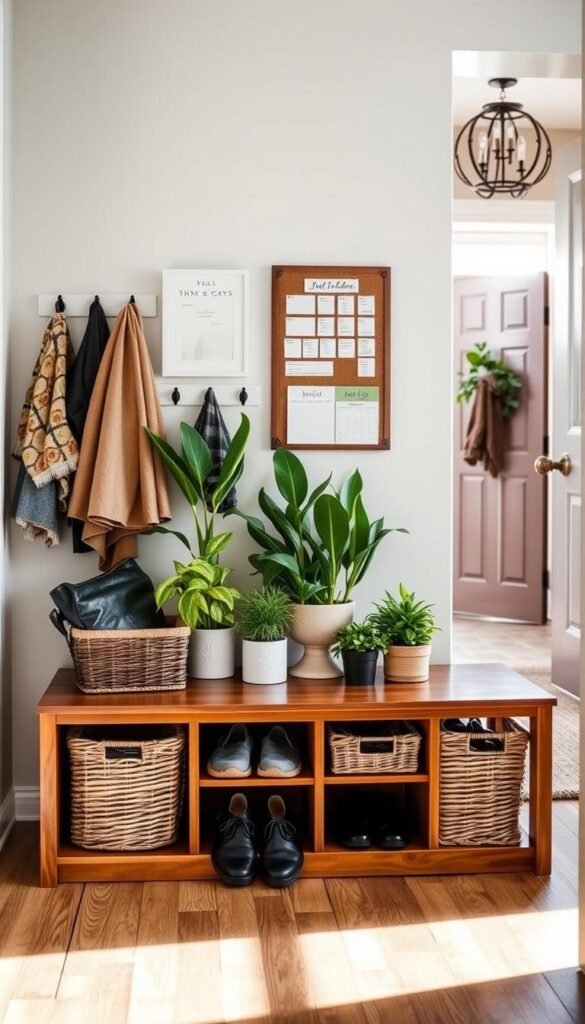
One basket per person or purpose keeps things tidy. Put baskets low for kids and labeled for each family member. Add a tray on the nearest surface for keys and mail.
Add hooks at the right height
Install one or more hooks at shoulder height for adults. Add a lower hook for smaller children. Command hooks work well for renters and quick swaps.
Include a bench (optional)
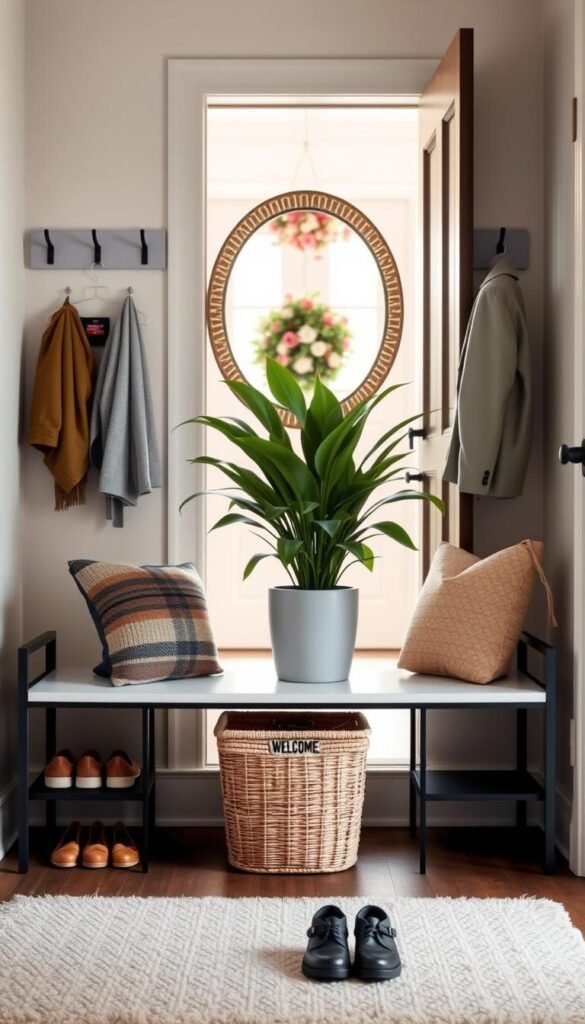
If space allows, add a bench or ottoman. It gives a calm place to sit and a spot to stash shoes in a basket beneath.
Label gently
- Use names or simple icons. No shame. Just clarity.
- Do a one-minute test run. Walk in, drop, and see if it flows.
- Adjust hook height or basket size if it feels tight.
- Commit to a 30-second reset each evening.
“Small systems make daily life lighter.”
| Step | Action | Why it helps |
|---|---|---|
| 1 | Choose spot by the door | Stops spread of items and saves time |
| 2 | Place baskets and tray | Keeps each person’s things separated |
| 3 | Install hooks at varied heights | Makes hanging easy for every family member |
| 4 | Add bench if space allows | Offers seating and hidden shoe storage |
Build depth: DIY mudroom-style unit or plug-and-play
You can choose a quick, plug-and-play setup or a deeper DIY built-in.
Two gentle paths. One gives speed. The other gives custom storage and lasting calm.
DIY built-in idea
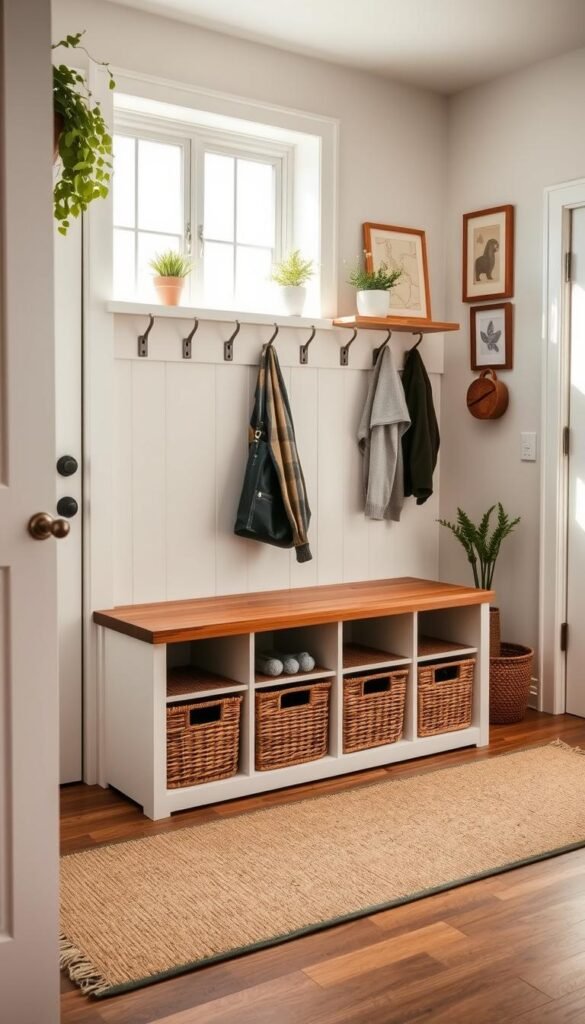
Turn a coat closet into a bench-and-cubby unit. Remove the door and open the space to the ceiling. Use two 4×8 ft MDF sheets for structure and half sheet red oak plywood for the bench top.
Build a lower box with two dividers for three cubbies. Template and cut the bench top. Add a 1-inch strip under the bench lip to make it look thicker.
Materials snapshot
MDF sides and dividers. Red oak plywood bench top. Edge banding. Faux shiplap back. PVC base cap and crown molding.
Prime with KILZ all-purpose primer. Sand with 150 grit. Paint with Behr Urethane Alkyd Enamel in satin. Sand between thin coats with 220 grit. Let each coat dry 24 hours.
Hardware and accessories
- Install three backpack hooks and three water bottle hooks.
- Use wicker baskets in lower cubbies and fabric boxes above.
- Add one mirror on the wall and one hook per bag to avoid pileups.
Plug-and-play setup
If time is short, choose a freestanding bench, one basket per person, simple hooks, and a mirror. Place it near the garage or main door.
One clear way: walk in, drop once, and move on. This saves time and keeps mud and coats from spreading through the house.
“Small, steady choices make daily life lighter.”
Keep it tidy with daily, weekly, and monthly routines
A few steady minutes each day stops clutter before it grows.
Start with a tiny plan. Pick short tasks for the day, week, and month. These habits keep your entryway and other rooms calm. They work without pressure.
Daily reset
One minute each evening: empty pockets. Hang coats on hooks. Put shoes in the basket. Place keys in the tray by the door. This quick pause saves time the next day.
Weekly refresh
Spend five to ten minutes. Return stray items to their room. Clear extras from surfaces. Tidy bags and wipe the small table. Label shelves in the mudroom or garage to guide kids and family.
Monthly edit
Take fifteen minutes. Remove out-of-season items. Wipe surfaces and check labels. Box or donate what you no longer use. This keeps storage lean and useful.
Room-by-room examples
- Entryway: key tray, one basket for shoes, two hooks for bags.
- Kitchen: wall hook for lunch bag, mail sorter, pen for notes.
- Pantry/closet: small bin for returns; labeled baskets for hats and gloves.
- Bathroom/bedroom: tiny tray for daily carry items; laundry basket by the door.
- Garage/mudroom: rug for muddy boots, towel for paws, posted mini-checklist for kids.
“Short, gentle habits protect your calm at the door.”
| Room | Quick task | Time |
|---|---|---|
| Entryway | Keys to tray; shoes to basket; hang daily bags | 1 minute daily |
| Kitchen | Hang lunch bag; sort mail; leave pen | 5 minutes weekly |
| Closet/Pantry | Rotate seasonal items; tidy labeled bins | 15 minutes monthly |
| Garage/Mudroom | Wipe boots; check hooks and shelves | 10 minutes weekly |
Conclusion
A small change by the front door can calm your whole day.
Start simple. Put one tray and one basket near the front door. Let keys and mail land there. Keep shoes in the basket. This small space makes daily life easier.
Add a bench or mirror if it helps. A bench gives seating and hidden storage. A mirror offers a quick look and go. Use hooks where reach feels natural.
If you pass through the garage, place your zone there. Pick tools you enjoy seeing. Gentle steps and soft routines build lasting organization for your home.
FAQ
What is a practical entryway setup I can do fast?
Pick one wall or corner by the front door. Add a small table or shelf for mail and keys. Hang three hooks for coats and bags. Place a basket for shoes or stray items. Keep it simple. Aim for one clear spot everyone uses.
Where else can I put this system besides the front door?
Try the mudroom or garage door area for boots and sports gear. A kitchen wall works well for keys and mail. Convert a closet or small nook into a hidden station. Choose wherever family traffic is highest.
What basic items should I buy to start?
Start with hooks, a bench or small table, baskets, and a tray for keys. Add a mirror if you like quick checks. Command hooks and slim shelves work well for renters. Keep the list short and useful.
How do I keep kids using their spot?
Make it easy and visible. Lower hooks to kid height. Use labeled baskets or simple icons. Offer a small seat for putting on shoes. Praise small wins. Gentle reminders work better than nagging.
Any ideas for very small spaces?
Use a single hook and a narrow wall shelf. Try an ottoman with storage inside. A magnetic key strip or clear jar on a ledge keeps clutter off counters. One basket per person keeps items contained.
How often should I tidy the area?
Do a quick daily reset: empty pockets and hang coats. Do a weekly refresh to return stray items. Once a month, declutter seasonal pieces and wipe surfaces. Small routines prevent overwhelm.
Can I build a longer-lasting unit myself?
Yes. Simple DIY units use plywood or MDF for cubbies and a bench. Add trim, primer, and paint for a finished look. Include upper storage for hats and baskets for shoes. Keep plans modest for manageable work.
What hardware makes the system durable?
Use sturdy backpack hooks, shelf brackets, and quality drawer pulls if you add bins. For mudroom use, water-resistant finishes help. Anchor heavy pieces to studs for safety.
How do I handle incoming mail and papers?
Designate a tray or napkin holder for current mail. Use a clear jar for receipts and a small folder for bills. Sort weekly. Avoid piling on counters by returning items to their homes right away.
How do I stop clutter from creeping back?
Keep the system simple and visible. Limit baskets and hooks to essentials. Use one spot per person. Add gentle labels. Make the daily reset a habit. Small, consistent steps beat big purges.
What should each family member have in their basket?
A basket can hold shoes, hats, and frequently used items like masks or chargers. Keep it light. Avoid stuffing it with things that belong elsewhere. One basket per person makes returns easier.
Are there easy ways to hide pet supplies or muddy shoes?
Place a mat or crate near the garage or door for muddy boots. Use a washable basket for leashes and wipes. A dedicated hook for a towel or boot scraper helps keep mud contained.
How do I make the area look calm and not cluttered?
Use matching baskets or neutral tones. Keep surfaces mostly clear. Add one mirror or plant to soften the look. Fewer, well-chosen items create a calm feel without perfection.
Any tips for renters who can’t drill holes?
Use Command hooks and adhesive shelves. Freestanding benches and leaning shelves add storage without damage. Magnetic strips and over-the-door hooks are also renter-friendly.
What’s the best height for hooks and a bench?
Place adult hooks about 60–66 inches from the floor. Lower one row to about 40–48 inches for kids. A bench around 17–18 inches high works well for sitting and shoe changes.