How to Clean Faster With Simple Systems
You are busy. You want a calm home and more time. This short guide offers soft, doable routines that free up space and headroom. Small steps add up. No guilt. No harsh rules.
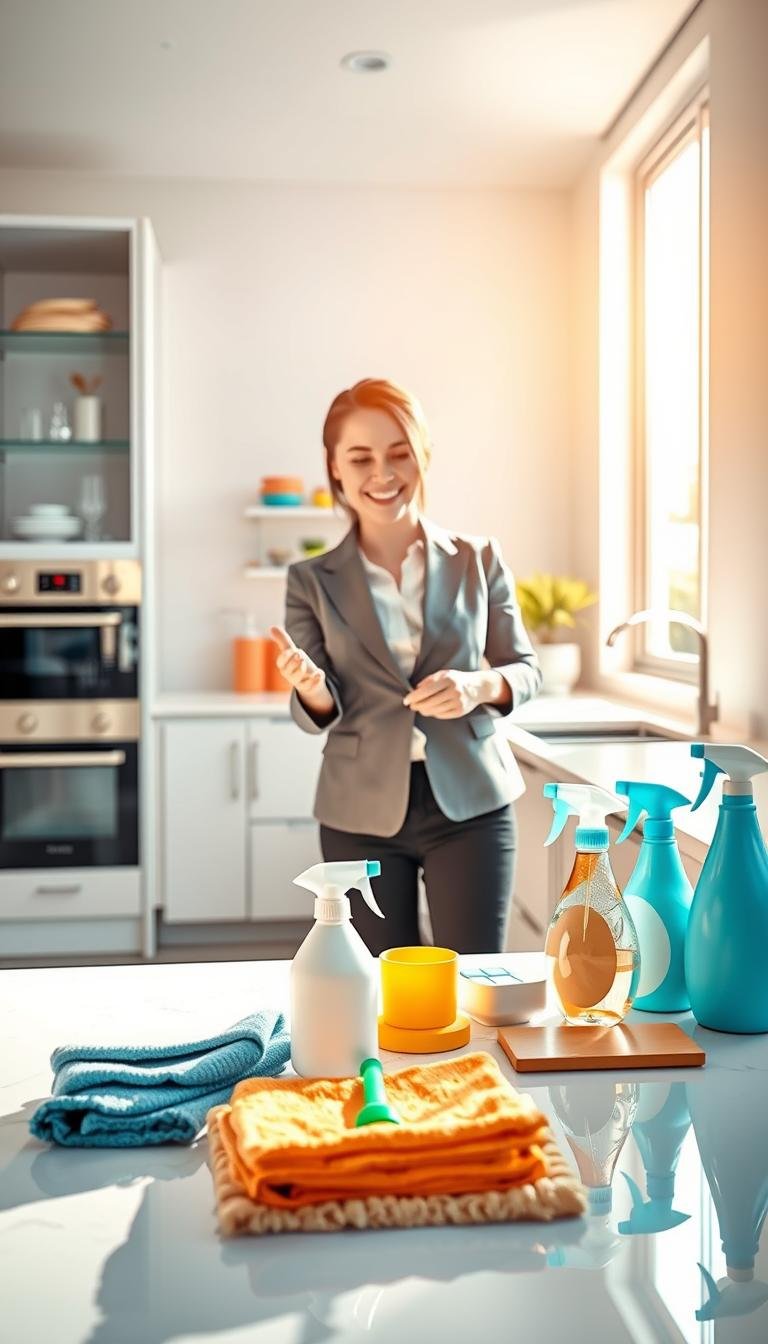
Start with a gentle plan. Work top to bottom. Move left to right. Start and finish in the same spot. Keep a caddy or apron of supplies so you do not walk back and forth. A quick routine each day keeps the house light.
We use mild tools. Warm water, white vinegar for mineral spots, a magic eraser for marks, and a spin mop for fast floors. Set short timers. Do one thing at a time. You will save time and stress.
Key Takeaways
- Build a steady system you can do daily, weekly, and monthly.
- Keep supplies nearby to cut walking and decisions.
- Work top to bottom and left to right to avoid rework.
- Use gentle tools: vinegar, a spin mop, and a magic eraser.
- Short timers and one-task focus make routines doable today.
- Small wins each day help your home feel lighter and calm.
Start with a calm plan and a clear path
Begin small and kind. Pick one area and give it a short, gentle window. A bit of focus beats scattered effort. This keeps you steady and humane.
Set a timer and pick one area.
Set a timer and pick one area
- Take a breath. Pick one area. Set a gentle timer for 10–15 minutes.
- Name your start spot and your finish spot in the room.
- Keep a small notepad nearby. Jot down things to do later.
- Use warm water and a cloth for quick wipes as you go.
Work top to bottom, left to right
- Move in one direction. Left to right. Then top to bottom.
- Dust and crumbs fall to places you will clean next. That saves time.
- Do not jump to other things. Your timer keeps you focused.
- If you run out of time, you are done for now. That is okay.
Make this a daily system. Same start spot. Same finish spot. One timed pass in the morning on busy days is enough to keep your home calm.

| Step | Action | Minutes |
|---|---|---|
| 1 | Pick area, name start/finish | 2 |
| 2 | Timed pass, left to right, top to bottom | 10–15 |
| 3 | Jot later tasks, quick water wipe | 2–3 |
Clean Faster With Simple Systems
A short, predictable loop in each room trims time and decision fatigue.
The room-by-room loop: start spot to finish spot
Choose a clear start spot in every room. End at the same spot each pass. This builds muscle memory.
Follow the same path every time. You work faster when your body knows the way. One steady loop reduces stops and second guesses.
Keep a small caddy of essentials within reach
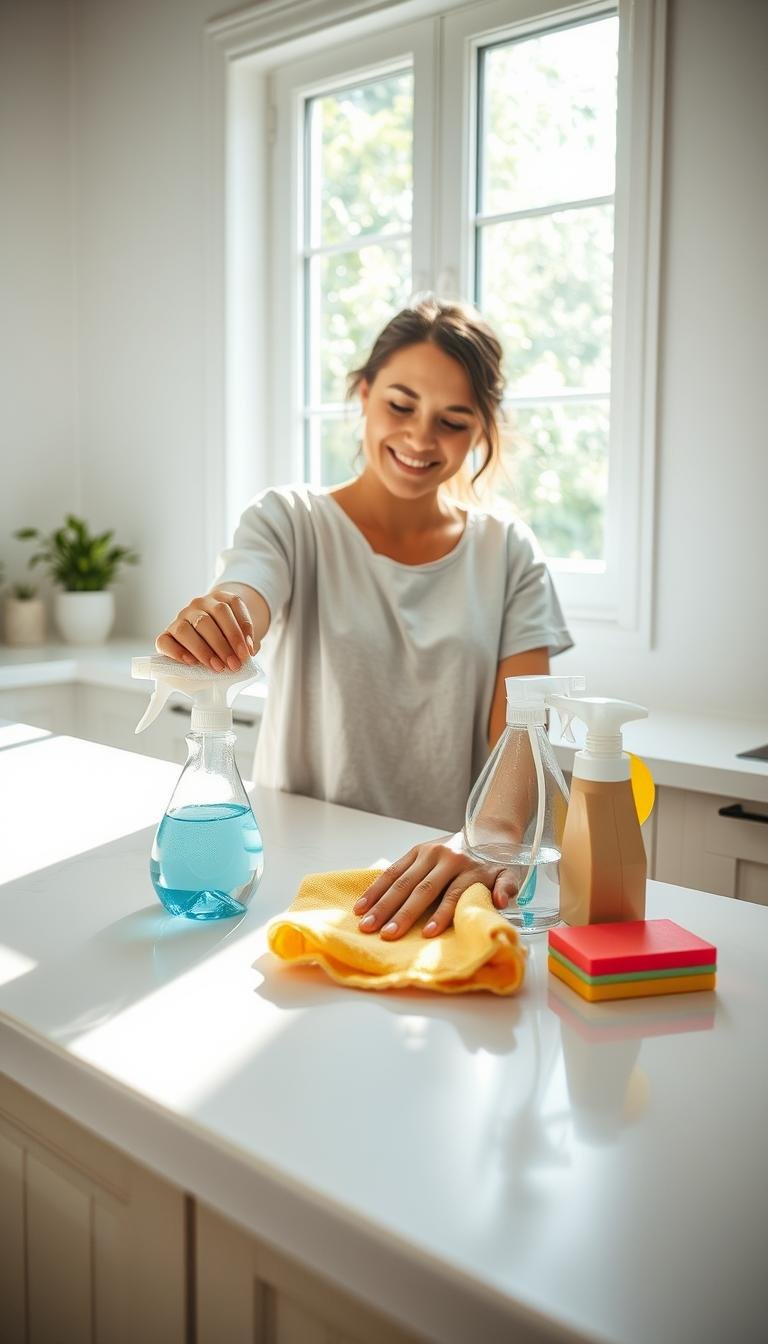
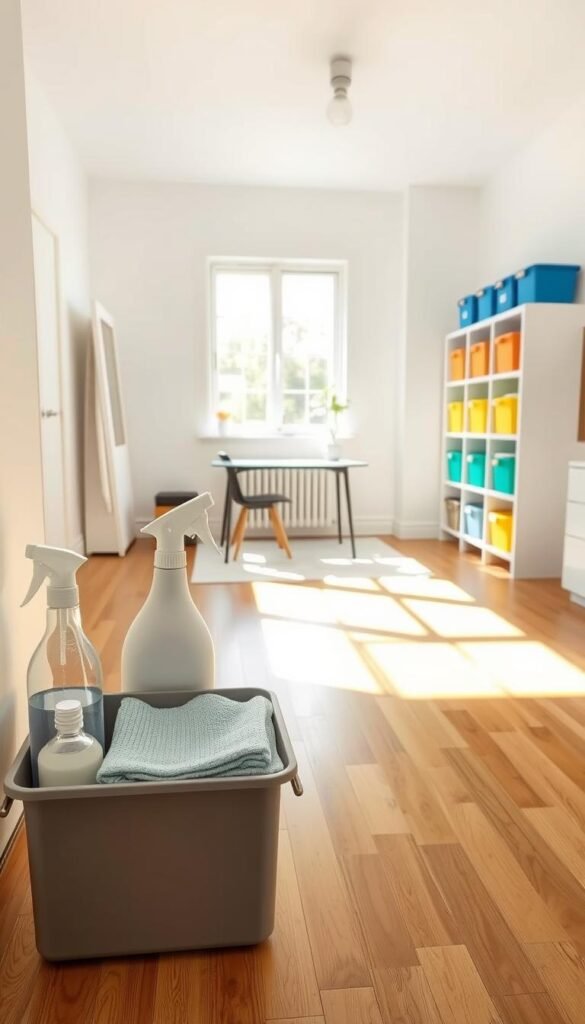
Keep a caddy or an apron near the door. Fill it with microfiber cloths, a feather duster, small spray bottles, and a magic eraser.
- Pre-fill bottles with warm water and a mild cleaner for quick grabs.
- Place the caddy in a central spot so the whole home is a short walk away.
- Wear an apron to hold small items and speed the loop.
Use gentle, effective tools and skip harsh chemicals
Use one gentle tool per task. A light spin mop and warm water lift dust fast. White vinegar works on mineral spots. Save harsh chemicals for rare needs only.
Do a quick look back when you finish a room. One small fix keeps the house calm and saves you time later.
Daily, weekly, monthly: a light routine that works
Small daily habits free up your week and calm the home.
Daily tasks keep clutter from growing. Load the dishwasher after dinner and start it before bed. Unload in the morning. Wipe counters and the sink. Do a five-minute tidy of floors and the sofa. Make the bed. These short acts save time and worry.
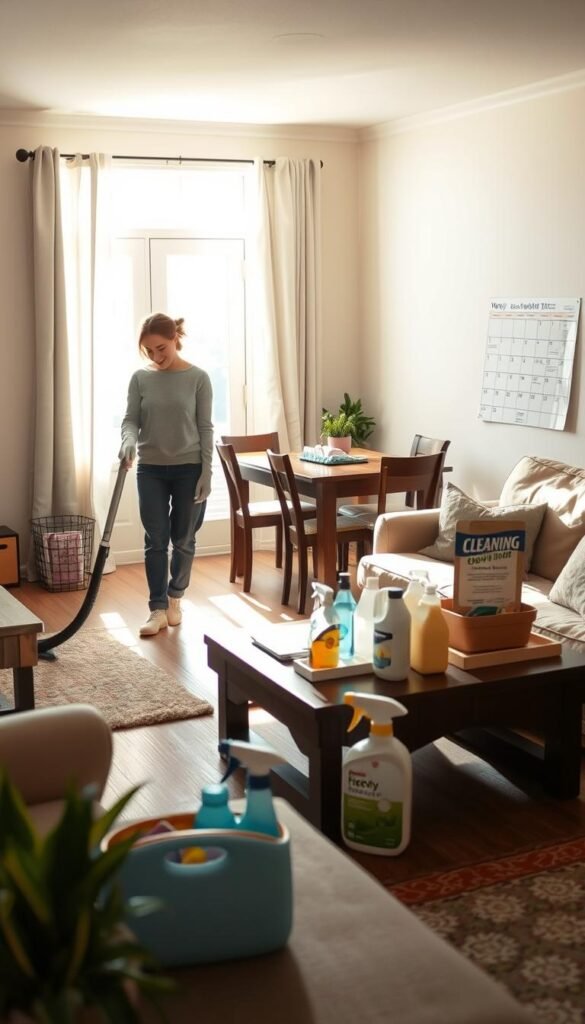
Weekly anchors stop pileups. Clean bathrooms and kitchen surfaces once a week. Vacuum in long rows and back out of the room. Set two steady laundry days and stick to them. Dust high to low with a quick feather duster pass.
Monthly light deep cleans protect the house. Wipe windows using a squeegee for a streak-free finish. Touch up baseboards and empty and wash trash cans. Dab white vinegar on faucets to lift mineral spots.
“When you finish one small thing, you are done. Stop there and be kind to yourself.”
Five-minute exit — pick one small win each evening. Fold a small pile. Put shoes away. When you feel you’re done, stop. The routine protects your time.
| Cadence | Key actions | Why it helps |
|---|---|---|
| Daily | Load dishwasher, unload morning, tidy floors, make bed | Prevents pileup. Saves time each morning. |
| Weekly | Bathrooms, kitchen surfaces, vacuum rows, set laundry days | Keeps home steady. Stops mess from growing. |
| Monthly | Windows with squeegee, baseboards, trash can wash, vinegar touch-ups | Light deep clean. Extends life of surfaces. |
Room-by-room examples you can copy today
A few set moves in each place keep chores tiny and steady.
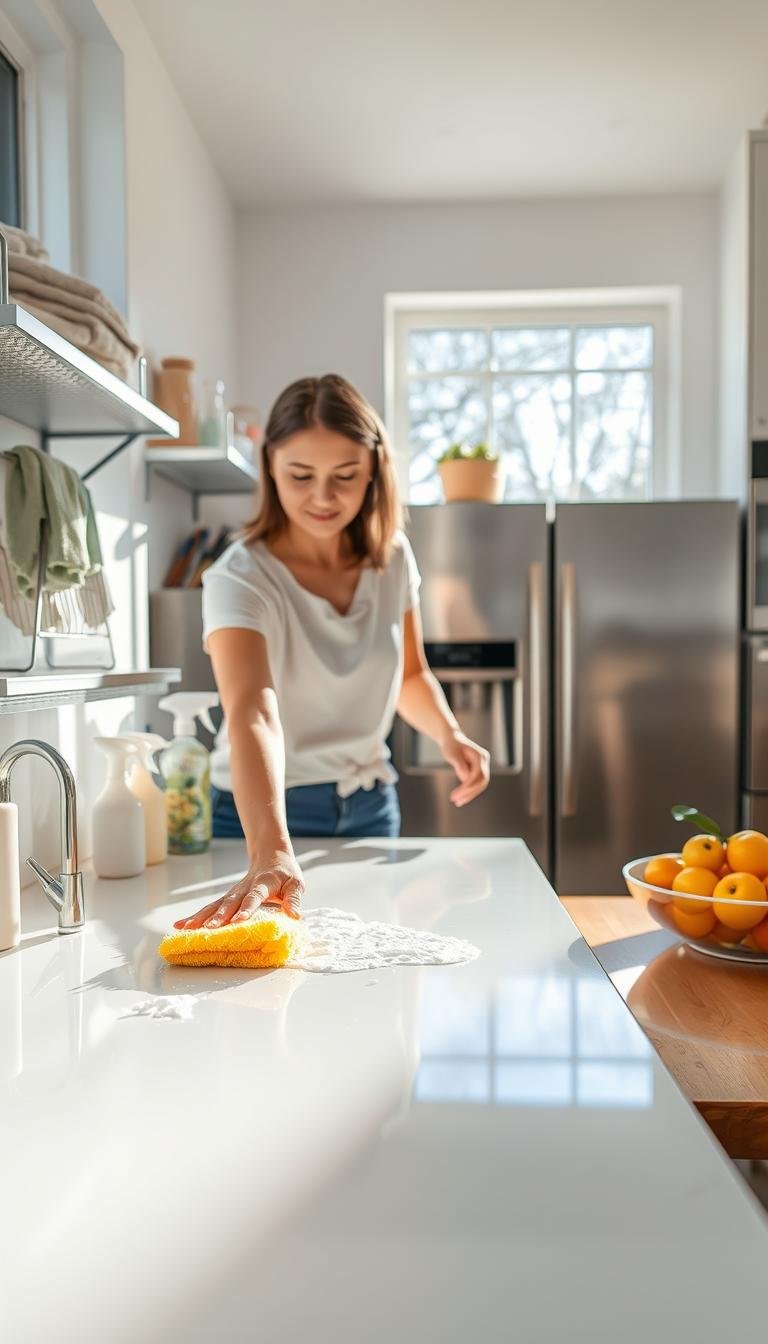
Kitchen: Load and run the dishwasher nightly. Unload in the morning so dishes do not pile at the sink. Wipe counters, handles, stove knobs, and the sink each evening with warm water and a mild cleaner.
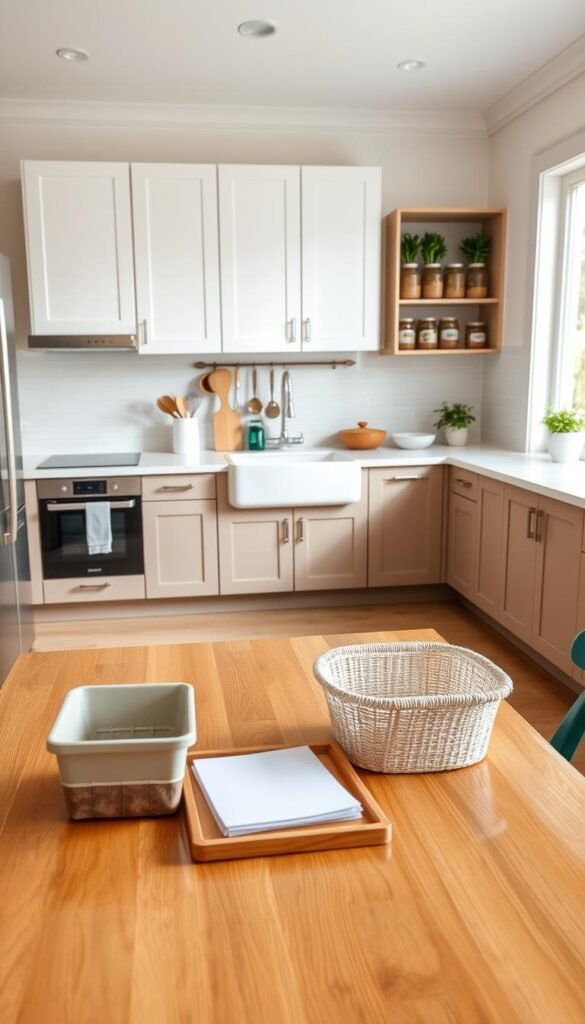
Pantry: Group food by type. Place items in simple bins and add labels. Rotate older items to the front each week so nothing expires unused.
Bathroom
After showers, spray and rinse the walls. Do a quick squeegee pass. Wipe the mirror and faucet to keep water spots away.
Bedroom
Make the bed each morning. Clear nightstands of clutter. Use one small laundry hamper per person to keep things sorted.
Closet and Entryway
Keep a donate bag ready in the closet. Hang like-with-like. Do a short seasonal review.
In the entryway add hooks at eye level. Use a tray for shoes and a basket for grab-and-go items.
- Keep a small caddy near the kitchen to make the way to wipe quick.
- Choose one shelf or drawer at a time and put away what belongs elsewhere.
- Wipe the sink dry with a soft cloth at the end of the day to avoid water marks.
| Place | Quick action | Frequency | Why it helps |
|---|---|---|---|
| Kitchen | Run dishwasher nightly; unload morning | Daily | Prevents pileup at the sink and saves time |
| Pantry | Label bins; rotate older food forward | Weekly | Speeds meal prep and reduces waste |
| Bathroom | Spray, rinse, squeegee, wipe mirror | After use / Daily | Keeps surfaces streak-free and low-maintenance |
| Entryway / Closet | Hooks, shoe tray, donate bag | Ongoing / Seasonal | Makes leaving and arriving effortless |
Declutter first, then clean
Begin with a quick sweep to remove trash and free visual space.
Start small. Make fast decisions. This lowers the visual load and makes the next pass easier.
Two-bag sweep: trash and donate
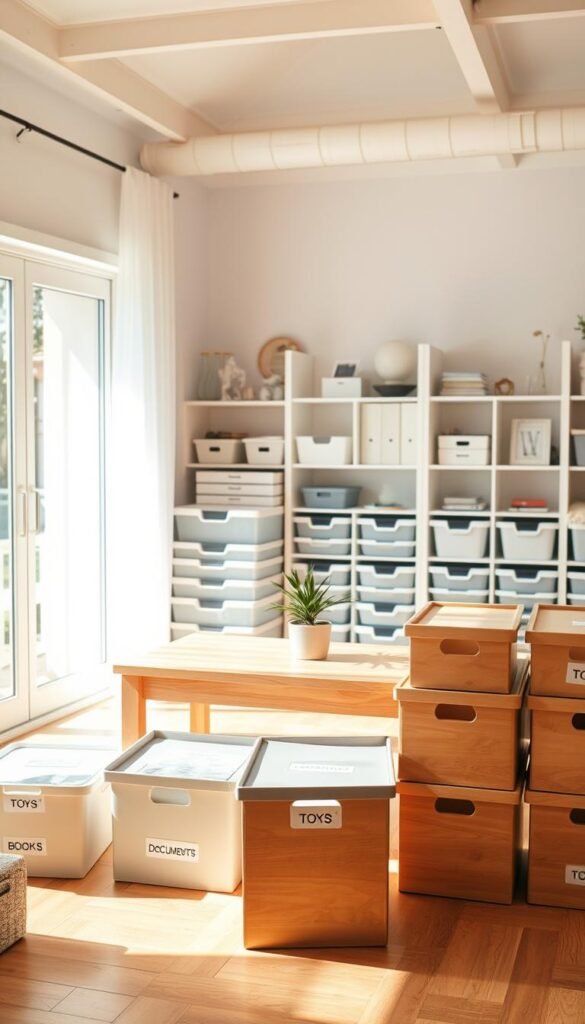
One bag for trash. One bag for donate. Move room by room. Do not sort for long. Quick choices keep momentum.
- Grab both bags and a timer. Set 10 minutes for each area.
- Toss obvious rubbish first. Then add things that you no longer need.
- Donations go in the car or a closet box to leave the home that day.
One-basket reset: put-away items per room
Use a laundry basket for items that belong elsewhere. Carry it as you move through the house.
Empty the basket at the end of the day. Do not let clutter migrate. That keeps your place calm.
- Put away items quickly. Make a fast move instead of long sorting.
- Give every thing a clear place. Labels help others return stuff fast.
- If you are unsure, use a small hold box and add a date. Revisit later.
“Small, kind steps beat perfection. A lighter surface makes cleaning faster.”
Finish with a quick wipe of high-touch spots. You will see progress and save time when you begin cleaning house. Keep your system the same each time. Less thinking. More calm.
| Action | Tool | Minutes |
|---|---|---|
| Two-bag sweep | Trash & donate bags | 10 per area |
| One-basket reset | Laundry basket | Fill & empty same day |
| Hold box | Small labeled bin | Revisit in 30 days |
Time-smart tactics that cut work in half
Focus on the busiest spots first so each pass gives the biggest payoff.
High-traffic first: living room, kitchen, bathrooms
Start where people gather. The living room, kitchen, and bathrooms show use first. Small moves here save the most time. Set a 10-minute timer per room. Do one steady pass. When you’re done, stop.
Vacuum in long rows; back out of the room
Vacuum in straight, overlapping rows. Move slowly. Back out of the room when you finish so your floor stays clean. Keep the cord over your shoulder. It keeps your way clear and avoids trips.
Squeegee glass for a streak-free finish
Mix a drop of dish soap in water. Use a soft cloth to wet the glass. Squeegee top to bottom. Wipe the blade after each pass. Mirrors and shower doors become clear in one go.
- Work top to bottom so you do not redo work.
- Keep tools in a caddy to save walking time.
- Do one quick floor scan last. Crumbs go last.
| Action | Why | Minutes |
|---|---|---|
| High-traffic pass | Biggest impact on house calm | 10 |
| Vacuum rows | Cleaner floor, less rework | 10–15 |
| Squeegee glass | No streaks. Quick finish | 5 |
Gentle tools and small habits that make a big difference
A few gentle tools and tiny habits can change how your home feels each day.
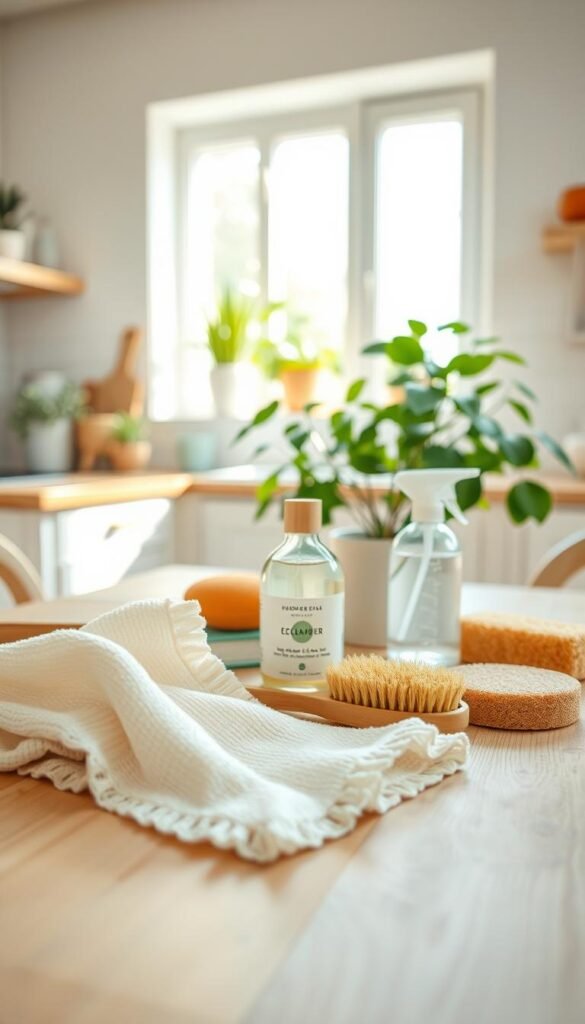
Choose soft, effective gear. Stock microfiber cloths for dusting and wiping. They trap dust without streaking. Add an ostrich feather duster for blinds and tight nooks. Use a Mr. Clean Magic Eraser for scuffs on walls, doors, and the sink.
Use warm water and a mild dish soap as your main cleaner. White vinegar is great on faucets to lift mineral deposits. In the kitchen, steam a cup of water in the microwave to loosen stuck food, then wipe. These moves are safe and low-cost.
- Spin mops like O-Cedar work well. Light, frequent passes save time and energy.
- Do a five-minute wipe each morning to keep a clean house feeling steady.
- Invite family to do one tiny task each day. Shared work eases the load and builds habit.
“A bit of the right gear beats a closet of products.”
| Tool | Use | Cadence |
|---|---|---|
| Microfiber cloths | Dusting and wiping | Daily |
| Feather duster | Blinds and high spots | Every few weeks |
| Spin mop | Floors, light passes | Couple times a week |
Simple systems for shared homes and busy weeks
Busy homes thrive on clear, shared rhythms that reduce friction. A few light rules help everyone know the way. Less guessing. More calm.
Chore cadence: who does dishes, counters, floors, and when
Create a short, visible cadence. Post a tiny list in the kitchen: dishes, counters, floor, trash. Keep it kind and clear.
- Run the dishwasher each night. Assign someone to unload in the morning.
- Rotate who wipes counters and sweeps the floor on a weekly basis.
- When the week is busy, pick one thing per person each day.
Laundry plan: assigned days or a morning load after coffee
Pick a reliable rhythm. Choose assigned laundry days. Or start one small load after your coffee each morning.
Keep laundry moving on a steady basis. Fewer piles. Less stress. Fold and put away the same day when you can.
Meal flow: plan weekly, shop once, prep simple bins
Plan meals for the week. Shop once. Prep ingredients into labeled bins per meal.
This saves time and shrinks decision fatigue. Leftovers become lunches. Food gets used instead of forgotten.
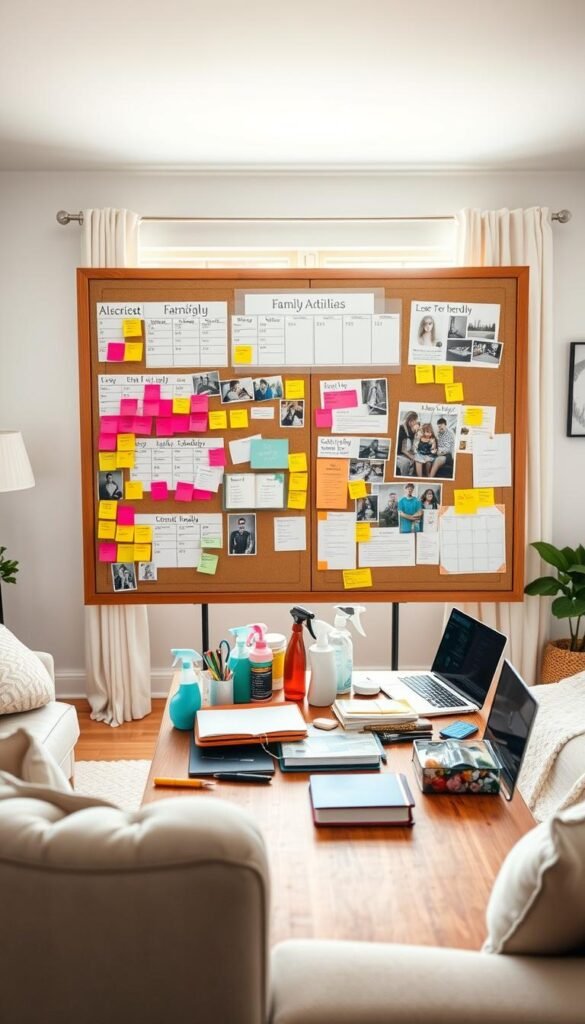
Family board or shared calendar to keep everyone aligned
Use a family board in the kitchen or a shared digital calendar. Put chores, laundry days, and meal notes on view.
“A small plan on the wall keeps people moving together.”
| Cadence | Daily | Weekly | Monthly |
|---|---|---|---|
| Kitchen | Run dishwasher; unload morning | Deep counter wipe | Fridge check & meal plan |
| Laundry | One small load after coffee | Assigned wash day | Seasonal closet sort |
| Home flow | One thing per person | Rotate chores | Review family board |
Conclusion
A short, steady habit can change how your home feels in days. Pick one system to try this week. Keep it small and kind.
Run the dishwasher nightly and unload in the morning. Do a light laundry load after coffee or choose two laundry days. These tiny moves prevent big catch-ups.
Do a five-minute reset each evening. Touch bathrooms and the floor on a simple rotation. Use a squeegee and vacuum in rows when you have a little more time.
Keep tools simple. Warm water, a cloth, mild soap, and a dab of vinegar cover most spots like the sink. Repeat on a steady basis. Measure progress by peace, not perfection. One room. One pass. You’re done.
FAQ
How do I start when everything feels overwhelming?
Begin with a calm plan. Set a gentle timer for 10–15 minutes. Pick one small area. Focus on one clear task like clearing the sink or wiping a counter. Small wins build momentum. Repeat each morning for steady progress.
What’s the easiest order to work a room?
Work top to bottom, left to right. Dust shelves first. Wipe surfaces next. Finish with floors. That way dust and crumbs fall to areas you’ll clean later. You avoid redoing work and save time.
How can I keep essentials handy without clutter?
Keep a small caddy with a microfiber cloth, all-purpose spray, sponge, and a trash bag. Store it in a consistent spot. Grab it when you move from room to room. It reduces back-and-forth and makes short tasks feel doable.
Which tools and cleaners should I really keep?
Choose gentle, effective tools. Microfiber cloths, a good sponge, a magic eraser, and a squeegee cover most jobs. Use warm water, mild dish soap, and white vinegar where safe. They’re simple and kind to surfaces and skin.
What should I do every day versus weekly or monthly?
Daily wins: wash dishes or load dishwasher, quick reset of counters, tidy floors, and make the bed. Weekly tasks: bathrooms, kitchen surfaces, vacuuming, and laundry days. Monthly: windows, baseboards, and trash can touch-ups.
How do I end each day with less mess tomorrow?
Do a five-minute exit routine. Put away a couple of things, wipe the kitchen island, and start the dishwasher. These tiny actions lower morning stress and keep the home feeling calm.
Can you give simple room-by-room examples I can copy?
Yes. In the kitchen run the dishwasher nightly and wipe handles and sink. In the pantry group food by type and label bins. In the bathroom squeegee the shower and wipe the mirror. In the bedroom make the bed and use a small laundry hamper.
How should I handle decluttering before cleaning?
Do a quick two-bag sweep: one for trash and one for donations. Then use a one-basket reset to put items back in their rooms. Decluttering first makes the actual wiping and washing much faster.
What time-smart moves cut work in half?
Tackle high-traffic areas first: living room, kitchen, and bathrooms. Vacuum in long rows and back out of the room. Use a squeegee on glass to avoid repeats. These habits save steps and repeat effort.
How can shared homes run smoothly without nagging?
Create a gentle chore cadence. Assign who does dishes, counters, and floors on which days. Pick laundry days or a morning load after coffee. Use a family board or shared calendar to keep everyone aligned.
Any tips for keeping floors quick to maintain?
Do light, frequent passes with a spin mop or broom. Spot-treat high-traffic spots daily. Regular small efforts prevent big, time-consuming jobs later.
What if I have little time but want visible results?
Focus on one surface that guests see. Wipe counters, fluff cushions, and clear the entryway. Ten minutes can make your whole home feel cared for. It’s not perfect. It’s enough.