Entryway Organization Ideas
You are busy. You want a calm spot to land at the end of the day. Small systems can make that happen.
This short guide helps you define the purpose of your foyer. We will pick a simple drop zone in your space. Then we add hooks, a slim console or a cabinet, and a bench with baskets for shoes.
We keep things vertical. Pegboards and labeled bins make small items easy to grab. A command center for mail and school papers cuts down on piles.
Paint like Sherwin‑Williams Rainwashed and better lighting make the area feel warmer. A tidy console table invites upkeep and supports gentle routines you can keep daily, weekly, and monthly.
Key Takeaways
- Define one clear purpose for your space.
- Use vertical storage: hooks, shelves, and slim cabinets.
- Contain shoes with a cabinet or bench and baskets.
- Create an in/out paper flow to stop piles.
- Small style touches boost motivation and upkeep.
- Follow short daily, weekly, and monthly routines.
Start simple: define the purpose of your entryway
Start small: pick a single, calm role for the area by your front door. Name that role. Is this a quick grab-and-go spot or a shared family hub? Choose one focus and keep it gentle.
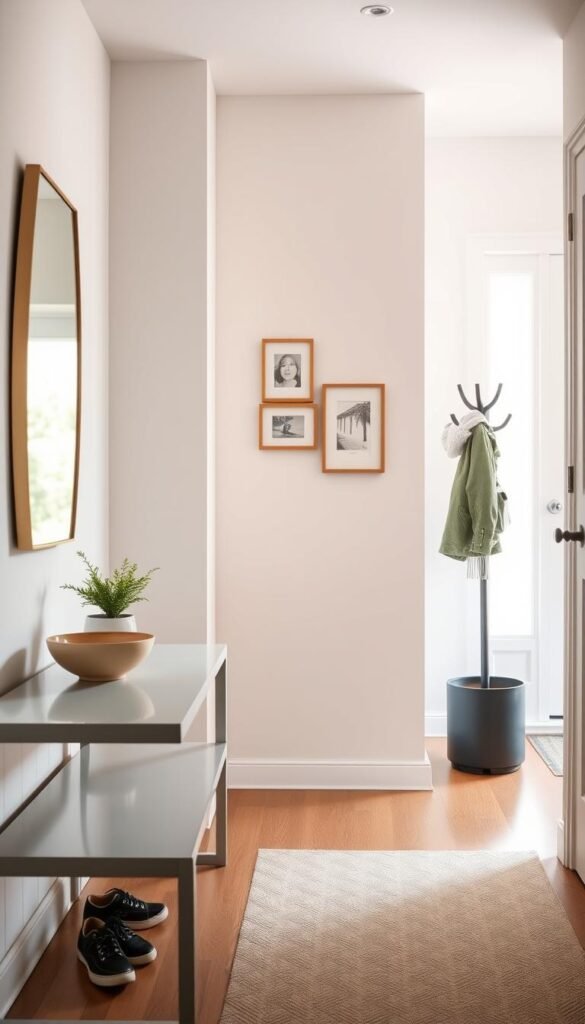
First decide exactly where the space sits. Mark the boundary with a small rug or a slim console. Let the rest of the foyer stay clear. Boundaries stop clutter from spreading.
- Name the purpose: quick exits or family drop zone.
- Pick the spot: by the front door. Mark it.
- Do a gentle reset: empty the area. Sort and return stray things.
- Limit what lives here: keys, daily bags, mail in/out, a few shoes.
- Write a short list: tape it inside a cabinet or closet wall.
| Goal | What stays | Visual limit |
|---|---|---|
| Grab-and-go | Keys, wallet, one bag, mail | One tray. One hook. |
| Family hub | Daily coats, one shoe basket per person | One bench. One labeled bin. |
| Minimal touch | Seasonal gear only | Small rug. Slim console. |
Keep the system simple. Fewer things. Clear rules. This way the spot stays useful. It becomes a calm place to breathe before you leave the house.
Set a calm drop zone that fits your space
Pick one small surface near the door and make it a calm landing spot. Keep the aim simple. One spot. One job. This makes daily life gentler.
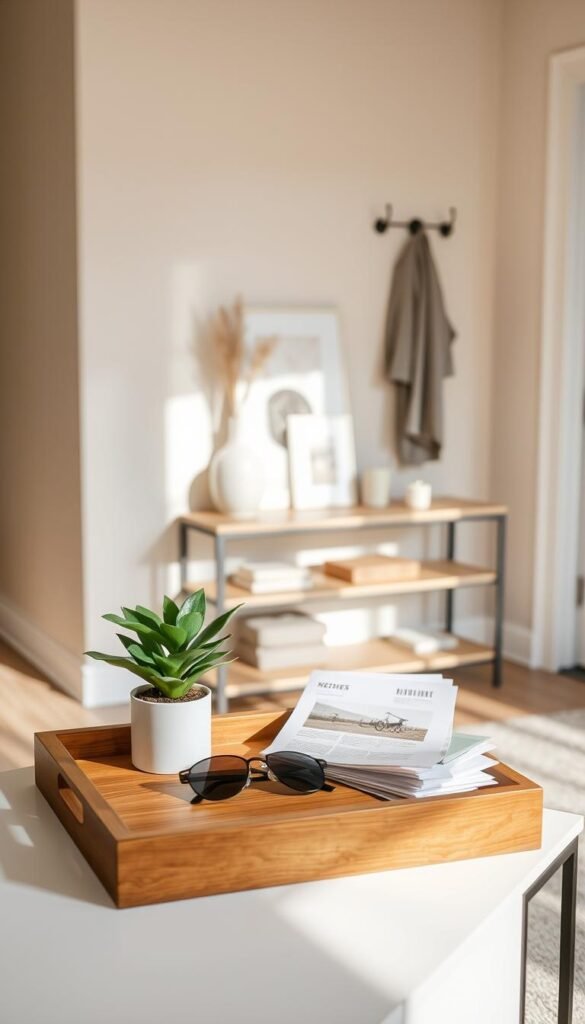
Quick setup steps
- Place a slim console or floating shelf by the front door. Leave walking space clear.
- Add one tray to catch keys and sunglasses. Easy to wipe and move.
- If surfaces are tight, mount a small wall organizer with a mail ledge and hooks below.
- Choose closed storage if visual calm helps. Drawers or matching bins hide loose items.
What to keep here — and what to move
- Keep in the entryway: keys, sunglasses, wallet, one daily bag, mail in/out, a few shoes, umbrella.
- Move elsewhere: bulky sports gear to the garage, extra coats to the closet, packages to the kitchen counter.
“A two-second pause at the door saves minutes later.”
Start tiny. Label zones for wallets, headphones, and the pet leash. Do a 30-second evening sweep. Return stray things to the spot. These small habits keep the system working.
Use hooks and vertical storage to clear the floor
A few smart hooks and slim ledges can turn a tight wall into real storage. Start with one vertical strip near the door. It frees the floor fast and reduces visual clutter.
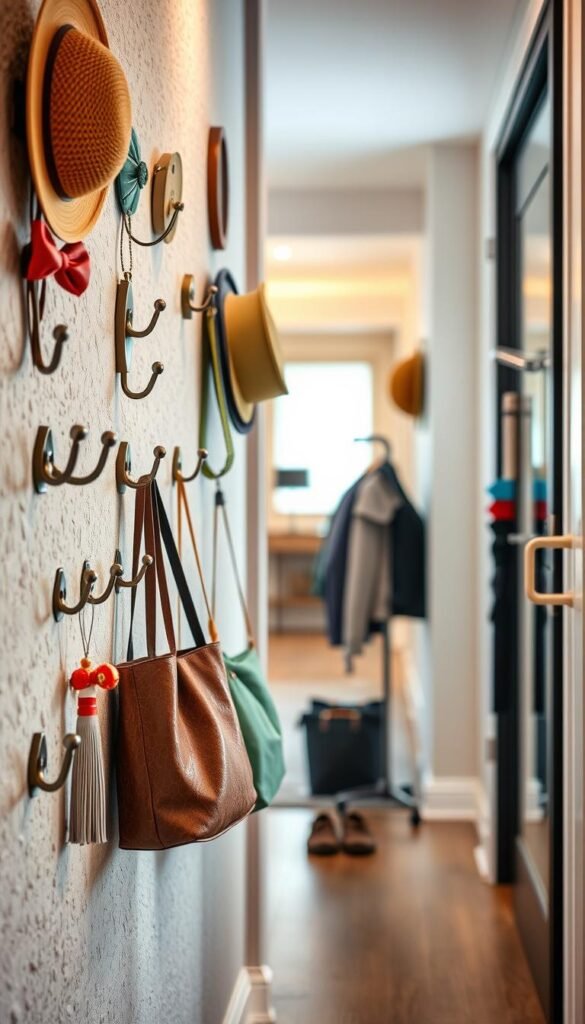
Install hooks at kids’ height so coats and bags land easily. Hooks work with one hand. Kids gain independence. Adults add a top row for taller items.
Number or name each hook. Add matching wall baskets beneath for gloves and hats. This assigns spots and keeps small gear from piling up on the floor.
- Go vertical: hooks clear the floor fast.
- One coat per person on a hook. Extras live in the closet.
- Slim ledges hold keys, sunglasses, and leashes without sticking into the walkway.
- Use sturdy anchors and line hooks with studs when possible.
Quick setup steps
- Pick a wall strip and measure for two rows if needed.
- Mount a lower row at child height for coats and small bags.
- Add numbered hooks and a basket per spot for hats and mittens.
- Place a slim shelf for keys and leashes at eye level.
“Bag on hook. Keys on ledge. Leash by the door.”
Shoes under control: baskets, cabinets, and better boot trays
A tidy shoe system frees the floor and makes leaving the house calmer. Pick one clear place for shoes by the door. Keep the rest of your home simple and uncluttered.
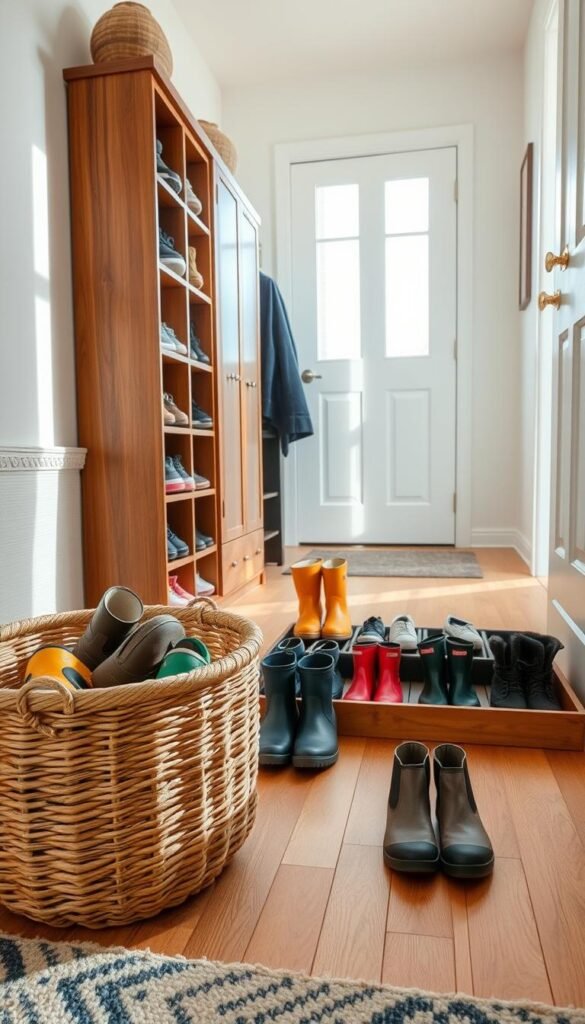
Closed shoe cabinet as a slim, tidy solution
Why choose a cabinet: it hides pairs and uses vertical storage. A slim cabinet like IKEA HEMNES tucks against a wall. The top becomes a tiny console for a single tray.
Use the cabinet when space is tight. Store bulk pairs in the closet. This keeps the floor clear and neat.
One open basket per person for everyday pairs
For busy families, give everyone one open basket. Kids toss shoes in fast. Adults grab a pair and go.
- Label each basket with names.
- Keep only current pairs in the basket.
- Rotate off-season shoes to the closet.
Upgrade the boot tray: copper looks and river stones for drainage
Place a tray by the door for wet footwear. A copper-look tray upgrades the style. Add river stones so meltwater sinks below shoes.
Keep a small cloth nearby for quick wipes. Tuck a bin for gloves and accessories close by. Do a two-minute Friday check. Shake out baskets and clear stray pairs.
- Pick the system that fits your space and budget.
- Set one basket per person and label it.
- Use a tray with stones for wet shoes; clean it weekly.
“One basket. One tray. Clear floor.”
Console table and catchall trays that actually work
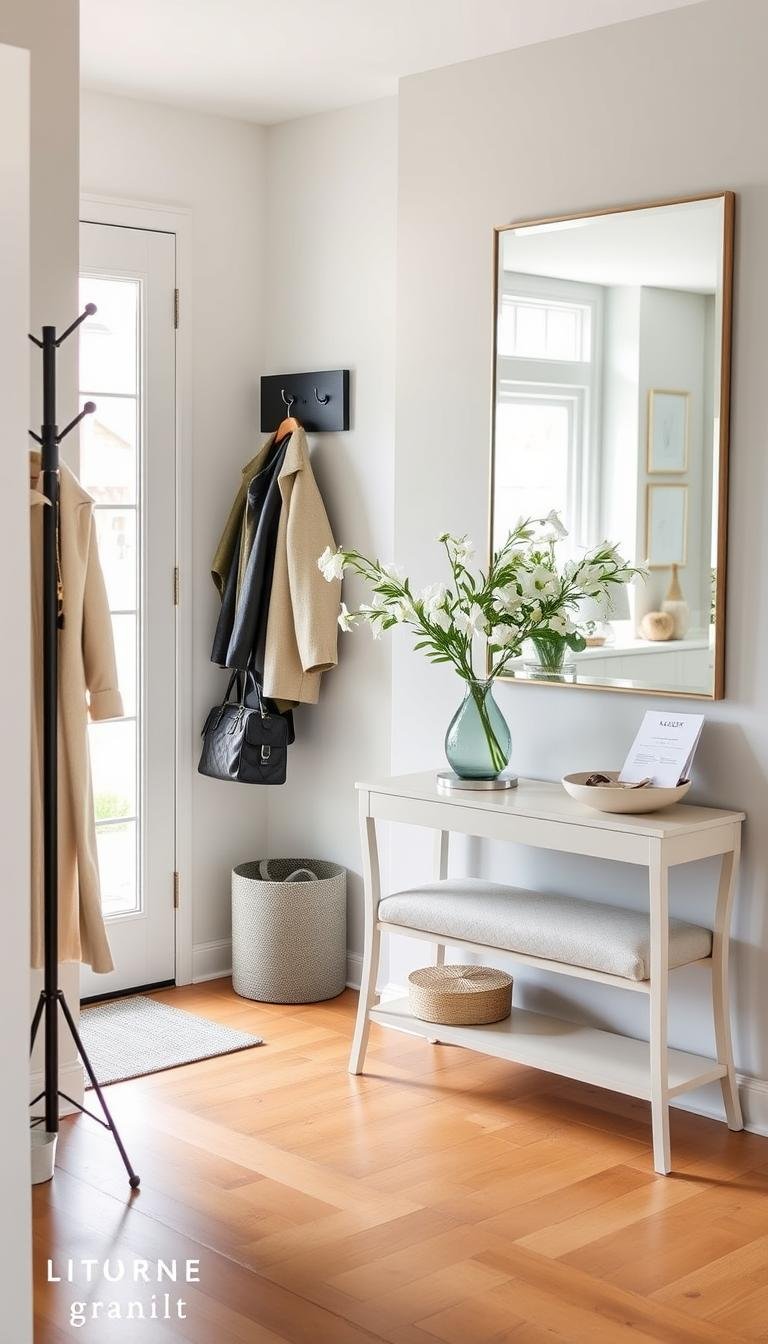
A tidy console makes leaving and coming home feel easier. Use a slim piece of furniture that fits your wall and leaves space to pass. This becomes the calm place for daily gear.
Tray for keys, wallet, and headphones
Tray for keys, wallet, and headphones
Set one small tray on the console top. Keep only essentials there: keys, sunglasses, wallet, and a pair of headphones. Let the tray be the single open surface. Clear it each night.
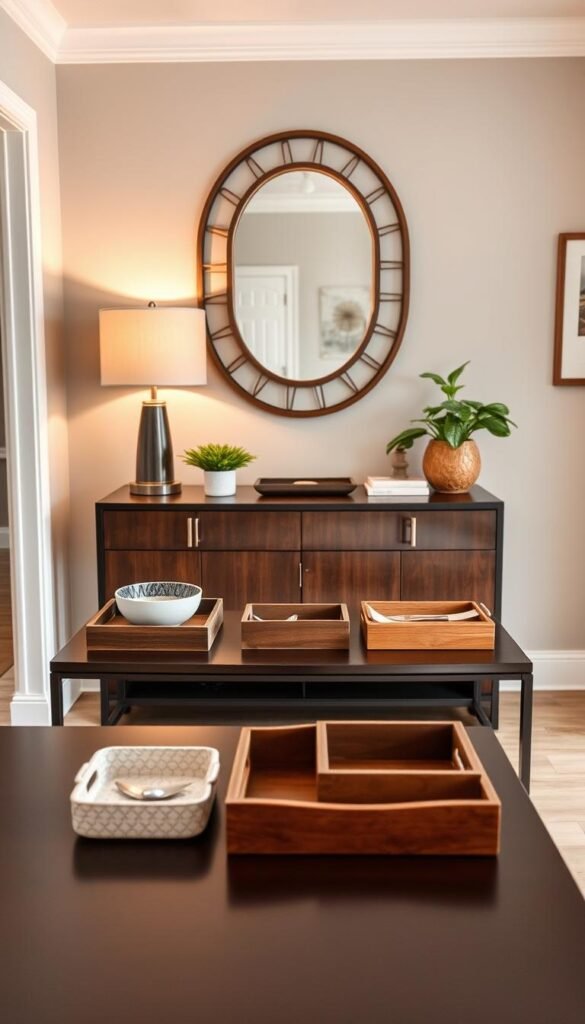
Labeled bins in or under the console
Use labeled bins inside or beneath the console. One bin for mail. One for tech. One for bags or pet gear. Labels make habits stick. They stop piles from forming on the floor.
Add a mirror to open up small spaces
Mount a mirror above the console. Mirrors brighten and make a small entryway feel larger. They also catch a last check before you walk out the door.
- Measure length and depth before you buy the console table.
- Add a single tray on top. Keep it clear each evening.
- Place a small wall hook beside the console for a daily coat or leash.
- Keep design soft: one plant. one photo. minimal clutter.
“One tray. One bin. One quick reset.”
- Choose furniture that sits flat and stable by the door.
- Personalize zones for work badges and gym bags.
- Do a one-minute reset every night. Wipe, sort, tuck away.
Entryway Organization Ideas for paper, mail, and schoolwork
A simple in/out system saves you time and clears the day. Keep the approach light. Pick one small spot near the door or console table for first sorting.
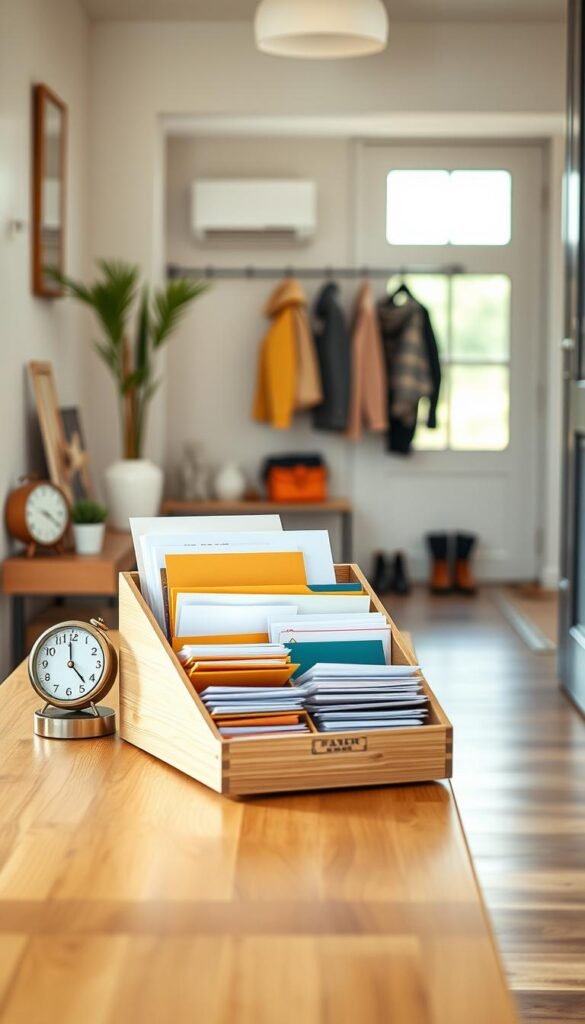
Create a simple in/out flow you can keep up with
Set two labeled bins: IN and OUT. New paper goes to IN. Signed forms and ready-to-mail items go to OUT.
Process paper at a set time each day. Two minutes is enough when the piles stay small. Scan important pages to Evernote or a folder. Recycle the rest.
Pegboard or wall organizer with hooks, ledges, and bins
Choose a wall-mounted organizer or a pegboard. Add hooks for keys and bags. Fit small ledges for mail and a clip for permission slips.
Use minimal supplies. One pen. One sticky pad. One letter opener. This keeps the command center calm and useful.
If space is tight, move the command center to the kitchen
When the foyer is small, place the full command station in the kitchen. Keep only today’s mail by the door. That way the door area stays uncluttered.
- Set two bins: IN for new, OUT for ready items.
- Label everything: clear labels stop clutter.
- Empty OUT each morning: mail it or tuck into backpacks.
- Review schoolwork weekly: keep favorites; photograph the rest.
| System | Best for | Key parts |
|---|---|---|
| Mini wall station | Small foyers | Hooks, one ledge, IN/OUT pockets |
| Pegboard command center | Families with papers | Reconfigurable hooks, bins, clip ledges |
| Kitchen command zone | Tight entry spaces | Tray at door, full station in kitchen |
“Two simple bins and a two-minute habit stop piles before they start.”
Bench, hall tree, and small-space wins
A compact seat with hidden storage makes shoe routines calmer and faster.
Pick a bench that lets you sit while you put on shoes. A bench with hidden storage keeps gloves, hats, and spare laces close. It reduces visual clutter and gives you one simple surface to use each day.
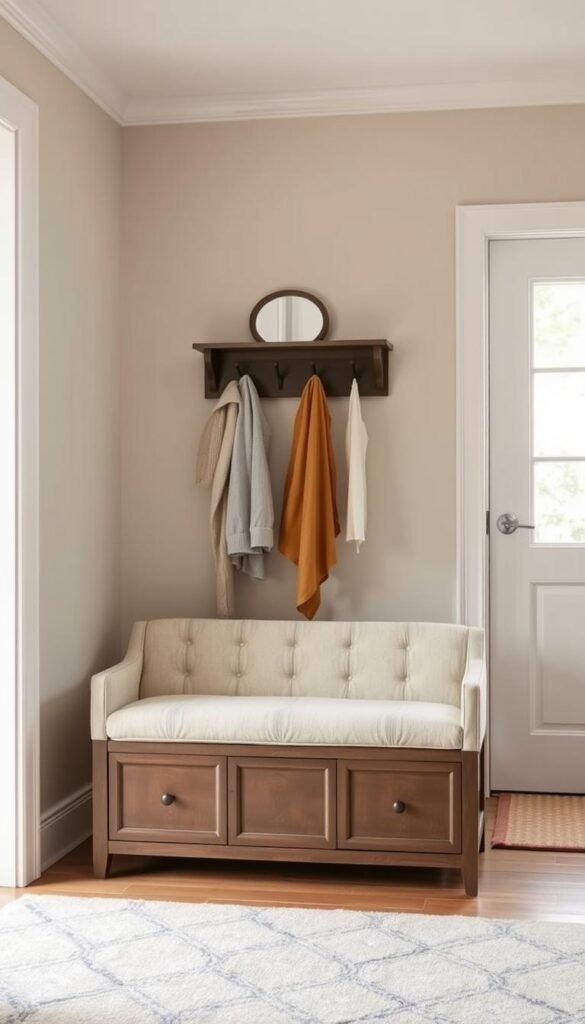
Bench with hidden storage for shoes and gloves
Choose a bench with a lift-top or cubbies. Slide a labeled basket under it for each person. One reach. One motion. Add a washable cushion for comfort. Do a quick Sunday sweep. Empty crumbs and fluff the cushion.
Right-size a hall tree: measure width, depth, and height
Consider a hall tree when you need hooks, cubbies, and drawers in one furniture piece. Measure width, depth, and height before you buy. Leave room to open doors and to move without bumping into coats or bags.
- Assign one hook and one cubby per person.
- Use upper hooks for adult coats and lower hooks for kids and daily bags.
- Keep only current-season items here; move extras to the closet.
| Solution | Best for | Key feature |
|---|---|---|
| Lift-top bench | Small foyers and halls | Hidden storage for shoes and gloves |
| Bench + baskets | Busy families | Labeled baskets under seat for one-step access |
| Compact hall tree | Tight corners | Hooks, cubbies, and drawers in one furniture piece |
“Place the bench where shoes come off naturally. Reduce steps. Increase success.”
Weather-ready: umbrellas, mats, and quick resets
Keep wet gear corralled so the floor stays safe and calm. A small plan prevents muddy shoes and dripping umbrellas from turning into a bigger chore. Use a few thoughtful tools and a simple nightly reset.
Umbrella stand: Place one by the front door. Pick a stand that fits both full-size and compact umbrellas. It keeps water off the floor and saves quick trips to grab a dry one.
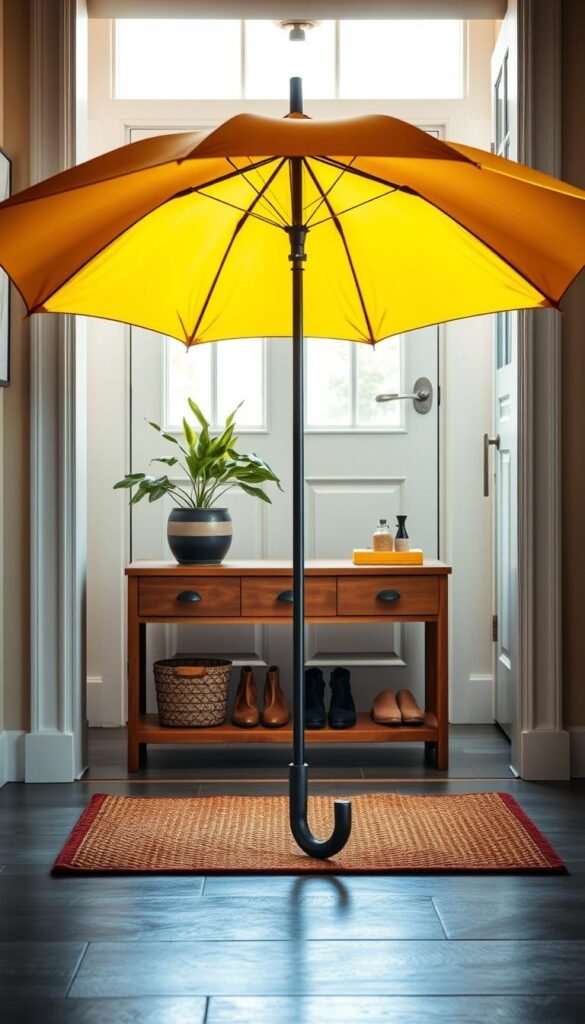
Quick tools that make wet days easy
- Set an absorbent mat to catch drips and protect the floor.
- Keep a boot tray for wet shoes on stormy days. Empty and wipe it each night.
- Add river stones to the tray. They lift boots and speed drying.
- Tuck a small towel in the stand to blot handles and hems fast.
Small-space tips and a gentle habit
If your area is tiny, choose a slim corner stand so vertical storage saves space. Hang one wall hook above the tray for a rain jacket. Rotate seasonal gear so heavy boots move out in spring and sunscreen moves in for summer.
Wet-day reset: Five minutes after dinner. Dump tray water. Shake the mat. Wipe the stand. Quick steps keep the spot ready for the next forecast.
| Tool | Best for | Care tip |
|---|---|---|
| Umbrella stand | Front door placement | Dry and air weekly |
| Absorbent mat | High-traffic floors | Shake and wash monthy |
| Boot tray + stones | Wet-weather shoes | Empty nightly; clean weekly |
| Slim corner stand | Small spaces | Use vertical storage; keep towel inside |
“Simple tools and five-minute habits keep your entryway ready for any forecast.”
Gentle daily, weekly, and monthly routines
Short, repeatable rituals make upkeep feel effortless. Small habits protect your calm. They take little time. They stop piles from growing.
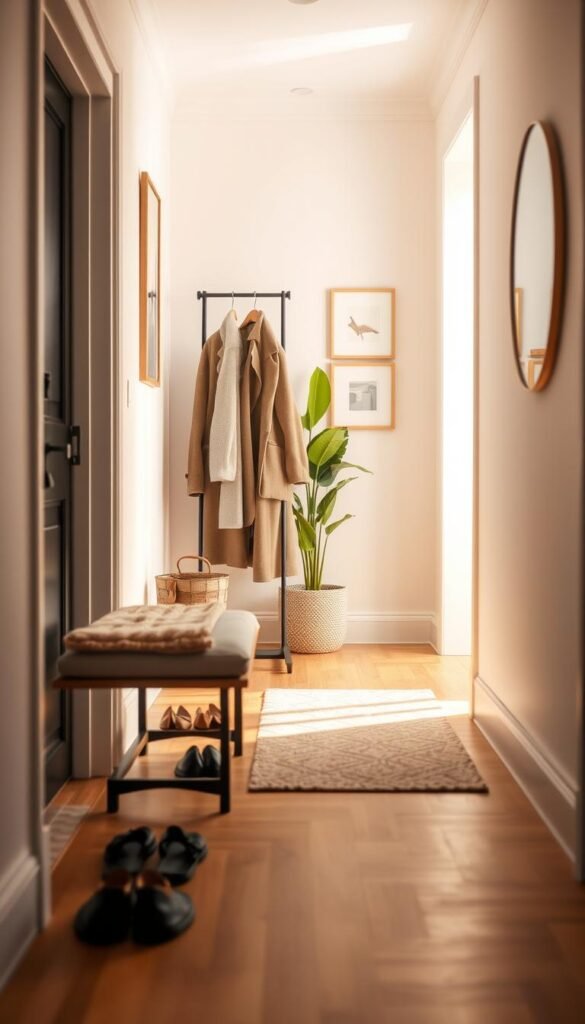
Daily three-minute reset
Do this each evening. Hang bags. Return keys to the tray. Sort the IN bin for 60 seconds.
Put shoes into baskets. Do a quick sweep of the place. A three-minute pause saves time tomorrow.
Weekly light tidy
Spend ten minutes on a light refresh. Clear the console. Wipe the mirror. Empty the OUT bin.
Shake mats. Check the boot tray. Recycle flyers and reset any labels that need it.
Monthly declutter and style refresh
Take twenty minutes once a month. Declutter one category. Rotate seasonal wear. Tighten loose hooks.
Donate one small bag. Add a fresh plant or photo. These simple acts keep the home feeling welcoming over the years.
- Gentle cue: set a phone reminder labeled “soft reset.”
- Keep tools nearby: wipes, extra labels, small trash bag.
- Use the same order: it reduces decisions and saves energy.
- Teamwork: ask family to help for two songs on Sundays.
“One tiny win keeps momentum.”
Room-by-room tie-ins to support your entryway
Let nearby rooms do the heavy lifting so the front spot stays light. Move certain tasks and gear out of the way. This keeps the daily flow calm.
Closet
Switch to matching hangers for a tidy look. Add a rod extender to double hanging space. Put longer coats on the top rod and shorter items below.
Mount hooks inside the closet door for bags and small backpacks. Use one labeled shelf with bins for hats, mittens, and shoe care accessories.
Kitchen
If the entry is small, move the full paper organizer to the kitchen. Add a small calendar and a mail bin. This keeps the door area clutter-free and still gives you a command spot.
Garage or mudroom
Store bulky sports gear and off-season items in the garage or mudroom. Keep only light daily items at the front. This gives the main area more breathing room.
Bathroom, bedroom, and pantry
Keep a mini caddy in the bathroom for sanitizer and tissues. Refill the entry tray weekly from that caddy.
Rotate seasonal coats and hats in the bedroom closet each month. Store dress shoes in the bedroom and leave daily pairs by the door.
Hang reusable bags in the pantry or tuck them in a low cabinet near the exit for quick grabs.
Small extras that help
- Add a narrow bench on a hallway wall with a basket beneath for quick seating and shoe storage.
- Place a spare labeled hook near the interior garage door for backup keys.
- Adjust organizers as life changes. One small swap in the right room can ease the whole system.
“A little shift in a nearby room keeps the daily front spot calm.”
Conclusion
A small change at the door can lift the whole mood of your home.
Start with one tiny, kind step. Hang two hooks. Place a single tray. Breathe. These moves use vertical space and clear the floor fast.
Assign spots. Label a basket. Keep one daily coat on a hook. Move extras into closets or the garage. Fewer choices feel easier.
Keep routines short. A nightly two‑minute reset stops piles. Soft finishes and a tidy tray make you want to keep the habit.
Try one of these entryway organization ideas today. Small shifts change the way your house greets you. Adjust as life changes. You can create calm in any of your entryways, one simple step at a time.
FAQ
How do I decide what the front door area should be for?
Start small. Think of the space as a calm drop zone for daily essentials. Keep only what you use coming and going. Keys, a wallet, shoes you wear most, and a weather item like an umbrella belong near the door. Move seasonal or bulk items to a closet, garage, or mudroom.
What’s a quick setup to make a usable drop zone?
Choose one surface or wall as the spot. Add a small tray or console for keys and sunglasses. Hang a few hooks at mixed heights for coats and bags. Put a bench or basket for shoes. Label or assign spots so everyone knows where things go. Keep it calm and simple.
Which items should stay by the door and which should be moved elsewhere?
Keep everyday items: keys, one pair of shoes per person, a light coat, sunglasses, and an umbrella. Move extras: seasonal boots, bulky sports gear, large mail piles, and most paperwork. Use the kitchen or a closet for overflow and the garage for big equipment.
How high should I install hooks for kids and adults?
Install lower hooks around 3 to 4 feet high for kids. Place adult hooks at about 5 to 6 feet. Use a row of mixed heights if space allows. This makes coats and backpacks easy to reach for everyone without cluttering the floor.
What’s the benefit of numbered hooks or wall baskets?
Numbered hooks give each person a clear spot. Wall baskets assign places for mittens, hats, and masks. They reduce decision fatigue. They also make it easier for kids to put things away on their own.
How do I keep keys, sunglasses, and leashes from getting lost?
Use a slim shelf or floating ledge dedicated to small items. Add a shallow tray for loose bits. Consider a hook for leashes just below the ledge. Keep one consistent spot and you’ll find things faster.
What’s the best shoe storage for a narrow entry?
A closed shoe cabinet keeps the area tidy and slim. If you prefer open solutions, use one basket per person for daily pairs. Place a boot tray for wet shoes. Choose vertical storage to conserve floor space.
How can I improve a boot tray for messy weather?
Upgrade to a tray with a raised grid and drainage. Metal trays in copper tones or trays with river-stone liners look homey and help water drain. Place it near the door and empty it often to avoid odor and buildup.
What should I keep on a console table to avoid clutter?
Limit it to a tray for keys, wallet, and headphones. Add one small bowl or hook for daily jewelry. Use labeled bins under the console for overflow like masks or small charging cords. Keep surfaces mostly clear to stay calm.
Do mirrors help small foyers?
Yes. A mirror opens the sightline and brightens the area. It also gives a last-minute check before you leave. Choose a simple frame that matches your style so the space feels peaceful.
How do I handle mail, schoolwork, and paper in this space?
Create an in/out flow. Use a wall-mounted organizer or pegboard with slots for incoming mail and a tray for outgoing items. Empty it daily. If space is tight, move the command center to the kitchen where you already spend time.
What’s a small-space solution for seating and storage?
A slim bench with hidden storage is ideal. It gives a place to sit while removing shoes and hides baskets or bins inside. If you have a narrow hall, choose a short-depth hall tree with hooks above the bench for coats.
How do I store umbrellas neatly by the door?
Use a tall umbrella stand that fits the corner or a slim wall-mounted holder. Look for waterproof liners or a tray beneath to catch drips. Keep an umbrella for both compact and full-size needs close to the exit.
What are easy daily, weekly, and monthly routines to keep this area calm?
Daily: do a three-minute reset. Put items in their spots and clear surfaces. Weekly: quick tidy and empty trays or boot mats. Monthly: declutter, swap seasonal items, and style refresh. Small routines prevent overwhelm.
How can other rooms support my entry setup?
Use the closet for bulk coats and a rod extender for more hanging space. Keep a calm mail spot in the kitchen. Store sports gear in the garage or mudroom. Rotate seasonal hats and coats from the bedroom closet. Keep reusable bags in the pantry near the exit.