Declutter Your Entryway Fast
You come home tired. You want calm. Small routines can change a busy space into a gentle welcome. These simple systems fit real life. They work in minutes and build steady peace.
Start with one clear area by the door. Spend ten to twenty minutes each day or a focused 30–60 minute session once a week. We use tiny habits: one basket for shoes, one bowl for small items on the table, and a three-slot mail spot.
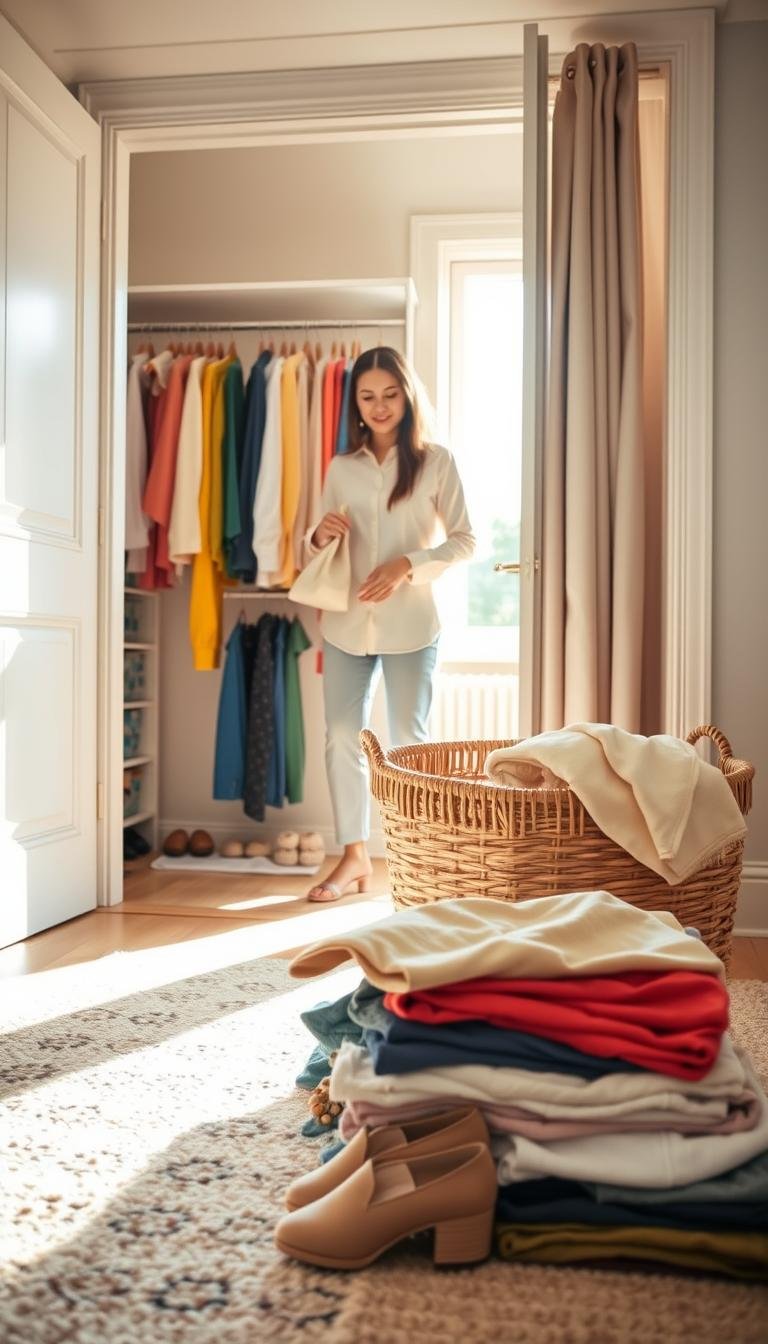
Work the closet next. Keep only current coats and go-to bags. Move extras deeper into the house or schedule a donation pick-up to set a gentle deadline.
This plan fits busy schedules. It breaks tasks into daily, weekly, and monthly rhythms. Little steps make big calm. By tonight, you’ll have a clearer area and a softer welcome for you and your guests.
Key Takeaways
- Use short, focused sessions to reduce clutter and stress.
- Create simple storage: a shoes basket and a small bowl on the table.
- Adopt daily, weekly, and monthly rhythms for upkeep.
- Limit closet items to current coats and go-to bags.
- Book a donation pick-up to keep progress steady.
- Small changes give immediate calm for you and your guests.
Start Here: A Calm, Five-Step Reset
Open a timer and follow five simple moves to restore order. This small system keeps the task gentle. You can do one 20-minute block now and repeat later in the day or tomorrow. Short sessions add up without pressure.
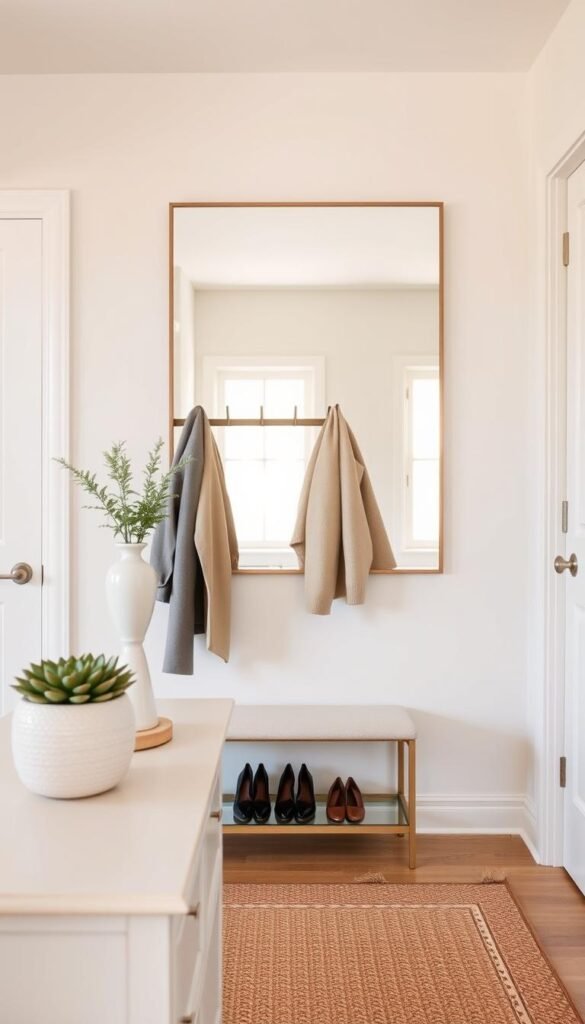
Step-by-step: Remove, Sort, Contain, Assign, Reset
Remove. Set a 20-minute timer. Pick up everything from the floor and surfaces. Place items in a single bin so the space clears fast.
Sort. Make three quick piles: keep, relocate, donate. No heavy thinking. If you hesitate, tag it “decide later.”
Contain. Use a bowl, bin, or tray. Shoes together. Keys and earbuds together. Mail together. Light containment makes instant order.
Assign. Give each group one home. A hook for the daily bag. A tray for small essentials. A basket for active shoes.
Reset. End with two minutes of tidy. Return containers. Wipe the surface once. Breathe. This small way of working makes repeatable progress.
- Work in 20-minute blocks. Stop when the timer ends.
- If more remains, schedule another short block the next day.
- Book a donation pick-up this week to move items out.
Essentials You Need: Simple Bins, Trays, and Hooks
Start with a few calm containers that do most of the work. Keep choices minimal. One or two pieces will change how the area feels. Soft materials and light colors help the space stay peaceful.
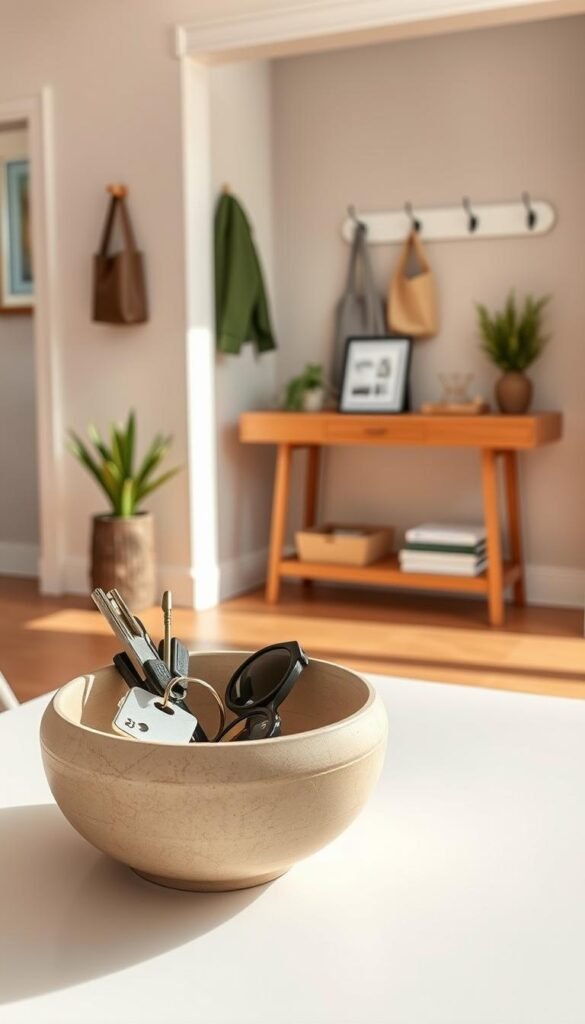
Catch-alls: bowl, tray, ring dish for small items and keys
Use one bowl for keys and earbuds. Add a small tray or ring dish beside it for loose coins or tiny items so they don’t scatter.
Baskets and bins: right-sized for shoes, bags, and mail
Choose one open basket for daily mail. Keep capacity small to force weekly sorting.
Pick a narrow bin for active bags. Place it where you step in most. Label each container with calm words: Keys. Mail. Shoes.
- Match materials to your design: light wood or white ceramic bowls feel soft and clean.
- Use soft bins inside a console to subdivide gloves, sunglasses, and dog gear.
- Keep one thing per container. Clear labels save time and reduce decision fatigue.
Use Your Wall: Slim Racks, Shelves, and Vertical Space
A slim wall system can give you hooks, a ledge, and a place for small items without crowding the floor.
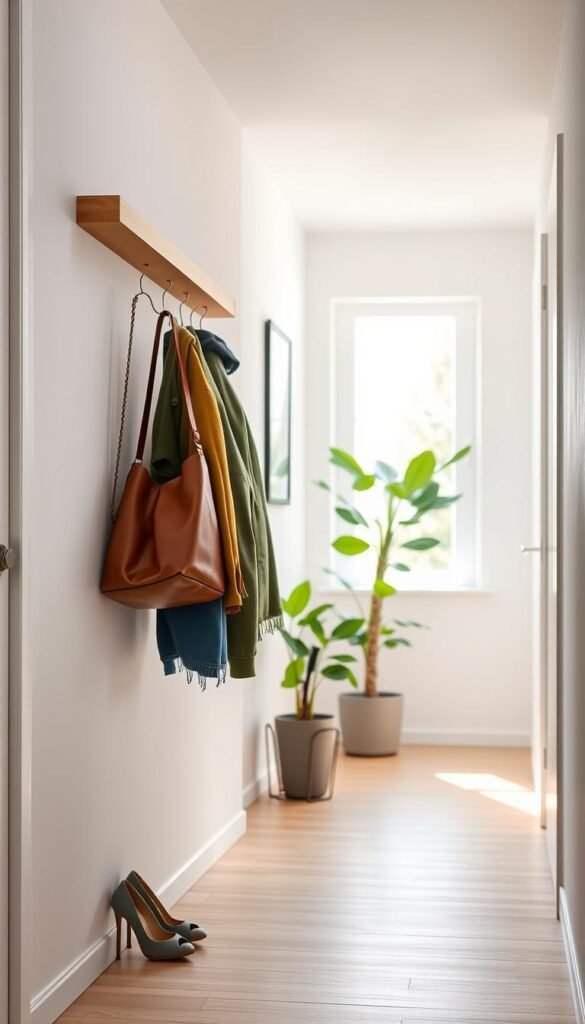
Pick one neat rack that combines a ledge and hooks. The Scout Regalia SR Wall Rack is 17.5 inches wide and only 2.5 inches deep. It holds up to 50 lb on drywall and is stronger on a stud. This kind of piece clears floor clutter and keeps sightlines calm.
For heavy coats, choose a vertical rail like the Schoolhouse Mollie 6 Hook. It is compact yet strong. Mount it on a stud when you plan to hang bags or winter outerwear.
Consider a narrow shelf such as the Most Modest Walter. Five inches of depth gives light function without crowding the wall. Above the door, add a floating shelf with two small baskets for seasonal hats or spare masks.
“Mount into a stud for heavy loads. Use anchors only within their listed capacity.”
- Magnetic key racks work on metal doors for no-drill use.
- Choose one wall system and stop. Fewer pieces feel calmer.
Surface Strategy: Console Table, Pedestal, and a Clear Top
Keep the table tidy so coming home feels easy. Choose one surface and treat it as a calm landing. A wide pedestal or a narrow console table works. Let the top stay mostly open.
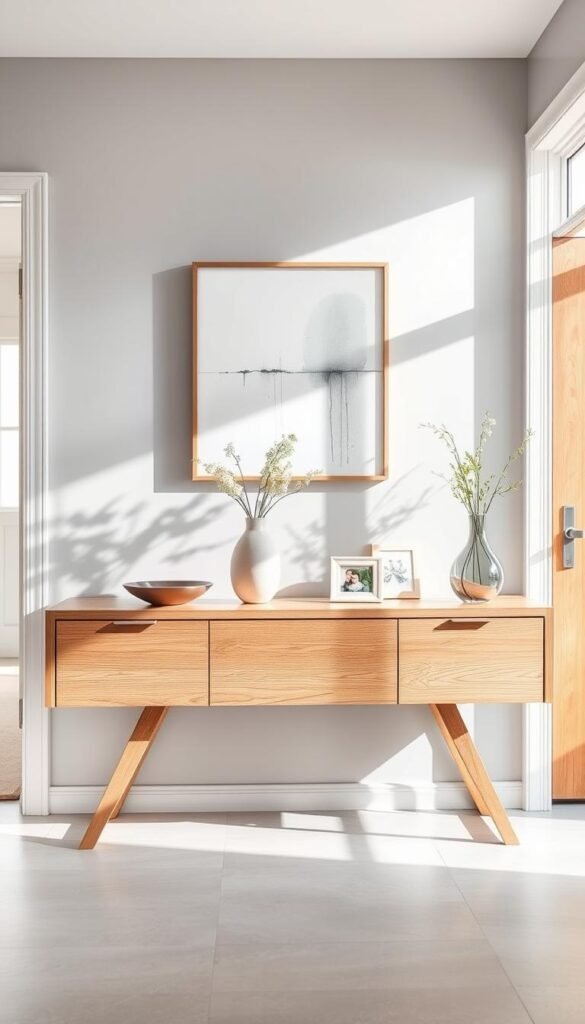
One-in, one-out decor
Limit decor to one small piece. Pick a plant or a candle. Not both. This simple rule lowers visual noise. It makes wiping the top faster.
Reusable dispensers and simple catch-alls
Place a refillable sanitizer at the back corner. It looks polished and cuts plastic waste. Add a tiny tray for wallet or badge and one small bowl for keys.
- Store backup items inside the console, not on it.
- Clip cords under the table for visual quiet.
- Wipe the top during your nightly reset.
| Surface Type | Best for | Top setup |
|---|---|---|
| Wide pedestal | Single item + sanitizer | Dispenser at back, bowl + tray |
| Narrow console table | Small spaces | One plant or candle, plus catch-alls |
| Console with storage | Hidden extras | Labeled bin inside; clear top |
Shoes in Order: Right-Size the Bin and Set a Limit
Make shoes easy to drop and go with one clear, simple solution. Pick one helpful piece of storage and stick with it. This keeps the path open and the routine small.
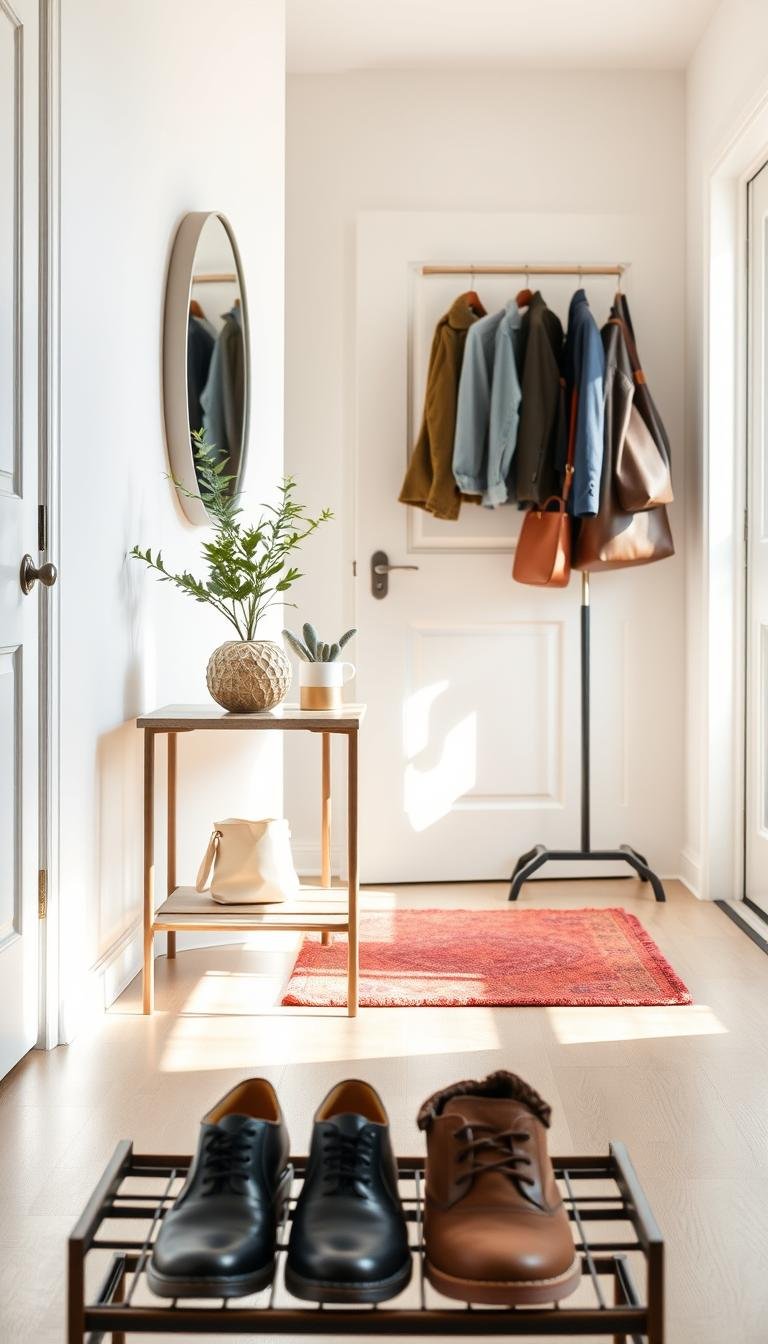
Fast choice: an open basket, a pop-up tote, or a low rack. Choose only one. The simpler the container, the faster shoes disappear.
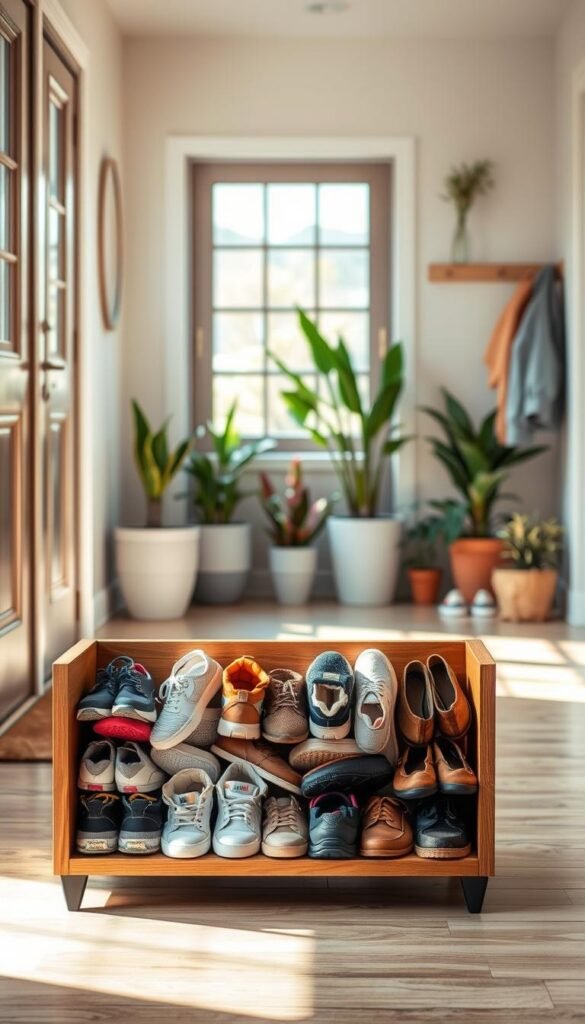
Practical tips for quick upkeep
Right-size the container so larger shoe sizes lay flat. A pop-up tote stacks teen shoes neatly. Wider bins prevent jams.
Label by person or size. Kids help when they can see their name. A clear label removes the question of where to put each pair.
- Set a soft limit: two pairs per person by the door. Extras live in the bedroom closet.
- Place the bin out of the door swing to keep the path clear and safe.
- Keep sports bags nearby but separate from shoes so laces don’t tangle.
- Do a 30-second shoe sweep each night. Toss pairs in and stop there. Good enough keeps order.
- If space is tight, use a low rack under a wall shelf to add storage without crowding the floor.
Mail and Paper Flow: Entry-to-Desk in Two Moves
Make the mail decision where you walk in so paper never migrates to counters.
Place a slim shelf or tray near the door. Choose one small organizer about 12 inches wide and 3.5 inches deep. Add hooks if you like a catch-all for light items.
Three slots: In, Action, Out
In holds true items you bring home. Junk goes straight to recycle. Make that call at the door.
Action holds bills and forms you must handle. Keep stamps and a pen in a tiny pouch on that ledge.
Out holds stamped mail or returns ready to leave. One slot keeps things moving.
Weekly sweep: recycle, file, shred
Keep the holder small so it nudges you to act. Do a five-minute sweep each week. Recycle, file, shred. If you need more room, add one labeled file in your office. Stop stacking on other surfaces. One tray. One spot. A calmer entryway for everyone.
| Slot | Primary use | Weekly action |
|---|---|---|
| In | True mail and needed items | Sort: keep or recycle |
| Action | Bills, forms, to-do papers | Handle or file |
| Out | Ready-to-send letters, returns | Take with you when you leave |
Keys and Small Items: Design a No-Think Landing Zone
Let one slim shelf and a few hooks do the remembering for you. Make arrivals and departures smooth. Keep the system at eye or hand height. That makes it easy. No extra thought required.
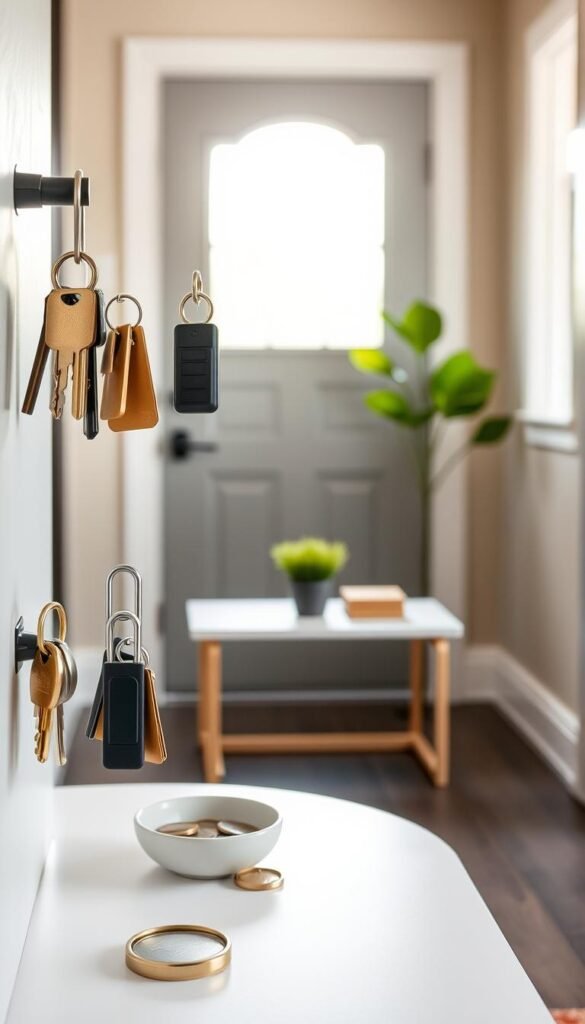
Choose a single slim rack with a tiny ledge. The hooks hold keys and a badge. The ledge holds sunglasses or earbuds. Mount it on the wall near the door but out of the swing. A small panel keeps the zone tidy and visible.
For renters, consider a magnetic key rack such as the Yamazaki Rin. It can mount with screws or stick to a metal door and holds about 4 lb. If you like modular design, Ilan’s The Control Panel offers light magnetic hooks and a stronger fixed hook for heavier bags.
“Empty pockets into this spot as soon as you walk in. No thinking. Just drop and go.”
- Mount one slim rack with a tiny ledge. Hooks hold keys and a badge.
- If you avoid drilling, use a magnetic rack on the metal door to free your hands.
- Assign one hook per set of keys. Label if needed to stop the “Where are my keys?” loop.
- Keep one hook for a daily bag only. Don’t hang coats here.
- Place the rack near the door but away from the swing so items don’t bump.
- When the ledge fills, move extras into their bins inside the console.
Light and Mirrors: Make the Space Feel Open
One well-placed mirror plus a soft light makes the space read larger. Wall mirrors bounce daylight and brighten a dim room without taking floor space. A slim mirror also gives you a quick outfit check before you go.
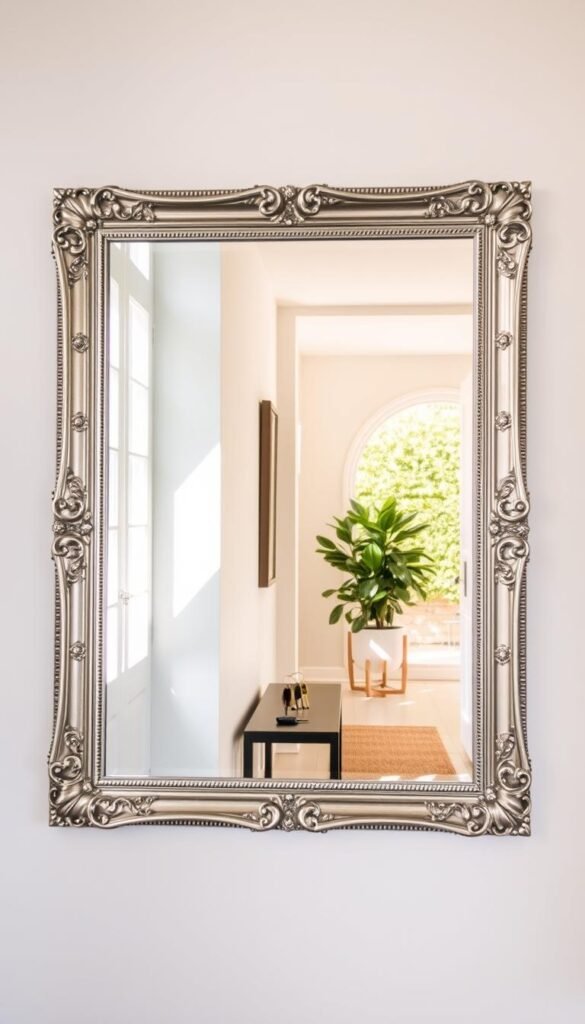
Wall mirror to bounce light and check outfits
Hang a single mirror at eye height. It reflects light and helps guests see into the room at once.
Choose a narrow frame for small homes. A thin edge looks calm and keeps the design quiet.
Warm lamp or overhead track for dim spaces
If the area feels dark, add one warm lamp or a slim track light. Warm bulbs feel kind after a long day.
Place the mirror across from the light. That doubles the glow and makes the space feel bigger.
- Hang one wall mirror at eye height for a quick outfit check.
- Add a warm lamp or a slim track light if the space is dim.
- Place the mirror across from the light to open the room.
- Keep fixtures simple to match your design and avoid visual clutter.
- A narrow frame reads quiet and clean in a small home.
- Avoid placing lamps where bags or coats will knock them. Safety first. Calm always.
- Wipe the mirror during your weekly sweep. Clear glass helps the whole space look fresh.
- Good light helps guests feel welcome and helps you find what you need fast.
“Light and reflection make even a small room feel more generous.”
Family Systems: Kids, Coats, Bags, and Daily Gear
Set one simple rule for the whole family. Give each person one hook and one bin at a reachable height. Labels remove the question and make mornings faster.
Per-person hook and bin. Lower hooks for kids. Use locker-style cubbies or shallow bins. Put names or photos on each spot so everyone knows their home for coats, bags, and a shoe.
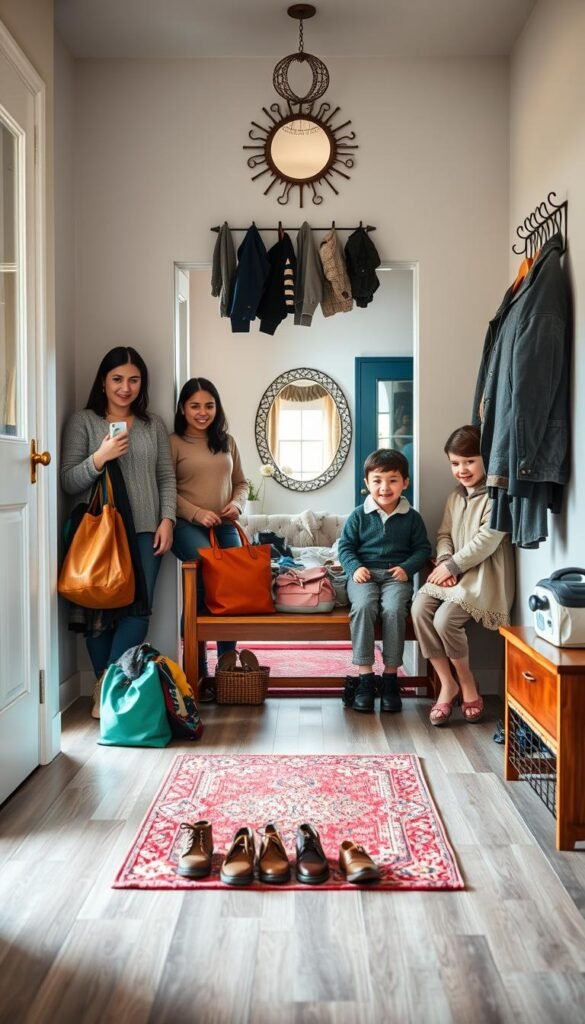
Kind reminders: suggest, don’t police
Offer choices instead of commands. Try: “Your hook or your bin?”
Short scripts like this invite cooperation. Kids respond better to a gentle nudge than a list of rules.
Sports gear rule and seasonal rotation
Keep only current season items at the rack. Move off-season coats and bulky gear to the larger closet.
Use the quick checklist: do we love it, need it, want it, and have room? If not, pack it for donation with care.
- Give each family member one hook and one bin at kid-friendly height.
- Keep only current coats on the rack; rotate in rain or winter gear as needed.
- Assign a single spot for daily bags so they return there with less prompting.
- Set a one-minute evening reset per person to hang coats and stow shoes.
“Fewer decisions. More flow.”
Ten-Minute Daily Reset: Keep Entryways Clear
Use a short timer to make tonight’s tidy feel doable. This is maintenance, not a deep project. Do only what fits the time. Aim for visible wins you can repeat each day.
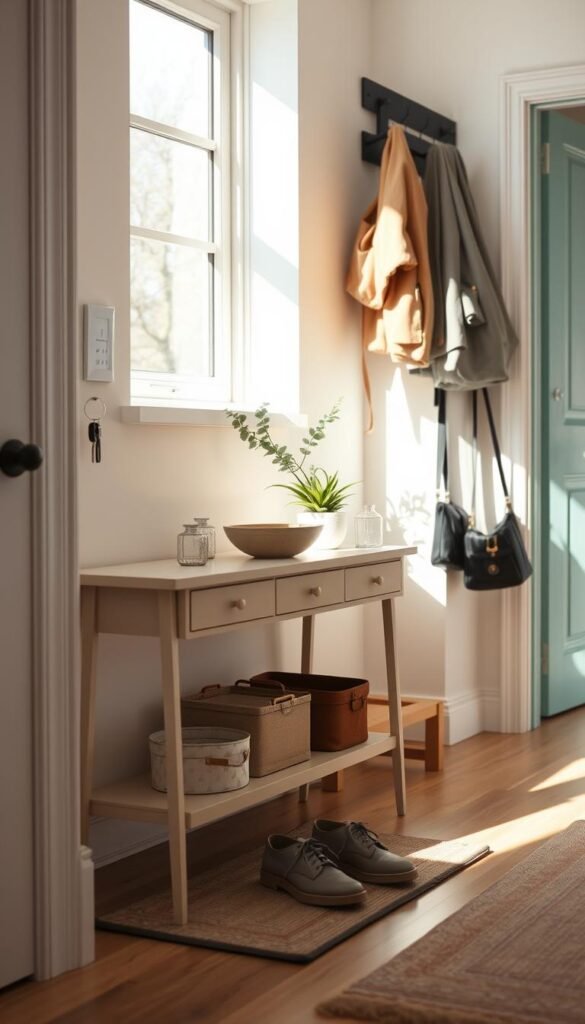
Mini checklist: shoes corralled, mail sorted, surfaces cleared
Set a 10-minute timer. Focus on the doorway zone and move on when the bell rings.
- Shoes: Kick pairs into the bin. Straighten them so the basket reads neat.
- Mail: Recycle junk now. Put one Action item on your desk. Save the rest for your weekly sweep.
- Keys and small things: Drop keys in the bowl. Place sunglasses on the ledge.
- Hang coats. Place bags in their spots. One motion per item keeps the flow steady.
- Return a single stray thing to its room. That one move wins the night.
- Scan the floor once. Remove anything that blocks the path.
- End with two breaths. You did enough for the day.
| Task | Minutes | Immediate result |
|---|---|---|
| Shoes tidy | 2 | Clear path and neat basket |
| Mail sort | 3 | Less paper buildup |
| Surface reset | 3 | Keys, sunglasses, and a clean top |
| Quick sweep | 2 | Floor is clear; entryways feel calm |
Weekly and Monthly Routines: Gentle Upkeep
Spend ten focused minutes each week to keep this zone calm and useful. Small habits save time and make the room feel lighter.
Weekly: tiny checks that matter
Do these in one short pass on the same day. Treat it as a kind, low-pressure habit.
- Donate bag: Check it. Tie when full and set by the door for pick-up or drop-off.
- Wipe surfaces: Dust the shelf and console table. A quick wipe keeps the top feeling fresh.
- Mail: Spend five minutes to file and shred. Small piles stay small.
- Shoes and kids: Straighten shoes and check kids’ spots for outgrown items.
Monthly: a calm edit
Once a month, open the front closet and do a light edit. Move off-season coats and extra shoes to deeper storage. Keep only what you reach for now.
- Rotate coats by season. Heavier items out. Current needs in.
- Refresh baskets. Shake them out and re-label if a category shifted.
- Review storage: if a bin overflows, right-size it or remove extras from the house.
Small, regular rhythms protect your home from big clean days. These few minutes each week and month keep the area calm and usable. You’ll notice less stress and more ease at the door.
Declutter Entryway When Space Is Tight
When the footprint is small, go up instead of out. Use vertical lines and narrow pieces to keep the path clear. Small changes do big work in tiny spaces.
No-drill options: magnetic racks on metal doors
Try a magnetic rack like the Yamazaki Rin. It sticks to metal doors and holds about 4 lb. No drilling. It keeps keys and light mail off surfaces.
Slim storage: narrow wall shelves and vertical hooks
Pick a thin shelf five inches deep or less for mail and a wallet. A narrow vertical rack such as the Schoolhouse Mollie fits coats in inches not feet. Tall choices save floor space and add useful storage.
- Install an above-door floating shelf and tuck two small baskets for seasonal hats.
- Choose a multi-function rack with a ledge to hold sunglasses and a tiny tray.
- Keep only one shoe container. Rotate extra pairs from the bedroom.
- Limit pieces: one rack, one shelf, one basket. Fewer items feel calmer.
“Tall beats wide in tight spaces.”
These renter-friendly moves respect your floor plan and your time. Little nightly resets keep the space steady. Two minutes a night keeps small places working for you.
Conclusion
Conclusion
End with a promise: one place for each thing and a short nightly sweep. Trust the small systems. They work when you keep them gentle and simple.
Use vertical solutions like a slim rack or a magnetic organizer on the door. Put one bowl on the table for tiny items. Choose narrow shelves and reusable dispensers to free floor space and reduce visual noise.
Set limits for shoes and coats. Two pairs by the door per person. Only current coats on hooks. Move extras to the closet or a donation bag on schedule.
Follow the mail flow: In, Action, Out. Touch the zone for ten minutes each day and a brief weekly sweep. Support your family with low hooks and labeled bins. Little routines lift your home. Keep going. Your house will feel lighter the moment you walk in.
FAQ
How do I start a calm, five-step reset without feeling overwhelmed?
Begin with five simple actions: remove everything, sort into keep/donate/trash, contain like items in baskets or trays, assign each item a home, and reset the surface. Work in 20-minute blocks. Focus on one small zone. Breathe. You’ll finish faster than you think.
What small containers work best for keys and odds-and-ends?
Use a shallow bowl, ring dish, or small tray on a console table or wall ledge. A magnetic key holder or wall-ledge with hooks keeps keys, earbuds, and sunglasses handy. Choose one visible landing zone so you always know where things are.
How can I manage shoes when space is limited?
Pick one solution: an open basket, pop-up tote, or a low shoe rack. Keep a limit for each person. Label bins by name or size. Store out-of-season pairs elsewhere. This keeps the floor clear and makes daily choices simple.
What’s the easiest mail system to stop paper pileup?
Create three slots: in, action, and out. Tuck incoming mail into “in.” Move bills or things needing attention to “action.” Recycle or file “out.” Do a weekly sweep to shred junk and file essentials.
Can I use vertical space without drilling into walls?
Yes. Try over-the-door organizers, magnetic racks on metal doors, or adhesive hook rails rated for your load. Slim wall shelves that don’t require studs can hold light baskets. These options work well in rentals.
How do I keep surfaces like a console table looking calm?
Limit decor. Choose one plant or one candle. Add a bowl or tray for loose items. Use a reusable sanitizer dispenser that matches your finish. Clear the top every evening with a ten-minute reset checklist.
What are good mounting tips for heavier racks or shelves?
Mount into studs when possible for heavy items. Use proper drywall anchors for medium loads. If you’re unsure, a stud finder helps. For very heavy storage, consider a freestanding unit instead.
How do I set up a family-friendly system for kids’ coats and bags?
Install low hooks and labeled bins for each child. Keep daily gear at reachable heights. Use kind reminders instead of policing. Rotate sports gear seasonally so only current items live in the front closet.
What lighting and mirror tips make the area feel open?
Hang a wall mirror to bounce light and allow outfit checks. Add a warm lamp or a small overhead track light for dim spaces. Soft, warm bulbs create a welcoming feel without glare.
How often should I do quick upkeep to prevent clutter return?
Do a ten-minute daily reset: corral shoes, sort mail, clear surfaces. Weekly, check a donate bag and wipe shelves. Monthly, edit the front closet and refresh baskets. Small routines keep the space calm.
What are no-drill storage ideas for tight spots?
Use magnetic racks on metal doors, tension rods for lightweight hanging, and slim vertical hooks that stick with strong adhesive. Narrow freestanding shelves also fit slim halls and provide shoe or bag storage.
How many baskets or bins do I need for a small household?
Start with a few right-sized pieces: one catch-all tray, two shoe baskets, one mail bin, and per-person hooks or bins. Add a shelf basket above the door for light, rarely used items. Keep it simple and expand only if needed.