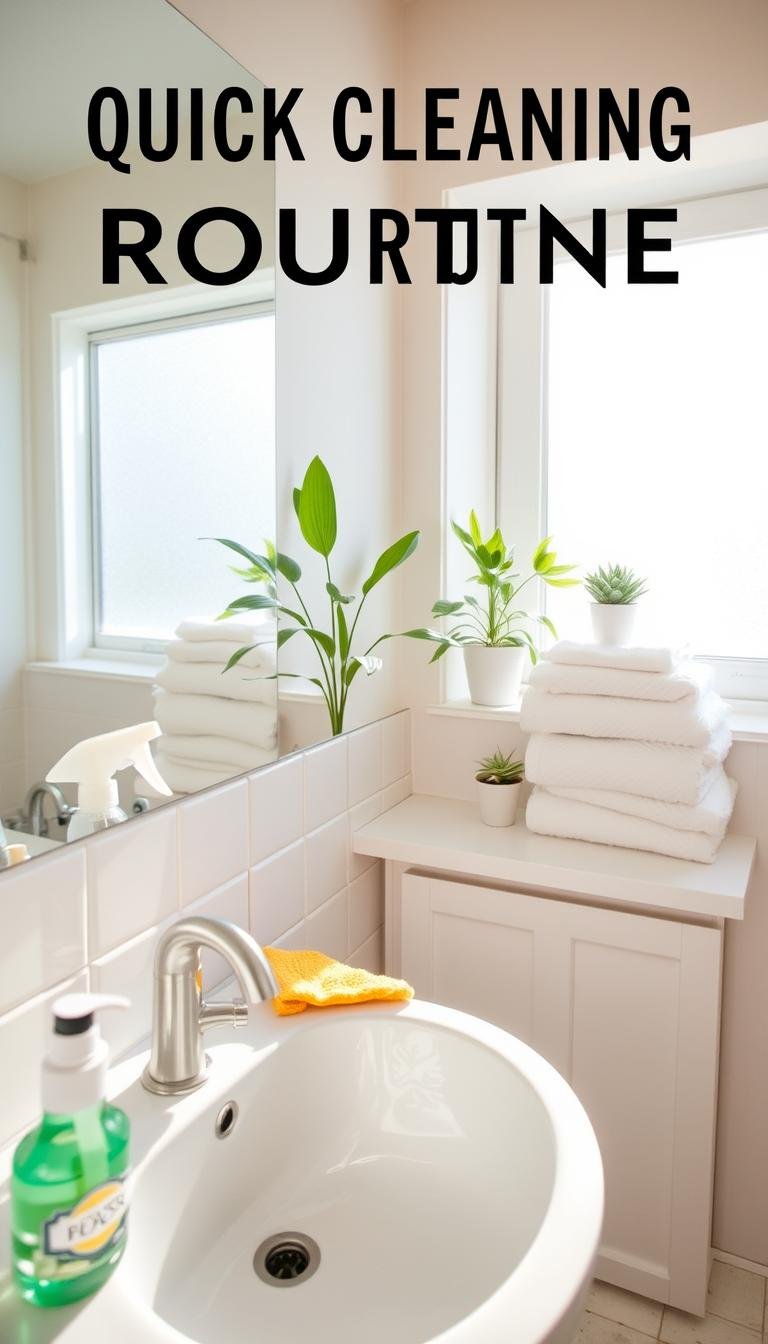

Daily Kitchen Cleaning Routine
You want a calm home that fits your busy life. This guide gives small, steady steps you can use each day. It promises simple, step-by-step systems for daily, weekly, and monthly rhythms. You’ll get room-by-room support to reduce overwhelm and feel peaceful tonight.
We keep it simple. Short tasks. Clear order. Gentle cleaners. A top-to-bottom flow saves time. Surfaces first. Floor last. Daily resets like wiping counters, rinsing the sink, and a quick sweep prevent buildup.
Weekly care covers mopping, sanitizing high-touch spots, and refreshing towels. Monthly steps add cabinet fronts and a coffee maker descaling with equal parts vinegar and water. Follow the checklists one step at a time. No pressure. Tiny wins add up.
Key Takeaways
- Small daily tasks prevent big scrubs later.
- Top-to-bottom order saves time and energy.
- Three layers: daily resets, weekly care, monthly refresh.
- Room-by-room checklists reduce overwhelm.
- Use gentle cleaners and steady habits for lasting calm.
Simple Tools and Cleaners for a Calm, Clean Kitchen
A small, well-chosen set of items makes daily upkeep quick and calm. Keep the kit light. Favor gentle, multipurpose products. Stash them where you will actually use them.
Minimalist kit: dish soap, a soft sponge, microfiber cloths, and a gentle multipurpose cleaner handle most jobs. Swap sponges regularly. Use a separate cloth for cabinets and appliance fronts to avoid streaks.
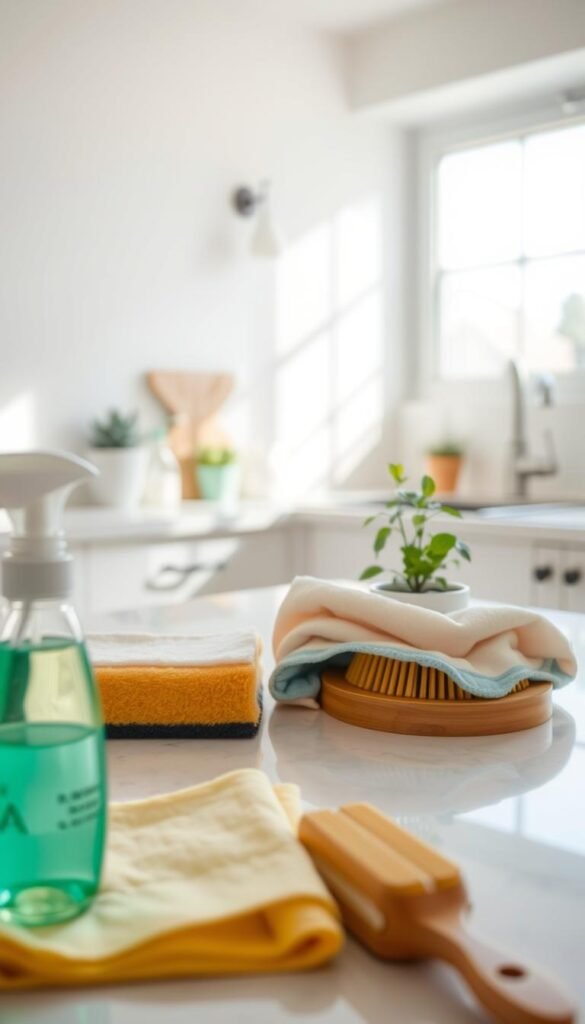
Natural helpers: baking soda tackles odors, light stains, and grout scuffs. White vinegar mixed with water cuts film and neutralizes smells in glass, microwaves, and appliance interiors.
- Keep tools light. A sponge, dish soap, microfiber cloths, and one gentle cleaner are enough.
- Add a soft scrub brush for grout and edges that need gentle abrasion.
- Store items in a small under-sink caddy. Easy access means you’ll clean more often.
- Choose fragrance-light or unscented options for a calm air.
Optional add-ons: one flat mop with washable pads speeds floor touch-ups. Label bottles. Replace worn sponges weekly or every two weeks. Little choices save time and lower stress.
Kitchen Cleaning Routine: A Peaceful Daily Flow
A short, steady daily flow keeps mess from growing and makes evenings calmer.
Follow this simple, numbered daily system. It takes five to ten minutes most days. Small steps now save time later.
-
Clear and load
Put dishes in the dishwasher. Hand wash fragile plates and pans. Leave the sink empty so you start fresh.
-
Wipe surfaces
Quick passes on countertops, the stovetop, and appliance handles. A damp microfiber and gentle spray are enough.
-
Sink reset
Light scrub with baking soda or a drop of dish soap. Rinse with water. Dry with a cloth for a soft shine.
-
Sweep and spot mop
Gather crumbs and treat small spills before they set. One minute now prevents scrubbing later.
-
Clutter sweep
Return mail, chargers, and stray items to their homes. Clearing surfaces calms your mind.
-
Evening checklist
Start the dishwasher at night so dishes dry. Take out trash if needed. Swap the towel so tomorrow begins clean.
Keep it light. Use the one-minute rule. If a step takes under a minute, do it now. If you miss a day, start again tonight. No shame.

| Step | Main action | Time | Why it helps |
|---|---|---|---|
| 1 | Clear & load dishes | 2–3 min | Empty sink. Keeps counters clear. |
| 2 | Wipe surfaces | 1–2 min | Removes crumbs and film. |
| 3 | Sink reset & sweep | 1–2 min | Prevents spots and sticky builds. |
| 4 | Evening start | 0–5 min | Run dishwasher. Ready for morning. |
Quick Resets by Zone: Small Steps, Big Calm
A two-minute pass in each zone stops mess from growing overnight. Aim for small wins. Move through spots with a soft cloth and a calm pace. These resets are light. They keep things usable and peaceful.
Countertops and cabinets
Quick spritz. Wipe crumbs and fingerprints with a soft cloth. Treat cabinet fronts with gentle passes to avoid streaks. A plain damp cloth and a soft touch keep finishes smooth.
Pantry
Group like items together. Snacks with snacks. Breakfast with breakfast. Note low-stock essentials so you buy only what you need. Small bins and clear labels make it easy for everyone to return items.

Sink and dishwasher
Sprinkle baking soda for a quick deodorize. If smells persist, run a hot cycle with a cup of white vinegar on the top rack. Leave the door open afterward to air dry. Keep a small dish cloth nearby for fast wipe-ups.
Refrigerator and fridge
Wipe spills as they happen. Move older food to the front so it’s used first. Be gentle with cleaners near food and focus on the front-of-shelf and door first.
Oven and stovetop
Give the stovetop a daily wipe to stop grease from sticking. Lift grates weekly for an easy wash. Save deeper scrubs for monthly care to keep work short and manageable.
Floors and entryway
Quick sweep where crumbs collect. Shake mats outside. Keep a tray for shoes to limit dust inside. A light pass with a broom keeps the space ready.
Keep it light. These are resets, not scrubs. A little now saves time later. You’ll return tomorrow with a calmer space.
The Weekly and Monthly Kitchen Cleaning Checklist
A short weekly check keeps surfaces fresh and makes monthly deep work easier. Use small, clear steps. Five to ten practical tasks each week. A few focused monthly items stop buildup.
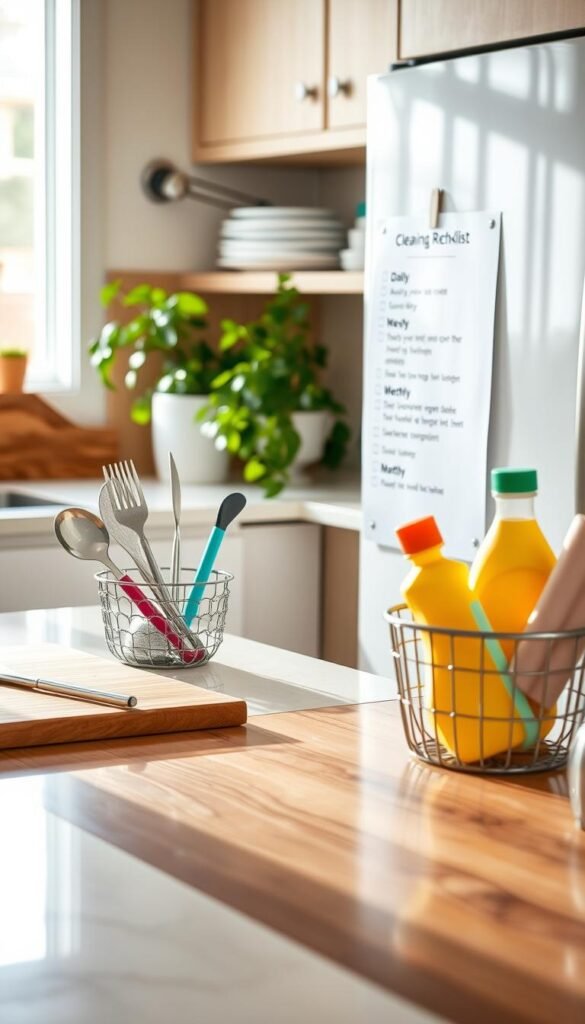
- Mop the floor with a flat mop and wet pads or a vinegar-water mix.
- Sanitize the sink and faucet handles. Quick and effective.
- Run a fast check for crumbs and spot-wipe grease near the oven.
Weekly tidy & review
- Steam the microwave with a cup of water and a bit of white vinegar. Wipe clean.
- Spot clean cabinet and fridge doors. Wipe the oven door glass if needed.
- Clear old leftovers from the refrigerator. Take out recycling and trash. Refresh your sponge and launder dish towels.
Monthly refresh & care
- Clean cabinet doors. Dust tops and light fixtures. Touch up grout with baking soda paste.
- Clean the dishwasher filter and run an empty hot cycle. Leave the door open to air dry.
- Descale the coffee maker with equal parts vinegar and water. Pause mid-cycle for 30 minutes, then finish and rinse with plain water.
- Review pantry and freezer items. Group like items and note gaps.
Tip: Keep each list short. Put “Mop Monday” or “Fridge Friday” on a small wall calendar. Finish with a one-minute reset. You’ll save time next week.
Gentle Habits, Easy Wins, and Time-Saving Systems
Tiny wins across your home make the whole day feel lighter.
Top-to-bottom rule. Start at the tops. Work down to counters. Finish with the floor. This way you avoid redoing work. Use a flat mop or a robot vacuum on busy days to save time.
One-minute rule. Handle tiny spills now. Sort two items while you wait. These micro steps stop pileups and keep your day calm.

Small schedule anchors
Pick friendly names. Try “Mop Monday” or “Fridge Friday.” Short anchors make tasks stick. A tiny checklist helps you move room to room with less thought.
- Kitchen example: wipe tops, wipe handles, then a quick floor pass to collect crumbs.
- Pantry: group items and keep a “use first” basket inside the door.
- Bathroom: keep a microfiber cloth under the sink for a nightly mirror and switch wipe.
- Bedroom, closet, entryway: two-minute resets. Hang clothes. Shake the mat. Hook keys by the door.
| System | Action | Tool | Why it helps |
|---|---|---|---|
| Top-to-bottom | High shelves → counters → floor | Step stool, cloth, mop | Prevents rework and saves time |
| One-minute rule | Quick wipe or sort now | Microfiber cloth, small caddy | Stops small tasks from growing |
| Weekly anchor | Named day for a small task | Calendar note, checklist | Builds habit with minimal effort |
| Deep help | Steam clean and air out | Steam cleaner, open windows | Lifts grime with water and improves air |
Conclusion
Finish the day with a few small steps and you’ll wake to a calmer space.
Keep it simple, gentle, and steady. Load the dishwasher. Wipe the sink. Spot the countertops. Sweep briefly. Swap the towel.
Keep a small cleaner kit ready. A sponge, a gentle cleaner, microfiber cloths, and baking soda handle most quick fixes. Use water and white vinegar for microwave steam and an occasional deodorize cycle in the dishwasher.
Save deep clean work for weekly and monthly windows. Descale your coffee maker with vinegar and water. Touch cabinets and the oven door with soft passes to limit dust and grease.
One short checklist. Do two or three small tasks each night. Protect your time. Start small. You’ll build a calm, clean kitchen without pressure.
FAQ
What is a simple daily kitchen cleaning routine I can actually keep up with?
Start small. Clear and load dishes after meals. Wipe counters and stove while pots cool. Do a quick sink scrub and rinse. Sweep crumbs and swap the dish towel each evening. These brief steps take 10–15 minutes and stop mess from growing.
What basic tools and cleaners should I keep on hand?
Keep a minimalist kit: a soft sponge, dish soap, microfiber cloths, and a gentle multipurpose spray. Add baking soda and white vinegar for stubborn grease and odors. A flat mop and small scrub brush are helpful extras for floors and grout.
How do I use baking soda and white vinegar safely?
Use baking soda as a paste for scrubbing sinks, ovens, and grout. Vinegar works well diluted in water for wiping counters and removing light mineral spots. Don’t mix them in a closed container. Test on a hidden spot first on natural stone.
What’s a quick evening checklist to finish the day calm?
Run the dishwasher or hand-wash remaining dishes. Empty the sink and wipe it dry. Take out trash if needed. Swap dish towels and clear clutter from counters. A calm five-minute sweep finishes the space.
How should I handle spills and grease on the stovetop?
Wipe spills as soon as the surface cools. For grease, spray a gentle degreaser or diluted vinegar, let sit a minute, then wipe with a microfiber cloth. Lift grates weekly for a deeper clean with warm soapy water.
How often should I clean the refrigerator and what’s the easiest approach?
Do a quick spot wipe weekly for visible spills. Once a month, pull forward items on the front shelf, toss expired food, and wipe shelves with warm soapy water. Keep a small bin for opened jars to group like items.
What’s the best way to keep the sink fresh and odor-free?
Rinse and dry the sink daily. Sprinkle baking soda, scrub gently, then rinse. Once a month run a cup of white vinegar down the drain, followed by hot water. Clean the faucet and handles with a gentle cleaner.
How do I make a weekly and monthly cleaning plan that feels doable?
Break tasks into short sessions. Weekly: mop floors, sanitize sink and handles, wipe microwave, refresh sponges and towels. Monthly: clean cabinet doors, dust high spots, descale the coffee maker, and clean the dishwasher filter. Schedule one or two small tasks per day.
Can small habits really prevent big messes?
Yes. Little rules help a lot. Use a top-to-bottom order when cleaning. Adopt the one-minute rule for tiny tasks. Give each area a quick reset after use. These gentle habits cut stress and keep your space calm.
How do I keep the pantry and freezer organized with limited time?
Do short shelf checks weekly. Group like items together. Move older items to the front. Keep a running list of low-stock essentials. For the freezer, toss freezer-burned food monthly and wipe shelves when you do.
What should I do about food odors in the dishwasher or trash area?
For the dishwasher, clean the filter monthly and run a vinegar cycle if odors persist. For the trash area, use a small bin liner, take out waste regularly, and sprinkle baking soda in the bin to absorb smells.
How can I involve my household without adding stress?
Make tasks tiny and specific. Ask for one-minute jobs. Provide clear homes for items. Rotate small chores on a simple schedule like “Mop Monday” or “Fridge Friday.” Praise progress. Keep it gentle and realistic.