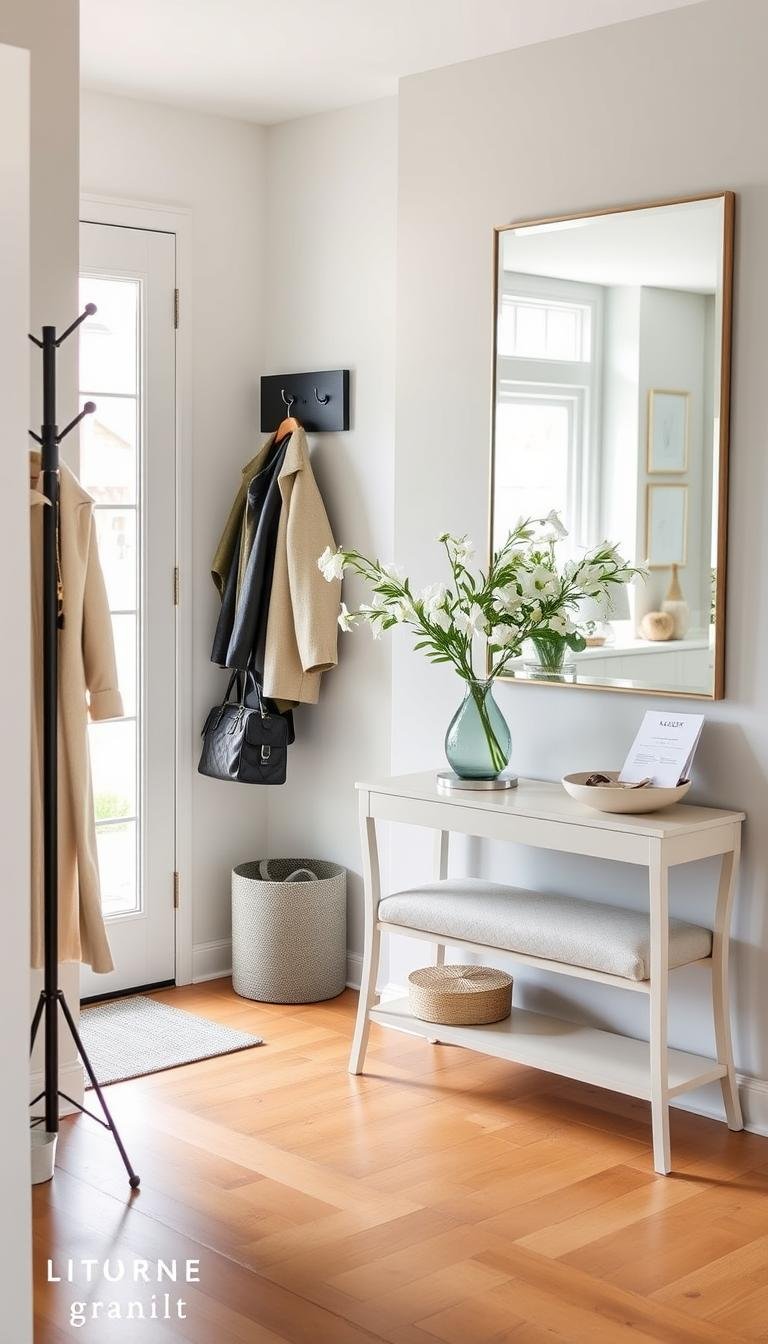
Coffee Table Organization (Minimalist Style)
You are busy. You want a calm living room that feels like a pause.
This post gives simple, gentle steps you can follow today. We promise small wins. No guilt. No big projects.
The right coffee table anchors the room. It invites talk and supports daily life. With a soft reset and a short checklist you will see the surface again.
We keep styling minimal. One story on display. One plant or natural moment. One candle to ground the senses. Open space keeps the focal point light.
Routines are short and doable. Five minutes each day. A weekly quick edit. A monthly rotation that feels easy. These small rhythms clear the space and your mind.
You’ll find clear homes for remotes, magazines, and daily items. One tray. One small box. One basket. The result is a calm living area that works for real life.
Key Takeaways
- Start with a soft reset and a simple sorting checklist.
- Use one tray, one small box, and one basket for daily items.
- Keep styling minimal: one display, one natural piece, one candle.
- Practice a five-minute daily reset and a weekly quick edit.
- Place functional homes under or on the surface for easy access.
Set the intention for a calm living room
Begin with a simple intention: calm the living space you use every day.
Say it out loud. “I want a calm living room.” This gentle phrase helps you choose less. It helps you keep only what supports rest.
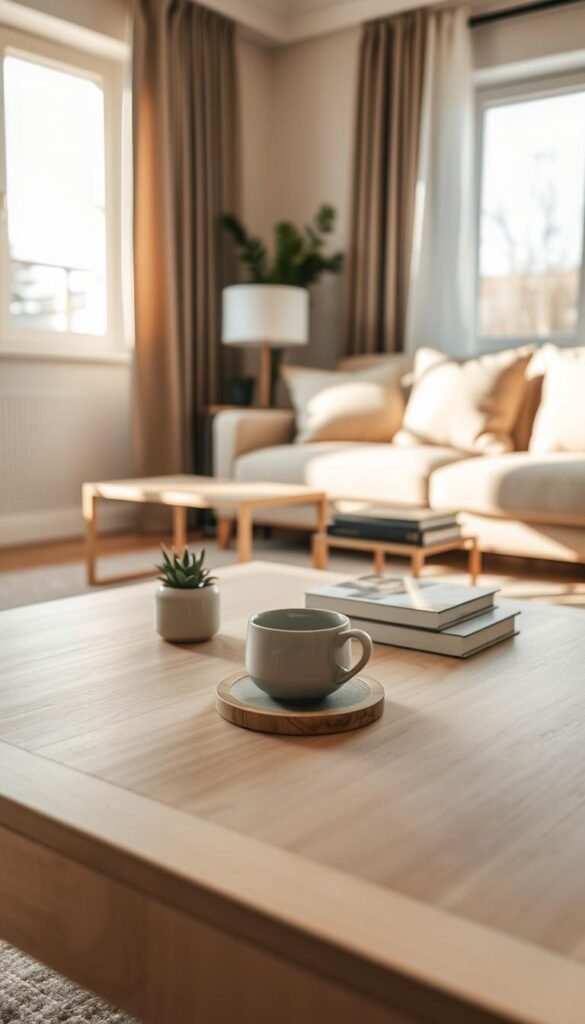
Decide the purpose of your coffee table. Pick one place for a drink. One small spot for a book or candle. One open area to breathe.
Choose ease over perfection. Keep steps short. Include family when you can. Quiet progress beats a perfect makeover.
- Picture people sitting with you. A clear surface within reach guides choices.
- Create a quick rule: if it takes under two minutes, return it now.
- Keep tools close. A small tray, a shallow box, a soft cloth make action simple.
- Protect flow. Leave open space on the surface and paths around it.
| Intent | Why it helps | Quick action |
|---|---|---|
| One clear spot | Makes the space feel calm and usable | Choose a corner for a book or candle |
| Easy return rule | Stops pile-up and saves time | Return items under 2 minutes |
| Tools nearby | Reduces friction to tidy | Keep a tray and cloth close |
| Open pathways | Encourages comfort and gathering | Leave access from all seats |
Trust small wins. One clear corner leads to one clear table. One clear table leads to a calmer room.
Declutter your table in easy steps
Start small: a short declutter burst clears the space and the mind.
Set a timer for 10–15 minutes. This gentle reset reduces stress and shows instant progress.
Quick sweep: a gentle, 10-15 minute reset
Clear the surface first so you can see change. Toss trash. Stack loose papers into one pile.
Relocate toys, books, and electronics that don’t belong. Place remotes in a shallow tray or basket.
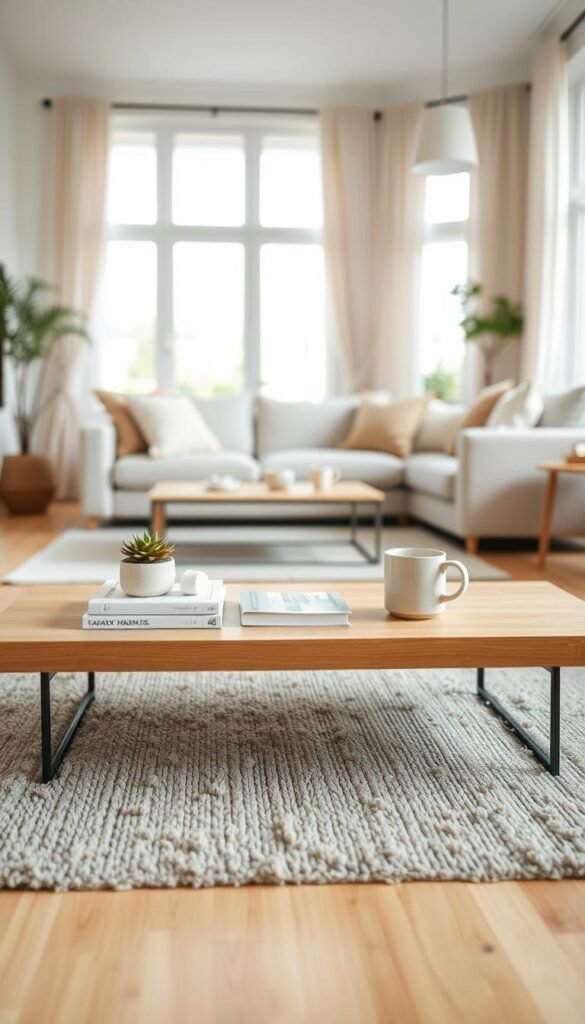
Keep-relocate-recycle-trash: a simple sorting checklist
- Keep what you use daily. Limit this to a couple of pieces.
- Relocate items to their true home. Use one small box for quick runs.
- Recycle old mail and magazines into a bag.
- Trash broken or used-up things.
Create homes for strays: baskets, trays, and a paper path
Gather remotes, coasters, and a pen in one shallow tray. Add a low basket under the table for current magazines.
Make a paper path: one thin folder for today’s post. One standing spot for bills to pay. Keep loose papers off flat surfaces.
Flat surfaces aren’t storage: a mindset shift
Say this softly to your family. Flat surfaces are for function and rest, not long-term storage.
Share the plan. Ask each person to return one thing after using it. Small habits keep the surface calm.
| Action | Tool | Result |
|---|---|---|
| Quick sweep | Timer (10–15 min) | Visible progress |
| Sort | Box + bag | Focused runs |
| Home for items | Tray + basket | Less visual clutter |
Coffee Table Organization
Divide the surface into clear zones so each object has a purpose.
Zone the surface: one focal point, one utility spot, one open space
Pick three simple zones. One calm focal point to rest the eye. One utility spot for daily items. One open space to keep the surface breathing.
Keep the focal point small. A single vase or a book works. Let it sit with room around it.
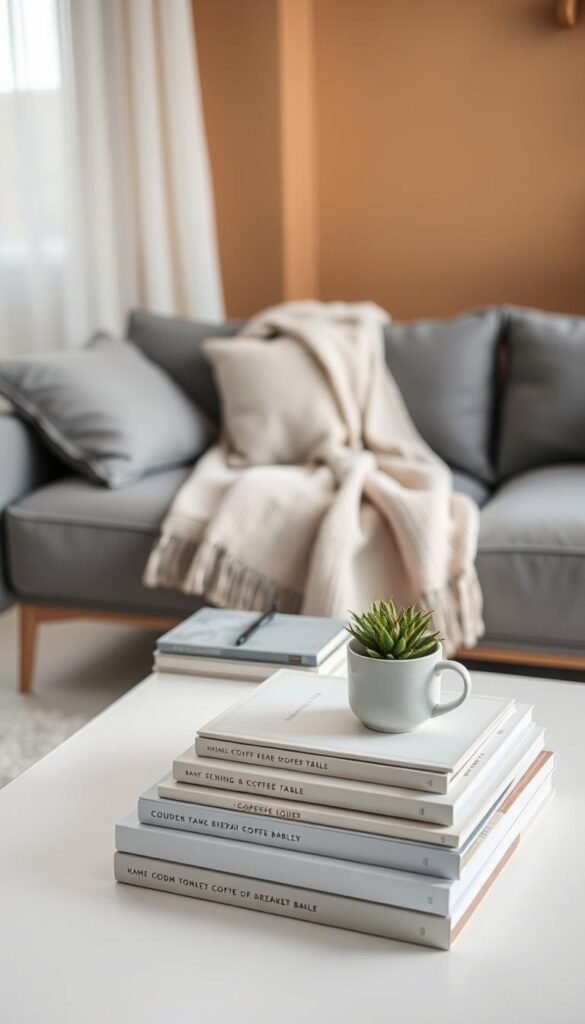
Tray method: corral remotes, coasters, and a notepad
Use a shallow tray for remotes, coasters, and a notepad. The tray sets limits. When it fills, remove one item.
Under-table storage: low baskets for books and magazines
Place a low basket beneath. Store two or three books and a few magazines. Rotate weekly so the surface stays clear.
Remote control solution: a small box or shallow basket by the sofa
Keep a small box near the sofa for quick returns. This makes grabbing and returning effortless for everyone.
- Check seating flow. Leave room for knees and feet.
- Edit weekly. Remove one thing if a zone spills.
- Choose a simple, neutral style so the surface supports living without clutter.
Simple styling for a balanced space
A single grouping gives the eye a place to rest and the room a pause.
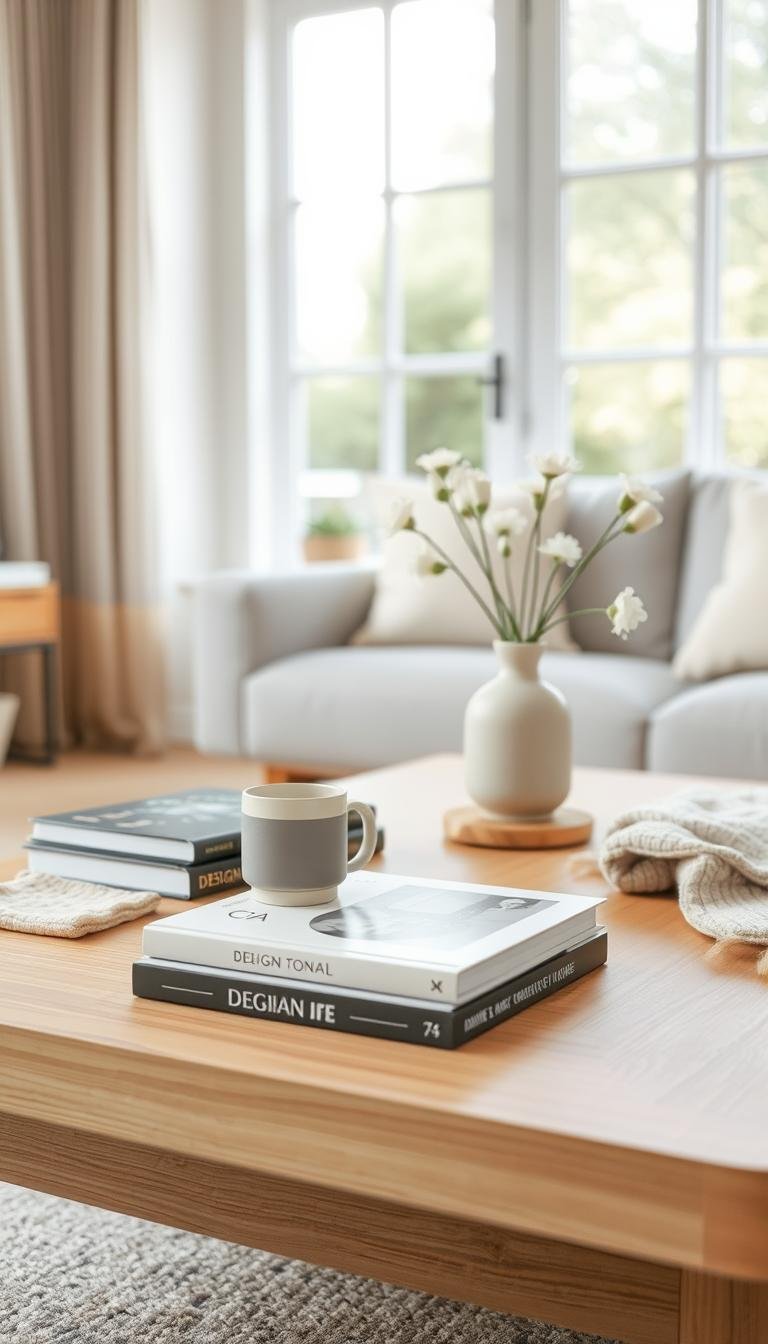
Story on display: one book, one keepsake, one small object
Pick one book and one small keepsake. Let them sit together. Different heights make the pairing feel intentional.
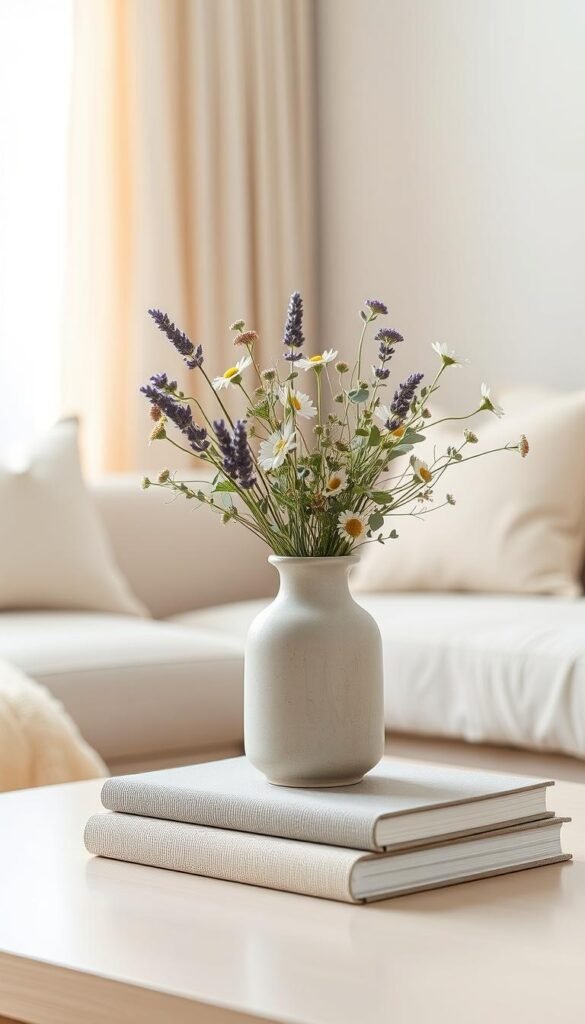
Nature leads: stems or flowers in a clear vase
Use a clear glass vase so stems float visually. The container fades and the greens feel light.
Short stems or a single spray of flowers keeps the look airy.
Ground the senses: a single candle and matches
Choose one larger candle as a quiet focal point. Add a small bowl of matches nearby.
This pair supports ritual without crowding the surface.
Room to play: a neat game set invites company
Set out one board or puzzle you enjoy. Store extra pieces in a small box under the surface.
Play becomes easy. The surface stays calm.
- Tell a small story: one book, one keepsake, one tiny object.
- Favor gentle textures: a linen runner or smooth tray.
- Rotate seasonally to keep the style fresh and simple.
| Element | Why it works | Quick tip |
|---|---|---|
| Single book | Provides a quiet point to land the gaze | Swap monthly for variety |
| Clear vase & flowers | Makes the glass disappear and lightens the look | Trim stems short for an airy feel |
| One candle + matches | Grounds the senses without clutter | Choose a neutral scent and size |
| One game set | Invites play while staying tidy | Keep extra pieces stored nearby |
Maintenance routines and quick resets
A clear end-of-day habit makes mornings easier.
Keep routines short. Little actions add up. They protect the calm you worked for.
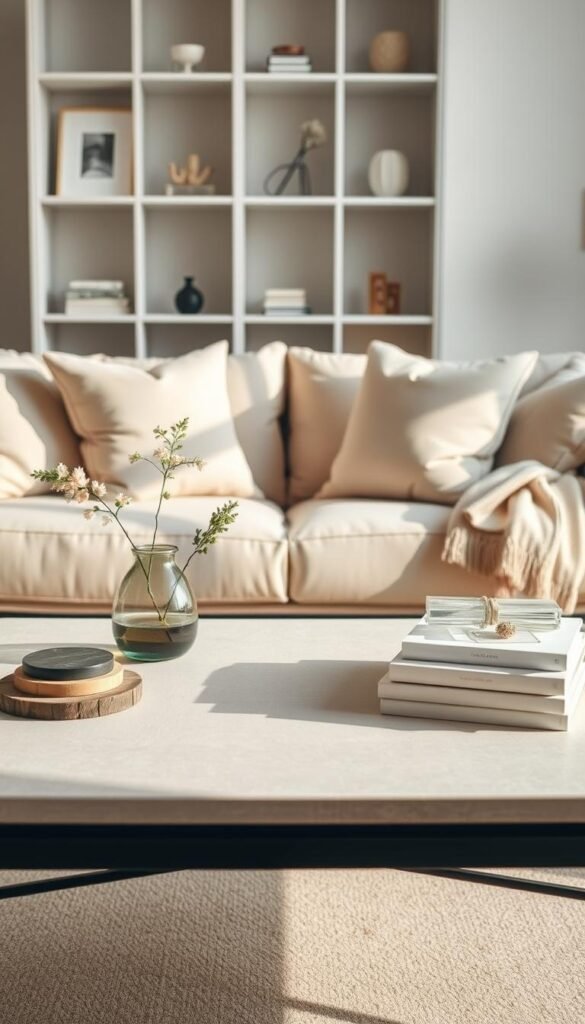
Daily: two tiny steps
Return remotes to the tray. Give each item a place. This prevents piles.
Wipe the table in under five minutes. A quick cloth clears crumbs and fingerprints. Use a timer if that helps.
Weekly: edit and refresh
Choose one day to scan books and magazines. Keep only what you plan to read this week. Remove one before you add one.
Refresh stems or flowers. Change the water and trim ends. Fresh greens keep the living room light.
Monthly: check your systems
Empty baskets and small bins. Wipe them out. Rotate a display piece so the space feels new without buying anything.
Family cues: simple rules everyone can follow
- Remotes live in the tray. No exceptions.
- Mail goes to a single folder, not the surface.
- Game pieces return to their box after play.
Use small tools nearby: a cloth, a bin for “relocate,” and a recycling bag. Set a five-minute timer when you need focus.
When life is full, aim for “clear enough.” One open place for a mug means the routine is working.
Room-by-room examples that support your living space
A few simple stations around the house stop clutter before it reaches the surface. These small habits protect the main place where people gather. They keep life easy for you and your family.
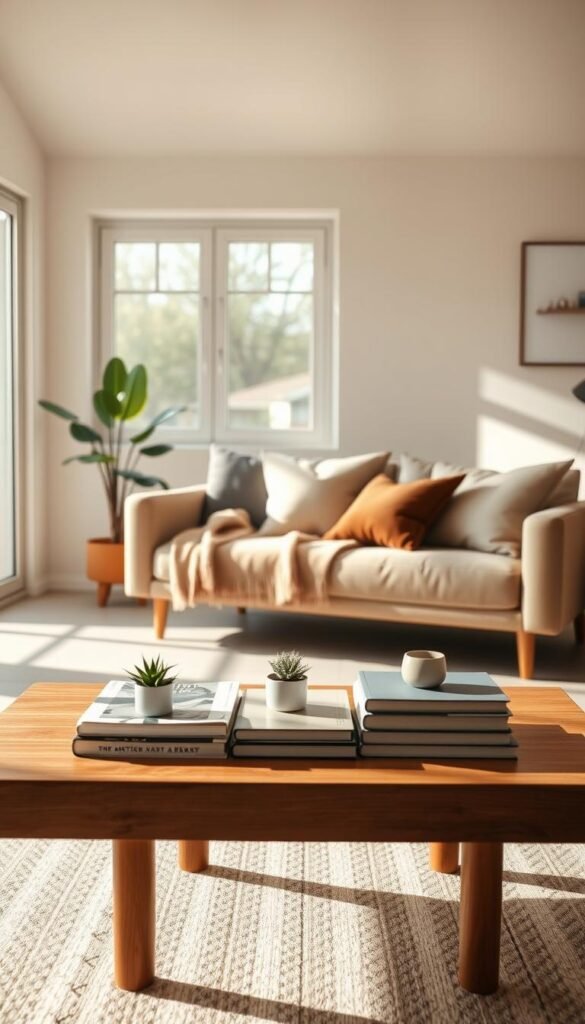
Living room
Sofa-side basket for remotes and a small coaster set. This keeps seating clear and makes it easy to return items after use.
Entryway
A door-side tray catches keys and mail. Sort mail into a folder daily so it never lands on the main surface.
Kitchen
Create one mail folder and a simple recipe spot. Papers stay in the kitchen, not the living area.
Pantry
Keep a single snack bin. Toss wrappers immediately. This stops crumbs and trash from moving into shared spaces.
Bathroom
Limit reading to one book at a time. Return extras to a shelf. Light choices feel calmer.
Bedroom
Use a nightstand tray for phone, watch, and glasses. Shared items can still sit on the coffee table without crowding.
Closet
Keep a visible donate bin. Drop decor or books you no longer love. Regular outflow makes room for what matters.
These examples place homes in each room so the main surface stays inviting. The steps are small. Your family can follow them. Over time, the surface remains a calm spot for gathering and rest.
Conclusion
A single, intentional spot can reshape the whole space.
You now have a simple system. One focal point. One utility spot. One open area. This works in any living room and for most coffee tables.
Keep styling light. A clear glass vase. A single candle. A few thoughtful pieces with room to breathe. Let the surfaces do less and invite more calm.
Protect the surface with trays and baskets. Hold gentle rhythms. Five minutes a day. A short weekly edit. A monthly rotate. Your time stays yours.
Try one 10–15 minute reset today. Notice how the room feels. Small steps add up. The furniture will thank you with quiet, steady peace.
FAQ
How do I set a calm intention for the living room before I start?
Start with a simple goal. Decide how you want the space to feel. Quiet. Warm. Inviting. Picture one focal spot for guests and one practical spot for daily bits. This small decision guides every choice you make.
What is a gentle, 10–15 minute reset I can do each day?
Do a quick sweep. Gather stray cups, mail, and toys. Wipe the surface with a damp cloth. Return items to their homes: basket, tray, or shelf. It’s small. It works. Repeat nightly to keep the room calm.
How does the keep-relocate-recycle-trash checklist work?
Sort fast. Keep: items you use here often. Relocate: things that belong elsewhere. Recycle: paper and junk mail. Trash: rubbish. Use four labeled piles or bins. It removes decision fatigue and speeds the task.
What are simple storage solutions for stray items?
Use two or three soft baskets and a shallow tray. One basket for books and magazines. One for remotes and chargers. A tray holds daily items like coasters and keys. Choose neutral materials to keep the look calm.
How do I stop treating flat surfaces as catch-alls?
Change the habit with a rule. If something lands on the surface, put it away within two minutes. Make a small landing zone instead. A tray or box becomes your temporary stop. Then return items after use.
How should I zone the surface for balance and function?
Aim for three areas. One focal spot for a styled object. One utility spot for practical items. One open space for breathing room. This creates a calm and usable surface without clutter.
What is the tray method and why it helps?
A tray groups small items. Remotes. Coasters. Notepad. It keeps things tidy and makes clearing fast. Choose a tray that fits your style. Natural wood or woven fibers feel soft and welcome.
Can I use under-table storage without making the room feel heavy?
Yes. Pick low, light baskets and limit what’s inside. Store a few books, a magazine, or a small blanket. Keep colors neutral. The goal is useful storage that stays visually calm.
What’s a simple solution for remotes?
Use a small box or shallow basket on the sofa side. Teach family members to return remotes after use. A labeled spot makes the rule gentle and easy to follow.
How do I style the surface without overdoing it?
Follow the “one of each” rule. One book. One keepsake. One small object. Add a clear vase with stems or a single candle. Keep pieces low and varied in texture. This keeps the look intentional and soft.
What natural elements work best for a light, balanced look?
Simple stems or seasonal flowers in a clear glass vase work well. Choose airy greens or single blooms. They add warmth without crowding the surface. Refresh weekly for freshness.
How can I invite play without creating clutter?
Keep one small game or board set accessible. Store it in a shallow box that slides under the table or in a nearby basket. The option to play stays present. The surface stays tidy.
What are quick daily, weekly, and monthly maintenance habits?
Daily: five-minute clear-off and wipe at day’s end. Weekly: edit magazines and refresh flowers. Monthly: reassess baskets and rotate display items. These short rituals prevent overwhelm.
How do I get the whole family to follow simple rules?
Keep cues clear and kind. Label spots for remotes and mail. Give one short rule: return items before leaving the room. Praise small wins. Consistency beats perfection.
How can I protect the main surface from spills and messes?
Place a coaster set near the sofa and encourage use. Use a washable runner or protective mat if needed. Make it easy to grab and return. Small barriers reduce stains and stress.
Where should I place a drop zone to keep entryway clutter from landing on the surface?
Add a tray or small bowl by the door. Keys. Wallets. Mail. This keeps things off the main surface and creates a gentle habit of dropping items in one spot on arrival.
How do I keep reading material in check across rooms?
Limit reading to one book on the surface. Keep a basket or shelf for extras. Use a donate bin when you finish a book. This keeps stacks small and the room light.
Can I use kitchen or pantry solutions to reduce surface clutter?
Yes. Create a mail folder in the kitchen. Keep snacks in a pantry bin so wrappers don’t end up on the surface. Moving these habits reduces daily migration of clutter.
What’s the easiest way to decide what decor to donate?
If an item hasn’t been used or admired in six months, it’s a candidate. Place it in a donate bin. Let go gently. It frees space for pieces you truly love.