Bedroom Organization Ideas for a Calm Space
You are busy. You want a quiet place that feels light. Small systems can bring that calm back without big projects.
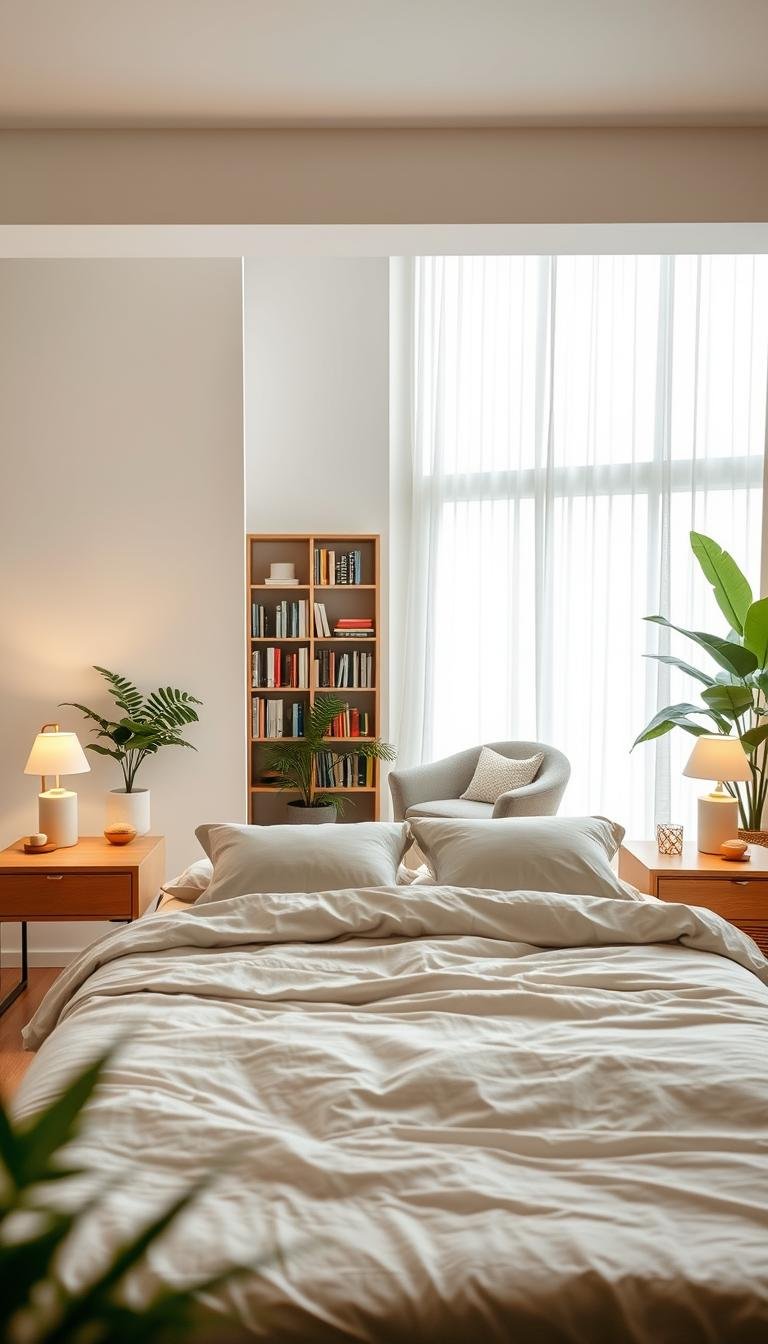
Start with a gentle reset. Clear top surfaces first. Give each item a simple home. Use nightstands with drawers and a small charging station to cut cord clutter.
We offer short routines for daily, weekly, and monthly care. Expect numbered checklists and tiny steps you can keep up with. Hooks, baskets, and wall shelves deliver fast wins.
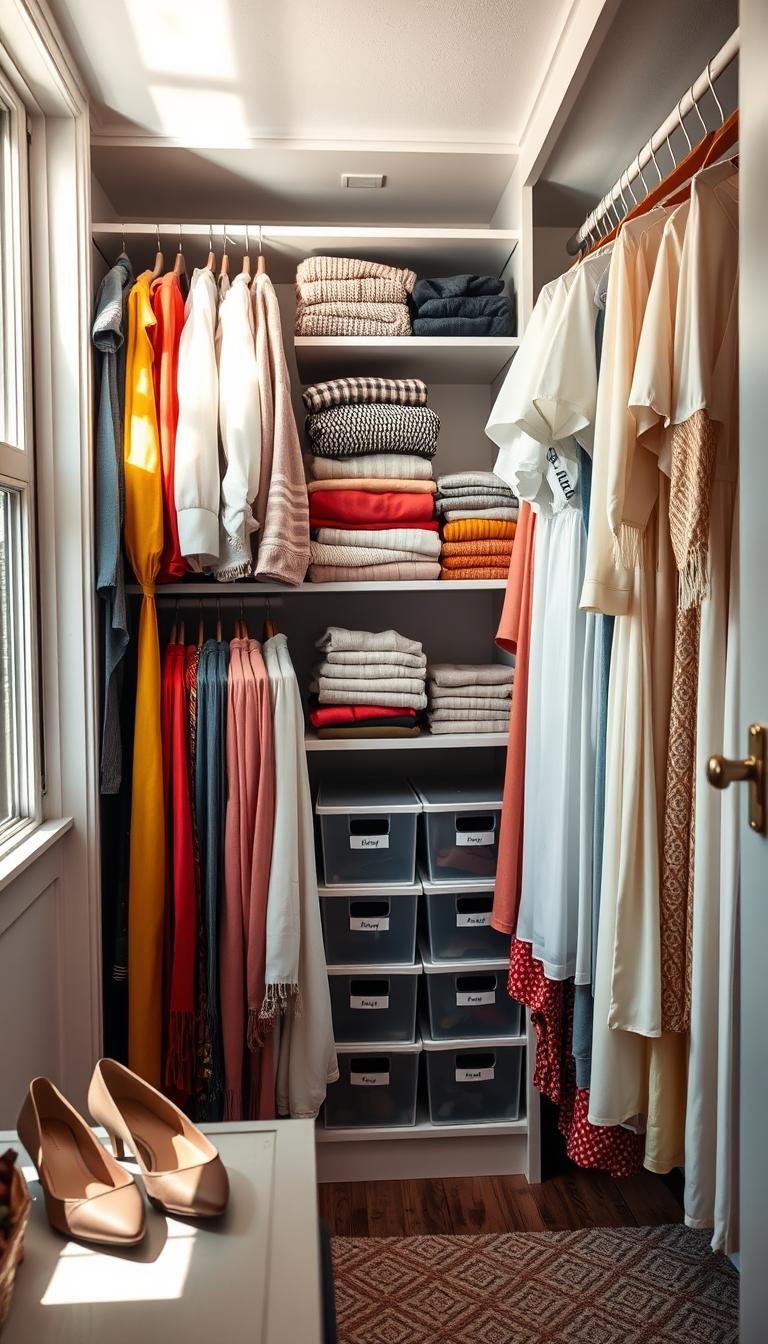
Closets can feel useful again. Try vertical systems like IKEA BOAXEL or EasyClosets for double hanging and extra shelves. Keep a donate bin nearby to make decluttering kind and easy.
Key Takeaways
- Begin with a soft reset by clearing visible surfaces.
- Create calm zones: bed, nightstand, dresser, and a sitting place.
- Use small storage moves: bins, hooks, wall shelves, and nightstand drawers.
- Adopt short daily and weekly routines to prevent clutter build-up.
- Maximize closets with vertical systems and double hanging.
- Keep a donate bin nearby for ongoing decluttering.
Start Simple: Clear, Calm, and Easy Wins
A few gentle moves can change how your room feels. Begin with a soft plan. Do less. Do it kindly. Choose one small area and set a short timer.
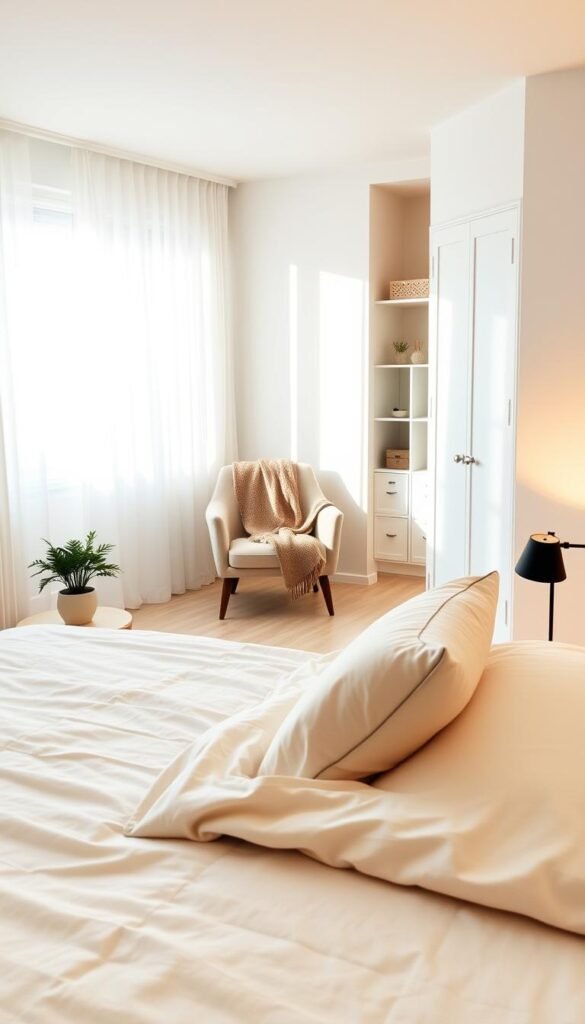
Gentle declutter mindset: keep what you use and love
Focus on what you use. Keep what you love. Let go without judgment. This is a calm approach to organizing. It supports steady progress.
Five-item, five-minute reset for surfaces
Pick a surface. Remove five items. For each item decide: put away, donate, or move to its true home. Return two essentials only. Set a timer for five minutes.
Step-by-step: a calm declutter loop
- Gather a small category.
- Sort like with like.
- Decide keep, donate, or recycle.
- Contain in simple storage.
- Label so it’s easy to put away next time.
Work tiny areas. Keep a discreet donate bin in the closet. End by taking out trash and placing donate items in the bin. Small wins add calm and lasting space.
Core Zones That Do the Heavy Lifting
Make a few spots do most of the work. Focus on practical swaps that free surfaces and hide clutter. Small changes bring big calm.
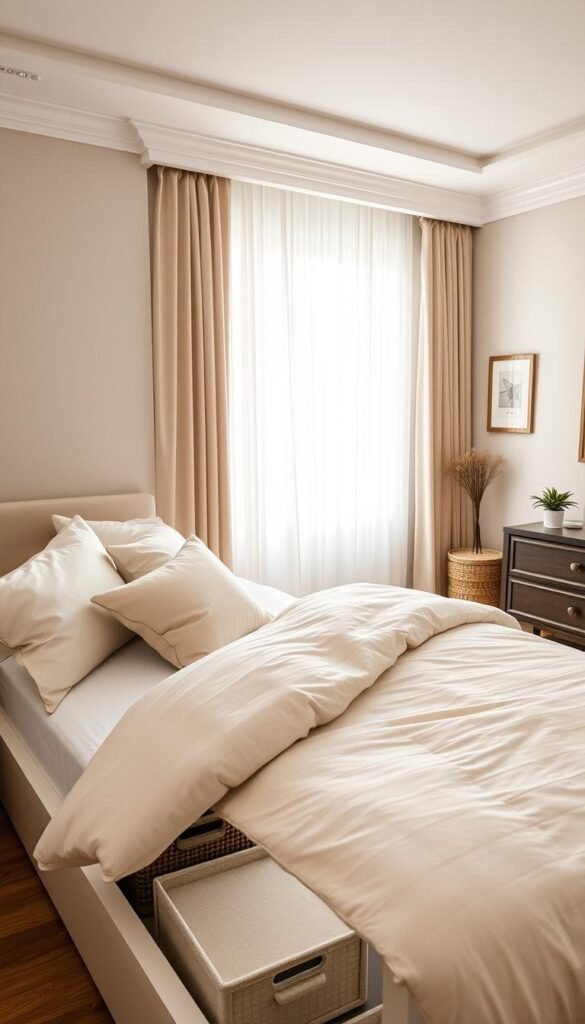
Bed and under-bed storage
Choose a bed with hidden storage when you can. Lift-up bases and under-bed drawers hide linens and off-season clothes. They keep bulky items out of sight and free floor space.
If you can’t replace the frame, slide in low bins. Use them for spare sheets or blankets. A trunk or storage ottoman at the foot adds seating and extra storage.
Nightstands with storage
Pick nightstands with drawers. A single drawer reduces surface clutter instantly. Add a small tray for glasses and a book.
Create a charging station by drilling a hole and tucking a power strip inside the nightstand. Use tiny bins inside the drawer to separate cords, masks, and lip balm.
Dressers that double as nightstands
Swap a small nightstand for a three-drawer chest if you need more storage. One piece of furniture can serve two roles. Fewer pieces. Fewer piles.
Wall-mounted lighting
Add sconces or flexible lamps to free nightstand tops. Trays corral nightly items. Hang a towel bar with S-hooks for necklaces. This keeps jewelry tidy and visible.
- Keep each zone focused: bed for rest, nightstand for nightly items, dresser for clothes, closet for the rest.
- Hidden storage is the kindest way to reduce visual clutter.
| Zone | Best fix | Quick benefit |
|---|---|---|
| Under bed | Lift-up base or low bins | Hides linens and seasonal clothes |
| Nightstand | Drawer + internal power strip | Clears surfaces and tames cords |
| Dresser | Use as nightstand (3 drawers) | More drawer space; fewer piles |
| Foot of bed | Storage ottoman or trunk | Seating plus concealed storage |
Bedroom Organization Ideas That Tidy The Room Fast
Tiny habits and easy installs give you a clear place to land each day. Use quick wins to cut visual clutter and create a simple flow. These moves take minutes and keep the room calm.
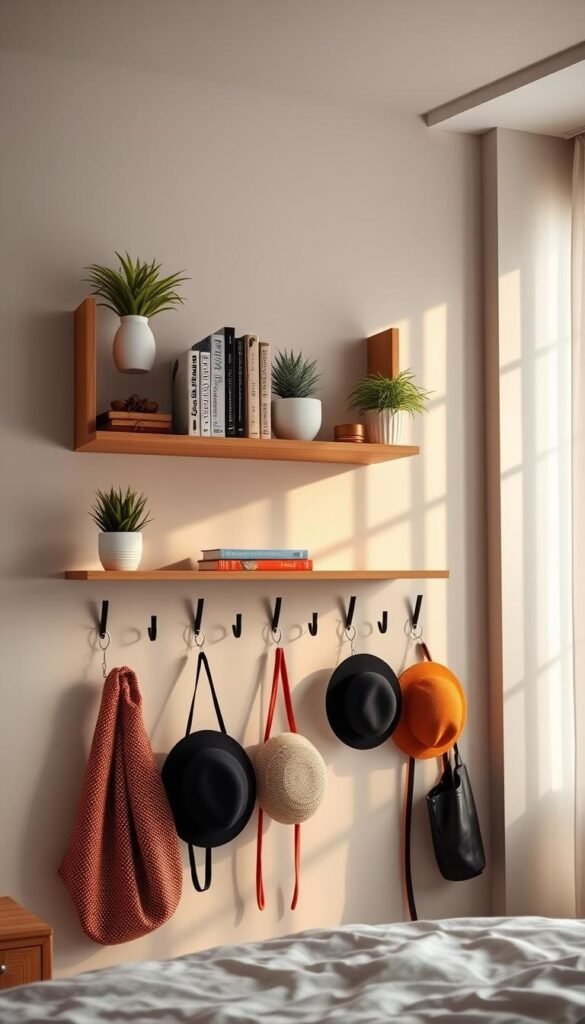
Hooks for daily-use clothing, bags, and hats
Install two or three hooks by the door. Hang the jacket, bag, or hat you grab most. This keeps the floor clear and makes morning routines smoother.
Floating shelves and wall pockets for books and decor
Add a slim wall shelf or floating shelf above a chair. Give books a quiet home and limit decor to a single row. Wall pockets beside the bed act like a second nightstand in tight spaces.
Baskets for pillows, throws, and laundry hampers
Place one large basket for extra pillows and throws. Use a lidded basket or slim hamper for laundry. One home for soft items keeps chairs and the bed free.
Labels and drawer dividers to keep items in place
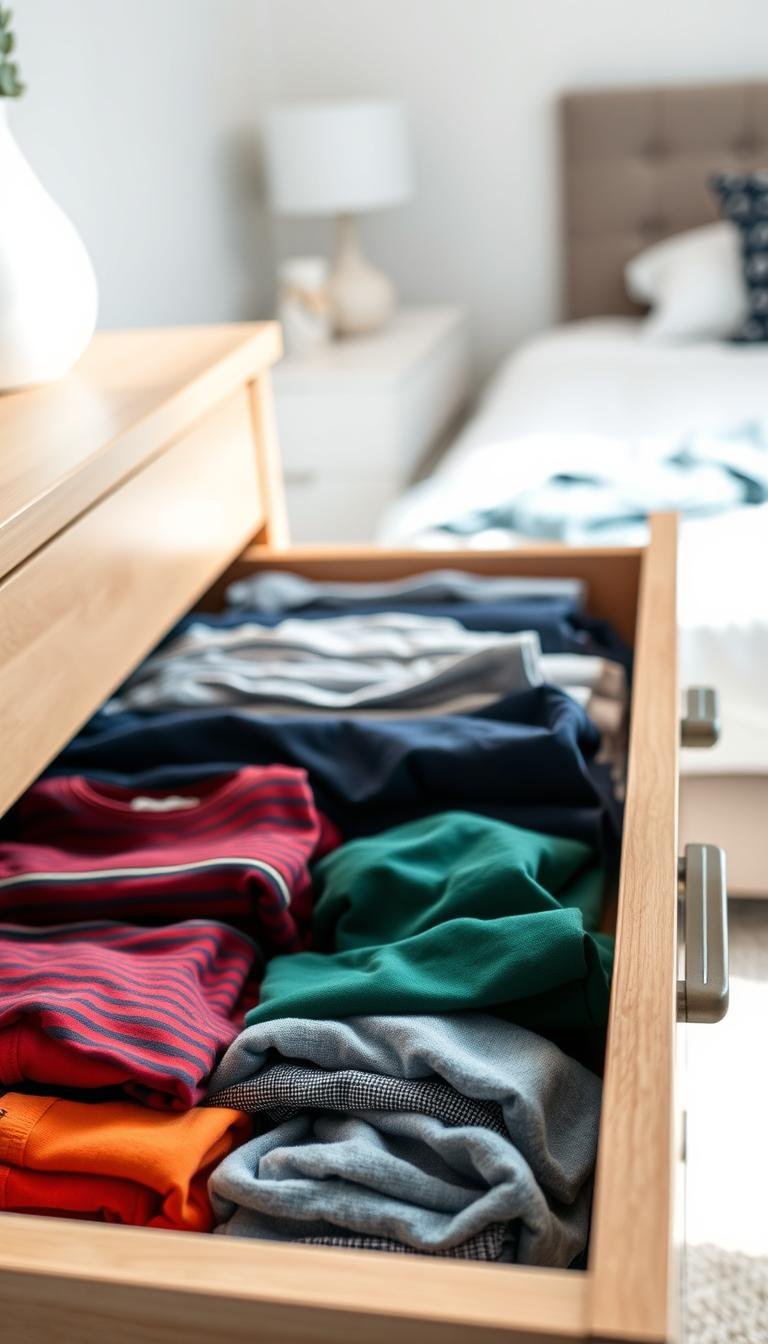
Divide drawers with simple inserts so tees stand up neatly. Label the front edge of each drawer. Gentle labels help everyone put away items in the right spot.
A tucked-away donate bin for ongoing clutter control
Keep a small donate bin in the closet corner. If something no longer fits or sparks no joy, drop it in. This tiny habit keeps edits easy and steady.
- Quick night sweep: two-minute hook-and-basket check to tidy surfaces.
- Simple installs: hooks, shelves, and a basket are fast wins that save time.
Calm Closets: Small Systems with Big Impact
You can double usable space with one simple change to your hanging rods. Start with a quick map of your closet. Note zones for tops, pants, shoes, and extras. A small plan makes edits easy.

Closet systems and double hanging
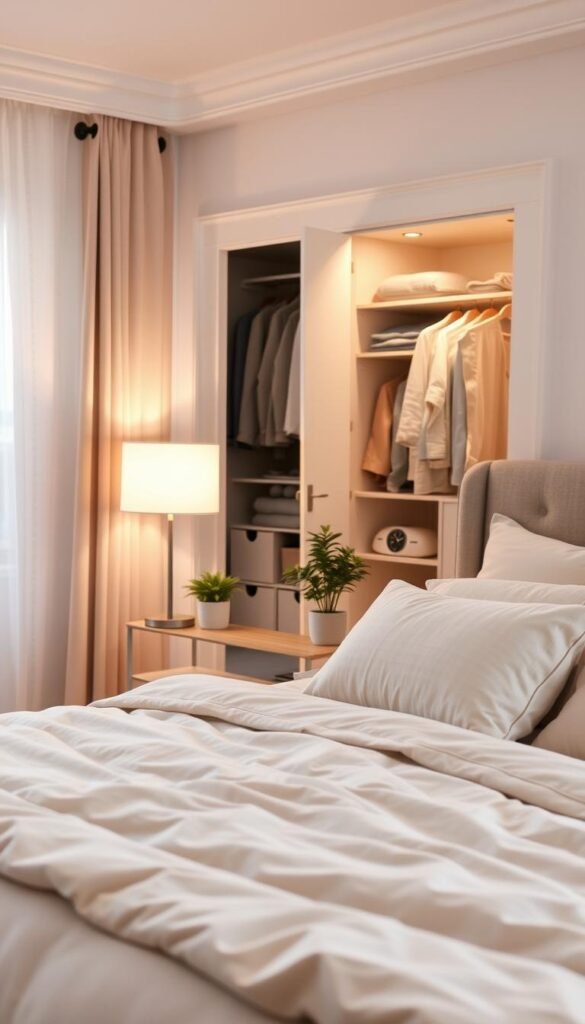
Add a second rod to instantly double vertical capacity. Systems like IKEA BOAXEL or EasyClosets fit most walls and keep everything tidy. You get more storage space without bigger footprint.
Uniform hangers and simple color order
Switch to slim velvet hangers. They save inches and stop slips. Arrange clothing from light to dark. The visual flow makes outfits easier to find.
Shoes off the floor with shelves or drawers
Lift shoes off the floor with shallow shelves, stacking bins, or a low drawer. A narrow rolling cart adds extra tiers and moves for cleaning.
- Map by zone: double hang shirts above pants to free lower space.
- One basket per bed: hold spare sheets in a slim basket.
- Small dresser inside: reclaim lower closet space for drawers and a tidy top.
- Labels and dividers: use drawer dividers and labeled bins for scarves, belts, and workout gear.
- Monthly edit: remove unworn items to the donate bin so the closet stays light.
Room-by-Room Touchpoints that Support Your Bedroom
A few thoughtful touchpoints in the kitchen, bath, and entry keep your sleeping room calm. These small moves give wandering things a predictable home. They protect your restful space without adding chores.
Kitchen and pantry
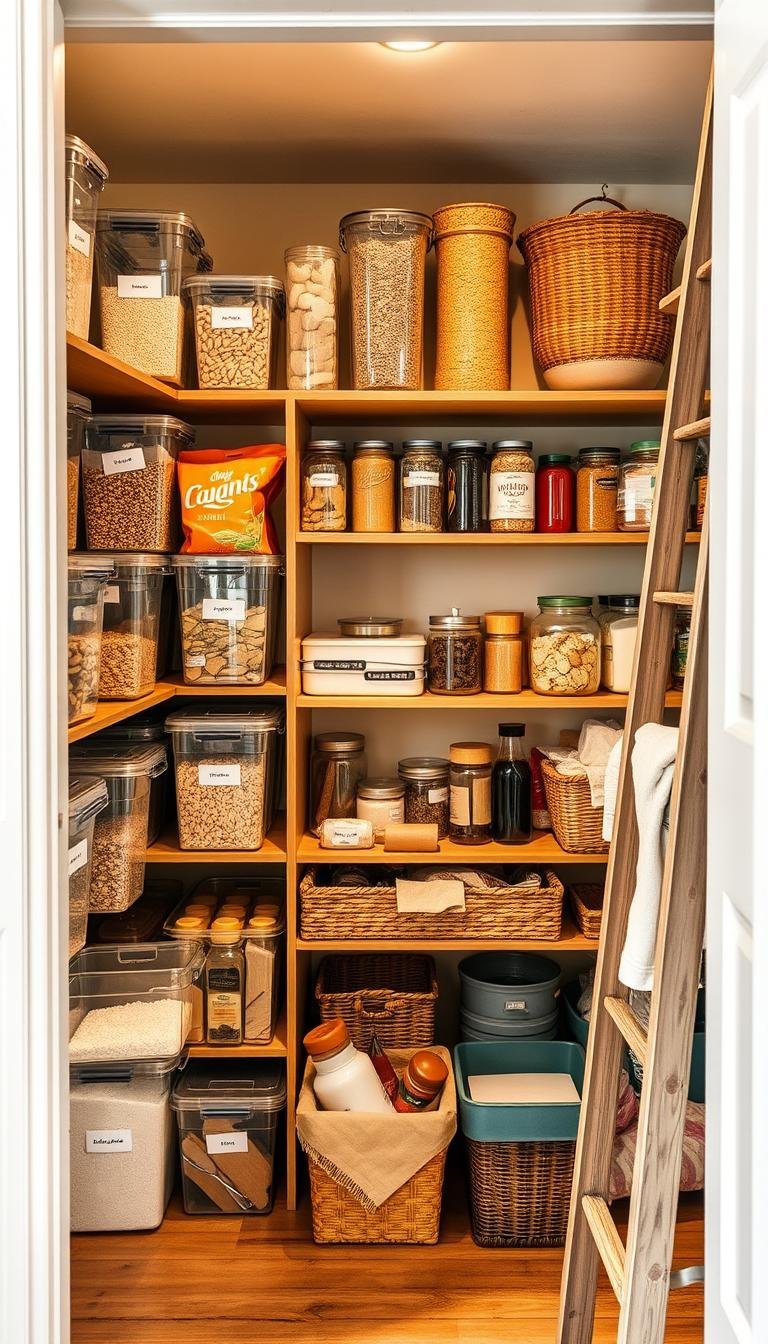
Use a shallow tray for mail and a bin for small tools. Trays keep loose items visible and easy to return.
Adopt a gentle “return-what-wanders” habit each evening. Carry one small basket as you go. Drop items back in their place once a day.
Bathroom
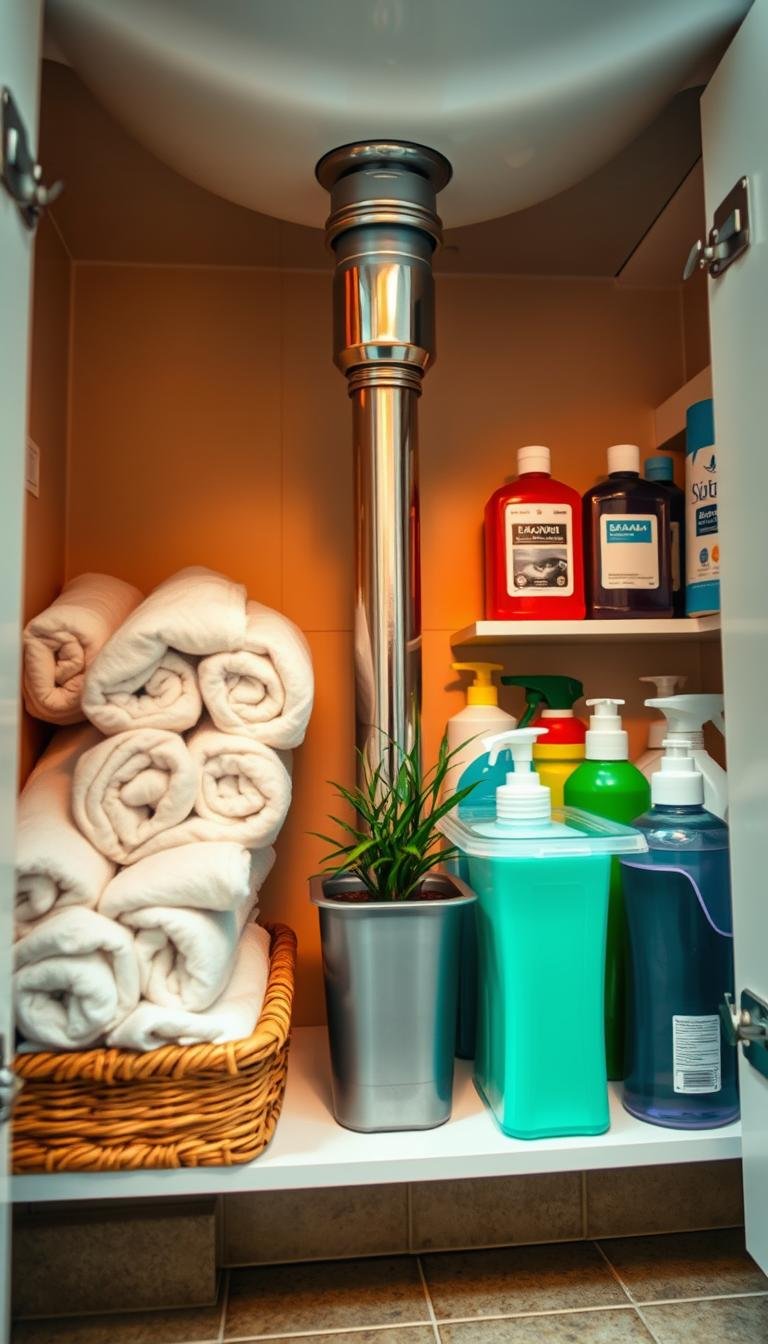
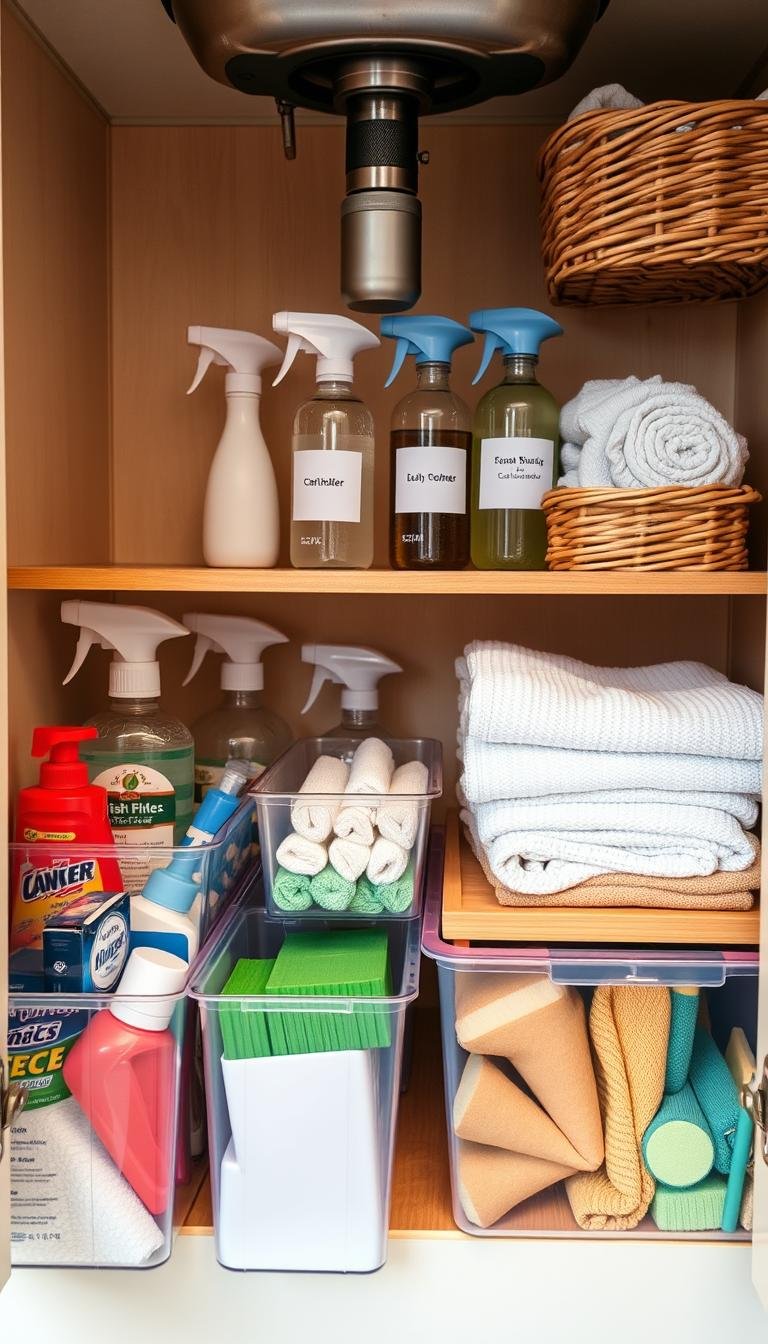
Add drawer dividers and one or two cabinet baskets. Keep counters clear by storing extras in boxes or baskets.
Make a laundry handoff simple. Put a hamper near the bath so clothes go straight out of the bedroom and into the wash.
Entryway
Install two sturdy hooks per person and a small shoe zone. A shallow tray catches keys and sunglasses.
One set of organizers by the door reduces the pile-up that drifts into the rest of the home.
Bedroom specifics
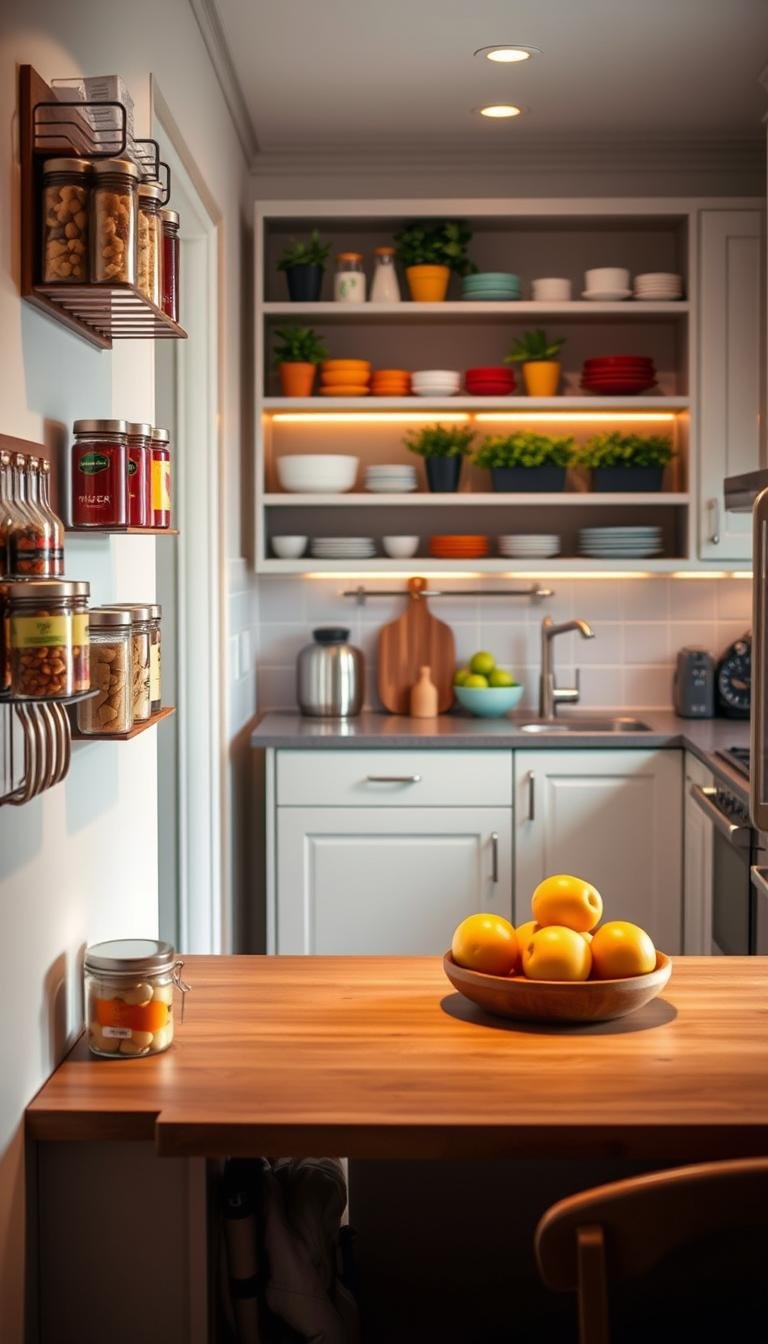
Hang a jewelry rail with S-hooks to keep necklaces untangled. Mount clear spice racks as a slim makeup shelf.
Hide cords in a cable box near the nightstand and add peel-and-stick clips to guide charging cables. Keep a small basket by the door for anything that needs to go back to another room.
- Quick habit: do a one-minute evening sweep. Reset trays and empty the key dish.
- Small systems: trays, bins, and a place for wandering items protect your space.
Gentle Routines: Daily, Weekly, Monthly
A gentle routine can turn one minute into a peaceful habit for your space. Small rituals help keep your room calm. They take little time. They add steady gains.
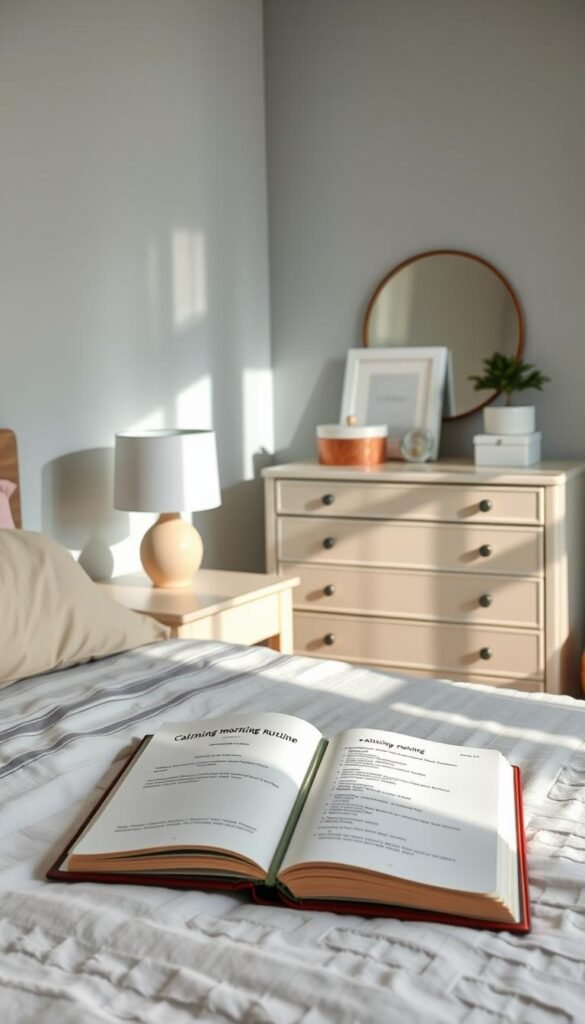
Clear the nightstand each night. Return one or two items to their place before sleep.
Use the hamper every evening so clothes do not land on a chair or the floor.
Do a 60-second closet reset. Face hangers the same way. Pull any “no” pieces toward the donate bin.
Weekly small tasks
Empty small trash. Dust flat surfaces. Wipe the top of your dresser or drawer.
Do a seven-minute tidy. Set a timer. Gather anything that wandered into the room and put it back.
Monthly and seasonal care
Rotate seasonal clothes. Move off-season items to higher shelves and bring current pieces down.
Refresh labels where needed. A clear label speeds up put away for you and your family.
Edit decor gently. Keep what makes you smile. Remove what feels busy so the room can breathe.
- One finish: when the donate bin is full, drop it off. A simple ending keeps the cycle gentle.
- Small wins: short habits protect your storage and cut clutter over time.
Small Spaces and Studio Setups
Work up, not out — that simple shift saves precious floor area. Use tall, slim solutions to create calm. Keep steps light. Choose one change at a time.
“Think vertical and choose pieces that multitask.”
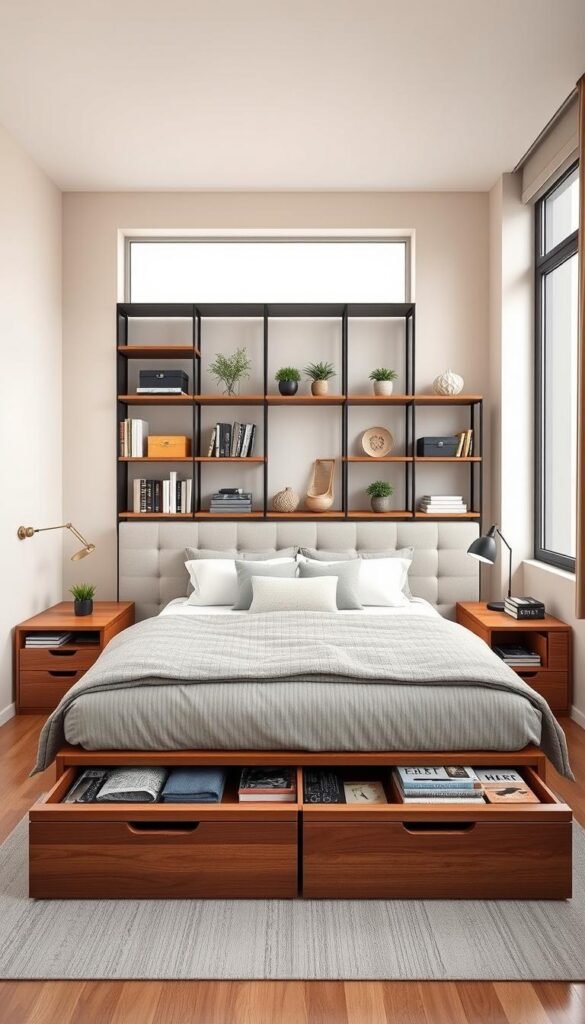
Use vertical shelves, slim dressers, ottomans, and rolling carts
Go vertical with narrow bookcases and floating shelves. Free the floor and keep daily items at eye level. Store lighter things higher up.
Pick slim dressers or a small chest as a nightstand. One piece of furniture can do two jobs. An ottoman with hidden storage adds seating and extra storage.
- Slide a rolling cart into a corner or under a closet rod for quick tiers.
- Choose a lift-up bed when possible to hide bulky blankets and boxes.
- Add a bed skirt to camouflage under-bed bins for a calm look.
Use clamp-on or wall lights. Guide cords with peel-and-stick clips and a small cable box. Tuck a file cabinet under a desk to store papers.
Keep only what you need in reach. Give each item a place and a label. Small, vertical moves protect your storage space and make daily resets fast.
Conclusion
Start with one corner and let simple systems grow from there. Small steps matter. You do not need a perfect plan. You need a kind, steady way forward.
– Clear surfaces. Give each item a small home.
– Choose two-in-one furniture like a dresser that doubles as a nightstand or an ottoman with hidden storage.
– Use wall lights to free nightstands and slim hangers to calm the closet. Lift boxes under the bed or use built-in drawers to hide bulk.
Keep a soft rhythm. One minute a day. Ten minutes a week. One small edit each month. Let the question guide you: does this make the room feel calm?
Your calm plan: clear surfaces, homes for items, short resets. Start now with one small corner.
FAQ
How do I start when my room feels overwhelming?
Begin with a gentle, five-minute reset. Pick one surface. Remove five items that don’t belong. Put them away or place them in a donate bin. Small wins build momentum. Repeat daily until surfaces feel calmer.
What’s the easiest way to keep nightstands tidy?
Limit nightstand items to essentials. Use one small tray for keys, glasses, or jewelry. Keep a slim charging station and one drawer for papers. Empty the top every evening. This simple habit keeps clutter from piling up.
How can I make the most of under-bed storage?
Choose low-profile bins or roll-out drawers. Store seasonal clothing, extra linens, or shoes you rarely wear. Label each container so you can find things fast. Clear bins work well if you prefer a quick visual check.
Which closet tweaks give the biggest impact?
Add a second hanging rod and switch to uniform hangers. Group similar items by color and type. Use shelf dividers and clear shoe boxes to free the floor. These small changes create visible order and save time getting dressed.
How do I keep clothes off the floor without strict rules?
Set up a few easy stations: a hooked spot for daily wear, a basket for laundry, and a small chair for tomorrow’s outfit. Make returning clothes part of a two-minute evening routine. Gentle habits beat strict rules.
What storage solutions work in a small room or studio?
Go vertical. Install floating shelves and wall pockets. Use a slim dresser or an ottoman with storage. Rolling carts tuck under a desk or beside the bed. Each choice adds storage without crowding the floor.
How can I keep jewelry and small items organized?
Use drawer dividers, a small jewelry tray, or a wall-mounted rail. Keep everyday pieces within easy reach. Store less-used items in labeled boxes. Clear separation prevents tangles and makes morning routines smoother.
What quick systems help with seasonal wardrobe rotation?
Sort clothing into keep, store, donate piles. Use vacuum bags or labeled bins for off-season items. Swap a small set of hangers and refresh labels. Schedule this task monthly during transitions to avoid overwhelm.
How do I build routines that stick without pressure?
Start tiny. A one-minute tidy each night. A five-minute weekly reset. Make the tasks feel manageable. Celebrate small progress. Over time, routines become comforting habits, not chores.
What are simple ways to hide visual clutter while keeping items accessible?
Use baskets, boxes, and trays that fit your style. Choose closed bins for a calm look and open baskets for everyday items. Keep a tucked-away donate bin to remove extras quickly. Consistent homes for items keep surfaces serene.