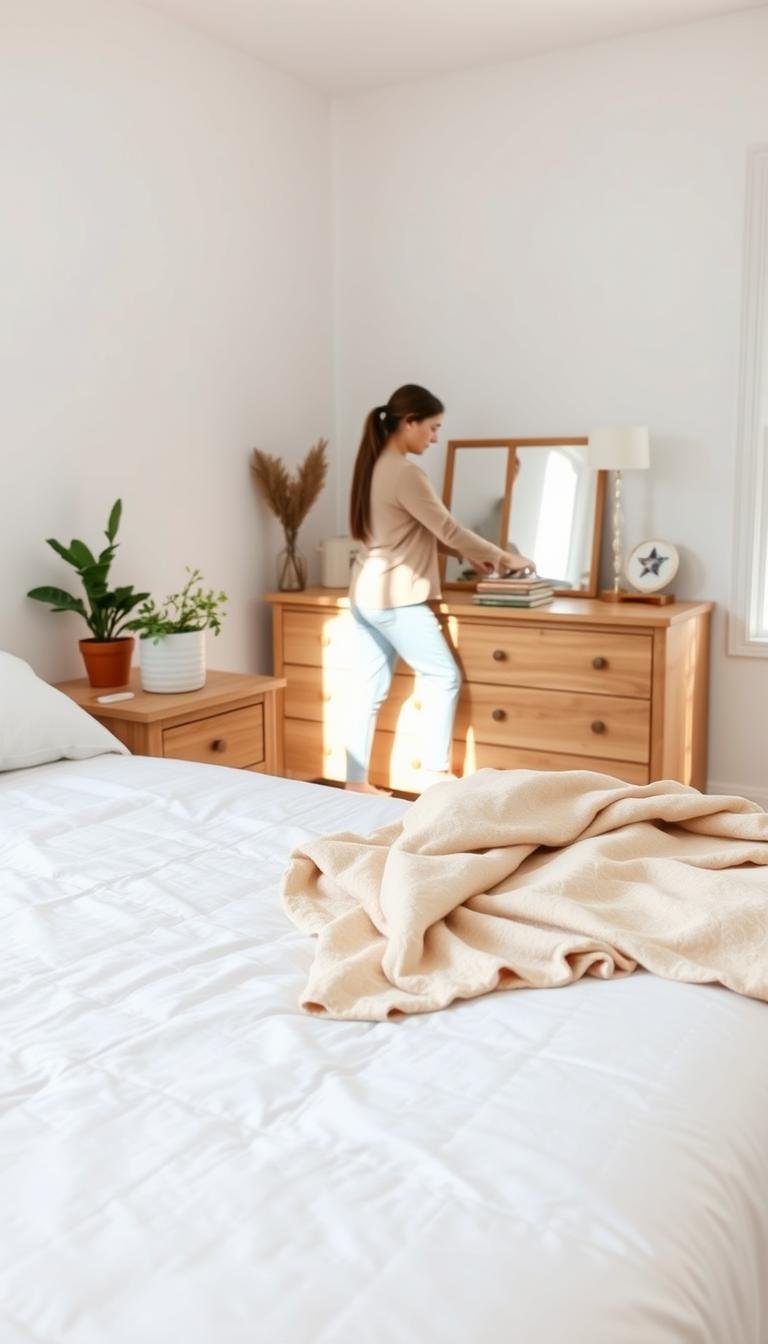
Bedroom Daily Tidy Routine
You are juggling a busy life. You want a calm home that helps you rest. This short plan offers a gentle, repeatable way to care for your room without pressure.
Begin with tiny steps. Two minutes here. Five minutes there. A quick bed smooth and a small basket for wandering items can change how your day begins and ends.
No guilt. No harsh chemicals. Use a microfiber cloth, a soft cleaner, and a HEPA vacuum when time allows. Open a window for 10–15 minutes to refresh air. Clear visual clutter first. Less to see means less to manage.
Layer a small daily list with simple weekly and monthly tasks. Build exits: grab trash and dishes on the way out. Place items by the door to return to their homes. This system fits a full house and a tight schedule.
Key Takeaways
- Start with tiny steps that fit your morning or night.
- Keep tools simple and gentle for everyday care.
- Clear visual clutter first to lift mood and motivation.
- Protect air quality with brief ventilation and light dusting.
- Use a small daily list with weekly and monthly layers.
- Build quick exits to prevent items from settling in place.
Why a calm bedroom helps you sleep better
A calmer space helps your mind settle before sleep. Fewer things to look at lowers mental noise. That helps you switch off faster.
Clutter, mood, and motivation: Visual clutter draws attention. Studies link clutter to lower motivation and worse mood. Start with a two-minute pickup. Return items to their home. Keep one lamp, one book, and a small tray for essentials.
Air quality basics: dust, allergens, and gentle products
Dust carries particles that can irritate lungs and skin. A light, top-to-bottom wipe once or twice a week helps. Focus on high-touch areas. Nightstand tops, headboard edges, and lampshades are priority spots.
Use a slightly damp microfiber cloth for cleaning. HEPA vacuum when you have time. Open a window for 10–15 minutes to refresh air.
“Clear surfaces you see first when you wake and before you sleep.”
- Use fragrance-free, human-safe cleaners. Reserve bathroom-grade disinfectants for true needs.
- Wash linens weekly to reduce allergens.
- Agree on shared zones with household members. One basket each keeps items from drifting.
Bedroom Daily Tidy Routine
Small, timed steps make cleaning feel easy and fast. This short plan fits into your morning or night. Use a timer. Aim for progress, not perfection.
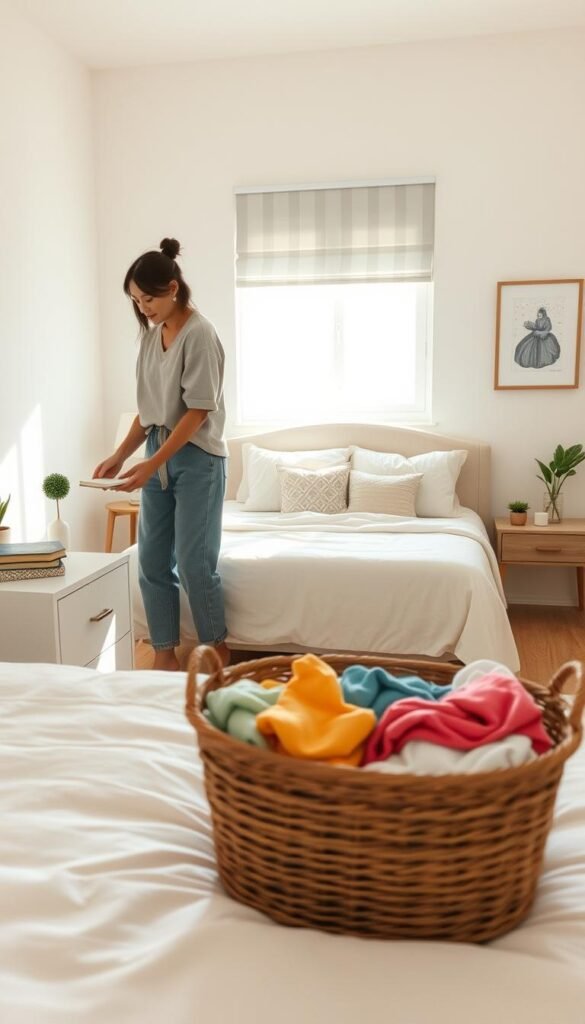
Two-minute bed reset: waft, smooth, and fluff
Step 1: Waft the duvet to settle it quickly. Smooth the top layer with your hands. Fluff the pillows once. Good enough is a win.
Optional: A light mist of crease-release and one palm sweep for a neater look.
Five-minute surface sweep: clear, corral, and dust light
Set a timer for five minutes. Clear nightstands and dresser tops. Drop small items into a tray or bowl.
Use a microfiber cloth for one quick wipe. A lint roller lifts dust from lampshades and fabric headboards fast.
Laundry flow: hamper here, hang or fold there
Keep a hamper by the closet. Put worn clothes in it right away. Hang or fold clean pieces if you can. If not, stack them on one shelf to finish later.
Floor check: pick visible lint, save full vacuum for later
Scan the floor for visible lint and threads. Pick them by hand. Straighten rug edges. Save the HEPA vacuum for your weekly block.
Exit habit stack: grab dishes, trash, and misplaced items
Place dishes by the door. Toss small trash into the room can. Carry both out as you leave. This one move prevents pileups.
Keep tools close: microfiber in the nightstand. Lint roller in a drawer. A gentle spray within reach.
- Two minutes in the morning. Five minutes at night. Use a short timer.
- On low-energy days do Steps 1 and 5 only. Your daily cleaning routine still counts.
- Small tasks keep momentum. Treat this as simple, repeatable tasks you can trust.
Simple systems that make tidying automatic
A few clear landing spots can stop items from wandering across the house. These tiny systems reduce decisions. They keep your schedule gentle and predictable.
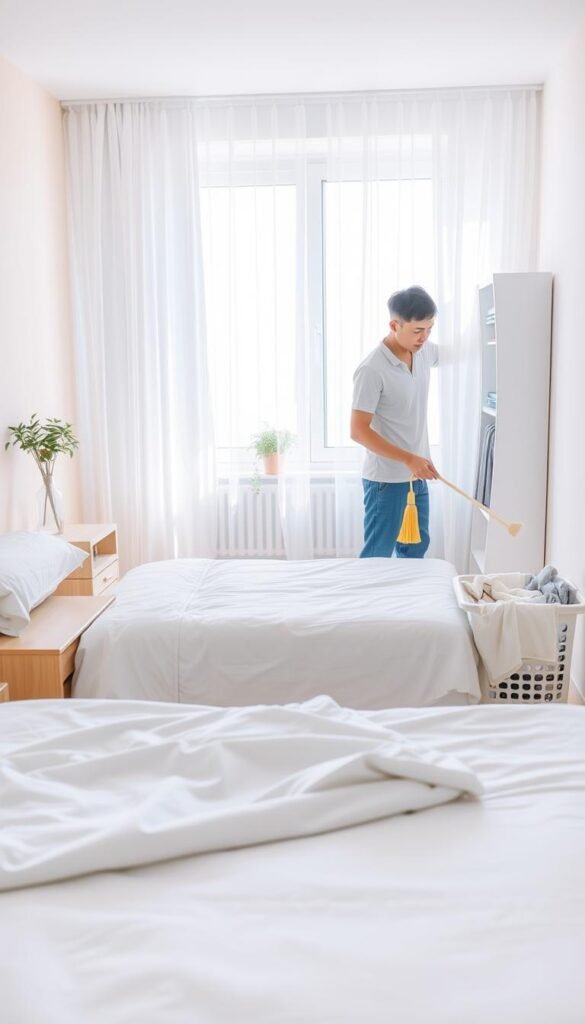
Landing spots are trays, baskets, and a small trash can. Place one by the entry. One on the dresser. One near the closet. Teach kids to drop items in labeled bins. It becomes a habit fast.
Timer technique: short bursts in the morning or night
Try a 5–10 minute timer. Focus on Bed. Surfaces. Exit stack. Stop when the bell rings. Progress, not perfection. Use this short block to match your schedule and energy.
Room-by-room examples
- Kitchen: clear counters, wipe spills, load dishes right away.
- Pantry: group snacks in bins and label shelves for quick finds.
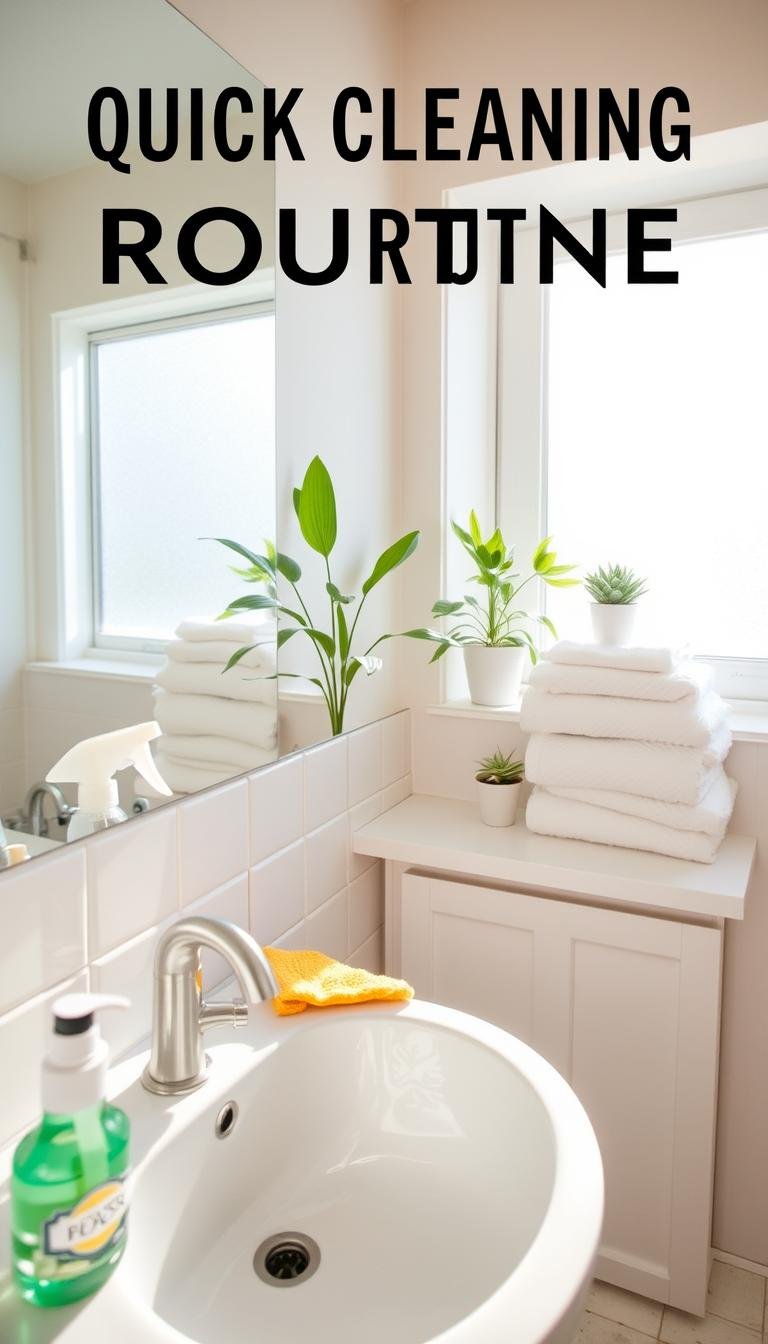
- Bathrooms: keep daily products in one caddy to grab and put away.
- Closet & entryway: hooks for bags, a hamper for laundry, shoe tray at the door.
Support your family with simple visuals. Label bins with words or pictures. Turn the end-of-day reset into a short game for kids. A lightweight vacuum or robot helps keep floors easy.
| Area | Landing Spot | Quick Action (5–10 min) | Why it helps |
|---|---|---|---|
| Kitchen | Counter tray / dish basket | Load dishes; wipe surface | Stops pileups and keeps prep space ready |
| Pantry | Snack bins | Group & label; rotate expiry | Saves time and prevents overbuying |
| Closet | Hamper & hooks | Hang daily items; toss worn clothes in hamper | Makes morning dressing faster |
| Entryway | Shoe tray & key bowl | Drop shoes; place keys in bowl | Reduces tracked-in dirt and last-minute searches |
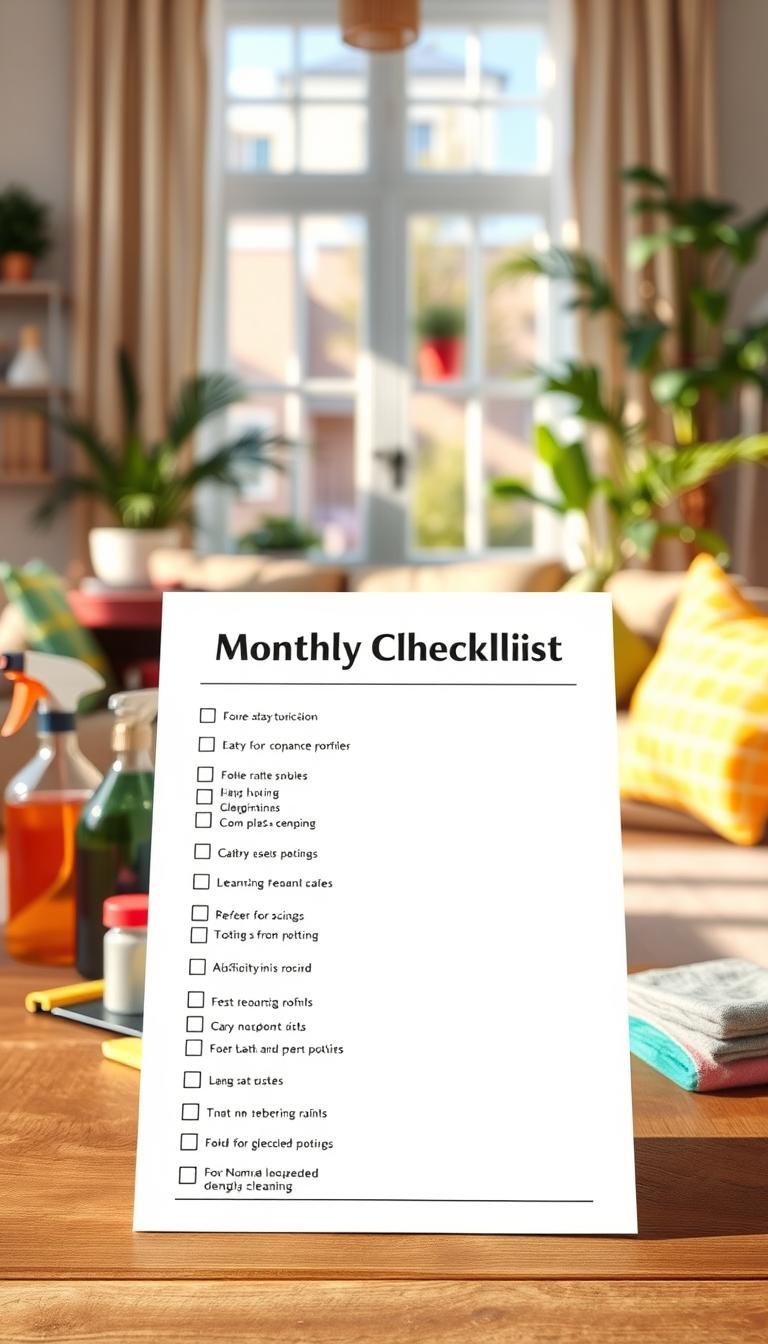
Small supports keep the plan kind to you. Post a simple cleaning routine card inside a drawer. Revisit the list monthly and tweak. One small change keeps your schedule working without extra strain.
Weekly and monthly layers for a fresher bedroom
Choose one predictable day each week for quick, doable cleaning tasks. That small commitment keeps things light. It also makes deeper monthly work feel easy.
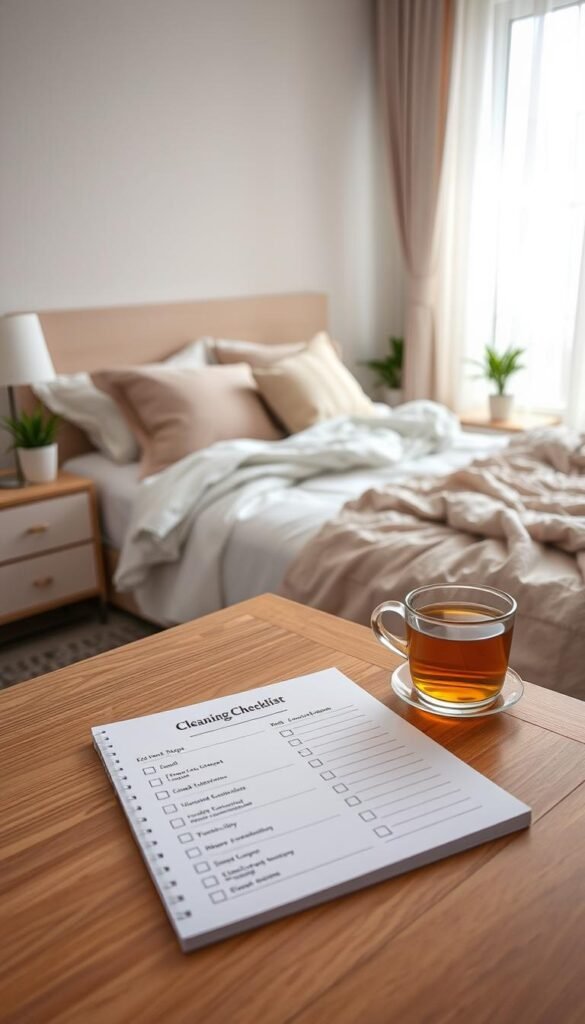
Weekly rhythm: fresh sheets, HEPA vacuum, quick dust
On your chosen week day, strip the sheets and wash them. Put fresh sheets back and make the bed.
Dust surfaces and furniture with a microfiber cloth. Focus on visible spots.
Run a HEPA vacuum over floors and rugs. Mop hard floors if needed.
Wipe handles, switches, and mirrors. Empty the trash. These small tasks keep the room feeling new.
Monthly refresh: fans, baseboards, curtains, and under-bed zones
Once a month, dust fans, light fixtures, and lampshades. Wipe baseboards and wall edges.
Wash or vacuum curtains. Clean vent covers and picture frames. Move light furniture and vacuum under pieces.
Refresh bulky bedding. Wash comforters and decorative pillows. Rotate pillows to even wear.
Do a quick closet audit. Dust the top shelf. Bag one donation if it is easy.
Cross-home pairing tip:
- While sheets wash, do a fast kitchen counter reset.
- When the vacuum is out, run it in the living room too.
- Pair a laundry block with a short surface wipe in bathrooms.
| Layer | Key actions | Frequency |
|---|---|---|
| Weekly | Change sheets; dust surfaces and furniture; HEPA vacuum floors; wipe handles; empty trash | Once per week |
| Monthly | Dust fans/fixtures; wash curtains; clean baseboards; move furniture; wash comforters | Once per month |
| Cross-room | Pair tasks: kitchen counters while laundry runs; living rugs with bedroom vacuum | As scheduled |
“Top to bottom. Clean to dirty. Floors last.”
Quick-reset toolkit for busy days
A small, ready caddy makes quick resets less stressful and more likely. Keep a light set of tools near your bed so short cleaning bursts fit into real life.
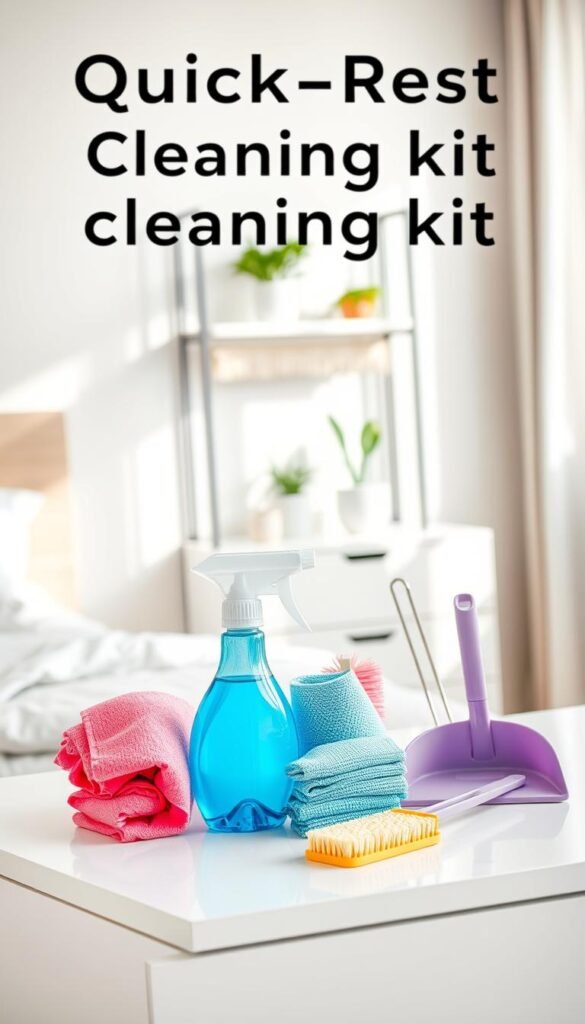
Micro tools: lint roller, microfiber cloth, gentle spray
Keep one microfiber cloth in the nightstand. Add a labeled gentle cleaner. You can refresh surfaces in minutes.
Use a lint roller on lampshades, throws, and fabric headboards. It lifts dust quietly and fast. Stash a small caddy under the bed with cloth, spray, roller, and a bag for trash.
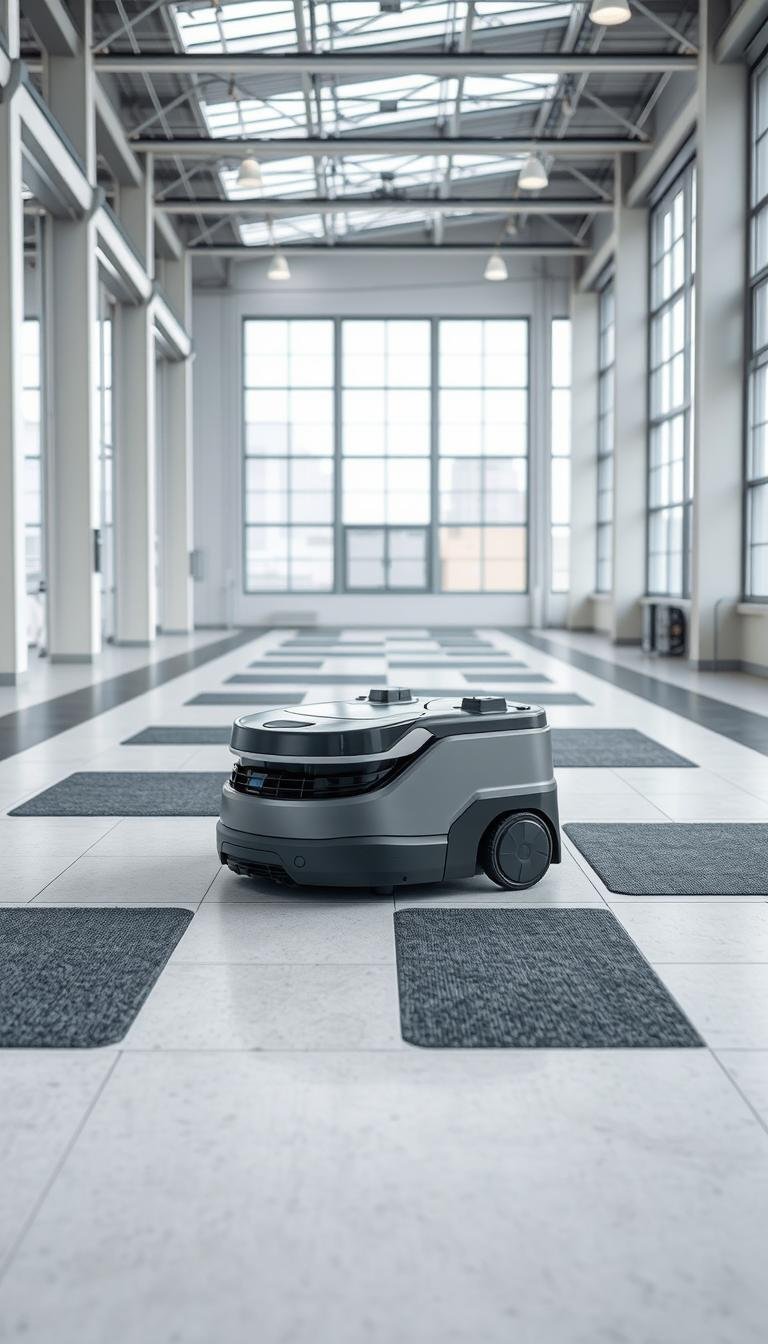
- Choose a lightweight vacuum or a robot for busy seasons. Run a quick pass when you have a gap of time.
- Sprinkle baking soda on carpets before a weekly vacuum. Let it sit while you finish small tasks.
- Open a window for 10–15 minutes or burn a short beeswax candle for gentle odor control. Always keep candles attended.
Short on time? Set a three-minute timer. Do the dresser top or the exit stack. Small wins add up.
“One calm breath by the window seals the reset.”
Conclusion
A few minutes each day can stop mess from growing into stress. Keep one simple list. Use a short timer when you feel stuck. Small wins add up fast.
Daily quick care prevents buildup. Make the bed most days. Clear one view in the room. A gentle cleaner and one cloth do plenty.
Follow a weekly plan: fresh sheets, a HEPA pass, and light dust. Add monthly jobs for fans, baseboards, and under-bed zones. These small cleaning tasks protect air and sleep.
Place landing spots for items and a tiny trash can by the door. Carry dishes and laundry out as you leave. Teach kids and family simple steps. Your house will feel lighter.
Start now with one tiny action. Two minutes. One tray. That calm choice is a clear way to care for your home without pressure.
FAQ
How long should my morning bed reset take?
Aim for two minutes. Smooth the sheets. Fluff pillows. Pull the duvet into a neat line. Small motions. Big visual payoff. This keeps the room calm and makes the whole day feel easier.
What quick steps reduce airborne dust and allergens?
Open a window for ten minutes if weather allows. Use a microfiber cloth to dust surfaces gently. Run a HEPA filter when possible. Wash pillowcases weekly. These simple moves improve air quality without extra effort.
How do I keep laundry from piling up?
Have one hamper near the closet. Sort as you go. Fold or hang what you wear the next day. A five-minute laundry habit after drying helps. Little actions prevent big piles.
When should I vacuum versus spot-clean the floor?
Do quick spot checks daily. Pick up visible lint and crumbs. Save a full vacuum for once a week. That keeps floors fresh without overwhelming your schedule.
What belongs in a bedside landing spot?
Use a small tray or basket. Keep glasses, a book, charging cable, and a notepad there. Add a tiny trash can for tissues and wrappers. This reduces clutter and makes nightly routines smoother.
How does a timer help short cleaning bursts?
Set a five or ten-minute timer. Focus on one task. No perfection. Just progress. Short bursts build momentum and make tidying feel doable even on busy days.
What is a simple weekly cleaning rhythm?
Change sheets once a week. Do a quick dust of surfaces. Run a HEPA vacuum. These steps refresh the room and support better sleep without long chores.
What should a monthly refresh include?
Clean ceiling fans or vents. Wipe baseboards. Wash curtains or launder what’s washable. Check under the bed for forgotten items. Monthly care tackles areas that get missed daily.
What micro tools should I keep in a quick-reset kit?
A lint roller, microfiber cloth, gentle multi-surface spray, and a small handheld vacuum or brush. Keep them nearby for fast touch-ups when time is tight.
How do I make these habits stick with kids or a busy family?
Make tasks short and specific. Use a shared landing spot for shoes and backpacks. Give simple, age-appropriate chores. Celebrate small wins. Consistency beats perfection.
Can these steps help if I have limited time each day?
Yes. Focus on the exit habit stack: grab dishes, toss trash, and return misplaced items. Five minutes at the end of the day keeps the room calm and starts tomorrow on a better note.