
The “Clean-As-You-Go” Method (Simple Rules)
You’re busy. Your days are full.
Find calm without long cleaning marathons. The “Clean-As-You-Go” Method offers small, gentle steps that fit real life. It shows how simple routines and quick resets can ease the burden of cleaning and help maintain a peaceful home.
Think wiping spills as they happen. Return items to their place. Keep a cloth and mild spray near at hand. These tiny choices save time and reduce buildup.
You will learn short checklists, room-by-room tips, and five-minute end-of-day resets. No guilt. No harsh products. Just soft, steady rules that make a clean house feel possible on busy days.
Key Takeaways
- Small, steady actions cut deep cleaning time and lower stress.
- Simple rules help you maintain order without big effort.
- Keep light tools nearby for quick touch-ups.
- Short routines and checklists fit into real schedules.
- Five-minute resets leave rooms feeling fresh each day.
What the “Clean-As-You-Go” Method Is and Why It Works
Handle small messes as they appear so they never grow. The idea is simple. You tidy while you use a space. Little actions add up. They keep your home calm without long chores.
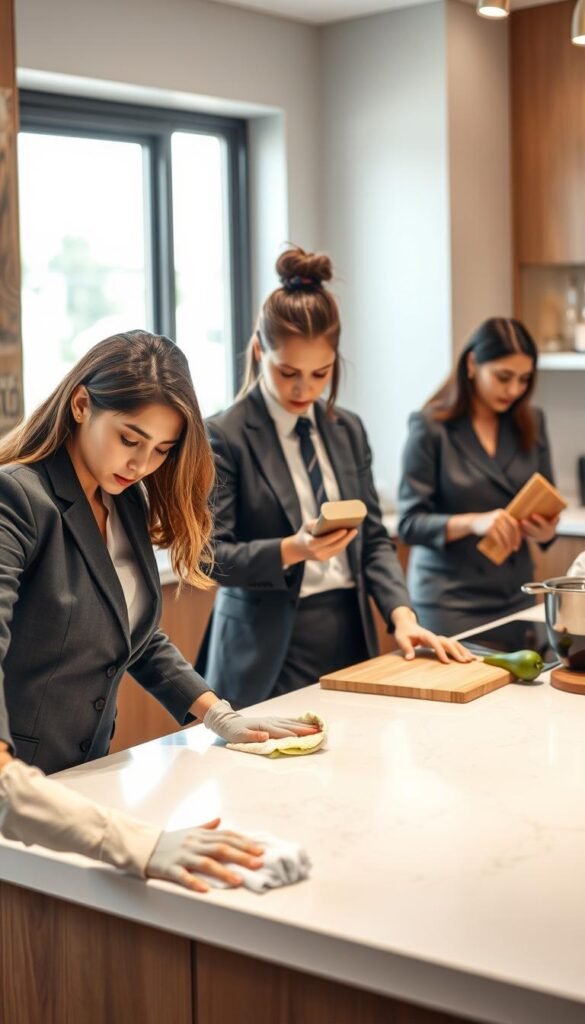
This approach fits busy days. Wiping spills and returning items takes seconds. Doing this during the cooking process or while you wait saves time. It makes deep cleaning feel lighter.
Key benefits in plain words
- Saves time: Small jobs finish fast and do not pile up.
- Less stress: Fewer visual distractions help you relax at home.
- Lower risk of accidents: Dry floors and clear pathways keep everyone safer.
“A few gentle resets each day remove friction from your routine.”
| Action | When | Benefit |
|---|---|---|
| Wipe counter | After breakfast | Cleaner surfaces, less grime |
| Return mug | Right after use | Less clutter on tables |
| Clear table | While tea steeps | Small tidy, big payoff |
Core Rules for Calm, Ongoing Cleaning
Turn short pauses into tiny tidy sessions that add up fast. These core rules keep chores light and steady. They fit into real life. No long marathons. Just small, kind actions.
Wipe spills and surfaces right away
Act fast on fresh messes. Wipe spills immediately. Then swipe nearby surfaces. Fresh mess is easy to lift.
Put items back in their place after each use
Make a habit of one short trip. Return mugs. Drop toys in a bin. These quick moves save serious time later.
Clean as you wait: simmer time, load time, hold time
Use short waits as tiny work blocks. While food simmers, load dishes. While laundry runs, clear a shelf. Little tasks fill little gaps.
Five-minute end-of-day reset
Do a short walk-through at day’s end. Toss trash. Gather stray items. Wipe one counter. That small ritual closes the day calmly.
- Keep a small caddy with a cloth and gentle spray.
- Work in tiny blocks: one drawer, one counter edge.
- Use a two-minute timer to stay focused.
“A few small resets remove friction from your routine.”
| Action | When | Benefit |
|---|---|---|
| Wipe spill | Immediately | Less stain, less scrubbing |
| Return item | Right after use | Less clutter later |
| Five-minute reset | End of day | Fresh start tomorrow |
Repeat daily. These tips form a gentle habit. Over time, this rhythm helps maintain a calmer home and protects your future self.
Light Tools and Setup That Make It Easy
Make reaching for cleanup as easy as reaching for your mug. A small kit removes friction. It keeps tidy actions quick and calm.
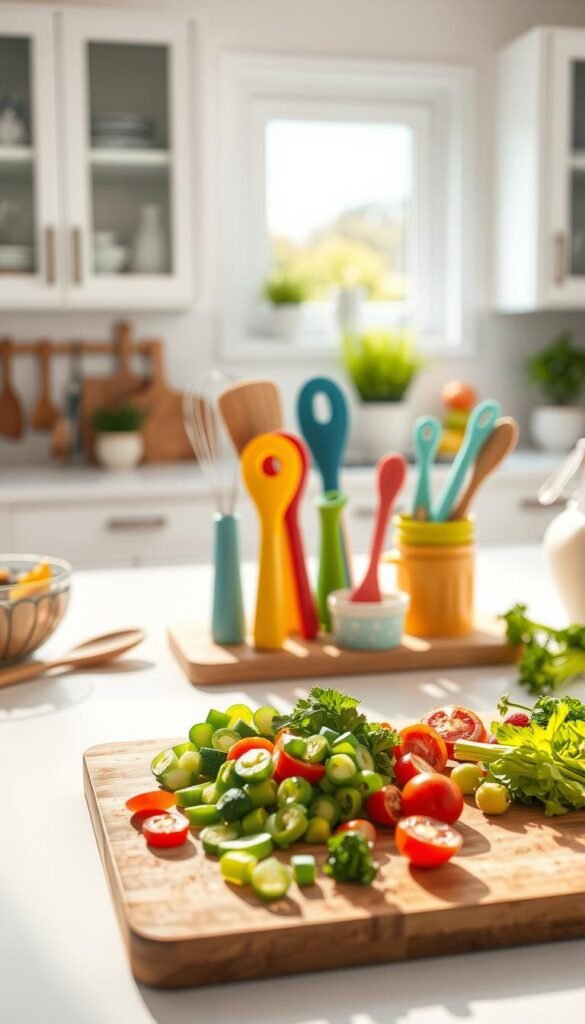
Keep a cloth and gentle all-purpose spray within reach
Keep a soft microfiber cloth and a plant-based spray near the sink and the main counter. A nearby cloth means you wipe spills the moment they appear.
No harsh chemicals. No fuss. Simple, gentle supplies help you act fast and feel confident.
Set a trash + recycling plan that’s quick to use
Use a clear trash bin and a small recycling spot. A counter garbage bowl catches peels, wrappers, and paper so you don’t leave scraps around.
Make the plan automatic. When sorting is easy, you do it without thinking.
Use a dish bin, garbage bowl, and extra towels
A dish bin holds quick rinses and small soaks. Extra towels nearby dry hands and wipe splashes fast. Store daily items within arm’s reach.
- Small caddy for moving tools through the space.
- Park rare equipment on a higher shelf in labeled bins.
- Keep only what you use daily at hand.
| Item | Where | Why |
|---|---|---|
| Microfiber cloth | Counter caddy | Fast wipe |
| Dish bin | Sink | Rinse and transfer |
| Garbage bowl | Counter | Catch scraps and paper |
“A tiny kit keeps cleaning small and steady.”
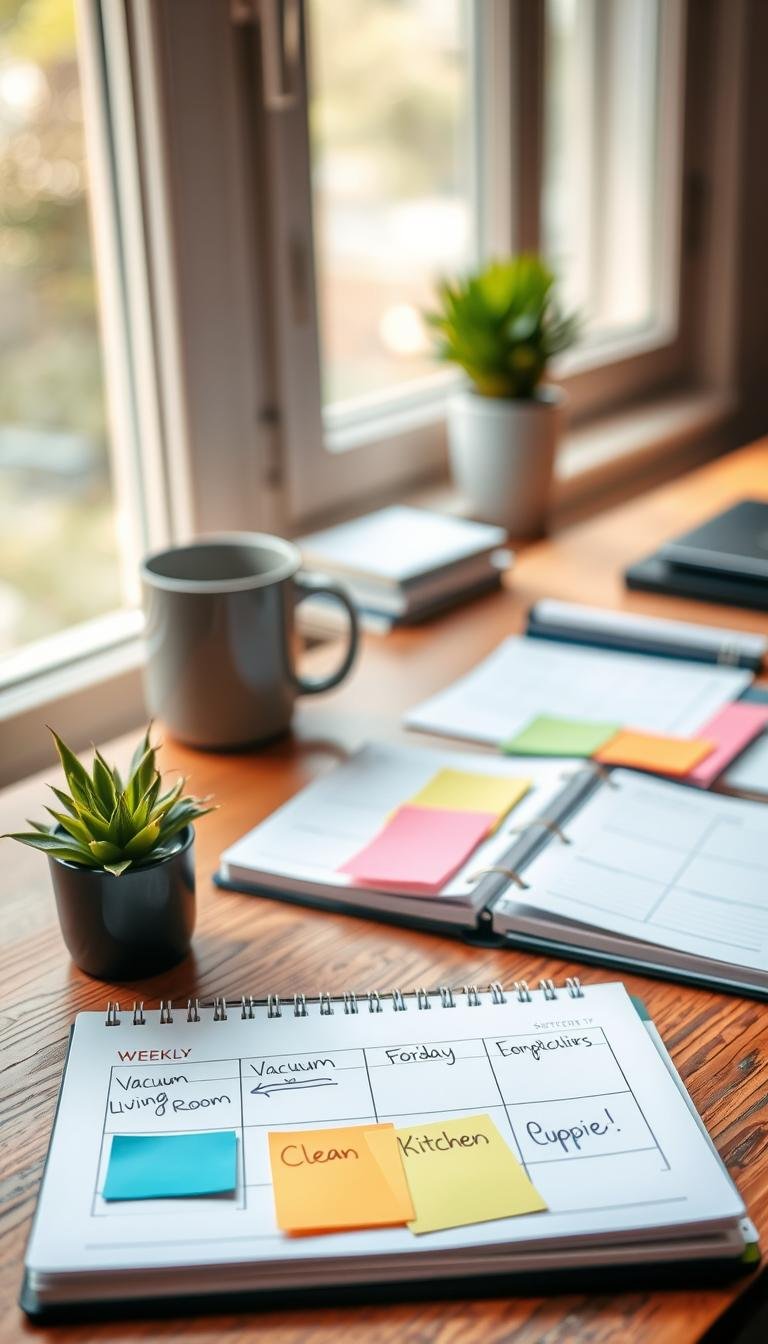
Daily, Weekly, and Monthly Routines at a Glance
Build tiny routines that fit into pockets of your day. These short rhythms turn small moves into a steady habit. They cut overwhelm and free your time.
Daily
Quick resets: Make the bed. Clear the sink. Wipe key surfaces in under ten minutes.
- Rinse dishes after meals.
- Run a quick dishwasher cycle when ready.
- Return items to their place to prevent clutter.
Weekly
Do short decluttering passes. Target high-traffic floors and the sinks.
- Sweep or vacuum entry and kitchen areas.
- Refresh sinks with a gentle scrub.
- Empty trash and recycling before they overflow.
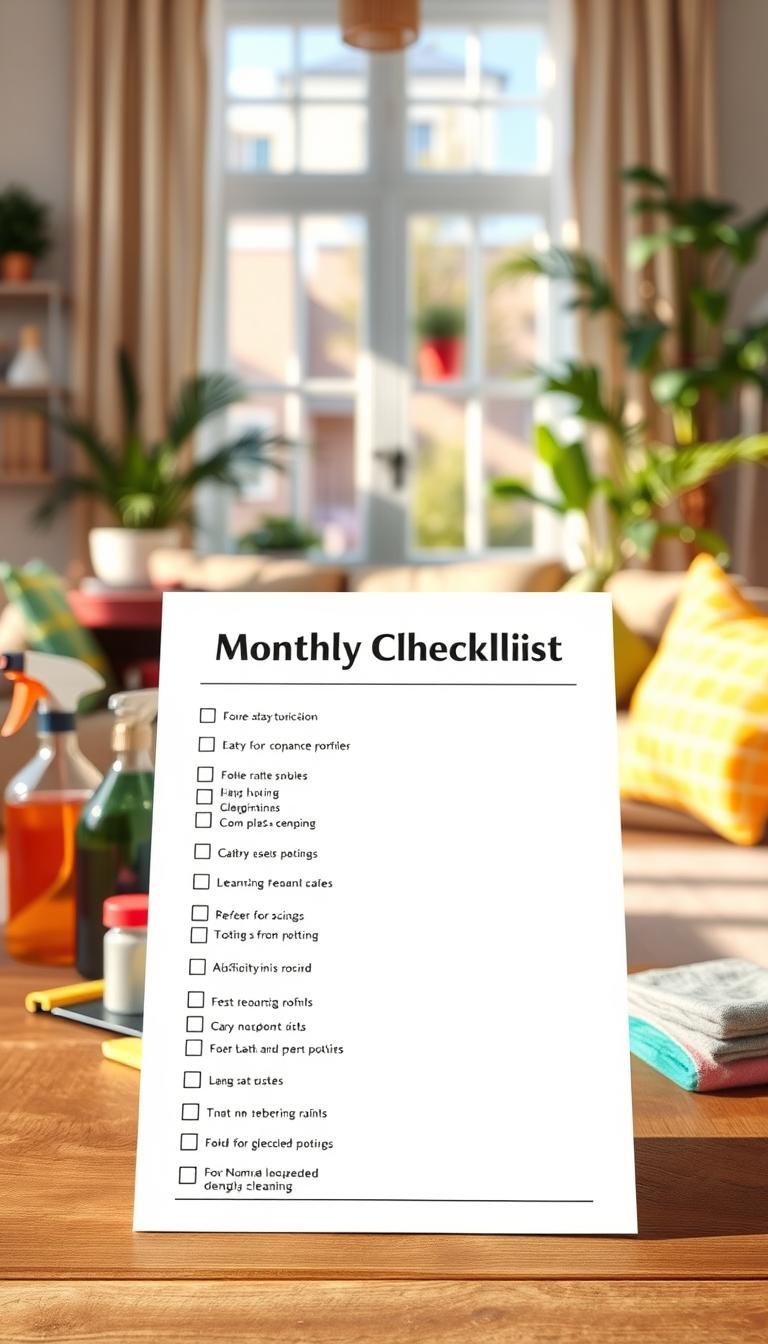
Monthly
Pick one zone for a deeper touch-up. Keep it short and kind.
- Declutter a drawer or shelf. Donate extras.
- Wipe baseboards or clean appliance exteriors.
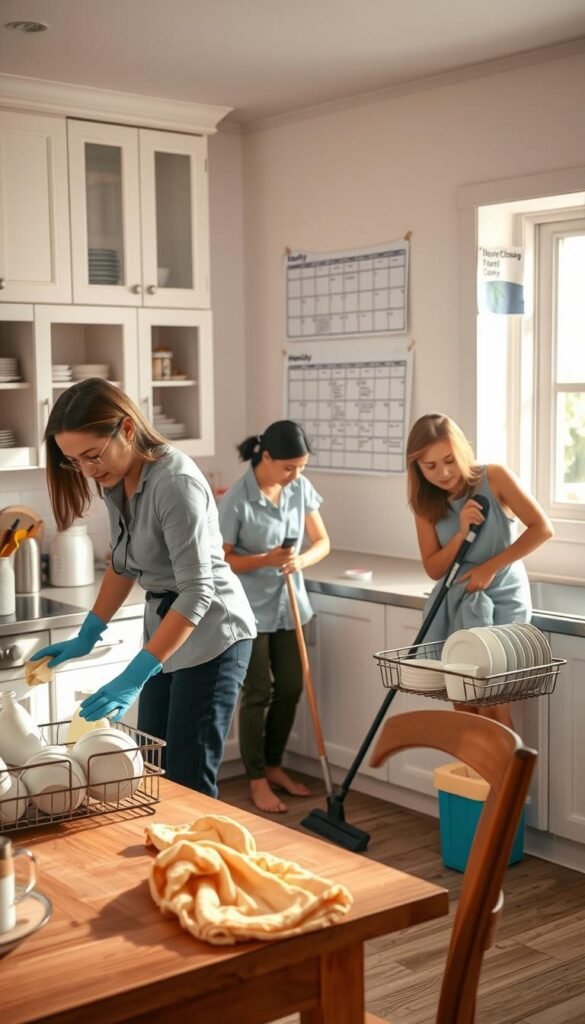
Simple tips like these help maintain calm at home. Keep plans small so they fit your work and life. Stop when you hit your time limit. Clean is a process, not perfection.
Room-by-Room Examples and Quick Resets
A few focused moves in one room can change your whole day. Small actions stop mess from growing. They save time and lower stress.
Kitchen and pantry
During prep: keep a small garbage bowl. Return ingredients and utensils to shelves as you finish them.
During cooking: wipe splatters and clear wrappers. Use a landing zone for utensils and small items.
After eating: rinse or load dishes, store leftovers, wipe counters and stovetop, and take out trash when full.
Bathroom quick wins
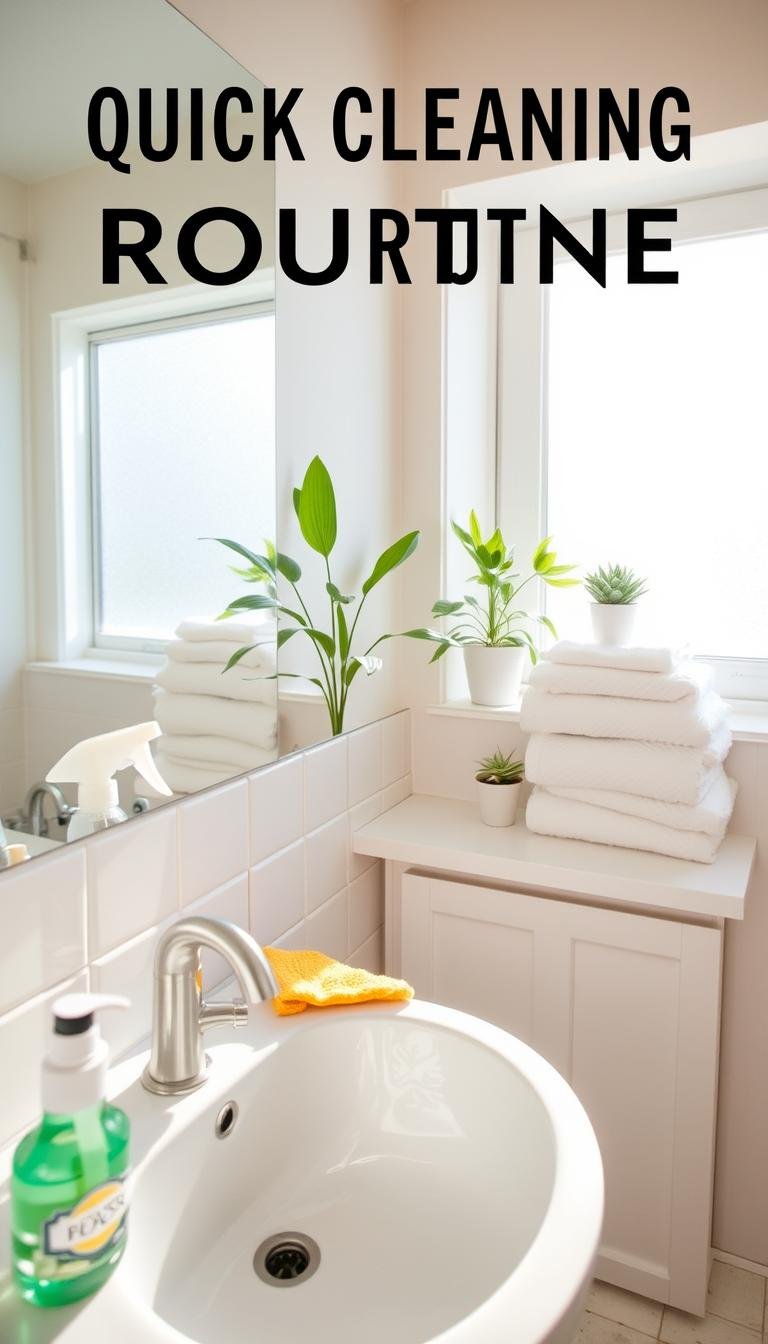
Swipe the sink after brushing. Spritz the shower to reduce buildup. Restock toilet paper now so it’s ready later.
Bedroom, closet, and entry
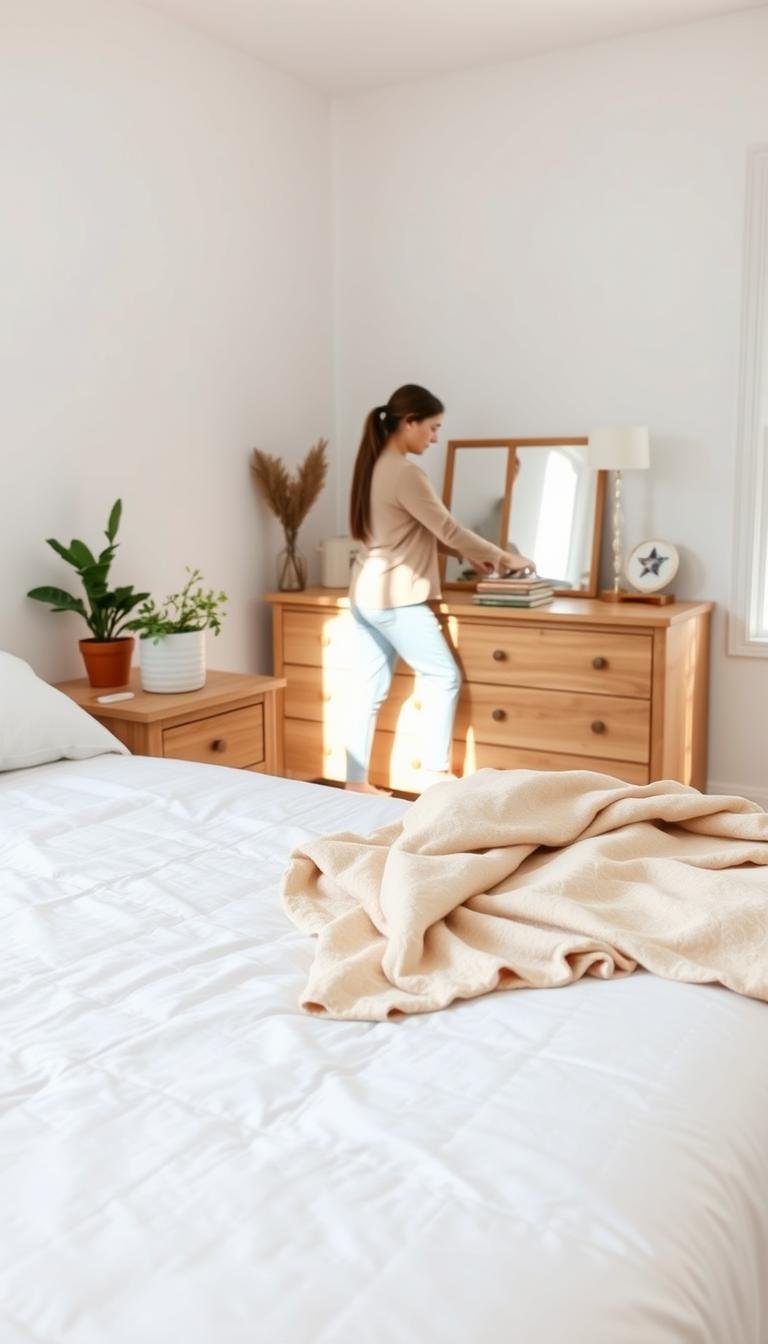
Make the bed on waking. Fold pajamas and put away a few clothes each day. Return dish ware if used nearby.
At the entryway, line up shoes, hang bags, set a key tray. Sort mail into trash or action piles.
Fast living-area resets
Fold blankets. Fluff pillows. Put away toys and books. Do a quick floor glance and lift crumbs or lint.
- Use tiny wins: one shelf, one minute.
- Keep moves short. No shame. Repeat daily.
“Clean-As-You-Go” Method in the Kitchen
Begin each meal prep by making space—empty the sink and clear the work surface. A blank start keeps the cooking process calm. It makes small tasks simple.
Start with an empty sink or dishwasher
Empty the sink or load the dishwasher first. Clean space lets dishes move fast. It prevents a pileup of dirty dishes mid-cook.
Use liners and soak pans early
Line pans with parchment, mats, or foil to cut scrub time. When pans get sticky, fill them with hot, soapy water right away.
Designate landing zones for utensils and scraps
Keep a bowl for scraps and a small tray for utensils during prep. This keeps the counter clear and tools within reach.
Restore the workspace before you serve
Wipe small spills with a soft cloth as they happen. Wash as you go and clean as you wait between steps.
- Keep your most-used tools and equipment at arm’s reach.
- Rinse and stack any dirty dishes neatly if you can’t wash them now.
- Before serving, stow ingredients and dry pans so you leave a clean kitchen.
“A tidy start makes the rest of cooking feel easier and kinder.”
Decluttering Steps That Support the Habit
A small clearing can open visual space and make daily put-backs easier. Start gently. Do one shelf or drawer at a time. Soft choices keep the task doable.

Keep only what you use often within arm’s reach
Store daily tools where you can grab them fast. Keep mugs, a favorite spatula, or a charging cable nearby. This protects your space and your focus.
Create simple homes for tools, paper, and small items
Label clear zones. Use a bin for tools, a tray for mail, and a bowl for small items. One simple example per zone helps everyone know where to put things.
Release duplicates and bulky equipment you don’t use
Let go of extras that block shelves and slow your resets. Donate or sell items that sit unused. Freeing up room keeps pathways open and lowers visual clutter.
- Keep only daily items within reach.
- Make it easy to put away with open bins and visible labels.
- Take gentle steps. One shelf today. One drawer tomorrow.
| Zone | Home | Quick example |
|---|---|---|
| Counter | Open bin | “mugs here” |
| Entry | Small tray | “mail here” |
| Desk | Drawer insert | “chargers here” |
This clean method supports quick tidying and a calmer environment at home.
Gentle Habits and Mini Checklists
Short, gentle loops keep each room ready for the next moment. These tiny routines fit into real life. They need little effort and give big payoffs.
Two-minute surface sweep
Set a two-minute timer. Sweep counters, table, and sink. Stop when the timer ends.
Quick tip: Keep a cloth and spray in a small caddy. Wiping in short bursts makes cleaning feel doable.
Floor glance
Look for crumbs, hair, or small spills. Use a hand vacuum or small broom. One lap clears the obvious.
Put-away loop
Run a short loop: dishes to the kitchen, toys to bins, paper to trays, cords to baskets.
Add a tiny bathroom pass. Swipe the sink. Restock a roll if needed.
- Use small bursts of work. One song. One timer.
- Keep cleaning tasks light. Stop before fatigue.
- End with a five-minute roam to gather, toss, and reset.
| Mini Habit | Where | How Long |
|---|---|---|
| Surface sweep | Counters, table, sink | 2 minutes |
| Floor glance | Entry, kitchen, living room | 1–2 minutes |
| Put-away loop | Whole house | 3–5 minutes |
“Choose grace over perfection. Your clean house grows one small loop at a time.”
Conclusion
Start small: clear one counter and feel the calm settle in. A single, short action can change how your kitchen and home feel. Use the empty sink as a cue. Keep a cloth and gentle spray within reach. Line pans and soak pots early to save time and effort.
Pick one tiny step today. Clear a shelf. Tackle a tray. Take out the trash before it overflows. These moves protect your tools and lower the risk of accidents.
Trust the rhythm. Short daily passes, weekly touch-ups, and a monthly zone will keep surfaces and dishes from piling up. Be kind to yourself. Small cleaning choices add up into a calmer house and a kinder routine.
FAQ
What is the “Clean-As-You-Go” approach and how does it help my kitchen?
It’s a simple habit of tidying while you work. Wipe spills. Put tools back. Load dishes as you cook. This saves time later. It keeps counters clear. It lowers stress and reduces slips and burns.
How can I start this habit without feeling overwhelmed?
Begin with tiny steps. Keep a cloth and gentle all-purpose spray nearby. Do a two-minute surface sweep after each task. Use a trash bowl for scraps. Small, consistent actions add up. No perfection needed.
What are the core rules to follow while cooking?
Wipe spills and surfaces right away. Put items back after use. Use wait times to load the dishwasher or soak a pan. Finish with a five-minute end-of-day reset. These rules protect your space and your time.
What tools are worth keeping within reach?
A cloth, an all-purpose spray, a dish bin, a garbage bowl, and extra towels. Keep them near your main work area. Simple tools reduce friction. They make it easier to act in the moment.
How do I handle garbage and recycling during cooking?
Set a quick plan. Use a small, stable trash bowl at your prep station for peels and scraps. Empty it into your bin when it fills. Have a recycling spot for paper and packaging. This cuts clutter and keeps floors clean.
What does a five-minute end-of-day reset look like?
Clear counters. Put away utensils and small appliances. Wipe surfaces and the sink. Toss trash. Start the dishwasher or air-dry a few items. It’s a gentle, short routine that makes mornings calmer.
How often should I do deeper cleaning versus quick resets?
Daily quick resets keep things in balance. Do small decluttering and floor passes weekly. Schedule a monthly touch-up for cabinets, large appliances, and donate extras. This rhythm keeps work manageable.
Can this approach work outside the kitchen?
Yes. Use the same idea in bathrooms, bedrooms, and entryways. Wipe the sink after use. Fold pajamas and put clothes away. Tidy shoes and mail at the door. Small habits spread calm across the home.
What if I cook for a crowd or make a big mess?
Prep with bins and liners. Soak pans as soon as they’re free. Assign landing zones for utensils and scraps. Tackle dishes in batches during simmer or rest times. Break big jobs into short bursts.
How do I keep family members involved without nagging?
Make roles simple and clear. Ask for one small action each person can do. Praise the effort. Use gentle reminders and a shared landing zone for items. Keep expectations realistic and kind.
Will this method really save time overall?
Yes. Small, regular actions prevent large catch-up chores. You’ll spend less time scrubbing and searching. You’ll avoid accidents and feel calmer in your space. The time you invest pays back quickly.
Any quick tips for avoiding sinks full of dirty dishes?
Start with an empty sink or dishwasher. Rinse or soak as you go. Load dishes during idle moments. Use a dish bin for rinsed items. Finish with a short wash or run the machine before bed.
How do I adapt this approach if I have limited counter space?
Create compact landing zones. Use vertical storage and small bins. Keep only daily items on the counter. Do one small tidy after each task. Clear space feels larger when it’s maintained.
What if I’m too tired at night to clean up?
Aim for a two-minute tidy. Empty the trash bowl. Stack dishes in the dishwasher. Wipe the main surfaces. These tiny wins reduce morning stress and protect sleep time.
Can these steps help reduce clutter long-term?
Yes. Combine daily habits with decluttering passes. Keep only what you use within arm’s reach. Create simple homes for tools and paper. Let go of duplicates and bulky items you rarely use. The system supports lasting change.