
15 Daily Habits for a Cleaner Home
You’re busy. You want calm. Small systems can change your space without stealing time. This guide offers gentle routines, checklists, and clear steps you can start today.
Cleaning experts Becky Rapinchuk and Jamie Hord both recommend simple moves like putting items away as you use them, finishing dishes at night, and making the bed each morning. These tiny choices add up to big relief.
We focus on short actions you can do in minutes. Each tip aims for quick wins in every room. The goal is ease, not perfection.
Expect room-by-room examples and weekly checklists that work together. Less visual noise. More breathing space. A calmer sense of living in your house.
Key Takeaways
- Small, repeatable steps lead to steady results.
- Putting things away as you go prevents big messes.
- Nights that include quick dish work set up calmer days.
- Simple checklists cut decision fatigue during the week.
- These tips fit busy schedules and protect your energy.
Simple mindset shifts for present-day home care
Gentle rules and tiny systems reduce stress in real life. Start with small choices. You do not need perfect results. You need steady steps.
Use a routine and a system to keep messes small. Becky Rapinchuk notes that people with clean homes use daily and weekly systems to manage clutter. Jamie Hord points out that visible spots make putting things away easier. These ideas are the way to less work and more calm.

Rules as tools: gentle structure, less stress
Think of rules as helpful. They free your mind. They do not shame you.
- Think small and steady. One short routine keeps mess from growing.
- Make choices once. Follow them each day to save time and energy.
- Keep clear start points. A basket by the couch. Hooks at the door.
- Share the load. One cue helps each person join in.
- When stuck, do one tiny action. One sweep. One win.
| Focus | What to set | Benefit |
|---|---|---|
| Morning anchor | Short reset (5 minutes) | Faster transitions into the day |
| Evening anchor | Quick tidy before bed | Less morning catch-up |
| Visible homes | Clear spots for keys and mail | Easier put-away that lasts all week |
Daily Habits for a Cleaner Home
Tiny wins each day add up to a calmer, easier living space. Keep steps short. Spend minutes, not hours. This numbered list makes the work feel doable.
- Put things away while you cook. Return spices. Seal bags. Load prep tools into the dishwasher as you go. You end with a calm kitchen.
- Never leave a room empty-handed. Take one item on your next pass. Use a small basket to speed returns.
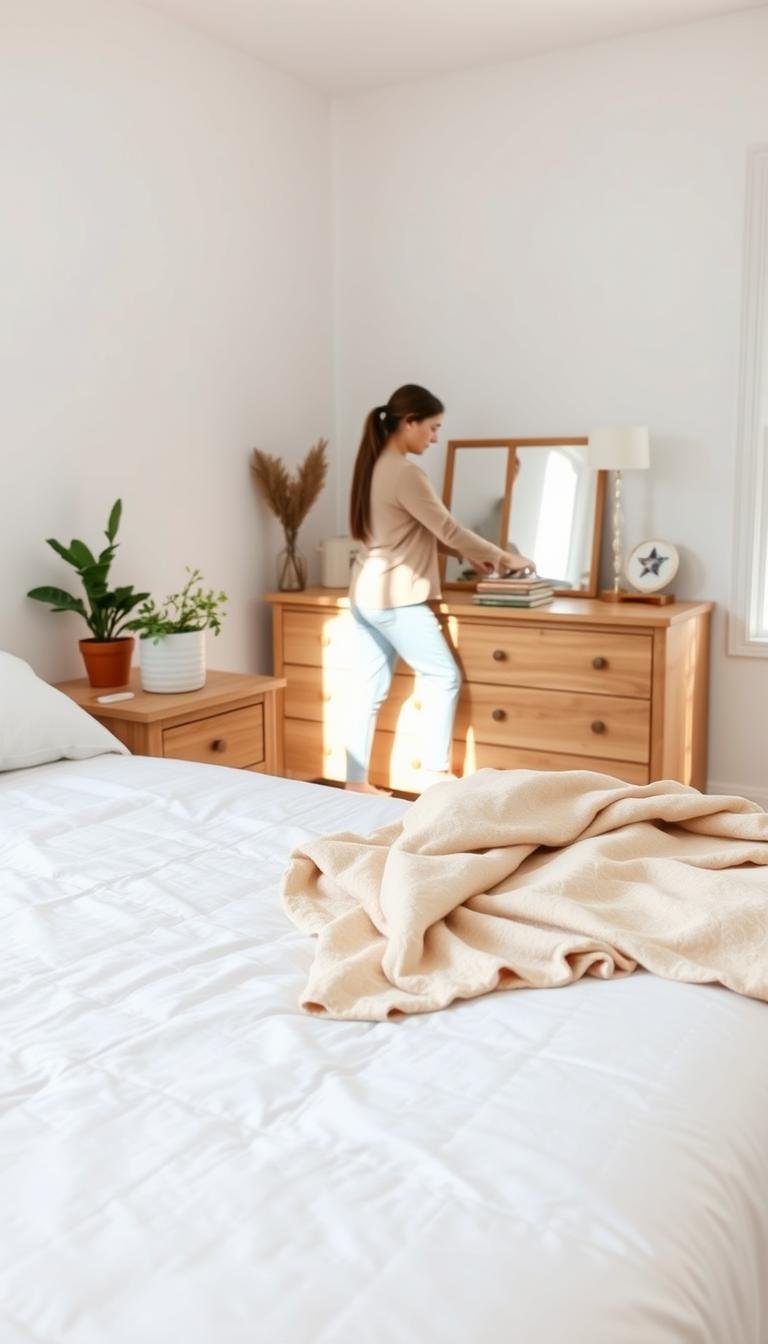
- Make the bed each morning. Two minutes. Your bedroom looks finished and your day starts calmer.
- Wipe counters after each meal. One quick swipe stops stains and keeps crumbs from spreading.
- Sort mail right away. Recycle junk. File bills. Put packages or items in their homes immediately.
- Finish dishes every night. Load as you cook. Empty the dishwasher before dinner when you can. Wake to a clean sink.
- Do one load of laundry per day. Wash, dry, fold, and put away. Small batches save you time later.
- Do a 2-minute floor scan. In high-traffic spots, pick up what landed on the ground before it spreads.
- Return floaters each evening. Keys, chargers, and remotes belong in set spots. Little returns make big differences.
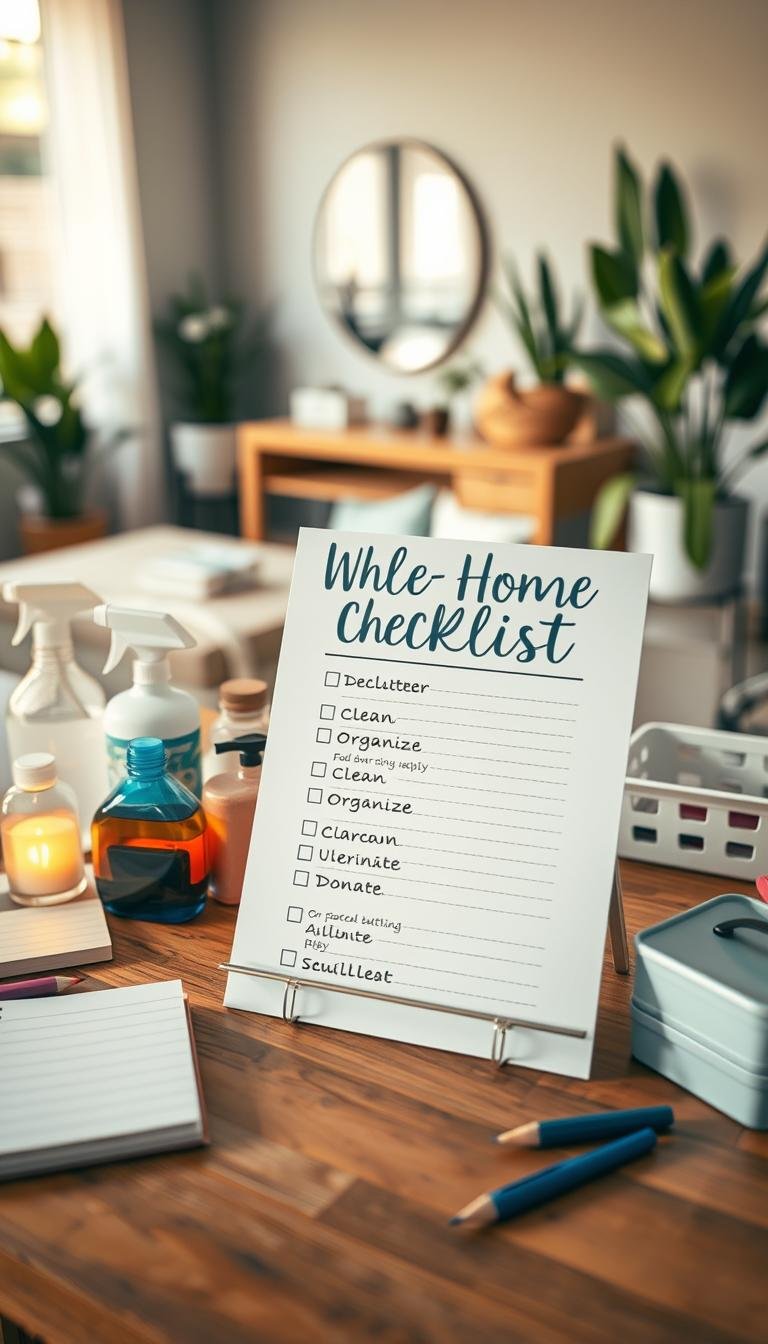
- Keep a simple list for accountability. Check off wins. Your cleaning routine stays light and fast.
Soft reminder: You do not need perfect results. Small actions, taken every day, protect your peace and your home without costing much time.
Five-minute quick resets that keep your house tidy
Quick five-minute resets keep clutter from growing overnight. These short checks protect calm. They take very little time. They make the next morning easier.
Nightly room reset with a basket sweep
Set a timer for five minutes. Grab one basket. Do one lap through the main room.
Collect loose items. Return them to their homes. Fluff cushions. Fold throws. Clear visible surfaces.
Entryway reset: shoes, keys, mail spot
Stop clutter at the door. Shoes go to the mat. Keys hang on the hook. Mail moves to its sort spot.
Have a bag ready for tomorrow. This simple rhythm helps you keep home calm each day.
- Living areas: cushions straight, remotes in place, surfaces clear.
- Bathroom: towels hung, counter wiped, trash checked.
- Bedroom: clothes to hamper, nightstand cleared, curtains closed.
- Kitchen: dishes done, counters wiped, quick sweep if needed.
Use the same order each night. The routine saves time and mental energy. Make it a family mini-task. Each person handles one task or one room.
| Reset | What to do | Benefit |
|---|---|---|
| 5-minute basket sweep | Collect loose items. Return on one trip. | Fewer piles next day |
| Entryway check | Shoes, keys, mail, bags set up | Stops clutter at the door |
| Night bathroom check | Hang towels. Wipe surfaces. Empty small bin | Feels fresh each morning |
| Family quick round | Each person tidies their zone | Load stays light all week |
Gentle rule: If you miss one night, pick it up the next day. The aim is steady progress, not perfection. Small, consistent tasks keep cleaning doable.
Simple organizing systems that make “put away” easy
When every item has a clear spot, put-away becomes nearly automatic. Use low-friction systems that match how your family moves through the house. Small changes pay off each day.
Give everything a home with visible, labeled spots. Clear labels help everyone know where things belong. Group similar items. Keep daily items within reach and store extras out of sight.
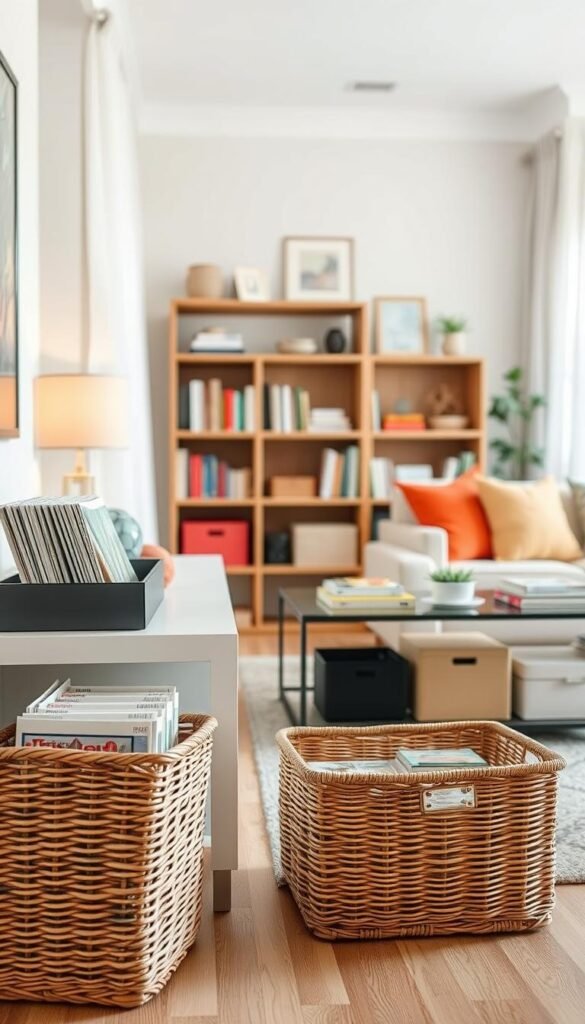
Use trays, bins, and catch-alls for everyday items
Trays gather keys, chargers, and small things. They protect counters and keep surfaces tidy. Matching bins reduce visual noise and make cleanup faster.
Family cues: one-touch rule and shared routines
Teach one-touch: place an item in its final home the first time. Add a simple list of spots for mail, gloves, chargers, and lunch kits. That lowers questions and reminders.
- Create visible homes with clear labels.
- Use a small bin for return, donate, and recycle.
- Store by use and reach. Everyday things stay handy.
- Review one small category each day to keep systems fresh.
Simple systems make put away feel like the easiest way to keep your home calm. Small steps. Little wins. A softer day at home.
Room-by-room examples you can copy today
Small, concrete steps make each room feel lighter in just minutes. Use these copy-ready examples. They are low effort. They work with real family life.
Keep counters clear except for daily tools. Prep-while-you-cook. Put things away as you use them. Label staple zones in the pantry. Use bins for snacks and breakfast items. Follow first-in, first-out when restocking.
Bathroom
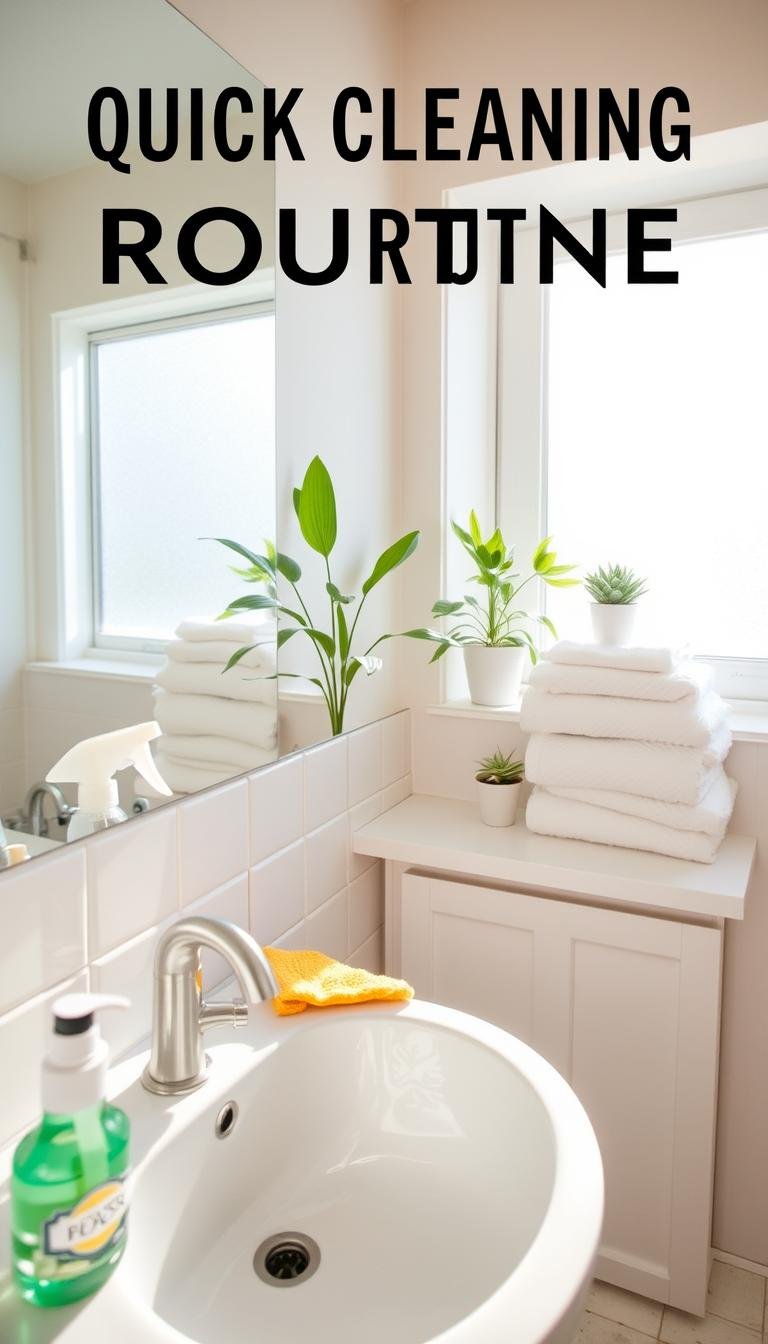
Wipe the faucet and counter each morning or night. Rotate towels so they dry and last longer. Keep a small bin for extras like travel sizes and spare soap. A quick scrub at the sink zone takes minutes and keeps surfaces fresh.
Bedroom and closet
Make the bed first thing. Keep a hamper within arm’s reach. Create a simple outfit zone for tomorrow. Use hooks for jackets and quick decisions. A small tray holds jewelry and watches so they do not wander.
Entryway and floors
Give each person one hook and one basket. Add a mail folder labeled “action” and “to file.” Use a shoe mat to stop dirt. Keep a lightweight vacuum or broom handy for crumbs in high-use rooms.
- Family cue: Label kid baskets by name.
- Weekly touch-up: One shelf, one drawer, one small spot.
Simple routine. Little wins. Less stress. These tips help your house stay calm with very little time or fuss.
Daily, weekly, monthly routines to keep home care light
Create a simple cadence that keeps chores tiny and steady. You do not need long sessions. Short repeats protect calm. This plan gives a clear rhythm you can follow every day.
Use small time boxes. Ten to twenty minutes keeps momentum. A short list stops tasks from growing. Batch errands on one day of the week to cut trips and clutter.
Daily: the 15 habits in minutes
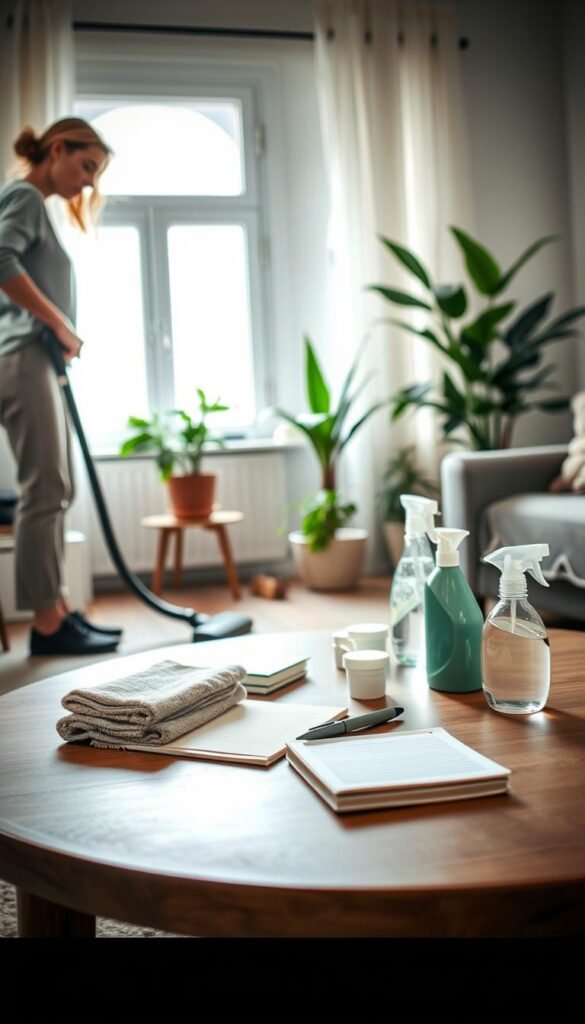
Keep the morning and evening anchors. Make the bed. Wipe counters. Finish dishes. Do one laundry load. Sweep with a basket sweep. These are short moves. They add up.
- Bed made.
- Counters wiped after meals.
- Dishes finished before bed.
- One laundry load handled.
- Quick basket sweep of living areas.
Weekly: planning day, menu plan, deeper reset
Pick one planning day each week. Map meals and groceries. Use 10-20 minutes to do a deeper reset in high-traffic rooms. That prevents big messes later.
- Set a weekly planning slot. Map the week’s meals.
- Do one deeper tidy of living or kitchen zones.
- Batch errands to one day when possible.
Monthly: mini-declutter sessions by zone
Choose one small zone each month. Closet. Pantry. Entry closet. Spend 20-30 minutes. Edit, donate, and relabel. A steady list keeps storage under control.
| Cadence | What to do | Time |
|---|---|---|
| Every day | Short resets and one-touch returns | 5–15 minutes |
| Week | Planning day and deeper room reset | 10–20 minutes |
| Month | Mini-declutter by zone | 20–30 minutes |
Make it visible. Put a simple checklist on the fridge or phone. Pair steps with anchors. After breakfast, wipe counters. After dinner, run the dishwasher. Shrink any task that feels heavy until it fits your day.
Weekly planning and meal prep that reduce mess and decision fatigue
Pick a single planning day to gather papers, sort tasks, and map out the week ahead. This small session brings calm. It saves time and keeps the kitchen and counters clearer all week.
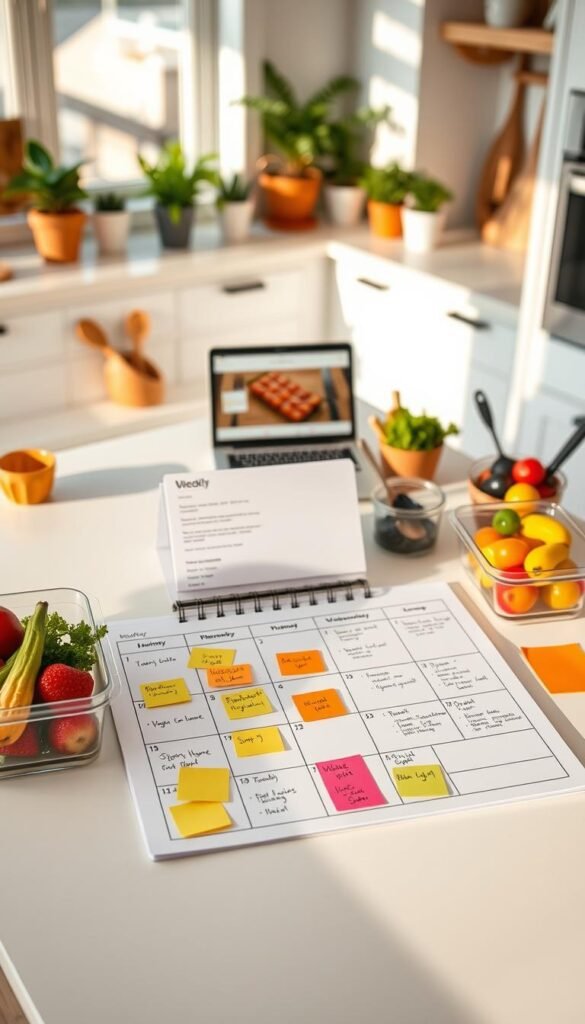
Weekly planning day: collect papers, set tasks, map the week
Choose one day. Sunday or any day that works. Keep it consistent.
- Gather papers and sort mail. Recycle junk.
- Review calendars. Note events for the family and work.
- Write a realistic list. Limit tasks each day to protect white space.
- Assign tasks to specific days. Add small wins you can finish quickly.
- End with a 5-minute audit. Trim anything heavy so the week feels calm.
Weekly menu: calmer evenings, neater kitchen, fewer piles
Plan a simple weekly menu. Repeat theme nights to cut decisions.
- Prep small. Wash greens. Chop one veggie. Marinate protein.
- Kitchen flow: empty the dishwasher before cooking. Load as you go. Wipe counters after meals.
- Create stations: lunch bins for kids, a breakfast basket, and a coffee tray.
- Keep a standing grocery list. Refill staples before you run out.
| Task | When | Benefit |
|---|---|---|
| Planning session | Weekly | Less surprise work and fewer piles |
| Menu prep | Weekly + short daily prep | Calmer evenings and neater kitchen |
| 5-minute audit | End of planning day | Clear start to the week |
Simple routine. One weekly session. One menu plan. Tiny prep steps add up. Your home and your time feel lighter.
Gentle decluttering and storage editing for lasting order
Every few months, a short edit can stop piles before they start. Take small, calm steps. The aim is steady control, not marathon cleaning.

How to work: Schedule an edit every 3–6 months. Pick one area. Pull items out. Decide with calm: keep, donate, recycle.
Practical short steps
- Limit sessions to 30–60 minutes. Short sprints reduce fatigue.
- Use clear, labeled bins for seasons and categories. Labeling aids retrieval.
- Seal and protect sentimental or seasonal things in sturdy containers.
- Keep a small “decision box” for maybes. Revisit it next round.
- Track donations in one place. Over years this builds a pleasing sense of progress.
- Make a short list of what to watch for next time. This saves time later.
Final gentle rule: Assign homes immediately after an edit. That tiny step prevents backslide and keeps your house and systems calm.
Conclusion
One short choice today can shape the whole room. Small moves add up. They change how your space and your life feel each day.
Keep a short routine. Pick three tiny tasks you can finish in minutes. Let them be the steady part of your day.
Finish dishes at night. Make the bed each morning. Tackle mail on arrival. Do one load of laundry and fold it. These simple cleaning steps stop clutter and save time.
Use weekly planning and a monthly edit to cut decision fatigue. Shrink any task if it feels heavy. One drawer. One basket. One shelf.
Start with one step now. Try the bed or an evening basket sweep. Small rules that serve you become calm ways to live. Over years, these tiny tasks build real peace in your home.
FAQ
How do I start with 15 simple routines without feeling overwhelmed?
Begin with one small step. Pick two habits that feel easiest. Practice them for one week. Add another pair the next week. Keep each session short. Ten to twenty minutes can shift your day. Gentle consistency beats perfect effort.
What does "never leave a room empty-handed" really mean?
It means carry one item out when you leave a room. A dish to the kitchen. A toy to the basket. A coat to the closet. These tiny returns add up fast. They stop clutter from spreading.
How do I make the bed without wasting time?
Keep it simple. Smooth the sheets. Pull up the cover. Fluff one or two pillows. It takes under two minutes. A made bed makes the whole bedroom feel calmer.
Any tips to ensure dishes get done each night?
Use a finish-it rule. Start the dishwasher or wash by hand right after dinner. Set a timer if you need one. Waking to a clear sink changes your morning mood. Consider a family cue so everyone helps.
How can I manage incoming mail and packages quickly?
Create one spot for incoming items. Open mail in a standing station. Sort right away: bin for bills, folder for action, recycle for junk. Unpack groceries into labeled spots when you get home.
What does a five-minute nightly reset look like?
Grab a basket. Walk each main room. Collect loose items and return them to their homes. Straighten cushions and clear counters. It’s fast. It keeps tasks small and mornings easier.
How can I keep counters clear while I cook?
Prep as you go. Put tools and packaging away as soon as you finish with them. Use a bowl for scraps. Wipe spills immediately. A few extra seconds saves a long clean later.
What is the one-touch rule for family members?
Touch an item only once when possible. Pick up laundry. Put it in the hamper. Put mail in the folder. Teach short, repeatable actions. It reduces decisions and clutter.
How do I set up visible, labeled homes for things?
Use clear bins, trays, and labels you can read at a glance. Keep frequently used items within reach. Give each family member a simple spot for daily items. When things are easy to return, people do it.
Can doing one load of laundry daily really help?
Yes. One load a day prevents mountains of clothes. Wash, dry, fold, and put away. Small, regular effort keeps closets and hampers manageable.
How often should I plan a deeper weekly reset?
Choose one calm day each week. Spend 30–60 minutes on planning, menu prep, and a focused tidy. This reduces decision fatigue and keeps your kitchen and living areas clearer.
What are gentle rules that actually work?
Make rules kind and clear. Examples: shoes by the door, mail sorted daily, dishes done after dinner. Keep them simple. Celebrate small wins. Rules feel helpful when they ease your day.
How do I tackle clutter without a big purge day?
Do mini edits. Spend 10–15 minutes in one zone each week. Use three boxes: keep, donate, recycle. Small, steady sorting beats overwhelming sessions.
Any quick entryway setup to reduce mess?
Add hooks, a shoe tray, and a small mail folder. Place a basket for keys and sunglasses. A mat for shoes catches dirt. These few items make comings and goings smoother.
How can I make putting things away feel easier for my family?
Make spots obvious. Use low bins for kids. Keep labels simple and visual. Teach one small habit at a time. Offer calm reminders. Praise helps it stick.
What should I do during monthly declutter sessions?
Focus on one zone. Check seasonal items. Label storage bins. Donate what you no longer use. Protect items that stay. Regular edits keep spaces useful and light.