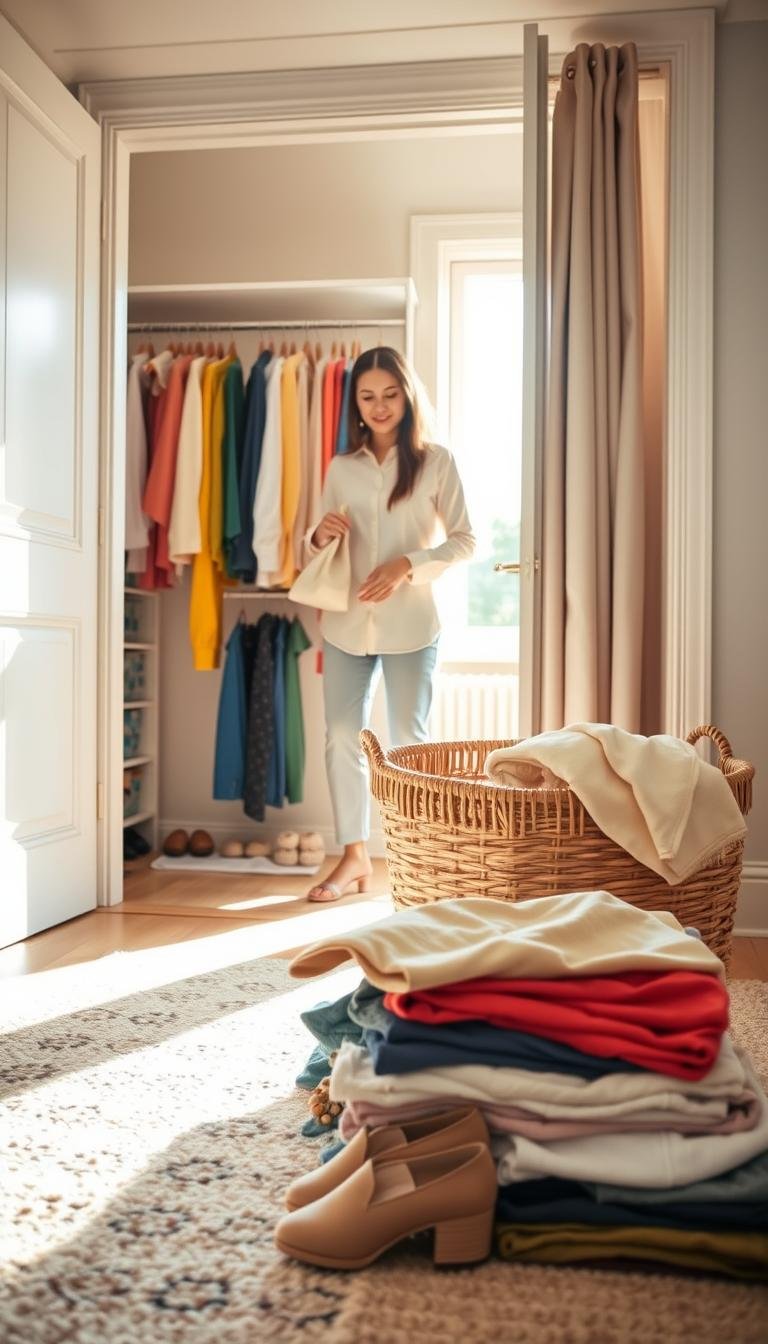
How to Declutter Your Closet (Fast Method)
You are busy. Days feel full and small tasks pile up.
This gentle guide offers a calm path. It shows simple steps to edit a wardrobe fast. You will use quick resets that fit real life. The aim is calm and confidence. Not space for more. But clear style and less clutter.
We focus on small wins. Short tasks. Daily, weekly, and monthly routines. You will learn which pieces you reach for and why. This makes decisions easier next time. Mornings will take less time. The home will feel lighter.
Key Takeaways
- Simple systems help you keep a calm space.
- Short steps and quick resets fit busy schedules.
- Editing items teaches you what truly works.
- Seasonal edits matter, but intention matters more.
- By the end you gain time, order, and a clearer style.
Set Your Intention and Light Prep
Begin with a soft aim: calm mornings and clothes that serve you.
Pause for a moment. Say the goal out loud. “I am creating a closet that works for me.” This small ritual sets tone and reduces pressure.
Why you’re doing this: You want calm, clarity, and a wardrobe that suits your lifestyle. This is not about perfection. It is about finding pieces that support the life you live now, not years ago.
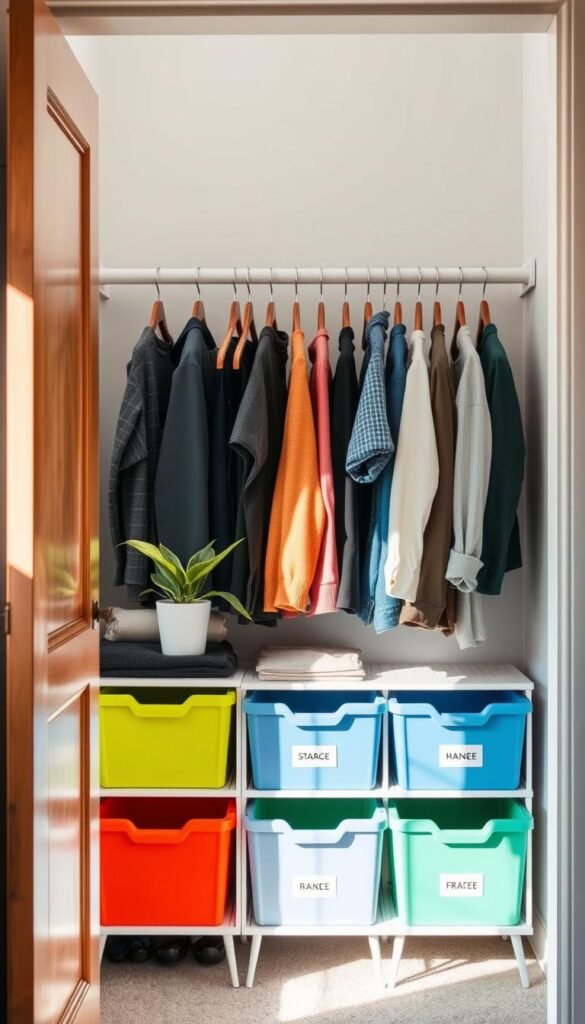
- Pick a short block of time on the calendar. One step at a time works.
- Make sure you have a timer, bags or boxes, fresh hangers, and water.
- Turn on steady music. Keep the space open and breathable.
- Gather a small trash bag and a hamper for stray items.
- Decide how you will measure success: one rail, one shelf, one shelf of things.
| Prep Item | Why it helps | Quick tip |
|---|---|---|
| Timer | Keeps momentum and limits overthinking | Try 20 minutes to start |
| Bags/boxes | Sort donations, laundry, and trash fast | Label as you go |
| Music & water | Keeps mood steady and energy up | Choose calm, steady playlists |
Remember. Personal style often evolves over years. Give yourself grace. If you feel like stopping, pause. Return when you are ready. These small tips will make the process kinder and more doable in a busy home.
Declutter Your Closet: The Fast Bed Method
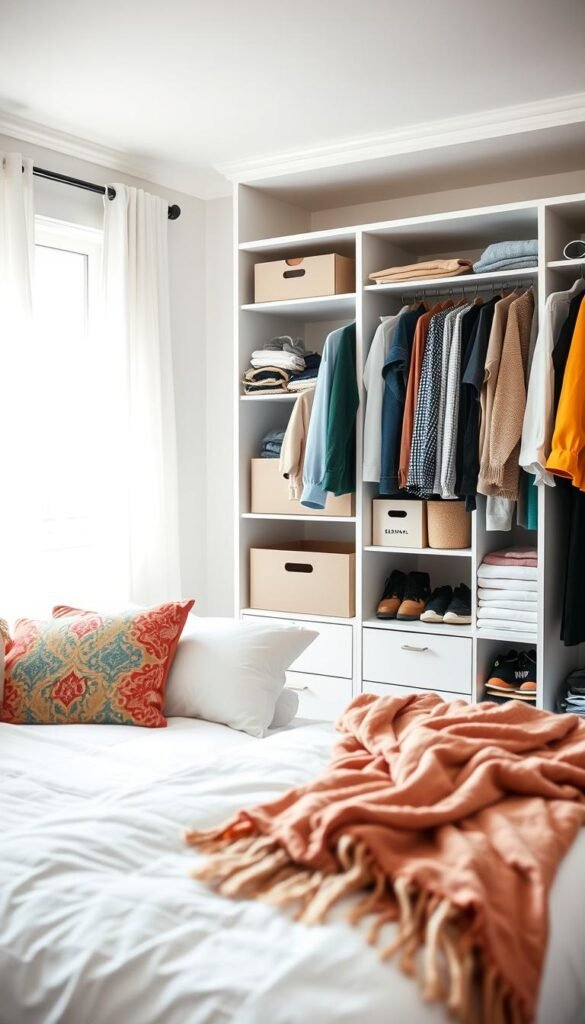
Clear a workspace on your bed and commit to finishing the sort in one go.
This is a simple, steady system. Block 2–5 hours if you can. Move everything out of drawers, shelves, and storage containers. Put all clothes, shoes, and accessories on the bed. Seeing the full wardrobe helps you decide faster.
- Step 1: Move all items off shelves and rails. Yes, everything.
- Step 2: Keep things on the bed. Avoid piles on the floor.
- Step 3: Do a fast closet clean. Wipe shelves, dust rails, air it out.
- Step 4: Make four piles: Love, Maybe, Donate, Trash. Label clearly.
Use two quick questions. Would I buy this today? Will I wear it in the next 3–6 months? Go with your first reaction. Your body often knows. Check condition. Stained or torn pieces go to textile recycling or trash. Bag donate and trash immediately so you won’t second-guess later.
Quick reset: Take a short walk. Breathe. Return calm and ready to put the Love pile back neatly into the closet.
| Action | Why it helps | Quick tip |
|---|---|---|
| Empty bed method | Shows all items at once | Prevents half-finished sorts on the floor |
| Four piles | Makes decisions simple | Label boxes or containers |
| Fast clean | Fresh start for the wardrobe | Air out for 10 minutes |
| Short walk | Resets emotions and avoids rash choices | Five to ten minutes around the block |
Smart Sorting Rules that Feel Good
Make easy rules that respect how you actually live.
Keep fit and lifestyle at the front. Ask if a piece fits your body and your typical day. If it does, it earns a spot. If it sits for special “someday” plans, it likely will not serve you now.
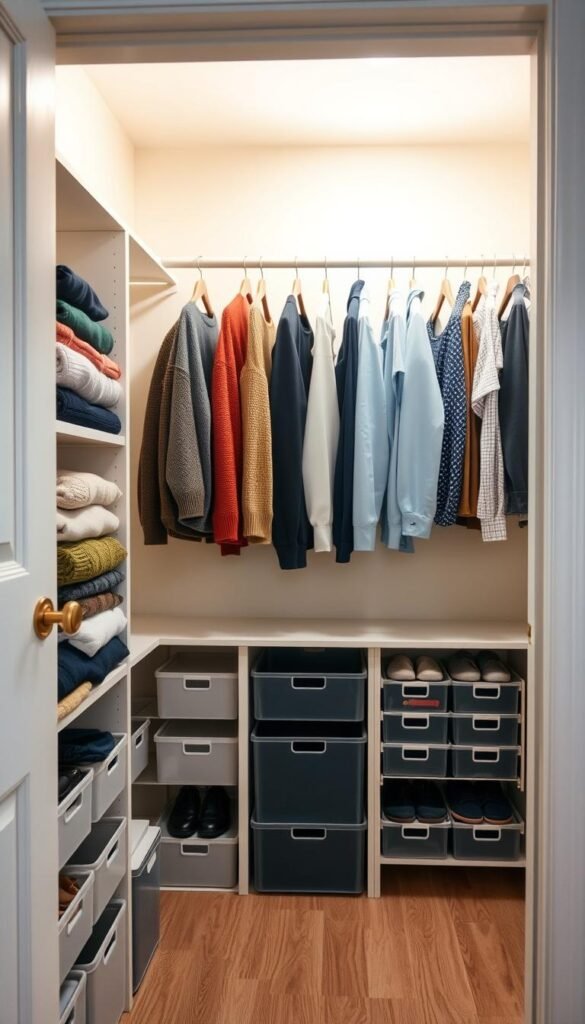
Fit and lifestyle over “someday”
Choose what supports daily life. One well-loved black tee outperforms five you never wear. Focus on pieces that make mornings easier.
The one-year honesty check
If you have not worn an item in a full year, move it to Donate or a hide box. This rule helps with getting rid without guilt. Some quality fashion from years ago may return. Keep a few favorites if you truly love them.
Tag-on items and duplicates
Remove tags and duplicates. Reduce repeating piles. One great version of an item is better than many that sit unused.
Hide box strategy: pause before donating
Seal a hide box. Date it. Store it out of sight for 30–90 days. If you forget what’s inside, donate with confidence.
| Rule | Why it helps | Quick action |
|---|---|---|
| Fit & lifestyle | Keeps wardrobe useful | Keep items you wear weekly |
| One-year check | Removes never wear pieces | Move to Donate or hide box |
| Duplicates & tags | Clears excess piles | Keep the best one only |
| Hide box | Prevents regrets | Seal, date, store 30–90 days |
Fast Capsule Options for Easy Mornings
Give a 33-item capsule a shot and watch how choices shrink and joy grows.
Try a small capsule for three months. This simple project borrows from Project 333. It helps you test a minimal wardrobe in real life.

Try 33 items for three months
Count clothing, shoes, accessories, and jewelry. Pack the rest away for 90 days. Label the box with dates and season. Come back and reassess then.
What to count and what not to count
Do not count underwear, sleepwear, loungewear, or true workout gear. If a yoga pant leaves the house, count it. Make sure multipurpose pieces pair well across the capsule.
Benefits: less decision fatigue, more favorite outfits
- Fast mornings and fewer choices.
- More outfits you enjoy wearing.
- Learn your style and fabrics you reach for.
- Adjust next season based on what worked.
| What to Count | Why | Quick Step |
|---|---|---|
| Clothing tops & bottoms | Core daily wear | Pick versatile colors |
| Shoes | Complete outfits | Select 2–4 pairs |
| Accessories & jewelry | Change looks fast | Limit to essentials |
| Excluded items | Keep comfort separate | Leave underwear, sleepwear out |
Soft encouragement: This one-step challenge gives time back in life. It lowers decision fatigue and brightens daily style. Try it. See how mornings feel.
Storage That Works: Hangers, Containers, and Simple Zones
A calm wardrobe begins with simple storage choices that save time every morning.
Match the look. Use one style of hangers to make rails read as one tidy band. This reduces visual noise and stops snags. Leave a little breathing room on each rail. The extra space helps you see outfits fast.

Keep things off the floor. Shoes, bins, and stray pieces stay cleaner. Clear containers help you find items without digging. Label softly. Try gentle tags like “cozy knits” or “light layers.”
- Choose one hanger style for fewer snags and a calm look.
- Stand up folded pieces so edges show at a glance.
- Give each category a place: one shelf, one bin, one rail zone.
- Rotate by season with a simple swap day and a short checklist.
- Keep a small donate bag inside so edits stay easy and light.
| Solution | Benefit | Quick tip |
|---|---|---|
| Matching hangers | Reduces visual clutter | Pick slim velvet or wooden hangers |
| Clear containers | See contents at a glance | Label with soft names like “tees” or “travel” |
| Raised storage & shelf zones | Keeps floor clear and easy to clean | Store off-season clothing higher or under-bed |
| Seasonal swap checklist | Prevents chaos when the weather changes | Swap items on one set day each season |
Maintenance Routines: Daily, Weekly, Monthly
A few gentle routines stop big overhauls later. Keep steps short. Make them easy to repeat. Small habits save time and reduce clutter.
Daily two-minute reset
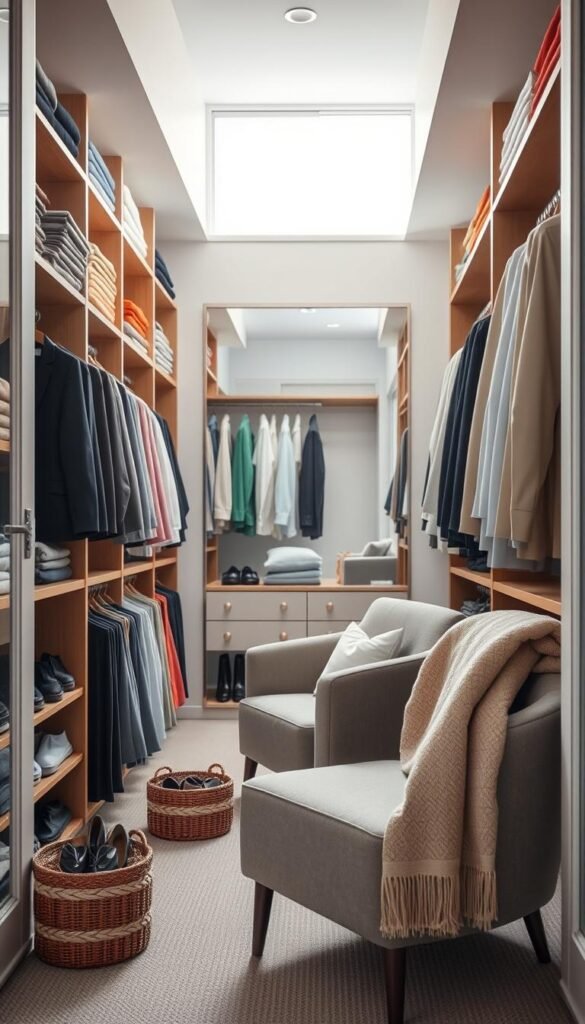
Set a 2-minute timer. Rehang shirts. Refold any slipped stacks. Return stray items to their spot.
Quick check: Remove one thing that does not belong. A tiny move keeps the space usable.
Weekly five-step laundry flow
- Sort. Separate lights, darks, and delicates.
- Wash. Use a short cycle when you can.
- Dry. Remove promptly to avoid wrinkles.
- Fold. Do this right after drying.
- Put away. Return items to the wardrobe or bins.
Keep laundry bins near the closet to cut travel time. Steam or lint-roll pieces as you hang so clothes stay ready to wear.
Monthly mini-edit by season and condition
Scan items by season. Check condition. Mend small tears or move worn pieces out.
If you never wear an item after two reminders, shift it to a donate bag. Maintain a small capsule rail for easy weeks.
| Routine | Why it helps | Quick tip |
|---|---|---|
| Daily reset | Prevents piles | 2 minutes each day |
| Weekly laundry | Keeps clothes fresh | Five clear steps |
| Monthly edit | Maintains condition | Repair or release |
Room-by-Room Examples to Support Your Closet
A few clear spots in each room protect your time and style. These small systems keep the home calm. They make dressing faster and gentler.
Entryway
Quick setup: Add a mat and a shoe tray. One hook per person. One small bowl for keys.
Choose a drop place you clear each night. Keep coats seasonal. This saves a pile at the door.
Bedroom
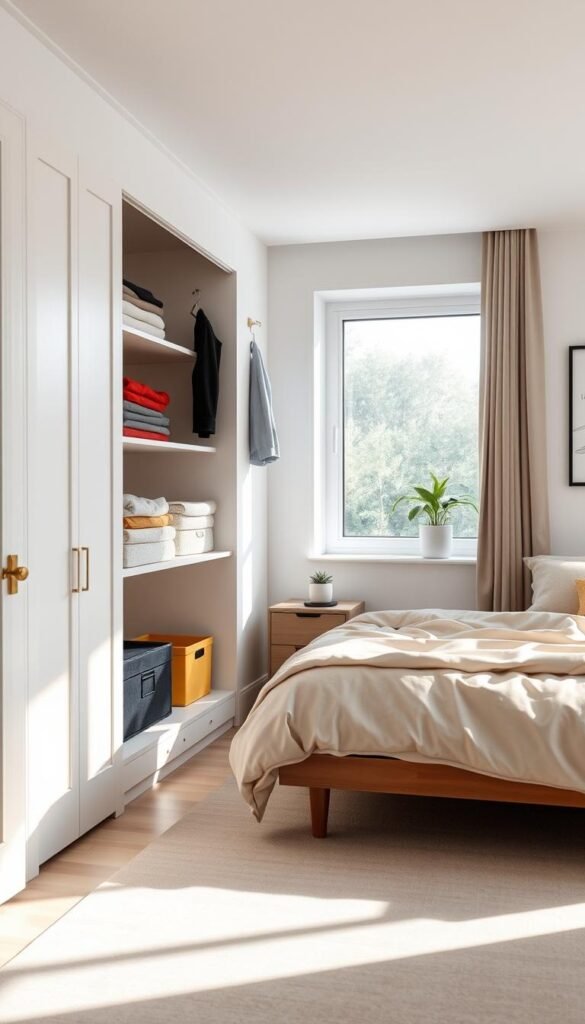
Clear the top of the dresser and the nightstand. Use one tray for daily pieces like a watch or everyday jewelry.
Use shallow drawers for tees and sleep items. Stand folds so you see each item at a glance.
Bathroom
Keep hair tools in a heat-safe bin. Use a small caddy for daily products.
Set a hamper near the door for an easy laundry handoff. These steps protect your morning routine.
Kitchen and Pantry
A simple meal plan saves time. That protects your morning rhythm and reduces last-minute fashion stress.
Keep a small “out the door” basket for snacks, water, or returns. It cuts little runs that create clutter.
Closet specifics
Group pants by length. Fold sweaters to protect knits. Use matched hangers for dresses and jackets.
Keep a tiny summer bin for warm-season pieces while cooler weather is out. Hold one pile only for returns or tailoring and clear it weekly.
| Place | Small system | Why it helps |
|---|---|---|
| Entryway | Shoe tray + hook | Stops morning pileups |
| Bedroom | Tray + stand folds | Makes outfits easy to find |
| Closet | Grouped pants + matched hangers | Protects fabric and saves time |
Conclusion
A single focused clean can change how mornings feel for months.
You now have a clear way forward for your wardrobe. One tidy session can replace constant seasonal swaps. Use small steps. Save time. Keep things light.
Try the capsule project for a season. Note which clothes and items you reach for most. Do a two-minute reset when piles appear. Run a once-a-month closet clean and a short laundry and put-away block each week.
Let fashion and style evolve. Store select pieces for a year if needed. This gentle approach to decluttering protects the wardrobe you wear. It keeps pants, summer layers, and go-to shoes ready. You did meaningful work. Keep it simple and kind. Enjoy the quieter mornings and calmer life.
FAQ
How long will the fast bed method take?
Plan for one focused session of 60–90 minutes for a small to medium wardrobe. Bigger closets may need two shorter sessions. Use a timer. Work in short bursts. You’ll feel lighter right away.
What is the first step before you start?
Set a gentle intention. Gather a timer, trash and donation bags, fresh hangers, and a water bottle. Clear a spot to sort. Soft music helps. Small prep makes the process calm and doable.
Do I really need to empty everything onto the bed?
Yes. Seeing all items at once helps honest choices. Shoes, bags and storage bins go on the bed too. It’s quicker to sort when nothing hides on a shelf or hanger.
What are the four piles and how strict should I be?
Make Love, Maybe, Donate, and Trash piles. Keep Love items you wear and adore. Maybe items can wait in a hidden box for a month. Donate anything in good shape you won’t wear. Trash items are for stains or damage beyond repair.
How do I answer “Would I buy this today?” without guilt?
Be kind but honest. If you wouldn’t buy it now, it probably won’t serve you. Think about fit and lifestyle. If it didn’t match your life this past year, let it go with gratitude.
What is the one-year honesty check?
If you haven’t worn an item in a year and it’s not seasonal or special occasion, it’s time to release it. This simple rule prevents keeping things “someday” that never arrive.
How does the hide box strategy work?
Place uncertain pieces in a sealed box with a date. Store it out of sight for 3–6 months. If you don’t miss the items, donate them. The pause reduces decision stress.
What counts toward a 33-item capsule?
Count tops, bottoms, outerwear, shoes, and accessories you wear daily. Exclude workout gear, underwear, sleepwear, and jewelry you don’t change weekly. Aim for versatility and favorite pieces.
How do I match hangers and why does it matter?
Use similar hangers to save space and create visual calm. Slim, non-slip hangers keep shape intact. Matching hangers make the closet feel tidy and reduce visual clutter.
What storage solutions are best for small spaces?
Clear bins, gentle labels, and shelf dividers work well. Keep items off the floor. Use over-the-door shoe pockets and under-bed boxes for seasonal swaps. Simple zones reduce daily friction.
What is a daily two-minute closet reset?
Each evening, return stray clothes to their home. Straighten hangers and put shoes away. Two minutes keeps clutter from piling up and saves time later.
How should I handle items with sentimental value?
Limit sentimental pieces to a small, special box. Display or store only what truly brings joy. For the rest, take a photo before letting go. Images hold memory without physical weight.
When is seasonal swap day and how often?
Do a seasonal swap twice a year. Move summer and winter wardrobes at the start of each season. Store off-season clothes in labeled bins. This keeps daily choices simpler.
What if I’m short on time and overwhelmed?
Start with 15-minute mini-edits. Tackle one shelf or a single drawer. Small wins build momentum. Be gentle. Progress, not perfection, is the goal.
How can I prevent duplicate items from creeping back?
Keep an inventory list of core items you own. Before buying, check your list. Donate duplicates during your next mini-edit. Thoughtful shopping protects your space and budget.
Where should shoes and bags live?
Give shoes a dedicated shelf or clear boxes. Hang or store bags upright in a bin. Keep everyday items easiest to reach. Seasonal or special pieces can go higher or in labeled containers.
How do I care for clothing to extend its life?
Follow garment care labels. Mend small issues quickly. Rotate wear to reduce wear patterns. Proper care saves money and keeps favorites in good shape.
Can family members share a system with different styles?
Yes. Create zones by person and by type. Use color-coded labels or baskets. Keep a shared donation box for items everyone agrees to release.
What if I feel guilty giving away expensive items?
Remember value isn’t only monetary. If an item doesn’t fit your life, it blocks space for things you love. Resell high-value pieces or donate them where they’ll be used.
How often should I do a full wardrobe edit?
Aim for a full edit once or twice a year. Mini-edits monthly keep things tidy. Seasonal checks align your wardrobe with your life and body changes.