How to Declutter Your Bathroom
Life feels full. You want a calm space at home that helps, not hurries. This short guide offers simple systems. It promises quick resets and no pressure.
Start with a 30-minute timer. Sort items into four piles: Keep, Donate, Trash, Belongs Elsewhere. Use numbered steps, checklists, and routines. These make the task feel achievable today.
Most opened beauty products last 6–18 months. Toss anything with odd texture, color, or scent. Combine duplicates to reduce waste and free up space.
Keep counters clear. Store most things out of sight. Small organizers fit drawers and cabinets. Two-minute daily resets keep the calm in place.
Key Takeaways
- Set a 30-minute timer to make progress fast.
- Sort into four clear piles for easy decisions.
- Discard products if texture, color, or scent is off.
- Use small organizers and keep counters clear for calm.
- Add short daily and weekly routines to maintain results.
- Focus on function first; fewer items create more space.
A calm start: set a simple goal for this room
Name one tiny win to focus on for the next half hour. Keep the aim clear. For example: “Clear the counter so I can wash my face with ease.” Write that line on a sticky note. Put it where you will see it all day.
Set a short block of time. Thirty minutes is enough to make visible progress. Walk the space in one steady path. Move clockwise or top to bottom. This steady rhythm cuts decision fatigue.
Use four simple piles: Keep, Donate, Trash, Belongs Elsewhere. Decide fast. If you hesitate, the item likely no longer helps you. Start with easy wins. Empty packages and worn tools let you get rid of the first layer of clutter.
Keep only items that support your daily routine in this room. Store the rest elsewhere or let it go. When the timer ends, stop. Celebrate progress. Plan one more short session later in the day.
Declutter Your Bathroom
Give yourself one focused half-hour and move through small zones. This keeps the task calm and doable. Set a simple timer for 30 minutes. Treat that span as one gentle mission.
Use a timer for focus and momentum
Start the timer. Work without overthinking. Move each item only once. Decide fast. Place it in the correct bin.
Set up easy sorting bins
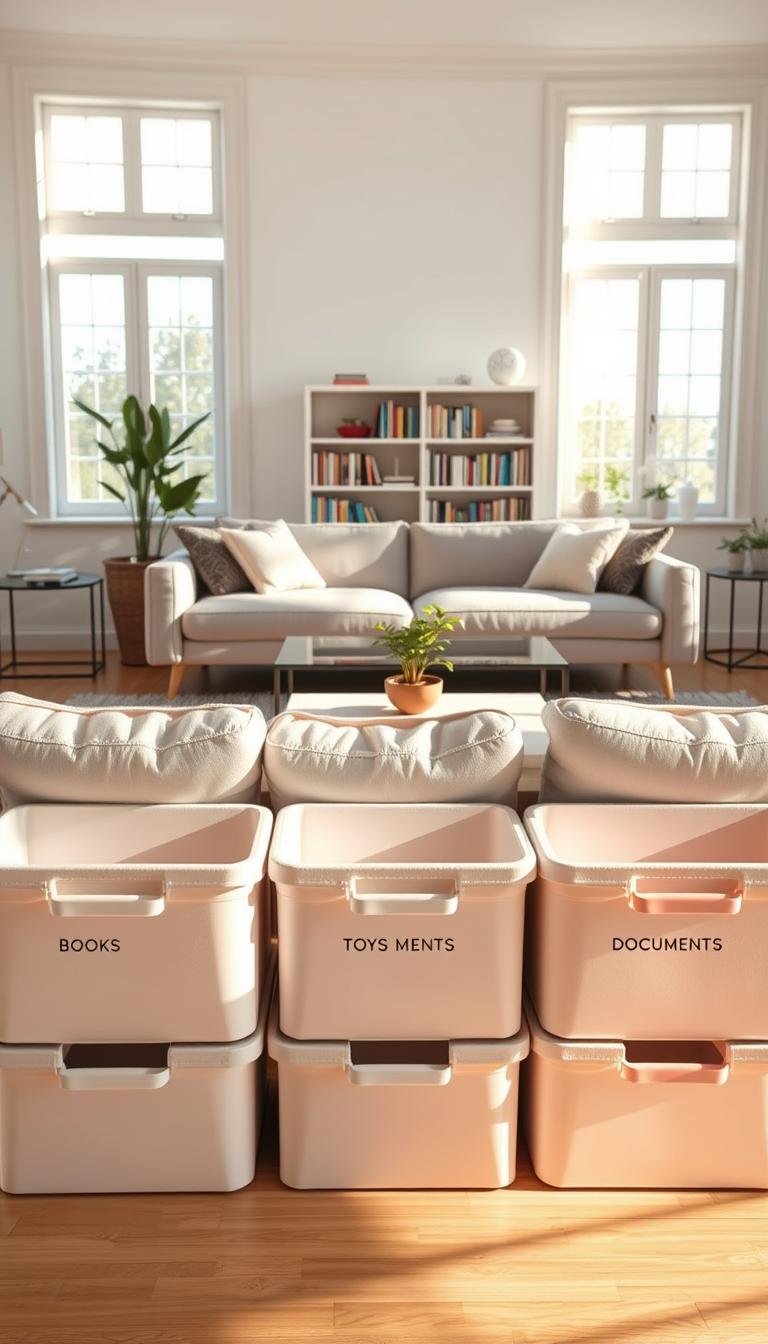
Prepare four containers: Keep, Donate, Trash, Belongs Elsewhere. Begin with visible surfaces. Then do one drawer. Limit the scope to protect your time.
Ask gentle questions as you decide
- Do I use this weekly?
- Is it still good?
- Would I buy it again?
- Can I combine duplicate bottles?
| Step | What to do | Quick tip |
|---|---|---|
| 1 | Set timer for 30 minutes | One focused block builds momentum |
| 2 | Sort into four bins | Move items once |
| 3 | Check hair tools and small items | Keep what you reach for often |
When the alarm rings, pause. Take out trash and donations. Wipe the cleared sink if you have a few spare minutes. One small step. One session. That is enough to move forward today.
A step-by-step system that takes you from clutter to clear
Begin with a fast sweep to clear visible mess and free space. A short win eases the mind. It makes the next steps feel simple.
“Five tidy minutes can change how the room feels.”
Follow this calm flow. Move with purpose. Decide gently.
- Step 1. Do a fast trash sweep. Five minutes removes obvious waste and opens space.
- Step 2. Gather by category. Pull hair, skin, dental, makeup, and towels together so you can see volume.
- Step 3. Right-size groups. Combine duplicate bottles and remove extra packaging where safe.
- Step 4. Check dates on products. If texture or scent is off, get rid without guilt.
- Step 5. Use small drawer bins and simple shelf dividers to give each group a clear home.
- Step 6. Wipe counters and shelves while they are empty. It is faster and oddly satisfying.
- Step 7. Return only what you use. Box or donate unopened extras to keep visual calm.
- Step 8. Add small labels and plan one short check-in in a few minutes next week to keep the wins in place.
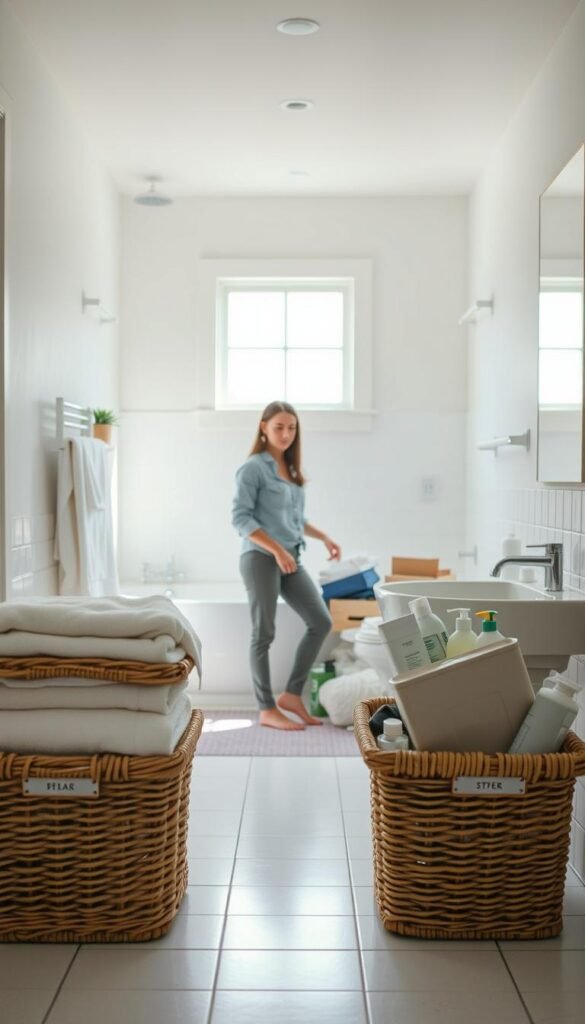
Room-by-room bathroom zones made simple
Focus on a tiny area first to build calm and confidence. Pick one spot. Work slowly. Small wins add up.
Vanity, sink, and counter
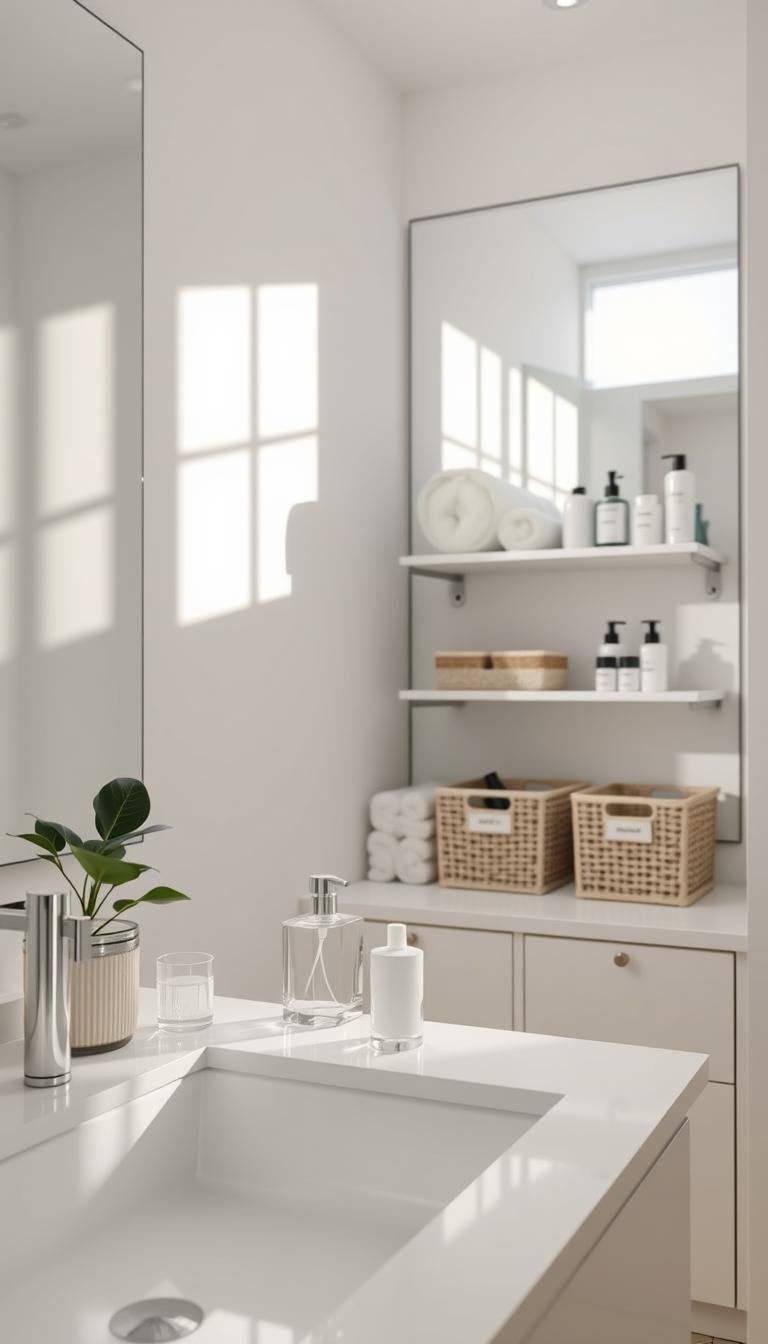
Keep only daily-use items visible at the sink. Hand soap and one or two essentials are enough.
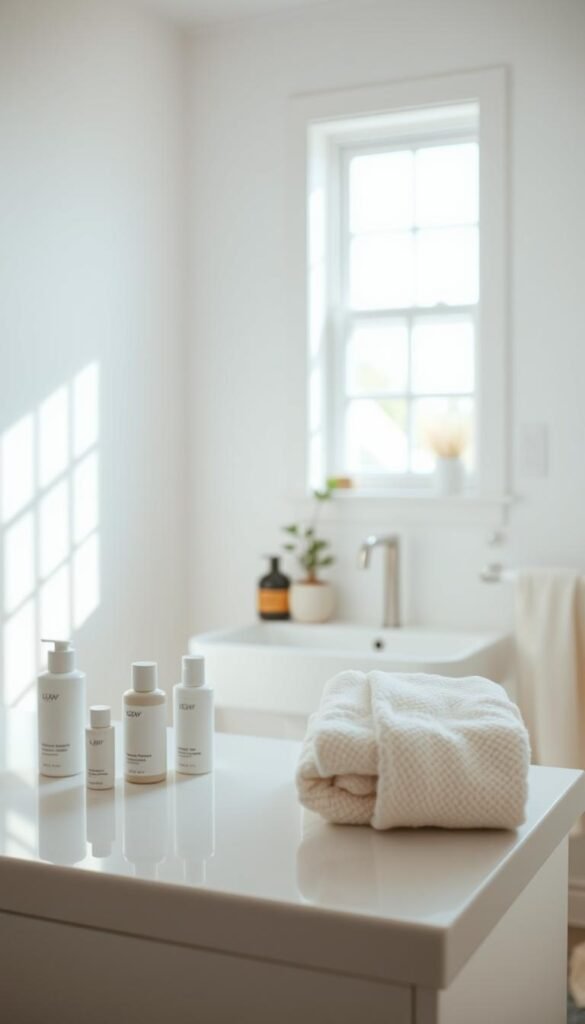
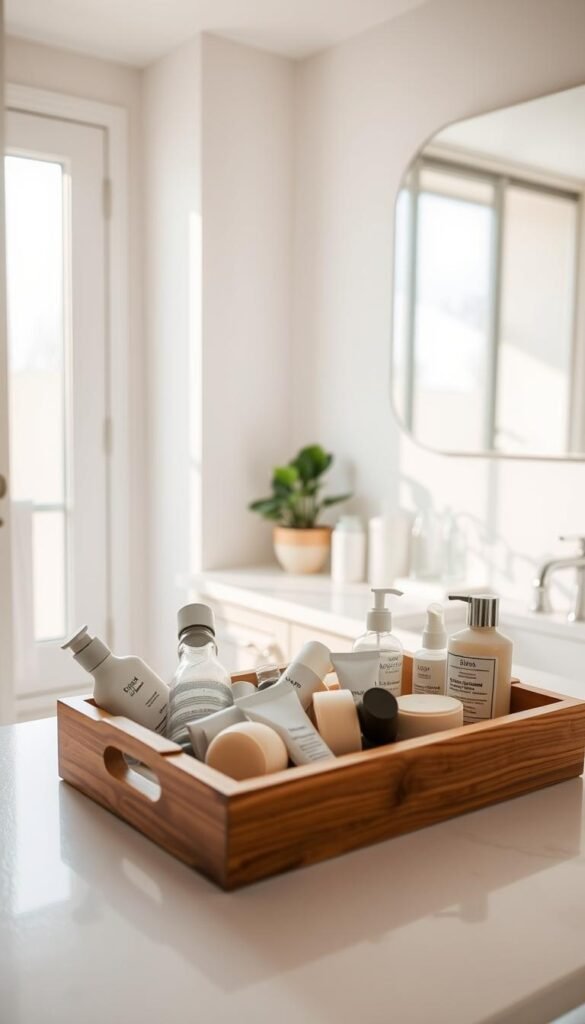
Tip: Use a small tray to corral things you reach for each morning. This keeps the counter clear and the area tidy.
Bathtub and shower
Edit bottles weekly. Remove empties and rarely used products.
Swap the shower liner every 3–5 months or choose a mildew-resistant option. Fewer choices make routines smoother.
Cabinets, drawers, and shelves
Give each group a clear home. One bin for dental. One for skincare. One for hair tools.
Use short, open shelves for backups only. Keep them light so you can see what you own.
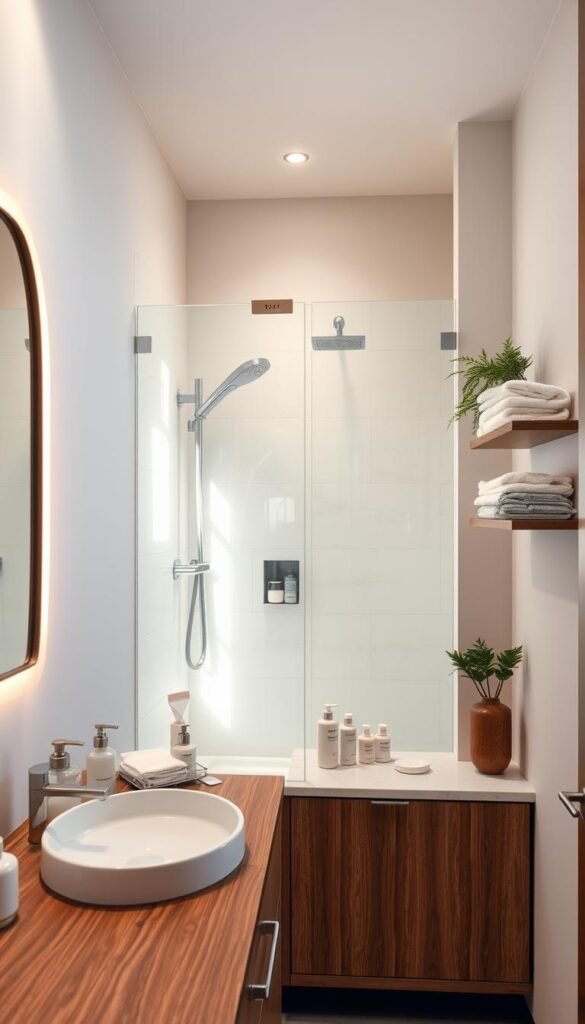
- Use a small caddy for current hair and body care. One in, one out keeps volume steady.
- Hooks help towels dry faster and are easier for kids than bars.
- Label drawer fronts or bins so everyone can find items quickly.
Keep the space calm: return items after use. It takes seconds and saves minutes later.
What to get rid of without guilt
Begin by scanning shelves for anything clearly past its prime. Work slowly. Make fast yes-or-no rules. Small choices free the space and calm the routine.
Easy rules to follow:
- Toss expired products first. If texture, color, or scent changed, let it go.
- Combine duplicate bottles when safe. Recycle empties to free room fast.
- Release tools that are broken or worn. If it snags or scratches, it is no longer useful.
- Keep one favorite version of a product type. One good option beats several average ones.
- Move medications out of the steamy area. Store them in a cool, dry cabinet and use pharmacy take-back programs for expired pills.
- Limit trial sizes. Keep one travel set and use or donate sealed samples within a year.
| What to check | Quick decision | Why it helps |
|---|---|---|
| Expired makeup & skincare | Toss if age or texture is off | Protects skin and clears space |
| Duplicate bottles | Combine or keep one | Reduces clutter and confusion |
| Medications | Move out of the steamy area; dispose if expired | Safety and longer shelf life |
| Trial sizes & extras | Keep one travel set; donate unopened within a year | Less crowding; easy choices later |
Let go with kindness. Each released item makes the room lighter. You gain clarity and a slower, calmer routine.
Lightweight storage that works in small spaces
Measure the space before you buy anything; fit matters more than style.
Start with a simple, budget-friendly plan. Think fit-first and function-first. Small gear often solves big problems.
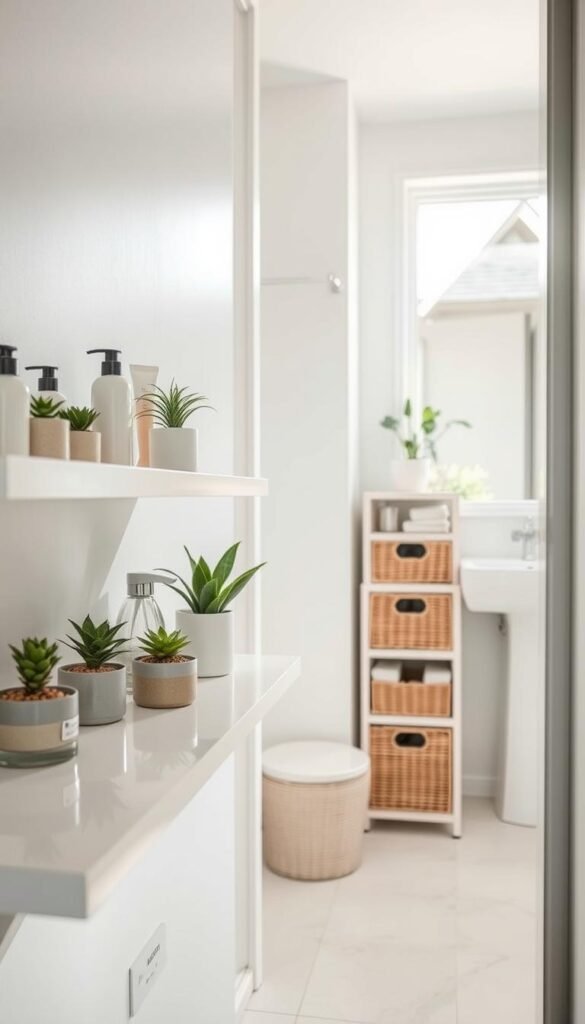
Drawer dividers, trays, and stacking bins
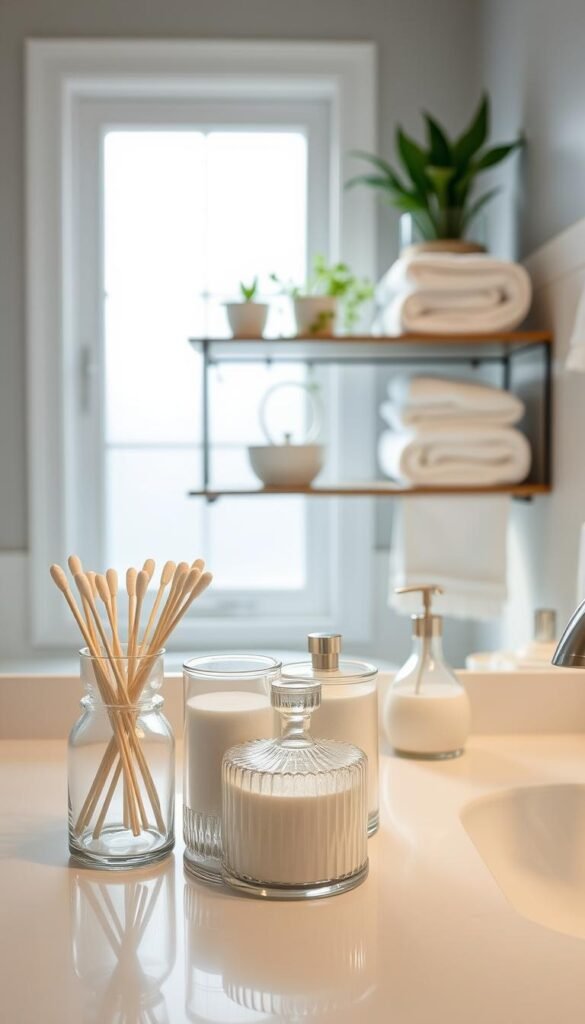
Use small drawer bins to separate categories. Slim dividers stop items from sliding. Shallow trays on counters corral daily items so the sink stays calm.
Hooks, towel bars, and over-the-door solutions
Add over-the-door hooks for robes and quick-dry towels. Vertical storage frees floor and shelf space. Simple racks cost little and change routines fast.
Shower organizers, bath bags, and corner shelves
Corner caddies group bottles. Mesh bath bags hold toys or razors and they drain quickly. One shelf per person keeps sharing simple.
Clear baskets for toilet paper, washcloths, and extras
Use open-front bins or stacking drawers inside the cabinet. This avoids unstacking to reach backups. Label lightly so everyone knows where items live.
| Organizer | Best for | Cost | Quick tip |
|---|---|---|---|
| Shallow tray | Daily essentials | $5–$15 | Keep one tray per counter zone |
| Small drawer bins | Makeup & small tools | $8–$20 | Measure drawer depth first |
| Corner shower caddy | Bottles & soaps | $12–$25 | Choose rust-resistant metal or plastic |
| Clear basket | Toilet paper & backups | $10–$30 | Visible stock stops overbuying |
Practical start: measure, pick one small piece, and add it slowly. Good fits keep habits simple and support long-term organization.
Family-friendly habits that keep clutter low
Walk through the space together to point out each item’s place. A short tour makes the system clear. It invites help. It builds shared ownership at home.
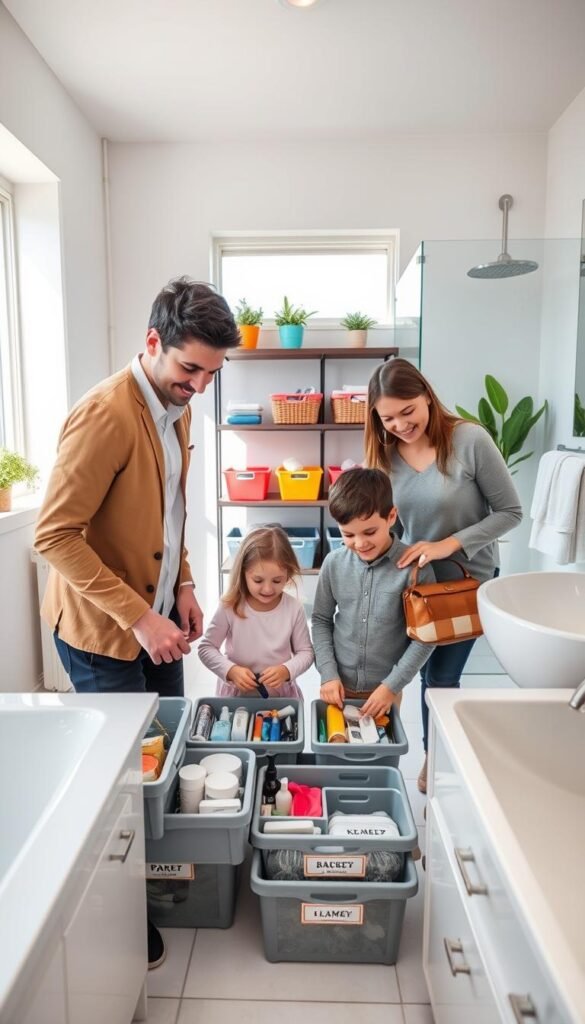
Label clearly and give a quick tour
Use big, simple labels. They remove guesswork and save time.
After you organize, show where daily things live. Explain the place and the why. Keep the tour brief so it sticks.
| Action | Who | Time |
|---|---|---|
| Show daily items spot | Adult leads | 2 minutes |
| Point out personal drawer/bin | Each family member | 1 minute |
| Demo the sink swish | Everyone | 30 seconds |
| Place shared caddy back | Quick check | 1 minute |
Assign drawers or bins and keep counters clear
Give each person a drawer or bin. Personal space makes it easy to put things back.
Practice a quick reset each day: hang towels, toss trash, close the curtain. Wash the sink while you wash your hands. Small acts keep the room calm.
- Use gentle reminders for kids. Encourage, do not nag.
- Keep a small caddy for shared items. It moves where it’s needed.
- Celebrate tiny wins as a family. A tidy bathroom helps the whole day feel lighter.
Daily, weekly, and monthly bathroom routines
Build short, repeatable steps you can finish in minutes. A steady rhythm keeps this area light. Small acts protect peace of mind.
Daily reset: towels up, counter clear, sink swish
In one to two minutes. Hang towels. Clear the counter. Swish the sink with a damp sponge.
Quick win: Finish these steps after teeth or before bed to make them stick.
Weekly tidy: edit the shower, empty the bin, refill supplies
In five to ten minutes. Remove empties from the shower. Empty the trash. Refill soap and paper so restock is simple.
Monthly review: check dates, combine bottles, refresh liners
In about fifteen minutes. Check dates on items. Combine duplicates to cut volume. Replace the shower liner every three to five months for freshness.
“Tiny routines on a regular schedule keep the room calm with very little effort.”
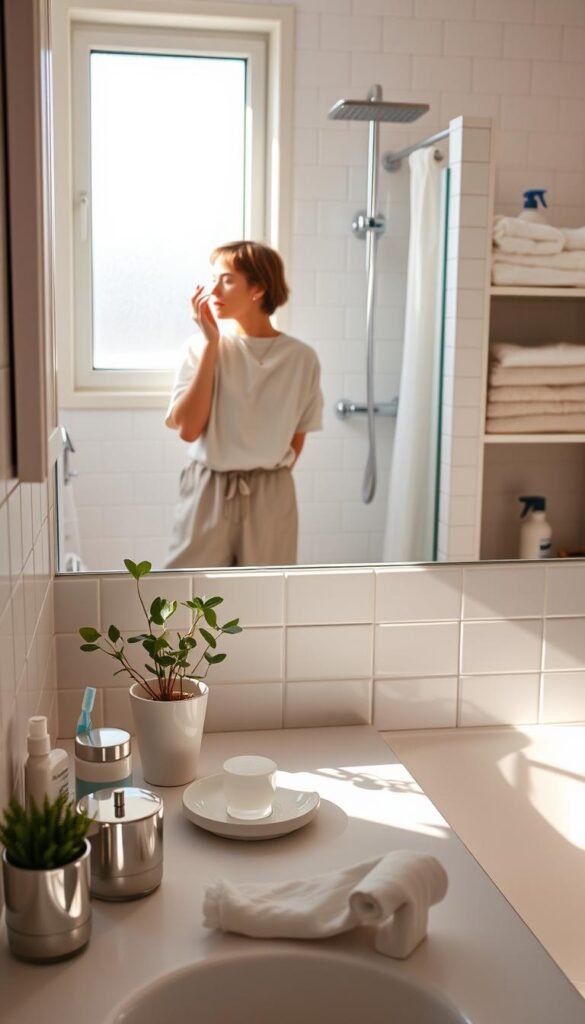
Easy wins for tricky areas: closet, pantry-style shelves, entry shelf
A few tiny shifts can make tricky shelves feel roomy and useful. Start small. Pick one shelf, closet corner, or entry spot to tidy for five minutes.
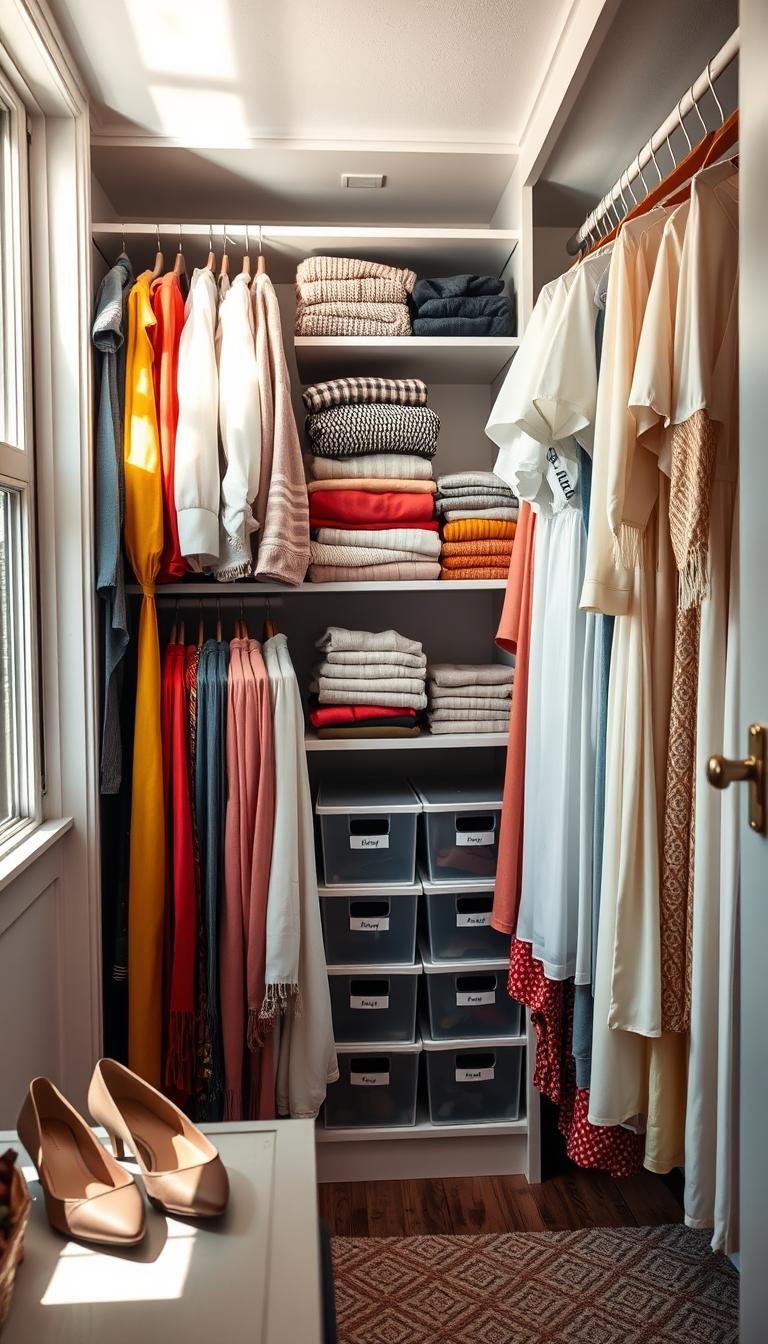
Linen closet: Keep two bath towels per person and a small guest set. Store two sheet sets per bed in each bedroom closet. Use a labeled bin for washcloths and another for spare toiletries.
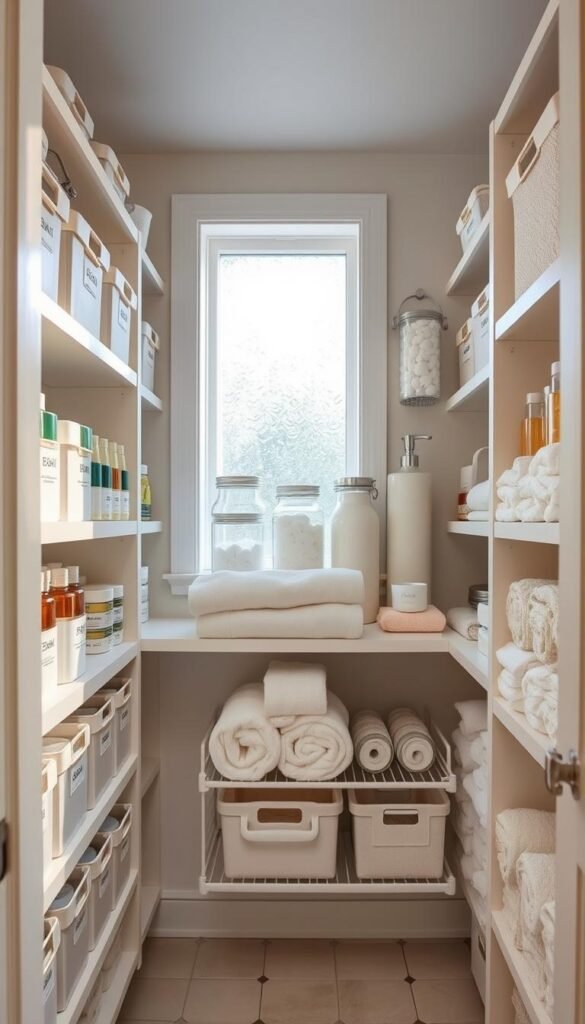
Landed items and quick grabs
Put a basket or shelf by the door to corral hair tools and rush-time things. One spot for chargers, keys, and one hair tool saves time.
For pantry-style shelves, group snacks in clear bins. Add a turntable for small bottles so you can reach what you need fast.
- Pick open-front baskets. They are faster to grab from than stacked lidded boxes.
- Use clear labels so everyone finds the right place.
- Keep one landing place per person. A labeled hook or cubby lowers morning stress.
Repeat these small storage moves across closets, kitchen, bedroom, and bathrooms. One system. Less effort. More calm.
Conclusion
Wrap up this session with an easy next step you can keep. Take a minute to tuck essentials into one drawer or a labeled cabinet. Keep only the products you use daily within reach.
Small habits matter. Do a tiny tidy in minutes each day. Do a weekly edit and a quick monthly check of dates and volume. Refresh the liner every few months.
Store medications in a cool, dry place outside the steamy room. Use simple bins and one organized drawer to hold categories. If you have a lot to sort, work one area at a time.
You have a clear way forward. One steady way across bathrooms in the home makes life calmer. Take one small step now.
FAQ
How do I start if the room feels overwhelming?
Begin with a tiny goal. Set a 10- or 20-minute timer. Focus on one surface or one drawer. Small wins build momentum. You’ll feel calmer fast.
What should I do with expired or duplicate products?
Toss anything past its date. Combine duplicates if you use them. Donate sealed, unused items you won’t keep. This frees shelf and counter space quickly.
How can I sort items quickly and gently?
Use three bins: keep, toss, and donate. Ask simple questions. Do I use this weekly? Does it fit my routine? If not, let it go. Be kind to yourself.
What’s the easiest way to handle shower bottles?
Edit to what you actually use. Keep one shampoo and one conditioner. Move seasonal or seldom-used items to a labeled bin outside the shower. Replace faded liners and wipe the caddy.
How do I organize small drawers and makeup areas?
Use drawer dividers and trays. Group by category: hair tools, skin care, dental, and makeup. Keep daily items within easy reach. Store extras in clear baskets or stacking bins.
What should I do with medications and trial sizes?
Check expiration dates and local disposal rules. Safely discard outdated meds at a pharmacy take-back or community drop-off. Keep trial sizes only if you truly plan to use them.
How often should I do quick maintenance?
Do a daily reset: towels hung, counters cleared, sink swished. Weekly, edit the shower and empty the bin. Monthly, check dates, combine half-used bottles, and refresh liners.
Any tips for small bathrooms with limited storage?
Choose lightweight solutions: over-the-door hooks, narrow shelving, corner caddies, and clear baskets. Use vertical space and slim trays to keep counters clear.
How do I involve family without nagging?
Give a gentle tour of where things live. Label bins and assign simple homes for items. Make a short, friendly routine: put tools back and wipe counters after use.
What quick fixes create a peaceful look on the counter?
Remove everything. Wipe the surface. Return only daily essentials in a small tray. Store backups and extras out of sight to keep the area calm.
How do I know when to toss a towel or bath mat?
Replace towels that are thin, stained, or have lost absorbency. Keep a limited number on rotation. Store extras in a labeled linen basket to avoid pileups.
Can I keep sentimental or specialty items without clutter?
Yes. Limit sentimental pieces to one small, visible spot. Store specialty items in a clear, labeled bin so they stay protected and don’t create visual clutter.
What are fast wins for an entry shelf or pantry-style bathroom storage?
Use baskets for corralled categories: hair tools, quick-grab toiletries, and mail. Label each basket and keep the top clear so the shelf reads tidy at a glance.
How do I handle broken or single-use tools like razors or toothbrushes?
Discard broken tools immediately. Replace single-use items regularly and store extras in a clearly marked bin so they don’t crowd counters or drawers.