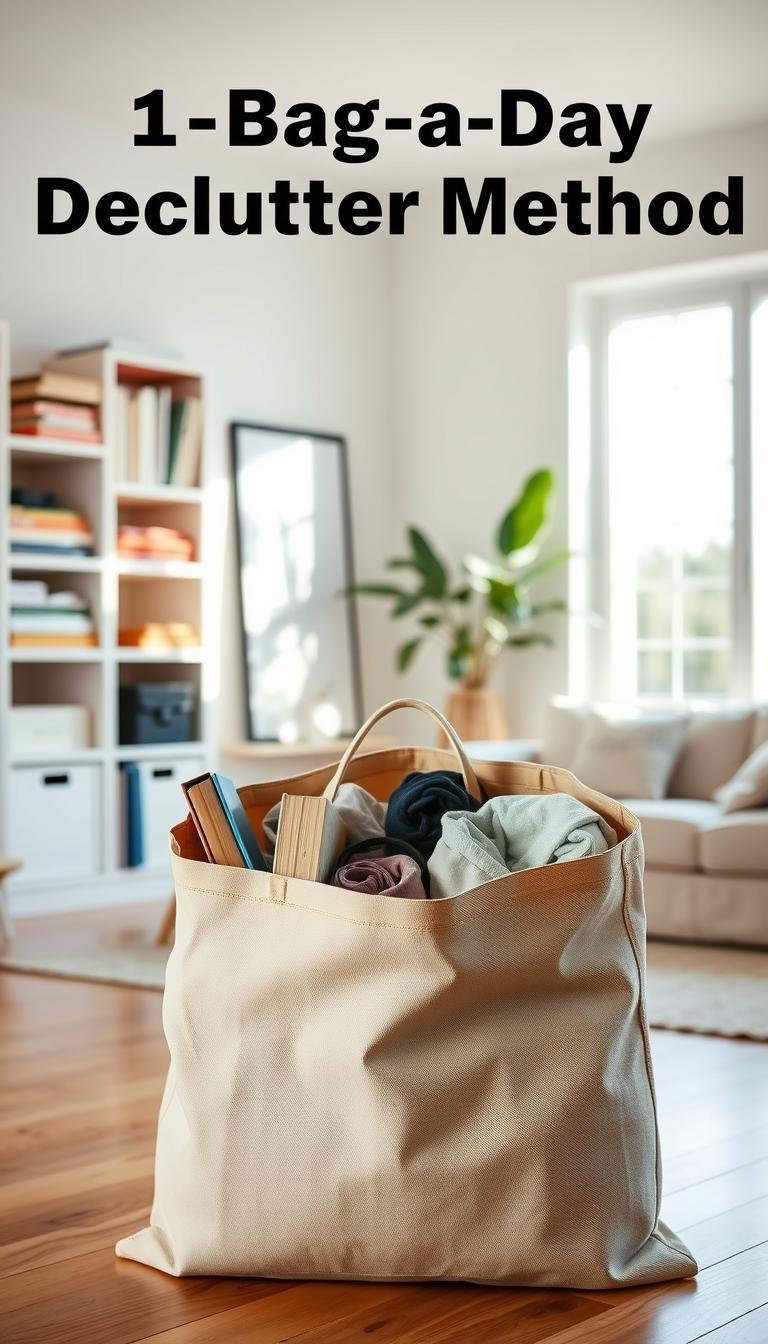
The 1-Bag-a-Day Declutter Method
You are busy. You want a calm home and a gentler pace of life. This simple way promises small wins. It fits a tight schedule and protects your energy.
One small bag. Spend a few minutes in a single room or zone. Fill the bag with items you no longer need. Move the bag out the same day.
Keep clear rules you choose. Focus on quick wins. Make the task part of your daily rhythm, not a weekend marathon.
This approach makes tidying kind and doable. You keep what you love. You let other things go without guilt. Repeat tomorrow and watch calm grow.
Key Takeaways
- Work a few minutes in one room each day.
- Fill one small bag with items to remove.
- Move the bag out the same day to prevent clutter.
- Use simple rules you pick to make choices easy.
- Small daily actions build a lasting, calm habit.
What the 1-Bag-a-Day approach is and why it works
Pick one small area and a short window to make progress without stress.
This way focuses on tiny wins. You choose a small bag, a brief block of time, and one small room zone. The task feels light. Your effort stays steady instead of spiking and crashing.
Simple rules make decisions easy. You decide what one rule will send an item out the door. Fewer choices protect your energy and reduce decision fatigue.
You move the bag out the same day. That step keeps stuff from wandering back in. It also creates an easy exit route you can repeat.
The process fits real life. Busy people keep going because the task is short and kind. You see clear progress in minutes. That builds trust in yourself and the method.
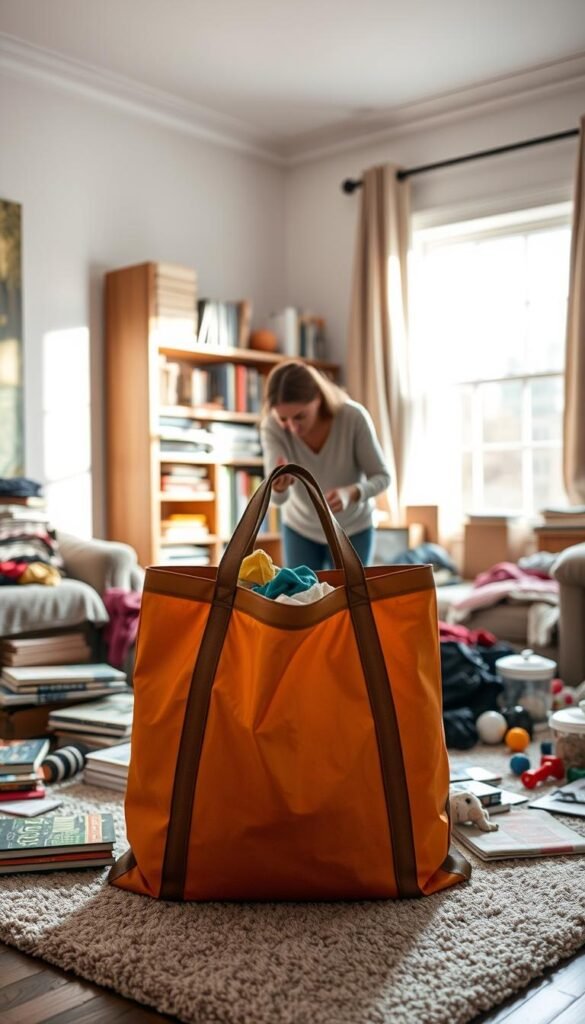
- Focus on fewer items so tidying feels doable.
- Keep the routine short so you finish before feeling drained.
- Learn what you truly use and love; buy less of what you don’t.
How to do the 1-Bag-a-Day system step by step
Start small. Choose a compact bag and a short block of time you can repeat most days. This keeps the process soft and steady.
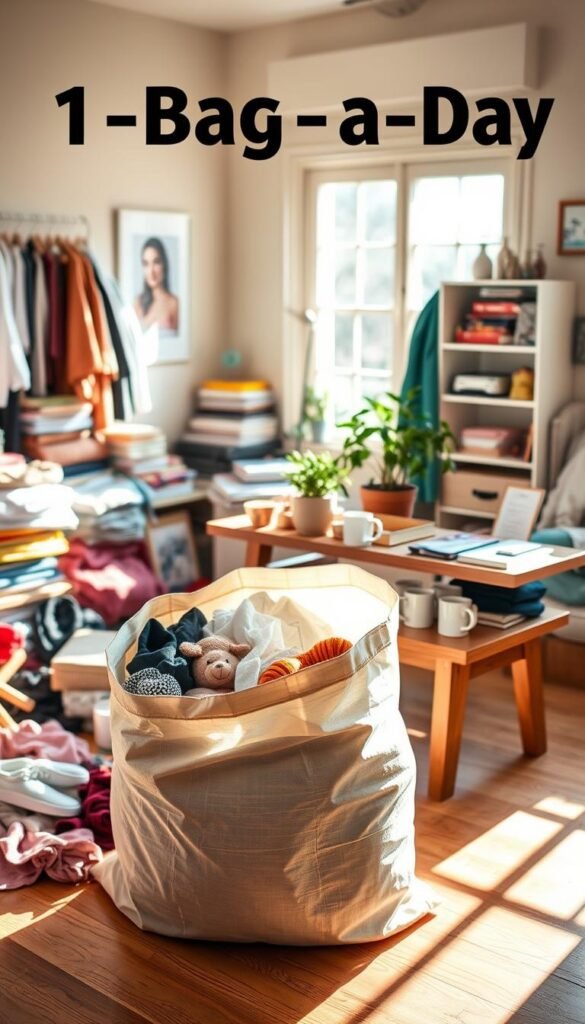
- Pick your bag and time. A grocery sack, paper bag, or tote works. Set a 10–20 minute window you can stick with.
- Set gentle rules. Use simple choices like expired food, broken gadgets, duplicates, or an item you haven’t used in a year.
- Make quick decisions. Use four containers or labels: keep, donate, sell, trash. Move a small box for donations so you can get rid of things faster.
- Create exit routes. Keep a donation box by the door, a recycling bin ready, and a trash reminder. Move the bag out the same day.
- Finish with a one-minute reset. Wipe a surface or fold a throw. Return one item to its home. Then rest and let the process work tomorrow.
Tip: Work left to right. Scan, decide, and put things back in order. Gentle, repeatable steps build lasting tidying and joy.
Daily, weekly, and monthly routines that keep clutter light
Small habits protect your time and calm your home. Use short sessions that fit your schedule. Gentle steps make tidying part of your life.
Daily
Fill one bag from a tiny zone. Spend a short block of time. Do a one-minute reset. Rest if you need to.
Weekly
Pick a category like clothes or books. Use the 1-3-5 split: 1 major tidy task, 3 medium tasks, 5 small finishes. Add a five-minute paper sweep. Schedule a donation drop so items leave on time.
Monthly
Review a small holding spot for stuck items. Adjust your rule so decisions stay clear and kind. Do a quick hanger flip in your closet to see what you wear.
Quarterly
Practice the one in, one out idea. For each new jacket or gadget, remove a like-for-like item. This keeps new things from piling up again.
Put a reminder in your calendar. Protect the time. Repeat the process gently and watch steady progress.
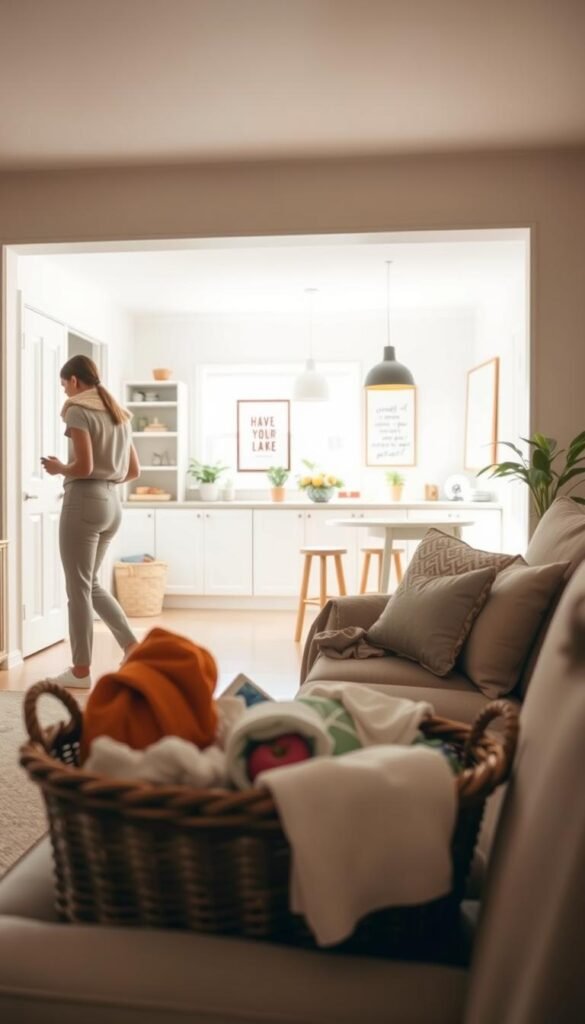
Room-by-room examples to make it easy
Move side to side and focus on small wins in one room strip at a time. The plan feels calm. It keeps choices short and kind.

Kitchen and pantry
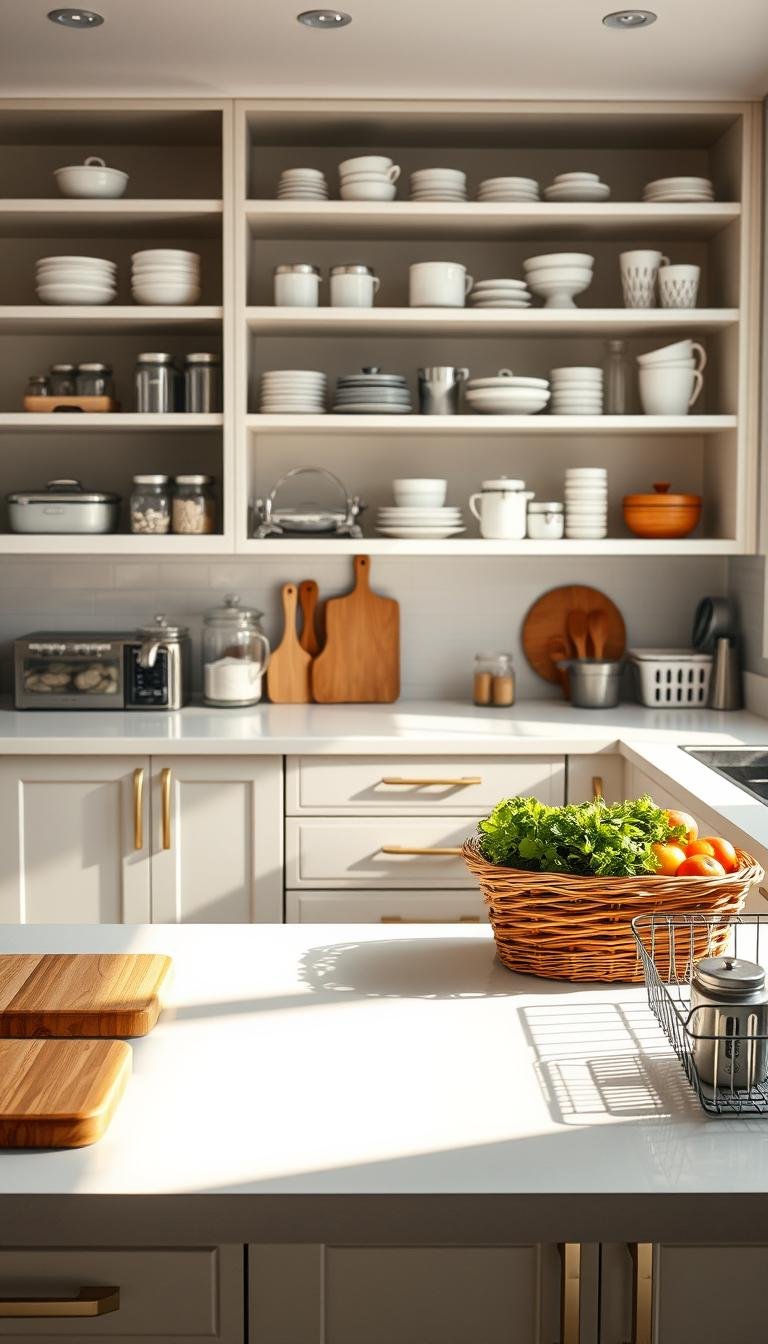
Clear one counter strip. Remove duplicate tools like extra spatulas.
- Check dates and get rid of expired items.
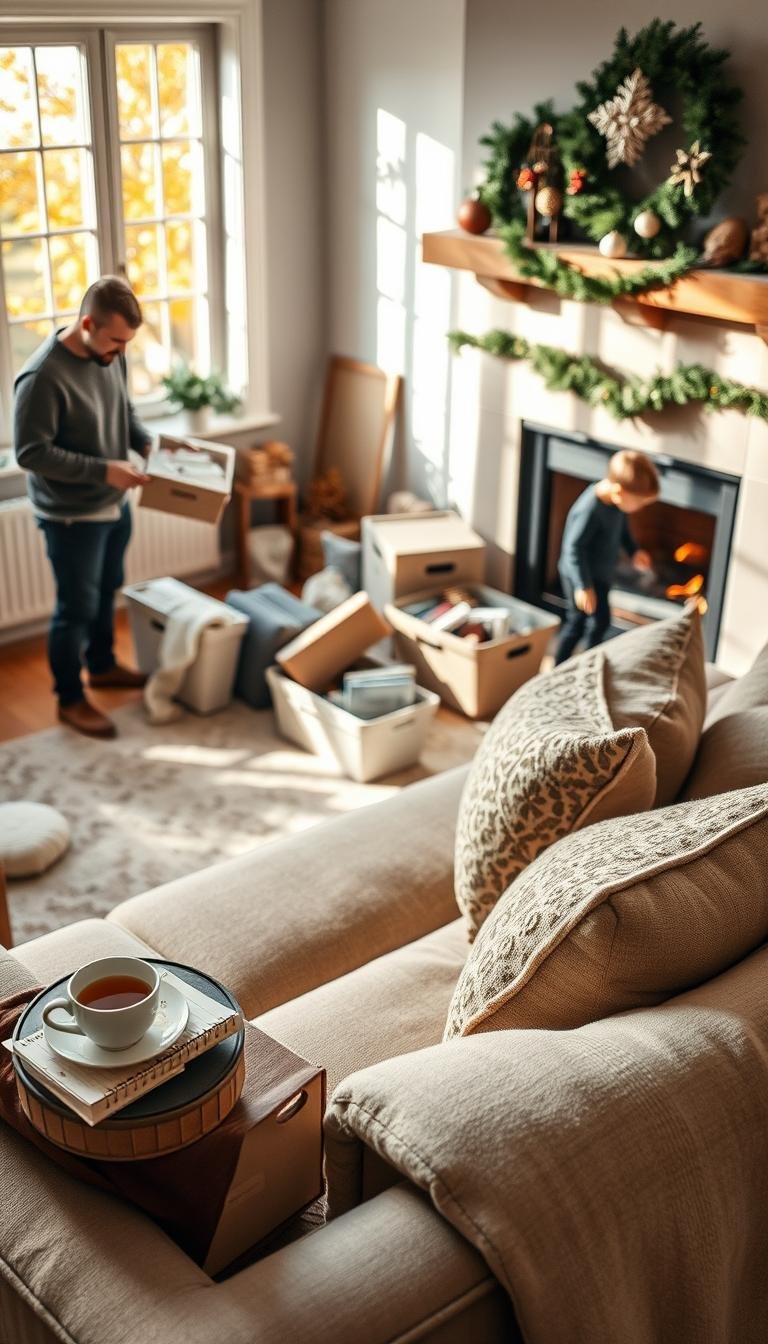
- Keep a small donation box for usable extras and move it to the car.
Bathroom
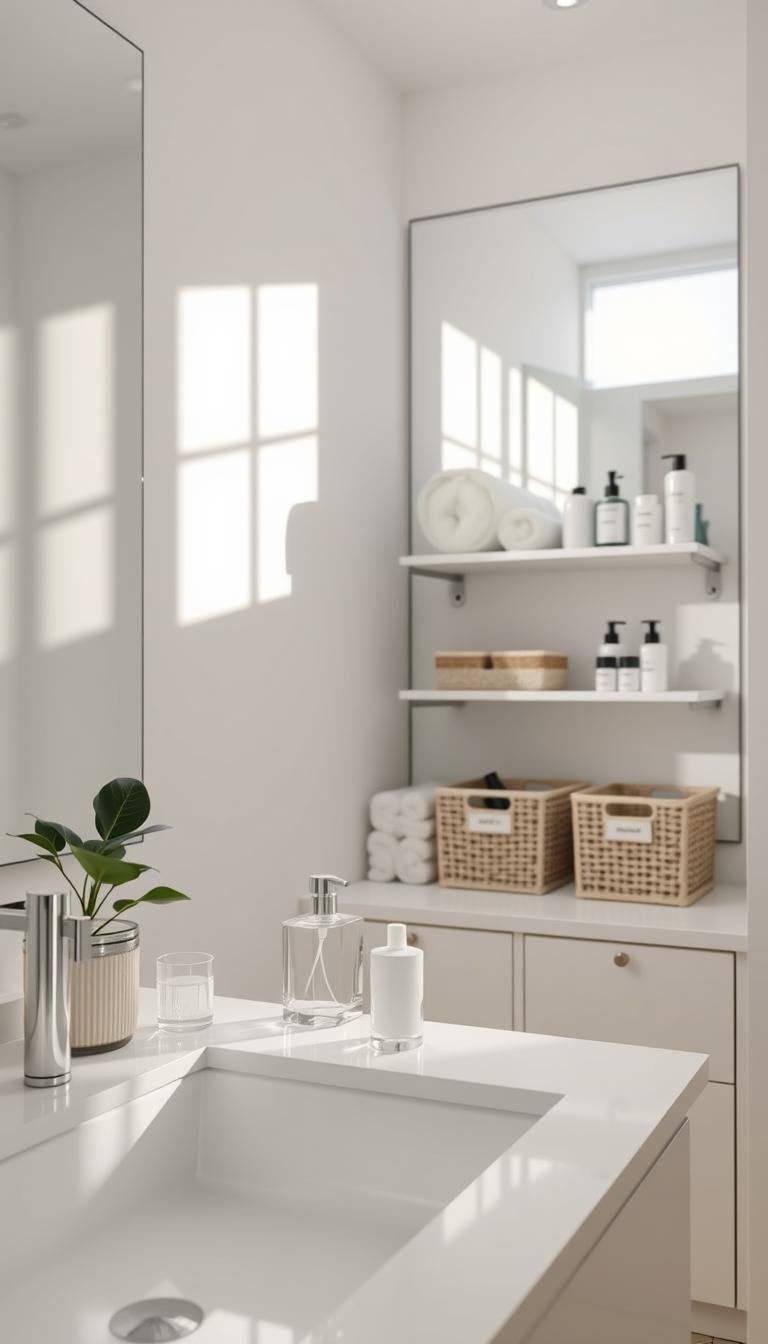
Gather half-used bottles. Choose one backup per product type.
Keep daily items in a small tray. Recycle empties. This keeps the space calm.
Bedroom
Start with the nightstand. Return only a lamp, a book, and water.
Set a simple laundry flow: one hamper and a set day to move clothes.
Closet
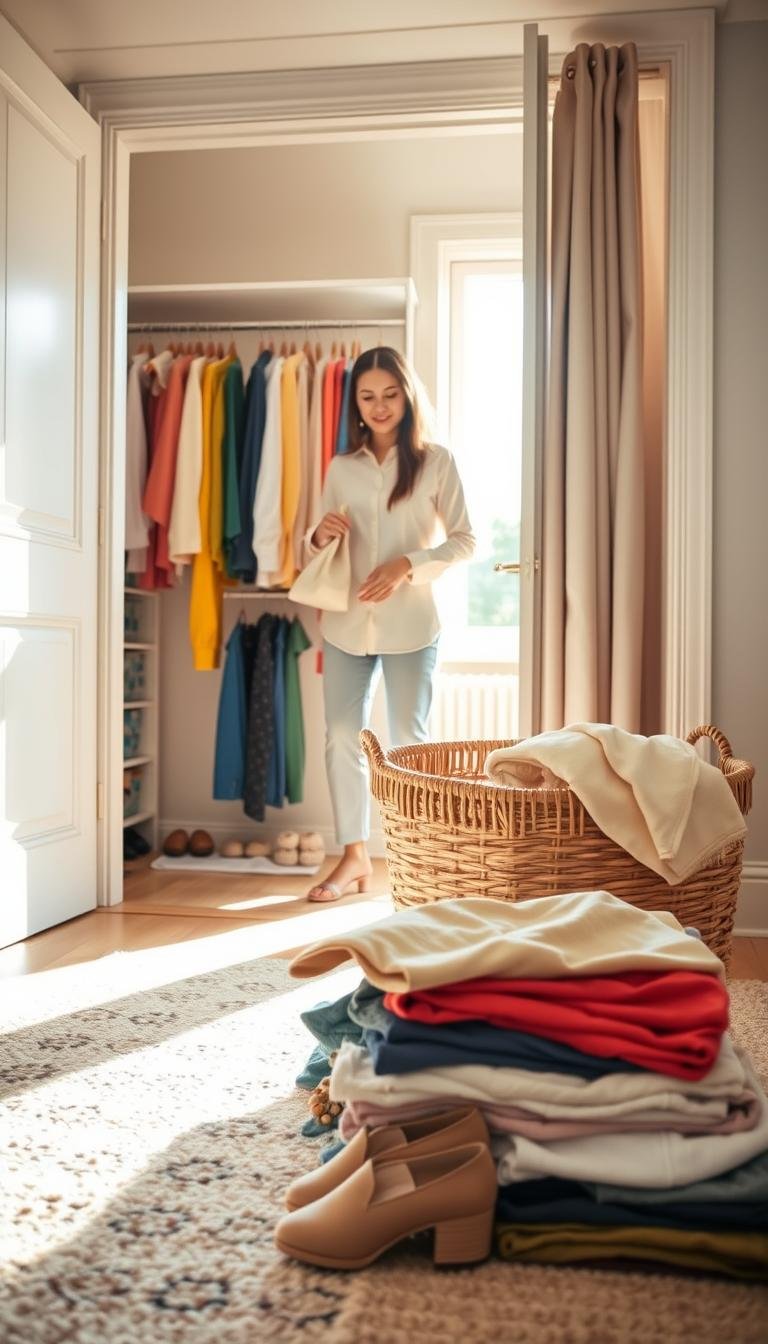
Do a quick pass on clothes, shoes, and accessories. Scan side to side.
Hang favorites front and center so your choices stay easy.
Entryway
Define a drop zone with a tray and a small basket. Limit keys, mail, and umbrellas to that spot.
Books and media
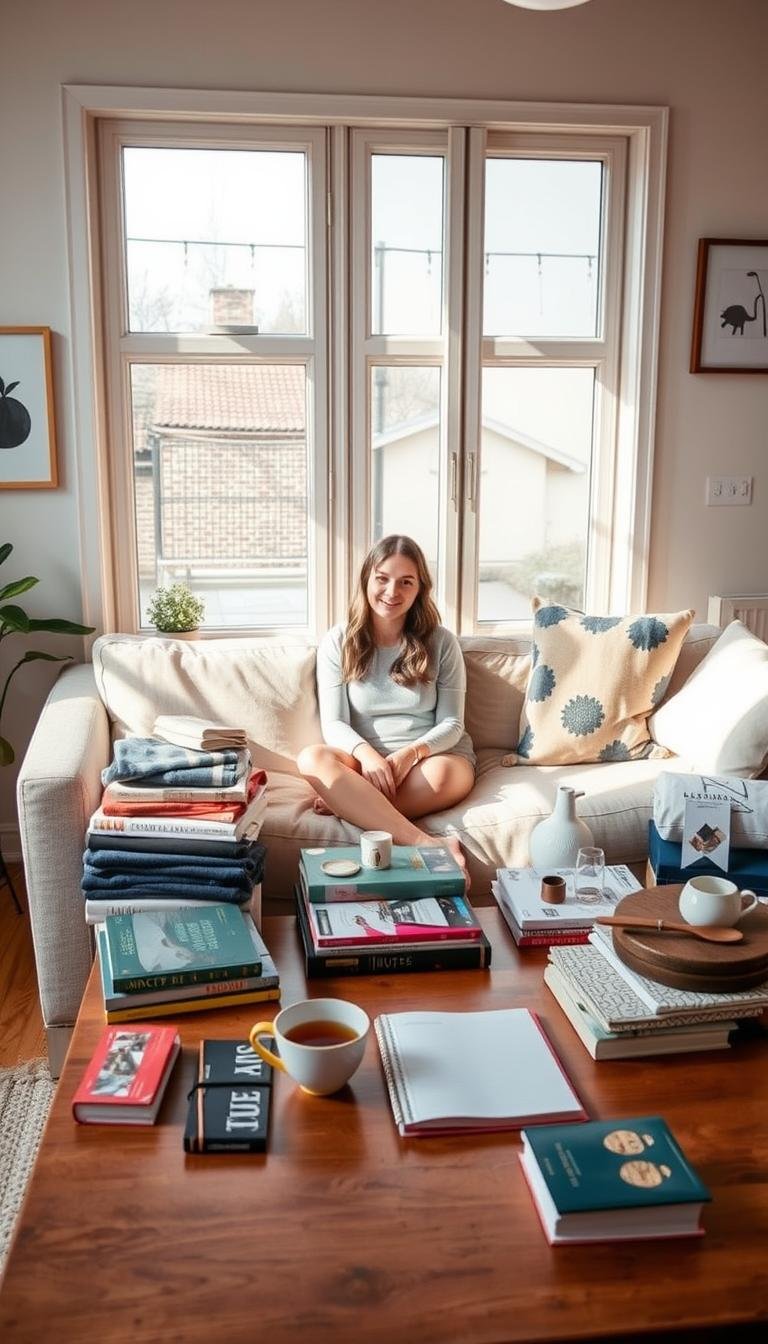
Pick the books you reach for. Group by size or use. Keep shelves one row deep.
| Room | Quick win | System |
|---|---|---|
| Kitchen | Clear one counter strip | Donation box in car |
| Bathroom | Choose one backup | Small daily tray |
| Closet | Side-to-side scan | Favorites front |
| Entryway | Set a drop zone | Tray and basket |
Use the four-box approach for tricky shelves: keep, donate, sell, trash. Try the ski slope sweep from left to right when a corner feels heavy. End each room with a one-minute reset. Smooth covers. Align hangers. Breathe. These small tips help you put things away fast and keep your home calm.
Declutter Method comparisons you can borrow from
You can mix gentle tactics from several systems to find what feels calm.
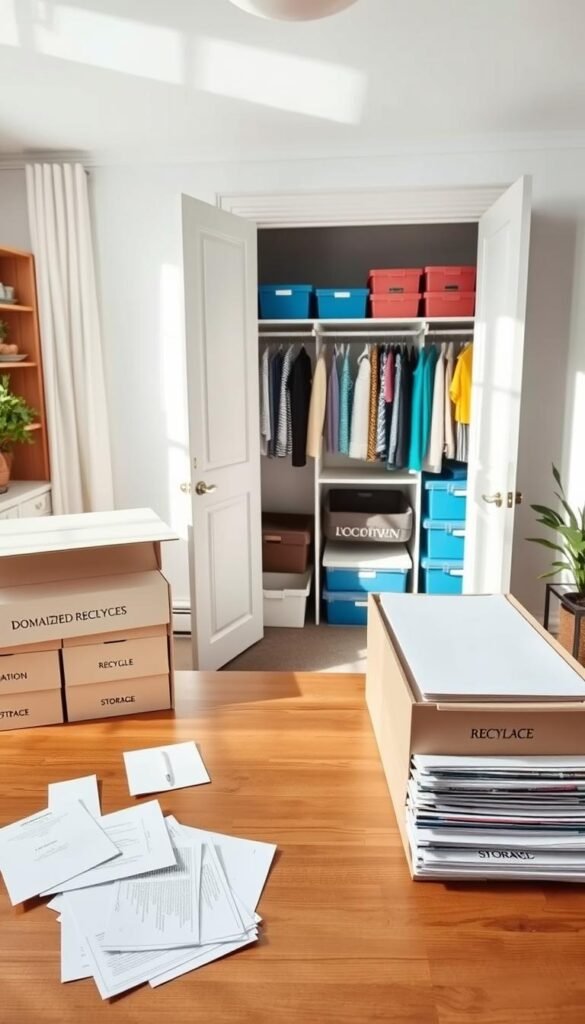
KonMari asks you to tidy by category in a specific order: clothes, books, papers, komono, then sentimental. Ask if an item sparks joy. Keep what supports your best life. This comes from Marie Kondo’s book and offers clear order and intention.
Four-box uses four labeled boxes: keep, donate, sell, trash. Work fast. The boxes make it easy to get rid of extras and move on.
Ski slope moves you side to side across a room. It lowers overwhelm and keeps sessions short. It pairs well with a one-bag-a-day approach.
Swedish Death Cleaning starts big and works to small. Save sentimental items for last. The process helps focus on daily comfort over years of stuff.
| Approach | Core idea | Good for | Quick take |
|---|---|---|---|
| KonMari | Category order; spark joy | Clothes, books, sentimental items | Intentional, gratitude-focused |
| Four-box | Keep / donate / sell / trash | Drawers, shelves, quick sorts | Fast, decision-friendly |
| Ski slope | Side-to-side sweep | Large rooms, low energy days | Reduces overwhelm |
| Swedish Death Cleaning | Big to small; save memories | Long-term downsizing | Practical, compassionate |
Try one rule at a time. Borrow the order from KonMari or the side sweep from ski slope. Track what fits. Over months, your own calm system will emerge.
Gentle decision helpers for tough items and sentimental things
Tough choices about cherished things get kinder when you use clear, forgiving steps. You can pause. You can be kind to yourself. Small tools keep the process calm and doable.
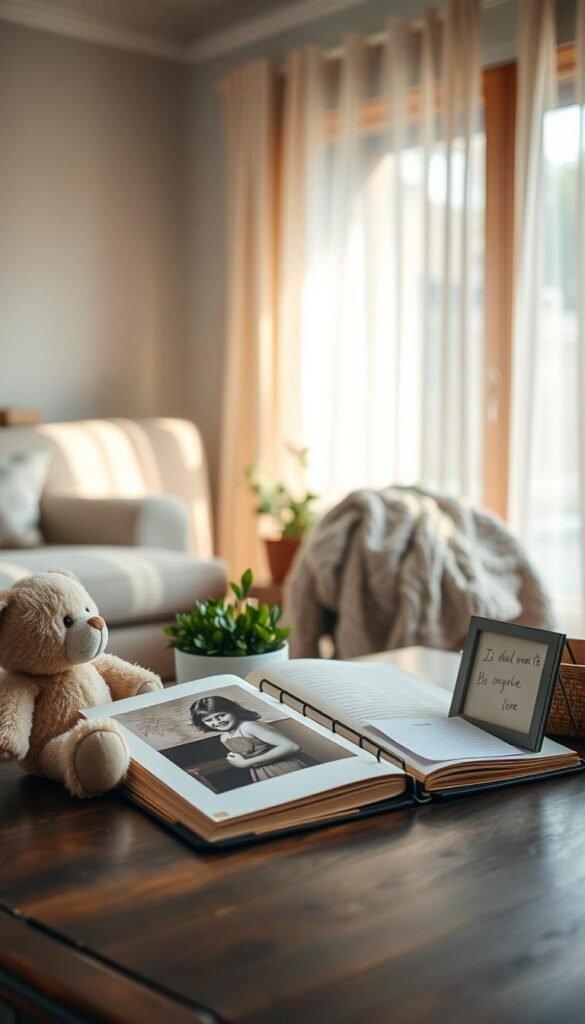
A no-guilt holding box with a review date
Keep a simple box for items you cannot decide on today. Write a review date on a sticky note and tuck it inside.
When the date arrives, open the box. Check one item at a time. Ask: does this support the life I live now or spark joy?
Keep what supports your life today
Try these gentle steps:
- Use one small memory box per person. Limit the size so the most meaningful things stay.
- Tackle decisions by category. Save photos and books for later so your decision muscles are ready.
- If a gift doesn’t fit your life, thank it and let it go. That is okay.
- Ask a calm friend for advice when you need another view.
Marie Kondo and the Konmari method suggest starting with easier categories and leaving sentimental items for last. This builds confidence. Celebrate small wins. You are learning what matters.
Simple systems, quick resets, and tiny habits for a tidy home
Give common things a clear place and they stop wandering through your space. A small habit can save minutes every day. You do less to keep more order.
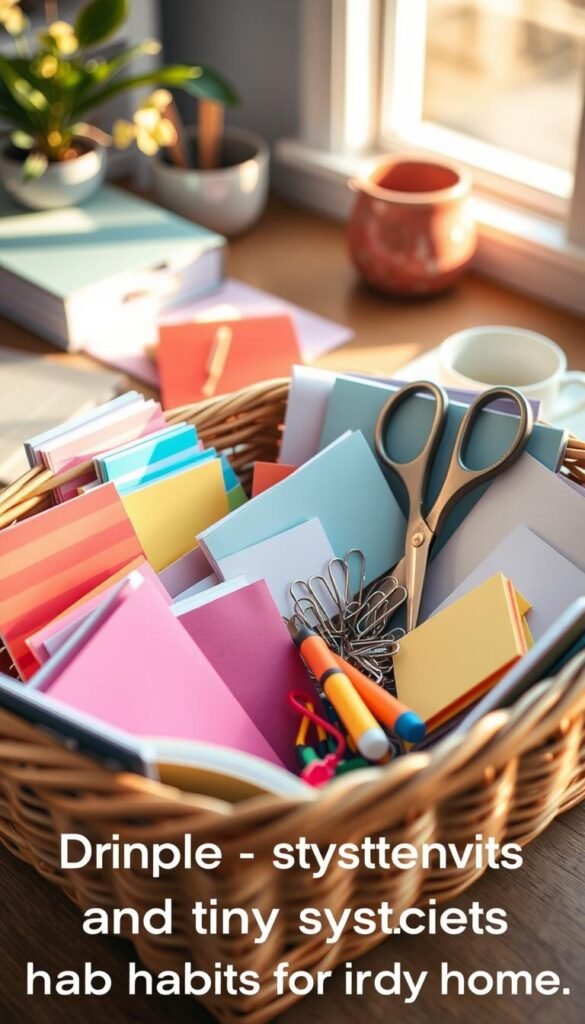
Set a home for everyday items you touch often
Put a tray for keys. Hang a hook for bags. Keep sunscreen in a bin near the door.
Close placement means less searching. Less wandering means less clutter. Small spots protect your time and calm your life.
Use a small “inbox” basket for the entryway
One basket holds mail and random stuff until a set day. Empty it weekly. This keeps the entry clear and the room inviting.
Try a two-minute timer for paper piles. Recycle, shred, or file. Tiny blocks stop overwhelm and finish the task fast.
Label lightly: shelf, bin, or box names
Write simple labels like Snacks, Tools, To File, or Returns. Labels speed decisions. They create visible rules that everyone can follow.
- Do a one-minute reset after each mini session: clear a surface, fold a throw, align a stack.
- Keep closets tidy weekly: return hangers, front-face go-to clothes, and place a donation bag by the door.
- Keep books one row deep and leave breathing space for future favorites.
- Choose three gentle rules for your space. Examples: no extras on counters; donation bag by the door; 10-minute Sunday reset.
Close each session gently. Breathe. Turn lights off. Close the door. Small rituals teach your brain that tidying is calm and doable.
Conclusion
Start with one tiny choice and let calm grow from there.
You do not need a perfect plan. One small bag a day is a kind, simple method that builds a peaceful house over time.
Borrow what helps. Use category order from a favorite book or a side-to-side sweep. Blend gentle decluttering methods into a process that fits your life.
Keep one clear rule: bag out the same day. The end feels clear. Progress stays steady with little effort.
When motivation dips, pick one item. Decide kindly. Close the day with a breath. Joy grows from tiny, steady tidying across months and years.
FAQ
What is the 1-Bag-a-Day approach and why does it work?
The 1-Bag-a-Day approach asks you to remove a small, consistent amount of stuff each day. It works because it breaks a big task into tiny actions. You build momentum without feeling overwhelmed. Over weeks you reclaim space. It fits busy schedules and avoids perfectionism.
How do I start the 1-Bag-a-Day system step by step?
Pick a bag you can carry and choose a short daily window. Set gentle rules for what goes into the bag. Use quick decisions: keep, donate, recycle, or trash. Create simple exit routes so items leave your home the same day or week. Finish with a one-minute reset to restore order.
What counts as a gentle rule for what goes in the bag?
Rules keep choices simple. Examples: items you haven’t used in a year, duplicates, damaged pieces, or things that don’t match how you live now. Make rules kind to yourself. They help you act without second-guessing.
How do I make quick decisions when I’m unsure?
Use a four-option rule: keep, donate, recycle, trash. Give yourself 10–30 seconds per item. If you truly can’t decide, use a timed holding box with a review date. That reduces shame and keeps progress moving.
How do I make sure things actually leave the house?
Create clear exit routes. Keep a donation bag in the car or a designated drop spot. Schedule a weekly donation drop or pickup. Recycle curbside or find a nearby center. Make leaving easy so stuff doesn’t linger.
What is the one-minute reset and when should I do it?
The one-minute reset is a quick tidy to restore calm after working. Straighten cushions. Put one thing back in its home. Clear the counter. Do this daily. It keeps small gains from slipping away.
How do daily, weekly, and monthly routines differ?
Daily: one bag, one tiny zone, and a one-minute reset. Weekly: focus on a category and drop off donations. Monthly: review stuck items and adjust your rules. Quarterly: practice a one-in, one-out habit for new items.
Any room-by-room tips for quick wins?
Yes. Kitchen: clear surfaces, trim duplicates, toss expired food. Bathroom: reduce half-used products and keep a small backup rule. Bedroom: tidy nightstands and create a simple laundry flow. Closet: do a quick pass on clothes and shoes. Entryway: set a drop zone and limit incoming items. Books: keep what you reach for.
Can I borrow ideas from other systems like KonMari?
Absolutely. Use what helps. KonMari’s joy question can guide sentimental choices. The four-box approach speeds decisions. Try the ski slope sweep to avoid overwhelm. Mix methods gently to fit your life.
How do I handle sentimental items without guilt?
Offer a no-guilt holding box with a clear review date. Keep pieces that support your life today. Photograph items you don’t keep. Share stories with family. Small steps and clear timelines ease the process.
What simple systems help daily maintenance?
Set homes for everyday items. Use a small inbox basket at the entryway. Label shelves or bins lightly. Keep a donation bag visible. Tiny habits prevent clutter from returning.