Lazy Girl’s Guide to Decluttering
You are busy. You want a calm home without pressure. Small routines can lift weight from your life.
This guide offers simple systems you can do in five or ten minutes. Quick wins build momentum. A standing donation bag and a hanger flip make decisions easier.
Try one-task-a-day rhythms. Set a robot vacuum on a daily schedule to lighten floor care. Use the “touch it once” rule to keep surfaces clear.
You will protect your energy. You will limit space so clutter has nowhere to grow. No guilt. Just steady progress.
Key Takeaways
- Short, daily actions add up to a calmer house.
- Five- and ten-minute tidies cut overwhelm.
- Simple tools like a donation bag reduce decision fatigue.
- One-task-a-day keeps cleaning manageable.
- Focus on space and purpose, not perfection.
Start here: a calm path to less stuff and more space
Pick one short action that gives your space immediate relief. You do not need hours. You need a clear plan and a timer.
Begin where you feel like it. One drawer. One shelf. Set five or ten minutes. Small bursts lower resistance and make cleaning feel possible.
Take a quick photo of the room. A picture shows what your eyes miss. It helps you choose the next action fast.
Simple starting checklist
- Set a timer: 5 or 10 minutes.
- Pick a target: shelf, drawer, or counter.
- Sort fast: trash, recycle, donate, keep.
- Bag it: use simple bins to hold items.
| Burst | Target | Result |
|---|---|---|
| 5 minutes | Nightstand | Clear surface, easier rest |
| 10 minutes | Entryway | Fewer shoes, more space |
| 5 minutes | One drawer | Less items, less decision fatigue |
Keep it light. If a task sounds like a lot, cut it in half. Two minutes daily adds up. Repeat tomorrow and protect your home, one calm move at a time.
Lazy Decluttering Guide principles that save time and energy
Small, reliable rules save you time and energy around the house. Use simple actions you can repeat in minutes. These are calm, low-pressure ways to keep things steady.
- Work in minutes: Do a five-minute sweep with a box. Sort trash, recycle, donate, re-home. A ten-minute tidy clears a surface and leaves you more energy.
- Touch it once: Open mail and act. In the kitchen, return each thing after use. Little choices prevent piles.
- Close the loop: When a task finishes, put items back. No piles. No loose ends.
- Let space set the amount: One shelf for towels. One bin for cords. When it’s full, that is the amount you keep.
- Reverse one-in-one-out and wait: Only replace an item when one is gone. Pause before buying. Most impulse fades.
- Take a picture: Snap a counter to see clutter hot spots. The photo helps you pick the next small move.
One small rule at a time. One space. One thing. Less stuff, less decision fatigue.
Simple daily, weekly, and monthly routines
A few tiny habits each day keep your rooms calm and easy to manage. These routines take little time. They help your home feel steady without stress.

Daily: quick resets in minutes
Set a five- to ten-minute timer. Load or run the dishes. Wipe main surfaces right after use.
Tip: Put away a few items per room. Small moves every day stop clutter fast.
Weekly: a one-task-a-day rhythm
Pick one light task each day. Monday laundry. Tuesday bathrooms. Wednesday dust. Thursday floors. Friday sheets.
Let family and kids help with one small piece. Trade days when life is full. The aim is consistency, not perfection.
Monthly: a gentle deep-dive
Do a tiny deep clean each month. Wipe appliances inside and out. Dust high spots. Review books and donate a few items.
“Small, steady habits beat occasional marathon cleans.”
- Daily checklist: 10-minute tidy, after-use wipe, run robot vacuum after meals.
- Weekly checklist: One task per day. Keep it flexible.
- Monthly checklist: Appliances, high dust, books review.
| Frequency | Focus | Goal |
|---|---|---|
| Daily | Surfaces & dishes | Clear counters, quick wins |
| Weekly | One task a day | Lighter, steady maintenance |
| Monthly | Deep spots | Prevent buildup and clutter |
Your easy, step-by-step declutter system
Decide what this space should do for you and keep only what supports that. A clear purpose makes choices simple. Pause. Name the role. Then follow small actions.
Set the purpose for the area
Say the function out loud. Nightstand = rest and reading. Entry = keys, shoes, mail out. Keep that rule visible. It guides what stays.
Collect and sort fast
Gather all loose items into one bin or pile. Sort quickly into trash, recycle, donate, keep. Do not linger on each thing. Move fast. This reduces decision fatigue.
Track what you use
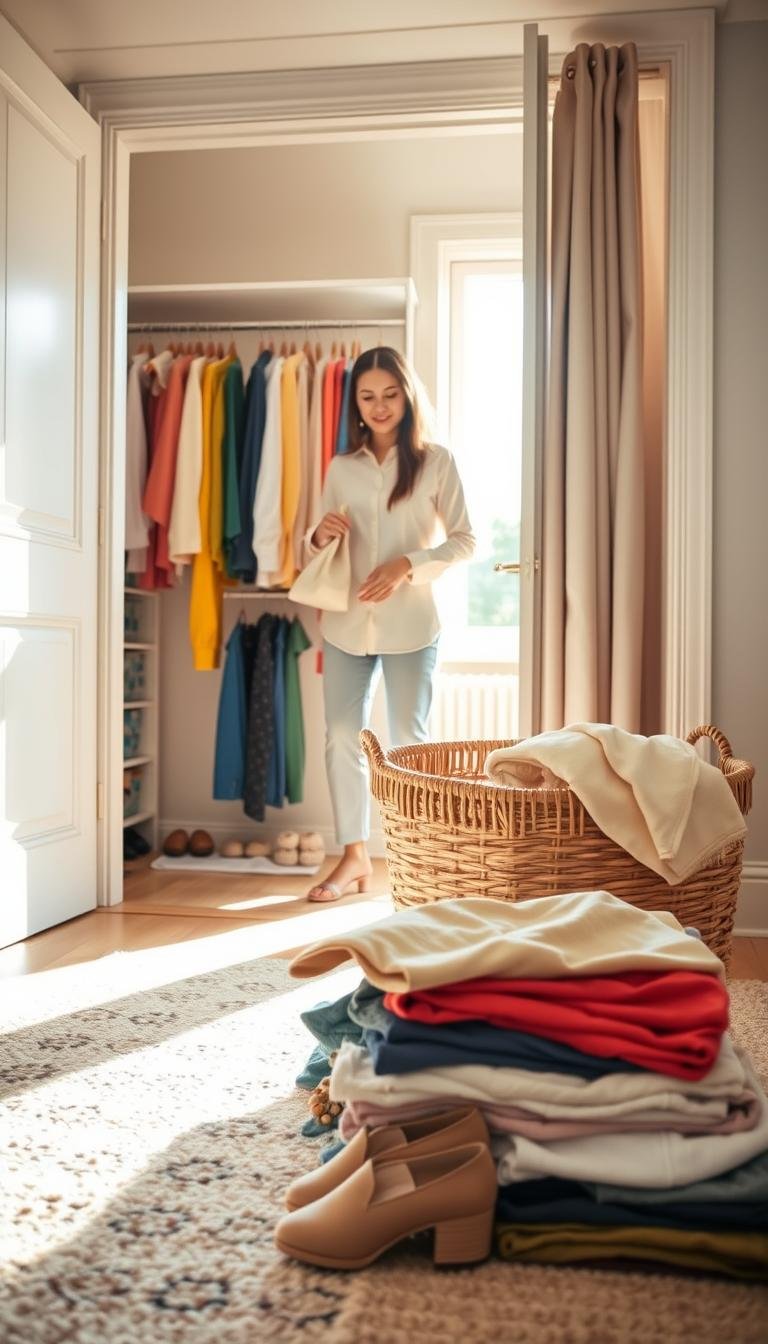
Flip hangers backward in closets. Wear or use an item and flip the hanger forward. Set a 30–60 day reminder. Items still backward can go.
Try a small “used” pile for bathroom products. Move an item there when you open it. If it never moves, consider getting rid.
Create homes and simple bins
Give each group a clear zone. One bin for cords with velcro ties. Label lightly. Shelves should show where to put away items. When a home is full, one thing must leave.
- Set purpose. Name the area’s job.
- Collect & sort. Fast: trash, recycle, donate, keep.
- Track use. Hanger flip. Used pile. 30–60 day check.
- Create homes. Simple bins and labels.
- Donation bag. Keep it visible and go-drop on errands.
- Small action. Ten minutes. Pause and rest. Repeat later.
| Step | Tool | Goal |
|---|---|---|
| Purpose | One sentence sign | Clear decision rule for the area |
| Sort | Four bins | Quickly reduce items to handle |
| Track | Hanger flip / reminder | See what you actually use |
| Home | Labeled bins | Easy to put away and find |
Room-by-room quick wins
A few tiny changes per room deliver immediate calm. These are small and doable. Pick one and set a five- to ten-minute timer.
Kitchen
Clear counters first. Cook double dinners and freeze portions in glass. Return ingredients as you use them. Create a small coffee station so mugs and tools go to one spot.
Pantry
Work one shelf at a time. Pull items, sort, and donate extras. Label lightly so things go back. Keep only the amount the shelf holds.
Bathroom
Keep a small caddy under the sink. Wipe counters after use. Do a quick product audit monthly and let go of what you do not use.
Bedroom
Use a nightstand bin for stray things. Empty it on a calm loop so there is no pile. Keep laundry moving with a simple hamper-to-washer routine.
Closet
Flip hangers to track what you wear. Build a simple uniform of basics you love. Keep an ongoing donation bag for clothes and small items.
Entryway
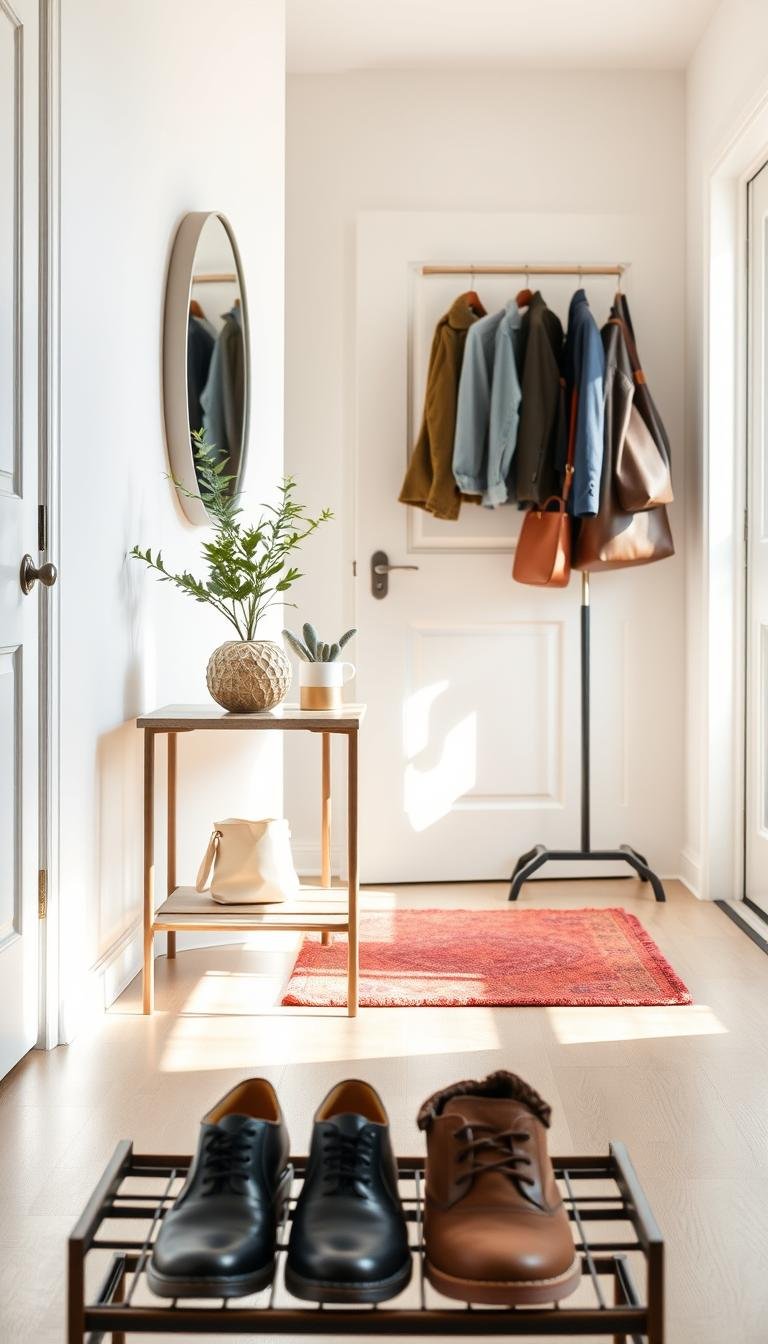
Set a shoe drop zone and sturdy hooks for coats and bags. Sort mail at the door with a touch-it-once habit so things away fast.
“One small win per room changes the feel of your house.”
| Area | Quick Win | Why it helps |
|---|---|---|
| Kitchen | Double dinners & clear counters | Fewer dishes and faster evenings |
| Pantry | One shelf at a time | Controls amount and prevents overflow |
| Closet | Hanger flip & donation bag | Shows what you wear and clears items |
Tiny habits and shortcuts for busy people and families
A few tiny moves each day keep clutter from growing without much effort. These are simple, low-decision ways to keep your house calm. Start with one habit this week. Let it teach the next.
Easy, friendly habits:
- Always carry one small thing when you leave a room. A toy. A book. A stray sock. It moves items back faster.
- One water bottle per person. Fewer cups in the kitchen. Fewer spills for kids. More water, less washing.
- Use a blanket bin and a single cord bin with velcro ties. Toss and go. Everything has a home.
- Keep a “go-backs” basket. Drop things that belong in other rooms. Do a quick return loop when you have a minute.
- Set your robot vacuum to run every day. Low-effort floors save you time and thought.
Name one small habit to start. Make it easy. Involve family with one simple job. Little wins add up every day.
| Habit | Why it helps | Time |
|---|---|---|
| Carry one item | Moves things away fast | 30 seconds |
| One bottle each | Less kitchen clutter | Instant |
| Robot vacuum | Steady clean floors | Daily |
Gentle motivation, accountability, and rewards
Find tiny motivators that make short tasks feel good. You do not need long sessions. Ten minutes or less can change a day.

Music, podcast, or audiobook to make minutes fly
Play upbeat songs or a short podcast while you tidy. People often finish an action before a song ends.
This keeps your mind engaged. It makes cleaning feel lighter and less like work.
Small rewards after small tasks
Give yourself a quiet cup of tea or ten minutes of reading as a reward. Small treats train your brain to return tomorrow.
Family clean-up time and age-appropriate jobs for kids
Pick one weekly time for the family to tidy one room. Ten to fifteen minutes is enough.
Assign simple roles. Young kids can pick up items. Older kids sort things or wipe surfaces.
- Pair tidying with music or a podcast.
- Reward small tasks with small rests.
- Set a weekly family time. Keep roles simple.
- Use a buddy or reminder when you do not feel like starting.
“Small, kind actions finish more than one long push.”
| What | How long | Why |
|---|---|---|
| Tidy burst | 5–10 minutes | Easy win. Protects energy. |
| Family clean-up | 10–15 minutes | Shared work. Faster results. |
| Reward | 5–10 minutes | Builds habit. Feels like rest. |
Be kind to yourself. This guide is about steady practice. Small lists. Two or three things only. Cross off and stop. That tidy moment is enough for today.
Maintain less: money and time savers that prevent clutter
Preventing excess starts with gentle choices about what enters your home. Small rules save both money and time. They stop clutter from arriving in the first place.
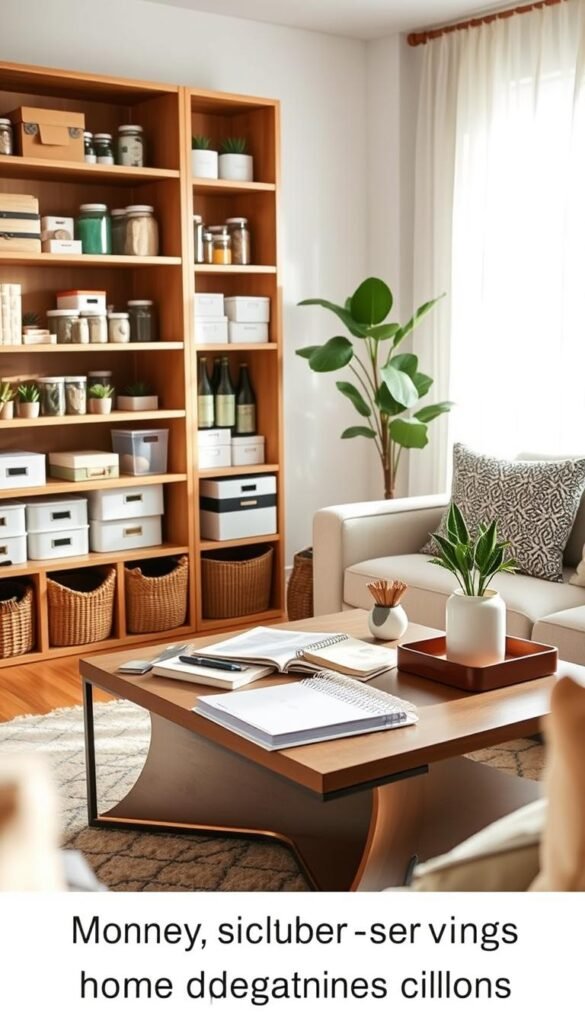
Borrow before buying and say no to freebies
Borrow books from the library. Ask neighbors for tools. This saves money and creates fewer items in your place.
Say no to freebies. A free coffee mug or tote costs shelf space. Keep only what truly earns its place.
Make it last: simple care beats constant upgrades
Wipe appliances. Repair instead of replace. Wash in cold. Little care delays replacement and frees up time for rest.
Reverse one-in-one-out: only buy when the old item is truly gone. This is a clear way to keep less stuff.
Keep surfaces clear: one “always-empty” zone
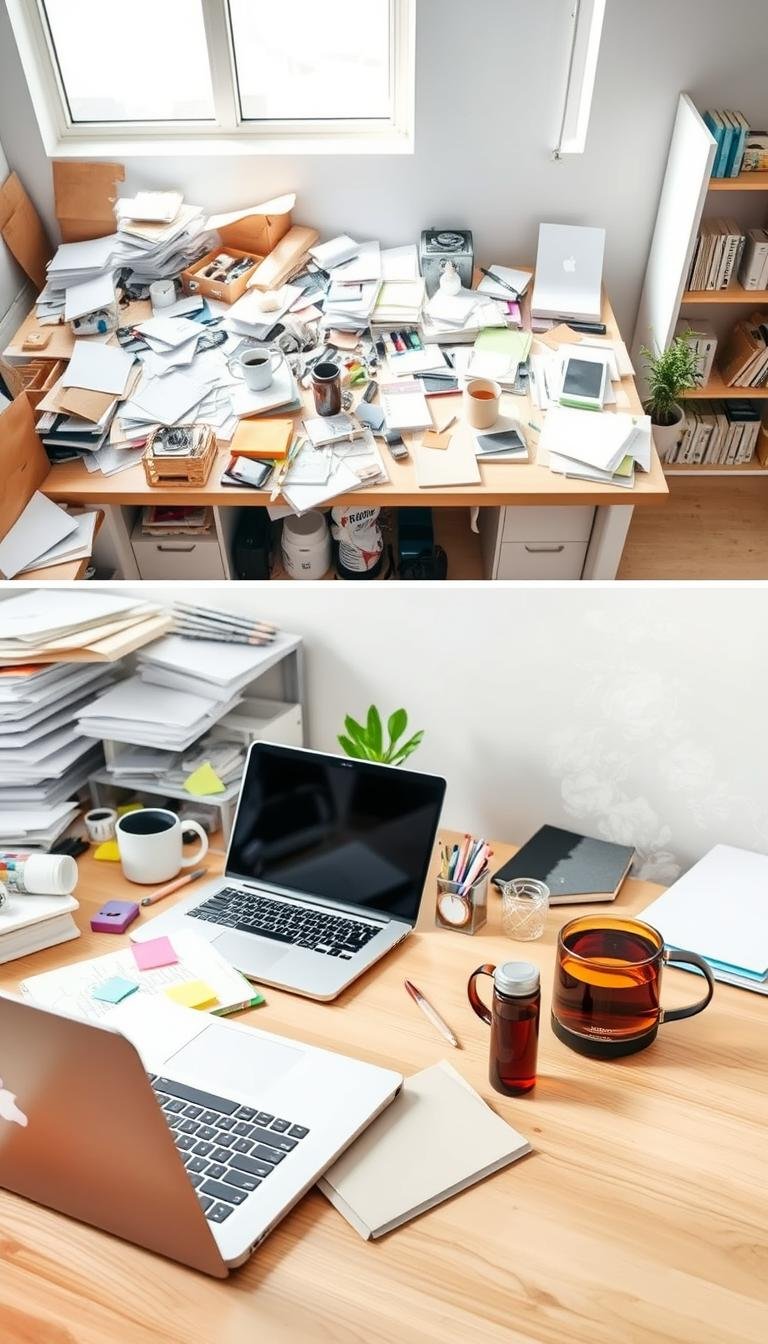
Pick one counter or table and keep it empty. This one visual anchor calms a room and guides other areas to follow.
Keep an ongoing donation bag. Toss a finished book or an unused gadget into the bag. Drop it off when you run errands to get rid of extras with ease.
“Small choices add up. Buy less, care more, and your home will thank you.”
- Borrow before buying. Library for books and neighbors for gear.
- Say no to freebies that clutter your place.
- Maintain what you own. Simple care saves money and time.
- One always-empty zone anchors calm in the house.
| Rule | Action | Result |
|---|---|---|
| Borrow | Library, neighbors, tool share | Saves money. Fewer items at home. |
| Say no | Avoid free mugs and totes | Less clutter. Clear counters. |
| Maintain | Clean, repair, gentle care | Delays replacement. Saves time and money. |
| One-empty zone | Choose a counter or table | Visual calm. Guides other rooms. |
Conclusion
Finish with one calm choice that makes the whole room breathe easier.
Small minutes add up. Do a five- or ten-minute sweep. Use a timer. A quick counter clear or a bathroom wipe resets the space and keeps cleaning light.
Protect your home with simple rules. Touch items once. Flip hangers. Run the robot vacuum. Keep a donation bag for books, clothes, and mugs. Cook double to cut dishes and save time.
Buy less. Borrow first. Replace one-for-one only when needed. Carry a refillable water bottle. Do one tiny loop around the house to return stray things.
You do not need perfection. Pick one small task today. Do it with care. Rest. That steady practice keeps your house calm and your life easier.
FAQ
What if I only have five minutes — what should I do first?
Start with a five-minute sweep. Pick one surface or one small area. Put away obvious trash. Return items to their homes. Set a timer. Small wins add up and make the next minute session easier.
How often should I do quick resets each day?
Aim for short daily resets. Spend a few minutes after meals and before bed. Do dishes or load the dishwasher. Clear counters and put away mail. These tiny habits cut down on big cleanup days.
I feel overwhelmed. How do I begin without pressure?
Choose one tiny task. A single drawer. One shelf. Give yourself permission to stop when the timer ends. Gentle progress beats perfection. Celebrate small wins and keep the pace soft.
What is the “touch it once” rule and why does it work?
When you pick up an item, decide its future. Trash it. Recycle it. Donate it. Put it back where it belongs. Closing the loop prevents piles and saves time later.
How do I handle sentimental items without guilt?
Limit a small, clear container for keepsakes. Photograph items you won’t keep. Ask: does this spark comfort or just guilt? Keep a few. Let the rest go quietly.
What’s the simplest system for clothes and closets?
Try hanger flips or a “used” pile. Flip hangers to track what you actually wear. Keep a donation bag in the closet for easy declutter. One-in-one-out works when you replace basics.
How can I keep kitchen counters clear without giving up convenience?
Create clear zones. Keep daily items in a small tray or caddy. Use a double-dinner habit to plan meals and limit leftovers taking up space. Put things away right after use.
What about kids and family — how do I get them to help?
Make tasks tiny and age-appropriate. Use a short playlist for a three-minute tidy. Offer small rewards. Assign consistent spots for shoes and toys. Gentle routines build habits slowly.
When should I donate or recycle things I no longer need?
Do a quick pass monthly. If you haven’t used it in six months to a year, consider donating. Recycle or trash broken items immediately. Keeping a donate bag out makes it easy.
How do I prevent new clutter from coming in?
Wait before buying. Borrow when possible. Say no to freebies that don’t fit your space. Use a one-in-one-out rule for non-essentials. Let the space guide what you keep.
Can small habits really save time and money?
Yes. Simple care extends items’ life. Fewer replacements mean less spending. Quick daily routines reduce larger time drains. Small habits protect your time and your budget.
What’s a realistic weekly routine for a busy schedule?
Pick one task per day. Monday: quick fridge scan. Tuesday: laundry loop. Wednesday: tidy living room. Thursday: bathroom wipe. Friday: paper purge. Weekends can be light deep dives if needed.
How do I make a maintenance system that sticks?
Keep it visible and simple. Use bins, labels, and clear zones. Set short, regular times. Add small rewards. Make the system useful so everyone uses it without thinking.
Is it okay to keep things “just in case”?
Keep a small, defined “just in case” box. Limit its size. Date items and review every six months. Most “just in case” items never get used. Boundaries help you decide.
How do I tackle paper, mail, and important documents?
Sort immediately. Recycle junk. File essentials in one spot. Scan when possible. Use a simple inbox and process it daily. Less paper clears mental space and surfaces.
What quick wins work best room-by-room?
Kitchen: clear counters and load the dishwasher. Bathroom: wipe surfaces and stash extras in a small caddy. Entryway: establish a shoe zone. Bedroom: do a five-minute nightstand tidy each evening.
How should I use photos to help decide what to keep?
Photograph bulky items or sentimental things before letting them go. Images hold memories without the space cost. This is an easy, low-energy way to downsize.
What tools or containers are worth investing in?
Small bins, a donate bag, labeled baskets, and a timer are all helpful. They’re affordable and make choices easier. Choose soft colors and simple designs for calm visuals.
How do I stop clutter from returning after I clean?
Keep one always-empty zone. Maintain daily quick resets. Use clear homes for items. Teach family members the touch-it-once habit. Routine beats occasional deep cleans.