Minimalist Home Starter Guide
You are busy. You want calm. You want a place that feels like a gentle pause in a full day.
This guide meets you where you are. It offers simple, pressure-free steps for creating a clear space that eases stress and saves time.
We keep it practical. You’ll get short checklists. You’ll see room-by-room ideas for the kitchen, pantry, bathroom, bedroom, closet, living spaces, and entry.
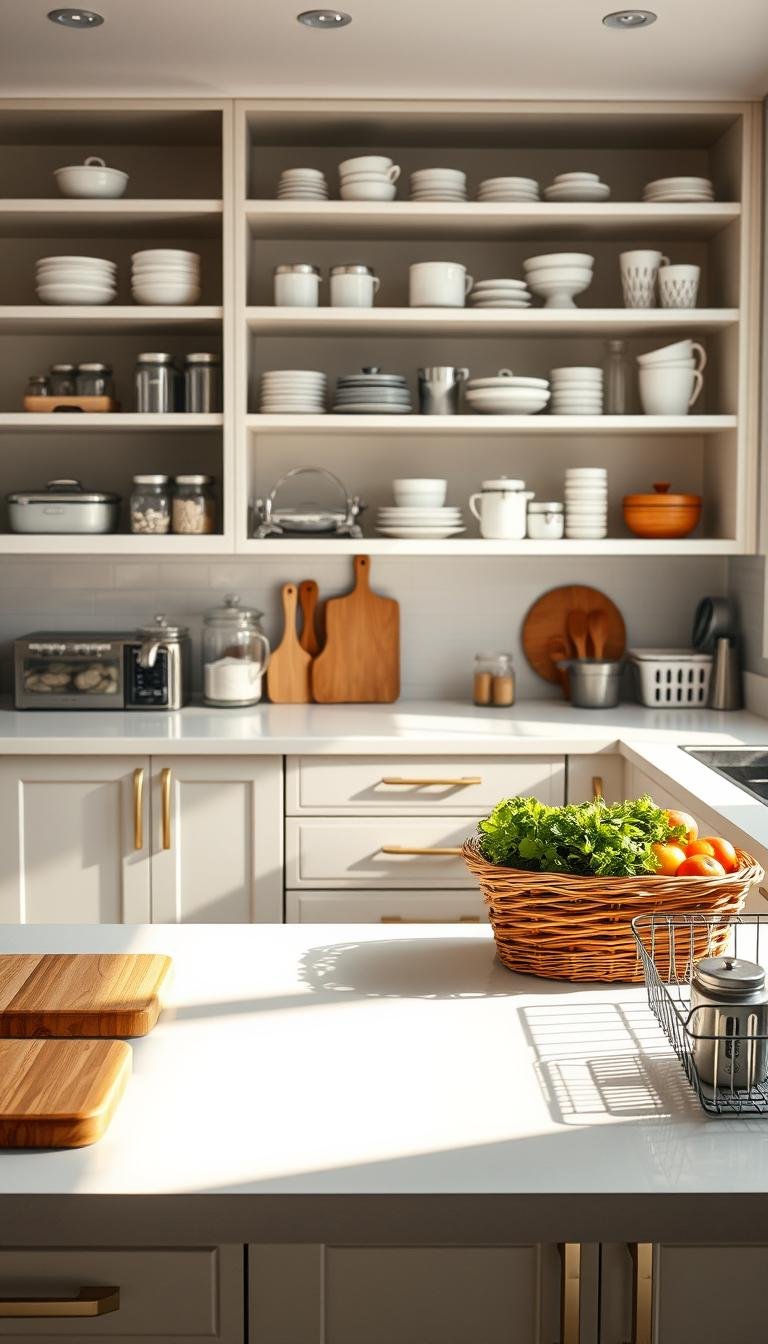
Peter Walsh says your house should be the antidote to stress. A common kitchen example keeps only a toaster, coffee maker, and microwave on counters. Clear counters reduce visual distraction and make cleaning easier.
You can begin with one drawer. One shelf. Small wins build momentum. We promise daily five-minute resets, light weekly flows, and a soft monthly review that fits real life.
Key Takeaways
- Small steps beat big overhauls. Start anywhere.
- Clear counters and floors cut clutter and improve focus.
- Short daily resets and light weekly routines save time.
- One-in/one-out systems keep spaces working for you.
- Room-by-room examples make ideas easy to follow.
Why a Minimalist Home Feels Better Today
A calmer space clears your mind and gives small, steady relief each day. A few edits to what you keep reduce visual noise. That lowers stress and helps you breathe in your space.
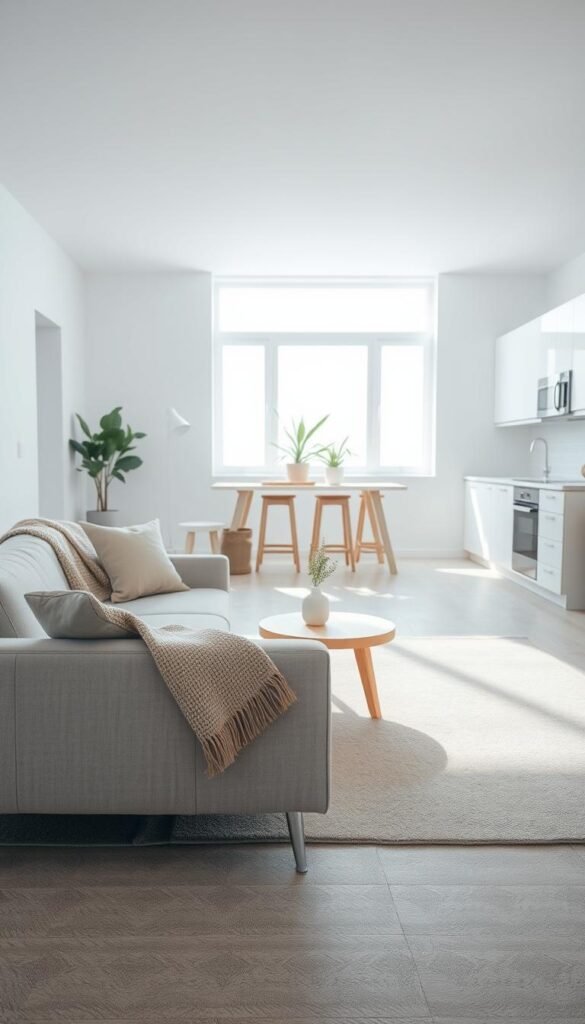
Less to look at means less to process. You notice this right away. Clear surfaces and floors make cleaning faster. You dust and sweep with fewer obstacles.
Fewer things also cut the time you spend hunting. The average person in the U.S. loses about 2.5 days a year looking for misplaced items. That adds up to wasted time and extra cost.
Choosing quality over quantity changes how rooms feel. A few loved pieces work better than many cheap items. Your rooms feel open. Guests and you both notice it when you wake and when you wind down.
Quick benefits
| Benefit | What changes | Everyday outcome |
|---|---|---|
| Less visual clutter | Clear surfaces, fewer objects | Lower stress and better focus |
| Faster cleaning | Fewer items to move | More free time for living |
| Better choices | Keep what you love | Rooms feel calm and useful |
These ideas are flexible. You don’t need to live with nothing. Keep what serves you and let go of extra stuff. Small edits add up. One cleared shelf can shift how your entire home feels.
Set Your Vision and Gentle Rules
Picture a simple scene that shows what “enough” looks like for your family. Take two minutes and write it down. Keep it honest. Keep it kind.
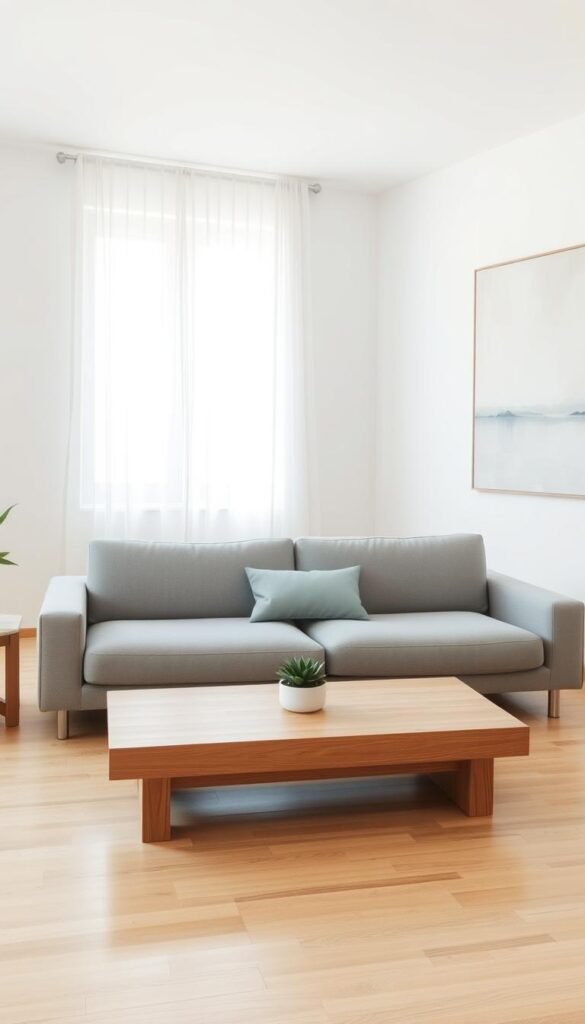
Now name the essentials by room. List the things that help daily life. Note what gets in the way. This makes decisions easier.
Simple guardrails to keep:
- One-in/one-out for clothes, toys, and kitchen items.
- Leave white space on tables, counters, some walls, and open shelves.
- Choose a clear floor as a baseline. Furniture stays. Piles go.
- Give every item a place. If it has no place, it wanders.
Pick one small tip to start tonight. A five-minute nightly reset works well. Review your vision monthly. Adjust as seasons and needs change.
Protect the feel. When in doubt, keep the essentials and honor your space. This way your home becomes calm and useful for the whole family.
Minimalist Home
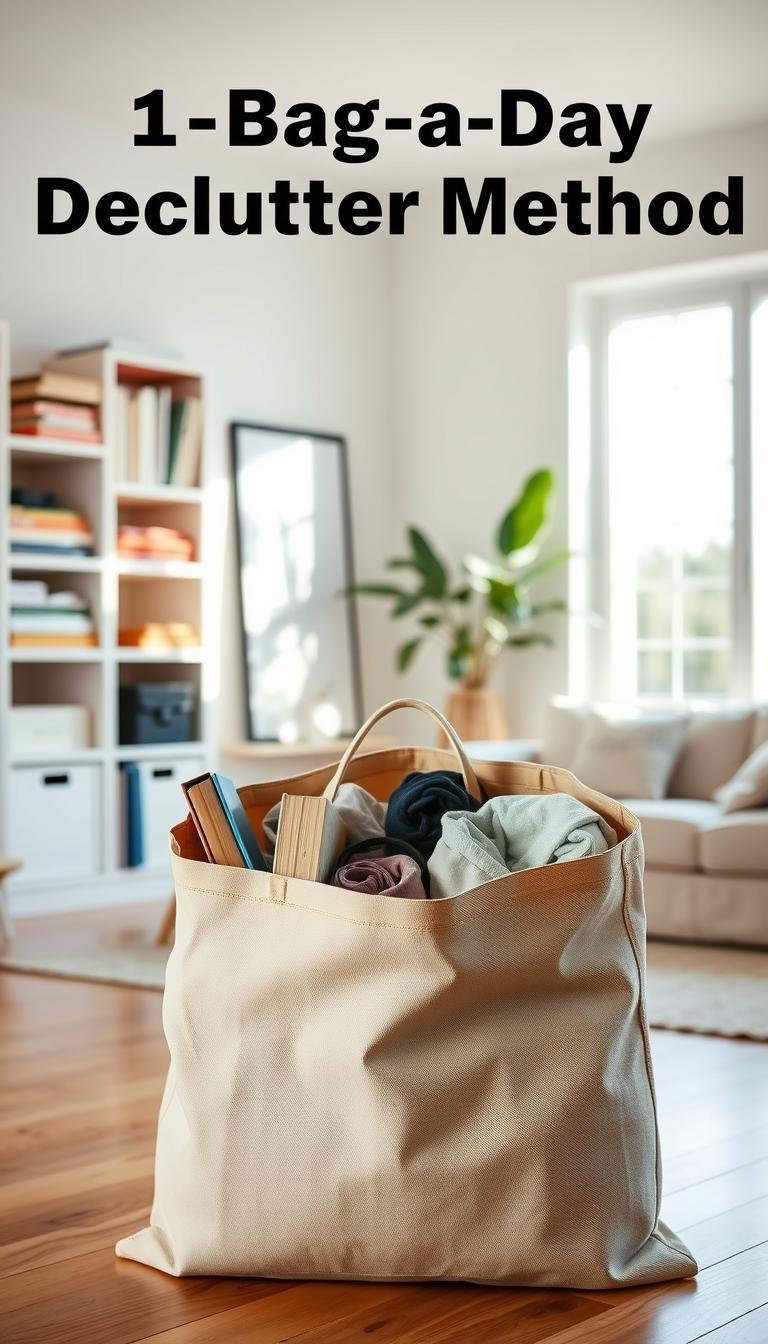
Begin with one tiny corner and let that small win lead the way. Choose a single drawer, a shelf, or one room edge. Set a 10–20 minute timer. Bite-sized sessions protect your time and energy.
Try the box-and-pause method for unsure things. Place doubtful items in a dated box. Store it. Check back in 3–6 months. Keep only what you used.
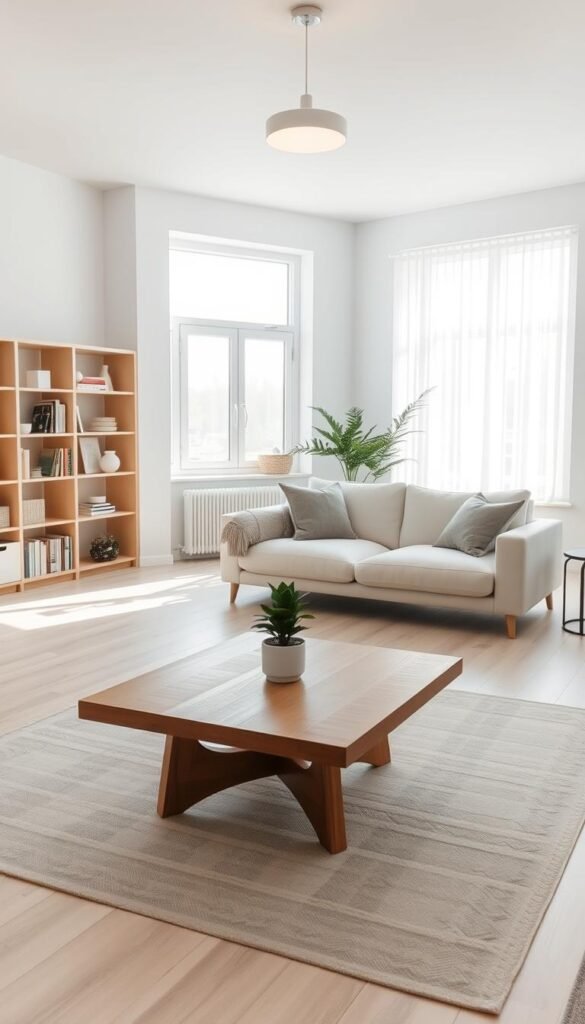
Simple tests and homes for items
Ask the “just in case” question. Name the simple use for each thing. If you can’t, consider letting it go. When you keep an item, give it a clear home.
- Pick one small start. Junk drawer or one shelf. Quick wins build confidence.
- Box-and-pause. Date the box. Review in 3–6 months.
- Assign a home. Label bins. Use shallow cabinets so everyday items are visible.
- Five-item sweep. Remove five things in five minutes. Repeat tomorrow.
- Paper flow. Recycle most. Scan needed papers with your phone. File a tiny set by category.
Keep counters clear except for daily-use appliances. Limit sessions so you stop before fatigue sets in. Celebrate small progress. One clear drawer saves you time and calms your space.
The Core Decluttering System
Open the drawer. Empty the shelf. Seeing the space helps decisions. A simple, repeatable flow keeps choices quick. Use it anywhere in your house. Small wins build calm.
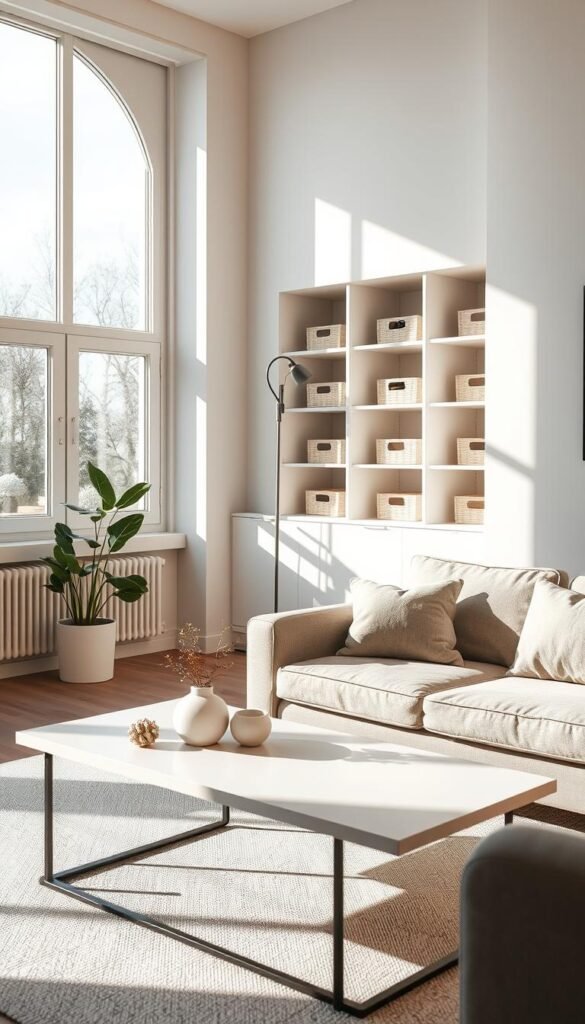
Step-by-step: remove, sort, edit, store, reset
- Remove. Clear the zone so you can see every thing.
- Sort. Group like items together. Like with like makes choosing fast.
- Edit. Decide in four ways: keep, donate, recycle, discard. Fast choices beat perfection.
- Store. Return only what stays. Use clear storage and label the place once.
- Reset. Wipe surfaces. Step back. Notice the extra light and ease.
Keep, donate, recycle, discard—made simple
Keep decisions limited. Four paths remove decision fatigue. Use a dated box for unsure items. If you don’t use the box in three months, let those things go.
Clear surfaces and walls with a few accents
Clear most surfaces and most walls. Add one or two accents. A small plant or a framed photo is enough to soften a room.
- Use a bin as a limit. When it’s full, stop adding.
- Decide once where items live. A single consistent place saves effort.
- Print the system on one card. Tape it inside a cabinet for quick refreshers.
Room-by-Room Examples and Easy Wins
Pick one surface to clear right now; small action builds steady momentum. Below are short, practical ideas you can do in minutes. Each one is a tiny win you can repeat.
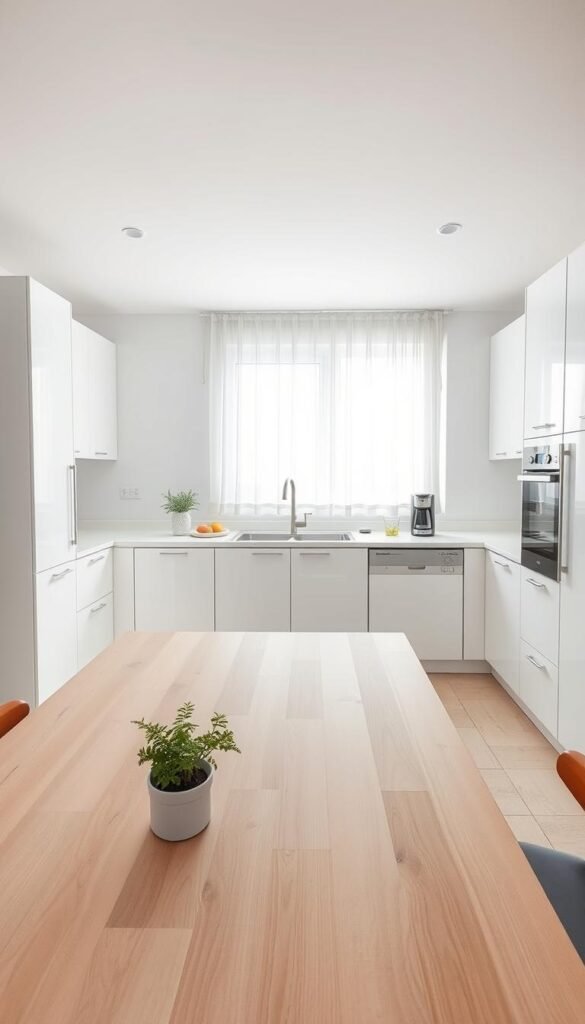
Kitchen and pantry
Clear counters to a few daily tools. Keep only the coffee maker and toaster or your chosen essentials. Edit gadgets you rarely use and move them to higher cabinets for occasional use.
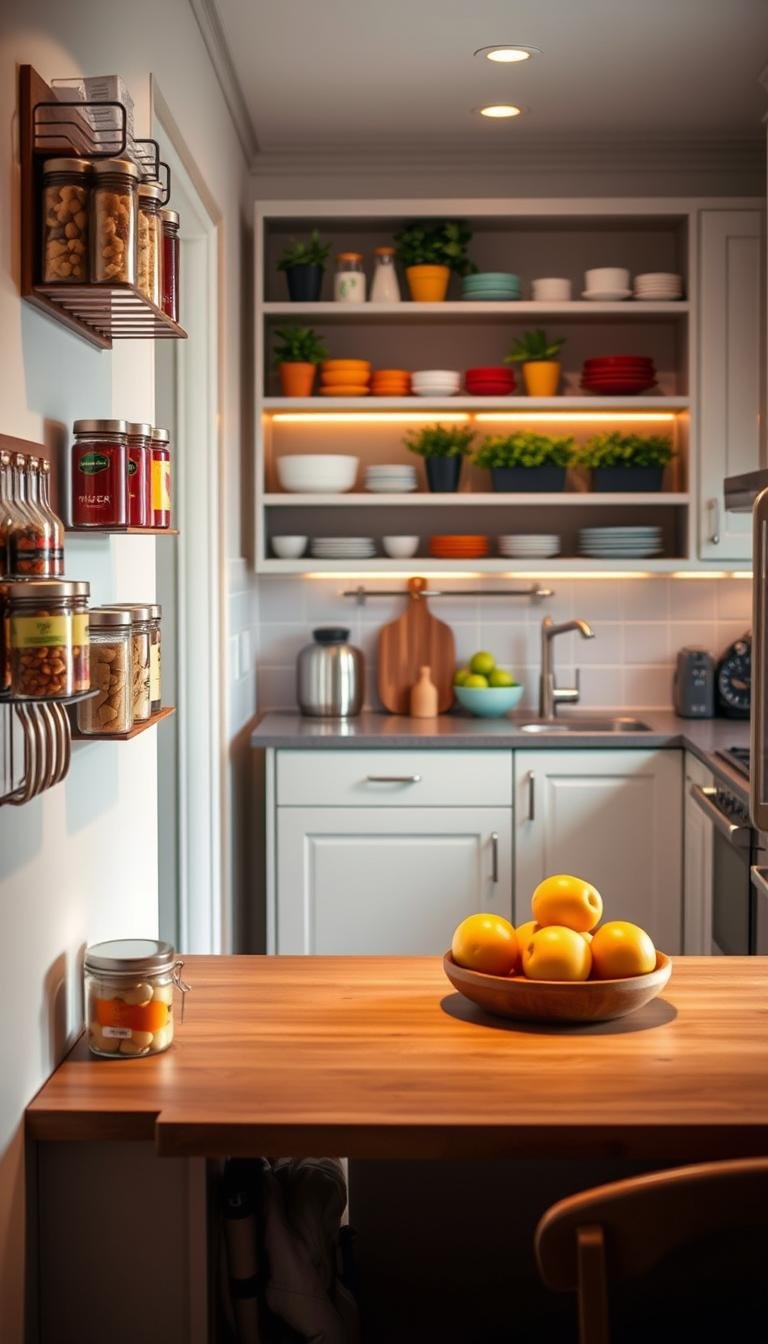
Label basics in the pantry. Create zones for baking, breakfast, and snacks. Use clear bins so you see what’s low. First-in, first-out saves money and time.
Bathroom
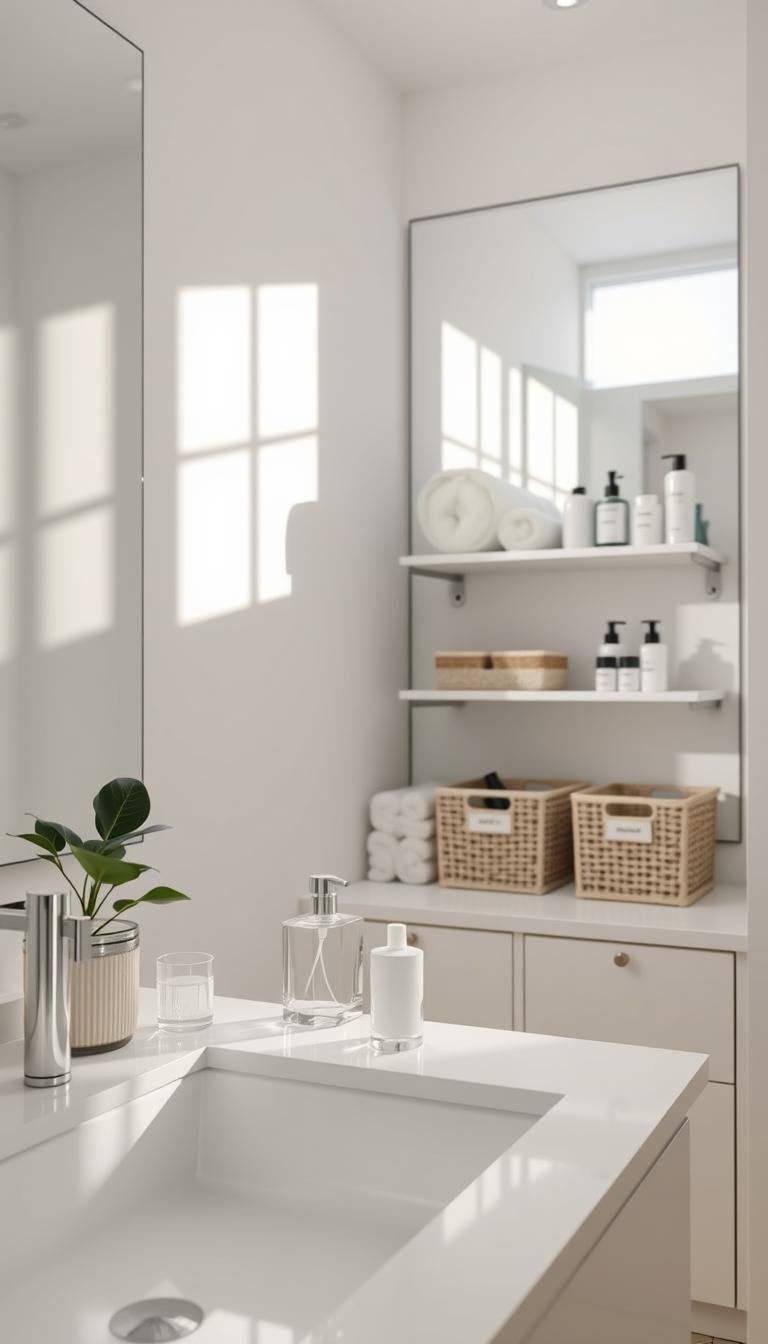
Make a small caddy with daily wipe supplies. Store it under the sink. Keep only slim essentials on the sink to keep surfaces clear.
Limit towels per person. Fewer towels mean less laundry and a calmer floor.
Bedroom and closet
Try a capsule wardrobe to cut morning decisions. Keep the bedside clear for a lamp, water, and a single book.
Leave under-bed space open. It helps airflow and feels calmer when the floor is visible.
Living room
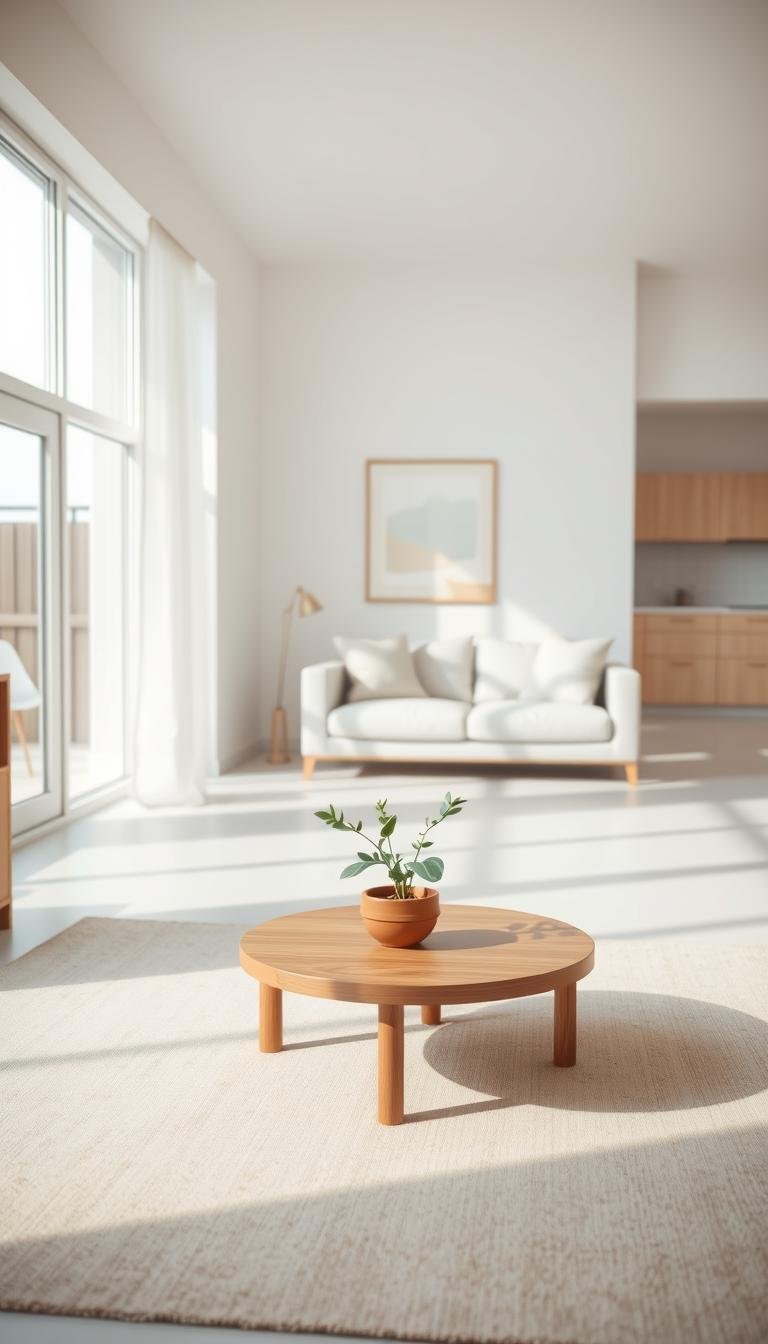
Pick furniture that fits the room. A modular couch works for seating and storage. Keep the coffee table clear with one soft accent, like a small tray.
Use hidden storage to tuck away games and cords. Clear surfaces make the room feel larger and more restful.
Entryway and quick wins
Add hooks, a catch tray, and a small bench for shoes. Make drop-zone rules so keys and bags always have a home.
- Quick tip: Set a 10-minute timer. Pick one room and do a fast sweep.
- Small win: Remove five items from a single surface. Repeat nightly.
Furniture, Surfaces, and Storage That Work
Pick furniture that bends to real life, not the other way around. Start by choosing pieces that do more than one job. Modular sofas can seat, sleep, and store. A bench can hide shoes and offer seating. These choices stretch value and reduce clutter.
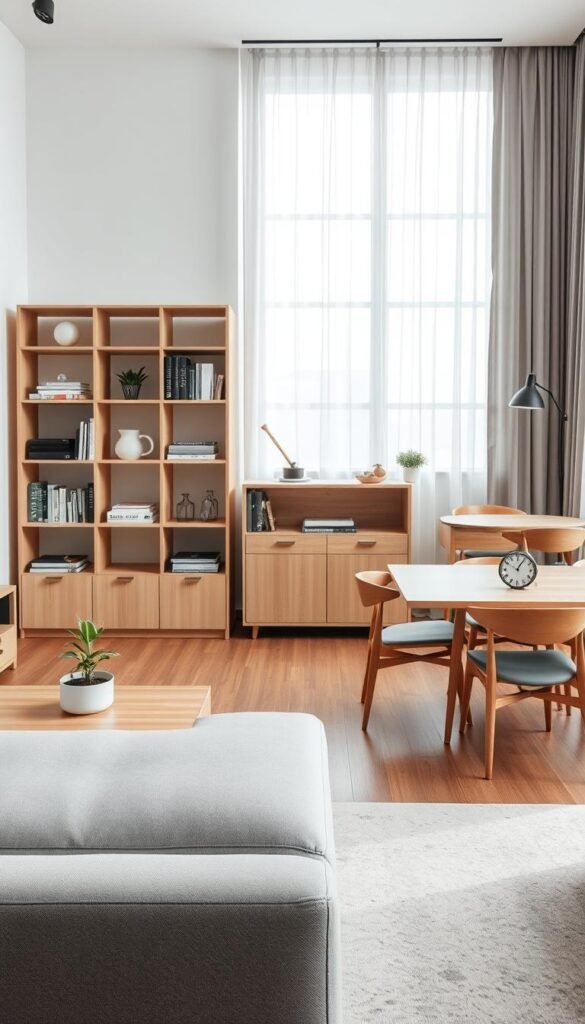
Rethink pieces: modular, multi-use, right-size tables
Choose the right table for the room. Smaller tables stop piles from forming. If a coffee table gathers mail, swap it for a slim side table or none at all.
Clear surfaces habit: everything has a place
Touch down. Put away. Return. Make this a simple daily rule. Clear surfaces are easier to keep tidy when each object has a consistent place.
Cabinets and shelves: contain, don’t display
Use bins and cabinet doors to contain most items. Display only a few loved accents. This way your shelves support calm and the rest of the space stays usable.
“A small map inside a cabinet helps everyone return things to the same place.”
- Choose functional furniture. Multi-use pieces adapt as needs change.
- Think in zones: reading, work, play. Zones make flow easy.
- Pick low-maintenance materials for quick wipes and easy care.
Calm Style: Colors, Art, and Decor Without Clutter
A quiet palette and a few thoughtful accents change how a room greets you. Start with soft colors as a base. They make surfaces feel calm and steady.
Subdued base, a few bold accents. Choose one or two accent pieces in a brighter hue. Use them sparingly. This keeps interest without noise.
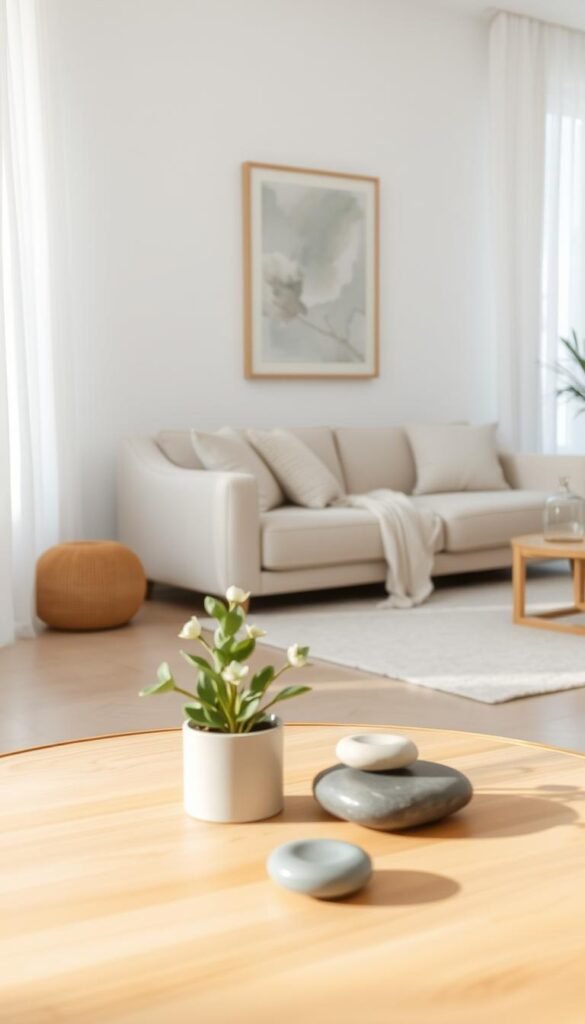
Simple art on bare walls
Keep most walls breathable. One framed piece gives the eye a place to rest. Simple frames and clear matting make art feel intentional.
Plants and texture for life
Pick decor you use and enjoy. Blankets, pillows, and plants add warmth without excess. Let a few loved pieces set the tone. Avoid filling every shelf.
- Start with a calm base. Soft colors under bold accents create balance.
- Choose simple curtains or wooden blinds for clean lines.
- Let bright colors be purposeful. Keep style flexible and fun.
Think of minimalism as guidance. Keep what you love. Remove what distracts. Step back. If a corner feels busy, take one thing away and breathe. The result is a soft space feel that supports your day and your house.
Daily, Weekly, and Monthly Minimalist Routines
A few short routines protect your space and buy you time each day. These are simple actions you can do without stress. They keep things working for you.
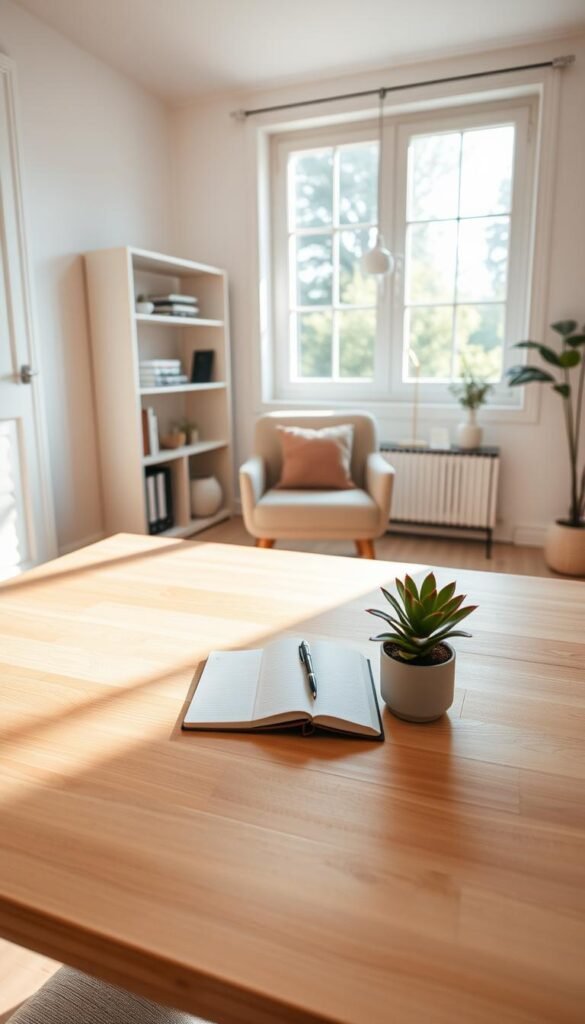
Daily resets
Five minutes is enough. Do a quick surface sweep. Put dishes away. Tidy the entry so pockets and bags have a home.
Start one laundry load and fold if that fits your rhythm. Or choose two laundry days each week. Put the coffee setup to bed each night to make mornings calm.
Weekly flow
Before shopping, edit the fridge. Toss expired items. Wipe a shelf. Plan simple meals that match your life.
Give floors a focus. Sweep or vacuum high-traffic areas. Mop where needed. Return stray things to their homes. Keep a basket by stairs for quick runs.
Monthly audit
Pick one small audit each month. Check closets, books, and paper. Donate what you no longer use.
Recycle most paper. Scan a few important documents and file a tiny set. Review one space for ten minutes and remove one layer of visual noise.
“Short, gentle routines beat perfection every time.”
| Routine | Frequency | Quick outcome |
|---|---|---|
| Surface sweep + dishes | Daily | Clear counters and less morning stress |
| Fridge edit + meal plan | Weekly | Fewer wasted groceries and easier shopping |
| Closet/books/paper audit | Monthly | Less clutter and fewer stacks of stuff |
| Laundry rhythm | Daily or bi-weekly | Fewer piles and a simpler routine |
Tips: Tie these tasks to daily anchors like after dinner. Keep them short. If you miss a day, skip the guilt. Start fresh tonight. Your home will thank you.
Conclusion
A few gentle edits can change how every room feels. Keep the core system simple: remove, sort, edit, store, reset. Use it in one kitchen corner, a bedroom drawer, or the living entry.
Choose fewer furniture pieces that serve daily life. Right-size a table. Notice if a coffee table collects clutter. Give items a clear home and return them there each day.
Practice tiny repeats. Five-minute resets. A weekly fridge edit. A monthly audit of books, closets, and paper. These small moves protect your energy and reduce stress.
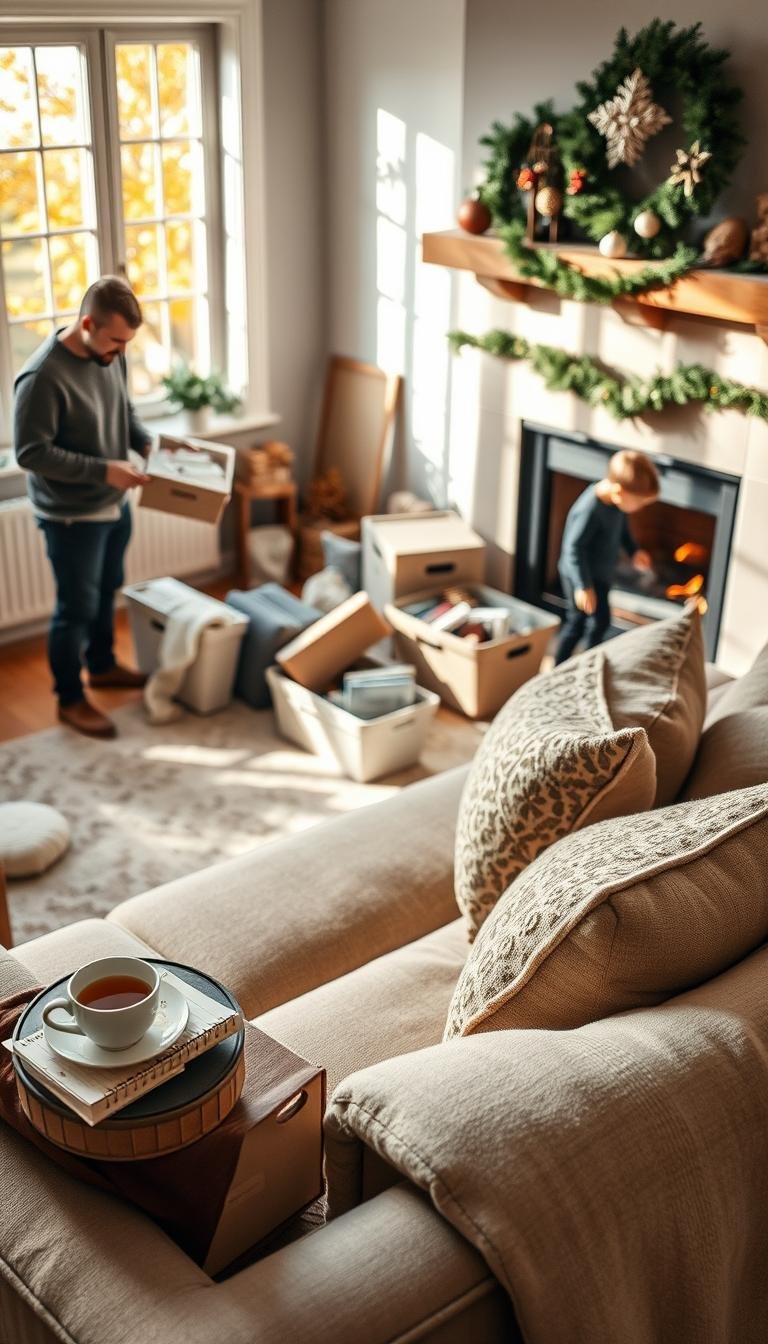
Start now. Set a short timer. Clear one shelf or one drawer. Share the rule with your family. Gradual steps keep the house useful and let your space breathe.
FAQ
How do I start with one small area when everything feels overwhelming?
Pick one drawer or one surface. Set a timer for 15 minutes. Remove everything. Sort into keep, donate, recycle. Put back only what you use or truly love. Small wins build calm.
What is a gentle rule I can keep without feeling deprived?
Try the one-in/one-out rule. When a new item arrives, let one go. Use white space and clear floors as your guide. These guardrails protect your calm without strict limits.
How long should I box items when I’m unsure?
Use the box-and-pause method for 3 months. Label the box and date it. If you haven’t needed an item by then, donate it. This removes guilt and reveals real needs.
How do I decide what to keep from “just in case” items?
Ask: Have I used this in the last year? Does it support daily life? If the answer is no, assign it a new home or let it go. Keep only practical and meaningful pieces.
What quick paper routine actually works?
Create three piles: recycle, scan, file. Deal with mail immediately. Scan important docs with an app. File what you need. Recycle the rest. Five minutes a day prevents paper build-up.
How can I clear counters in the kitchen without losing function?
Edit gadgets to the essentials. Store extras in cabinets. Use a small tray for daily items like coffee and fruit. Label basics in the pantry. Clear counters feel calmer and stay usable.
What furniture choices help rooms feel lighter?
Choose modular and multi-use pieces. Pick a right-size table rather than oversized. Opt for storage that hides clutter. Fewer, better pieces make rooms breathe.
How do I keep surfaces clear with a busy family?
Give every item a home. Use hooks, bins, and a small drop zone at the entry. Build quick daily resets into routines. Short, consistent habits reduce clutter stress.
How many decorative items are too many for a calm space?
Aim for a few meaningful accents. One or two art pieces. One plant for texture. Let walls and surfaces have breathing space. Quality over quantity keeps the room peaceful.
What is a realistic daily reset that fits a hectic schedule?
Spend five minutes each evening clearing key surfaces. Run the dishwasher. Tidy the entry. A short ritual like this prevents mess from mounting and saves time later.
How do I maintain progress each month without strict rules?
Do a monthly audit: quickly scan closets, books, and the pantry. Donate items you no longer use. Digitize papers you don’t need in hard copy. Small, gentle checks keep the system working.
Can kids and minimal systems work together?
Yes. Use clear storage and low hooks. Limit toy rotation to a few bins. Teach simple put-away games. Systems that match family life reduce stress and keep routines gentle.
What if I worry about letting go of gifts or sentimental items?
Keep a small memory box for true keepsakes. Photograph larger or fragile items before letting them go. You can honor memories without holding every object.
How do I choose colors and art that calm a room?
Start with a subdued base. Add one or two bold accents. Pick simple art on bare walls. A single plant adds life without clutter. These choices create warmth and softness.
Where should I put items I use rarely but still need?
Store them out of sight in labeled bins or higher cabinets. Assign a clear home. If access feels clumsy, question how often you truly need the item and consider donating.