How to Declutter Paper Clutter
You live a full life. You want calm when you walk through your front door.
Start with a soft plan. Small steps beat big overhauls.
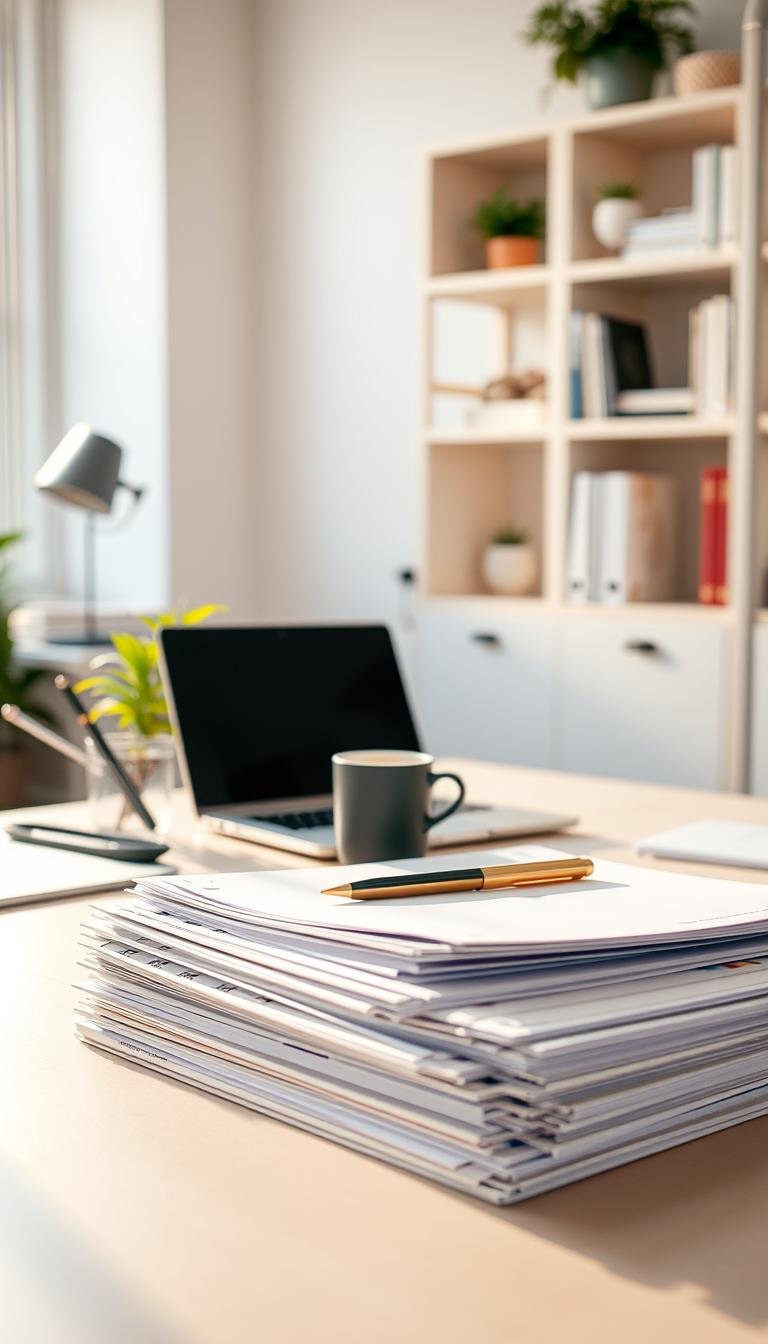
Keep only three kinds of paper: action items, time‑limited notes, and keep‑forever documents like passports and tax records. Use one vertical inbox to process weekly. Scan what you can. Pick a fireproof box for essentials.
Try a 5‑minute daily sort. Shred, file, or recycle. Spend 30 minutes each week on filing and shredding. Do a monthly review to archive and purge. Set an entryway sorter with quick labels like ASAP, long‑term, and kids’ post.
This simple method blends organizing with real life. It gives you routines that fit busy days. No guilt. Just steady wins.
Key Takeaways
- Use three clear categories to decide fast: act, hold, keep.
- One vertical inbox helps you process mail each week.
- Daily 5‑minute sorts stop piles from growing.
- Weekly 30 minutes for filing. Monthly for archiving and purging.
- Go digital with simple scanning and e‑billing to reduce paper in.
- Keep vital documents in a fireproof box for safety.
Start simple: calm your space and set a clear path
Pick a single spot and make it your peaceful processing zone.
The one surface rule: clear the main pile and breathe
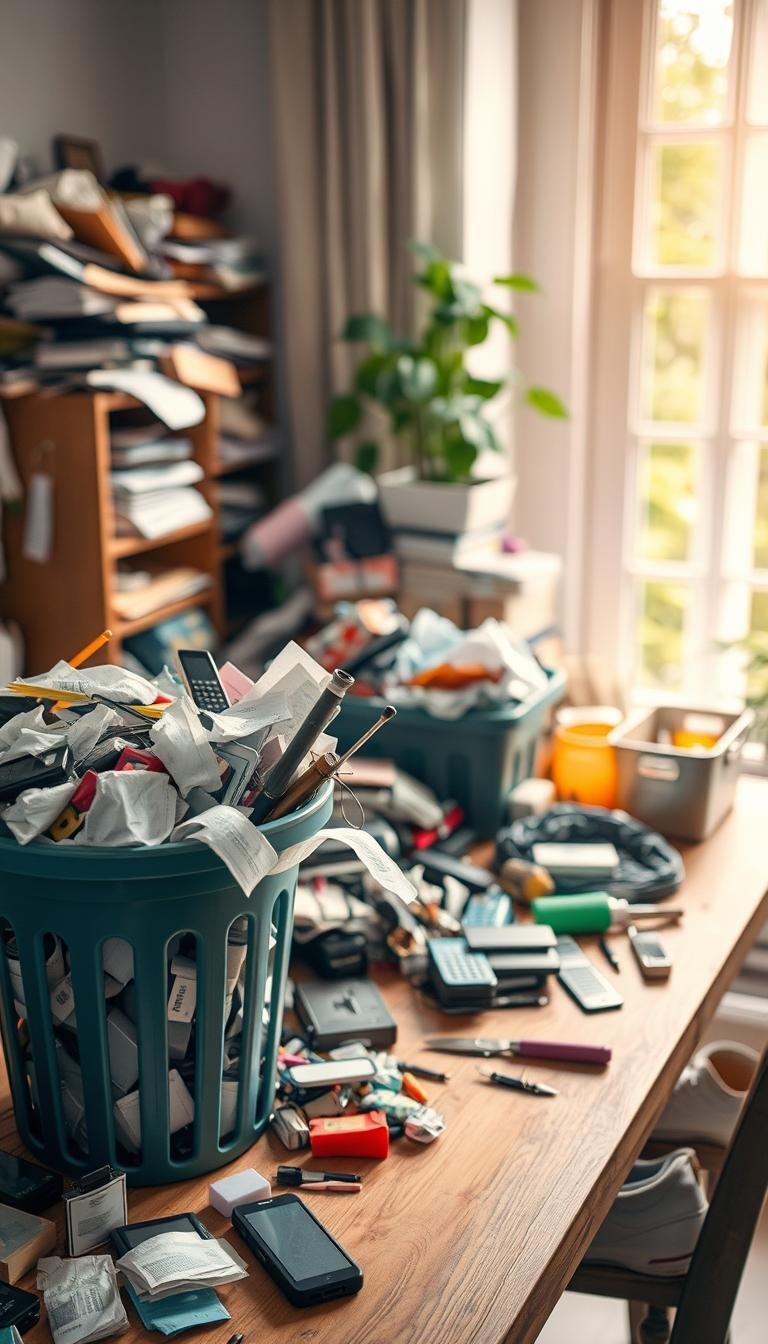
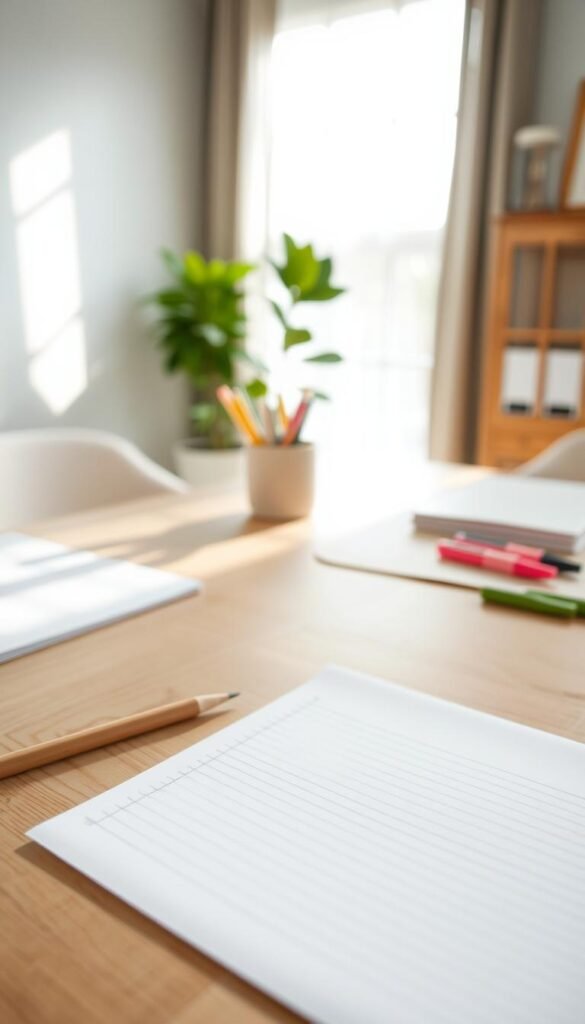
Choose one surface in your house. The kitchen island, an entry table, or a desk works well. This is your calm zone. Keep only what helps you decide fast.
Remove everything. Set aside just ten minutes of time. You are sorting, not perfecting. Touch each paper once. Ask: Act now, hold a bit, or keep forever?
- Recycle obvious flyers and post that you don’t need.
- Shred any items with personal information.
- Put action items into one visible tray or vertical slot.
- Keep a small bin nearby so getting rid is easy.
Use a gentle daily reset. Clear the surface each evening. A standing organizer helps. It keeps piles from spreading and reminds you to process.
Take small steps. A calm surface at a time changes the whole home.
Declutter Paper Clutter: a simple system that works
Set a single inbox and let it do the heavy lifting for you.
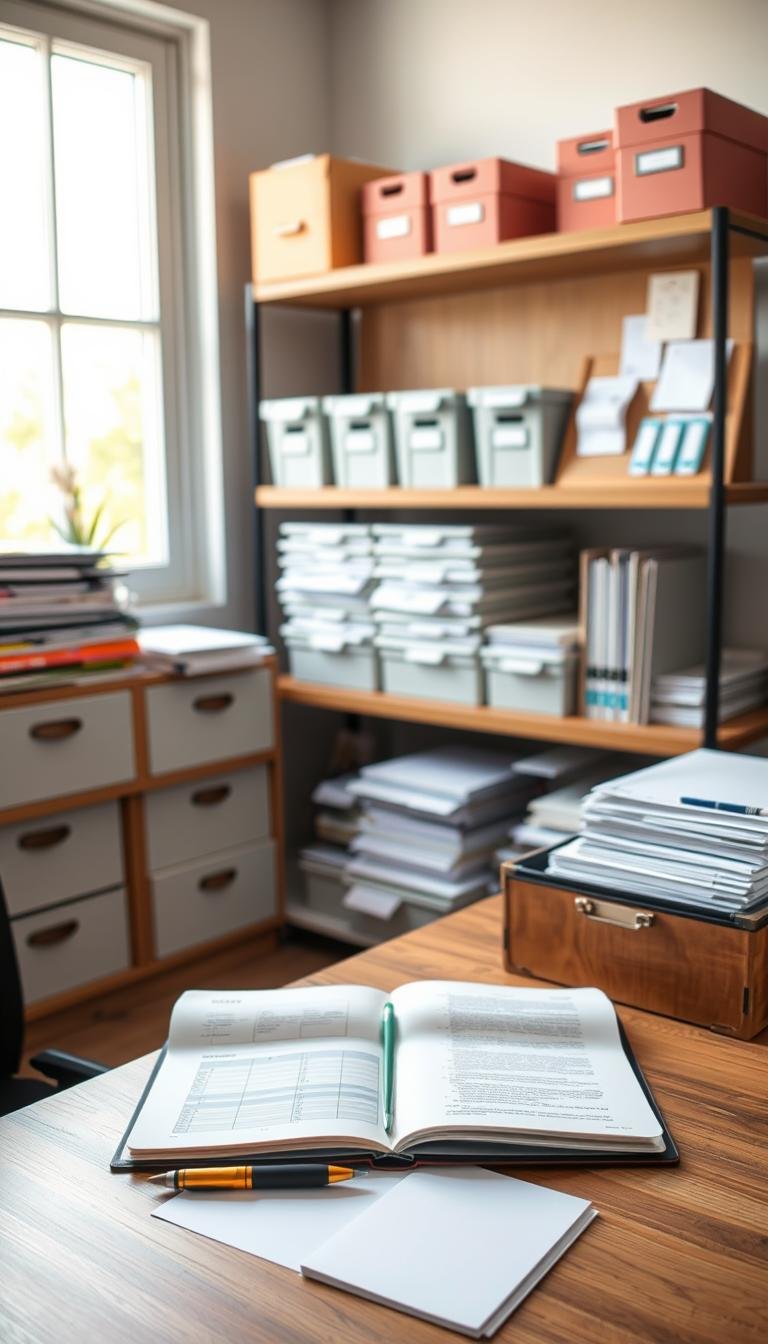
Create one visible inbox. Use a single slot for bills, forms, and time‑sensitive items. One place. Less searching.
File into three categories: To Do for action, Wait and See for short‑term items, and This Year for receipts and records you need this year. The three categories keep decisions fast.
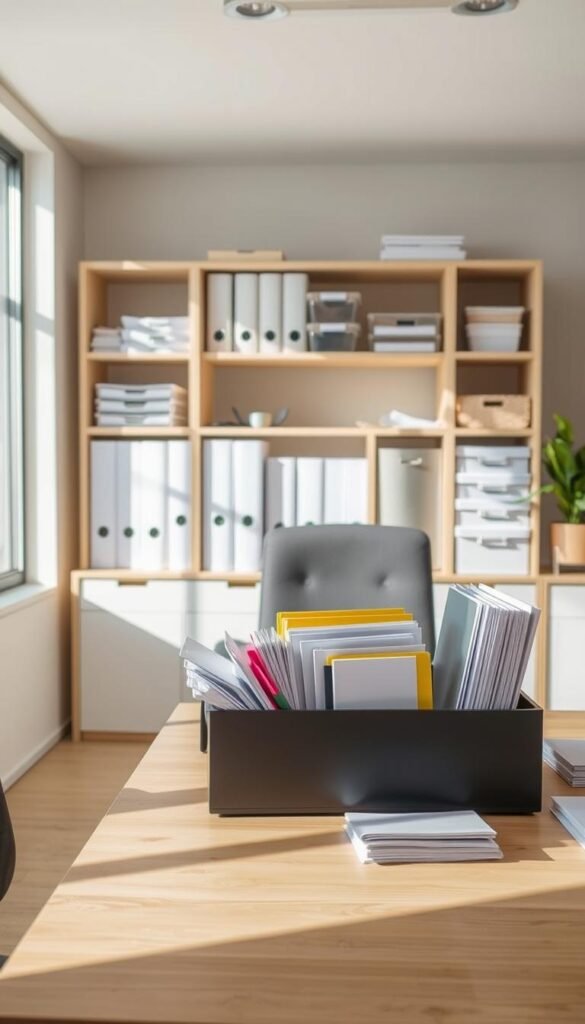
Adopt a 5‑minute daily sort. Each day sort new mail into shred, file, or recycle. Small steps add up. You will feel calmer.
- Stand it up: a vertical organizer keeps papers visible and limits overflow.
- Go digital: scan with a phone app. Use cloud folders and e‑billing.
- Keep‑forever documents—birth certificates, passports, tax documents—in a fireproof lock box.
- Shred anything with sensitive information. Then recycle when allowed.
Keep slim file folders with broad labels. For kids, save favorites in one folder or a photo book. Stop the flow at the source by unsubscribing and using DMAchoice. This gentle method and simple systems help the system work for your life.
Room‑by‑room paper hotspots and easy wins
Walk each room and note the small spots where papers gather. This quick tour shows you where to place gentle fixes. Small rules beat big overhauls.
Entryway or mudroom: Set a mail station with a wall-mounted sorter. Label slots for To Do and Long-Term. Add a recycling bin under it so most ads and junk mail leave the house fast.
Kitchen counters: Keep a single “today” tray. Let only same-day papers live there. Clear the counter each night. No parking piles. Just a calm surface.

Other quick wins
- Pantry: Clip a tiny list board. Store specific coupons in your Wait and See folder.
- Bathroom: Toss catalogs straight into recycling. Move warranties and manuals to the office.
- Bedroom & closet: Remove stacks. Keep one bedside To Do note for nightly tasks.
- Home office: Use broad folders, magazine holders, or a filing cabinet. Fewer categories are easier to keep.
- Kids’ zone: One labeled folder or a thin photo book per school year. Save favorites and photograph the rest.
“Small, visible tools near landing spots make processing almost automatic.”
Use the same labels across the house: To Do. Wait and See. This Year. Keep tools close to where papers land. Then the work becomes gentle habit, not a chore.
Routines, checklists, and gentle habits that make it stick
Build tiny routines that fit the flow of your day. Use short, steady actions so this method becomes normal. Little time investments add calm to your home.
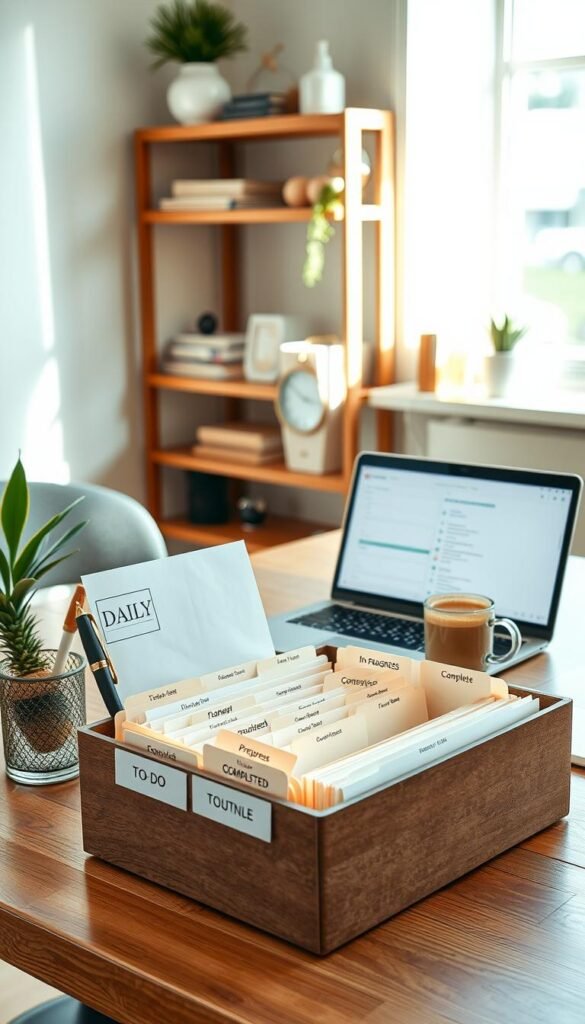
Daily routine
Five minutes: open today’s mail. Sort into shred, file, or recycle. Put action items in the inbox. Clear the tray before bed.
Weekly routine
About 30 minutes: pay bills, empty the inbox, and batch scan with your phone. Then shred in one go. Batching saves time and energy.
Monthly routine
Set aside 15–30 minutes. Review files and move older documents from “This Year” to archive. Purge expired items and update labels.
Backlog day
Set aside a short block of time. Start with easy wins. Recycle obvious ads. File only what matters. No rush. One pile at a time.
Quick reset and supplies checklist
- Quick reset: empty the shredder, clear counters, relabel folders, restock recycling bags.
- Supplies: vertical file, file folders, a reliable shredder, sticky notes, and a small recycling bin.
“Small, consistent steps make organization feel simple and kind.”
Keep it simple: use one system across the house. Fewer categories mean faster filing and less decision fatigue. Celebrate the steady progress. A little time each day builds lasting calm.
Conclusion
Close the loop with one calm action: open today’s mail and decide. This small habit keeps paper clutter from growing and shows the system works.
Use the three categories and one inbox. File the few documents you need. Keep essentials like birth certificates and tax documents safe in one fireproof spot.
Reduce incoming mail. Unsubscribe from junk mail and choose e‑billing. Vertical folders and broad labels limit piles and make it easy to file fast.
When a pile appears, breathe. Touch the top paper. Pick a category. One small step is progress. This gentle method supports busy people and helps your house feel calmer each year.
FAQ
How do I start when my home has papers piled everywhere?
Begin small. Pick one surface and clear it. Sort into three piles: action, keep, and recycle. Set a timer for 15 minutes. You don’t need perfection. Just make a visible change. That first cleared space gives calm and momentum.
What is an effective inbox system for daily papers?
Create one inbox for all incoming items. Check it once a day. Sort immediately into To Do, Wait and See, or This Year. Use a tray or wall sorter. Treat the inbox like a holding spot, not a storage drawer.
Which papers should I keep forever?
Keep originals for vital documents. Birth certificates, passports, social security cards, and certain long‑term tax records belong in a fireproof lock box. Store other important records in labeled slim folders or secure cloud folders after scanning.
How long should I keep tax and financial documents?
Keep tax returns and supporting documents for at least seven years in most cases. Keep bank statements and credit card records until you confirm the transaction and any disputes are resolved. Scan and archive older records you rarely need.
What should I shred rather than recycle?
Shred anything with personal or financial data. This includes account numbers, old ID cards, expired credit offers, and receipts with sensitive info. Use a cross‑cut shredder and empty it regularly so it doesn’t become another pile.
How can I reduce incoming junk mail and catalogs?
Stop the flow at the source. Unsubscribe from catalogs and marketing lists online. Register with opt‑out services and switch to e‑billing whenever possible. A few minutes of setup cuts future paper by a lot.
Is scanning documents worth the effort?
Yes. Scanning reduces physical storage. Create a simple folder structure in the cloud. Scan bills, warranties, and school records you might need later. Keep originals for legal or identity documents and store them securely.
How do I manage kids’ artwork and school papers without guilt?
Set a simple keep system. Choose a labeled folder or box per school year. Photograph or scan large art. Let your child pick favorites. Rotate displays and gently recycle the rest. You keep memories, not every scrap.
What routine helps keep paper from building up again?
A short daily habit helps most. Spend five minutes opening mail and sorting. Weekly, pay bills and batch‑scan or shred. Monthly, review the This Year folder and purge expired items. Small habits prevent big backlogs.
How do I tackle a big backlog without feeling overwhelmed?
Use a backlog day plan. Break the pile into timed sessions. Sort into action, scan, recycle, and shred. Use a vertical organizer to keep progress visible. Celebrate small wins. You can finish it in stages without pressure.
What supplies do I need to keep systems working?
Start with a vertical file holder, a few labeled file folders, a shredder, and a recycling bin. Add a fireproof lock box for essentials and a simple scanner app or device. Keep supplies accessible so you use them.
Where should mail and urgent papers live in the house?
Put a mail drop near the entry or kitchen. Use a wall‑mounted sorter with a clear inbox for urgent items. Keep a small “today” tray on the counter for immediate tasks. This keeps papers from migrating to every surface.