Sunday Reset Routine for a Calm Week
You are busy. Life moves fast. You want a peaceful home and a steadier mind.
This gentle sunday reset shows what light care can do. It is not a marathon. It is a short set of tasks that make the week ahead feel easier.
Expect simple systems. Quick wins. Room-by-room examples. Small daily, weekly, and monthly habits you can keep. You will find checklists and a tiny list to place in your planner.
Basic steps help: wipe counters. Tidy the desk. Fold laundry. Water plants. Start winding down early on the day that ends the weekend for better sleep and lower stress.
Key Takeaways
- Small weekly resets cut decisions and reduce stress.
- Short, room-by-room tasks give quick wins in minutes.
- Use a simple list and a planner to hold priorities.
- Soft time blocks and buffers help productivity and calm.
- Start with one small action. Repeat weekly to build trust.
What a Sunday Reset Is and Why It Works
A short weekly pause can clear clutter and calm your mind.
It is simple care for your space and your thoughts. You do a few small tasks. You give yourself a softer start to the week.
A sunday reset routine clears visual noise so your mind can focus on the week ahead. Try one 15-minute tidy in hotspots. Kitchen counters. A desk. The living room. You will notice quick change. That change eases mental load.
Plan the week. Review goals. Block time for must-do items. Make one short list of priorities. This prevents the Monday scramble and supports better productivity and work flow.

| Action | Time | Benefit |
|---|---|---|
| 15-minute declutter | 15 min | Less visual stress |
| Week planning & time blocks | 20 min | Clear priorities |
| Grounding practice | 5 min | Calmer mind |
Choose tiny wins. One surface cleared. One drawer edited. One plan confirmed. This is not about doing more. It is about doing less, on purpose. Your weekly reset stays flexible. Adjust it to your energy and the week ahead.
Sunday Reset Routine: Declutter and Organize Your Home
A few targeted minutes in each room can change how your week begins. Move gently through the house. Focus on simple wins. One quick pass makes a big difference.
Kitchen quick reset: load the dishwasher, clear the sink, and wipe counters. If short on time, just clear counters and take out trash.
Pantry simple system: group by meal, front-face items, and use light labels so you see what you have.

Bathroom refresh: swap towels (wash every third use), wipe mirror and sink, and empty the bin. Aim for 10–15 minutes.
Bedroom & closet: make the bed, open a window, gather laundry, and set two outfits for the week. Return stray clothes to their place.
Entryway & desk: basket for keys and mail. Shoes in one spot. Clear desk surfaces, file top papers, and place a fresh notepad.
“Stop when a space looks 20% better. That small change gives calm without fatigue.”
- Plants: water weekly, rotate for light, trim spent leaves.
- One-room list: keep a short list per room so you know what to get done.
Simple Routines by Timeline
Small, timed habits make your home feel ordered without taking the whole day. These are easy systems you can layer into days and weeks. They keep chores light and steady. Pick what fits your energy.
Daily resets
Five minutes after dinner. Clear dishes. Wipe one counter. Reset a hot spot.
In the morning, make the bed. Open blinds. Do a 60-second counter sweep. Small things compound.
Weekly reset routine
Start a load of laundry. Swap towels after every third use. Prep a simple meal or wash produce. Take out trash. These steps help you start the week with fresh basics.
Monthly light declutter
Pick one drawer, one shelf, or one small zone. Set a timer for 15 minutes. Stop when it rings. Repeat next month.
Two-minute habit stack
- Pick up five items.
- Put them back where they belong.
- Pause. Breathe for ten seconds.

“Small, kind habits protect your energy and make the start of the week feel lighter.”
| Timeline | Action | Why it helps |
|---|---|---|
| Daily | 5-minute tidy + dishes | Less buildup. Easier mornings. |
| Weekly | Laundry, towels, meal prep, trash | Fresh basics for the week. |
| Monthly | One drawer or shelf | Stops clutter from growing. |
Tip: Use a tiny planner dashboard. Three goals. Three tasks. Two anchors. Track simple body cues like sleep and water to keep energy steady.
Plan the Week with Ease
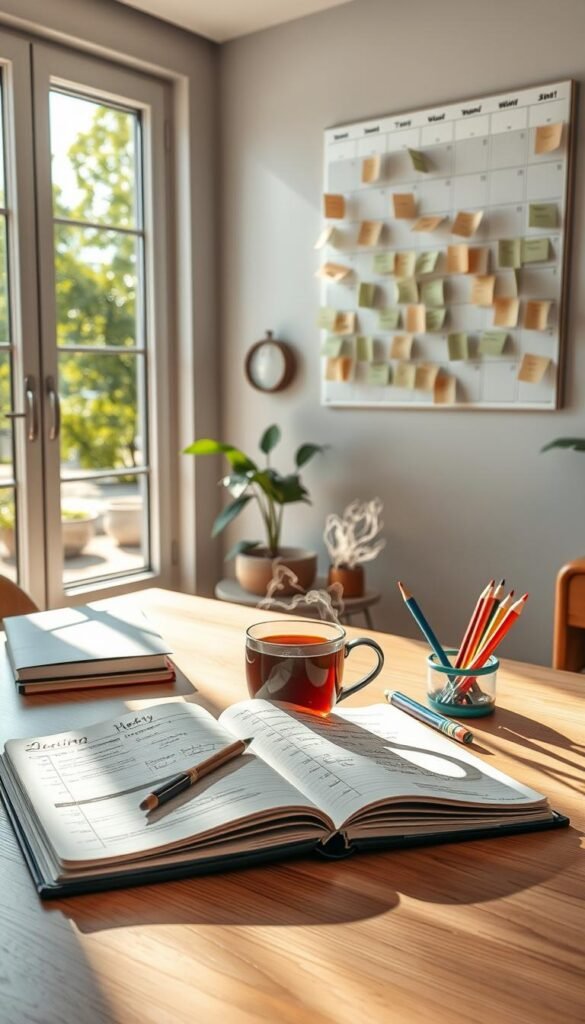
One clear glance at your week saves time and decision energy. Keep planning simple. Use short lists and soft time blocks. Add gentle buffers so changes feel manageable.
Plan week at a glance: priorities, time blocks, gentle buffers
Choose three goals. Block focused time for work and life. Leave small gaps between meetings. These pauses protect your day.
Meals and groceries: simple dinners, double once, stock basics
Pick three easy meals. Cook one dinner double. Shop groceries for fresh produce. Wash and prep a few items to speed midweek meals.
Life admin: pay bills, return items, review appointments
Do two quick admin tasks. Process mail. Confirm appointments. Clear items that take space in your home.
Evening wind-down: screens down early, cozy light, stretch
Turn screens off an hour before night. Use a soft lamp. Stretch or breathe for five minutes to cue rest.
Low-stress laundry plan: one load start-to-fold
Run one load start-to-fold. Set timers for wash, dry, and fold. Keep clothes moving so laundry feels done, not endless.
“Keep tasks realistic; add one new way of planning, remove one thing to protect ease.”
Conclusion
Start with one clear surface and let order steady your thoughts. A short reset routine can change how your week feels. Try a 15-minute declutter. Wipe the kitchen counter. Begin an early rest to close the day.
Simple checklist to start today: clear one counter. Start one load of laundry. Pick three priorities for the week ahead. Prep one piece of produce. Breathe for one minute.
Use minutes, not hours. Return things to their place. Let small weekly reset routines build trust with your body and mind. Your house does not need perfection. A little steady care keeps clutter low and makes work and life feel softer.
FAQ
What is a simple weekly reset and how long does it take?
A simple weekly refresh is a short, practical session to clear clutter and prep your home for the week. Aim for 30–60 minutes. Break tasks into 10–15 minute blocks. Small wins add up. You’ll feel lighter and more ready for the days ahead.
How can I make the kitchen feel calm fast?
Focus on counters and the sink first. Load the dishwasher or wash a single sink-full. Wipe surfaces and clear stray items into a basket for later sorting. Keep a short list of staples for groceries so you don’t overthink meals.
What’s an easy pantry system that actually works?
Group items by meal type. Put snacks, baking, and breakfast items together. Front-face cans and boxes so you use older items first. Label shelves with simple tape or a marker. It’s low-effort and stays tidy longer.
How do I manage laundry without it taking over my weekend?
Start one load early. Wash, move to dryer, and fold within the same day. Keep a small basket for items that need special care. Plan one predictable laundry day or split loads across the week to avoid overwhelm.
What quick steps refresh a bedroom in minutes?
Make the bed first. Clear nightstands. Open a window for fresh air. Return clothing to the hamper or hang an outfit for the week to reduce decision fatigue in the morning.
How often should I do a deeper declutter?
Do a light declutter weekly and a targeted one monthly. Pick one drawer, one shelf, or one small zone each month. The slow approach keeps your home calm without big upheaval.
How do I plan meals without rigid rules?
Choose two simple dinners to cook and double one for leftovers. Keep a list of go-to recipes and basic staples on hand. Block one shopping trip or use a pickup service to save time and reduce decision stress.
What are realistic daily habits to maintain order?
Try a five-minute tidy each evening. Do dishes or load the dishwasher. Clear counters and put things back where they belong. These tiny habits prevent clutter from growing.
How can I tackle life admin without feeling overwhelmed?
Set a 20–30 minute weekly slot to handle bills, appointments, and quick emails. Use a simple planner or app to jot priorities and deadlines. Small, scheduled time blocks make these tasks feel manageable.
What’s a calming evening routine to support the week ahead?
Lower screens an hour before bed. Dim lights. Do gentle stretches and set out tomorrow’s outfit. A short list of priorities for the next day helps you sleep with less worry.
How do I keep an entryway from becoming messy?
Use a basket or tray for keys and mail and one spot for shoes. Drop items in the basket and sort once a week. This simple system keeps the entryway useful and peaceful.
Can plant care fit into a weekly reset?
Yes. Water plants on a gentle schedule. Rotate pots for even light. Trim spent leaves during your tidy time. Caring for plants is quick and soothing and adds life to your space.
How do I adapt this plan if I work full-time?
Shorten tasks into evening or morning micro-sessions. Do five-minute tidies before bed. Reserve longer tasks for a weekend morning. Prioritize essentials like meal prep and laundry so weekdays feel smoother.
What tools help keep the system simple and sustainable?
Use clear bins, baskets, labels, and a basic planner. A timer helps you stay focused. Choose one go-to grocery list and a few favorite recipes. Simple tools reduce friction and make habits more likely to stick.