Capsule Wardrobe: How to Start (Beginner Guide)
Life is busy. You want calm mornings and less hurry. This guide offers a gentle path. It gives simple routines that fit real life.
A capsule wardrobe is a small group of items you love and wear often. It uses fewer clothes to make more outfits. This approach cuts decision fatigue and saves time and money. You shop with intent and keep neutral colors that mix match easily.
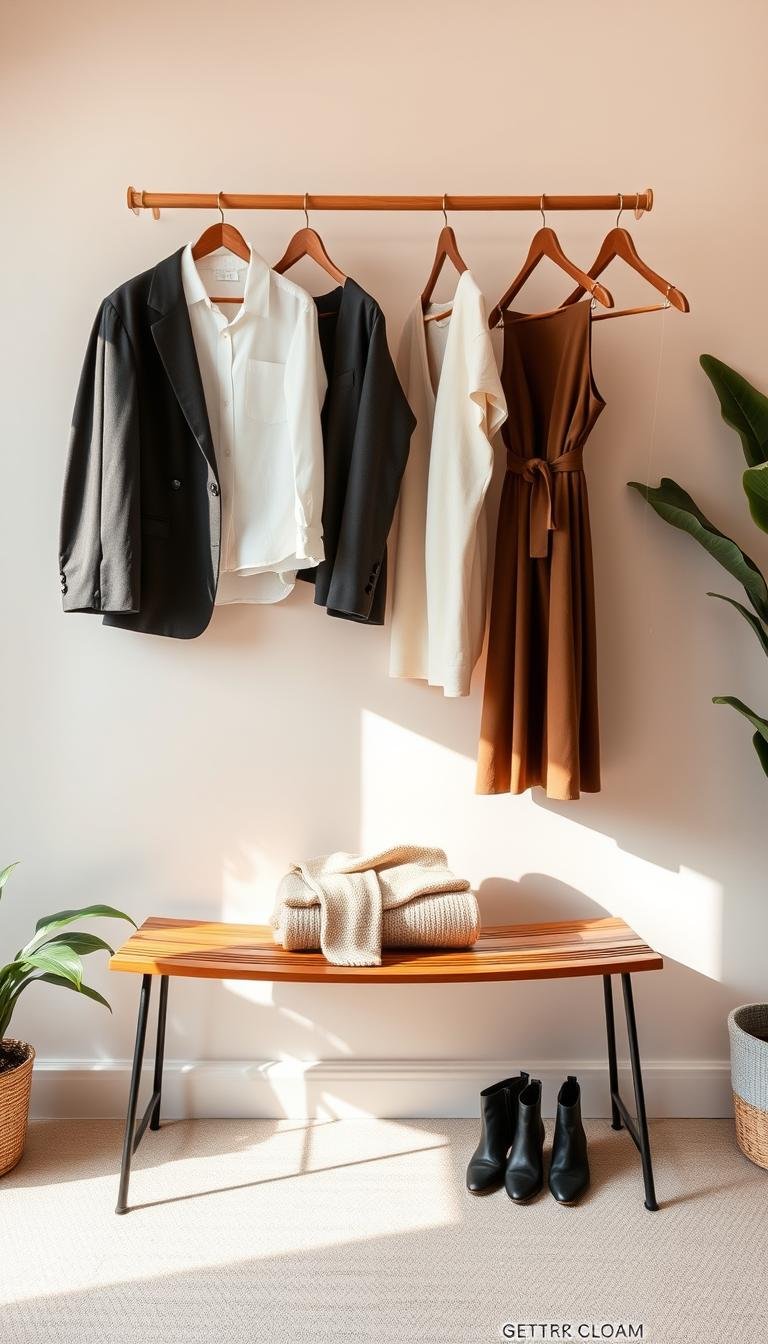
Start small. Pull five pieces you reach for and hang them at the front of your closet. Try a two-minute daily reset. Return clothes to hangers and set out tomorrow’s pair. These tiny steps help you feel put together without pressure.
Key Takeaways
- Begin with what you already own for quick wins.
- Use neutral color pieces to mix match with ease.
- Short checklists and soft routines save time when getting dressed.
- Small daily resets keep your closet calm.
- Shop slowly and on a budget to build a minimalist wardrobe over time.
What a Capsule Wardrobe Is and Why It Helps Today
What if dressing were one less thing to worry about each morning? A capsule wardrobe is a curated set of interchangeable items. You pair a small selection of clothes to make many outfits. The idea is simple. Less clutter. More calm.
Why it matters now: modern life is busy. Decision fatigue steals minutes and focus. A compact collection saves time and money. It also reduces waste by cutting repeat purchases.
“Fewer choices can feel like more freedom.”
- A capsule wardrobe is a small set of clothes that work together. You get more variety with fewer pieces.
- Neutral colors make mixing easy. Your looks become automatic and consistent.
- Buy less and better. You save money and spend less time on laundry and sorting.
Start by picking items you already wear. Build 5–7 go-to outfits. Notice the extra time you gain. A minimalist wardrobe is gentle. It gives you steady, dependable outfits on moving days.
A Brief History and Modern Minimalism
The roots of minimal dressing trace to small London shops and later to New York runways.
From Susie Faux to Donna Karan’s “Seven Easy Pieces”
In the 1970s Susie Faux, owner of the London boutique Wardrobe, described a set of essential, timeless items you could supplement each season.
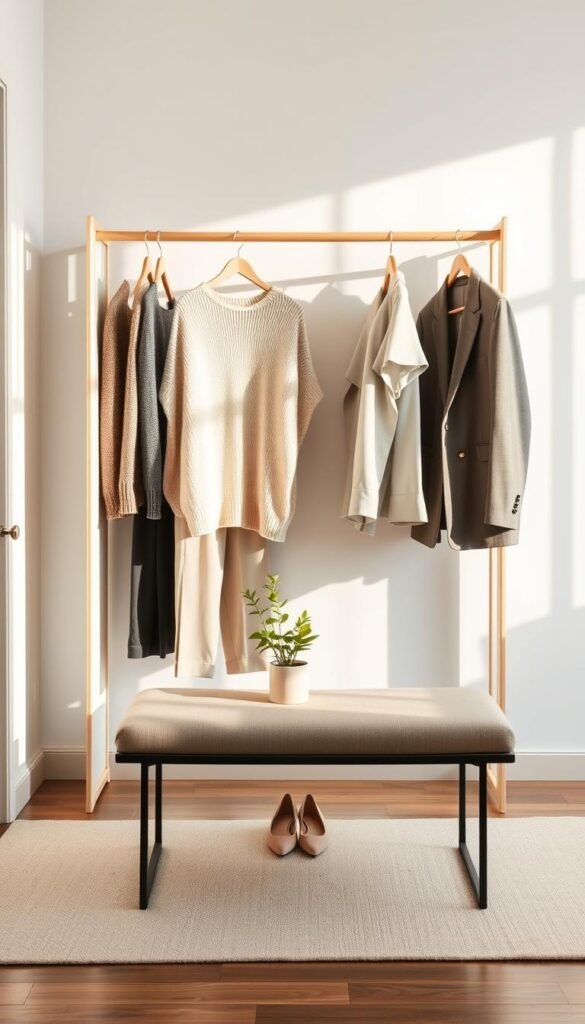
In 1985 Donna Karan made the idea famous with her “Seven Easy Pieces.” Her list included a tailored jacket, a dress, a skirt, a white shirt, a bodysuit, cashmere, and leather. The concept showed how a few pieces can move you from day to evening.
Why this idea resonates now
The idea has been around for years. Today more people care about sustainability. You want less clutter and more calm.
Fewer, better items cut waste. They make getting dressed easier. They also lower the fashion industry’s environmental impact.
“Fewer, well-chosen pieces create lasting style.”
- Origins: London boutique thinking in the 1970s.
- Iconic moment: Donna Karan’s 1985 set of essentials.
- Modern pull: simplicity, calm, and lower waste in clothes.
| Era | Originator | Key idea |
|---|---|---|
| 1970s | Susie Faux (London) | Essential, timeless items; seasonal swaps |
| 1985 | Donna Karan | Seven Easy Pieces for day-to-night versatility |
| Present | Everyday users | Sustainability, less clutter, calm mornings |
Mindset and Gentle Goals for Beginners
Think of your initial set as a rough draft you can refine. This view frees you from perfection. It invites small, steady choices instead of big, stressful leaps.
Think draft, not perfect: Version 1 today
Start with Version 1 now. Make it simple. Let it be unfinished.
Focus on the clothes you wear this day and this season. Store extras out of sight. Add slowly as needs become clear.
Soft guardrails over strict numbers
Use gentle rules, not rigid counts. Numbers are tools, not laws.
- Choose comfort and function first. Skip fussy pieces for now.
- Plan one outfit the night before. One small way to feel put together.
- Notice repeats. The pieces you reach for often belong in your set.
“Small steps build a lasting, calm system.”
The goal is ease. Keep the process light. Celebrate small progress as you continue building a minimalist capsule wardrobe that truly fits your life.
Plan Your Palette: Neutral Colors First
Pick a base of gentle tones to anchor every outfit. A calm palette makes decisions simple. It gives a steady foundation you can rely on.
Core neutrals that mix and match easily
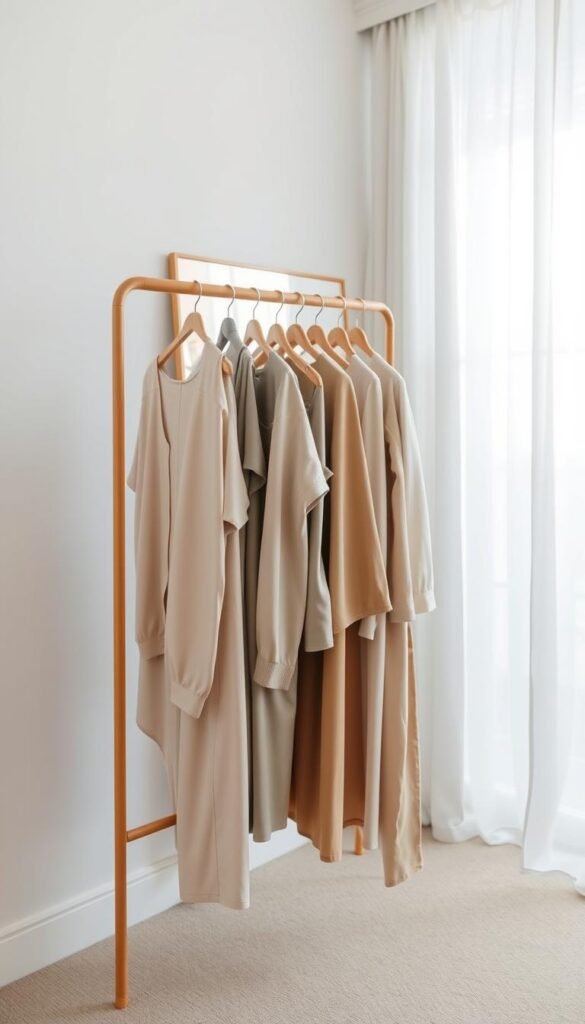
Start with neutral colors: black, navy, gray, brown, camel, taupe, cream, and white. These shades create a quiet foundation. They pair naturally and make getting dressed easier day after day.
Adding one or two accent colors with care
Pick one or two soft accent colors that suit your skin tone. Use them in small ways. A scarf. A tee. A cardigan. One piece at a time keeps looks cohesive.
- Try a quick check. Lay five core pieces on the bed. If they create three outfits, the palette is working.
- If a color clashes often, set it aside until a new season.
- Create a tiny swatch note on your phone with your colors and bring it when you shop items.
A neutral foundation makes it much easier mix when you dress. Aim for consistency, not perfect harmony. This simple plan helps your capsule wardrobe feel calm and useful every morning.
Choose Timeless, Functional, Versatile Pieces
Choose items that quietly work for many days, not just one look. Pick a few reliable pieces that make getting dressed calm. Aim for comfort and ease. Let each item earn its place.
Timeless essentials you can rely on
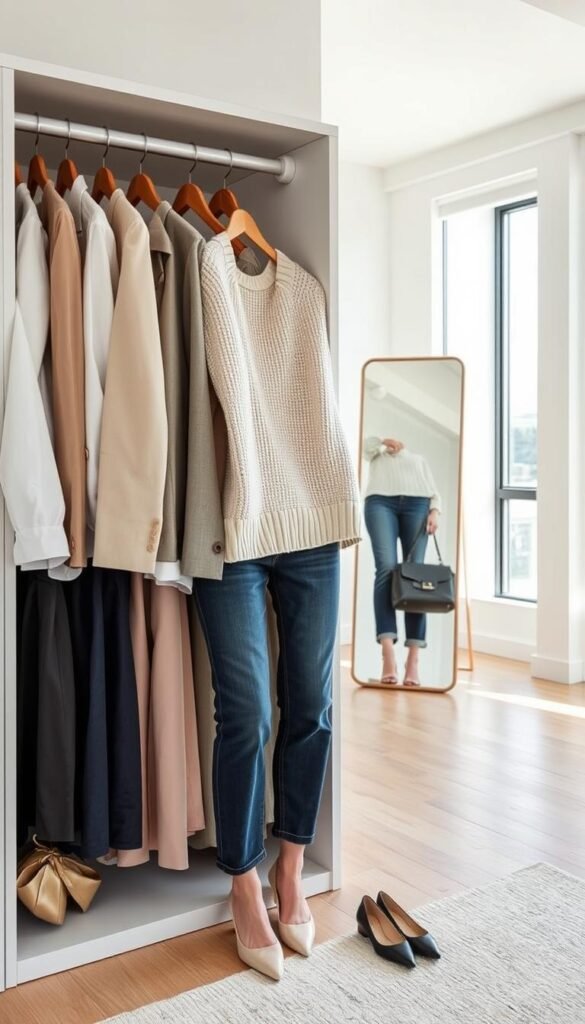
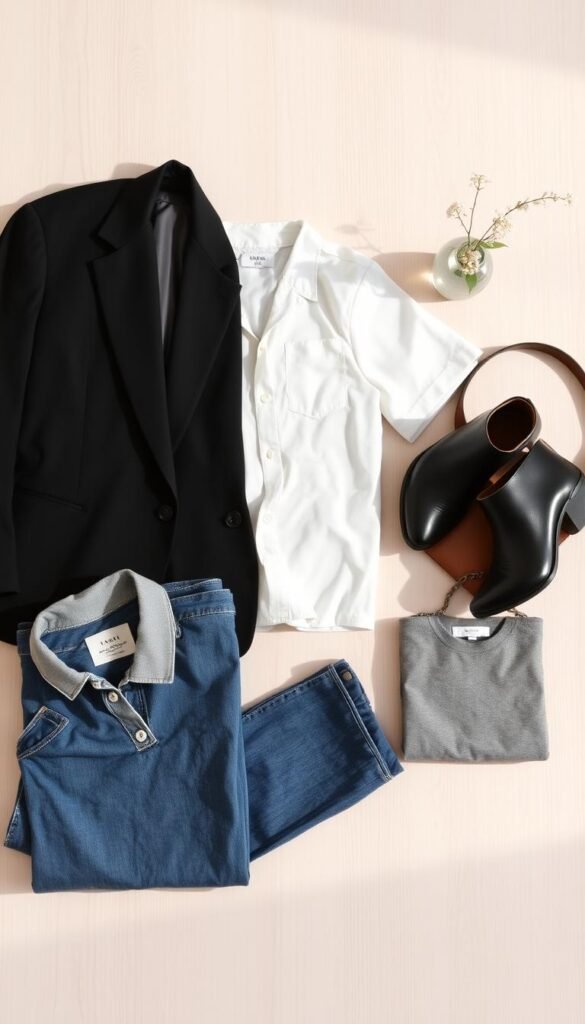
Main items: a white button-down shirt, a classic blazer, straight-leg jeans, and a simple black dress. These shirts and jeans form daily anchors. They work across seasons.
Functional: fabrics, fit, care
Favor cotton, wool blends, linen, and knits that keep shape. Choose clothes that wash well. Make sure the fit lets you move. No pinching. No fuss. Ask: is it comfortable? Easy to launder? Can it last years?
Versatile: dress up, dress down, repeat
One pair of pants that pairs with sneakers and heels saves time. Pick one jacket that suits dinner and office looks. Shoes should be simple and supportive.
- Choose pieces you can wear for years.
- Favor fabrics that feel good and wash well.
- Keep a short gap list and add slowly.
| Staple | Why it works | How to wear |
|---|---|---|
| White shirt | Crisp, timeless | Under a blazer or with jeans |
| Straight jeans | Comfortable, easy | Sneakers or heels |
| Blazer jacket | Polish for many looks | Dress up or down |
| Black dress | One-and-done outfit | Layer or accessorize |
“Choose pieces that serve you. Keep function over fleeting style.”
Step-by-Step: Build Your First Capsule
Gather a few pieces you reach for most days. This makes the task kind and quick. You will see progress in one session.
Collect your favorites. Pull the clothes you love and wear now. Put them together at the front of your closet so they are easy to view.
Collect your favorites you wear now
Place the items where you can reach them. See patterns. Notice repeats. This shows what truly fits your life.
Sort by category and edit kindly
Sort the rest into clear groups: jeans, pants, skirts, shorts, tees and tanks, tops, sweaters, dresses, coats and jackets.
Select season-appropriate staples
Move out-of-season items aside. Choose pieces you can wear this month. Store the rest out of sight.
Identify gaps and note future purchases
Try simple outfit pairs from what you kept. If three looks come easily, the piece stays. Note any gaps and add them to a short shopping list for later.
- Step 1. Pull the clothes you love and wear now. Place them at the front of your closet.
- Step 2. Sort by category listed above.
- Step 3. Edit kindly. Remove duplicates. Release what no longer fits your life.
- Step 4. Select season staples. Store extras away.
- Step 5. Try three outfit pairings. Keep what works.
- Step 6. Note gaps for future shopping.
- Step 7. If you feel tired, pause. Come back later.
- Step 8. Label a small section “Capsule” to make mornings simple and put together.
| Category | Why | Action |
|---|---|---|
| Jeans & Pants | Daily anchors | Keep 1–2 reliable pairs |
| Tops & Tees | Mix-and-match options | Choose neutral and one accent |
| Sweaters & Jackets | Layering and weather | Select season-appropriate pieces |
| Dresses | One-and-done outfits | Try 1–2 versatile styles |
Suggested Starter Counts to Keep It Easy
Aim for a gentle range of items that fit your life and laundry rhythm. Use counts as soft guidance. They help you plan. They do not demand perfection.
Everyday capsule ranges: 28–42 pieces
Try a range of 28–42 pieces for daily life. Adjust for season and work. This count includes shirts, tops, pants, jeans, and outer layers.
- Range fits many lifestyles. Add or remove items as needed.
- Choose one pair of dark jeans and one pair of trousers for variety.
- Keep shoes neutral. One dressy pair. One casual pair. White sneakers work well.
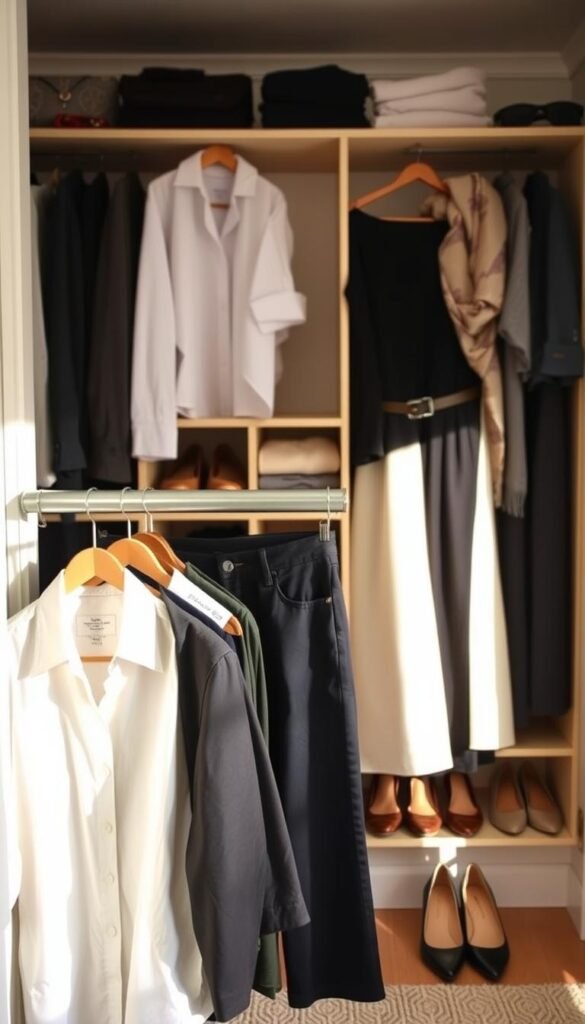
Ultra-minimal starter: 14 essentials plus socks and underwear
Prefer ultra-minimal? A 14-piece beginner set is kind and simple. One example: two jackets, eight tops, two pants, and two pairs shoes. Add socks and underwear. This supports a weekly laundry routine.
Use these counts as a guide, not a rule. Let your minimalist capsule grow slowly.
Review after two weeks. Tweak pieces to match real life. The goal is calm mornings and easier clothes choices.
Create Ready Outfits You Love
Find seven simple outfits you actually reach for and make them easy to repeat. This makes mornings calm. It turns decision time into a small, gentle ritual.
Plan 7–10 go-to looks. Pull your capsule rack. Arrange sets for work, errands, and dinner. Keep the list short. Repeat what feels good.
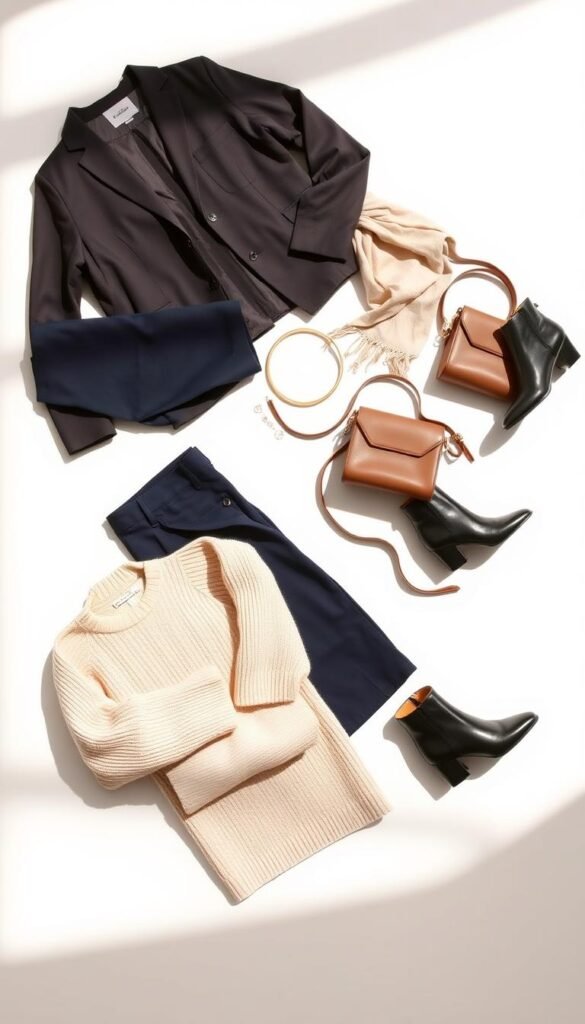
Build multiple outfits from one piece
Start with one item and make three outfits from it. Try pants with a shirt and sneakers. Then swap jeans or shoes for a new outfit. Small swaps create big variety.
Balance proportions and use the rule of thirds
Pair a slim top with wide pants. Or a relaxed shirt with straight jeans. Tuck at one-third. Layer at two-thirds. This simple way keeps lines calm and flattering.
Layer lightly and take photos
Add a cardigan over a dress or a blazer over a tee. Tiny layers add interest without fuss. Take quick photos of your favorites. Save them in an “Outfits” album.
- Repeat your best colors to make mix match easy.
- Keep one go-to outfit for work, one for errands, one for dinner.
- Rotate the pair of shoes that serve most days.
“A few well-planned outfits make getting dressed faster and kinder.”
Closet Setup: Simple Systems and Quick Resets
Make your closet a calm tool, not another task. A small, clear system helps you dress with ease. It frees minutes each morning. It keeps clothes tidy and trusted.
Reserve a single rail or shelf
Reserve a single rail or shelf for the items you reach for most each day. Give this zone one label. Keep it uncluttered. This makes outfit choices quick and calm.
Store out-of-season items away
Move off-season pieces to a labeled bin or high shelf. Store bulky coats under the bed. This clears space for the pieces you actually wear now.
- Matching hangers: keep a tidy line and protect fabric.
- Group by color: light to dark so you spot outfits fast.
- Open “try soon” bin: revisit weekly and decide.
- Care tray: lint roller, fabric shaver, small sewing kit.
- Hook for tomorrow: hang one outfit to speed mornings.
Quick reset routine
End each day with a two-minute reset. Return clothes to hangers. Fold knits. Drop small repairs into the tray. These tiny habits keep your system working.
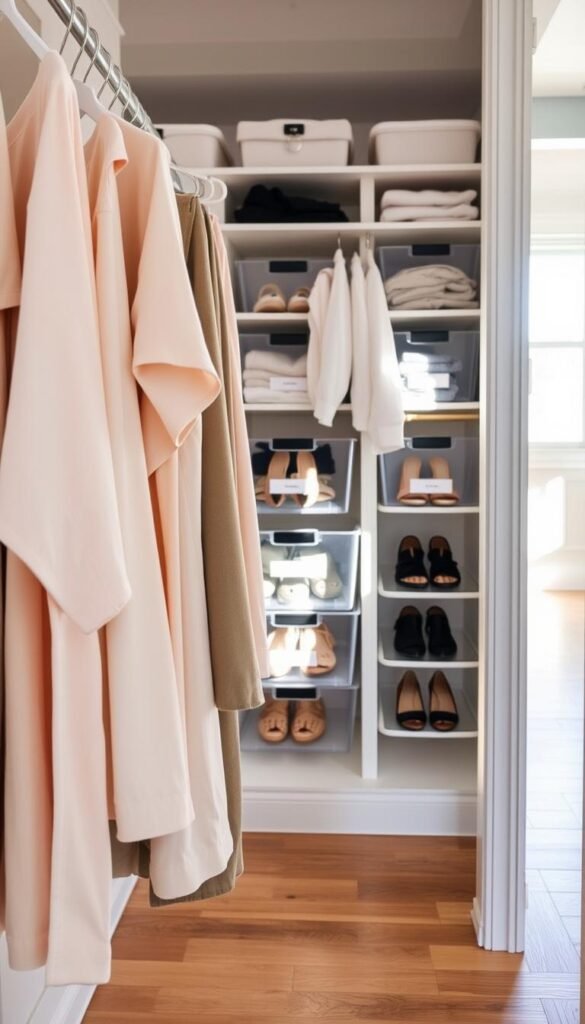
| Zone | Purpose | Action |
|---|---|---|
| Dedicated rail | Daily outfits | Keep 10–15 pairs and tops visible |
| High shelf/bin | Out-of-season items | Label and store by season |
| Care spot | Small repairs | Tray with tools for quick fixes |
“A tiny routine each night makes mornings kinder.”
Daily, Weekly, Monthly Capsule Routines
Quiet routines make getting dressed feel automatic and kind. Small, regular habits protect your time. They keep your closet calm and reduce stress.
Daily
Two-minute reset and next-day outfit check
Each evening. Return worn items to hangers. Lay out tomorrow’s outfit on a hook. Check the weather and tweak as needed. This tiny ritual saves minutes in the morning.
Weekly
Laundry rhythm and outfit refresh
Pick one steady day and time for laundry. Wash, dry, and put clothes away the same evening. While folding, create one new outfit from your pieces. Snap a quick photo to save for repeat looks.
Monthly
Micro-declutter and gap review
Spend ten minutes on five items. Decide: keep, store, or release. Add any repeated gaps to a short list. When a need appears twice, consider filling it.
- If pressed for time, do only the reset. Progress beats perfection.
- Use a gentle timer to end each step. The sound brings calm.
- Celebrate how fewer clothes free up space and focus.
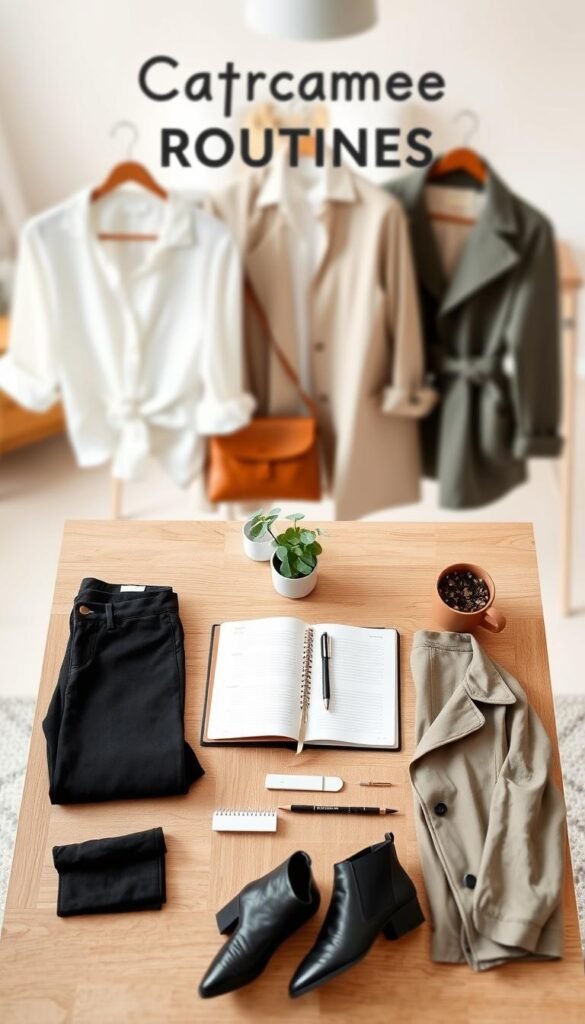
“Small habits keep your closet ready and your mornings kinder.”
Room-by-Room Examples to Support Your Wardrobe
A few small changes in each room can make dressing simpler every morning. These gentle systems cut friction. They help you reach the right pieces quickly. Below are easy, practical examples you can try this week.
Entryway
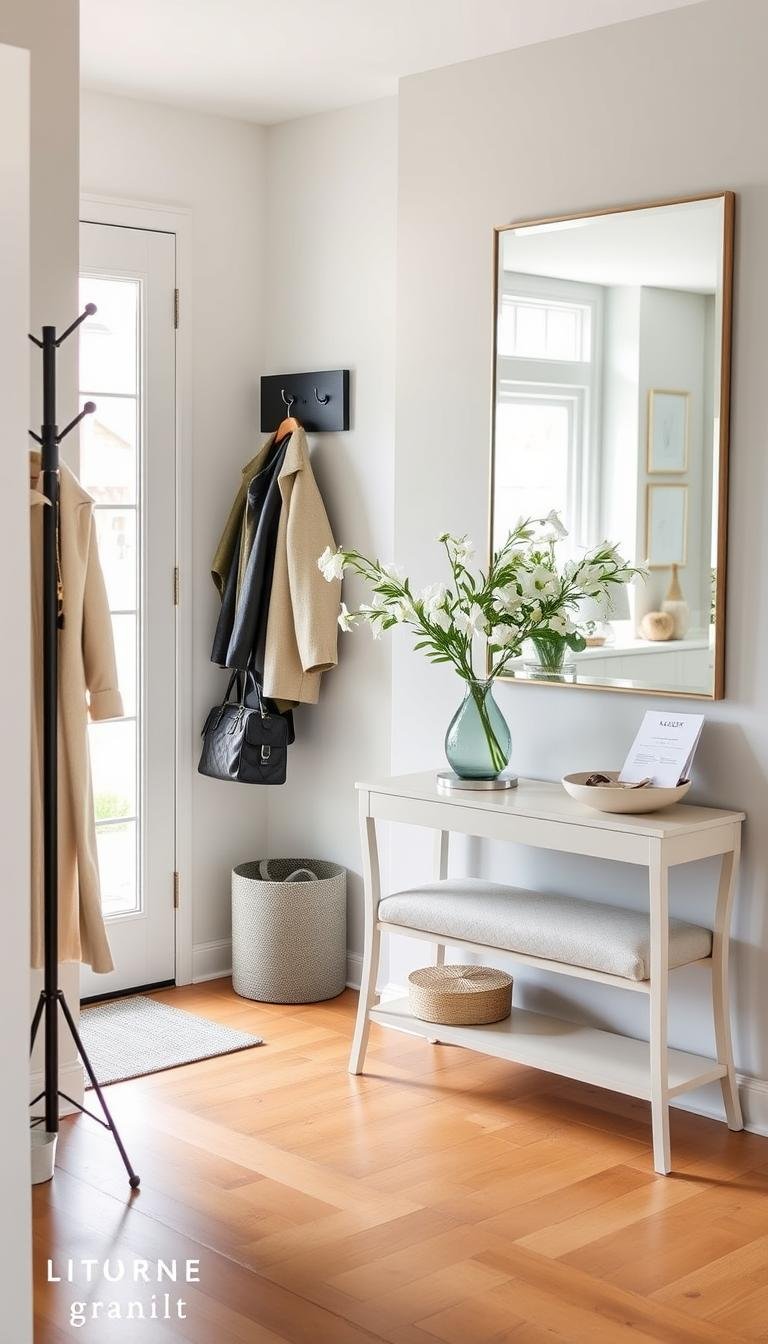
One tray for keys. One hook for your go-to jacket and bag. Add a small shoe mat for quick changes. This keeps exits smooth and stress low.
Bedroom
Clear the top of your dresser. Use it as a calm staging area for tomorrow’s outfit. A folded set saves decision time in the morning.
Closet
Edit monthly. Group items by color from light to dark. Use simple hangers for a clean line. This helps you spot clothes fast.
Bathroom
Keep a small fabric care station: gentle detergent, a stain stick, a sweater comb. Store them in one caddy for easy touch-ups.
Laundry
Use three baskets labeled lights, darks, delicates. Pre-sort to save time on wash day. It makes laundry less of a chore.
Kitchen and Pantry
Place a donation bag in the pantry. Drop rarely used aprons or tote bags there. Keep a lint roller and a small fabric brush in a labeled bin for quick mid-morning fixes.
Hallway
Add a narrow bench for shoes and a shallow basket for accessories. This small station supports your outfit flow and keeps things tidy.
“Small systems in key spots reduce decision fatigue and keep your mornings kind.”
- Entryway: tray, hook, shoe mat.
- Bedroom: staging area on dresser.
- Closet: edit monthly; group by colors.
- Bathroom: one caddy for fabric care.
- Laundry: labeled baskets to pre-sort.
| Room | Purpose | Quick action |
|---|---|---|
| Entryway | Exit flow | Tray + hook + mat |
| Closet | Fast selection | Color group + simple hangers |
| Laundry | Less sorting | 3 labeled baskets |
Capsule Wardrobe
Think of your edited set as a personal toolkit for easier mornings. It is a tightly edited collection of interchangeable items. Each piece pulls double duty. The result: more outfits with fewer things.
What it aims to do:
- Bring clarity. Fewer choices. Less stress.
- Center on timeless style and neutral tones for calm, consistent looks.
- Make shopping intentional. A short list guides every new buy.
You wear your clothes more. Each of your pieces should support multiple outfits. Small edits and routine refreshes help you grow this system over time.
Keep your personal flair. An accent scarf or a textured knit adds personality without breaking cohesion. A minimalist wardrobe supports daily routines. It saves energy for the things that matter most.
“A steady base of thoughtful pieces makes dressing calm and confident.”
Color, Fit, and Fabric: The Easy Mix-and-Match Formula
Let color, cut, and fabric do the thinking for you. This simple trio helps you build calm outfits fast. Use them to make dressing gentle and reliable.
Neutrals as the foundation
Use neutral colors as your foundation. A base of soft tones makes pairing simple. Stick to a few shared shades across tops and shirts. Repeat those colors often.
Comfortable fits that work across outfits
Choose fits that skim the body, not squeeze. A well-cut tee or shirt should move when you lift your arms. It should sit right when you sit and walk.
- Favor breathable fabrics that hold shape for repeat wear.
- Do a quick mirror check: lift arms. Sit. Walk. The piece should feel easy.
- Keep a short list of your best colors to make mix match much easier.
- If a color feels strong, wear it in a small piece like a tee before committing to a coat.
- Note care tags. Easy-care clothes last and make daily life simpler.
“A few shared tones and comfortable cuts make getting dressed faster and kinder.”
Packing Light: The 5-4-3-2-1 Travel Capsule
Bring fewer pieces that work harder so you move through travel days with ease.
How to adapt for season and trip length
Use the 5-4-3-2-1 method as a flexible guide. Five tops. Four bottoms. Three accessories. Two pairs of shoes. One swim piece if needed.
For colder season trips add a sweater or swap a bottom for an extra top. For a longer stay add one extra bottom. Keep choices simple.
Shoes and layers that pull double duty
Choose one light jacket that works day to night. Pick sneakers as your casual base. Add one dressier shoe for evenings.
Layers should dress up or down. A scarf can act as an accessory and an extra layer. Aim for pieces that earn their place.
- Pick mostly neutral colors and one accent color for interest.
- Choose wrinkle-resistant items and a tiny laundry kit.
- Lay everything out and build three outfits before packing.
| Count | What | Notes |
|---|---|---|
| 5 | tops | mix neutral and one color accent |
| 4 | bottoms | versatile pairs for day and night |
| 3 | accessories | scarf, belt, simple jewelry |
| 2 | pairs shoes | sneakers + dress shoe |
| 1 | swim or special item | omit or swap based on destination |
Shop Intentionally and Within Budget
Make buying small and purposeful instead of impulsive. A calm plan protects your time and your wallet. Use simple rules so shopping feels easy. This helps you buy what you need and skip what you don’t.
Use a simple shopping list
Keep it short. Aim for three items max. A small list stops random purchases and keeps you focused. Check your closet first. If a similar piece exists, skip it.
Buy fewer, better; add slowly
Choose quality over quantity. One well-made piece can replace many clothes you rarely wear. Try a 72-hour pause before buying. If you still want it, and it fits your list, go back.
- Set a monthly budget envelope. When it’s empty, stop shopping.
- Prioritize gaps that unlock outfits. A belt or a pair of shoes shifts many looks.
- Read care labels. Easy-care items save time and extend wear.
- Add one new item at a time to see how it blends.
| Focus | Why it helps | Quick action |
|---|---|---|
| Short list | Prevents impulse buys | Limit to three items |
| Budget | Protects spending goals | Use an envelope or app |
| Quality | Lasts longer; saves time | Choose sturdy fabrics and read care tags |
“Buy less. Choose well. Let each item earn its place.”
Seasonal Switches and Sustainable Wins
A brief seasonal refresh keeps your closet useful and your mornings calm. Rotate gently when the weather shifts. Bring forward the pieces that suit the current season. Store the rest out of sight.
Rotate by weather, store the rest
Set a simple season switch. Pull items that match the forecast. Check each piece for comfort, fit, and condition. Keep what serves you now. Tuck the others into labeled bins.
Donate, sell, or recycle promptly
Move released clothes out within three days. Donate, sell, or recycle them. This stops backsliding. No guilt. Just simple action.
- Use a small “maybe” bin with a date. Decide at the next switch.
- Note colors that worked. Repeat them next year for easy mixing.
- Care gently. Wash on gentle cycles and air-dry to help items last years.
“Each rotation is a gentle chance to refine without pressure.”
| Step | Action | Why it helps |
|---|---|---|
| Switch | Bring forward season-appropriate items | Makes daily dressing match the weather |
| Sort | Check comfort, fit, condition | Keep only what you wear and love |
| Release | Donate, sell, or recycle within three days | Prevents clutter and supports reuse |
Keep your wardrobes light. Celebrate small wins. One clear shelf is a big step toward ease.
Conclusion
Choose one small step today to make mornings easier. It is a simple way to win back time. Small actions add up.
Keep it light. Pick five favorite pieces and build one outfit you love. Let those clothes be the core that helps you feel put together.
Give your minimalist capsule a small space. Do a two-minute reset tonight. Use saved photos of outfits when mornings feel busy to guide you with ease.
Add slowly and gently. Use weekly laundry and monthly micro-declutter. One clear rail. One calm day at a time. You’ve got this.
FAQ
What is a capsule wardrobe and why start one now?
A capsule wardrobe is a small, intentional collection of clothes and shoes that mix and match easily. It helps you save time, reduce decision fatigue, spend less, and create fewer wardrobe mistakes. Start now if you want calmer mornings and outfits that feel like you, without buying more.
How many pieces should I aim for as a beginner?
A gentle starter range is 28–42 pieces for everyday life. If you want ultra-minimal, try about 14 essentials plus socks and underwear. Keep shoes, jackets, and seasonal items separate so your daily closet feels simple.
How do I choose colors that actually work together?
Begin with core neutrals—think navy, black, white, beige, and gray. Add one or two accent colors you love. This makes mix-and-match easy. Stick to simple tones and repeat them across tops, jeans, pants, and jackets.
What are the most useful items to include first?
Start with timeless essentials: a good pair of jeans, a versatile blazer or jacket, a neutral dress, a couple of simple shirts, and a sweater. Add comfortable shoes like sneakers and one pair of dress shoes. Choose pieces that can be dressed up or down.
How do I edit my closet without getting overwhelmed?
Collect what you wear now. Try items on. Sort into keep, maybe, and donate. Be kind to yourself. Think of this as version 1. You can refine it. Focus on fit, comfort, and how often you reach for each piece.
How do I handle seasonal clothes and storage?
Rotate by weather. Store out-of-season items in labeled bins or vacuum bags. Keep only season-appropriate pieces front and center. This keeps your daily choices simple and your closet tidy.
What about outfits for work, weekends, and travel?
Plan 7–10 go-to outfits that you love. Use layers to adapt looks. For travel, follow a 5-4-3-2-1 packing formula: five tops, four bottoms, three layers, two shoes, one dress or special piece. Shoes and jackets should pull double duty.
How can I shop without overbuying or breaking the budget?
Make a short shopping list based on gaps. Buy fewer, better items. Choose quality fabrics and neutral colors that wear well. Add slowly. Look for brands known for fit and durability rather than chasing trends.
How do I maintain the system weekly and monthly?
Do a two-minute daily reset and check your next-day outfit. Weekly, keep a laundry rhythm so favorites are ready. Monthly, do a gentle edit and note any gaps you still need to fill. Small routines keep the closet peaceful.
Can this approach work if I want more variety in looks?
Yes. Fewer pieces does not mean boring. Choose versatile items you love. Use accessories, layers, and textures to create many looks. Plan outfits in photos so you can repeat combinations that feel fresh.
How do I care for fabrics to make them last?
Read garment care labels. Wash similar fabrics together. Air dry delicate pieces. Repair small issues quickly. Gentle care extends the life of clothes and reduces waste over years.
What if I have a specific dress code at work?
Build a small professional set within your capsule. Include a blazer, tailored pants or skirt, a few blouses, and shoes that meet the dress code. Keep colors cohesive so pieces mix easily with your casual items.
How do I choose the right fits for my body and lifestyle?
Prioritize comfort and confidence. Pick cuts that flatter your proportions and allow easy movement. Try different brands until you find reliable fits. Comfortable silhouettes make getting dressed feel calm instead of stressful.
Is this sustainable and eco-friendly?
Yes. Buying less and choosing durable items reduces waste. Donate or sell pieces you no longer wear. Repair when possible. Thoughtful shopping supports sustainability and a simpler closet over time.
How do I create ready outfits quickly each morning?
Plan a handful of go-to outfits and photograph them. Use the rule of thirds for balanced looks. Keep shoes and jackets together near the door. A short morning checklist makes dressing quick and pleasant.