Closet Organization for Beginners
Your days are full. Your to-do list never ends. You want a calm home. You want gentle systems that last.
Start small. One shelf. One rail. Short bursts of time. These tiny wins add up.
We will use kind habits and simple steps. Matching hangers give a put together look. Good lighting helps you see pieces fast. Hang items that wrinkle. Fold the sturdy clothing so it stays neat.
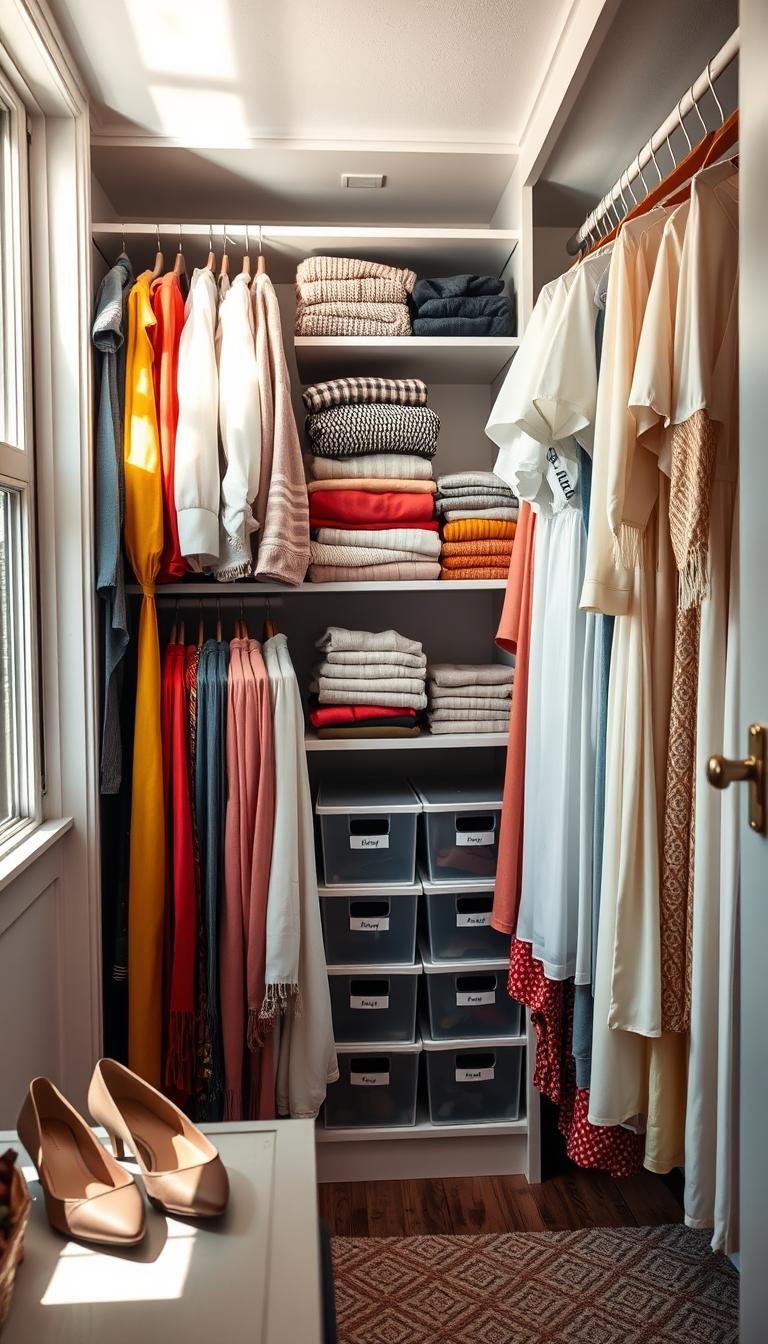
Assign every item a clear home. Use a closet organizer, clear bins, and shelf dividers for easy storage. A quick daily reset takes minutes. Over time your room will feel lighter and your wardrobe space will be easier to use.
Key Takeaways
- Begin with one small area to save time and reduce stress.
- Matching hangers and good light create a calm, put together space.
- Know what to hang and what to fold to protect clothing.
- Clear bins and shelf dividers make storage repeatable and simple.
- Daily quick resets keep progress steady and sustainable.
Start with a Calm Reset
Choose one tiny area and make a short, achievable plan for it. This keeps you steady. It removes pressure. Ten to fifteen minutes is enough.
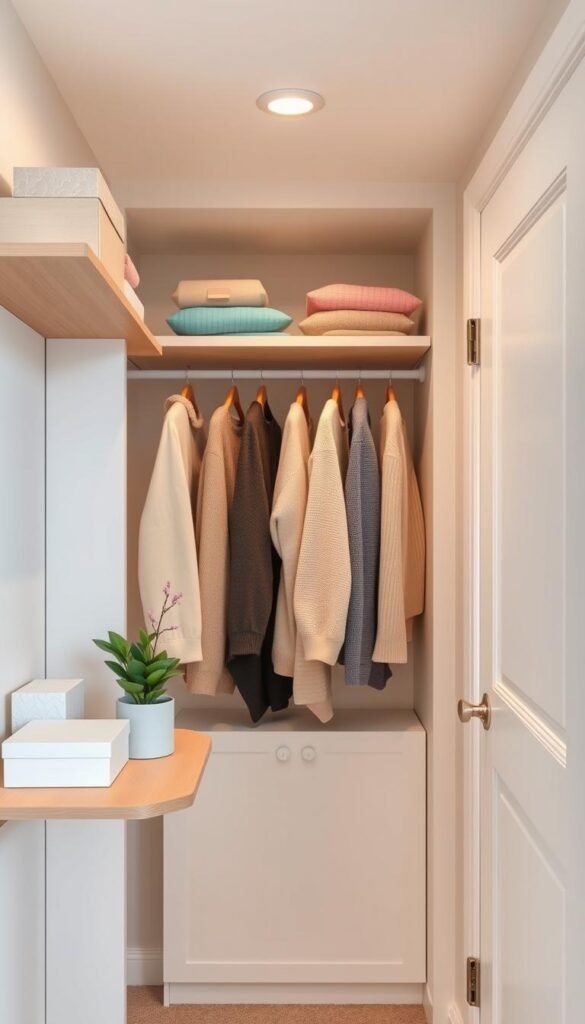
Set a clear goal. A single shelf or a short rail works well. Set a timer. Stop when it rings. You can return another day.
Set a simple goal and time limit
Pick one task. Give it a short time. Celebrate the finish. Small wins build calm.
Gather supplies: bags, bin, basket, hangers, label tape
Keep tools simple and nearby. Use a donation bag and a trash bag. Add one sorting bin and a basket.
- Use matching hangers to make items look neat.
- Add a motion-sensor USB‑C rechargeable light strip if the closet is dim.
- Label as you go to cut decision fatigue.
“A clear floor and a single goal make the whole space feel lighter.”
| Task | Time | Why it helps |
|---|---|---|
| One shelf | 10–15 min | Makes progress visible fast |
| Short rail | 10–15 min | Clears tangled hangers and clothes |
| Floor sweep | 5 min | Creates immediate visual calm |
| Labeling | 5–10 min | Reduces future decisions |
End with a quick sweep. Take donations out that same day. Little routines protect your space and make each room easier to use.
Decluttering Made Simple
Pick a narrow strip of space and make tiny choices that add up. Work on one small section. Give yourself short, kind bursts of time. This keeps the task light and steady.
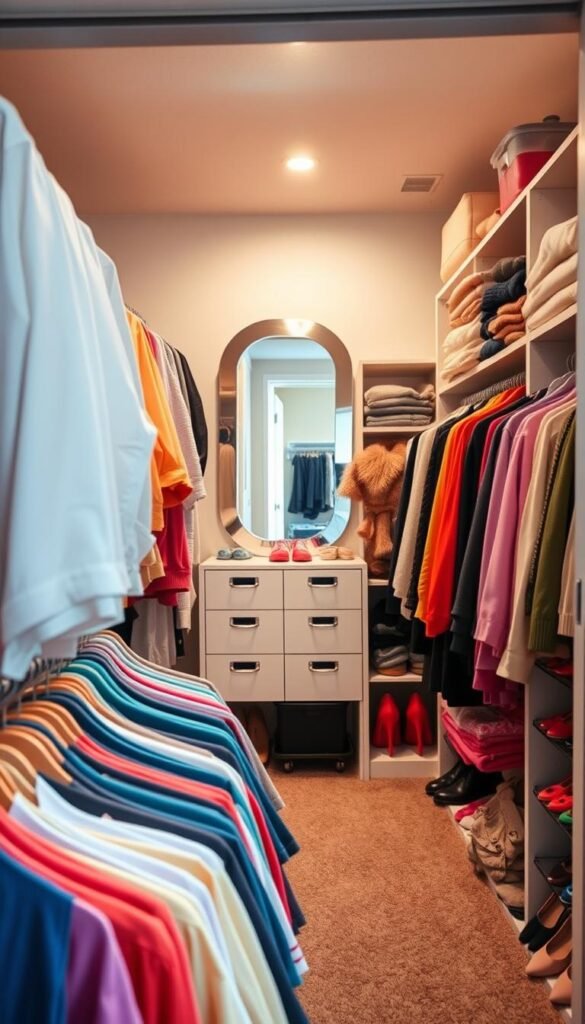
Three-pile method: keep, donate, recycle
Use three bags. Label them keep, donate, recycle. Move quickly. Bags help decisions stick.
Gentle questions to decide: fit, love, wear
Ask simple things. Does it fit? Do you love it? Do you wear it? If you pause, place the piece in a maybes bin to review later.
One small section at a time
Keep folded clothing visible. That stops stacks from sliding. Place keep pieces on matching hangers and face them the same way.
- Improve lighting to speed decisions and ease stress.
- Add one shelf, one bin, and one label as a simple closet organizer plan.
- End with a short reset. Remove the donate and recycle bags from the room that same day.
“Little, steady edits create big relief over time.”
Closet Organization Essentials
Gather a few proven items that truly change how your space works. Keep choices minimal. Choose tools that make daily routines easier and calm the visual noise.
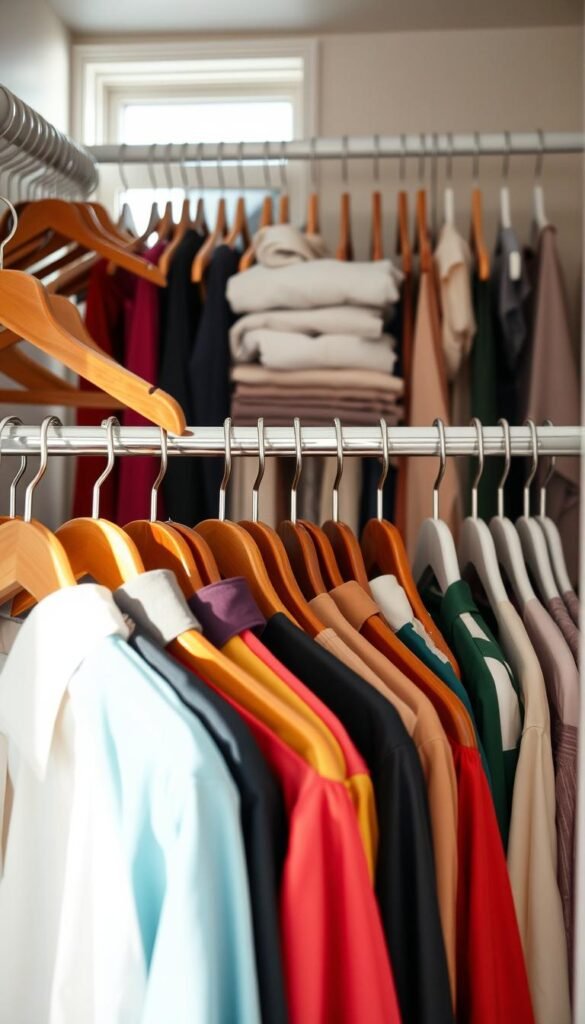
Use matching slim, nonslip hangers
Slim velvet hangers are affordable and sturdy. They save space and keep clothes from slipping off. Consider Mawa space-saving hangers for a sleeker steel option. Chrome pant hangers with a PVC nonslip finish hold trousers well. Pick one style and stick with it.
Add shelf dividers and stackable bins
Use Lynk tall shelf dividers to keep stacks upright. Remove them gently to protect paint. Add Clearline open bins so folded items stay visible. Transparent bins help you find things fast.
Improve light with motion-sensor strips
Install MCGOR 10‑inch motion lights. They mount without wiring and charge via USB‑C. Instant brightness makes decisions quicker and reduces stress.
Mix drawers, shelves, and hanging space
Balance storage types to match how you dress. Drawers for small items. Shelves for sweaters. Hanging for dresses and shirts. One consistent set of products keeps upkeep simple.
“Fewer, better tools make daily care feel gentle and doable.”
What to Hang, What to Fold
A fast rule keeps mornings simple: hang what creases, fold what holds shape. This reduces choices. It protects your pieces. It makes outfit time easy.
Hang dresses, blouses, skirts, and slacks. These items wrinkle and look best on a rail. Use matching hangers for a calm, streamlined look. That small step speeds morning decisions.
Fold denim, sweaters, T‑shirts, and athleisure. These products keep shape when folded. Stack them where you can see the top piece. Clear bins and shelf dividers prevent shifting.
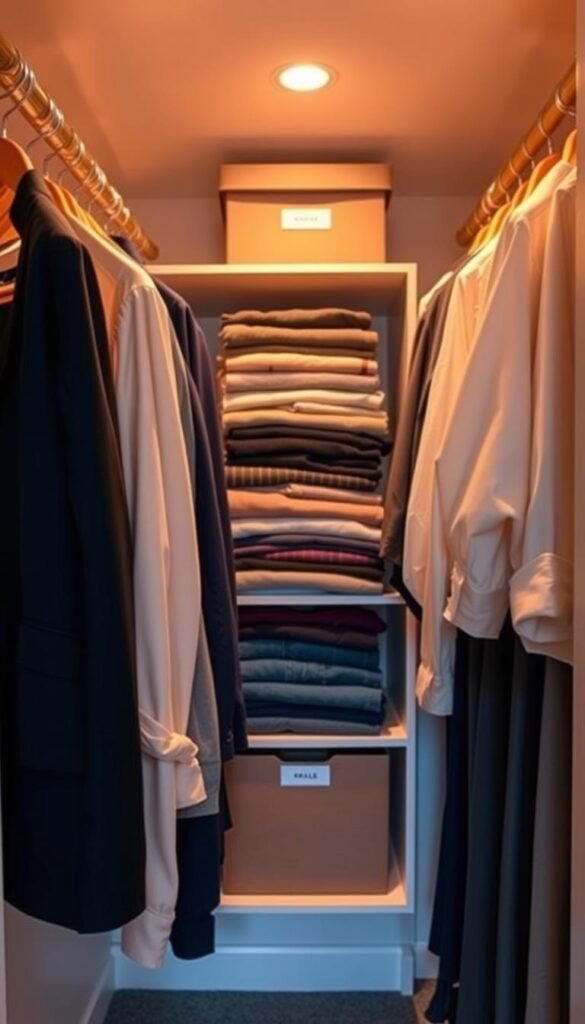
- Hang dresses and blouses so fabric stays smooth.
- Fold denim, tees, and heavier knits to protect shape.
- Store heavier sweaters mid‑shelf to keep stacks balanced.
- Place most‑used clothes at arm height for easy reach.
- Label shelves so anyone can return items to the right spot.
“Give each piece a little air. It lasts longer and makes your bedroom feel calmer.”
| Category | Action | Why it helps |
|---|---|---|
| Dresses & Blouses | Hang | Prevents wrinkles and speeds outfit choice |
| Denim & Tees | Fold | Protects shape and reduces hanger clutter |
| Sweaters & Knits | Fold, store mid‑shelf | Keeps stacks stable and avoids stretching |
| Athleisure | Fold | Easy access for daily wear |
Smart Hangers and Rods that Save Space
A few compact upgrades give your wardrobe more breathing room. These choices are simple. They take minutes to install. They gently change how you use the space.
Slim velvet hangers for most clothing
Use slim velvet hangers to fit more on a rail. Amazon Basics slim velvet hangers are affordable and shed less flock. They hold shirts and dresses neatly without bulk.
Pants hangers with nonslip coating
Choose pants hangers with a PVC or nonslip coating. Mawa space-saving hangers use steel with a PVC finish that grips fabric. Chrome pant hangers work too but watch for creasing on thin bars.
Tiered hangers for pants and scarves
Tiered hangers stack vertically. They are great for pants and scarves. One hook stores several pieces. This saves space and keeps outfits paired.
Add an extra closet rod to double capacity
Install a second rod in short-hanging sections to double capacity. Place everyday tops on the upper rail and skirts or pants on the lower. Leave a small gap at the rod ends so air can move. Keep hooks facing one way for a tidy look.
- Quick tips: Group by type, then color. Keep a spare box of hooks and clips. If creasing appears, try another hanger style.
“Small, useful upgrades make daily dressing calmer and faster.”
Shelves, Dividers, and Clear Bins
Small changes to how you stack will make daily access much easier. Use simple products to keep piles upright and visible. That alone makes mornings calmer.
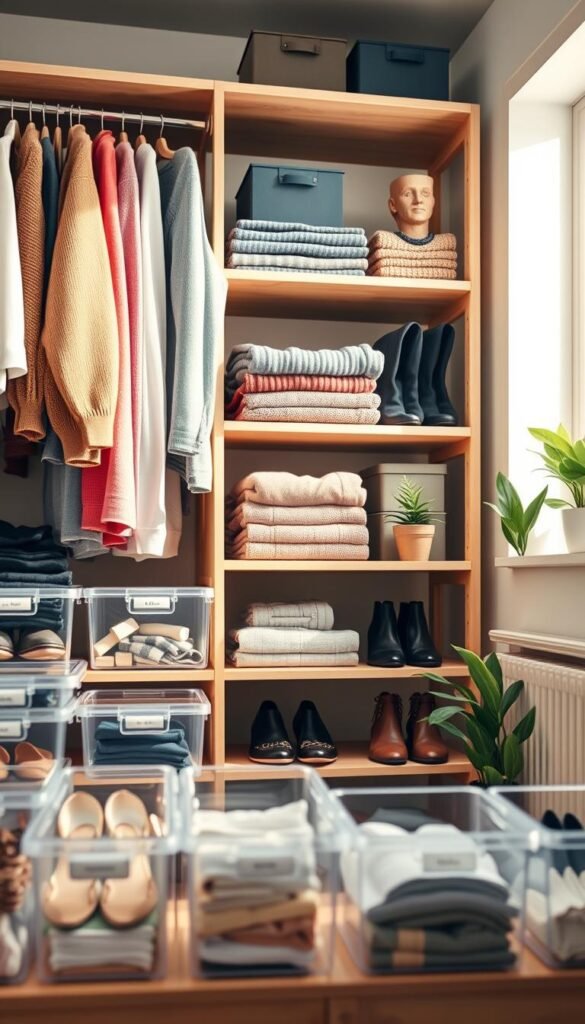
Use tall shelf dividers to keep stacks tidy
Lynk Tall Shelf Dividers are coated steel and sturdy. They fit shelves up to 0.75 inch. Remove them carefully to avoid paint chipping.
Stack clear open bins for sweaters and tees
Clearline Open Bins are transparent and stackable. Buy lids separately to customize height. They keep sweaters and tees visible and safe.
Stagger shelf heights for boots and bags
Give taller items room. Staggered shelf heights stop squishing. Store lighter items above shoulder height and heavier ones below.
- Label bin fronts with one calm word for quick find.
- Slide bins forward to reach back pieces without mess.
- Leave a small gap between stacks to prevent tipping.
- Pair these organizers with slim hangers below to balance space.
“Calm systems let you save space and keep a functional wardrobe in each room.”
Small Closet Strategies
When space is tight, look up before you look out. You can find inches above the rail and behind doors. These bits often hold more than you think.
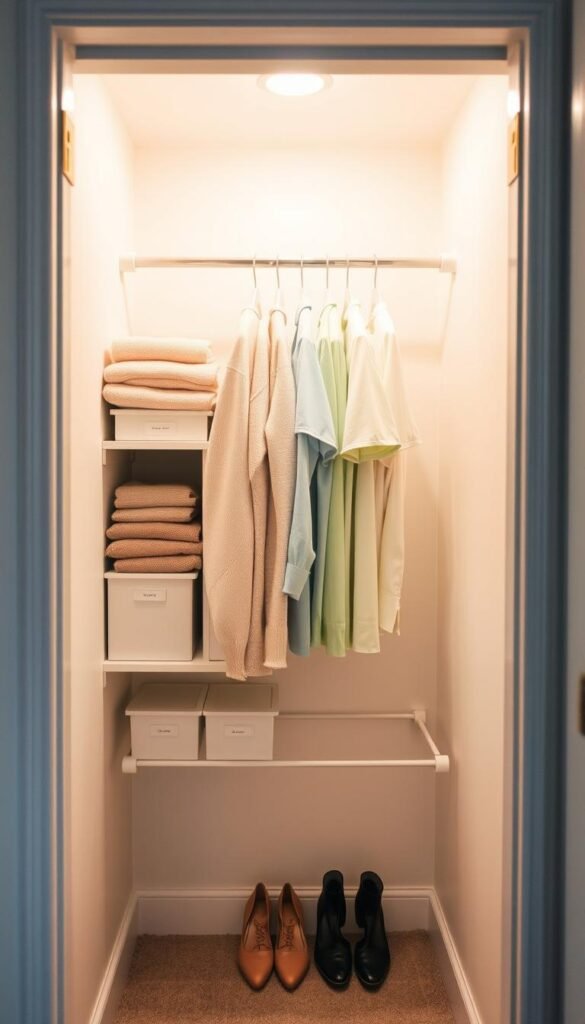
Go vertical with racks and over-rod space
Use tall racks and over-rod hooks to claim upper air. Add a second rail or a clip-on rod to double hanging capacity. Match hangers to keep the rail slim and neat.
Use open shelves when doors eat space
Swap bulky doors for open shelving to gain precious inches. Clear bins and low-profile organizers reduce visual bulk. Limit categories to what you wear most in this bit of storage.
Pocket doors or curtains to free the pathway
Consider a pocket door or a simple curtain to free floor swing. These renter-friendly swaps keep the room flow clear. Mount motion lights so you can see everything fast.
- Quick ideas: narrow vertical shoe racks free floor area.
- Choose clear bins to find things at a glance.
- Edit often. One minute a day keeps tight spaces under control.
“Think vertical first. Small changes can save space and calm your daily routine.”
Daily, Weekly, Monthly Closet Routine
Short, predictable steps make daily care feel effortless. A little habit each day saves time later. These tiny moves protect your things and calm your room.

Daily: quick reset
Take two minutes. Rehang or fold stray clothes. Clear the floor. Drop laundry into a basket.
Face all hangers the same way. This keeps the rail neat and makes outfits easier to find.
Weekly: small edit
Edit one small group. Pick tees or socks. That one edit keeps piles from growing.
Refill spare hangers so clean loads go away fast. Wipe a shelf with a dry cloth to cut dust.
Monthly: deeper care
Rotate seasonals and refresh labels. Recharge motion-activated lights via USB‑C so brightness stays strong. Check bins for overflow and remove a couple of items.
“Tiny routines keep your storage put together with almost no effort.”
| When | Action | Time | Why it helps |
|---|---|---|---|
| Daily | Rehang, fold, laundry to basket | 2 minutes | Keeps clothes ready and floor clear |
| Weekly | Edit one category; refill hangers; wipe shelf | 10–20 minutes | Prevents build-up and keeps space tidy |
| Monthly | Rotate seasonals; recharge lights; check bins | 30–60 minutes | Makes long-term care simple and reliable |
Keep a tiny toolkit nearby. Tape. Labels. A fabric comb. These small tools make edits fast.
Room-by-Room Closet Examples
Treat each room as its own tiny project and make one sensible change. You can do a little every day. These real-life examples keep things calm and useful.
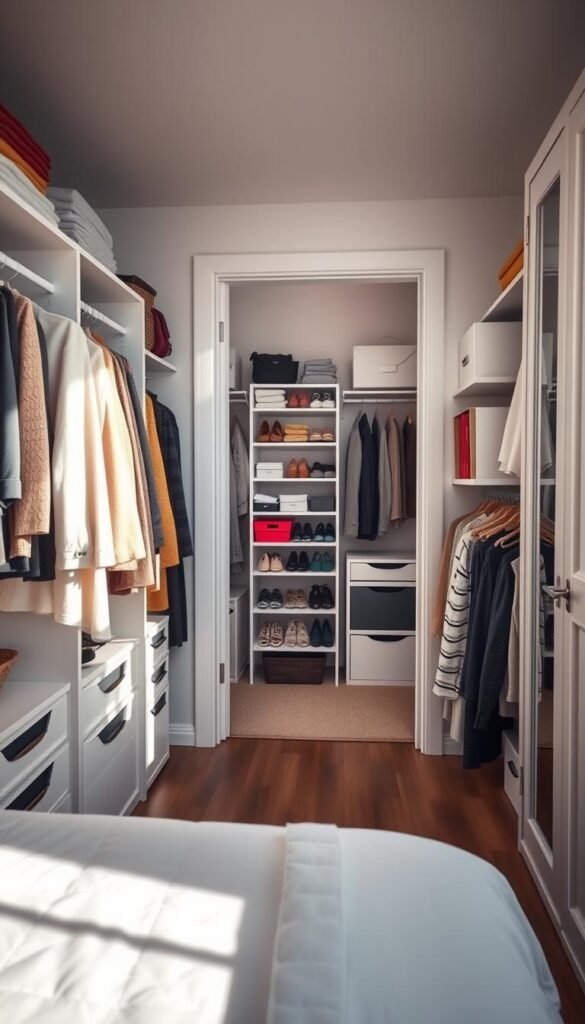
Bedroom
Keep your core wardrobe at eye level for easy outfits. Store matching boxes on the top shelves for off‑season pieces.
Tip: Use matching hangers to create a put together look and make mornings faster.
Entryway
Add sturdy hooks for coats. Place a shoe tray by the door. Install a vertical rack for scarves and hats to save space and cut clutter.
Bathroom / Linen
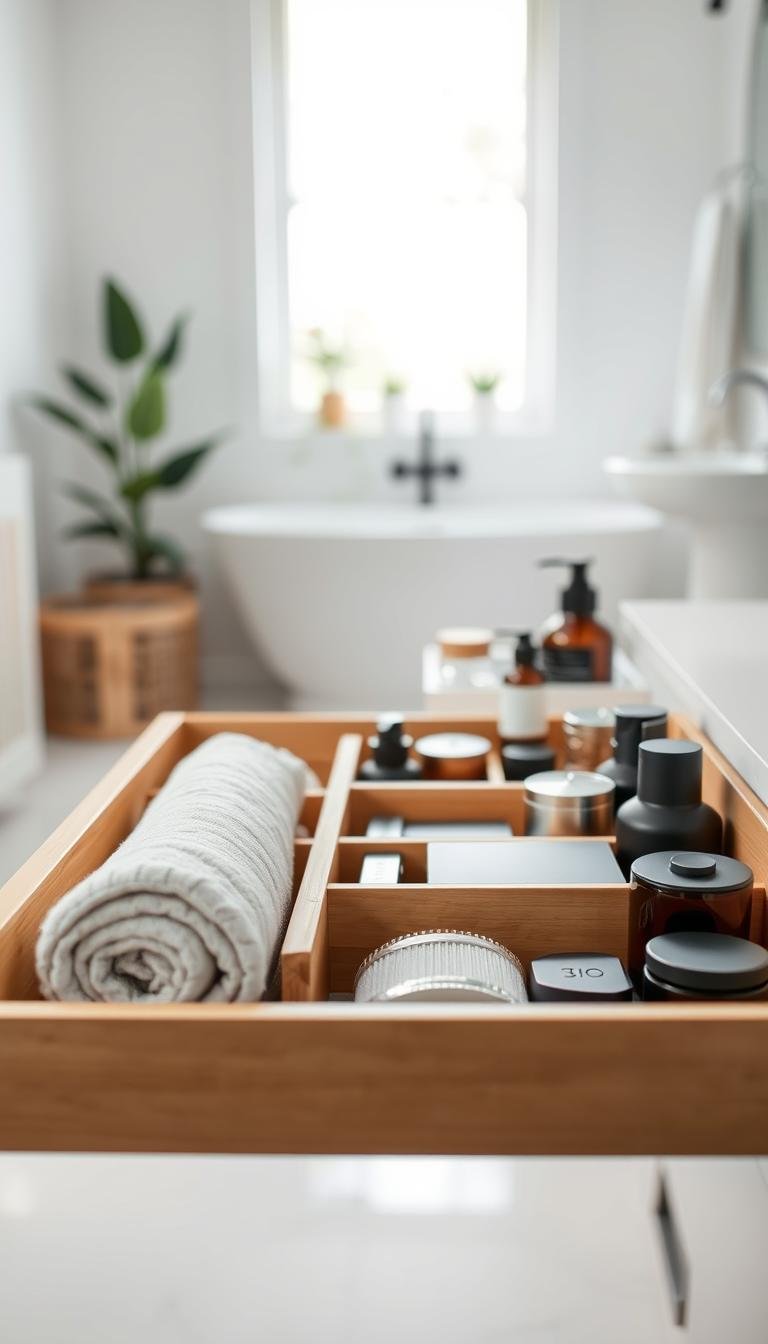
Use clear bins and labeled dividers for towels and toiletries. Clear containers show contents at a glance and keep shelf life visible.
Pantry
Group items in baskets by category. Use tiered shelves so cans and jars are visible. This small shift saves time at meal prep.
Kids’ Room
Install a low rod and easy bins. Set out daily outfits so kids can reach them. Low storage helps mornings move smoothly.
- Give each person a separate section to reduce mixing and morning stress.
- Dedicate one wall to built‑in organizers in narrow rooms to keep the pathway clear.
- Keep frequently used pieces closest to the door for quick grab‑and‑go.
- Edit one shelf each week to maintain flow and calm the space.
“Small, steady edits in each room add up to real ease.”
Accessories, Jewelry, and Small Items
Small, visible solutions make tiny things feel calm and cared for. Keep surfaces clear. Use vertical storage to lift items off a counter. This reduces visual clutter and makes daily choices easier.
Vertical accessory racks keep headbands and scarves visible. Mount one near the rod or door. Favorites stay in sight and off flat surfaces.
Consider a glass‑top tray or a small island if you have the space. It displays jewelry like a boutique. You can spot a pair at a glance and avoid tangles.
Use clear, labeled bins for hair ties, makeup, and tiny items. Place them at chest height for easy reach. Limit each bin to one category. This one rule cuts rummaging and saves time.
- Try an accordion peg rack for ties, belts, or craft ribbons.
- Keep only daily‑use accessories in the closet; store extras elsewhere.
- Choose uniform containers so the area looks calm and steady.
- Review one small organizer each month and remove what you no longer use.
“When small pieces have a clear home, your morning routine feels softer.”
Shoes, Boots, and Bags
Shoes, boots, and bags deserve a small zone that makes daily choices effortless. Keep footwear visible. Protect bag shapes. Use vertical solutions that are easy to maintain.
Tiered shelving for shoes you wear most
Place a tiered shoe rack at eye level for your daily pairs. This keeps toes and heels in view. It speeds outfit decisions. It helps you rotate shoes so wear evens out.
Staggered cubbies for tall boots
Stagger shelf heights so tall boots stand without folding or slouching. Give each pair its own vertical room. Tall cubbies prevent creases and protect liners.
Shelf dividers to stand purses upright
Use shelf dividers to keep purses upright and easy to grab. Leave a bit of space between bags to protect shape. Hang a few lightweight bags on S‑hooks if shelves fill up.
- Store off‑season shoes in clear bins up high to save space.
- Keep a boot brush and a small cloth in the space for quick care.
- Limit each row to one shoe type so choices stay simple.
- Label shelves by category: heels, flats, sneakers, boots.
“Small, visible systems protect shapes and make daily getting‑ready feel gentle.”
Color‑Coding and Simple Labels
Color and tiny labels cut visual noise and save time each morning. A soft, clear plan helps you find items fast. It keeps the rail calm and the room feeling put together.
Group by color, then sleeve length
Group clothing from light to dark. This gives instant clarity when you scan the rail.
Within each color, order by sleeve length. Short sleeves first. Long sleeves last. You see what you need in a glance.
Match boxes and add calm labels
Use matching storage boxes for a clean finish. Clear fronts or uniform lids keep lines steady. Add short labels. Keep them simple: tees, knits, denim, scarves.
- Choose one hanger style so the rail looks put together.
- Leave tiny gaps between color groups to prevent crowding.
- Use soft motion lights to make colors true and selection easier.
- Keep specialty pieces at the end of the rail for quick access.
- Review labels each season and adjust as your needs change.
“A calm color flow and clear labels save time every single morning.”
Shared and Family Closets
A shared wardrobe works best when boundaries are gentle and obvious. This reduces friction. It makes mornings calmer.
Separate sections for each person. Give each person their own hangers, bins, and a named label. That simple step helps items return home fast. Use sturdy organizers that kids can use alone.
Create a small changing zone away from storage
Keep a tiny bench or mat just outside the storage area. It frees the main room for access. It stops door jams and speeds routine dressing.
Practical tips that reduce friction
- Install double rods for short hanging to grow wardrobe space.
- Keep shared tools in one caddy: lint roller, brush, spare tags.
- Use the top shelf for community items like spare bedding.
- Agree on a one in, one out rule for bulky pieces.
- Set a five-minute weekly family reset to tidy each section.
“Clear boundaries and tiny systems make a shared space kinder to everyone.”
| Person | Assigned Items | Daily Task |
|---|---|---|
| Parent A | Workwear, jackets | Hang shirts; place shoes on rack |
| Parent B | Casual tops, sweaters | Fold tees; return bins |
| Kids | Play clothes, jackets | Use labeled bins; one‑minute tidy |
Renter‑Friendly, Quick Upgrades
Small, tool-free upgrades help you gain usable space without stress. These fixes cost little. They are easy to undo when you move.
Start with a motion light. Choose magnetic or adhesive USB‑C rechargeable strips. They click on with motion. No wiring. Instant brightness makes mornings calmer.
Try clip‑on shelf dividers to tame stacks on a shelf. They fit common depths. No drilling. Use freestanding bins or a rolling cart for flexible storage that moves with you.
Quick installers and low-cost products like temporary racks, over‑door shoe pockets, and tiered hangers expand space fast. Hang an extra closet rod or a temporary rack to double hanging capacity without tools.
- Add magnetic or adhesive motion lights for instant brightness.
- Clip on shelf dividers to keep stacks neat.
- Use freestanding bins and carts for flexible storage.
- Try over‑door organizers and tiered hangers to save space.
“Measure first. Pick neutral pieces so the area stays calm and cohesive.”
| Product | Install | Best for | Price range |
|---|---|---|---|
| USB‑C Motion Light | Magnet or adhesive | Instant light for small closet | $15–$35 |
| Clip‑on Shelf Divider | Clips on, no tools | Taming folded stacks on shelves | $10–$25 |
| Over‑Door Organizer | Hangs, no drilling | Shoes, scarves, accessories | $12–$40 |
Five-Minute Closet Reset Checklist
Set a timer and let a tiny reset create momentum for your day. Five focused minutes is enough to make a real difference. These steps are gentle. They build habit. They help you feel calm and put together.
Quick actions to do right now
- Set a five-minute timer. That’s enough time to make a visible change.
- Rehang or fold any clothes out of place so stacks stay tidy.
- Return accessories to their bins or racks. Keep things visible.
- Face all hangers the same way for a clean rail and easier picks.
- Clear the floor so the space feels open and calm.
- Tuck stray items into the right organizer or label a new closet organizer.
- Scan shelves and straighten fronts so piles won’t shift.
- Pull any donations you spot and drop them in a bag by the door.
- Note one tiny fix for later. For example: “add a divider” or “relabel tees.”
Stop when the timer ends. You are ready for tomorrow. Little resets like this protect your storage and keep the area usable without stress.
“Five minutes of care makes the whole space feel lighter.”
Conclusion
Finish with a few quiet choices that keep your room calm. You created a calmer home by choosing small, steady steps. Celebrate that progress.
Keep short sessions. Ask gentle questions when deciding about clothes and other pieces. Lean on matching hangers, simple color coding, shelf dividers, and motion lights. These small design moves give a boutique feel and faster daily picks.
Let the layout breathe. Protect closet space for the items you love. Return one item a day to its place and the wardrobe space will stay steady.
These ways are simple by design. They support your real life. You are finished for today. Soft progress adds up over time.
FAQ
What is the first step for a beginner who wants a calmer wardrobe space?
Start with a calm reset. Set a small, realistic goal and a short time limit. Gather simple supplies like bags for donate, a bin for keep, a basket for things that belong elsewhere, slim hangers, and label tape. Work in one small section so it feels doable.
How do I decide what to keep or let go?
Use a three-pile method: keep, donate, recycle. Ask gentle questions: Does it fit? Do I love it? Have I worn it in the last year? If you hesitate, consider donating. Small, steady choices make big changes.
Which items should I hang and which should I fold?
Hang dresses, blouses, skirts, and slacks that wrinkle. Fold denim, sweaters, T‑shirts, and athleisure. Keep folded stacks visible with shelf dividers or clear bins so they don’t slump and get lost.
What hangers and rods save the most space?
Pick matching slim, nonslip hangers like velvet styles. Use pants hangers with a nonslip coating and tiered hangers for pants and scarves. Add an extra rod where possible to double hanging capacity.
How can I make small closets feel larger and more usable?
Go vertical. Use tall shelves, over-rod space, and vertical racks. Swap swinging doors for pocket doors or use curtains if doors take up pathway space. Open shelves can help when door clearance is tight.
What shelving and bins work best for sweaters and accessories?
Use tall shelf dividers to keep stacks neat. Stack clear open bins for sweaters and tees so you can see contents. Use small bins or a glass-top tray for jewelry and tiny items to keep them tidy and easy to reach.
How do I keep the space bright enough to see everything?
Improve light with motion-sensor LED strips or puck lights. Choose rechargeable USB‑C options for renter-friendly installs. Good lighting makes it easier to edit and maintain your wardrobe.
What quick habits help maintain order daily and weekly?
Daily: do a two-minute reset. Rehang garments and put laundry in the basket. Weekly: edit one type of item and refill hangers. Monthly: rotate seasonal items, wipe shelves, and check batteries or charge lights.
How do I set up shared or family storage without clutter?
Divide the space into clear sections for each person. Use matching boxes or labels to identify zones. Create a small changing or staging spot away from storage so decisions don’t pile back onto shelves.
What are renter‑friendly upgrades I can try right away?
Choose magnetic or adhesive motion lights, clip-on shelf dividers, freestanding bins, and temporary extra racks. These add function without holes or permanent changes.
How should I store shoes, boots, and bags to save space?
Use tiered shelving for everyday shoes and staggered cubbies for tall boots. Add shelf dividers so purses stand upright. Keep frequently used items at eye level and seasonal pieces higher up.
Any tips for labeling and color-coding without feeling fussy?
Group by color, then by sleeve length or type. Use calm, clear labels on boxes and bins. Stick to simple, consistent labels so you can find things fast without extra effort.
What should I do in a five-minute reset?
Rehang or fold out-of-place items. Return accessories to bins or racks. Face hangers the same way and clear the floor. Small habits like these keep the whole system working.