Jewelry Organization Ideas
You are busy. You want a calm home and simple routines that fit your life. Small steps can make mornings gentler. We promise soft, reliable systems that reduce daily friction.
Start with a quick declutter. Toss broken or tarnished pieces. Jamie Grunfeld notes this makes every system work better.
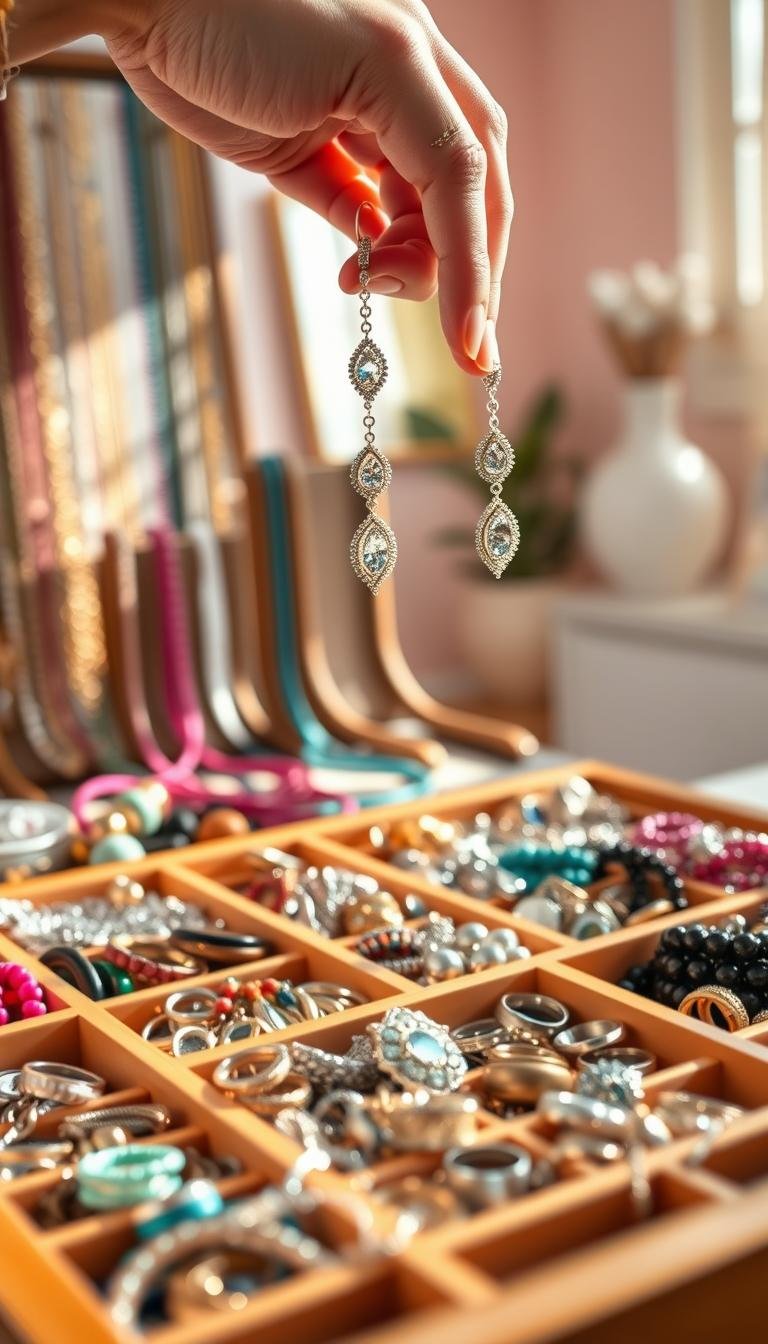
Decide how you remember things. If you like to see items, try trees, fabric boards, or decorative hooks as Katie McMenamin Sabo suggests. If you prefer closed storage, a jewelry box offers a neat, protected option.
Visibility also helps. Joanna Teplin says clear display cuts tangles and lost pairs. We will sort pieces by use and add a simple tray for daily favorites. This gives a calm, repeatable way to keep your collection tidy.
Key Takeaways
- Start small. A few minutes a day keeps clutter low.
- Declutter first to make systems work.
- Pick a visible or closed solution that fits your memory and room.
- Use a tray for everyday pieces to avoid misplacing them.
- Protect delicate items with soft linings and calm habits.
Start Here: A Calm System for Jewelry Organization
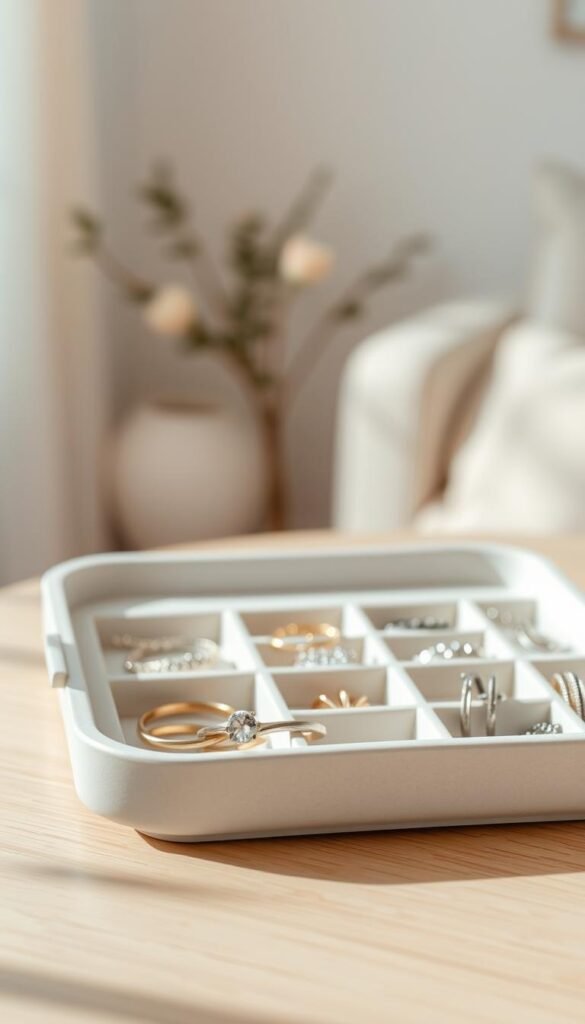
A short, focused sweep can turn chaos on your countertop into a calm landing zone. This is a tiny, doable start. It takes ten minutes. It saves time later.
Quick wins in ten minutes
Set a timer for ten minutes. Gather scattered items from the nightstand, countertop, and bags.
- Make a landing zone. Place one tray where you undress. This holds daily favorites only.
- Sort fast. Favorites on the tray. Everything else in a temporary box to sort later.
- Pair earrings as you find them. Put single pieces in a small lidded box.
- Wipe smudges with a soft cloth. Avoid harsh cleaners.
- Stop when the timer dings. Small wins build momentum.
Tools you need
Keep this tiny toolkit nearby. One tray. Two small boxes for tiny parts. One soft cloth.
| Item | Purpose | Where to place |
|---|---|---|
| Tray | Daily landing zone for favorites | Countertop or dresser top |
| Small lidded boxes | Singles, backs, extenders | Drawer or shelf |
| Soft cloth | Quick wipe of fingerprints | Keep in the toolkit |
Tip: Mix a visible tray with stackable containers. See what you wear most while keeping the rest in safe storage. A labeled small organizer stops stray bits from roaming your space.
Gentle Decluttering: Keep, Repair, Release
Pick one spot and make three calm decisions about each item. This is a soft process. No guilt. Just small moves you can repeat.
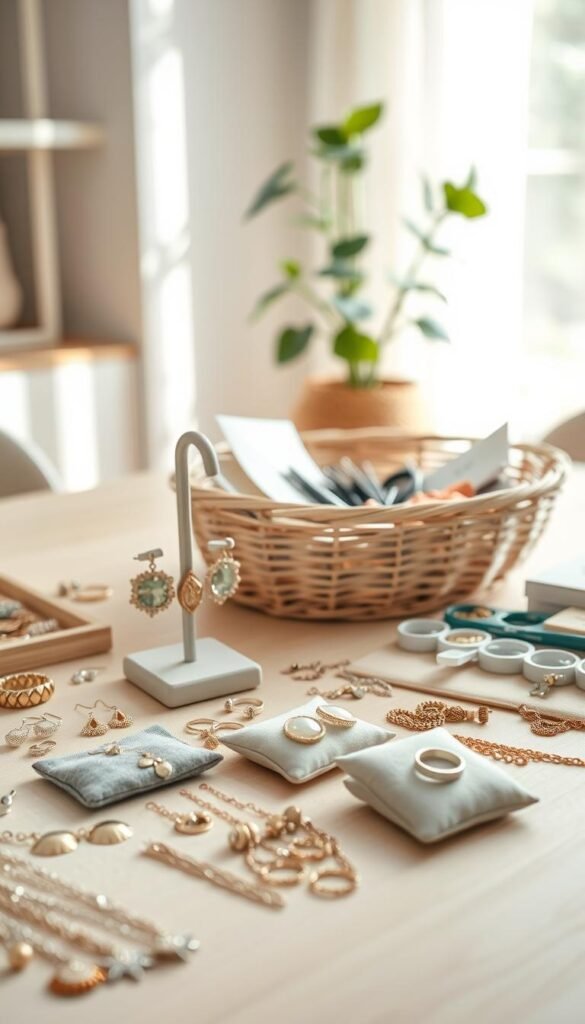
Simple keep-or-let-go prompts
Keep if you love it, wear it, and it feels good. Hold it up. Does it make you smile? If yes, it stays.
Repair if it’s a favorite with a fixable issue. Loose stone. Bent post. Weak clasp. Put these in a tiny, labeled repair bag and drop it in your organizer so it actually gets fixed.
Release if it pinches, itches, or hasn’t been touched in a year. You are allowed to let it go. Mismatched earrings? Keep only if sentimental and likely to pair. Otherwise release or repurpose.
What to repair vs. repurpose
Rings that snag or don’t fit can be resized if you love them. If not, pass them on. Set items by types—necklaces, earrings, bracelets, rings—to speed choices.
“Set a gentle timer for 15 minutes. Stop on time. Return tomorrow if needed.”
- Make a tiny “repair” bag. Label it and store it where you will see it.
- Separate by types to make decisions easier.
- If you sell or donate, store items neatly so the process feels calm and kind.
Sort by Type, Material, and Use
Begin by laying out every piece so you can see what you own.
Make five simple piles: necklaces, earrings, rings, bracelets, and watches. Keep piles small. Work calmly. This helps you spot what needs special care.
Now split each pile by frequency of use. Make sections for daily, weekly, occasional, and rare. Daily pieces should be the easiest to reach.
Separate fine from costume items. Fine pieces need padded slots and anti-tarnish care. Costume pieces can live in deeper drawers or closed bins.
- Long necklaces need hanging space to avoid tangles.
- Studs and tiny earrings need small compartments.
- If you wear sets together, store them together.
- Mark any tangles now. Detangle during your weekly reset.
- Keep a small card of extra backs and extenders with earrings and necklaces.
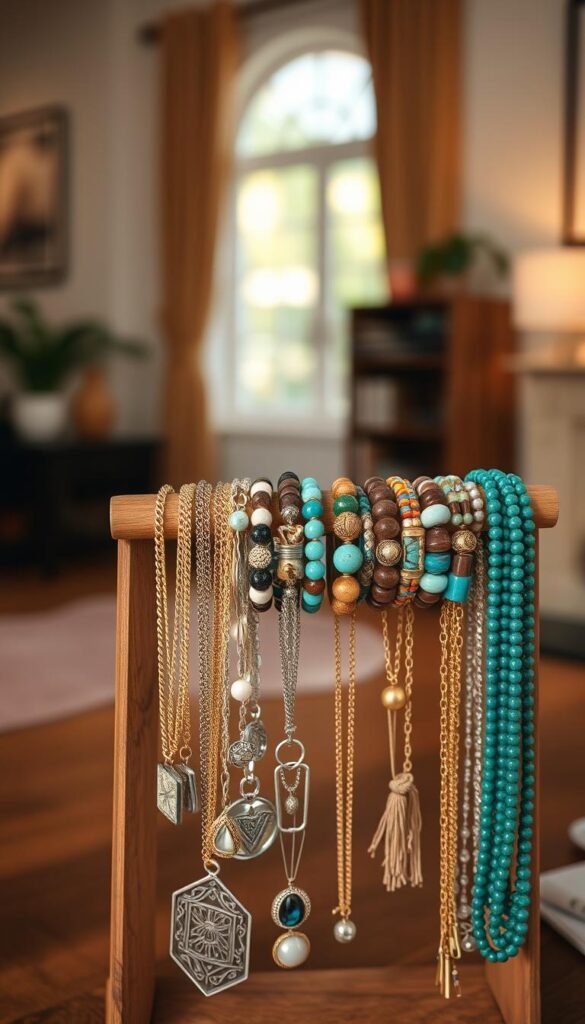
| Need | Best storage | Why it helps |
|---|---|---|
| Long necklaces | Hanging hooks or pegboard | Prevents tangles and shortens daily prep time |
| Rings & studs | Padded slots or small trays | Protects settings and keeps pairs together |
| Bracelets & watches | Rolled sections or soft cushions | Keeps shape and avoids scratches |
| Everyday pieces | Countertop tray or top drawer | Easy reach saves time each morning |
“This simple sort tells you exactly how much hanging, sectioned, or padded space you need.”
Choose Storage Solutions That Fit Your Collection
Begin by matching storage to the way you live and the space you have. Make a choice that supports your morning routine. This keeps the daily flow gentle.
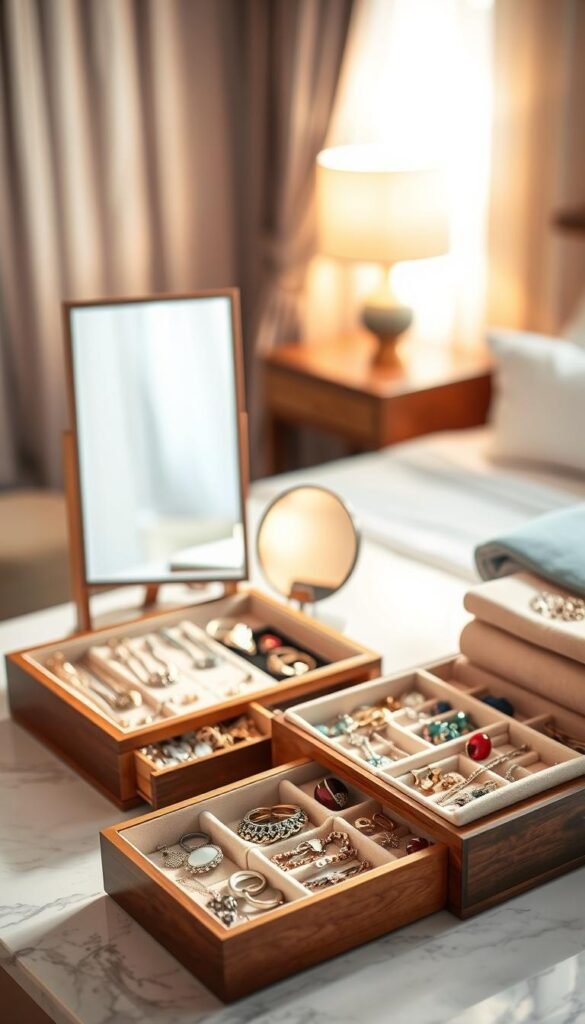
Visible vs. hidden organizers
If you forget what you own, pick visible organizers. Trees, fabric boards, and decorative hooks help you remember. They make selection quick.
If you prefer a calm surface, pick hidden storage. Drawer inserts and closed boxes keep things tidy and dust-free.
Match the solution to your space
Small space? Use slim wall hooks or an acrylic peg rack to hang strands.
Shallow drawers work well with stackable trays and shallow compartments. Countertop users like a low tray or a simple jewelry holder for daily pieces.
Protective linings and anti-tarnish basics
Choose soft linings like velvet or felt. They prevent scratches and keep finishes bright.
Use anti-tarnish strips for silver. Replace them monthly in closed boxes. Keep glass-top boxes away from direct sun.
- Measure first. Right fit reduces tangles.
- Mix and match. Visible for daily wear. Lined boxes for special pieces.
Jewelry Boxes and Trays: Soft, Sectioned, Simple
A soft-lined box can quietly protect your favorites and make mornings easier.
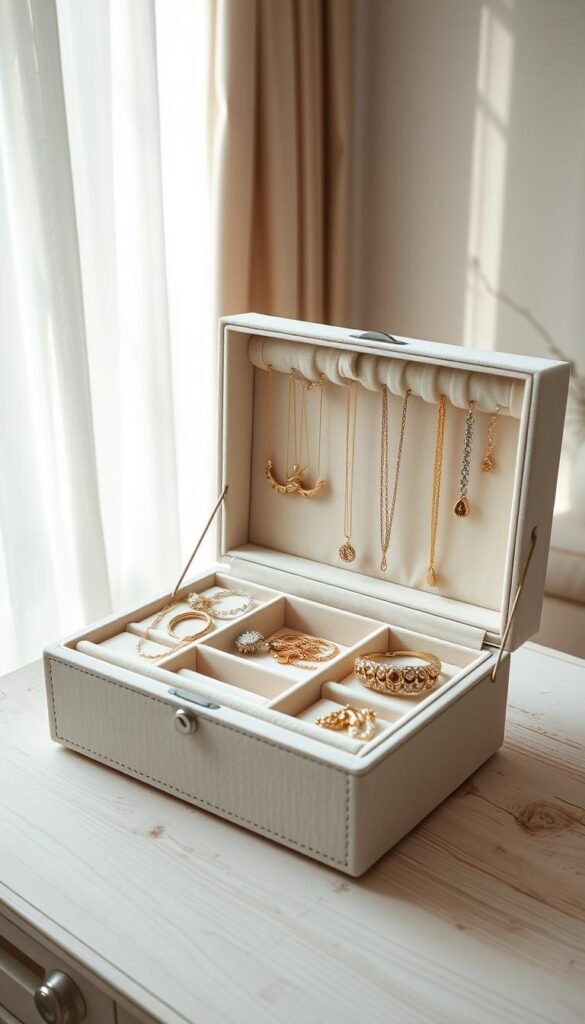
Choose a jewelry box when you want gentle protection and clear sections for each type. Soft cloth linings reduce scratches and help slow tarnish.
When a box works best: You have many delicate items. You like a tidy surface. You want drawers or a glass lid to keep things restful.
Compartment and tray layouts that prevent tangles
Look for ring rolls, walled cubes for studs, and long compartments for chains. These simple compartments stop knots before they start.
A tray on top keeps daily pieces easy to grab. Drawers below hold bulkier items like watches and statement pieces.
- Small, shallow boxes suit thin rings and studs. They are not for chunky items.
- Glass-top boxes are lovely. Keep them away from direct sun to protect light-sensitive stones.
- Deep boxes with drawers work well for larger assortments. Labels help if you use more than one box.
- Add anti-tarnish strips inside to support silver and slow tarnish.
“Soft linings and clear sections make getting ready calm and reliable.”
Drawer Systems: Stackable Trays, Dividers, Compartments
A tidy drawer can act like a calm little closet for your daily pieces.
Start with measurement. Measure width and depth before you buy inserts. Fit matters. A wrong fit wastes space and time.
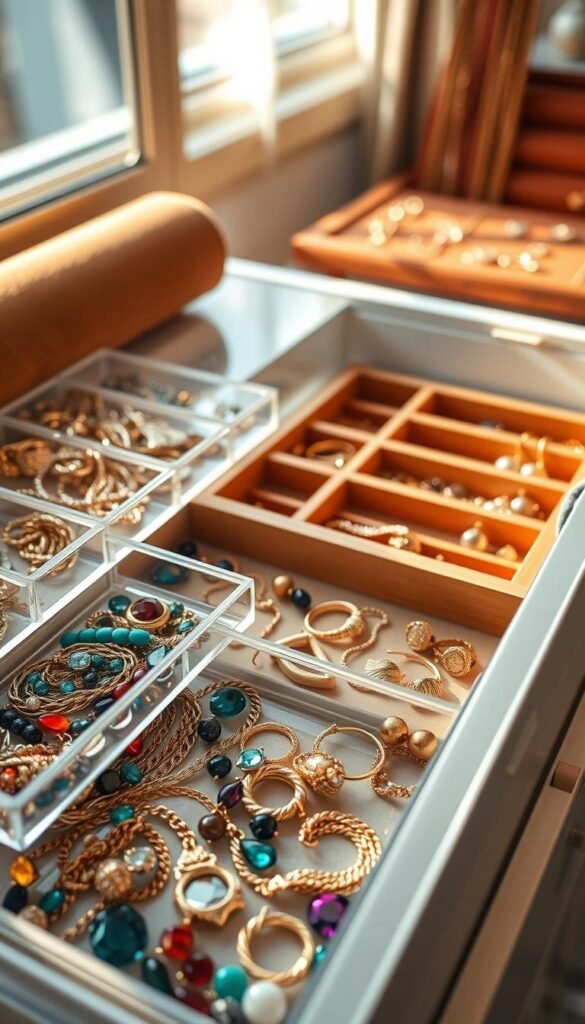
Plan one layer per category. Put rings on the top tray. Place earrings next. Keep chains and watches below. This makes mornings faster.
Choose shallow compartments for studs and small bits so they don’t float. Acrylic trays keep things visible. Velvet-lined trays reduce movement and scratches.
- Stackable trays give more capacity without taking more space.
- Label tray edges so you can re-stack in minutes after cleaning.
- Keep a small repair box in a rear corner for spare backs and fixes.
- Reserve one empty compartment for new pieces to prevent overflow.
| Need | Recommended insert | Why it helps |
|---|---|---|
| Rings | Ring rolls in shallow tray | Protects shape and keeps easy reach |
| Studs & small pieces | Shallow divided compartments | Prevents mixing and makes pairing quick |
| Chains & watches | Long, padded tray | Keeps length neat and avoids tangles |
| Daily favorites | Top stack tray | Saves time each morning |
“A simple drawer plan turns hidden space into a calm, reliable system.”
Hanging Jewelry and Wall Hooks for Necklaces and Bracelets
A neat row of hooks can stop knots before they start. Use a simple wall solution to keep necklaces visible and ready. This is a calm, visual way to cut tangles and clutter.
Peg racks and decorative hooks
Peg racks with multiple pegs keep strands separate. A popular example is the 11-peg acrylic rack from The Container Store. Decorative hooks also display bracelets and necklaces neatly. Hanging organizers with clear pockets work if you like pockets and visibility.
How to space hooks to avoid tangles
Follow a few simple spacing rules. Space hooks 2–3 inches apart for short chains. Use 4–6 inches for long pendants. Leave one empty hook between long pieces to reduce friction.
- Use peg racks or decorative hooks when you want fast access and easy visibility.
- Hang heavier bracelets near the center for balance.
- Keep one necklace per hook. Double up only for sturdy chains.
- Mount racks at eye level so you actually use them.
- A small dish below catches backs and extenders.
- Avoid humid walls near showers to protect finishes.
| Solution | Best use | Why it helps |
|---|---|---|
| Peg rack (multiple pegs) | Many chains and short necklaces | Keeps strands separate and visible |
| Decorative hooks | Bracelets and staple pieces | Displays pieces and reduces knots |
| Hanging clear-pocket organizer | Delicate items and small sets | Pockets stop tangles and are easy to check |
“A little wall space can save you time and keep daily choices gentle.”
Stands and Holders: Display-Ready Storage
A small, curated display can turn daily dressing into a calm ritual. Tabletop towers and simple stands keep often-worn pieces visible. They help you decide quickly and move gently through your morning.
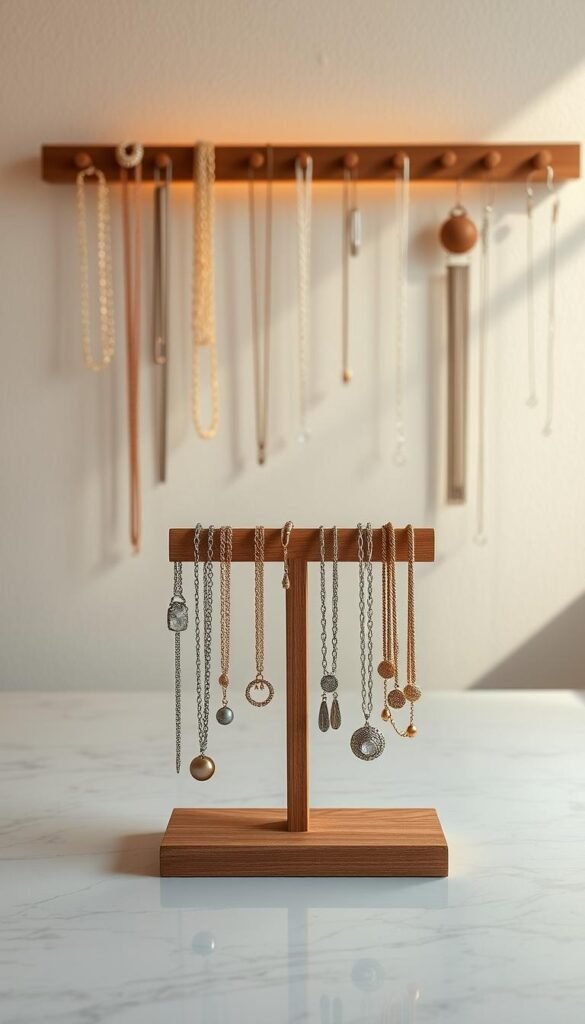
Choose a jewelry stand for pieces you reach for every day. A single T-bar works well for bracelets. A tiered stand holds necklaces and rings without tangles.
Keep displays light. Five to seven pieces per holder prevents visual clutter. Fashion pros often show dainty rings and one or two neck chains. This speeds mornings and keeps your space calm.
- Match the stand’s styles to your room so it feels intentional.
- Add a small box or tray at the base for backs and tiny charms.
- Rotate pieces monthly to keep the display fresh and useful.
- Dust weekly with a soft cloth. Open display needs gentle care.
- Place stands away from open windows to avoid light and dust buildup.
- If you wear sets, show the set together to cut prep time.
“Simple displays double as decor when you keep them calm and curated.”
Jewelry Armoires and Cabinets for Large Collections
When your collection needs more than trays, an armoire can be a calm, single home for many pieces.
Standalone armoires offer ample compartments, hooks, and often a mirror. They give a tidy place for long chains, studs, rings, and watches. These units suit a generous collection. They are a step up from small boxes and trays.
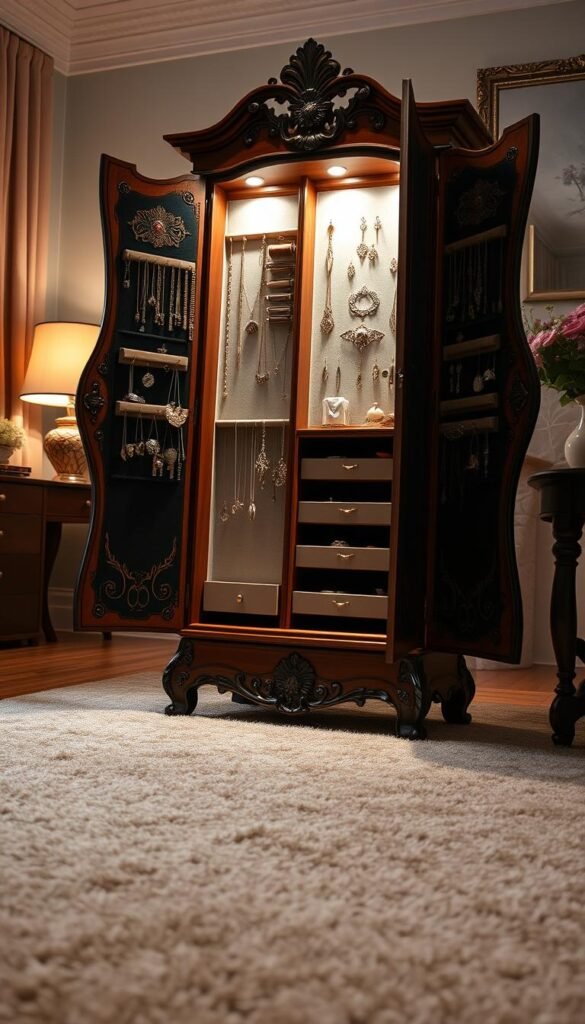
Before you buy: measure the floor space and check the door swing. These pieces are heavy. They may need anchoring for safety. Think about weight and where the unit will sit in your room.
Use the top drawers for rings and studs. Reserve deep drawers for watches and statement items. Look for a variety of compartments so each type has a calm home. Add soft liners and anti-tarnish strips inside closed sections.
- Choose an armoire when boxes and trays overflow.
- Check interior hooks for long chains and room for chunkier pieces.
- Keep the cabinet away from direct sun and moisture.
- Label drawers by category to speed your daily reset.
| Feature | Best for | Why it helps |
|---|---|---|
| Hanging hooks & mirror | Necklaces and quick checks | Prevents tangles and speeds dressing |
| Shallow top drawers | Rings and studs | Easy reach and gentle protection |
| Deep drawers | Watches, cuffs, statement pieces | Room for bulk without crowding |
| Multiple compartments | Mixed collections | Keeps each type in its calm home |
“An armoire brings order when your pieces outgrow smaller storage solutions.”
Brands like West Elm and Pottery Barn make heavy but well-organized units. Think of them as a furniture piece that protects and displays. A thoughtful placement makes mornings gentler and keeps your collection safe.
DIY Jewelry Organizers: Budget-Friendly Options
You don’t need fancy gear to make useful, attractive storage at home. Small, kind projects keep favorites visible and easy to reach. They also save money.
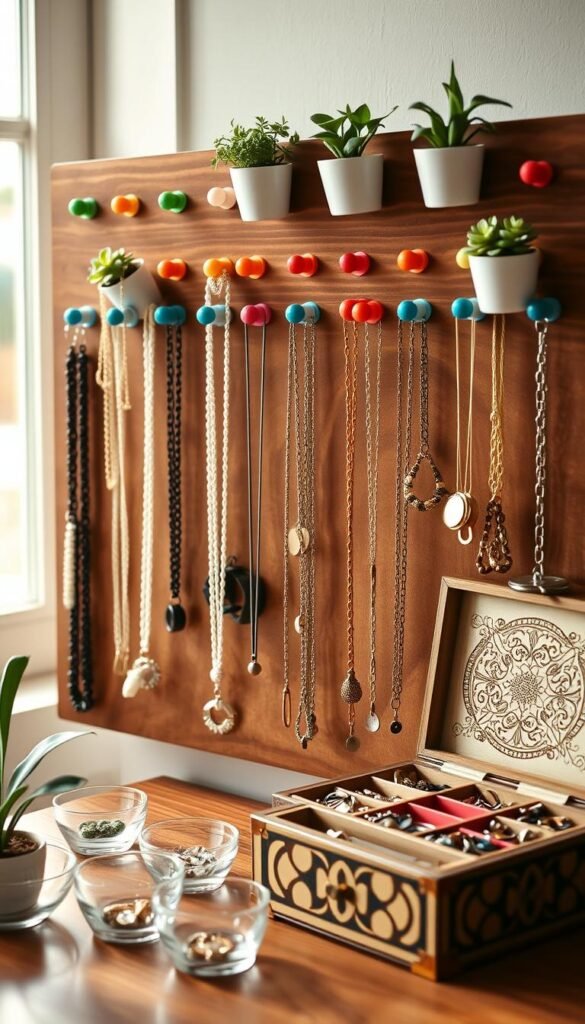
Cork boards, frames, and dishes that work
Pin small hooks into a cork board. It makes a fast wall display for light pieces. Space hooks so chains and dangly earrings don’t touch.
Stretch mesh inside a picture frame. This creates a neat earring board. Studs and hoops fit easily. It looks tidy on a wall or leaned on a dresser.
Repurpose shallow dishes to corral rings and daily studs. Add felt pads underneath to soften contact and reduce scratches.
What to store — and what to avoid
Great option for costume pieces. DIY solutions shine with items you wear often and replace easily.
Avoid placing heirlooms or delicate stones on open displays. Steam, splashes, and dust speed tarnish. Keep fine chains in lined or closed storage.
- Cork board + small hooks = quick wall display for light pieces.
- Picture frame + mesh = simple earring board for studs and hoops.
- Shallow dishes catch rings and everyday studs by the sink or bed. Add felt pads.
- Use hooks for sturdy chains. Hang delicate chains separately in lined storage.
- Keep open displays small. Refresh layouts monthly so you enjoy the variety.
Kind tip: DIY is a gentle, budget-friendly solution. Use it for everyday pieces. Protect fragile or sentimental items in padded, closed storage.
Daily, Weekly, Monthly Routines
Build tiny habits that keep your pieces calm and easy to find each day. Small, repeatable steps protect value and remove daily friction. These routines are short. They fit your life.
Daily: quick resets that stick
Drop favorites on the tray when you undress. Pair earrings immediately. Wipe fingerprints with a soft cloth.
Before bed: return stray items to their section in your organizer. This prevents morning scavenges.
Weekly: gentle upkeep
Detangle one or two chains. No marathon sessions. Dust visible stands with a soft cloth. Check earring backs and clasps for wear.
Re-sort any hotspot bowl so it stays light and useful. Small weekly care prevents big repairs later.
Monthly: a calm deep edit
Rotate pieces into the tray so you wear more of your collection. Refresh anti-tarnish strips in closed storage. Scan for repairs and move items to your labeled repair bag.
Seasonally: review what you no longer wear. Release with care.
“Tiny, steady habits protect value and make getting ready feel effortless.”
| Cadence | Time | Core actions |
|---|---|---|
| Daily | 2–5 minutes | Tray reset, pair earrings, wipe fingerprints, return strays |
| Weekly | 10–20 minutes | Detangle 1–2 chains, dust stands, check clasps, re-sort hotspot bowl |
| Monthly | 30 minutes | Rotate pieces, refresh anti-tarnish strips, move repair items to bag, deeper edit |
Room-by-Room Examples: Simple Zones That Work
Designate one easy landing place in every room to cut morning searching. A small plan makes daily life calmer. You do not need perfection. Just clear spots that match how you live.
Bedroom and closet
Keep one tray on the dresser for daily pieces. Add a jewelry stand or a low tray on your vanity for favorites. Use wall hooks in the closet for long chains so they stay tangle-free.
Bathroom
Only wear what you will use that day. Steam and humidity harm delicate items. Store most pieces in a small closed box away from the sink.
Entryway and kitchen
Place a catch-all dish or tiny holder by the door for rings, keys, and small items. This saves frantic searches. Avoid using the kitchen or pantry for long-term storage. If you must set something down while cooking, use a dedicated safe spot bowl.
Shared homes and small spaces
Give each person one organizer or holder to prevent mix-ups. Hang light racks on the back of closet doors in small apartments. If kids or pets roam, choose closed storage higher up.
“Tiny, consistent zones keep your home calm and your pieces where you need them.”
Travel and On-the-Go: Cases, Rolls, and Holders
Travel prep is easiest when each piece has its own little home. A small system cuts tangles and speeds getting ready. Pack light. Pack calm.
Compact cases with compartments
Choose a compact jewelry box or roll with soft compartments. Look for straps for necklaces and tiny pouches for studs. Brands like Cuyana use straps and pouches to keep chains separate. Leather rolls also work. They keep items from rubbing.
How to pack necklaces, earrings, and rings
- Necklaces: Feed chains through a strap or tuck each into its own pouch to stop tangles.
- Earrings: Pair them and place in a snug section so backs stay with their mates.
- Rings: Slip rings into a ring roll or a small zip pouch lined with felt.
- Add a soft scarf or a bit of tissue to fill empty space. This prevents rattling.
- Keep one spare pair of backs and a tiny cloth in the holder for quick fixes.
- Choose a hard-sided box for checked bags and a soft roll for carry-on.
- On arrival set a small tray on the nightstand so all pieces return to one spot.
- When near water, store jewelry in the hotel safe when not worn.
Tip: A clear-pocket organizer can hang in a closet and keep strands separated while you travel.
Caring for Delicate Pieces: Soft Linings and Safe Spots
Treat delicate pieces like small treasures and give them soft homes. A few calm choices will protect finish and shape. Soft materials and cool spots are your allies.
Glass-top cautions, light and humidity
Keep a glass-lid box away from windows and direct light. UV can dull opals, amethysts, and pearls.
Avoid bathrooms. Steam and humidity speed tarnish. Pick a cool, dry shelf to store fine items.
Separate pouches and anti-tarnish cloths
Choose soft linings like velvet or felt to cradle delicate pieces. Small compartments stop sliding and rubbing.
Use separate pouches for chains and stones. This prevents friction and lost mates.
- Add anti-tarnish cloths in closed sections. Refresh monthly.
- Wipe lotions and sunscreen off before you store items.
- Give pieces rest days. Clasps and strings last longer.
- Check prongs and clasps monthly. Send simple repairs early.
Kind note: Simple, soft choices protect value and make daily routines calmer.
Small Spaces and Shared Homes: Smart, Low-Visual Clutter Ideas
Think upward and tucked away to keep surfaces calm. Use vertical approaches first. Slim wall racks and tiered stands free counters. They save floor space and make finding pieces quick.
Choose clear acrylic organizers so you can see what you own in tight areas. Stack shallow trays in drawers. Use under-bed boxes for off-season items. These storage solutions expand capacity without adding visual weight.
For shared homes, keep things simple. Pick a color code so each person spots their section fast. Limit surfaces to one small tray per person. This reduces visual clutter and daily decision fatigue.
Keep overflow in labeled boxes by type. Place heavy pieces low and light pieces high for balance. In studios, favor a closed approach with one tiny daily tray on the dresser.
Review quarterly. Small spaces need gentle edits to stay calm.
- Go vertical: slim wall racks and over-door hooks.
- Use clear organizers and stackable trays.
- Employ under-bed box storage for seasonal items.
Conclusion
Take a breath and imagine your dresser as a calm, usable space. This is a simple way to end the scramble and start gentle mornings. A small habit can change how you feel about getting ready.
Start small. A tray, a soft cloth, and a lined jewelry box or hanging rack will protect delicate pieces. Visible systems help you remember. Closed storage keeps things tidy. Choose the option that fits your routine.
Care is light. Daily resets and a monthly refresh keep the whole collection ready. Let go of items that no longer serve you. Make room for what you truly enjoy.
Your home and your pieces deserve calm. You have what you need to store jewelry simply and kindly. We’re here for the small steps that help you and others feel lighter.
FAQ
How do I start organizing my jewelry collection without feeling overwhelmed?
Begin small. Set a ten-minute timer. Use a tray and a soft cloth. Pull out a few pieces. Sort into keep, repair, or release piles. Small wins build calm. Repeat a little each day.
What simple tools should I have on hand to organize pieces quickly?
Keep a tray, small boxes, and a soft cloth nearby. Add a dish for rings and a felt-lined tray for delicate items. A hook strip or peg rack helps with necklaces. These few items make sorting gentle and fast.
How do I decide what to keep, repair, or let go?
Ask three questions. Does it fit and feel like you? Is it damaged beyond easy repair? Have you worn it in a year? If yes, keep. If it needs a simple fix, repair. If no, release with gratitude.
How should I sort pieces to make daily dressing easier?
Sort by type, material, and use. Group necklaces, earrings, rings, and bracelets. Separate fine pieces from costume jewelry. Make a daily zone for the items you wear most. This saves time each morning.
What storage options work best for small bedrooms or shared closets?
Choose low-visual clutter options. Clear acrylic organizers, vertical wall hooks, and under-bed boxes are gentle choices. Use stackable trays in a drawer to keep things tidy without taking much space.
Should I use visible displays or hidden boxes?
Both can work. Visible displays like stands and peg racks make choosing easy. Hidden boxes and armoires protect fine pieces and reduce visual noise. Match the solution to your space and how often you wear items.
When is a jewelry box the right choice?
A soft, sectioned jewelry box is ideal for small to medium collections and for delicate pieces. Look for compartments that prevent tangles and a felt lining to protect metal and stones.
How do I prevent necklaces from tangling on a hook or stand?
Space hooks a few inches apart. Hang each chain at its own hook. For finer chains, use small clear tubes or straws threaded onto the chain to keep them separated. Good spacing keeps tangles away.
What are smart DIY organizer ideas that actually work?
Try cork boards with push pins for earrings. Repurposed dishes and muffin tins make great ring and stud holders. Picture frames with mesh or fabric work for lightweight pieces. Avoid storing heavy or valuable items in DIY solutions.
How do I care for delicate pieces and prevent tarnish?
Store fine metals in anti-tarnish cloths or sealed pouches. Use soft linings in boxes. Keep pieces out of direct light and away from humidity. Wipe fingerprints off after wearing to preserve finish.
What daily and weekly routines help keep things under control?
Daily: reset a small tray, pair earrings, wipe down pieces. Weekly: detangle necklaces, dust stands, re-sort any hotspots. Monthly: do a deeper edit and refresh anti-tarnish materials. Small routines prevent larger tasks later.
How should I pack jewelry for travel so nothing gets damaged?
Use compact cases with compartments or soft rolls. Secure earrings in small pouches. Thread necklaces through card slits or use rolls to prevent tangles. Keep rings in a padded spot to avoid scratches.
How can I store pieces safely in a bathroom or humid area?
Avoid long-term storage in bathrooms. If you must, use sealed boxes with silica gel packets and anti-tarnish strips. Keep only a few everyday pieces there and move delicate items to a dry bedroom or closet.
What should I use for large collections when I need serious storage?
Consider an armoire or cabinet with drawers and hooks. Look for soft-lined compartments and modular trays. A dedicated piece with good layout protects fine items and makes it easier to rotate and display your collection.
How do I match storage to the pieces I own—fine versus costume?
Store fine pieces in soft-lined boxes, sealed pouches, or a cabinet. Keep costume pieces in visible trays or on stands for easy access. Separate materials to avoid chemical reactions and reduce the need for frequent cleaning.
Any simple tips for keeping rings and studs easy to find?
Use small compartments or a sectioned tray for rings and studs. Keep a shallow dish by your entryway for quick drops. Label drawer sections if that helps. Clear visibility saves time and worry.