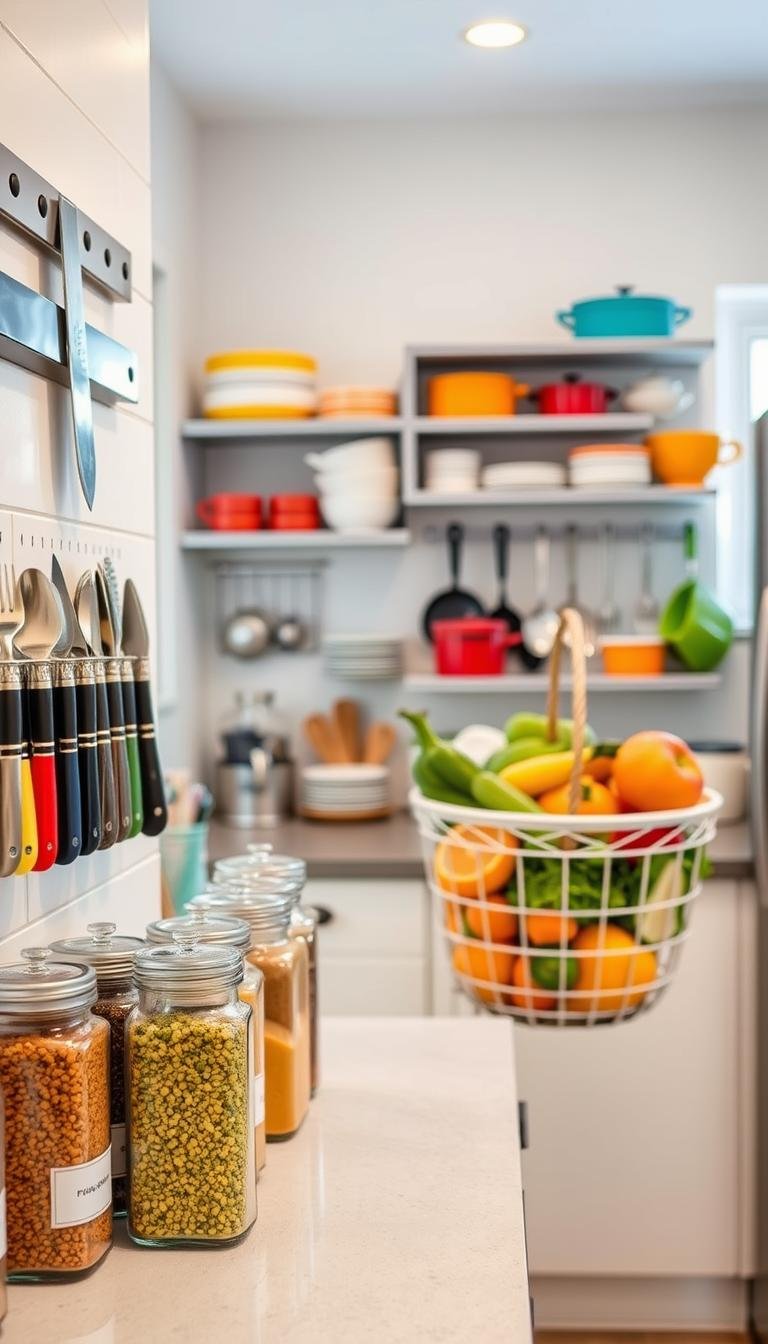
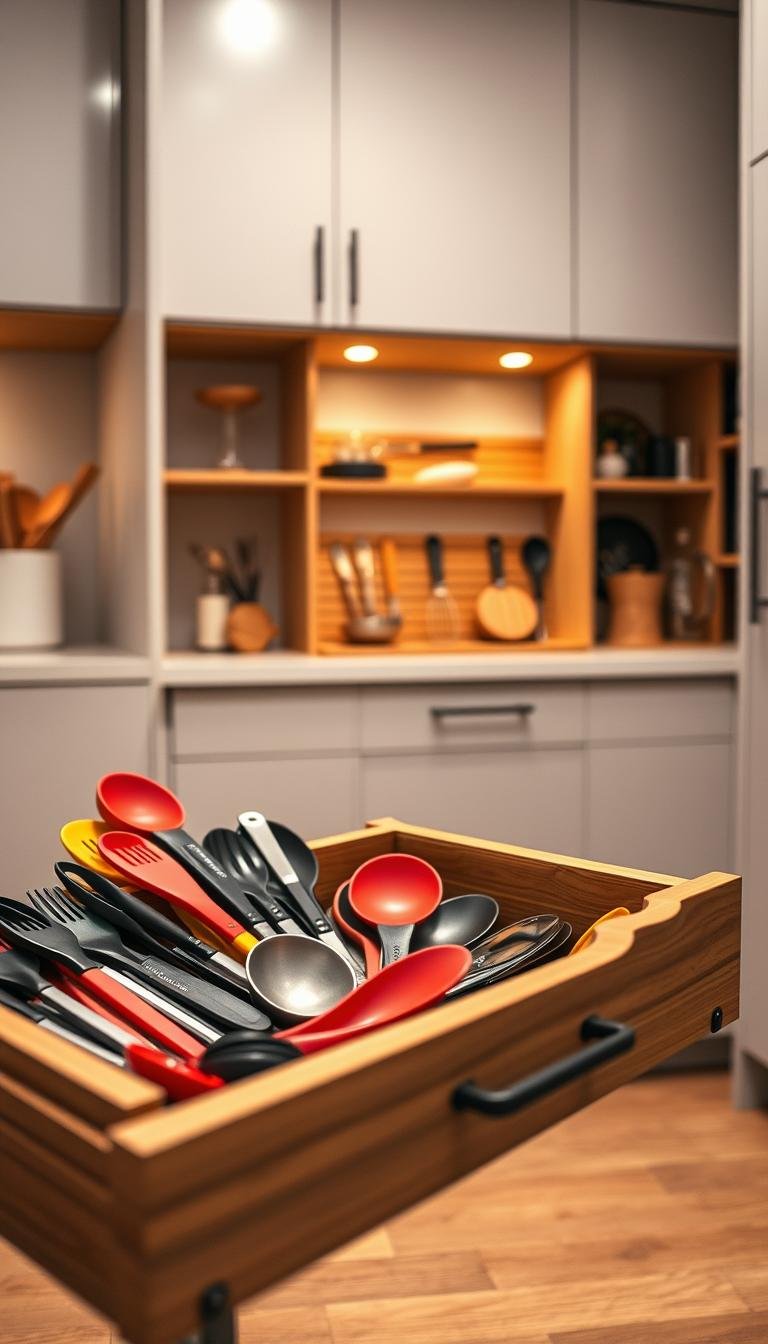
How to Organize Kitchen Drawers (Simple System)
You are busy. You want a calm, useful home without pressure.
This short system helps you clear clutter fast. First, give every item a clear home. Then remove duplicates and keep what you use.
We work drawer by drawer. Measure. Add simple dividers. Create zones for prep, cook, serve, and store. Roll towels to stop jams. Try an in-drawer knife dock or a small knife block to free counter space.
Use light labels and a 60-second reset each day. Keep one-in, one-out. Weekly touch-ups keep the system steady. These steps match your needs and scale to tight cabinets.
Key Takeaways
- Give every tool a home.
- Declutter first. Remove duplicates.
- Use dividers, liners, and a knife dock.
- Do a 60-second daily reset.
- Weekly and monthly touch-ups keep order.
Calm Start: What an organized drawer gives you
A tidy drawer makes mornings gentler and faster.
Quick wins you can feel today:
- You save time every day when the drawer opens to what you need. No digging. No shifting piles. A calm grab every time.
- Your space feels lighter when tools stop sliding and mixing. Simple dividers and liners keep order. You see contents at a glance.
- Your home runs smoother when everyone knows where things go. Light labels and clear sections help family return items without asking.
- Your stress drops when sharp tools have a safe spot. An in-drawer knife dock protects fingers and clears the counter for prep.
- You waste less when snacks stand upright and visible. Vertical storage makes quantity clear. You buy only what you need.
- Small moves give big wins. Roll towels to stop jams. Place kids’ items low for easy reach. Put measuring spoons near spices.
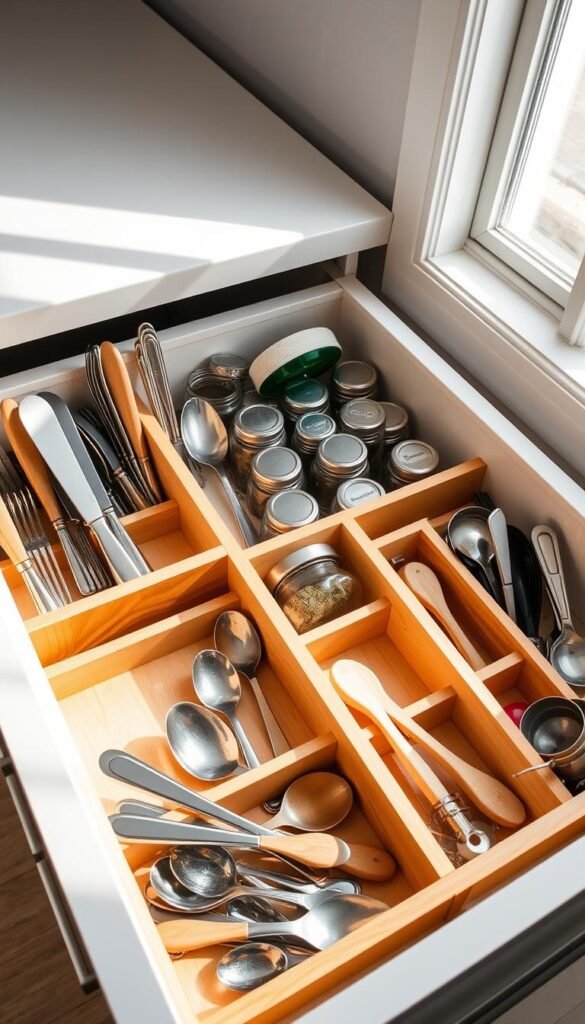
These changes cost little time and add calm every time you open a drawer. A simple system becomes a quiet helper. You keep energy for cooking, not searching.
Declutter first, gently
Begin with a single drawer and a quiet breath. This is the first step. Keep your pace slow. You are allowed to stop.
Take everything out. Lay like with like. Let similar utensils and items form small groups.
- Make four piles: keep, donate, recycle, trash.
- Ask one calm question: do I actually use this in a normal week?
- Notice duplicates. Keep one or two best tools. Let extras go.
Return sharp tools to a safe spot as you work. Keep fingers and counters clear of loose blades.
Use a simple bag or box for donations. Put it near the door so it leaves soon. If a choice feels hard, start a dated trial box. If you do not miss it in 30 days, pass it on.
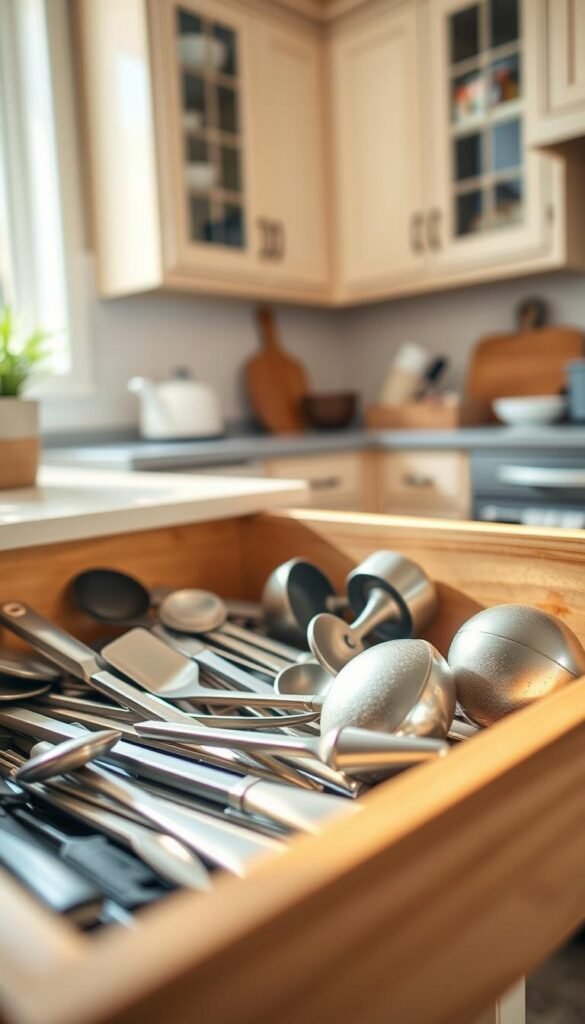
Wipe the empty drawer with a soft cloth. Let it dry before adding organizers or storage bins. Pause. Notice the space you made. This small time gives calm and clears clutter from your kitchen and life.
Measure, map, and plan your drawer zones
Before you buy anything, take three simple measurements. This gentle step saves time and returns. It helps you choose the best dividers and trays for your needs.
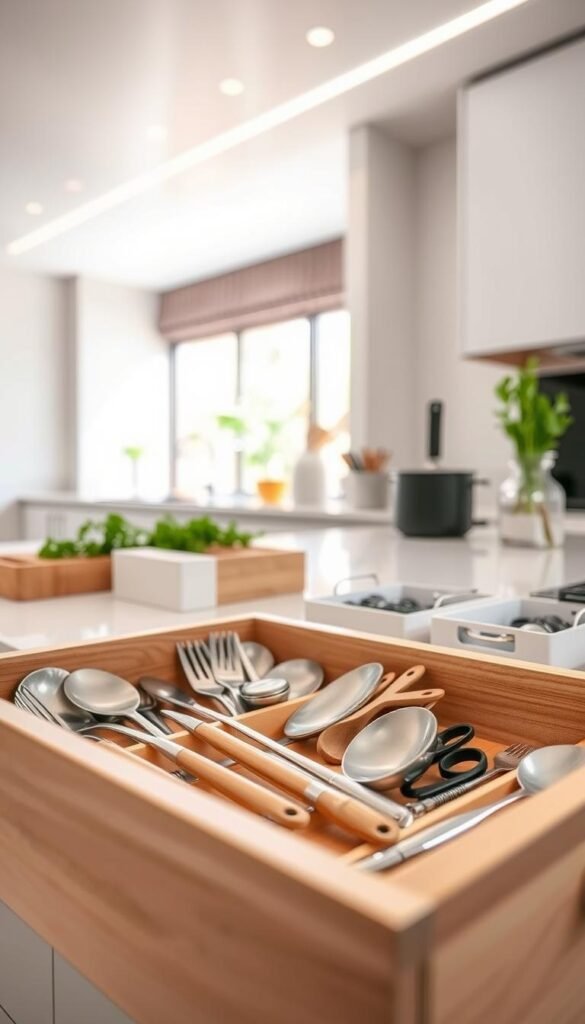
Measure length, width, height before you buy organizers
Measure the drawer length, width, and height. Write it down. This simple step prevents returns and wasted space.
Place a few flatware pieces and measuring cups inside the empty drawer. Test how spatulas and spoons sit. Adjust until the layout feels easy.
Map tasks to locations: prep, cook, serve, store
Map zones by task. Keep prep tools near the cutting board. Put cook tools close to the stove. Store wraps and bags near the pantry or cabinets.
Keep spices near the prep zone. Place measuring spoons beside them. These small pairings shave minutes from cooking.
Place kids’ items low for easy access
Put kids’ plates and cups in a low drawer they can reach. A child-height drawer gives independence and keeps upper cabinets calmer.
Use bamboo dividers or expandable drawer dividers to shape the sections. Leave a small open space for changing needs. Safety first: keep any knife zone away from the kids’ drawer. Consider an in-drawer knife tray if it fits your drawer height.
- Measure every drawer.
- Test layouts with the real tools you own.
- Map zones to how you work.
Smart tools and materials for tidy drawers
Small, sturdy pieces change how your drawers behave.
Choose bamboo first. Bamboo drawer dividers and expandable trays give warmth and strength. They flex to fit odd widths and hold shape. They resist shifting better than cheaper options.
Add tiny adhesive dots under dividers. They stop sliding when you pull a drawer. This keeps your layout steady and calm.
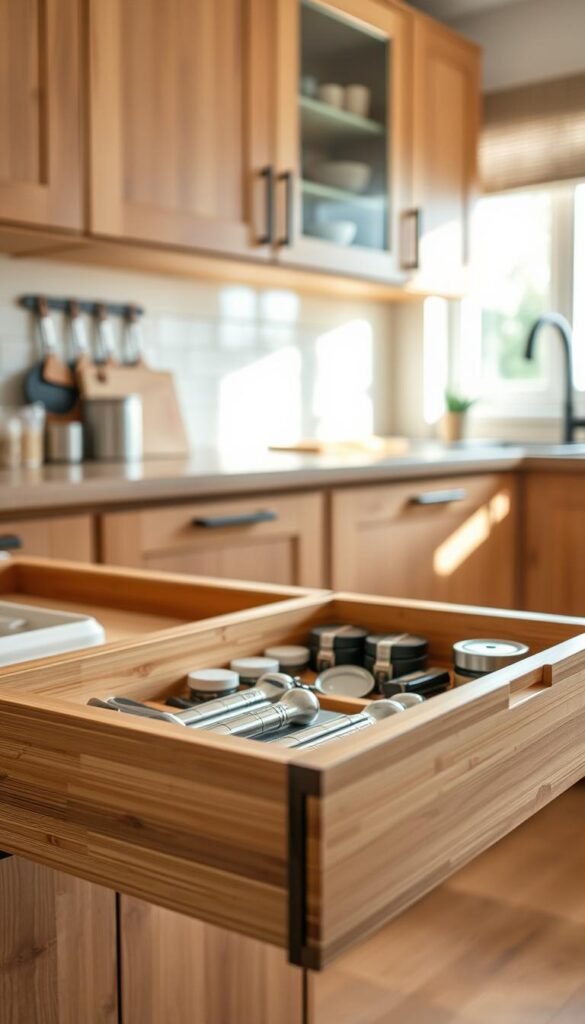
Bamboo dividers and expandable trays
Pick expandable bamboo for a snug fit. It frames trays and blocks movement. It works well with utensil trays and long tools.
In-drawer knife dock vs. counter knife block
Swap a counter knife block for an in-drawer knife dock. You free counter space. You create a safer, consolidated home for knives.
Clear bins, spice liners, and anti-slip dots
Use clear cubbies for small items. Spice liners keep jars upright and labels visible. Plastic bins work for messy fridge zones. Clear walls help you find things fast.
| Tool | Material | Benefit |
|---|---|---|
| Bamboo drawer divider | Bamboo | Warm look, sturdy fit, expandable |
| In-drawer knife dock | Wood/Plastic | Safer, frees counter space |
| Spice liner | Rubber | Keeps jars upright, labels visible |
| Clear cubby | Plastic | Easy viewing, simple cleaning |
Organize Kitchen Drawers
Choose the drawer you open most and make it effortless to use.
Flatware and everyday utensils: right-size compartments
Start small. Use a sturdy flatware tray that fits the drawer. Group forks, spoons, and knives in separate slots.
Keep serving pieces to a minimum. Label lightly: “flatware,” “spoons.” This helps others return items fast.
Knife drawer setup: safe, simple, consolidated
Add an in-drawer knife dock. Place blades down and handles up. Keep shears in a side slot.
This replaces a counter knife block and frees space. It also keeps the set in one safe place.
Kitchen towels: roll to see every piece
Roll towels and stand them in rows. You see every towel at a glance. Grabbing one is simple.
Keep only what fits. Fewer towels mean less fumbling and faster resets.
Food storage and wraps: bag organizers and dividers
Use a bag organizer for sandwich and snack sizes. Anchor it with a divider so the box does not slide.
Store wraps in one row for quick reach. Put lids and measuring cups near pots and prep zones.
- Choose bamboo for heavy-use trays. A bamboo drawer tray resists shifting better than light plastic.
- Use a utensil organizer with long channels for spatulas and tongs.
- Group plastic tools separately from wood tools to track wear.
| Drawer Type | Organizer | Material | Key Habit |
|---|---|---|---|
| Flatware | Sturdy tray | Bamboo or heavy plastic | Label and limit serving pieces |
| Utensils | Utensil organizer | Bamboo | Long channels for tongs and spatulas |
| Knife set | In-drawer knife dock | Wood/Plastic | Blades down. Handles up. Shears aside |
| Food wraps | Bag organizer + divider | Plastic box anchored with divider | One-row access. Refill as needed |
Simple habit: do a 60-second return-to-home after use. Keep only items you use weekly in these spaces. Reroute seasonal items to another bin.
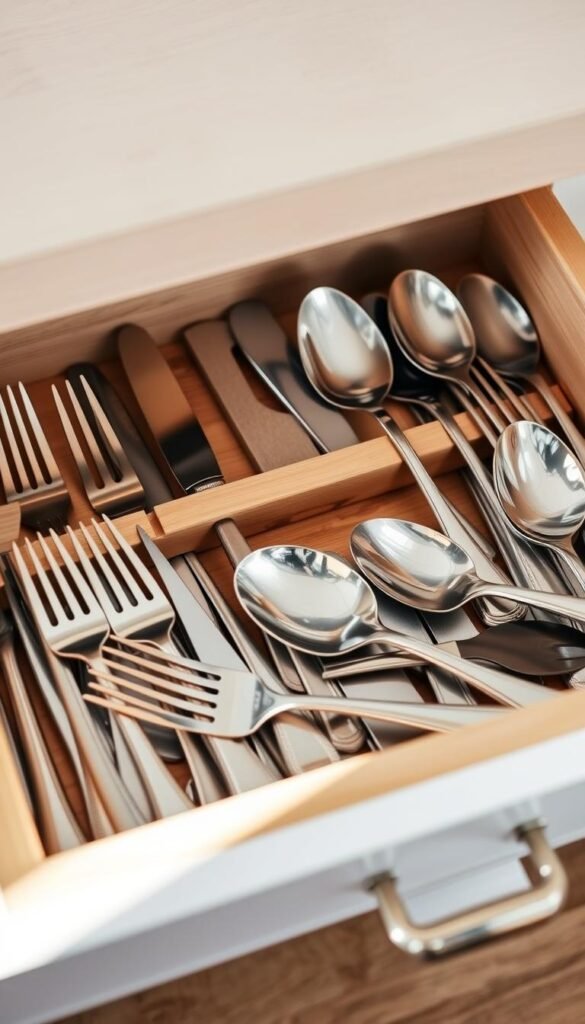
Deep drawer strategies that save time
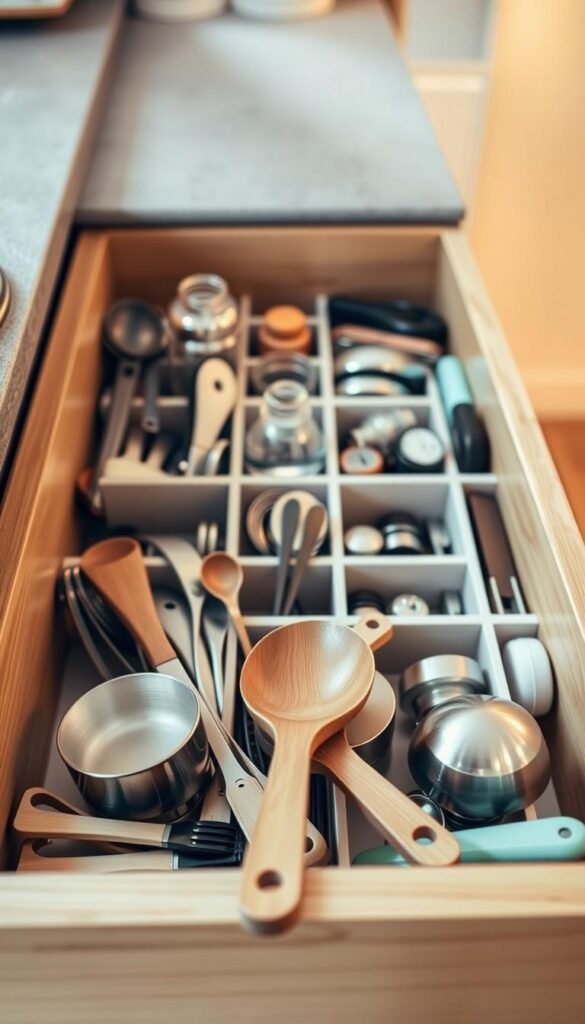
Use one deep drawer for plates and bowls. Lifting down is easier than lifting up. Kids can help set the table without reaching high.
Plates and bowls in a deep drawer for easy reach
Keep a small gap between stacks. Dishes lift out without scraping the sides.
Place heavier plates at the back. Lighter bowls go near the front.
Pots and pans without stacking, lids on their homes
Avoid tall stacks of pans. They topple and scratch. Instead, line pans side by side when you can.
Store each lid with its pot. You skip the lid hunt and cook faster.
- Add a simple divider or a small wood block to keep pans upright.
- Put heavy cast iron low for safety. Lighter saucepans can live higher in the same bay or another drawer.
- If reach is hard, fit a pull-out inside the base cabinet. Deep space becomes easy to use.
Keep the drawer action smooth. Wipe rails during your monthly tune-up. A calm, working space saves time and stress.
Room-by-room examples you can copy
Here are small layouts you can copy and use right away.
Kitchen and pantry
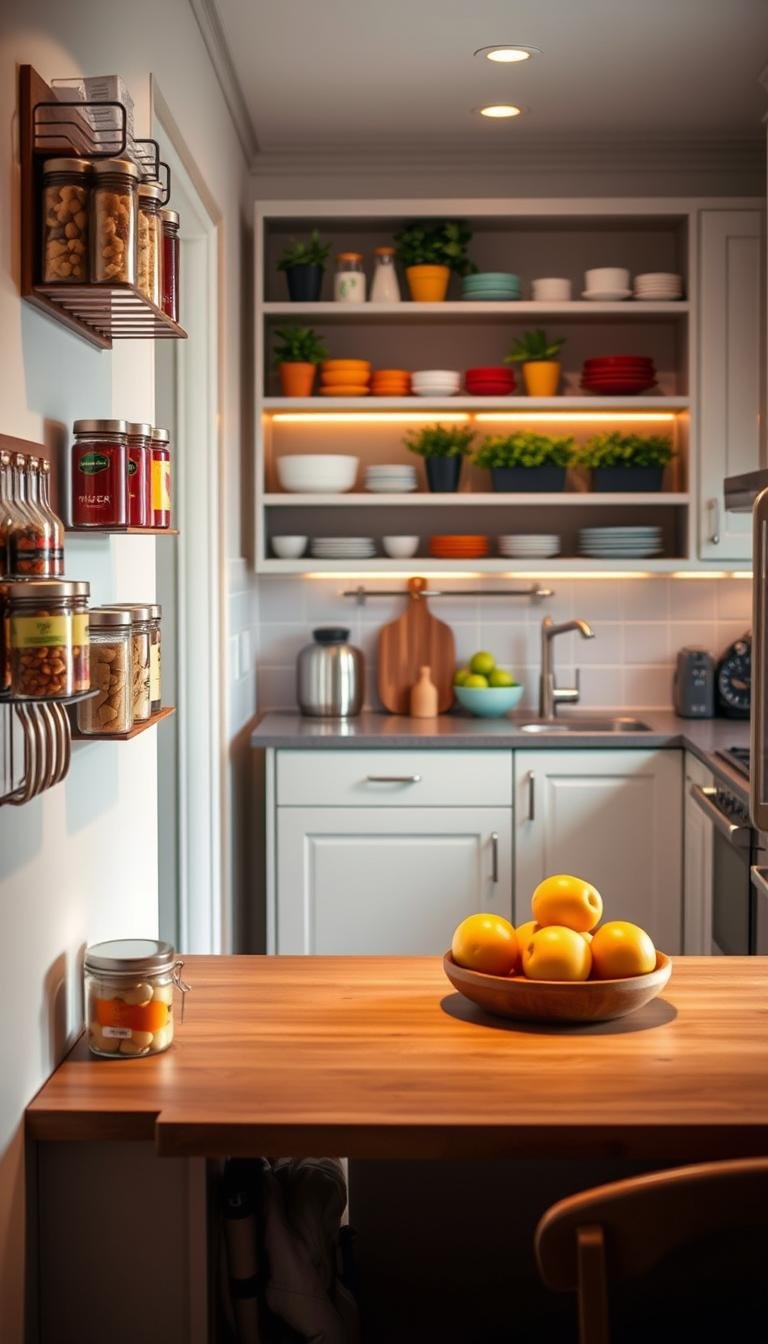
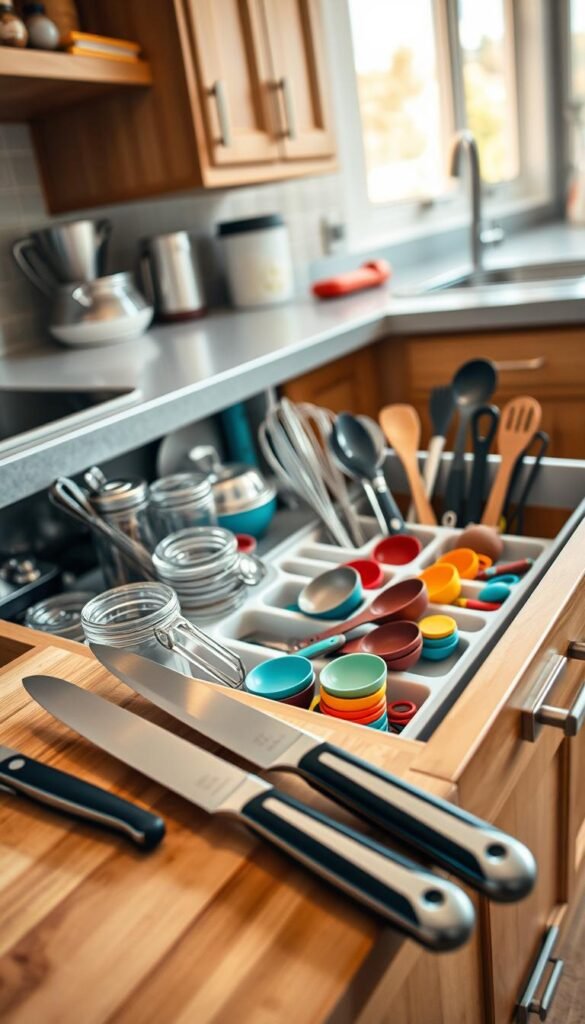
Stand snacks upright so you can see quantities. This cuts waste and speeds choices.
Tip: keep measuring spoons with spices. Use a spice liner so jars do not roll. Label shelves so anyone can find what they need.
Bathroom
Use clear plastic bins for hair, skin, and first aid. Small dividers hold tweezers and nail clippers. Clear bins make contents visible at a glance.
Bedroom and closet
Soft compartments protect belts, scarves, and jewelry. One compartment per item type keeps things gentle and tidy.
Entryway
Create a labeled catch-all. Keys, sunglasses, mail, and wipes each get a small section. A short weekly edit keeps the spot useful.
| Room | Quick Setup | Material | Key Habit |
|---|---|---|---|
| Kitchen & Pantry | Snacks upright; spice liners; measuring spoons nearby | Plastic bins, spice liner | Label shelves; refill weekly |
| Bathroom | Clear bins; small dividers for tools | Clear plastic | One-bin per category |
| Bedroom/Closet | Soft compartments for accessories | Fabric inserts | Store seasonal items higher |
| Entryway | Labeled catch-all with sections | Bamboo drawer tray or small box | Daily drop and weekly edit |
- Add a bamboo drawer tray where you want warmth and weight.
- Use cabinets with pull-out drawers to see the back row easily.
- Keep daily tools at the front and seasonal items tucked away.
Set up simple systems, not perfection
Small systems last. Build a steady routine that fits your life. One clear step beats a dozen rules you don’t keep.
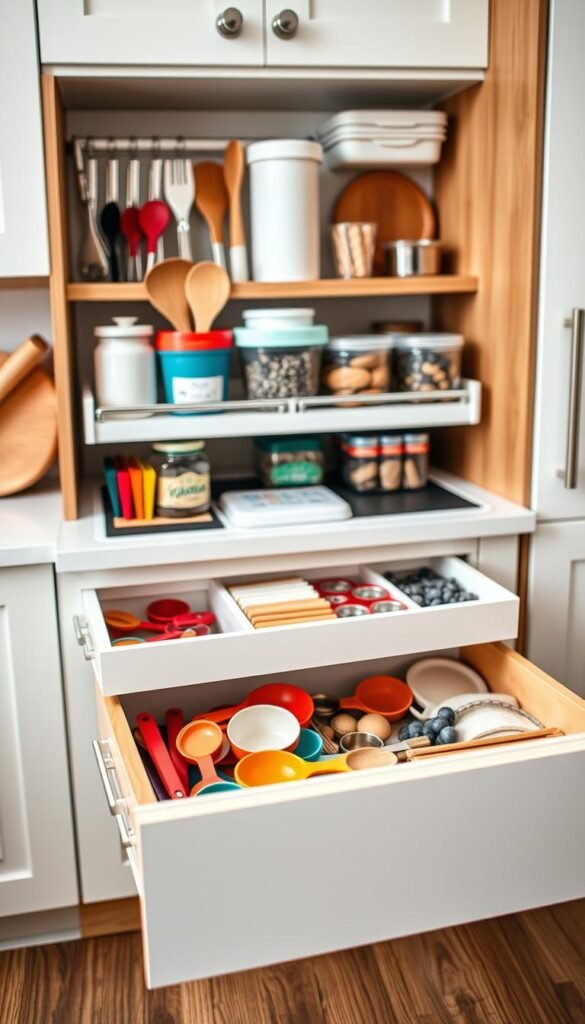
Assign a home for every item. Use one-word labels. Try “tongs,” “spatulas,” or “measuring cups.” Light labels help family members return things with no fuss.
Assign a home for every item and label lightly
Place daily tools at the front. Put rarely used items toward the back or in cabinets. Keep a small buffer of space so things do not jam.
Keep extras out: one-in, one-out guideline
When a new spatula arrives, move one out. Store backups in a box or donate them. This rule keeps storage useful and stops clutter from growing.
- Choose a simple system you can keep on busy days.
- Assign a clear home for each item and label gently.
- Practice one-in, one-out to control overflow.
- Keep a donate box in your pantry for quick edits.
Small wins matter:label today. Edit next week. Notice how much time you save when drawers close smoothly. That time is your reward.
| Focus | Action | Why it helps |
|---|---|---|
| Labeling | One-word tags | Faster returns. Less asking. |
| Placement | Daily items front | Quick access. Less search time. |
| Extras | One-in, one-out | Prevents overflow. Eases storage. |
Maintenance made easy: daily, weekly, monthly
A tiny touch each day keeps your system calm and useful. These short habits protect the order you already made. They take very little time. They keep your drawers and cabinets working for you.
Daily quick reset: 60-second return-to-home
After dinner, take 60 seconds. Return tools and small items to their labeled homes. Close each drawer with care.
Wipe crumbs if you see them. A quick swipe keeps motion smooth. No heavy cleaners needed.
Weekly light edit: remove floaters and duplicates
Once a week, open one drawer and remove floaters that landed in the wrong place. Toss broken items. Donate clean duplicates.
Re-roll towels that unraveled. Keep only what fits without squeezing. Nudge spice jars back near measuring spoons if they shifted.
Monthly tune-up: adjust dividers and categories
Each month, tighten layouts and check drawer dividers. Add adhesive dots when trays slide. Move an overfull group to a nearby spot.
Check knife storage for safe placement. One small adjustment prevents a safety problem later.
- Note one friction point each month. Solve it. That is enough.
- Walk your cabinets and drawers with a calm eye. Do one small fix per week.
- Celebrate the ease you built over the year. Your simple system keeps paying back.
Conclusion
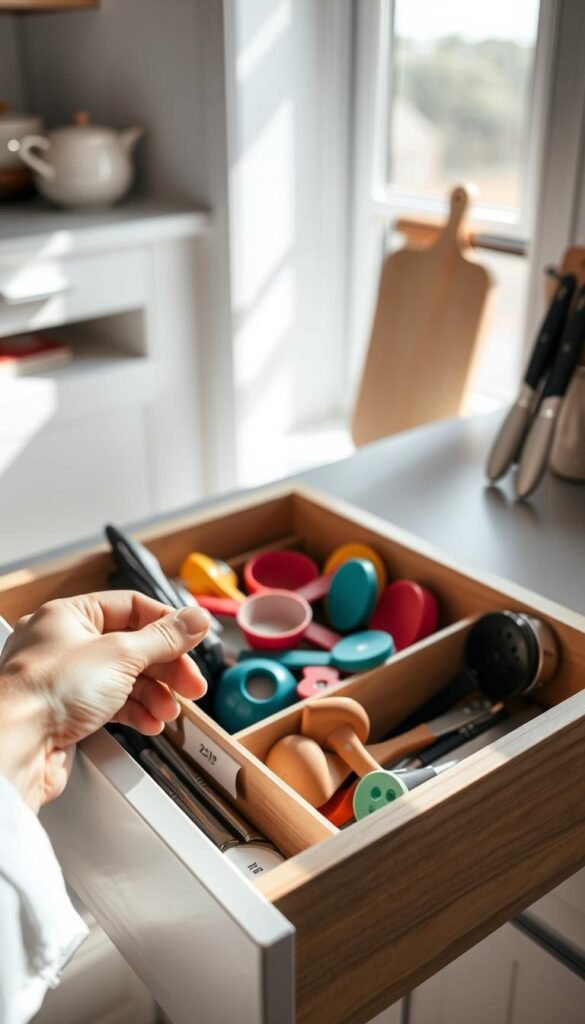
You built this calm space with tiny, sensible steps. Small choices like rolling towels, using spice liners, and an in-drawer knife dock change how you cook. Plates and bowls in deep drawers and lids kept with pots save time.
Keep what works. Adjust what does not. Add adhesive dots under dividers when trays slip. Move one item out when a drawer feels full. Space returns. Stress drops.
Your storage now supports real life. Flatware sits ready. Pans are easy to reach. Counters feel open without a counter block. Share light labels as links for the whole home.
Return to this post when you need a refresh. One small change today adds up over a year.
FAQ
How do I start when my drawers feel overwhelming?
Begin small. Pull out one drawer at a time. Sort items into keep, donate, recycle, and trash. Work with a timer for 10–20 minutes. Choosing one tidy win lowers stress and builds momentum.
What’s the first practical measuring step before buying organizers?
Measure length, width, and height of the empty drawer. Note any internal hardware that reduces space. Use those numbers to choose bamboo dividers, trays, or clear bins that truly fit.
How do I decide which items to keep versus “just in case”?
Ask how often you use the item in the past year. If it’s rare and replaceable, let it go. Keep things you reach for weekly. This gentle rule protects space for daily tools.
What are the best organizers for flatware and utensils?
Choose right-size compartments. Bamboo dividers and expandable trays work well. Use small bins for measuring spoons and cups. A tidy layout makes meal prep faster.
Is it safe to store knives in a drawer?
Yes, if you use an in-drawer knife dock or a labeled knife tray. These keep blades covered and stable. If you prefer a counter block, place it near prep zones to reduce trips.
How should I store kitchen towels inside a drawer?
Roll them so you can see every piece at a glance. Use a shallow tray or divider to keep stacks neat. This saves time when you reach for one.
Any tips for organizing deep drawers with plates and pans?
Use vertical plate and bowl dividers. Give each pan its own slot and hang lids on a dedicated rack or inside a divider. Avoid heavy stacking to reduce strain when you pull items out.
How can I keep plastic wrap, foil, and bags tidy?
Use a bag organizer or small bin with dividers for wraps and bags. Label sections. Keep zip bags near lunch prep tools to create a system that flows.
What small tools help prevent sliding inside drawers?
Non-slip liners, adhesive dots, and silicone mats help. Clear bins with snap lids also stop items from moving. These fixes are small and calm-inducing.
Where should kids’ items go in drawers?
Place kids’ utensils, cups, and plates in lower drawers within easy reach. Use bright bins or simple labels so they can help put things away. This builds routine and independence.
How often should I do maintenance on my drawers?
Do a 60-second daily reset. Do a light weekly edit for floaters. Do a monthly tune-up to adjust dividers and remove duplicates. Small habits keep clutter from returning.
How do I balance beauty and function without spending a lot?
Start with essentials: a few bamboo dividers, one clear bin, and a non-slip liner. Focus on zones for prep, cook, serve, and storage. Function first. Add pretty touches slowly.
What’s an easy labeling method that doesn’t feel fussy?
Use simple, removable labels or a piece of washi tape and a pen. Label by task or item type. Light labeling guides everyone and reduces decision fatigue.
Can these systems work beyond the kitchen?
Yes. Use clear bins and small dividers in the bathroom, bedroom, and entry. Group items by function. The same gentle system reduces stress throughout the home.