Dresser Drawer Organization (File-Fold Method)
You are juggling a lot. You want a calmer home without pressure.
Start small. Begin with every piece of laundry in one place. This helps you assign space that truly fits your life.
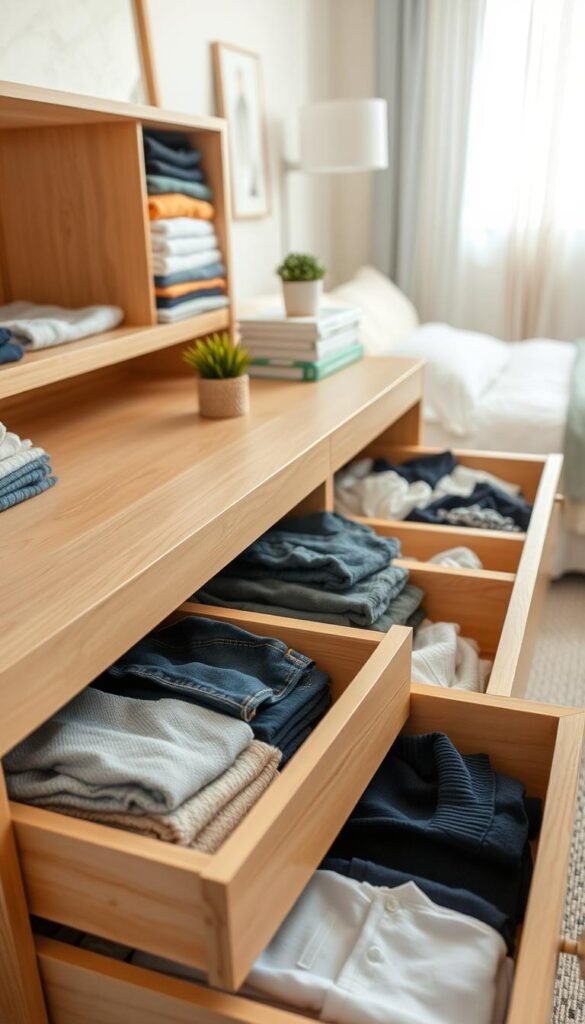
The file-fold method makes clothes stand tall so you see each item. Use daily-use drawers for essentials. Move bulky or rare items to other spots so main drawers breathe.
We will add simple dividers and SKUBB-style boxes only where they help. A hanging shelf can free hangers and protect sweaters. You’ll get a gentle, step-by-step system with short checklists and tiny routines.
Key Takeaways
- You will set up a calm system that saves time each morning.
- File-folding lets pieces stand and stay visible.
- Keep daily pieces closest and move rare items elsewhere.
- Add dividers and boxes only where they truly help.
- Follow short daily and weekly routines that take minutes.
Why this simple system works for calm, clutter-free drawers
One quick step brings visible peace to a room. It is gentle. It is doable. You do not need a full weekend. You need one focused pass and a little patience.
Quick wins you can see in minutes
- Empty one drawer. Wipe it clean. Return only favorites.
- You will notice a clear change fast. That momentum makes more tasks easier.
- Clear the top of your dresser and treat it as a small decor zone. A tiny tray holds daily essentials and reduces visual clutter.
- Group like with like so your brain stops hunting for things. Place most-used items where your hand lands first to save time each morning.
- Label gently if helpful. Labels help kids and guests follow the way you choose.
Try soft adjustments. If a fold style does not stick, switch methods. The best setup is the one you will use. Enjoy small wins in each room. They add up without pressure.
Dresser Drawer Organization
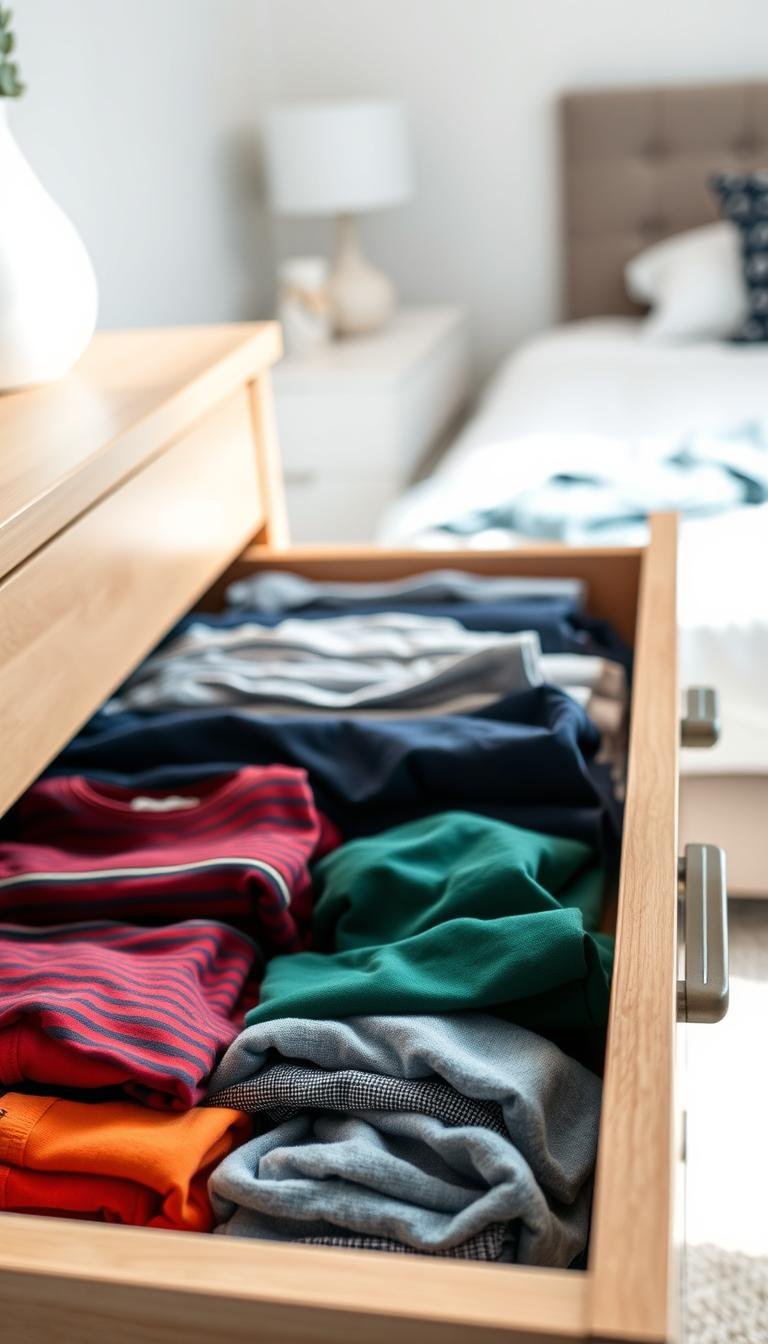
Begin by emptying a single unit so you can truly see what you own. This gives you a clear picture. It keeps choices calm. It prevents guesswork.
Prep: empty, clean, and gather laundry so everything is present
Empty each drawer fully. Wipe the interiors. Let the wood or liner breathe. Having all laundry in one spot helps you assign real space. It prevents an unseen pile from stealing room.
Declutter: gentle “keep, donate, relocate” decisions
Make soft choices. Keep what fits and feels like you. Set a donate pile for what no longer serves you. Use the “over a year” guide kindly. If you have not worn something in years, it may be ready to leave.
Relocate bulky jeans or sweatshirts to the closet or under-bed. That frees the main place for everyday pieces. Be honest but tender with yourself.
Sort: create clear categories by use and frequency
Sort by type: tees, tanks, long sleeves, undergarments, sleep, workout. Work duplicate categories together. Empty both and edit so you set one simple capacity.
Then sort by frequency. Put daily-use items up front. Move occasional pieces to lower-access spots. Group by color if it helps you quickly spot the ones you want.
End with intention: place each category back so your hand finds the right thing every time.
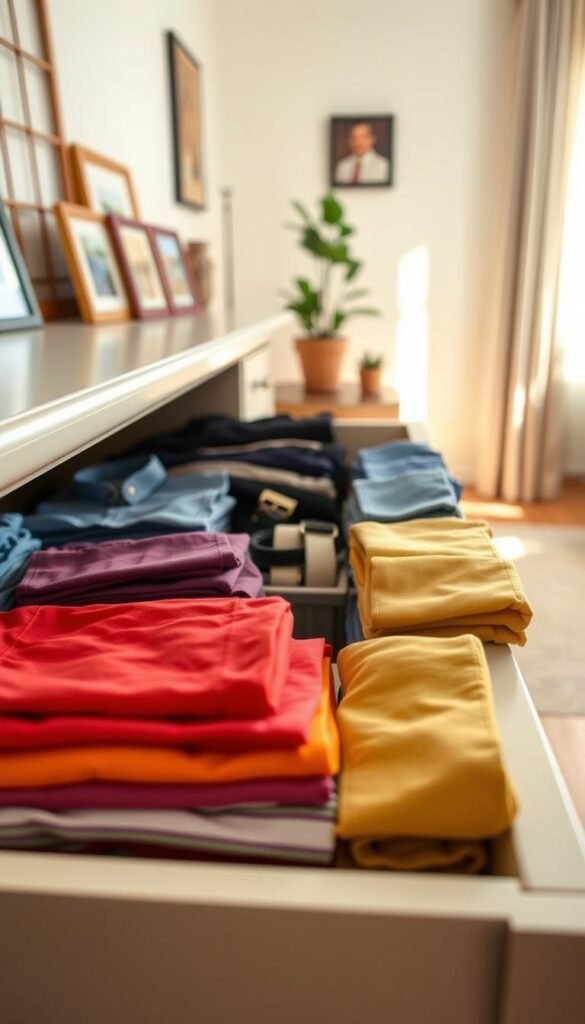
The File-Fold Method: a step-by-step folding routine
A steady rhythm helps—smooth, fold, and set upright for instant clarity.
Why this method works: file-folding makes small rectangles that stand upright so you see every piece at a glance. Use small bins for soft fabrics that need support.
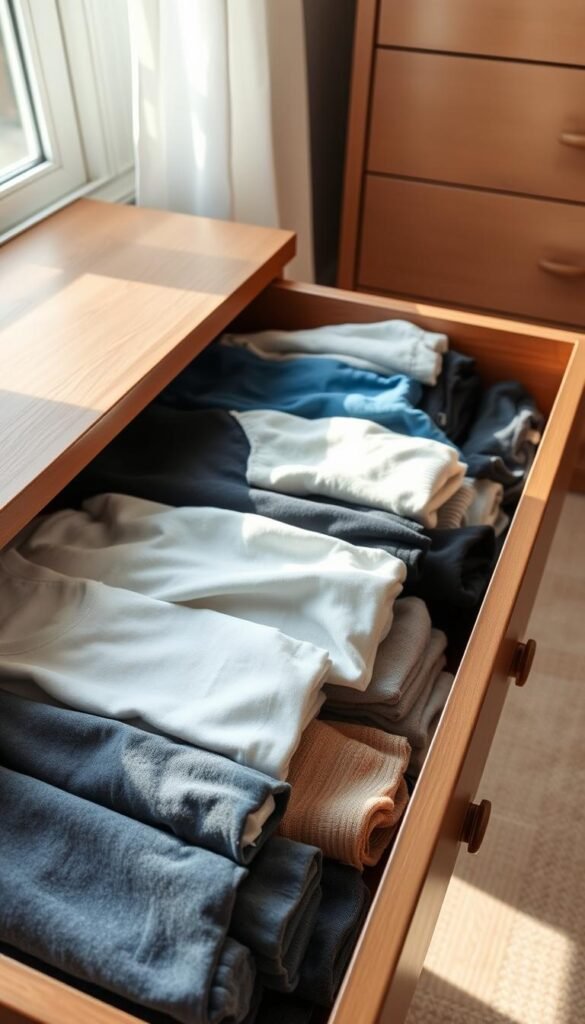
How to file-fold shirts, tanks, and tops
- Lay the shirt flat. Smooth once. Calm movements help neat folds.
- Fold sides toward the center to form a long rectangle. Tuck sleeves in.
- Fold from the bottom up into thirds or quarters until compact.
- Stand the piece on its edge in the drawer; it should hold itself up.
Adjusting for size: kids’ clothes, activewear, and soft fabrics
Add one extra fold for larger clothing so heights match your section. Use a small bin for soft activewear so pieces stay upright and easy to grab.
When to roll vs. file-fold for best fit
Roll when fabric collapses or when you pack for travel. File-fold for daily visibility. Keep folds consistent so your eye can scan and choose quickly.
“Fold small. Stand tall. Choose calmly.”
| Use | Best for | Quick tip |
|---|---|---|
| File-fold | Everyday shirts and tops | Stand pieces upright for easy scanning |
| Roll | Very soft fabrics, travel | Saves space; less visible in daily drawers |
| Small bin | Activewear, thin tank tops | Helps fabrics hold shape and stay tidy |
Design your drawer: dividers, organizers, and a simple layout map
Map the front-to-back zones before you add containers. This keeps choices clear and gentle. Start with a quick sketch on paper. Mark front, middle, and back so you can see reach and use.
Place high-use items up front; move bulky or rare-use items out.
Place high-use items up front
Put daily tees, socks, and underwear where your hand lands first. Keep the middle for often-used pieces. Move bulky or special-occasion items to a different dresser or storage bin.
Smart tools that help
Use adjustable dividers to frame each row so stacks do not topple. Add solid plastic organizers for socks and undergarments. Tiny inserts catch no-show socks and keep them visible.
- Sketch a quick layout: front for daily, middle for often, back for rarely used.
- Fit the height of folds so everything stands at the same level.
- Leave a finger-width gap so rows pull out easily.
- Use containers to help soft fabrics stand and to block sliding in wide drawers.
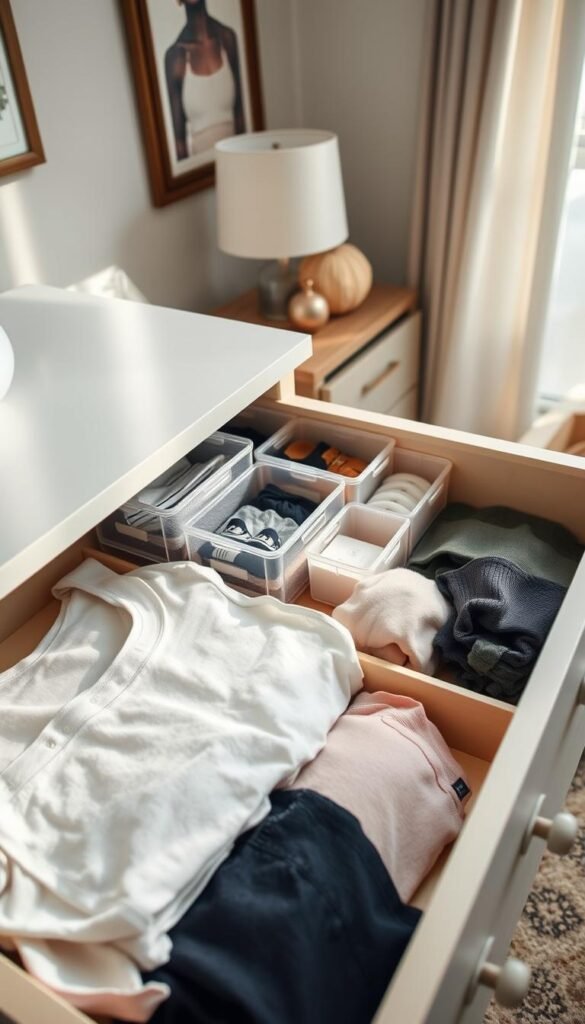
| Zone | Best for | Tool |
|---|---|---|
| Front | Daily tees, socks | Small plastic organizers |
| Middle | Workout wear, sleepwear | Adjustable dividers |
| Back | Shapewear, dress socks | Bins for off-season storage |
Label lightly. Use tags like “tees,” “socks,” and “sleep.” Labels make put-away quick and calm. Revisit your map after a week. Tweak any section that feels tight or messy.
Daily, weekly, monthly: easy maintenance that sticks
Two minutes a day can keep your storage neat and your mind lighter. This gentle habit protects your calm. It makes the system feel doable on busy mornings.
Daily two-minute reset
After you set laundry down, file-fold and put away one small stack. Two minutes. Nudge any leaning row upright. Smooth edges with a quick swipe.
Weekly light tidy
Re-file strays and pair socks. Scan drawers and spot-check categories. Check if any items or clothing wandered to the wrong spot.
Wipe the top so the surface stays clear. Remove any itchy or ill-fitting pieces kindly.
Monthly refresh
Rotate off-season clothing to the back or to alternate storage. Reassess space and tighten a fold or remove one or two pieces to keep breathing room.
Donate one item you no longer reach for. Let the space feel lighter.
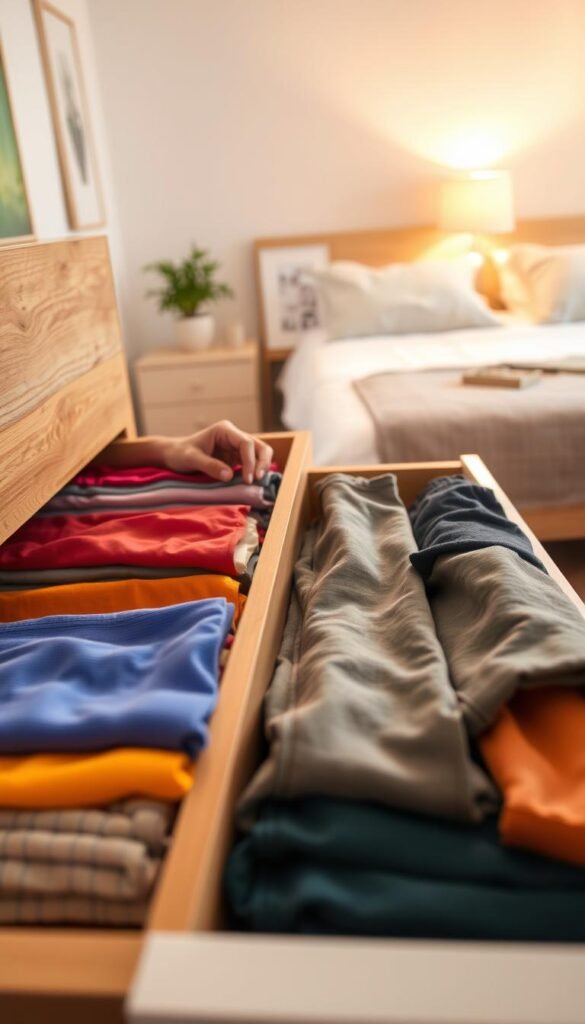
- Seasonal: shift clothes up or down so daily reach stays easy.
- Ongoing: simplify the steps if any routine feels heavy.
- Keep tops clear to make resets faster each day.
Room-by-room examples to extend the system
A few simple swaps make other rooms feel tidier without extra effort. These quick wins keep your home calm. Use the same gentle folding and small bins you already trust.
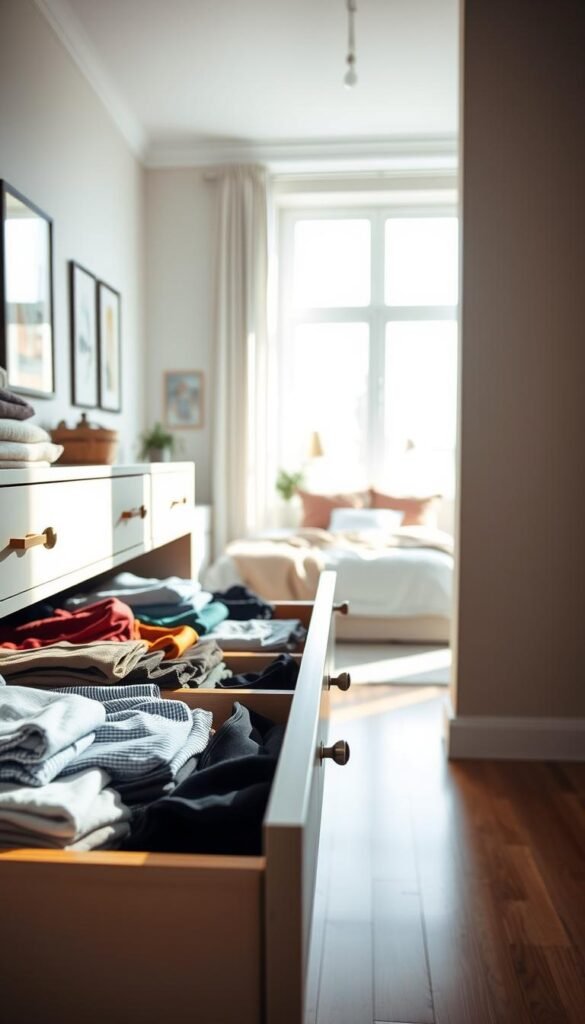
Kitchen
File-fold dish towels so you see each one. Use shallow bins and acrylic organizers to keep rows upright.
Add an in-drawer knife block to free counters and improve safety.
Pantry
Group linens and aprons by task. Label shelves and clear bins so resets take seconds.
This simple shelf system makes storage feel effortless.
Bathroom
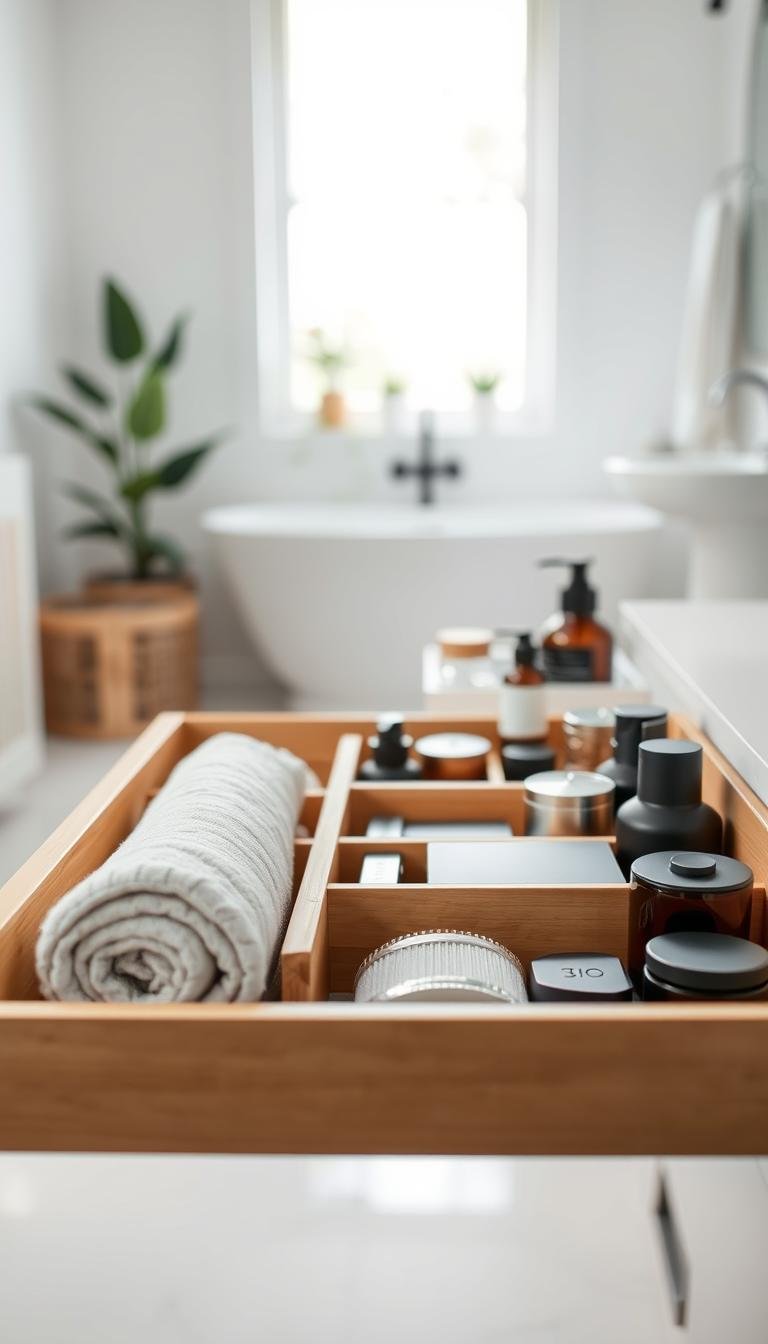
Pick narrow acrylic bins or GODMORGON-style boxes to stop tipping. Small dividers hold hair tools and skincare upright.
Keep washcloths file-folded so you can grab one with a dry hand.
Bedroom and closet
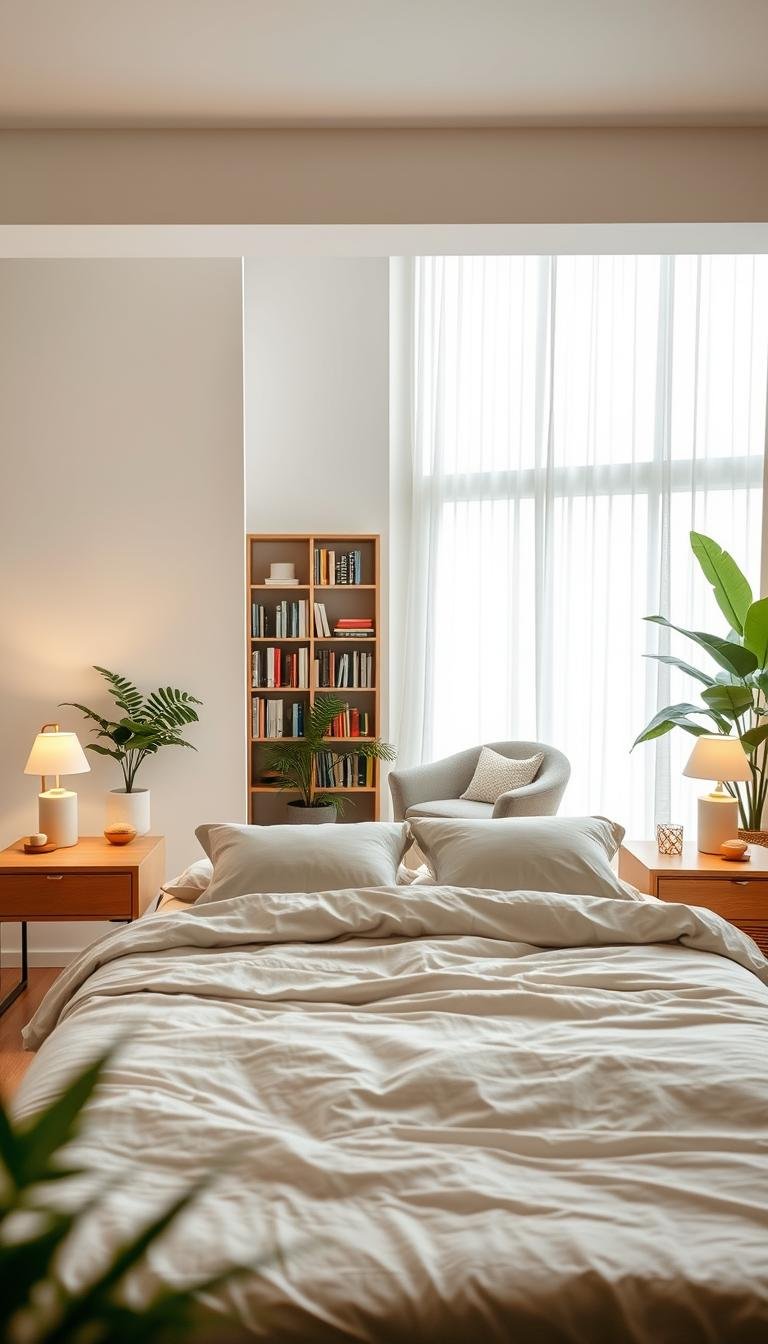
Use SKUBB-style boxes for socks and undergarments. Give pajamas one drawer and move off-season clothing to the back or a lower shelf.
Entryway and extras
Set tiny labeled sections for gloves, hats, and pet gear so leaving the house is calm.
In the office or craft room, label the bottom of clear organizers so pens and clips return easily.
Dining room
File-fold placemats and runners. Stack napkins by color for fast table setting.
- Small changes. Big relief.
- Keep labels gentle. Keep routines brief.
- One tidy habit in each room becomes your home’s quiet system.
Troubleshooting: small spaces, deep drawers, and overstock
When your storage feels tight, small shifts can free real breathing room. This section gives calm fixes you can try in minutes. Nothing drastic. Just kind edits to help your daily routine.
Quick fixes to try
- If a drawer feels tight, set a simple capacity cap for that category and honor it. One cap per place keeps things steady.
- Move rare-use dress socks or shapewear to another bin or a different dresser. Shift rarely worn items to free daily space.
- For deep drawers, add taller dividers or stack a shallow box to make a usable second row only if pieces stand on their own.
- If clothes topple, add a small bin for support or tighten the fold slightly. Organizers help soft fabrics hold shape.
- Use the bottom zone for heavier items but keep them under your cap. When you have not worn something in years, consider releasing it.
- Practice “one in, one out” when capacity is full. Re-check fit after laundry day and adjust fold height so everything stands neatly.
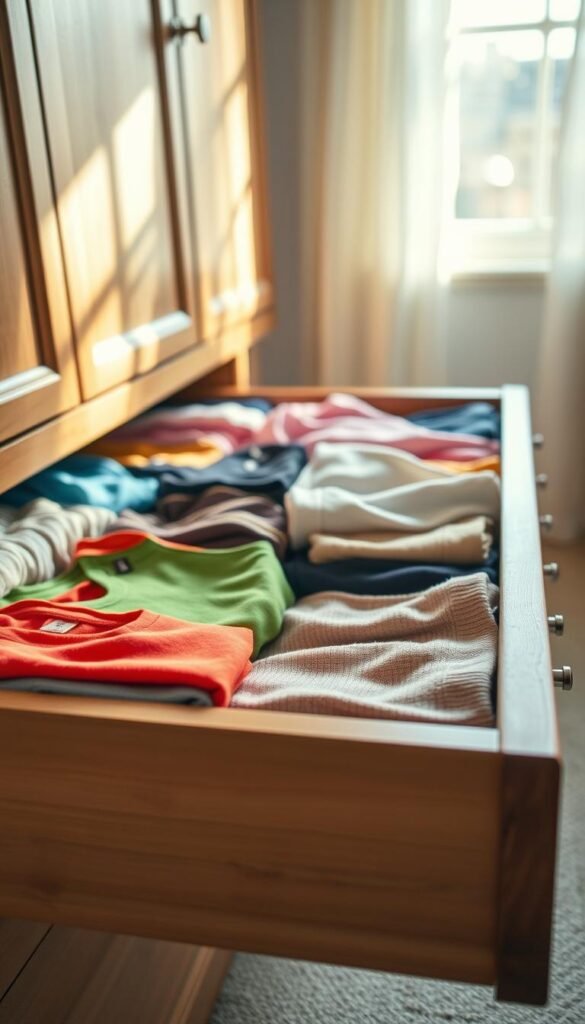
Gentle checklists and routines you can copy today
A tiny, repeatable reset after laundry keeps things calm all week. Use the short lists below to make that reset painless. Do them the same day as laundry and you save time each morning.
Five-step quick reset after each laundry load
- Empty clean laundry onto a surface.
- File-fold shirts, tops, and tank tops into neat stacks.
- Pair socks and place them in small containers.
- Return pieces to the right dresser drawer or bin.
- Smooth rows and close gently.
Weekly dresser checklist for serene drawers
- Re-file any things left on top.
- Remove one item you don’t wear and set aside for donate.
- Wipe the surface and confirm each drawer has breathing space.
- Scan the closet and move seasonal pieces so daily reach stays easy.
- Adjust one fold height if a row leans.
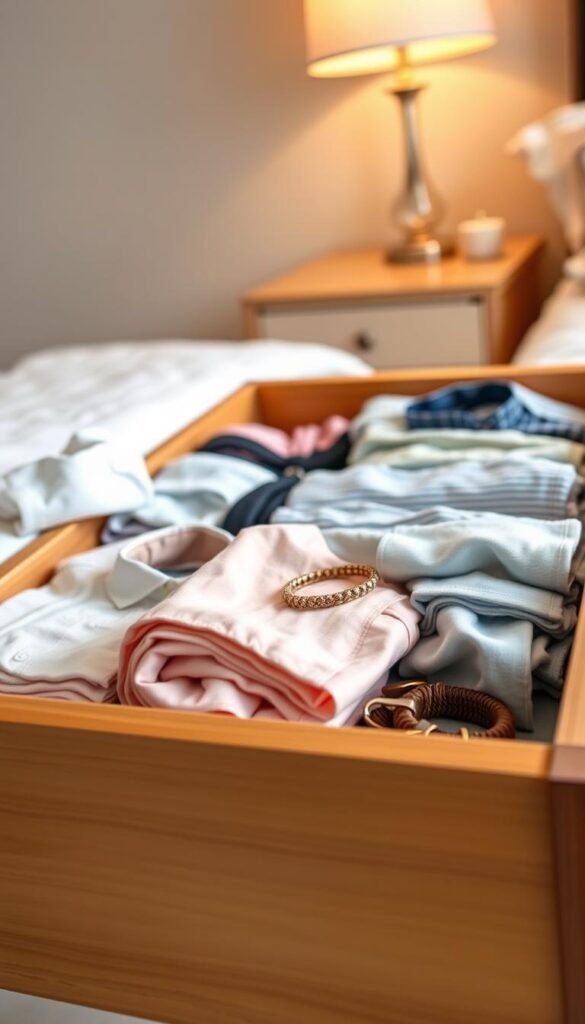
| Action | Frequency | Benefit |
|---|---|---|
| Quick reset | Each laundry day | Less morning search time |
| Weekly tidy | Once a week | Maintains space and calm |
| Monthly rotate | Monthly | Makes room for off-season pieces |
Ongoing: Use the file-fold method. Set small caps when categories overflow. If you have not used a piece in years, consider donating it with care. Keep two easy outfits in front for busy mornings.
Conclusion
Finish with one calm act: clear a single top space and return only what you love. This small step saves time and protects your energy each day.
You now have a clear system. Your dresser feels lighter. The right clothes live in the right place. File-folding and a few drawer dividers keep rows neat and visible.
Give each drawer a job. Rotate off-season pieces to the back or closet. Honor a simple capacity cap so piles do not grow.
Start with one dresser drawer today. Tackle one small pile. Return tops, tanks, or a single favorite and enjoy the calm that follows.
FAQ
What is the file-fold method and why is it gentle on my routine?
The file-fold method arranges clothes upright so you can see each piece. It reduces rummaging. It saves time. You spend less energy choosing outfits. The method feels calm and manageable. It fits busy days and messy moments. Small, consistent steps make this simple system stick.
How do I start if my drawers are full of mixed items?
Begin by emptying one unit completely. Sort into keep, donate, and relocate piles. Clean the space. Group items by use — shirts, socks, undergarments, tanks. Work in short bursts. You’ll avoid overwhelm and make steady progress.
Which items are best file-folded and which should be rolled?
File-fold shirts, light sweaters, and tank tops that keep shape when folded. Roll soft or stretchy pieces like activewear or bulky knitwear to save vertical space. Try both. Use what keeps things neat and visible.
How do I handle small things like socks and underwear?
Use small bins or dividers to keep similar pieces together. Pair socks and stack undergarments upright so you can pick easily. Label sections if that helps. Containers make small items feel tidy and intentional.
What tools are simple but effective for making the system last?
Adjustable dividers, shallow bins, and simple labels work well. You don’t need fancy gear. Choose breathable fabric bins for soft pieces. Use clear or neutral tones to keep the space calm. Tools should support daily habits, not complicate them.
How often should I tidy to keep this sustainable?
Do a two-minute reset every day when laundry lands. Do a light weekly tidy to re-file strays. Once a month, rotate seasonal items and donate one piece that no longer serves you. Small rhythms keep the space peaceful.
I have deep or oddly sized storage. Any tips for awkward spaces?
Layer with bins and risers to create smaller zones. Use dividers to stop items from shifting. Consider folding thicker pieces and stacking at the back. Set a capacity cap. Fewer, well-chosen items feel calmer than a full space.
Can I use this system outside the bedroom?
Yes. File-folding suits towels in the kitchen, pantry linens, and bathroom cloths. Shallow bins help at the entry for hats and gloves. The approach adapts to any small space where visibility and easy access matter.
How do I decide what to donate without guilt?
Ask simple questions: Have I worn this in a year? Does it fit my life? Is it comfortable? If the answer is no, let it go. Keep one item you love. The goal is ease, not perfection. Donation frees space and reduces decision fatigue.
What if items keep toppling over after folding?
Tighten the fold and shorten stacks. Add a small bin or divider to steady rows. Move less-used or bulky pieces to another place. Small fixes prevent recurring mess and protect the calm you’ve built.