25 Kitchen Organization Hacks for Small Spaces
You juggle a lot each day. You want a calm home that works for you. Simple systems can bring that peace. Quick routines ease the load and make daily life softer.
Small changes add up. Create zones for prep, cooking, and cleaning so tools stay within reach. Add shelf risers and pull-out shelves to open up vertical space in cabinets and drawers. A “use-it-soon” bowl helps stop food piles in the fridge and on the counter.
We focus on storage that fits tight spaces. Bins, clear containers, and a slim wine rack for bottles turn odd nooks into useful spots. Hooks on a door or wall hold utensils, boards, and lids. Pulling a cart or a shelf forward saves bending and searching.
Key Takeaways
- Small routines cut daily clutter.
- Zones make meal prep smoother.
- Shelf risers and pull-outs double usable space.
- Bins and clear containers keep food visible.
- Hooks and racks free counter space.
- Fast wins build calm and confidence.
Why Small Kitchens Need Simple Systems
A few steady habits turn a tiny area into a smooth-working place.
Simple systems reduce decisions. They clear mental clutter. You waste less time and feel calmer.
Designated zones keep tools where you use them. Prep items live near knives and boards. Cleaning supplies stay by the sink. This grouping makes cooking intentional and faster.
Adjust shelves and add risers to stop overstacking. Shelves set at the right height save space and time. A repeatable drawer layout helps your hands learn where items live.
Keep surfaces open for work. One home for each item cuts clutter in tight areas. Start small. One cabinet or one drawer at a time builds steady progress.
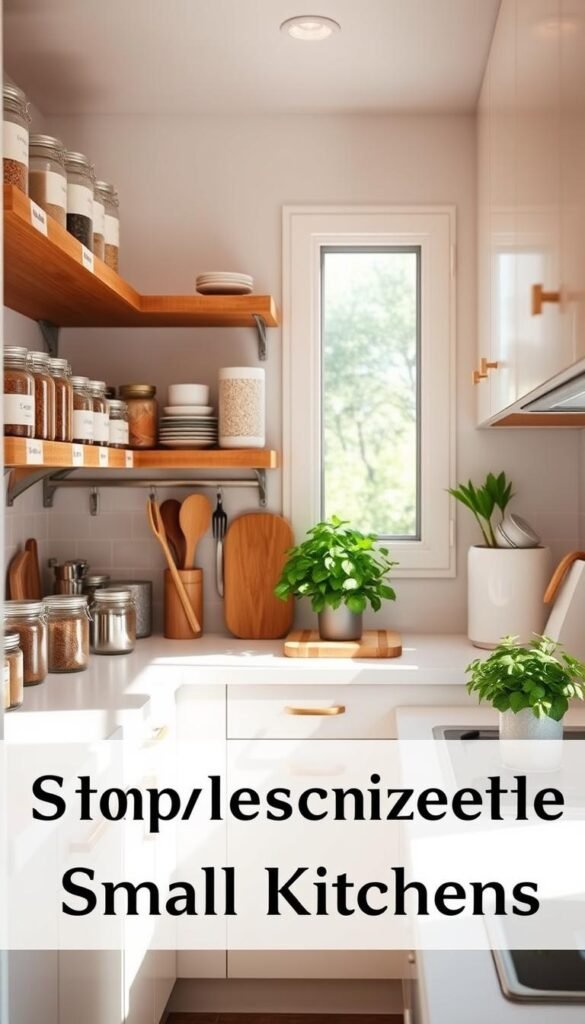
| Problem | Simple Fix | Benefit |
|---|---|---|
| Stacked shelves | Add risers or adjust shelf height | More usable vertical space |
| Lost tools | Repeatable drawer layout | Faster prep and fewer trips |
| Cluttered counters | Assign a single place per item | Clear work area and safer cooking |
Quick Wins to Clear Space Today
A short, focused reset can change how your space feels today. These steps take little time. They give visible wins that build calm without pressure.
Five-minute counter reset
Set a timer for five minutes. Put away stray items. Wipe the sink and main prep area. Keep the task small. You’ll finish fast and feel lighter.
Keep a small tray on the counter. Let only daily essentials live there. Everything else goes back to its home.
Two-bag declutter sweep
Grab two bags. Bag one is trash or recycle. Bag two is donate. Move fast. Don’t overthink each item.
- Clear duplicate water bottles. Keep the best few and donate the rest.
- Add a magnetic notepad to the fridge and jot needs in real time.
- Start a “use-it-soon” bowl for opened snacks and sauces. Finish those before buying more.
- Do one drawer quick sort: keep, relocate, discard. A small win fuels the next step.
End with a two-minute reset. Return tools to their zones. You’ll see an easy way forward tomorrow.
Kitchen Organization Hacks
Start by giving each activity its own spot so tasks flow without friction.
Design clear zones so you know where each task begins. Name four simple areas: prep, cooking, cleaning, and coffee. You’ll see where things belong at a glance.
Designate cooking, prep, cleaning, and coffee zones
Put knives, cutting boards, and towels near your prep area. Keep pots and spatulas by the stove. Store soap, brushes, and towels by the sink.
Set the coffee maker, mugs, and pods together. Mornings become calm and repeatable.
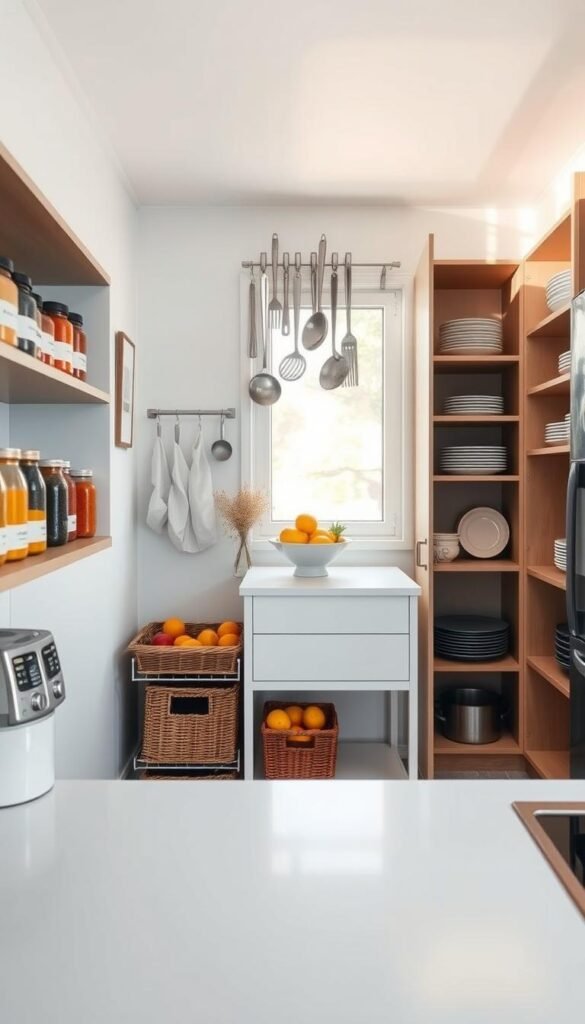
Remove bulky packaging and decant essentials
Clear boxes crowd shelves. Move flour, sugar, and pasta into stackable containers. This frees shelf space in your pantry.
Label lightly. A soft label system helps you and others return items to the right spot.
Create a “use-it-soon” bowl to prevent food pileups
Place a small bowl for near-expiry snacks and sauces. Add items as you spot them.
This gentle habit cuts waste and stops many little piles. Over time you’ll keep everything in reach and in use.
“Zone by function. Keep tools where you use them for effortless flow.”
One small change. One clear place. That’s enough to feel calmer and more in control.
Cabinets That Work Hard: Shelves, Risers, and Pull-Outs
Think vertical first to unlock hidden room in tight cabinets. Small, steady steps make storage calm. Focus on visibility and reach. You’ll save time and stress.
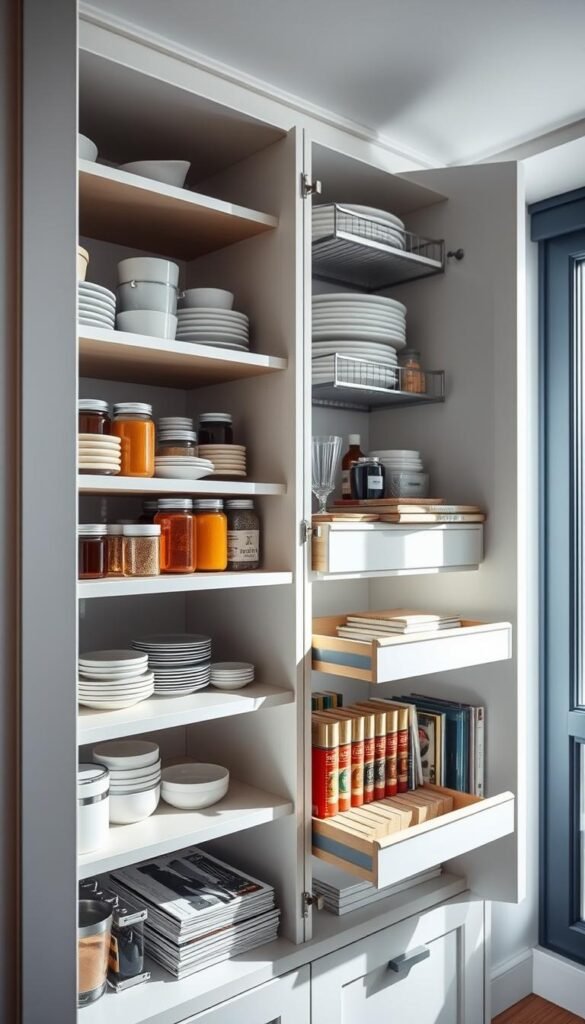
Add shelf risers to double vertical space
Measure the cabinet height. Then add risers to use the gap above plates and jars.
Shelf risers increase capacity by creating two usable layers. This keeps items visible. You avoid precarious stacks and wasted space.
Use pull-out shelves for deep cabinets
Pull-out shelves stop the back-of-cabinet shuffle. One smooth glide shows what you have.
Install slides in deep lower cabinets to make pans and small appliances reachable. It’s a gentle upgrade with big returns.
Store seasonal or occasional items up high
Keep special bakeware and holiday pieces on the top shelf. You access them only when needed.
File trays and vertical dividers are great near the oven. They let you stand pans and sheets upright. No more sliding stacks or noisy clanks.
- Adjust shelf heights to fit tall containers.
- Add a slim cabinet or cart if you can. Even 12 inches adds useful room.
- Place cleaning towels near the sink side of a cabinet.
- Keep a small rack for lids or cutting sheets close to the oven for quick reach.
“Small changes to shelves and slides make daily tasks simpler and calmer.”
Smart Drawer Organizers and Dividers
Give each tool its own lane and your hands will learn where to reach. A calm drawer frees your counters. Small changes make daily tasks easier. Use simple parts that fit your life.
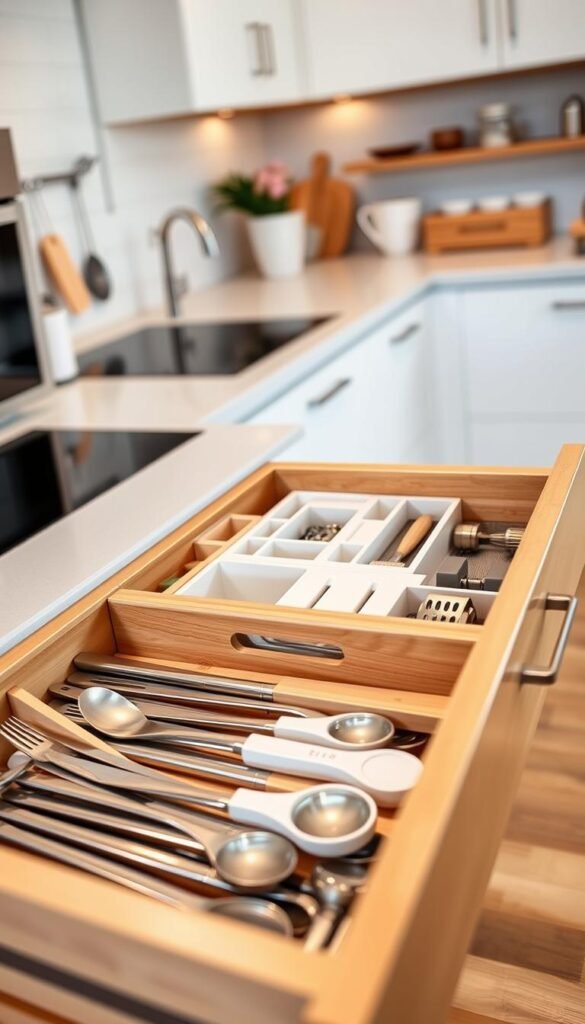
Adjustable dividers for utensils and tools
Dream Drawer Organizers fit 12–18 inch drawers and are spring-loaded for quick tweaks. Place dividers to form lanes for spoons, spatulas, and openers.
Start with one drawer. Empty it. Wipe it clean. Add a liner if you like easy wipe-downs.
Shallow bins for small items and flatware
Use InterDesign Linus shallow organizers (2 inches deep) for forks and small tools. Their grippy feet stop slipping. Fit bins snugly so nothing slides.
- Empty one drawer and clean it.
- Add adjustable dividers to create clear lanes.
- Drop in shallow bins for small items and flatware.
- Use bamboo boxes for foil, wax paper, and parchment paper to keep wraps tidy.
- Group like tools: prep, baking, openers. Keep an overflow box for rare gadgets.
Revisit in a month. Adjust dividers as your habits settle. You’ll gain calm, clear space, and faster mornings in your kitchen.
“One small drawer done well makes the rest feel possible.”
Knives and Cutting Boards: Safe, Slim Storage
A safe, slim plan for knives and boards keeps counters clear and hands calmer. You want quick access and less risk. Keep blades off the worktop and near your prep zone.
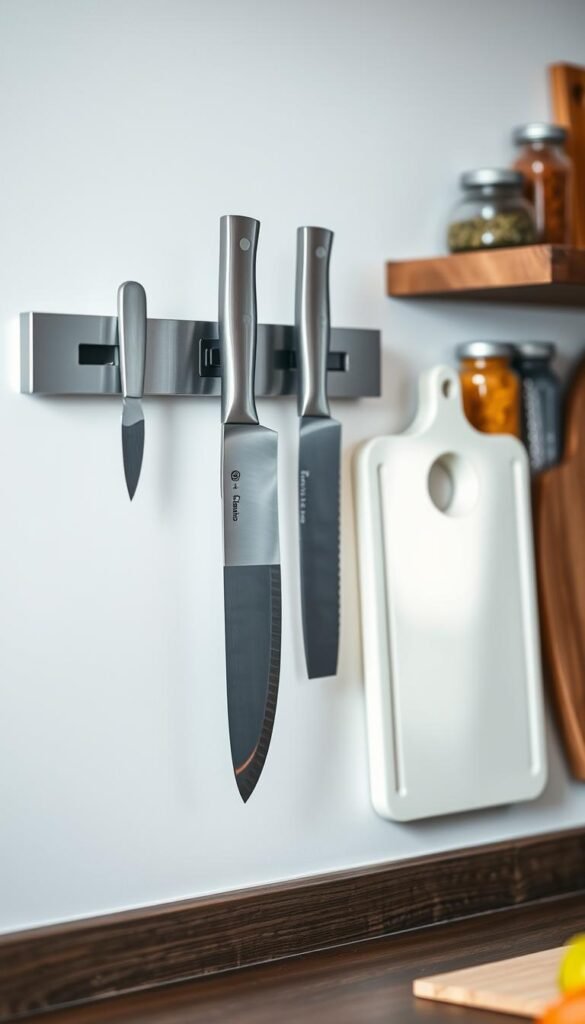
Magnetic strips for wall or inside a door
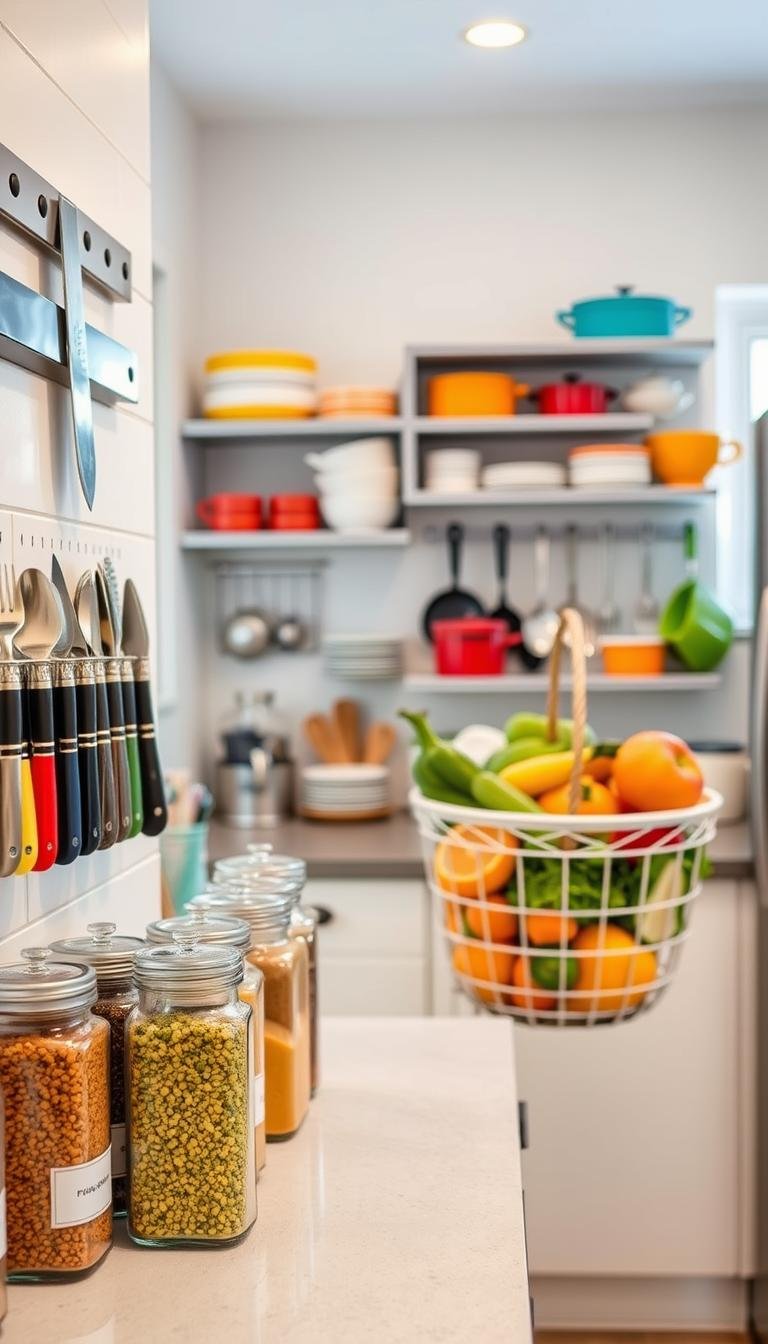
Mount a wood magnetic knife strip on the wall. The Benchcrafted Mag-Blok is gentle on edges and comes in 12–18 inch lengths. It saves counter space and protects blades.
Prefer inside a cabinet? A Modern Innovations stainless bar fits the inside of a cupboard door with shorter screws. It works for small tools too.
In-drawer and blade-guard options
No wall space? Choose an in-drawer knife tray. The Wüsthof 7-Slot tray fits drawers at least 3¼ inches deep and cleans easily thanks to open gaps.
Store loose knives with Messermeister Edge-Guard blade guards. They protect fingers and blades. Safer storage for busy days.
File boards upright
File cutting boards upright in a slim rack. They dry better and are easy to grab. Keep one small board by the sink for quick jobs and larger boards near your prep area.
- Keep knives close to prep to reduce steps.
- Use blade guards when you must store blades loosely.
- Review stored items every six months and remove duplicates.
Pots, Pans, and Lids Without the Clang
A quiet system for pots and pans saves time and annoyance. You can protect nonstick surfaces and cut the noise with small steps. These moves keep cookware safe and within reach.
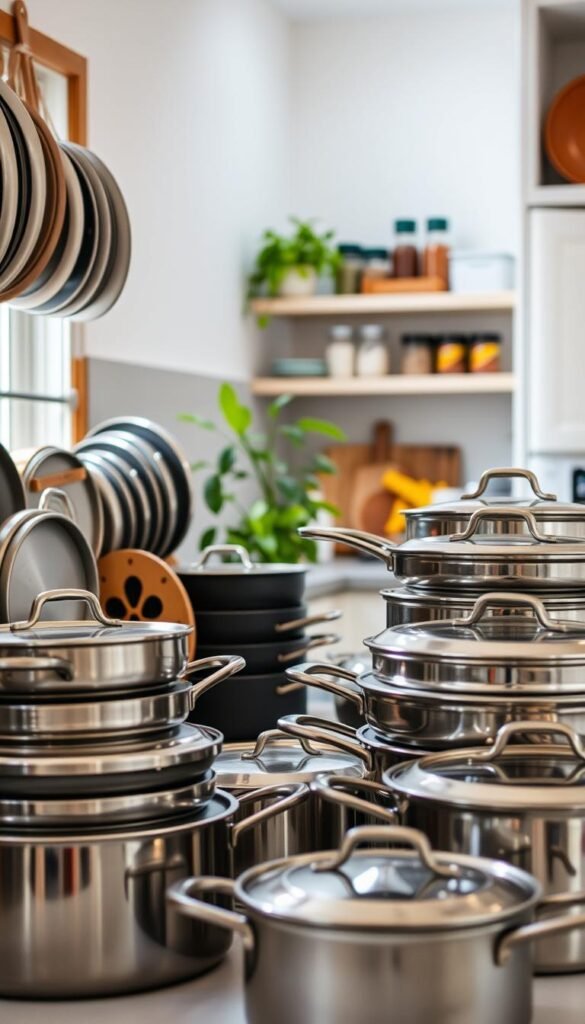
Nest gently and protect surfaces
Nest pans with soft liners between each piece. Felt or silicone mats stop scratches. This keeps nonstick coatings intact and reduces clatter.
Use upright dividers and peg systems
Install dividers or a peg system so each pan has a slot. Thin pans stand up instead of stacking. You avoid the loud pile-ups and find the pan you need fast.
Stand lids and bakeware in adjustable racks
Use an adjustable rack to hold lids, sheets, and cutting boards upright. One pull shows all lids. No more shifting stacks.
| Problem | Fix | Benefit |
|---|---|---|
| Scratched nonstick pans | Soft liners when nesting | Longer cookware life |
| Loud stacked lids | Adjustable lid rack | Quieter, faster access |
| Deep cabinet avalanches | Pull-out shelf | See all items at once |
- Place heavy pots low for safe lifting.
- Keep daily pans at the front of shelves.
- Keep one roasting rack near sheets and boards.
- Review seasonally and remove worn pieces.
- Take advantage of vertical space with a narrow rack for lids or trays.
“Upright storage and soft liners make cooking less noisy and more joyful.”
Pantry Power: Bins, Baskets, and Labels
Give each food type a simple home and your pantry will work for you. Small choices make shelves calmer. You spend less time hunting. You gain usable space.
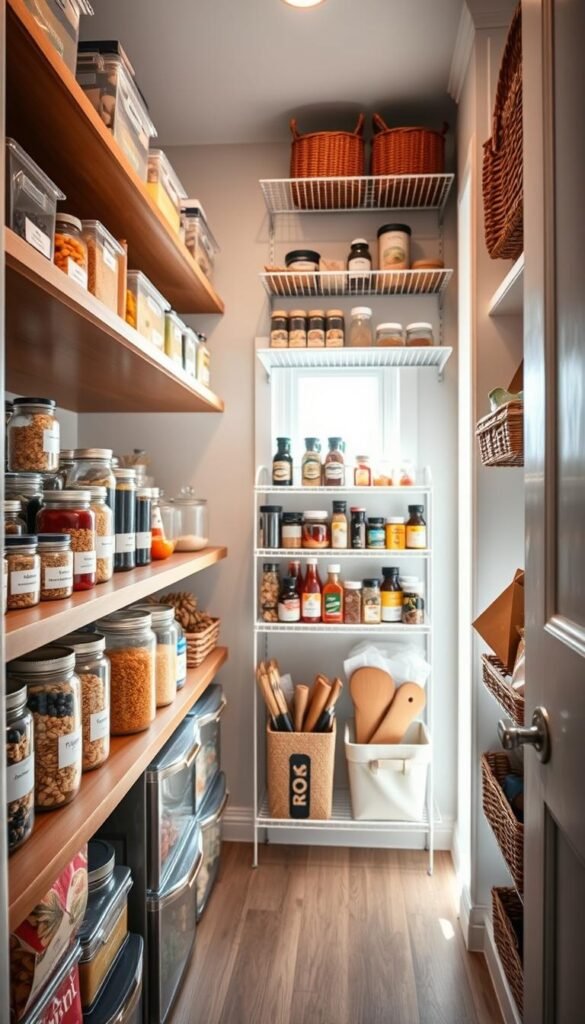
Group like items; assign one bin per category
Set simple categories: breakfast, baking, snacks, grains, cans. Use one bin per category. This helps you keep everything in the right place.
Use tiered risers for cans and spices
Tiered risers bring cans and spices into view. Place risers on deep shelves so back rows are visible. A small riser saves a lot of time.
Track instructions and expiration dates on containers
Decant bulky dry goods into clear containers. Use an adhesive card sleeve on each container to hold cooking notes or dates. Make sure expiration dates are visible. A simple label or card keeps food rotation easy.
- Keep a “refill later” spot for partial bags that won’t fit in containers.
- Use a wine rack to store reusable bottles sideways. They stay neat and stable.
- Label lightly. Short words help everyone return items to the right bin.
Fridge and Freezer Flow
A tidy fridge helps you cook without the scramble. Small, gentle steps improve what you see. That makes decisions faster and reduces waste.
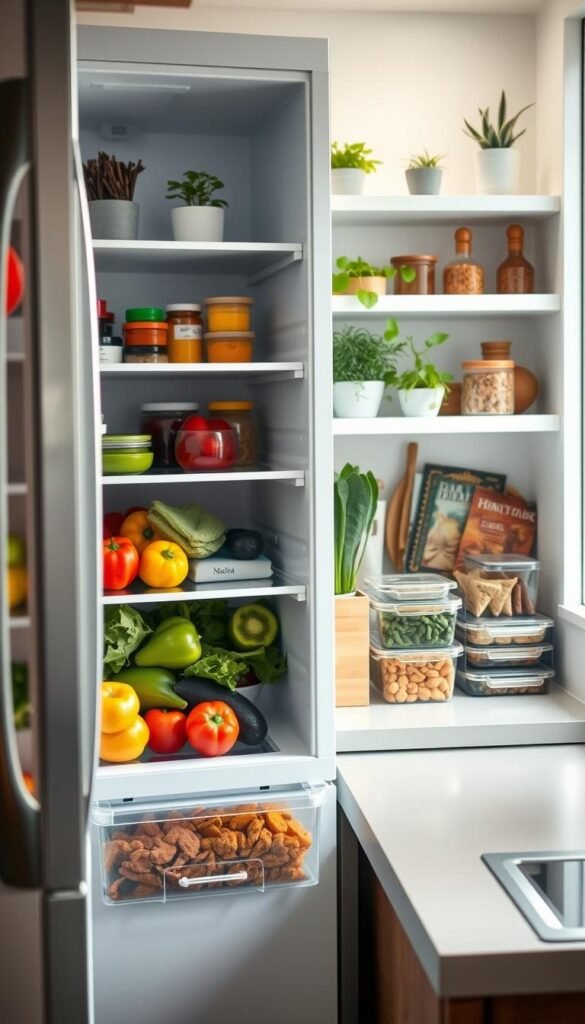
Clear bins for snacks and produce
Assign clear bins for produce and snacks. You see what you have and eat it in time. Keep one “eat first” bin for near‑expiry food.
Use containers that stack. They save room and keep items visible.
Use a can dispenser to save shelf space
Place a can dispenser on a shelf to stabilize cans and free up space. It stops rolling and makes the front can easy to pull.
Keep leftovers on the middle shelf. They are easy to spot and finish.
- Take advantage of adjustable shelves to fit tall bottles without cramming.
- Add a small lazy susan on a deep shelf for jars and sauces.
- Keep raw proteins low and sealed to protect produce and prevent leaks.
- Do a quick weekly check. Toss expired items and plan meals around what you have.
“Small bins and one steady habit make the fridge feel calm and useful.”
Countertop Calm: Trays, Crocks, and a Lazy Susan
A single surface can be calm if you limit what lives there. Choose a small system and keep to it. A tidy counter gives you room to work and less to clean.
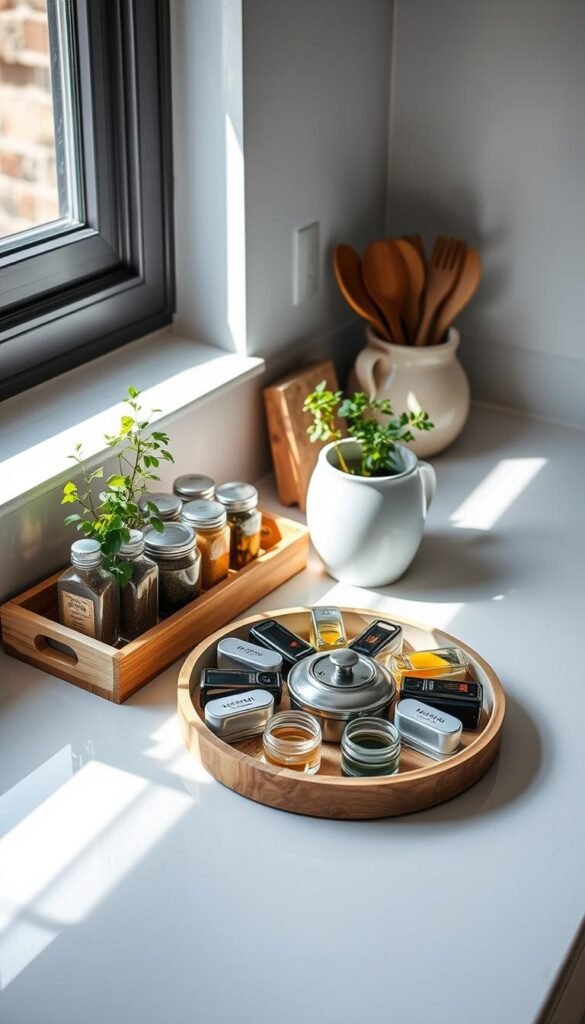
Corral daily appliances on a tray
Use one tray to corral daily appliances. The tray makes it easy to move them when you need counter space. Wipe under the tray. Your surface stays clean with little effort.
Utensil crocks keep tools handy without clutter
Pick a stoneware crock for the utensils you reach for each day. Choose two sizes. One holds cooking spoons. One holds small tools. This keeps drawers from overflowing and keeps essential items visible.
- Keep only essentials out. Return extras to drawers or cabinets for storage.
- A divided lazy susan can hold pods, tea, or small snack packs.
- Store a slim rack for cutting tools inside a cabinet to keep surfaces open.
- When guests arrive, lift the tray and tuck it away. Quick reset. No stress.
This is a gentle solution. Less out means more room to cook your way. One small habit changes the feel of the whole space.
Make Walls and Doors Do More
Make the most of vertical surfaces so your small space feels calmer and more capable.
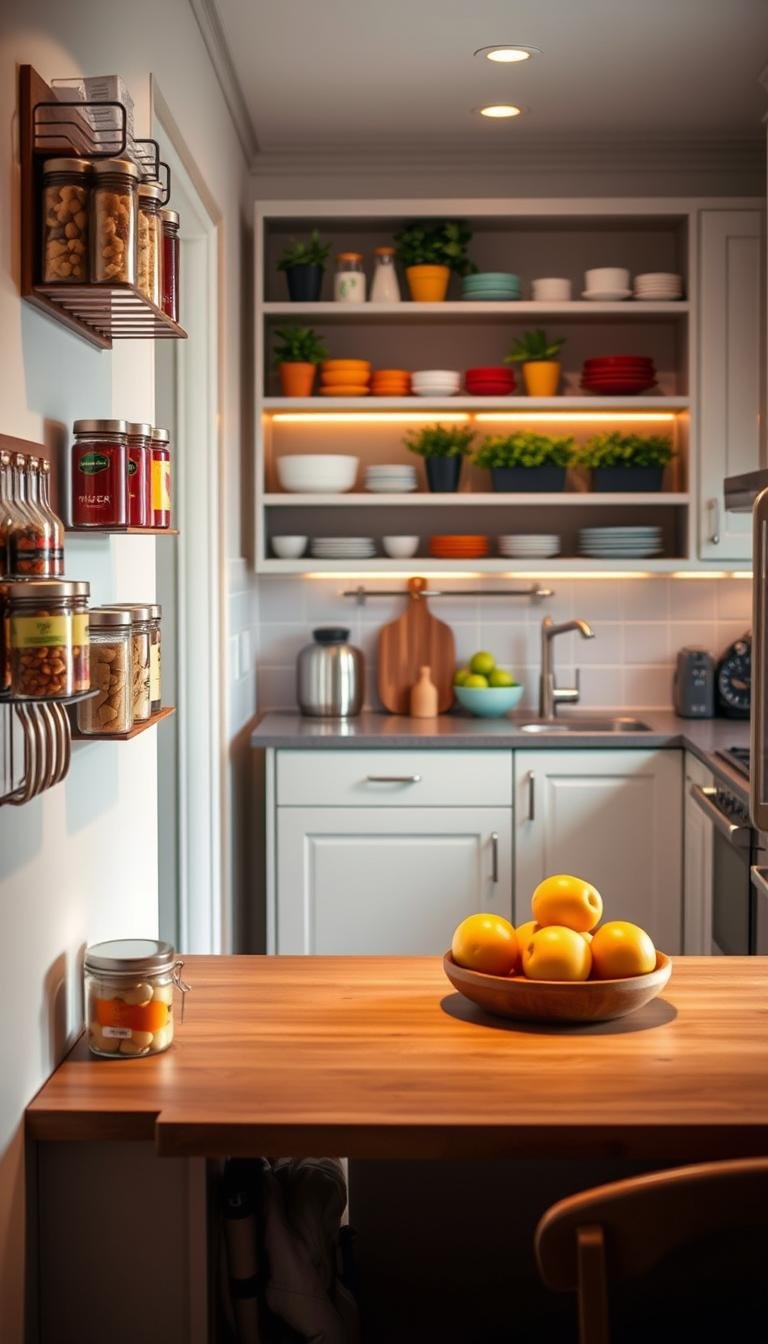
Install cup hooks under cabinets for mugs and light utensils. BronaGrand screw-in cup hooks are easy to fit. They keep mugs within reach. Counters stay clear. Use just a few hooks. A tidy line looks calm.
Use the inside of cabinet doors
Mount a slim rack on the inside of a cabinet door for wraps, foil, and lids. It keeps these flat items tidy. Use shorter screws if space is tight.
Take measurements first. Doors must close without bumping stored items. Label the rack if family members will return items.
Mount a magnetic bar for tools
Fix a slim magnetic bar to a wall or inside a door. It holds measuring spoons, small scissors, and metal tools. This frees drawers and keeps tools visible.
- Keep heavier items in cabinets. Walls and doors work best for lightweight storage.
- Choose a tidy layout on the wall. Fewer hooks used well beat a crowded line.
- These small shifts add storage without taking floor space.
| Surface | Best use | Tip |
|---|---|---|
| Under cabinet | Mugs, small utensils | Use BronaGrand screw-in cup hooks; space evenly |
| Inside cabinet door | Wraps, foil, lids | Install slim rack; measure for door clearance |
| Wall or door | Light metal tools | Mount magnetic bar; use short screws inside doors |
“Take advantage of vertical surfaces with care. Keep it simple. Avoid a cluttered look.”
Under-the-Sink Strategy: Cleaning Supplies and Compost
Your sink cabinet can be a calm, useful zone with a few small swaps. Keep it safe and simple. Small moves free up space and make chores easier.
Stacking drawers and clear lanes
Place stacking drawers for sponges, brushes, and extra bags. Nothing gets lost. Drawers keep tiny items tidy and easy to reach.
Label softly — “wipes,” “brushes,” “bags.” Calm and clear returning habits follow.
Tension rod for spray bottles
Fit a spring tension rod across the cabinet. Hang spray bottles from hooks. You free space below for small bins and a compost container.
Compact compost and drip control
Choose a compact compost bin with a tight lid. It can sit on the counter or under the sink. Bag and freeze scraps if space is tight.
Keep a small rack or tray to catch drips. It protects the cabinet base and keeps things dry.
- Keep only a few light, multi-purpose cleaning supplies here.
- Store dish towels in a dry basket and rotate clean to front.
- Do a monthly check to use up cleaners before buying more.
| Tip | Why it helps | Placement |
|---|---|---|
| Stacking drawers | Corral small tools and bags | Under sink, front |
| Tension rod | Frees floor space below bottles | Across cabinet width |
| Compact compost bin | Reduces trash volume and odors | Counter or under sink |
“Small, steady systems under the sink make daily tasks lighter and keep your space calm.”
Water Bottles, Wine, and Odds and Ends
Make one small system for bottles and lids and your counters breathe. Create simple homes that keep everyday items within reach. Small changes stop tiny piles from turning into a big mess.
Use a wine rack to store bottles on their sides
Lay reusable bottles on their sides in a wine rack. This keeps them from tipping and saves shelf room.
- Lay water bottles on their sides in a wine rack. No more falling stacks.
- Group lids with their bottles. A small pouch or elastic band keeps sets together.
- Store rarely used entertaining wine higher up. Daily bottles stay low and easy to grab.
Label a bin for lunch gear and food containers
Keep one labeled bin for containers, wraps, and small ice packs. Place it at eye level in the pantry or a lower cabinet for quick reach.
- If sets are mismatched, keep the best pieces and donate the rest.
- Reserve one small shelf for party extras and clear it after events.
- A calm home for odd items prevents clutter spillover.
| Item | Best Spot | Why it helps |
|---|---|---|
| Reusable bottles | Wine rack on shelf | Prevents tipping; uses vertical space |
| Lunch containers | Labeled bin in pantry or cabinet | Keeps sets together; quick grab-and-go |
| Entertaining bottles | Top shelf | Out of the way until needed |
| Odds and small tools | Small reserved shelf | Stops clutter spread after gatherings |
“Simple homes for small items make your daily flow calmer and faster.”
Daily, Weekly, Monthly Routines
Gentle rhythms keep clutter from returning. Small, repeatable actions protect your calm. They save you time and make the most of your space. This is a soft, realistic plan you can follow without stress. Use visible bins and tiered systems to help maintain gains with minimal effort.
Daily steps you can do in five minutes
Put tools back in their zones. Wipe the sink and main counter. Check the “use-it-soon” bowl. Plan a snack or side around what’s in it.
Weekly checks that take 10–15 minutes
Do a quick scan of the fridge. Move near‑expiry items to the front. Tidy pantry bins and make sure labels still match. Sweep floors and do a light surface clean. These small actions save bigger chores later.
Monthly care: 30–45 minute reset
Pick one cabinet or drawer for a deep declutter. Wipe shelves and pull-outs. Swap seasonal items in or out. Over time, these short sessions keep your kitchen calm and easier to use.
- Daily: Put tools away. Wipe surfaces.
- Weekly: Fridge scan. Pantry tidy.
- Monthly: Deep declutter one space.
“Small, steady routines keep everything simple and kind to your schedule.”
Room-by-Room Micro Systems
Treat each area as its own little project and build calm in short steps. Small systems spread gently. They protect your time and reduce decision fatigue.
Kitchen and pantry: zones, bins, and risers
Keep your prep, cooking, and coffee zones clear. Use clear bins and risers so you see what you have fast. Label lightly. Rotate backstock low and move near‑expiry to the front.
Bathroom and closet: small bins, drawer dividers, door hooks
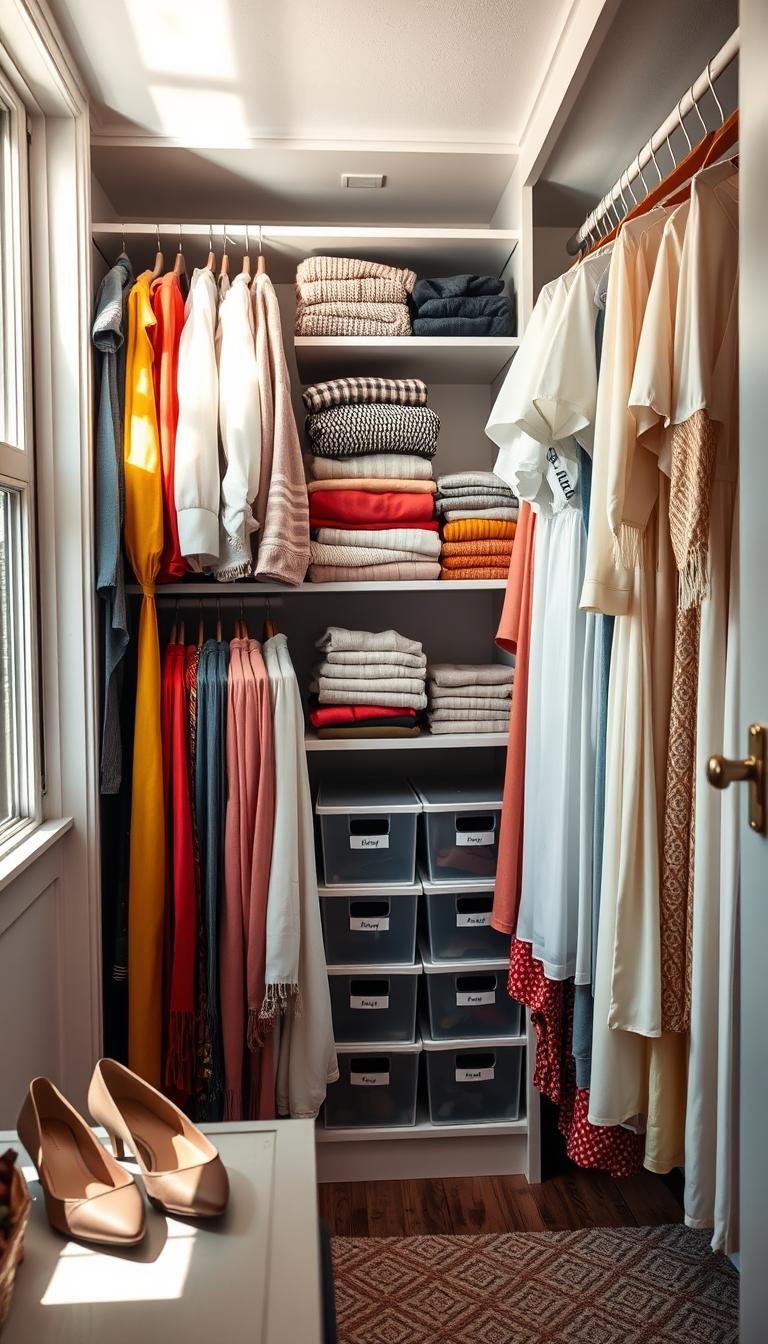
Fit shallow drawer dividers for daily items and toiletries. Add cup hooks or a magnetic bar inside doors for a spare knife or metal tools. Small bins under the sink keep cleaners and compost gear tidy.
Bedroom and entryway: catchall trays and labeled baskets
Place a catchall tray on the dresser. Empty it each evening. Use a slim rolling cart or a bench basket by the door for gloves, mail, and scarves. Add a small rack for umbrellas or totes.
- Rule: one container per category. Right-sized boundaries stop pileups.
- Start tiny. One drawer. One shelf. Reassess in a week.
| Room | Simple fix | Why it helps |
|---|---|---|
| Pantry | Labeled bins & risers | Faster finds; less waste |
| Bathroom | Drawer dividers & small bins | Daily items stay visible |
| Entryway | Slim cart or bench basket | Quick grab-and-go; fewer piles |
| Bedroom | Catchall tray | Clothes and small items return nightly |
“Tiny systems in nearby rooms make the whole home easier to live in.”
Conclusion
Gentle, repeatable steps help you keep counters, pantry, and fridge clearer.
Small steps create a calm kitchen over time. You do not need perfection. Give yourself permission to start slow.
Keep zones clear and containers simple. Use risers, dividers, and a few racks as a steady solution. Magnetic strips and drawer dividers make upkeep easier.
Refresh one shelf or drawer when you have a few minutes. Let labels guide items home. Review monthly and release what you do not use.
You have a clear way forward. One kind habit at a time makes the whole space feel lighter and more usable.
FAQ
How do I start when my space feels cluttered and overwhelming?
Start small. Do a five-minute counter reset. Put away dishes. Toss trash. Return one category of items to its home. This gentle habit builds momentum. Use a bin for things that belong elsewhere. Repeat daily and you’ll see calm returning.
What’s the easiest way to free up cabinet and drawer space quickly?
Remove bulky packaging and decant essentials into clear containers or jars. Group like items in shallow bins and label them. Use shelf risers to double vertical space. Pull-out shelves help with deep cabinets so you can reach the back without fuss.
How can I store cutting boards and knives safely in a small area?
Mount a magnetic knife strip on the wall or inside a cabinet door. If wall space is tight, use an in-drawer knife tray. File cutting boards vertically in a slim rack or divider so they’re easy to grab and tuck away without leaning against each other.
What are simple solutions for pots, pans, and lids to avoid the clang?
Nest pans where you can and protect nonstick surfaces with cloth or paper. Use pan dividers or a peg system for upright storage. Stand lids and bakeware in adjustable racks so everything sits neat and accessible.
How do I make pantry shelves work harder for me?
Group like items into baskets or bins. Assign one bin per category. Use tiered risers for cans and spices so labels are visible. Label containers and note expiration dates. This reduces waste and saves time when you cook.
Any tips for keeping the fridge and freezer organized?
Use clear bins for snacks and produce. Keep like items together. A can dispenser saves shelf space. Label shelves for meal prep sections. Rotate older food forward so nothing gets forgotten.
How can I keep countertops calm without hiding everything away?
Corral daily appliances on a tray or rolling cart. Use a utensil crock for tools you use most. A Lazy Susan makes oils, vinegars, and spices reachable and tidy. Keep surfaces functional and uncluttered.
What are smart hooks and wall solutions that save space?
Install cup hooks under cabinets for mugs and small utensils. Use the inside of cabinet doors to store wraps, lids, and cutting boards. Mount a slim magnetic bar for tools. These add storage without taking floor or shelf space.
How should I organize under the sink where cleaning supplies live?
Use stacking drawers for sponges and brushes. Add a tension rod to hang spray bottles. Keep a compact compost bin for food scraps. Group cleaning products in a caddy so you can grab them and go.
What’s a good system for bottles, wine, and random odds and ends?
Use a small wine rack for bottles stored on their sides. Label a bin for water bottles, lunch gear, and food containers. Store seldom-used items up high or on a cart to free up daily spaces.
How do I maintain order with realistic routines I can keep up?
Build short, regular habits. Daily: five-minute reset and wipe down. Weekly: fridge check, tidy pantry bins, quick surface clean. Monthly: deep declutter, shelf wipe, and swap seasonal items. Small consistent steps beat occasional big efforts.
Can small systems from the kitchen work in other rooms?
Yes. Use zones, bins, and risers in the pantry and mudroom. Add small bins and drawer dividers in bathrooms and closets. Place catchall trays and labeled baskets in the entry and bedroom. The same gentle approach brings calm everywhere.