
Monthly Cleaning Checklist (Room-by-Room Guide)
You are busy. You deserve a calm home.
This gentle guide offers a simple, room-by-room plan. Short tasks fit into your day. They save you time and worry.
Small systems make a big difference. Start with daily care for floors and counters. These quick wins stop mess from growing and keep the kitchen hygienic.
Weekly steps handle bathrooms, bedding, dusting, and trash. Monthly tasks reach deeper. Think grout, filters, baseboards, vents, and window treatments.
We use soft tools and safe methods. No harsh rules. No guilt. Just a clear plan you can adapt to your life.
Key Takeaways
- Use short, regular tasks to keep your home steady.
- Daily care prevents larger chores later.
- Weekly work supports monthly deep touches.
- One simple plan helps you know what to do each day.
- Track progress with a single list to see steady wins.
Start here: a calm plan for a tidy month
Begin with one simple rhythm you can keep all month. Small steps beat grand promises. You do not need long sessions. You need a plan that fits your life.

- Set four focus areas. Pick one room per week. This keeps time needs small and clear.
- Pick a daily anchor. Ten minutes every day for floors and counters. Waist-high down is the sweet spot.
- Add one weekly block. Sixty minutes for bathrooms, linens, dust, and trash. Split it if that helps.
- Do one appliance task weekly. A quick wipe of the dishwasher exterior or a filter check keeps things smooth.
Write your list on one visible page. Put it on the fridge. Share it with others at home.
- Choose short times of day that suit you.
- Assign one simple area to each person.
- Use a timer. Stop when it rings.
- Keep a small caddy of tools nearby.
Review each week. Notice wins. Adjust the plan for the next week. Progress matters more than perfection.
Monthly Cleaning Checklist
A short round of focused chores clears clutter and restores calm across rooms.
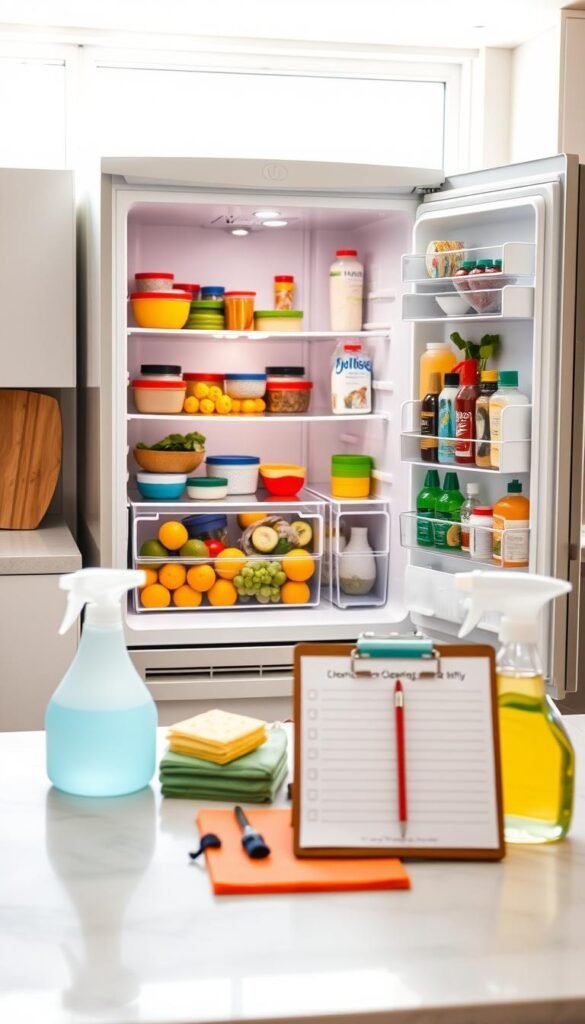
Kitchen: refrigerator, dishwasher, and counters
Empty and wipe refrigerator shelves and drawers. Toss expired items and wipe gaskets.
Clean the dishwasher filter. Run a hot cycle. Wipe counters and the sink rim.
Pantry: inventory, purge, and simple zones
Do a quick inventory. Group staples into simple zones like baking and snacks.
Discard stale items. Face labels forward so you can see supplies at a glance.
Bathroom: grout, glass, and gentle shine
Scrub grout lines with a soft brush. Wipe glass and chrome for a soft shine.
Clear the vanity. Wipe inside the medicine cabinet and switch plates.
Bedroom, Closet, and Entryway
Launder pillow protectors and mattress pads. Rotate the mattress if needed.
Do a five-minute closet edit. Dust shelves and free the floor space.
Sort shoes and outerwear. Wipe surfaces and let the entryway get fresh air when possible.
Whole-home touchpoints, appliances, and soft surfaces
Dust fans and vents. Vacuum baseboards and window treatments.
Wash hood filters. Flush drains with vinegar and baking soda. Empty and wash trash and recycling bins.
Vacuum sofas and check upholstery for spots. Lightly fluff cushions and reset throws.
Daily and weekly routines that support your month
A short reset each day prevents bigger chores later. Start simple. Pick two small actions you can do in five minutes. Repeat them. They add up.

Daily reset: floors, counters, and small wins
Each day sweep or vacuum high-traffic areas. Wipe kitchen counters and the sink after meals.
Unload dishes or load the dishwasher. Do a five-minute tidy in the living area. Keep a small caddy with water, cloths, and a spray for quick starts.
Weekly tune-up: bathrooms, bedding, and dust
Once a week focus on toilets, showers, and sinks. Change sheets and pillowcases for fresh sleep.
Dust surfaces and light fixtures. Vacuum and mop key floors. Flush the kitchen drain with boiling water for a simple refresh.
Fifteen-minute tasks: quick clears for busy days
“Short bursts of action beat long, rare sessions. Small wins build calm.”
- Clear one hotspot. Fold a load of laundry.
- Wipe a bathroom counter and mirror.
- Vacuum a rug or refresh sofa cushions.
Use a simple cleaning checklist and a timer.
Assign small roles to kids. A two-minute task for them helps build steady habits. Protect your time. Stop when the timer rings.
| Focus | Every Day | Weekly |
|---|---|---|
| Floors | Sweep / quick vacuum | Vacuum & mop |
| Surfaces | Wipe counters & sink | Dust fixtures & mirrors |
| Textiles | Put away laundry | Change sheets & pillowcases |
Room-by-room mini systems and quick resets
Mini systems let you tidy with little time and less stress. These short routines make chores feel gentle. Do one pass and stop. Done is kind.

Kitchen: sink, drain flush, and wipe path
- Clear the sink. Load or hand-wash dishes.
- Scrub the sink. Sprinkle baking soda, add vinegar, then pour hot water to flush the drain.
- Wipe in a path: stove → counters → table → handles. Finish with a quick dishwasher exterior wipe.
Pantry: top-to-bottom shelf sweep
- Start at the top shelf. Sweep crumbs and collapse empty boxes.
- Group like with like. Keep daily items at eye level.
- Place a small donate bin for extras.
Bathroom, bedroom, closet, and entryway systems
Bathroom: Mist the mirror and wipe top to bottom. Shine fixtures. Wipe switch plates. Quick swish in the toilet. Replace towels.
Bedroom: Clear nightstands. Return only daily items. Empty the hamper. Slide a low bin under the bed for seasonal things.
Closet: Face hangers the same way. Keep a donate bag inside. Do a 60-second floor sweep for shoes.
Entryway: Use hooks for bags and coats. Keep one basket per person. Shake the mat and air the space when weather allows.
Whole-home tip: Set a short weekly routine to dust shelves and baseboards. These small steps ease larger chores and protect calm in your home.
Simple planning, scheduling, and tracking
Plan one clear focus each week to protect your time and energy. A gentle schedule keeps chores small and steady. This makes the work feel doable.
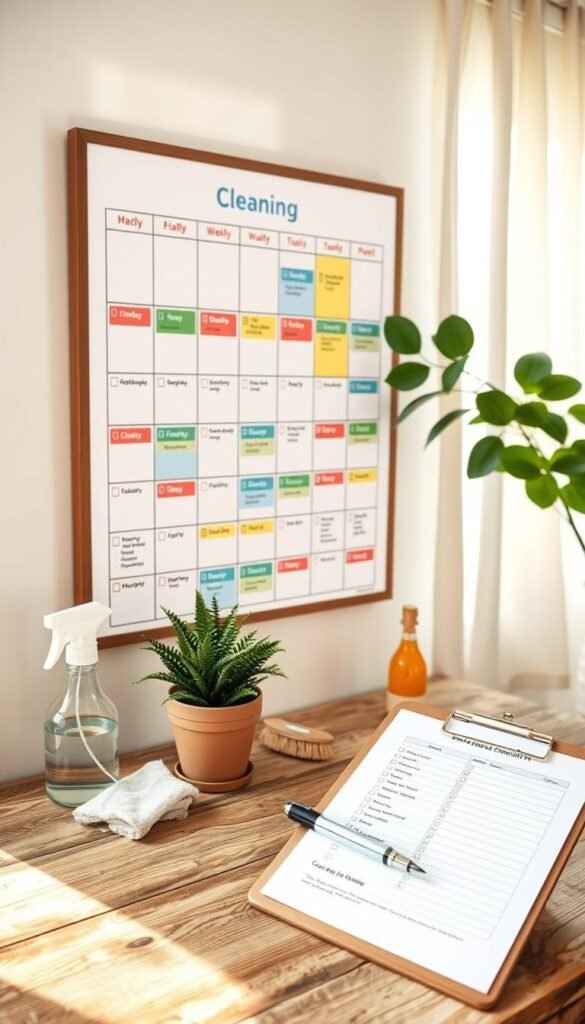
Block your month: one room per week
Choose one room each week. Add a single focus task like grout or a filter check.
- Pick two 30-minute blocks or one 60-minute block each week.
- Add a 10-minute daily reset to support the weekly effort.
- Mark the plan on your visible list so it does not hide in your head.
Share the load: assign age-appropriate chores
Divide simple tasks so everyone helps. Small jobs build teamwork and calm.
- Kids can sort laundry, line up shoes, or wipe low surfaces.
- Match chores to work hours and energy. If evenings are tight try a morning slot.
Use a printable checklist and track progress
Keep one printable checklist on the fridge. Check off tasks with a pen or an app. Note what felt heavy and what worked.
Adjust by season and life rhythm
Add seasonal notes to your schedule. In spring swap clothes and edit closets. In fall plan a top-shelf pantry pass and a washing machine filter check this year.
Small changes stick. Revisit your cleaning schedule each month. Move repeat items into weekly routines and keep rare jobs on a seasonal list. This simple guide helps your home stay calm and steady.
Conclusion
A few short routines, done often, protect surfaces and calm your home.
Small steps beat big to‑do lists. Ten quick minutes each day. One focused weekly block. A simple monthly pass for grout, fans, filters, baseboards, bins, and doors keeps wear low.
Keep water, cloths, and soft tools near. Start with one task. Stop when the timer rings. Invite kids to help with tiny chores. That builds care and confidence.
Reserve a couple of deep clean days each year for the refrigerator, dishwasher, pantry, and behind appliances. Adjust your schedule by season. Use your checklist to track wins.
Keep it gentle. Protect your time. Your steady work brings a calmer house and a cleaner home.
FAQ
How do I start a calm plan for a tidy month without feeling overwhelmed?
Begin with one small step. Pick a room and set a 15–30 minute timer. Do simple wins like clearing counters, wiping visible dust, and emptying trash. Repeat short sessions across the week. This gentle pace builds momentum and keeps stress low.
What’s the easiest way to divide tasks across a month?
Block your month by room. Focus on one room per week. Do daily quick resets and one deeper task each week. That keeps work balanced. It also makes larger upkeep like appliance care and baseboards feel manageable.
Which kitchen tasks should I prioritize once a month?
Tackle the refrigerator first. Toss expired food and wipe shelves. Run the dishwasher on a cleaning cycle and wipe counters and handles. Check and clean the vent filter if you use a hood. These steps protect food and reduce odors.
How often should I clear pantry clutter and inventory food?
Do a quick pantry sweep monthly. Check expiry dates, group like items, and pull together a donate pile. Use simple zones so you know where staples live. It saves time at meal prep and reduces waste.
What’s a gentle routine for bathroom maintenance that still feels thorough?
Do small daily wipes and a weekly scrub. Once a month focus on grout, glass, and fixtures. Use a soft brush on grout and a glass cleaner for mirrors. Gentle products keep surfaces bright without harsh chemicals.
How do I care for linens and mattresses without a lot of fuss?
Wash sheets weekly. Rotate or flip the mattress per manufacturer advice. Monthly, launder duvet covers and vacuum the mattress surface to remove dust. These habits keep sleep spaces fresh and calm.
What quick steps keep closets working and clutter-free?
Do a monthly quick edit. Pull out things you haven’t worn in a season. Straighten hangers and sweep the floor. Keep a donate bag handy so you can remove items right away.
How should I maintain whole-home touchpoints like vents, fans, and baseboards?
Wipe visible dust each month. Use a microfiber cloth or vacuum attachments for vents and fans. A damp mop or cloth along baseboards and door edges keeps the home feeling cared for without a big time commitment.
What’s the best approach to appliance care for washer and dryer?
Run a cleaning cycle or use a washer cleaner monthly. Clean the lint trap after every load and vacuum the dryer vent area periodically. Check hoses and filters to prevent problems before they start.
How do I keep trash and recycling from becoming a monthly headache?
Empty bins regularly. Rinse containers to prevent leaks and odors. Once a month, wash bin lids and check for damage. Small regular steps stop build-up and make maintenance easier.
What are simple ways to refresh soft surfaces and window treatments?
Vacuum upholstery and shake out cushions. Launder removable covers per instructions. Dust blinds and vacuum drapes or use a gentle steam when needed. These quick resets keep fabrics looking newer longer.
How can daily and weekly routines support a calmer month-long plan?
Keep a short daily reset for counters and floors. Add a weekly tune-up for bathrooms and bedding. These tiny, steady habits reduce the need for long deep cleans and create a peaceful rhythm.
What are effective 15-minute tasks for busy days?
Clear a high-traffic surface. Empty one trash can. Sweep a small area. Those short wins add up. They help you feel accomplished without a huge time investment.
How do I involve family without adding stress?
Share the load with simple, age-appropriate chores. Use clear bins, labels, and a short list so tasks are obvious. Praise small efforts. Teamwork helps keep the home steady and teaches responsibility.
Is there a simple tool to track progress without overdoing it?
Use a printable checklist or a small phone note. Mark off one room or task at a time. Adjust by season and life rhythm. A gentle tracker keeps you honest without pressure.