The Perfect Morning Cleaning Routine (Beginner-Friendly)
You are busy. You want a calm start and a house that supports your day. This guide gives a simple flow you can finish in about 20–30 minutes.
We focus on small wins. Make your bed in two minutes. Unload the dishwasher first, then fill the sink with hot soapy water to keep dishes moving.
Take a five-minute basket walk to clear clutter. Sweep crumbs, dry mop, and spot wet mop in stages. A daily laundry load keeps backlog away.
No guilt. Just gentle habits and clear steps you can repeat every morning. Start with one or two actions. Add more when you feel ready.
Key Takeaways
- Finish a quick, calming routine in about 20–30 minutes.
- Two-minute resets make a big visual difference.
- Unload first, then soak dishes to save time.
- Use a five-minute basket pass to remove clutter fast.
- Small daily habits prevent larger work later.
Why a calm morning routine makes your home feel lighter
Small, steady steps change how your home greets you each day. A short plan eases the mind. It also makes the house feel more spacious and manageable.
Start small. Keep it simple. Pick one easy task first. Then add one more. This builds a gentle habit you can keep without stress.
Focus on flow. Unload the dishwasher, then fill the sink to soak. Clear counters, then move to floors. Each step unlocks the next and saves time.
The full set of quick tasks fits into about 20–30 minutes. In that window you can make the bed, start a load of laundry, move dishes, and reset surfaces. That short time keeps the rest of your day calmer.
Try soft cues for help. A quiet timer, a playlist, or a family stand-up can align everyone with one simple task. Kids can carry a basket. Partners can empty the dishwasher. No pressure. Just small, shared steps.

- Start with one step. Then another.
- Use soft cues. Gentle prompts help, not push.
- Aim for ease. The goal is a lighter house and a calmer start to your day.
Morning Cleaning Routine
Start your day with a short, clear set of tasks that shift the tone of the whole house. These steps fit in about 20–30 minutes. They are small. They add up.

-
Make the bed in two minutes for an instant reset
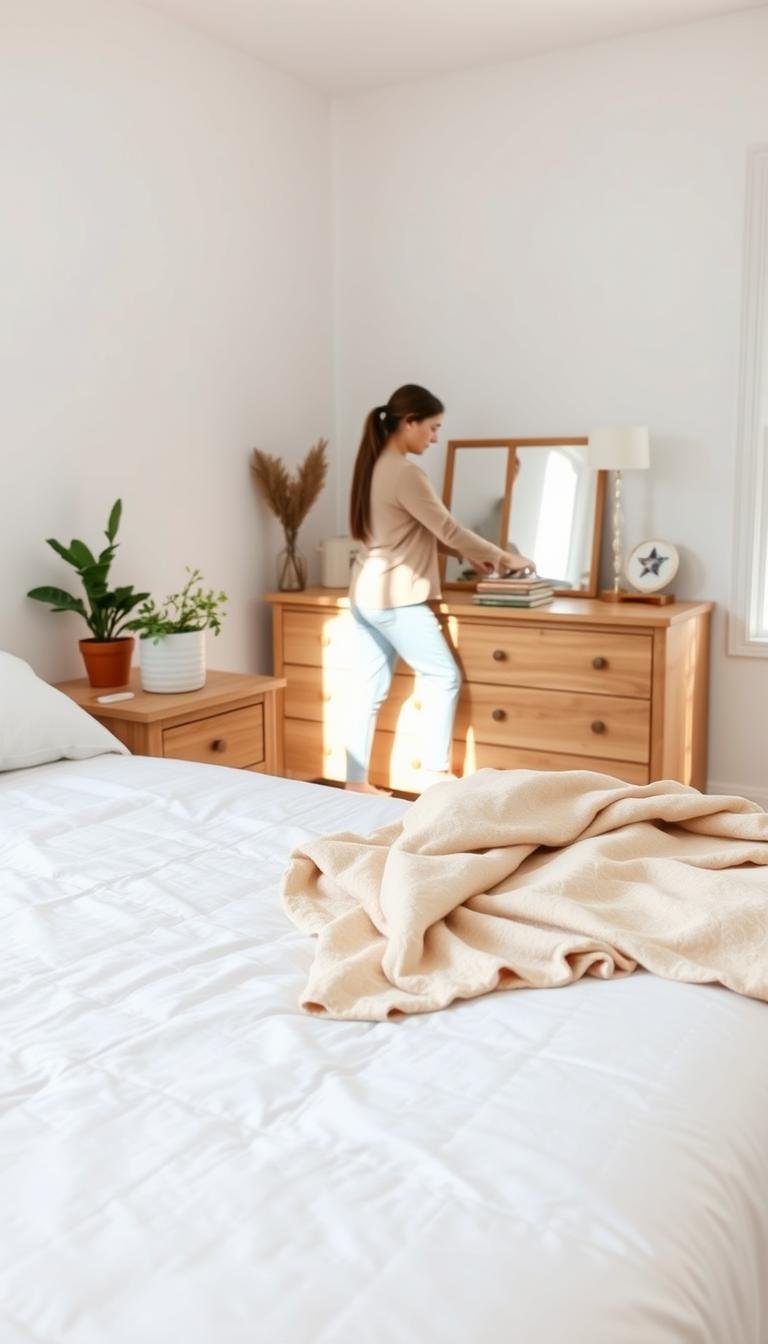
Two minutes. Smooth the sheet. Pull up the comforter. Fluff pillows. This simple step lifts the room and your mood.
-
Start one load of laundry to keep the cycle moving
Run one load daily. Pick a category: whites early, towels on Friday, sheets Saturday. Small loads stop big pileups.
-
Unload the dishwasher and fill the sink with soapy water
Empty the dishwasher first. Then fill the sink or a wash tub with hot soapy water. Let dishes soak while you move on.
-
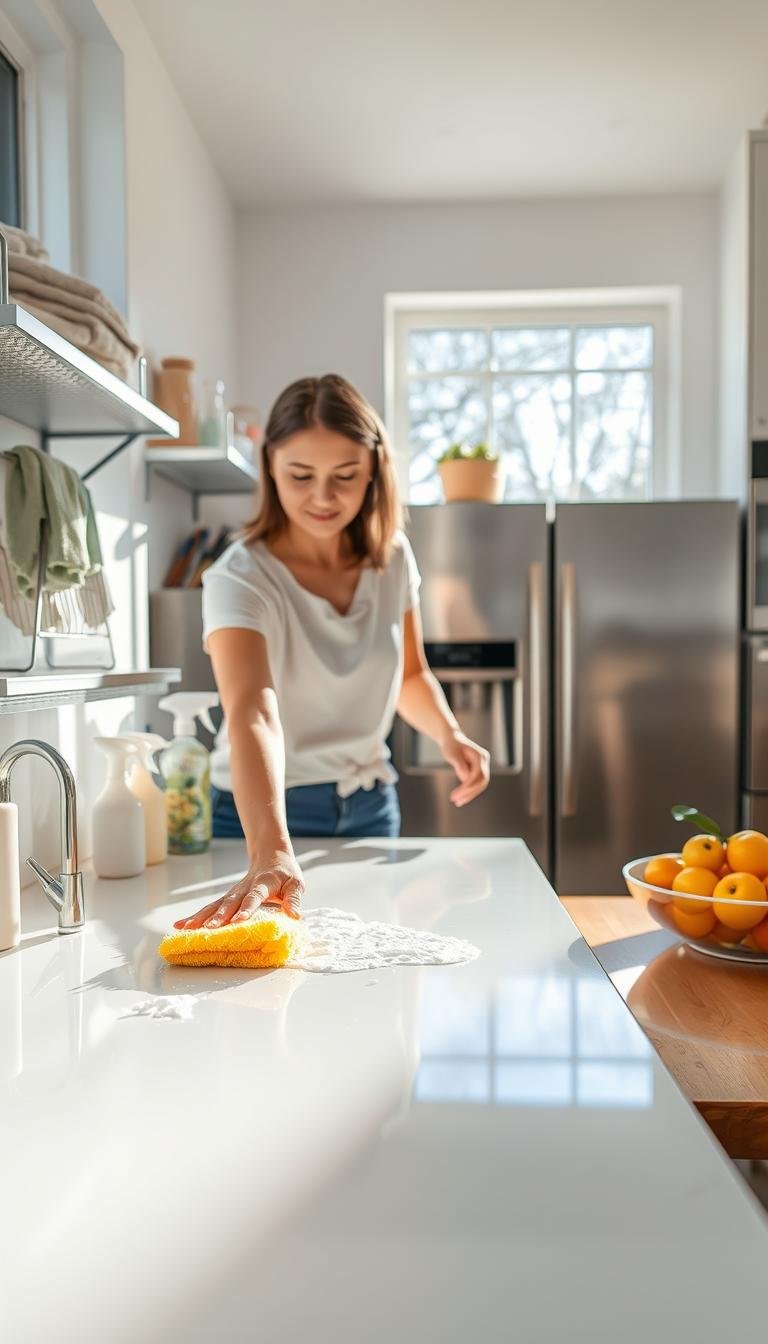
Clear counters and put things back in their place
Return cups, mail, and spices. Wipe surfaces quickly. Clear counters make cooking and prep faster.
-
Do a five-minute clutter basket walk-through
Grab one basket. Walk each room for five minutes. Return items to their place as you go. It feels tidy fast.
-
Quick floors: sweep crumbs, dry mop, spot wet mop
Sweep high-traffic crumbs (~2 minutes). Dry mop main zones (~4 minutes). Spot wet mop only where needed (~6 minutes).
-
Finish with one small weekly task
End with a tiny weekly job. Example: quick mirror clean Tuesday. Dust a shelf Wednesday. Keep it under ten minutes.
Keep habits soft and doable. If you have only a few minutes, unload the dishwasher, clear counters, and sweep. If you missed a night reset, start with dishes and sink. Breathe. A few tasks done well make the rest of your day easier.
| Task | Estimated Minutes | Why it helps |
|---|---|---|
| Make the bed | 2 | Immediate visual lift |
| Laundry (one load) | 5–10 to start | Prevents pileup |
| Dishwasher + soak | 3–5 | Keeps sink clear |
| Basket walk | 5 | Returns stray items quickly |
| Floors (quick) | 2–6 | Feels clean without deep work |
Room-by-room examples for quick wins
This short, room-by-room set of examples helps you get quick wins without heavy work. Pick one or two tasks and spend just a few minutes.
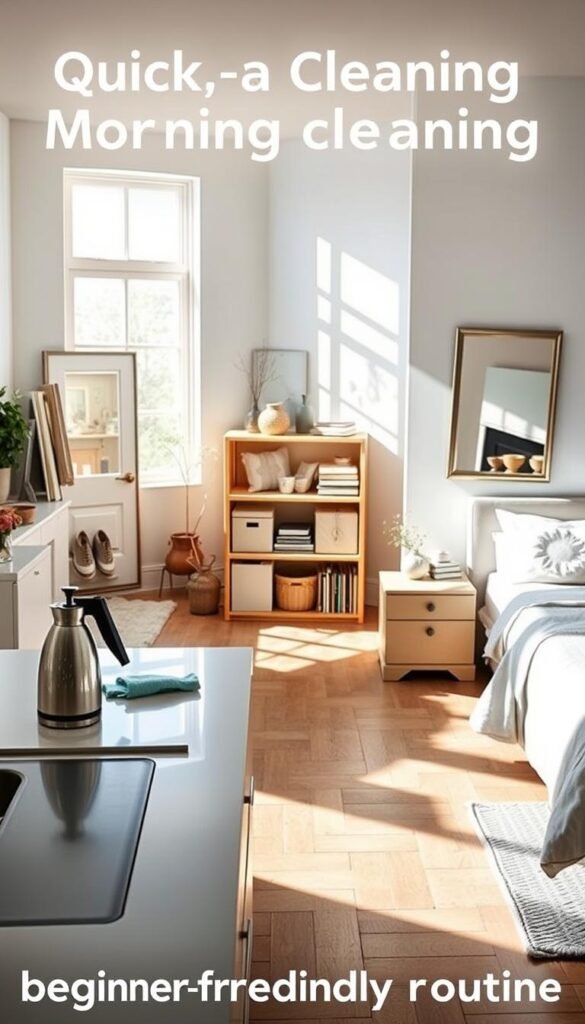
Kitchen
Unload the dishwasher first so dishes have a home. Fill the sink with hot soapy water to soak pans.
Wipe counters from clear to cluttered. Reset the sink and drying rack. This saves time at the next meal.
Pantry
Return stray items to their shelf. Face labels forward so you can find things fast.
Wipe one shelf. Small efforts keep the space tidy and cut down on wasted minutes later.
Bathroom
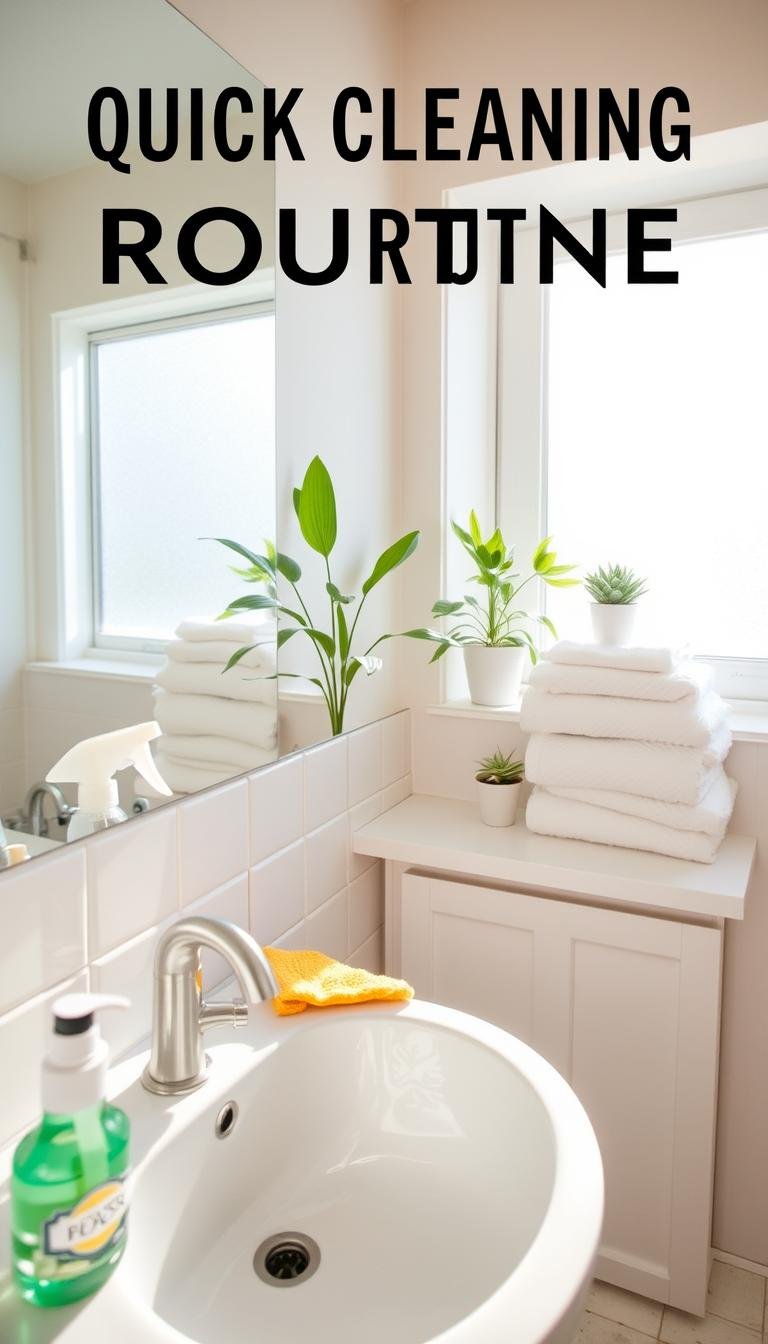
Wipe the mirror and counters. Swap hand towels and empty the small trash.
This 5–7 minute pass feels like a full refresh without any deep cleaning.
Bedroom
Air bedding a few minutes. Fluff pillows and make the bed.
Clear nightstands of cups, books, and hair ties. A calm surface helps you end the day better.
Closet & Entry
Hang or fold visible clothes first. Do a one-minute drawer tidy to keep floors clear.
At the door, put shoes in a bin and mail in a tray. Wipe the doorknob for a quick reset.
Quick tip: Use small containers and a set place for keys, backpacks, and mail. Label bins so kids know where to drop their gear. If you have only a few minutes, pick kitchen or bathroom first. That often gives the biggest lift.
| Room | Key Task | Estimated Minutes | Why it helps |
|---|---|---|---|
| Kitchen | Unload dishwasher; soak dishes; wipe counters | 5–8 | Clears space for cooking; prevents pileup at sink |
| Pantry | Return items; face labels; wipe one shelf | 3–5 | Speeds meal prep; reduces frustration |
| Bathroom | Mirror and counter wipe; swap towels; empty trash | 5–7 | Feels refreshed without deep cleaning |
| Entry/Closet | Shoes to bin; mail to tray; quick tidy | 2–4 | Sets a calm tone for the day |
Weekly and monthly routines that prevent deep cleaning
A simple weekly rhythm stops buildup before it starts. Small, steady plans keep your house calm. They protect your free time.

Weekly cadence: assign one focus task per day
Pick one small task each day. Keep each under 10–15 minutes. This makes it easy to stick with.
- Monday: kitchen wipe-down and quick dishes.
- Tuesday: bathroom counters and mirror.
- Wednesday: dusting common areas.
- Thursday: quick floor pass.
- Friday: towels and small laundry loads.
- Saturday: bedding and a short zone tidy.
Monthly touchpoints: light zone clean for 15 minutes
Each week of the month pick one zone for a 15-minute focus. Rotate pantry shelves, fridge bins, drawers, or the entry closet.
These monthly checks prevent the need for deep cleaning. They keep buildup from forming.
Quick reset checklist for busy mornings
- Unload the dishwasher. This frees the kitchen flow.
- Fill the sink to soak any pans.
- Clear counters. Put away stray items.
- Do a five-minute basket round. Return items to their rooms.
- Add a fast sweep if you have a minute.
| Plan | Time | Why it helps |
|---|---|---|
| Daily focus task | 10–15 minutes | Stops pileups and makes maintenance simple |
| Monthly zone touchpoint | 15 minutes | Prevents buildup and reduces deep cleaning |
| Quick morning reset | 5–10 minutes | Keeps dishes and counters clear every morning |
If you can do only one thing: unload the dishwasher. It clears the sink and makes the day easier.
Support mornings with a light night habit. Run the dishwasher. Stage a basket. Set out tomorrow’s items.
Gentle time-savers, family help, and ADHD-friendly cues
Start with one small trigger that signals the rest of the day. This makes the process feel simple. It removes the need to decide every minute.
Use the two-minute rule and a basket. If it takes under two minutes, do it now. Keep a basket by the door. Walk once through rooms. Collect and return items as you pass.
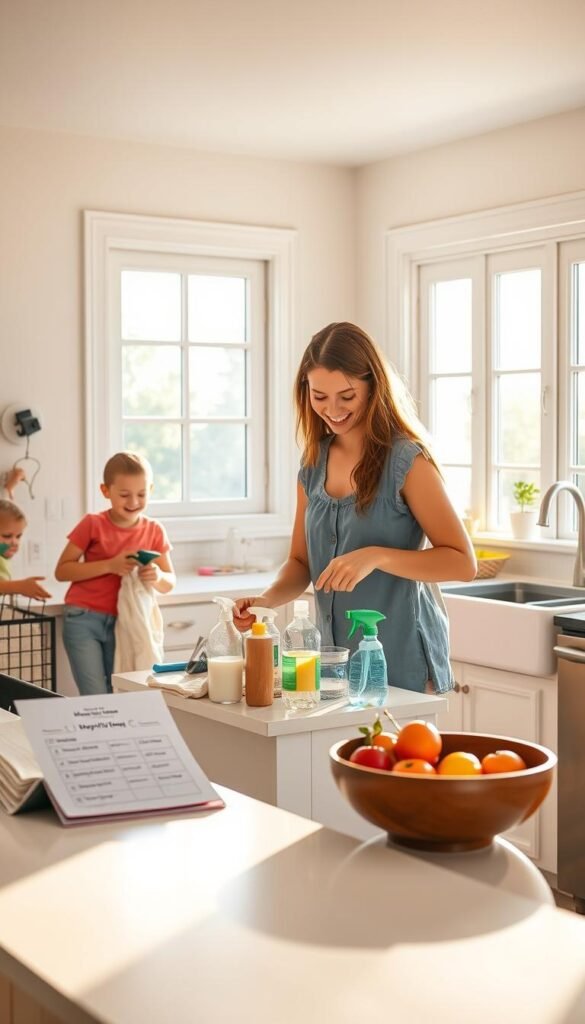
“Press play” prompts and soft timers
Try a gentle audio guide or a playlist. Let voice cues tell you the next step. Pick one song per task. When the song ends, move on. It helps attention without pushing.
Simple family roles and clear labels
Give short jobs. One child carries the basket. Another empties the top rack of the dishwasher. A partner starts the daily load.
Label laundry baskets by load. Mark compost and recycling at the sink. Clear words make it easy for kids and partners to help.
| Tool | Use | Minutes |
|---|---|---|
| Basket | One pass to collect stray items | 5 |
| Two-minute rule | Quick wins to avoid buildup | 2 |
| Audio guide | Step prompts for attention support | 10–30 |
Conclusion
A small, steady plan can reset your space in under half an hour.
Start with one step today. Unload the dishwasher. Make the bed. Or start a load. Small tasks move the whole system.
Keep it to 20–30 minutes when you can. Use the minutes you have. Stop when the song ends. Done is enough.
If your mornings are tight, use the quick checklist. Empty the dishwasher, soak the dishes, and do a short floor pass. These anchors work across homes and schedules.
Let your coffee be the cue to begin. Build slowly. Add one or two tasks when they feel easy. Progress, not perfection, is the point. Your house will feel lighter and your day will start calmer.
FAQ
What is a simple goal for a beginner-friendly morning cleaning routine?
Aim for a calm 20–30 minute flow that resets main surfaces. Make the bed. Start one load of laundry. Unload the dishwasher. Clear counters. Do a five-minute clutter basket walk-through. Small wins set a peaceful tone for your day.
How can I keep the routine short but effective?
Start small and focus on high-impact tasks. Use the two-minute rule for quick actions. Group similar tasks like dishes and counters. Use a basket to gather clutter fast. Finish with one tiny weekly task to keep progress steady.
What should I expect to accomplish in 20–30 minutes?
You can make beds, load laundry, empty the dishwasher, wipe counters, sweep crumbs, and do a quick clutter pass. You’ll not deep clean. You’ll create surface order that makes the whole house feel lighter.
How do I involve family without creating extra stress?
Give simple, timed roles. Kids can sort shoes or put away toys for two minutes. Partners can unload a shelf or wipe a counter. Keep instructions short. Use soft timers or a shared checklist to make tasks predictable and kind.
What’s a quick kitchen checklist for busy mornings?
Unload what fits in your cupboards. Fill the sink with soapy water for soaking. Wipe counters. Put stray items away. Start the dishwasher if full. These steps clear visual clutter and make the space usable fast.
How can I manage laundry without it taking over my day?
Start one load in the morning to keep the cycle moving. Set a timer to move it to the dryer or hang it as soon as it’s done. Keep a small basket for folded items. Little, regular loads beat big, stressful piles.
What’s the fastest way to handle morning clutter?
Do a five-minute clutter basket walk-through. Toss everything nonessential into a basket. Return items to their homes later or assign a daily unload spot. This creates instant calm while you complete other tasks.
How often should I do deeper tasks so mornings stay manageable?
Use a weekly cadence with one focus task each day. Add short monthly touchpoints for zones that need attention. Fifteen minutes a month on a problem area prevents future overwhelm and keeps mornings light.
Any tips for keeping bathrooms tidy in the morning?
Wipe mirror and counters. Swap or hang fresh towels. Empty small trash. Quick wins make the room feel clean without a long scrub. Rotate one deeper bathroom task once a week.
How do I make this routine ADHD-friendly?
Use audio prompts or a gentle timer. Break tasks into bite-sized steps. Visual cues help—baskets, labeled bins, and simple signs. Celebrate small finishes to build momentum rather than pressure.
What tools or habits save the most time?
A clutter basket. Soft timers or a phone alarm. A dishwasher and designated laundry baskets. Simple labels for recycling and laundry. These small systems keep tasks quick and clear.
Can I adapt the plan if my mornings vary each day?
Yes. Keep a short core list you always do. Add one flexible task depending on time. Some days you’ll do just the essentials. Other days you’ll add a five- or fifteen-minute focus. The goal is consistency, not perfection.