30-Day Decluttering Challenge
You are busy. You want a calm, livable home without stress.
This gentle 30-day plan meets you where you are. It uses small tasks and soft rules. One clear win at a time builds confidence.
Choose simple zones. Pick tiny actions you can finish in minutes. Save larger steps for weekends. Set a donation date so items actually leave. Keep a “maybe” bin for decisions you can delay.
Start with surface clutter to see quick progress. Add a daily reminder. Use short daily resets, weekly catchups, and a monthly check. This simple method fits your time, goals, and lifestyle.
Key Takeaways
- Create a soft, flexible 30-day plan with tiny, doable tasks.
- Pick zones and focus on surface areas first for quick wins.
- Set a donation date and a daily reminder to build habit.
- Use a “maybe” bin to avoid rushed decisions.
- Balance short daily moves with larger weekend steps.
- Keep tools simple: boxes, clear bins, labels, a basket.
Calm start: what this decluttering challenge is and how it works
Start here: one tiny step to make your living space feel lighter. You pick a simple intention. You want calm at home. One small task each day builds steady habits.
There are two main ways to work. You can use a time-based plan. Or you can choose a space-based plan. Both work. Pick the way that feels light.

Keep it flexible. Fix a daily window if that helps. Or select small zones on days when you have energy. Grace days are allowed. Skip and double up later. Progress still counts.
- Set a simple schedule. Five to fifteen minutes is enough.
- Create a remove-it-from-the-house plan so items actually leave.
- Clear surfaces first for quick wins and visible change.
| Plan Type | How It Works | Best For | Tempo |
|---|---|---|---|
| Time-based | Short timer sessions each day | Those with routine energy bursts | Daily |
| Space-based | One small zone per day | Those who prefer visual progress | Daily or flexible |
| Flexible | Mix time and zones. Use grace days. | Busy households and shifting schedules | Weekly or by mood |
Be kind to yourself. This month is about steady care. It is not about perfection. Your house will feel lighter, one day at a time.
Simple rules, gentle tools, and a plan to move items out
Use a few soft guidelines to move items with intention and ease. Keep rules kind. Keep decisions small. This helps you act without guilt.
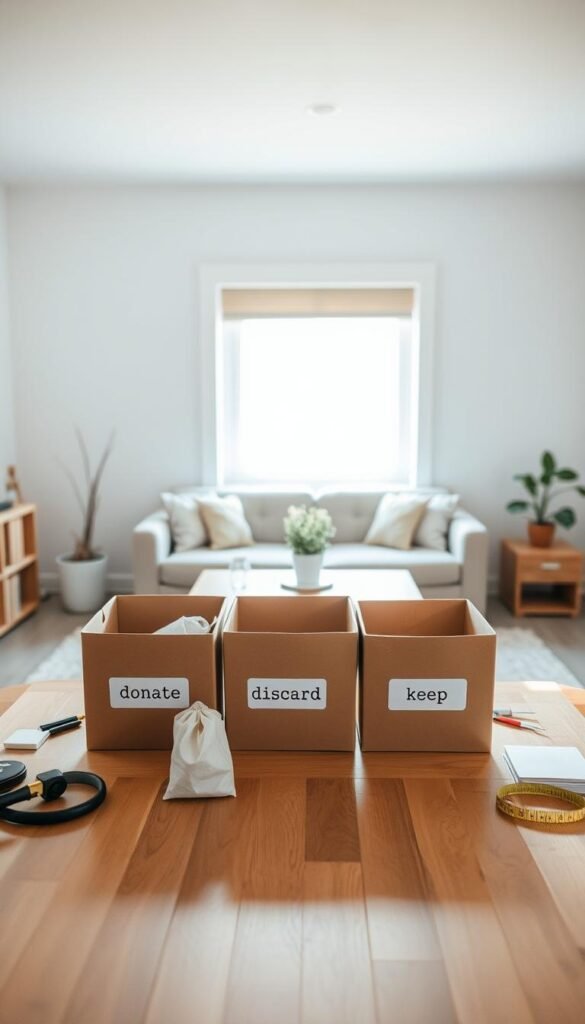
Soft rules to guide decisions without guilt
Keep what you use and love. Let go of what is broken, unused, or heavy on your mind.
Try OHIO: Only Handle It Once. Put an item straight where it belongs or into donate/recycle. This saves time and avoids second-guessing.
Time boxing options: minutes a day, days a week, or weekend focus
Set a timer. Ten to fifteen minutes a day works for most people.
Or pick two short days each week. Or reserve one bigger weekend block. Protect your energy. Stop when the timer ends.
Set up a donation and recycling flow that actually leaves the house
Pick a weekly donation day. Ideally drop off when you do grocery shopping. Bags leave the house on a routine.
Label a box for donations. Choose a nearby center or schedule a pick-up. Make removal part of your plan.
Light gear list and simple homes for things
Keep gear minimal: two boxes, a few clear bins, labels, a basket, and one “maybe” bin.
Contain and store with baskets, clear jars, turntables, trays, hooks, and caddies so every item has a home.
Accountability without pressure
Use phone reminders. Ask a friend or family member to cheer you on.
Invite your household. Model small steps. Offer grace days. Keep the process kind and steady.
| Focus | Option | When to Use | Benefit |
|---|---|---|---|
| Short bursts | 10–15 minutes daily | Busy weekdays | Regular habit. Low fatigue. |
| Twice weekly | 2 short sessions | When pockets of time exist | Visible progress without pressure. |
| Weekend block | 1–2 hour session | Bigger zones or storage | Bigger wins. Fewer interruptions. |
Daily, weekly, and monthly systems you can keep
Short routines protect the progress you already made. Build tiny habits that fit your time. These steps are realistic. They are kind to your energy.
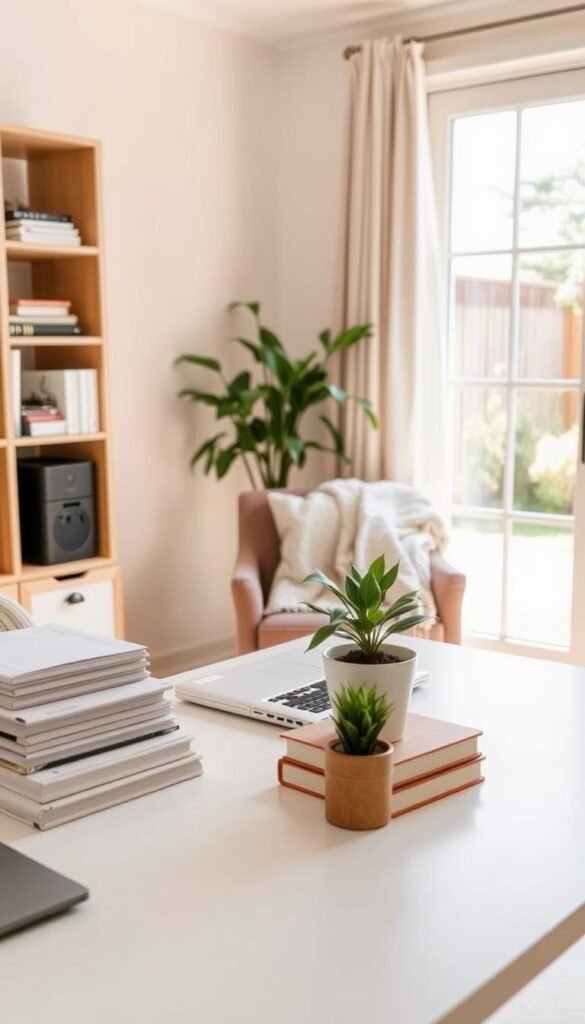
Daily quick resets in minutes: OHIO and surface sweeps
Nightly 15-minute clutter catcher: grab a basket. Walk each room. Return items to their homes. This keeps surfaces clear and stress low.
Daily reset (5–10 minutes): sweep counters, clear sinks, and use OHIO. Do a quick paper touch: recycle junk and place bills in one tray.
Weekly routines: clutter catcher, paper path, and inbox tidy
Weekly clutter catcher (15 minutes): pick a day. Walk rooms. Put things away. Make it part of your family rhythm.
Weekly paper path: pay bills, file papers, shred what you don’t need. Weekly inbox tidy: set a 10-minute timer and bulk delete.
Monthly maintenance: storage check, unsubscribe session, and donation drop
Monthly storage check: open one cabinet, drawer, or bin. Remove expired items and duplicates.
Monthly unsubscribe session (15 minutes): cut email noise. Set a donation drop day so bags actually leave the house.
Stress helpers: music, short timers, and decision breaks
- Play upbeat music to speed tasks.
- Use a 10–15 minute timer. Work, then stop.
- Take a quick break when a decision feels hard.
Room-by-room examples: easy wins in real spaces
A few focused minutes in one space can make your whole room breathe easier. Start with surface clutter so you see progress fast. Small wins build calm.

Kitchen and pantry
Kitchen quick wins: clear counters. Toss expired spices. Group baking items. Use a turntable for oils and sauces.
Pantry steps: pull one shelf. Check dates. Group snacks, grains, and cans. Label bins for quick returns.
Fridge, freezer, and under-sink spots
Fridge/freezer: toss expired food. Wipe shelves. Group by use—breakfast, leftovers, meal prep.
Under-sink: remove everything. Toss empties. Keep one cleaner per type in a small caddy.
Bathroom and vanity
Edit the medicine cabinet. Check dates. Contain daily items on one shelf and move backups to a bin.
Vanity drawers: divide by category—hair, skincare, makeup. Use shallow trays. Keep one of each daily thing within reach.
Bedroom, closet, and entryway
Nightstand: keep a lamp, current book, and water. Under-bed: remove dust-catchers and store seasonal linens in a zipped bag.
Closet: edit one rail at a time. Shoes you wear go front. Move seasonal clothes to labeled bins. Hang accessories on hooks.
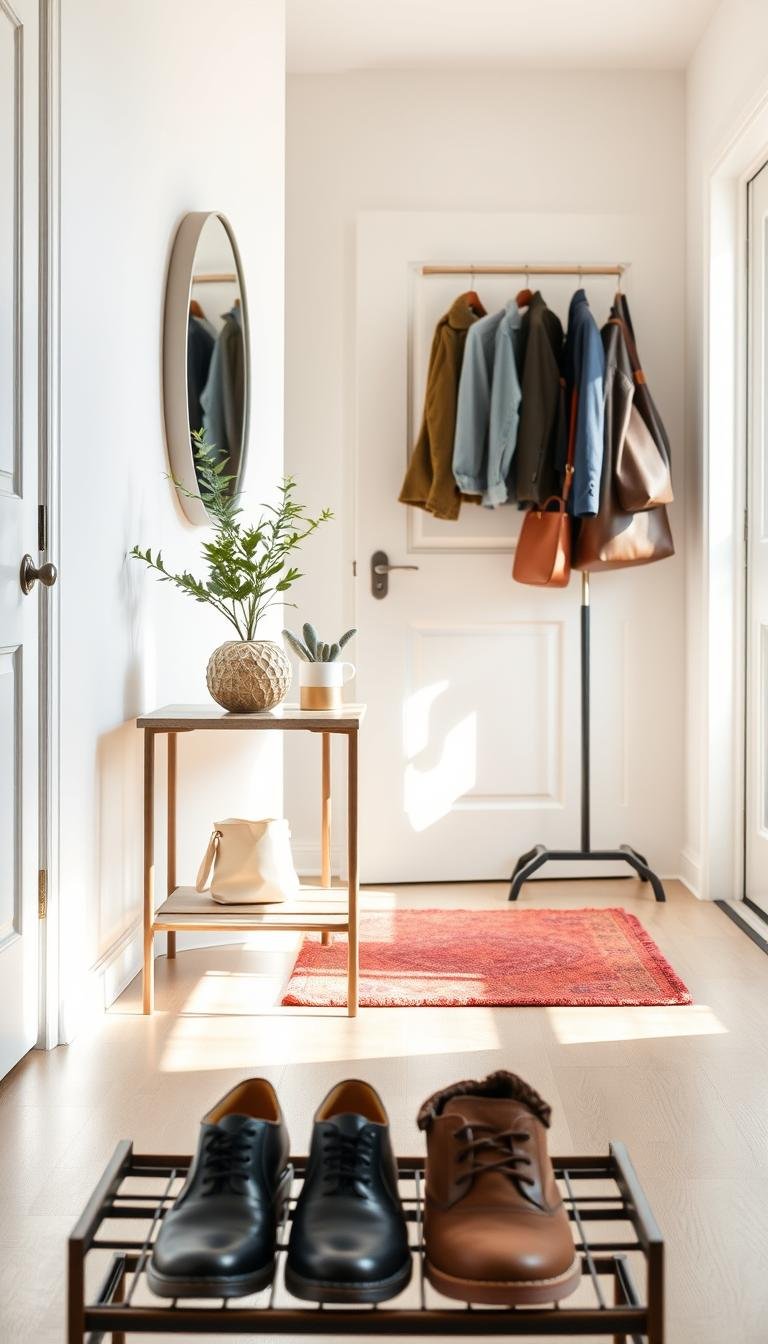
Entryway: define one drop zone for keys and mail. Clear the closet floor. Use a bin for bags and label the top shelf.
- Small storage helps: one basket per category, clear bins, and labels for easy returns.
- Keep ideas tiny: one shelf, one drawer, one bin. Quick tasks keep momentum.
Decluttering Challenge: a flexible 30-day plan you can actually finish
Start with a plan that fits your week and your energy. This method breaks the month into tiny, doable steps. It keeps time short and wins frequent.
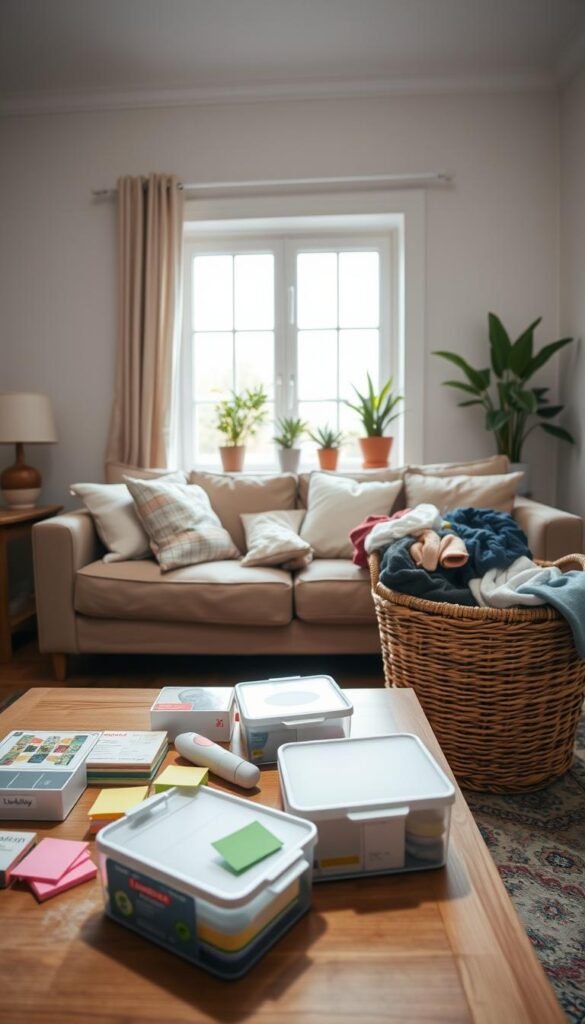
Your first pass: surface clutter and easy decisions
Begin with a surface sweep in each room. Remove trash. Set aside obvious donate items.
These quick wins show change fast. They boost confidence and make the rest feel easier.
Ten-minute tasks for weekdays, bigger bites for weekends
Weekday sessions: pick one shelf, one drawer, or a small stack. Use a 10-minute timer. Stop when it dings.
Weekend bites: tackle a cabinet set, a closet section, or a paper file session. Reserve longer blocks for deeper jobs.
Use 7-day sprints for momentum, then return to the 30-day flow
Try a seven-day sprint when you want a push. Do short daily tasks with a clear focus for one week.
After the sprint, slide back into the gentle 30-day plan. Momentum helps, but the month keeps the pace calm.
When life gets busy: skip, double up, and keep moving
If you miss a day, skip the guilt. Double up later when you have energy.
Put removal on your calendar. Schedule donation pick-up or a drop-off day so items actually leave the house.
- Keep a master list of tiny tasks. Pick what fits your time.
- Track goals softly. One checkmark a day is enough.
- Two short rounds with a break often beat one long push.
- End each session with a quick reset. Move the donate bag to the door.
Conclusion
A few minutes each day have reshaped how your home feels and works. You did steady, kind work. Small steps add up. Your rooms feel lighter and calmer.
Quick checklist to keep momentum:
– Daily reset in minutes. Use OHIO and a “magic” drop basket.
– Weekly donation day tied to grocery trips.
– Monthly spot checks: closet, pantry, cabinets, drawers.
– Make a one-room list for next month. Ten minutes is enough.
Keep storage visible. Clear bins and labels help the whole family. If clutter returns, breathe. Then declutter one group of things. Over the year, small weekly moves prevent a lot later. Final gentle rule: if an item has no home or purpose, let it go. Your life needs space for what matters.
FAQ
What is the 30-Day decluttering plan and how does it work?
This is a gentle, step-by-step month-long plan to clear surfaces and simplify spaces. You spend short, focused blocks of time most days. Start with easy wins. Move items into donate, keep, recycle, or maybe bins. Build small habits that fit your life. The goal is progress, not perfection.
How much time do I need each day?
Choose what fits your schedule. Try 10–15 minutes on weekdays and one longer 30–60 minute session on a weekend. Or pick a three-day-a-week rhythm. Time boxing keeps the work calm and doable.
What are the simple rules to help me decide what to keep?
Use soft rules. Ask: Do I use this? Do I love it? Does it fit my life now? If unsure, place items in a “maybe” bin for 30 days. Be kind to yourself. Small, consistent decisions beat big, stressful purges.
What supplies do I need to get started?
Keep it simple. You’ll want sturdy boxes or bags, clear bins or baskets, labels, and a timer. A donation bag and a recycling box help move things out quickly. No fancy gear required.
How do I actually get donations and recycling out of the house?
Set a predictable flow. Schedule a weekly drop-off, arrange a pickup, or place donations by the door on a set day. Put recycling at the curb or in your car the night before. Small logistics prevent clutter from returning.
What if I feel overwhelmed or stuck?
Use tiny tasks. Work one shelf, one drawer, or one corner for 10 minutes. Play music. Set a short timer. Take breathing breaks. Invite a friend or family member for gentle support. Grace days are part of the plan.
How do I keep clutter from coming back after the month?
Adopt daily and weekly habits. Do a 5–10 minute surface sweep each day. Use a weekly paper path routine and a monthly unsubscribe and donation check. Small maintenance keeps spaces calm.
Can this plan work for a family home with kids?
Yes. Involve kids with simple choices. Create clear drop zones and labeled containers. Assign small, age-appropriate tasks. Focus on systems that match your family’s routine rather than perfect order.
How do I handle sentimental items without guilt?
Slow down. Photograph items you’re unsure about. Keep a small memory box for true keepsakes. Limit sentimental storage to a set space. This honors memories without overwhelming your home.
What are easy room-by-room wins for quick progress?
In the kitchen, clear one cabinet or the spice shelf. In the bedroom, tidy a nightstand or one dresser drawer. In the bathroom, sort a medicine cabinet. In the entryway, clear the drop zone. Small wins build momentum.
How should I plan for busy weeks when I can’t stick to the daily plan?
Use flexibility. Skip a day. Double up on a lighter day. Try a 7-day sprint when you have more time. The plan is designed to bend with life, not break you.
Are there digital tools or apps that help with this process?
Simple tools work best. Use a timer app, a shared checklist like Google Keep, or a calendar reminder. These add gentle accountability without pressure.
What if I own a lot of specialty items, like seasonal clothes or hobby gear?
Tackle those by category and season. Use clear bins and label them. Keep only what you use or truly plan to use. Store seasonal items in a dedicated spot to avoid overflow.
How do I sort paperwork without getting buried?
Create a short paper-path routine. Sort mail immediately. Have three trays: action, file, recycle. Do a weekly inbox tidy. Scan important documents and toss duplicates when possible.
Can I combine this plan with organizing storage solutions?
Yes. After your first pass, add simple solutions: clear bins, shelf risers, and labels. Only buy storage after you’ve reduced items. That ensures systems are practical and not just decorative.